
Matching Energy Storage Systems to Real-World Projects
An energy storage system (ESS) is only as valuable as its fit with the project it serves. Site climate, grid conditions, load profile, and revenue model all shape which system is worth buying — and which will quietly erode a project's return. Ginlong (Solis) Technologies Co., Ltd., a solar inverter manufacturer and energy storage solution provider founded in 2005 and listed on the Shenzhen Stock Exchange (Stock Code: 300763), addresses this through SolisStorage, its energy storage subsidiary, with a portfolio spanning residential, stackable, and commercial & industrial (C&I) systems engineered for defined working conditions, protection classes, and operating modes.
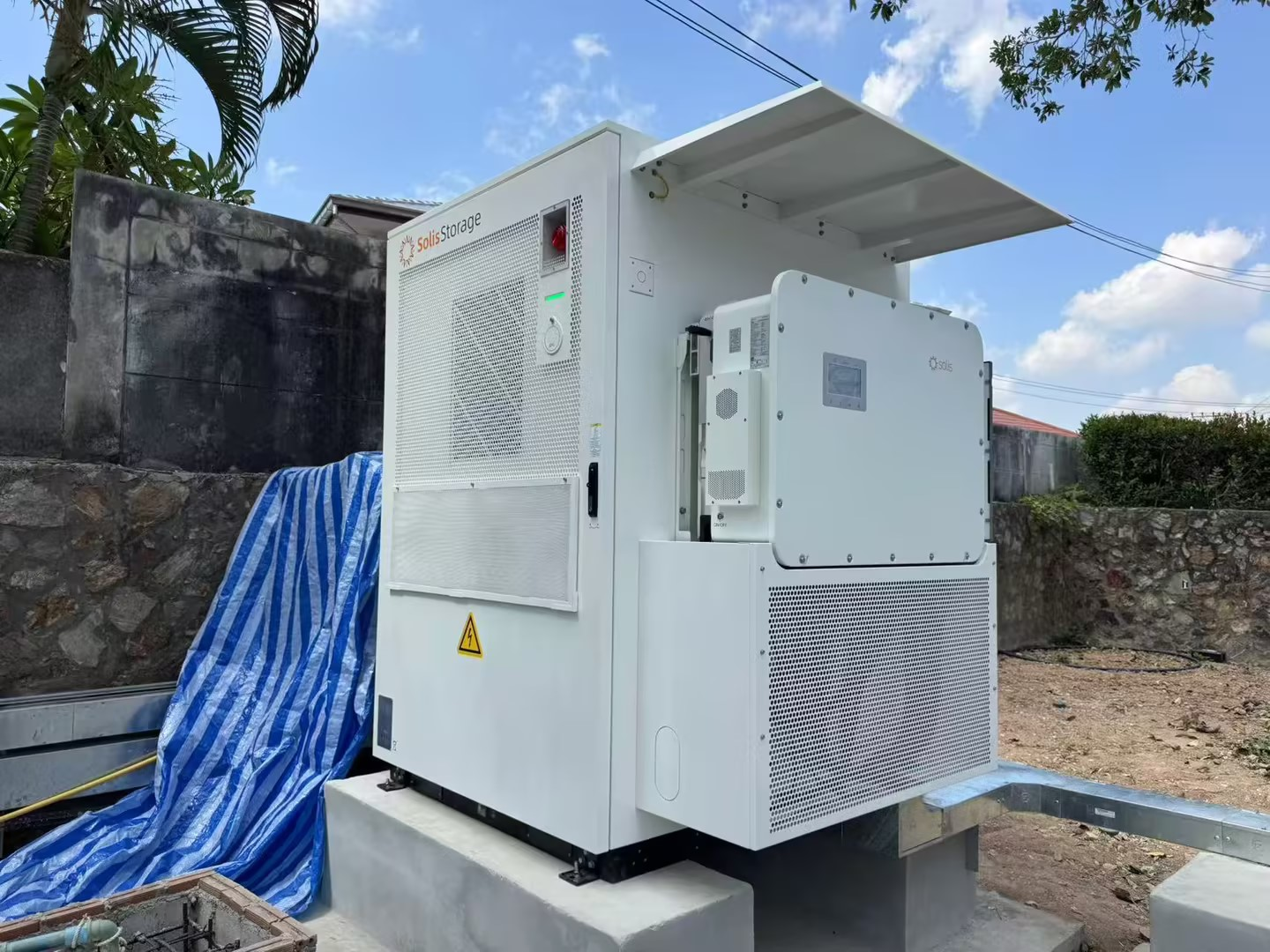
EverCore ESS on-site installation in Thailand (125 kW / 522 kWh self-use and backup project).
The problem — and the opportunity — in ESS project selection
A common mistake in energy storage procurement is comparing only headline numbers: kilowatt-hours, kilowatts, and price. Yet project success depends on variables that sit outside the datasheet. Is the site coastal, with salt fog? Will the system operate at altitude? Does the project require seamless backup during grid faults, or participation in wholesale electricity markets? Each answer changes the technical specification.
The market context explains why this question matters now. The global energy storage systems market was valued at approximately USD 668.7 billion in 2024 and is projected to reach USD 5.12 trillion by 2034, according to Global Market Insights. MarketsandMarkets estimates the residential energy storage segment will grow from USD 2.69 billion in 2024 to USD 4.58 billion by 2030, a CAGR of 9.3%, while the long-duration energy storage (LDES) segment is expected to grow at a CAGR of 13.6% through 2030 from a 2024 base of USD 4.85 billion. Longer-duration and multi-revenue projects are precisely where scenario fit — not just hardware cost — determines the economic outcome.
For buyers in the research and evaluation phase, the practical question is structured: what energy capacity and inverter rating does the project need, what protection class does the environment demand, which operating modes must the system support, and which software platforms must it connect to?
SolisStorage: a portfolio built around project classes
SolisStorage is the dedicated energy storage subsidiary of Ginlong (Solis) Technologies Co., Ltd., with in-house capabilities in PCS, EMS, and system integration, and solutions deployed in more than 100 countries and regions. The portfolio covers three product classes: the IntelliHome residential energy storage system, the FlexCore-ID stackable energy storage system, and the EverCore ESS for commercial and industrial applications.
| Product line | Model | Key specifications | Positioning |
|---|---|---|---|
| Residential ESS | IntelliHome | LiFePO4; 5 kWh nominal capacity; 44.8–57.6 V operating voltage; 100 Ah rated cell capacity; 50 A recommended charge/discharge current; >6,000 cycles / 10 years; IP66 | Household energy storage |
| Stackable ESS | FlexCore-ID | 20 kWh battery pack; LFP, 314 Ah cells; cell cycle life ≥8,000 (25±2°C, 0.5P, EOL 70%) | Small farms, shopping malls, hospitals, large residences, small C&I enterprises |
| C&I ESS | EverCore ESS | 100.5 / 120.6 / 261.2 kWh rated energy; 50 / 60 / 125 kW inverter; EVE LFP 3.2 V / 314 Ah cells; 8,000 cycles; IP55 cabinet + IP66 inverter | Renewable energy and power grid industry, commercial & industrial users |
Behind the hardware stands a manufacturing and service base: a factory area of 98,114.69 m², more than 5,000 employees, an annual output of 80 GW, and an R&D team exceeding 1,000 people. The company has been named a “Top Inverter Brand” by EuPD Research for eleven consecutive years and was the first inverter manufacturer globally to receive a reliability test report from PVEL. For project buyers, SolisStorage also offers OEM/ODM production with customization of logo, outer package, software interface, regional voltage standards, communication protocols, and function parameters. Monthly capacity exceeds 10,000 units, with 30–45 days lead time for mass OEM orders and a MOQ of 1 unit for standard off-the-shelf models. After-sales support includes 24/7 global remote technical support, 27 local overseas service centers, 48-hour on-site fault handling with whole-machine replacement guarantee, and long-term spare parts supply.
Technical deep dive: how EverCore is engineered for project conditions
EverCore's design begins with an architectural decision: physical separation of AC and DC. The hybrid energy storage inverter (AC side) and the battery cabinet (DC side) occupy dedicated spaces rather than being co-located in a single enclosure. This AC-DC separation architecture produces three distinct project-level benefits.
AC-DC separation architecture
Thermal separation improves cell temperature uniformity. Because the inverter is external, its 6 kW of power heat is dissipated directly into the ambient environment, leaving only 3.5 kW of electrochemical heat to be managed inside the battery cabinet. This allows the system to achieve temperature uniformity close to liquid-cooled solutions while keeping an air-cooled design. The engineering logic, as SolisStorage states it, is that reducing heat generation is more effective than improving heat dissipation capacity.
Protection separation raises ingress protection ratings. As an independent unit, the hybrid energy storage inverter achieves an IP66 rating — dust-tight and protected against powerful water jets — while the battery cabinet maintains IP55. Drawing on 20 years of power electronics experience, SolisStorage estimates that this separated protection design reduces the system's full-lifecycle failure rate by 50%.
Structural separation enables flexible DC-side expansion. A single EverCore inverter can connect up to 6 battery cabinets in parallel, allowing linear storage expansion without additional inverter investment, and reducing system expansion costs by approximately 10%. For C&I customers with phased construction plans and limited initial budgets, this is a direct financial parameter.
One integrated 125 kW hybrid inverter
At the center of the system is the 125 kW hybrid energy storage inverter, which integrates the PCS (power conversion system), STS (static transfer switch), PV inverter, circuit breaker protection, and EMS (energy management system) into one unit. SolisStorage states that this gives EverCore the highest power density in its class. The integration delivers three practical outcomes: seamless grid-tied / off-grid switching in less than 10 ms without an external STS, meeting strict power quality requirements for precision industrial equipment; support for both DC and AC coupling of existing PV systems, with PV over-sizing ratios up to 200%; and connection of up to 6 EverCore units in parallel for direct grid connection, significantly simplifying construction procedures.
Control architecture follows the same simplification logic. Traditional systems use independent CPUs for BMS, PCS, EMS, and STS, forming a multi-brain distributed topology where multi-node communication links introduce protocol compatibility and latency risks. EverCore instead adopts a single central controller — single-CPU centralized management — which schedules the entire system through a unified control core, reducing failure points and improving fault location and response speed.
Air cooling with Coanda-effect airflow
EverCore retains an air-cooled design for the 125 kW / 261 kWh C&I system and supports it with engineering data. The core breakthrough is an independent three-air-duct design that combines a patented diversion air duct for the hybrid energy storage inverter with Coanda Effect airflow attachment technology on the surface of battery packs; cooling airflow adheres evenly to curved surfaces, improving air penetration density and heat exchange efficiency. SolisStorage reports a 30% improvement in system heat dissipation efficiency versus traditional air cooling. Combined with IP66 / IP55 high protection ratings and C4-grade anti-corrosion coating standards, EverCore operates stably in ambient temperatures from -25°C to 55°C and at altitudes up to 4,000 meters, covering climate profiles from Middle East high-temperature deserts to European cold regions.
Lifecycle O&M economics
The maintenance profile is where project economics compound. C&I energy storage projects typically have an asset lifecycle of 10 to 15 years, and owners often underestimate how operating and maintenance (OPEX) costs erode project IRR. Based on industry experience cited by SolisStorage, EverCore saves approximately €9,500 per unit in lifecycle O&M costs compared with liquid-cooled systems: €2,500 from eliminating liquid cooling fluid replacement, €1,500 from simplified PCS replacement, €1,500 from simplified pack replacement, and €4,000 from reduced routine inspection complexity. Component selection reinforces this: Minebea cooling fans carry a 10-year maintenance-free specification, and Honeywell industrial-grade flammable gas detectors are calibration-free for 10 years.
Safety architecture and cell technology
EverCore implements a 15-layer, three-dimensional protection system spanning cell, pack, and system levels. Thermal insulation materials resistant to 1,000°C are used between packs to block lateral thermal runaway propagation at the source. Fire suppression is staged in three progressive layers: pack-level aerosol, cabinet-level aerosol, and fire-fighting water channels, enabling targeted intervention at different stages of a thermal event.
Cell selection forms the foundation of the safety system. EverCore uses A-grade 314 Ah LFP cells custom-developed for C&I applications. Their internal resistance is only 0.15±0.05 mΩ, lower than the 0.17 mΩ of conventional 280 Ah cells; SolisStorage notes that every 10% reduction in internal resistance reduces charge-discharge heat generation by approximately 20%, directly lowering thermal runaway risk at the electrochemical source. At a 0.5C charge-discharge rate, the cell achieves 8,000 cycles with remaining capacity ≥70% — roughly 14% more than the 7,000 cycles of traditional 280 Ah cells. At 500 cycles per year, this extends the system's economic lifecycle from approximately 14 years to 16 years.
Open software ecosystem
Software is the final fit criterion. In mature electricity markets, C&I storage revenue has evolved beyond peak-valley arbitrage to include grid ancillary services (FCR / aFRR / mFRR), demand response, and virtual power plant (VPP) dispatch. EverCore's open software ecosystem, built on operating experience from more than 300,000 energy storage sites, supports this: to date, the system has been connected or is being connected with 102 third-party VPP / EMS operators across 11 European countries. Integration cases include the Kraken energy management platform under Octopus Energy in the UK, aggregator platforms such as Check Watt in the Nordic market, and dozens of local EMS providers in German-speaking regions and the Benelux.
Solis' AI Cloud Platform has been deployed at more than 5,500 energy storage power stations worldwide. By integrating Nordpool wholesale electricity price data and Flatpeak retail electricity price data, the platform builds a multi-source price forecasting model that enables minute-level dynamic optimization of charge-discharge strategies. At a residential storage project in Latvia, Solis AI optimization increased annual electricity bill savings by 302.6% — a quantified example of software amplifying hardware value.
SolisStorage EverCore ESS — C&I energy storage system with integrated 125 kW hybrid inverter and modular battery cabinets.
Application and use-case scenarios
SolisStorage's EverCore ESS is specified for the renewable energy and power grid industry, covering renewable power plants, utility companies, commercial & industrial users, and residential users. Typical project types include energy storage system integration, grid stability retrofitting, peak shaving / frequency regulation, and virtual power plant (VPP) related projects. The functions supported are peak load shifting, backup power supply, and self-consumption of PV power. Operation is continuous — 24/7 — in grid-tied mode, off-grid mode, and seamless backup switching mode. Documented working conditions span wide temperature ranges, coastal salt fog, and high altitude, in both household outdoor and industrial outdoor environments, with IP66 and IP55 protection ratings and C5 anti-corrosion certification among the specified special requirements.
Denmark: warehouse self-usage with uninterrupted switching
In Denmark, a C&I industrial end user operates a 125 kW / 261 kWh EverCore system for warehouse self-usage with a 20-year project horizon. The system saves on electricity bills and switches between on-grid and off-grid in under 10 milliseconds to prevent interruptions — a critical parameter for a facility that cannot tolerate supply gaps.
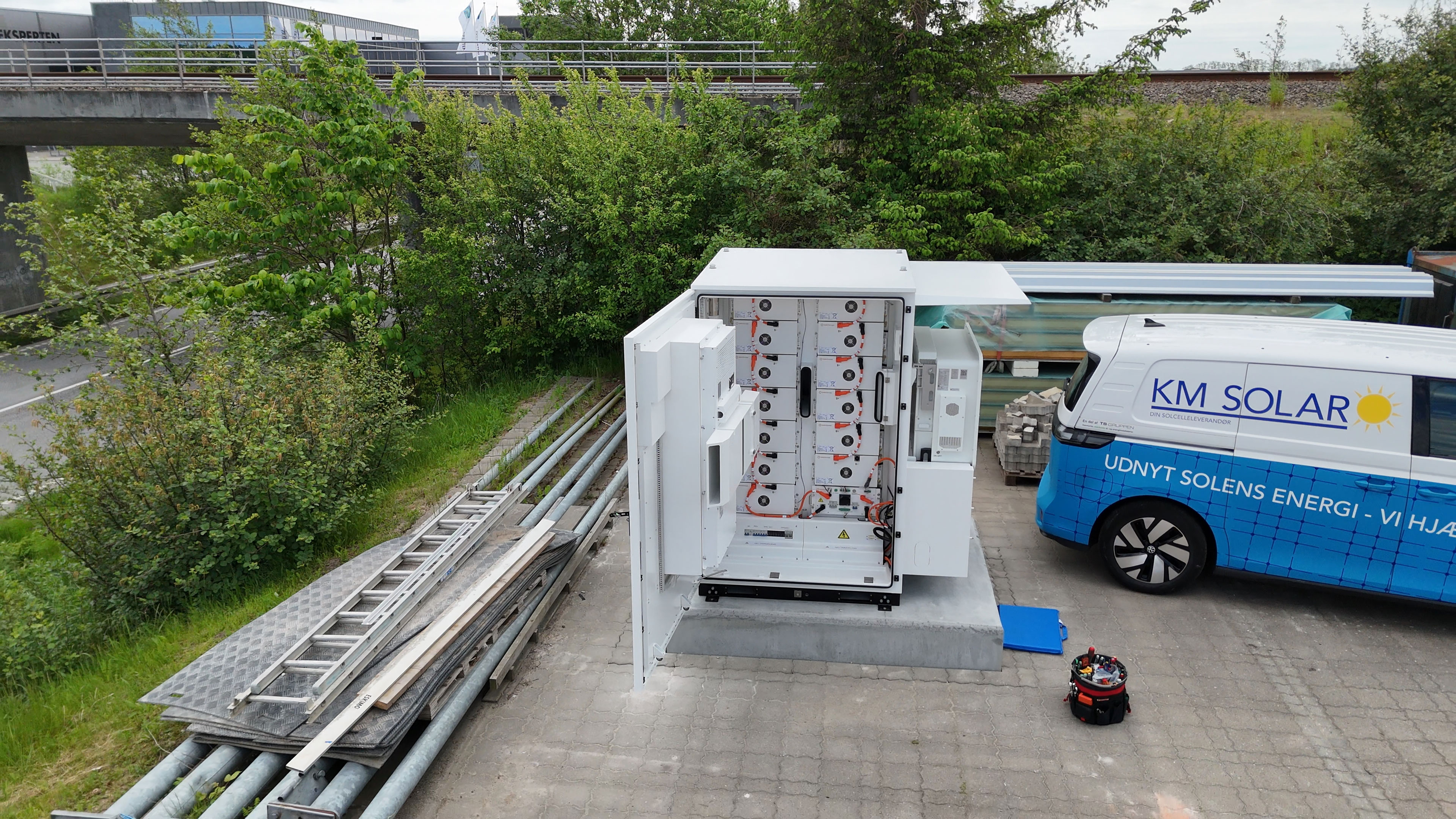
EverCore 125 kW / 261 kWh installation at a Denmark C&I warehouse (project horizon: 20 years).
Thailand: self-consumption and backup power
In Thailand, a self-consumption and backup power project owner uses a 125 kW / 522 kWh EverCore configuration for self-use and backup duty, also designed for a 20-year horizon. The result reported by the project owner is stable operation and reduced electricity bills. Projects of this type demonstrate how capacity scaling — in this case, four battery cabinets behind a single 125 kW inverter — supports sites with higher energy demand without additional inverter investment.
Market trends shaping ESS project selection
The demand pattern behind these projects is shifting toward longer-duration and multi-service storage. MarketsandMarkets projects the long-duration energy storage market to grow from USD 4.85 billion in 2024 at a 13.6% CAGR through 2030, reflecting grid operators' need for systems that discharge over hours rather than minutes. In Europe, the profit model for C&I storage has moved from basic peak-valley arbitrage to multi-dimensional revenue — grid ancillary services, demand response, and VPP dispatch — which places a premium on software openness and third-party platform compatibility.
On the supply side, China's exports of lithium-ion batteries for energy storage and non-automotive uses reached over USD 65 billion in 2024, a 51.4% increase from the previous year, according to Reuters. The scaling of the supply base is making longer-horizon, software-augmented storage projects more accessible to commercial and industrial buyers globally. Industry recognition also matters for evaluation: Solis (Ginlong Technologies) was ranked the world's #1 in residential PV inverter shipments in 2023 and the 3rd largest inverter manufacturer globally, according to Wood Mackenzie. That track record in power electronics is the foundation of SolisStorage's PCS and system integration technology.
EverCore vs. conventional C&I storage designs
The differences between EverCore and conventional C&I ESS designs are architectural rather than cosmetic:
| Dimension | Conventional C&I ESS | SolisStorage EverCore |
|---|---|---|
| Architecture | Typically integrated AC/DC enclosure | AC-DC physical separation (external inverter + battery cabinet) |
| Thermal load | Inverter power heat contributes to cabinet thermal load | 6 kW inverter heat dissipated outside; 3.5 kW electrochemical heat inside |
| Protection class | Single protection envelope | IP66 inverter + IP55 battery cabinet |
| Thermal management | Liquid cooling or basic air cooling | Three-air-duct air cooling with Coanda Effect (30% higher heat dissipation vs. traditional air cooling) |
| Control topology | Multi-CPU distributed control (BMS / PCS / EMS / STS) | Single-CPU centralized management |
| DC expansion | Often requires additional inverter capacity | Up to 6 battery cabinets per inverter (~10% lower expansion cost) |
| Software ecosystem | Closed hardware island in some designs | 102 third-party VPP / EMS operators across 11 European countries |
One honest limitation should be noted. EverCore is engineered for the -25°C to 55°C ambient range and documents C4-grade anti-corrosion coating standards; projects with more corrosive site conditions — such as specifications requiring C5 anti-corrosion certification — should confirm the appropriate coating and protection configuration with the manufacturer before final specification. Similarly, because the architecture separates the inverter and battery cabinet and supports up to six cabinets per inverter, physical layout should be planned in the early design phase rather than treated as a single-footprint unit.
Future outlook
The direction of the industry is toward storage systems that behave less like passive batteries and more like controllable grid assets. The combination of longer cell life (8,000 cycles, equivalent to approximately 16 years of economic life at 500 cycles per year), open software ecosystems, and AI-based charge-discharge optimization points to a future where project value depends as much on the software layer as on the electrochemical core. For buyers, the practical implication is to evaluate ESS vendors on four axes: cell and system safety, environmental protection class, architectural simplicity (which drives O&M cost), and ecosystem openness. As VPP integration and multi-revenue models spread beyond Europe, the systems that are easiest to maintain, expand, and connect will be the systems that hold their value longest.
Project-specific guidance from SolisStorage
For engineers, procurement managers, and system integrators evaluating energy storage for a specific project, the SolisStorage team provides technical specification support, including protection-class recommendations, OEM and customization options, and VPP / EMS compatibility checks.
- Website: www.solisinverters.com
- Email: sales@ginlong.com
- Phone: +86 574 65802188
- Address: No.188 Jinkai Road, Binhai Industrial Park, Xiangshan, Ningbo, Zhejiang, China 315712
- Brochure: Download the Solis Global Brochure (PDF)
FAQ: project fit and operating requirements
Q1: What supporting equipment does this energy storage system require?
The product requires supporting equipment including a lithium iron phosphate battery, a smart energy management platform, and monitoring sensors.
Q2: What environments is the system designed for?
It is designed for environments such as household outdoor and industrial outdoor, and it operates under conditions including wide temperature range, coastal salt fog, and high altitude.
Q3: What protection and anti-corrosion ratings apply?
The special requirements for this scenario include IP66 and IP55 protection ratings and C5 anti-corrosion certification.
Q4: Which project types does the system support?
It applies to energy storage system integration, grid stability retrofitting, peak shaving / frequency regulation, and virtual power plant (VPP) related projects within the renewable energy and power grid industry.
Q5: What operating modes does the system support?
It operates in grid-tied mode, off-grid mode, and seamless backup switching mode, supporting 24/7 continuous operation.
Q6: What are the typical applications?
Typical applications include peak load shifting, backup power supply, and self-consumption of PV power.