
Matching Electric Forklift Capacity to Smart Manufacturing Workflows: CPD10 to CPD35 Scenario Fit
Smart Manufacturing · Electric Forklift Scenario Reference
Matching Electric Forklift Capacity to Smart Manufacturing Workflows: CPD10 to CPD35 Scenario Fit
A 3-ton electric forklift and a 1-ton electric forklift can carry the same pallet on paper and behave very differently on a production floor. Rated capacity becomes a usable specification only after load weight, load center, lift height, aisle width, floor condition, shift pattern, and ambient environment have been defined. This reference maps the CPD10, CPD20, CPD30, and CPD35 counterbalance trucks to the smart manufacturing, cold chain fruit and vegetable wholesale, and retail-floor workflows they are built to serve — and explains why controller and battery configuration should follow the scenario rather than lead it.
The four-model range discussed here is produced by Ningjin Shunhao Trading Co., Ltd., a B2B-focused electric forklift manufacturer and OEM/ODM supplier operating the Mightlift brand. Founded in 2022, the company exports to global markets at an export ratio of 70% and describes its customer base as global distributors, manufacturing plants, cold-chain enterprises, and warehouse operators. OEM and ODM customization — including load capacity adjustment, low-temperature and explosion-proof refitting, and branded appearance optimization — is presented as a standard service line rather than an exception.
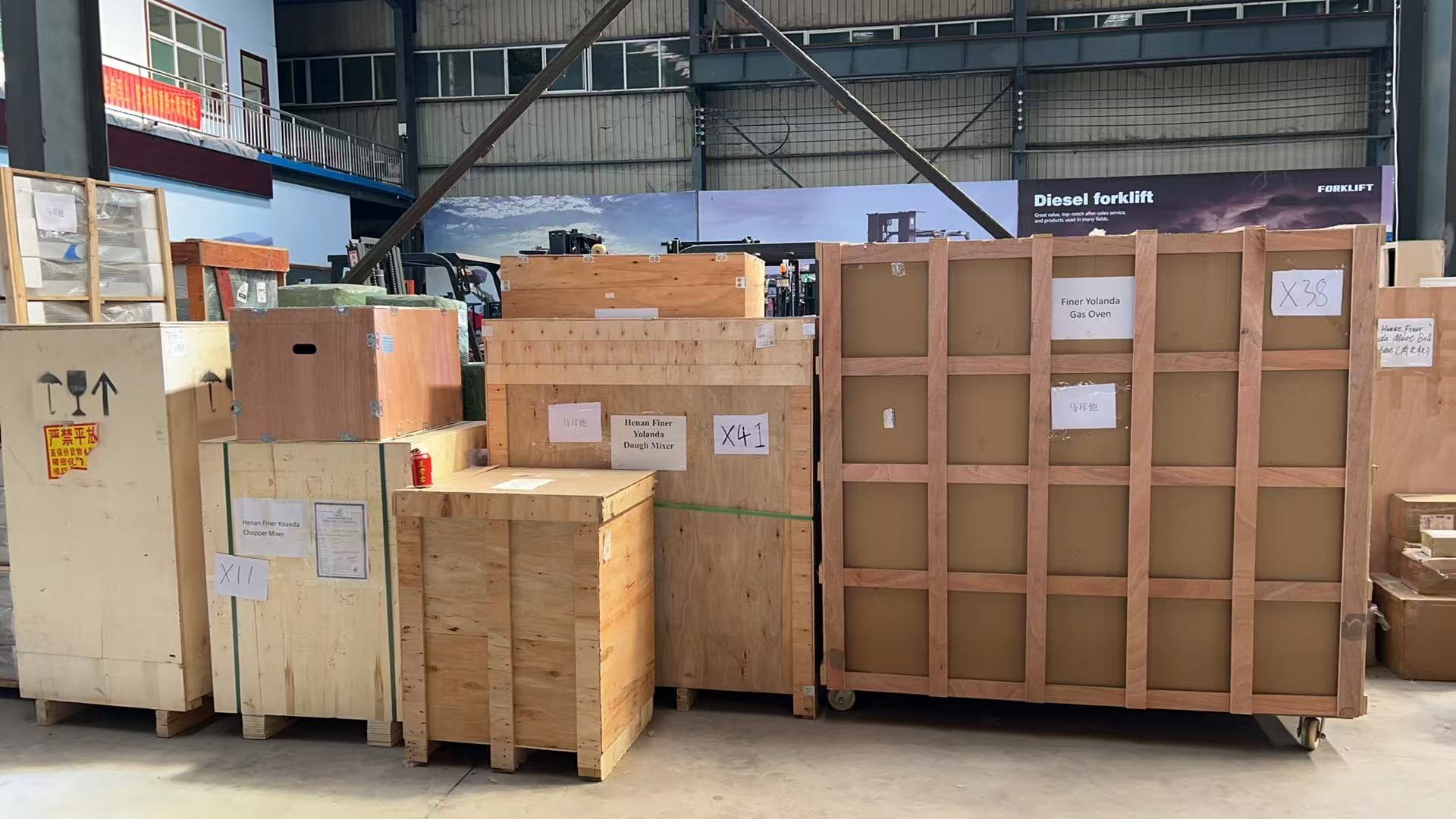
Electric forklift manufacturing and assembly environment — the CPD series is configured against the workflow each unit will serve, not against a single default specification.
The scope of this article is deliberately narrow. It is not a specification dump, and it is not a ranking. It sets out which capacity fits which workflow, what evidence supports that fit, and where the boundaries lie, so that procurement and engineering teams can agree on a truck class before negotiating battery chemistry, controller brand, or commercial terms.
Why Workflow Fit Comes Before Capacity
Two site conditions decide most capacity questions, and both are operational rather than commercial. In warehousing and distribution applications, the documented requirement before selection is to confirm pallet weight, load center, aisle width, mast height, floor capacity, and local charger voltage. Each of those six inputs can move a buyer up or down a truck class on its own.
- Pallet weight and load center — rated capacity is quoted at a defined load center; a load whose center of gravity sits further forward reduces usable capacity.
- Aisle width — affects the turning requirement and, at the extreme, whether a counterbalance truck is the correct class at all.
- Mast height — must be matched to racking height and door clearances, not chosen for maximum reach.
- Floor capacity — a heavier truck distributes more point load through its wheels.
- Charger voltage — a local constraint that determines which charging configuration is available on site.
- Shift pattern — single- or multi-shift operation determines whether the battery and charging plan can stay simple.
Heavy-duty material-handling projects add a second layer of conditions. For mixed indoor and outdoor routes, the documented assessment covers surface condition, slope, weather exposure, load dimensions, attachment compatibility, and rated residual capacity. Attachments such as fork positioners, side shifters, or approved clamps are useful, but they change the load geometry and therefore the residual capacity available — which is why attachment choice belongs in the capacity calculation, not in the accessory line of a purchase order.
The Four Truck Classes: What Actually Changes Between 1 and 3.5 Tons
All four models share a common technical baseline: battery-powered electric drive, zero emission at the point of use, low noise operation for indoor workshop use, brushless AC drive and pump motors, a heavy-duty lead-acid battery as standard with a lithium battery optional, and a choice of controller brands — SANTROLL, CURTIS, INMOTION, or ZAPI. What changes across the range is how each truck is engineered to a working environment.
CPD10 — 1 Ton
Rated at 1000 kg with a brushless AC drive motor and pump motor. It is designed for indoor pallet receiving, put-away, and dispatch on level floors, and it moves light pallets with no tailpipe exhaust at the point of use.
CPD20 — 2 Tons
Rated at 2000 kg with high-power front dual drive motors, electric steering with cargo-sensing smooth control, and an automatic electromagnetic parking brake with AI brake assist. Its control unit is sourced from an internationally recognized brand, and the model is positioned for light-duty warehouse fleet deployment.
CPD30 — 3 Tons
Rated at 3000 kg with a standard and extended lifting height of 3000 mm to 7000 mm. It uses a high-power electric drive system with intelligent MOSFET control, a large-angle adjustable steering wheel with voice prompts, and a large-flow cyclone air filter system.
CPD35 — 3.5 Tons
Rated at 3500 kg with front wheel dual drive motors and P.E.S three-speed efficiency regulation. Two details matter for fleet operation: a lateral side battery extraction layout, and ergonomic right-positioned hydraulic control valves.
These differences are not cosmetic. A truck with a 7000 mm lifting range can serve racking that a shorter mast cannot reach; a truck with side battery extraction can change service time on a multi-shift fleet; and dual drive motors change how a loaded truck behaves on a ramp or an uneven yard.
Scenario 1 — Indoor Workshop and Clean Production Workflows (CPD10, CPD20)
Indoor production areas are the clearest case for electric drive, because the advantage is measurable at the point of use rather than at the fleet level. A battery-powered truck produces no tailpipe exhaust where operators and production staff are working, and it operates at low noise — a practical benefit in enclosed workshops where communication and shift comfort matter.
The CPD10 is specified for exactly this pattern: indoor pallet receiving, put-away, and dispatch on level floors, moving light pallets. The CPD20 extends the same logic to light-duty warehouse fleet deployment, where several trucks share a receiving-to-storage flow.
A documented case from the electronics sector illustrates the fit. An electronics manufacturer in an industrial park uses electric forklifts for component, work-in-process, and finished-goods logistics. The reported outcome is twofold: improved material-flow efficiency, and the removal of tailpipe exhaust from enclosed clean production areas. The relationship covers a long service horizon of 10–15 years and involved coordinated bulk delivery and fleet configuration for electronics manufacturing routes. The exact unit count is not disclosed.
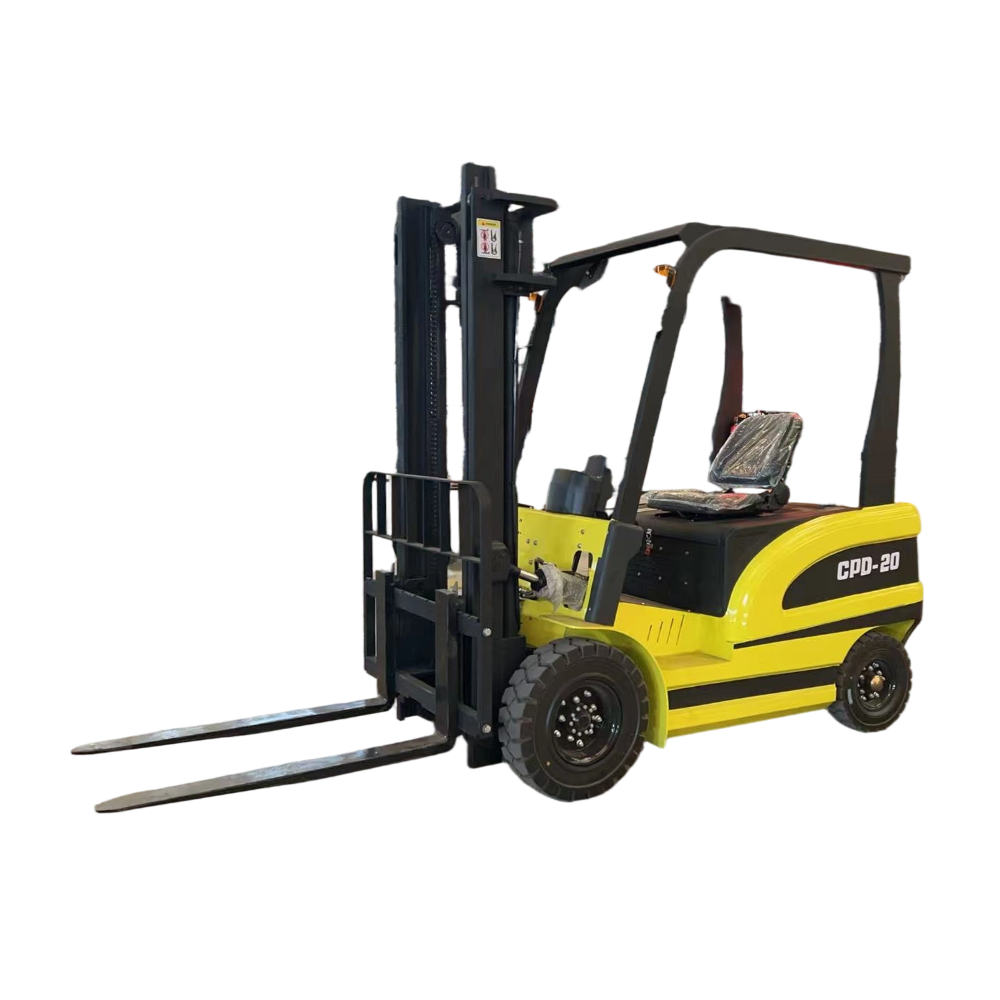
CPD20 (2 tons), configured with front dual drive motors and electric steering with cargo-sensing smooth control for light-duty warehouse fleet deployment.
Two supporting requirements are worth planning before the trucks arrive. First, the scenario assumes level floors; ramps and dock levelers change the load case. Second, a warehouse fleet depends on infrastructure as much as on vehicles — pallet racking, a dock leveler, a charger, and a warehouse management system are part of the documented equipment set. A truck delivered without a charging plan is an incomplete installation.
Scenario 2 — Cold Chain Fruit and Vegetable Wholesale Markets (CPD30, CPD35)
Cold chain fruit and vegetable wholesale markets combine two pressures that rarely appear together elsewhere: high pallet weights at peak hours, and stacking heights that exceed typical shop-floor racking. The CPD30's 3000 mm to 7000 mm lifting range is the relevant specification here, because it allows a single truck class to serve both low-level picking and upper-tier storage positions. Its large-flow cyclone air filter system is also relevant where dust and debris accumulate.
The CPD35 addresses the weight side of the same workflow. Rated at 3500 kg, it is configured to support heavy-load fleet operation and service access through a front dual-drive layout and side battery extraction — a service design choice that matters when a truck works through a long cold-chain shift and battery handling has to be quick.
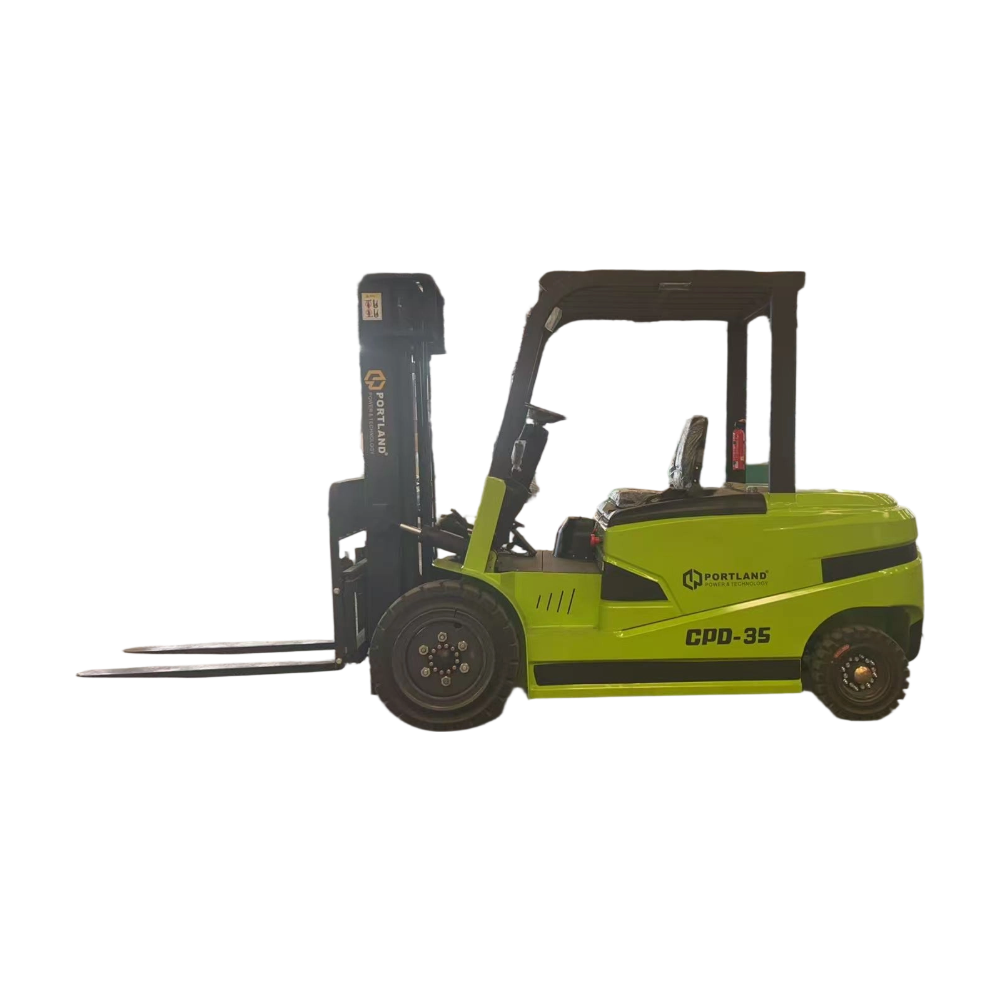
CPD35 (3.5 tons), rated for heavy-load operation with front wheel dual drive motors, P.E.S three-speed efficiency regulation and lateral side battery extraction.
Battery chemistry deserves separate treatment in this scenario. Third-party analysis reports that lithium-ion batteries in cold storage applications, at temperatures down to -20 °C, retain significantly more capacity than lead-acid batteries, and links that performance gap to an 11.6% CAGR in the food industry segment. On the product side, both the CPD30 and the CPD35 ship with a heavy-duty lead-acid battery as standard and lithium as an option.
The practical reading is that cold-chain buyers should treat the battery specification as a scenario decision rather than a default upgrade. Temperature exposure, shift length, and available charging windows determine whether the standard lead-acid configuration is sufficient or whether the optional lithium configuration is the better match. Neither choice should be made before the site's temperature profile is documented.
Boundary to confirm: a high-lifting truck is not automatically the right truck. Where the CPD30's extended mast is specified, door clearances, racking beam heights, and overhead obstructions must be checked, and where attachments are used, rated residual capacity must be recalculated rather than assumed.
Scenario 3 — E-Commerce and Supermarket Floor Handling (CPD10, CPD20)
E-commerce warehouses, supermarkets, and department stores present the opposite profile from heavy industry: lower unit loads, short travel distances, very high cycle counts, and pedestrians sharing the same floor. Handling quality matters as much as lifting capacity in this environment.
The CPD10 covers light pallet movement and short transfers where the load is known and the route is short. The CPD20 adds electric steering with cargo-sensing smooth control and an automatic electromagnetic parking brake with AI brake assist — control characteristics that reduce operator effort and support predictable stopping behaviour in mixed-traffic areas.
Because these sites often run more than one shift, the documented operating assumption is explicitly a single- or multi-shift operation based on the battery and charging plan. That makes charger placement and charge-window design part of the layout decision, alongside pallet racking and the warehouse management system.
A genuine limitation belongs in this section. Counterbalance trucks such as the CPD10 and CPD20 are not narrow-aisle solutions. Where aisle width is the binding constraint, the correct answer is a different truck class rather than a smaller counterbalance model — market analysis identifies Class II narrow-aisle trucks as the fastest-growing electric segment, with a projected 9.28% CAGR through 2030, driven by warehouse densification. Buyers who measure aisle width first and capacity second are less likely to make that mistake.
Scenario 4 — Heavy Multi-Route Sites: Building Materials, Yards, and Loading Bays (CPD35)
The most demanding fit in this range is the building materials and heavy industrial goods environment, where heavy pallets move across workshops, yards, and loading bays within the same shift. Applications of this type are described as heavy-duty material-handling projects and are common in global heavy industry markets.
The CPD35 is the designated truck for this pattern. Its role is to support heavy-load fleet operation and service access through a front dual-drive layout and side battery extraction. The P.E.S three-speed efficiency regulation is a further match for routes that alternate between open-yard travel and precise indoor positioning, since it allows the operator to shift the truck's performance balance to the task at hand.
What makes this scenario different is that the route itself is variable. Indoor and outdoor mixed routes are subject to site assessment, and the documented equipment set includes a loading dock, a charging area, and a fork positioner, side shifter, or approved clamp attachment. The list of conditions to assess — surface condition, slope, weather exposure, load dimensions, attachment compatibility, and rated residual capacity — is longer than for any purely indoor application, and the truck should be specified after that assessment rather than before it.
How Controller and Battery Choices Follow the Scenario
Across the CPD10, CPD20, CPD30, and CPD35, the same two configuration decisions appear: controller brand and battery type. Both are frequently treated as commercial levers during negotiation. Read against the scenarios above, they are better understood as consequences of the workflow.
Controller selection
Each model offers SANTROLL, CURTIS, INMOTION, or ZAPI controllers, described as reliable and stable control systems. The relevant question is not which brand is inherently better, but which control behaviour matches the application. A supermarket floor with pedestrian traffic and frequent stops places different demands on control smoothness than a yard operation with long straight runs. The CPD30 additionally uses a high-power electric drive system with intelligent MOSFET control, and the CPD20 pairs its front dual drive motors with electric steering and cargo-sensing smooth control — engineering decisions already aligned to their intended environments.
Battery selection
All four models ship with a heavy-duty lead-acid battery as standard, with lithium available as an option. The operational difference is concentrated in charging behaviour. Published technical commentary notes that opportunity charging — 15 to 30 minute top-ups — does not degrade lithium-ion cycle life, while it significantly harms lead-acid battery longevity. That single fact reshapes several of the scenarios above:
- High-frequency retail and e-commerce floors with short, unpredictable idle windows fit opportunity charging, which favours lithium.
- Single-shift operations with a fixed overnight charge window can remain on the standard lead-acid configuration without difficulty.
- Cold chain sites add a temperature dimension, where third-party analysis indicates lithium retains more capacity at low temperature.
Market adoption is moving in the same direction. Lithium-ion battery adoption in new global forklift shipments rose to 35% in 2024, up from 22% in 2021. That trend supports lithium as a growing option, but it does not remove the need to match chemistry to duty cycle — a 2024 share of 35% also means that the majority of shipments still use other configurations.
Spec-to-Scenario Mapping: A Single Reference Table
| Truck | Rated capacity | Configuration facts | Workflow fit | Boundary to confirm |
|---|---|---|---|---|
| CPD10 | 1000 kg | Brushless AC drive and pump motors; SANTROLL / CURTIS / INMOTION / ZAPI controllers; heavy-duty lead-acid with optional lithium | Indoor pallet receiving, put-away and dispatch on level floors; light pallets; e-commerce and supermarket floor handling | Level floors; load center; aisle width; charger voltage |
| CPD20 | 2000 kg | High-power front dual drive motors; electric steering with cargo-sensing smooth control; automatic electromagnetic parking brake with AI brake assist; brand-name controller | Light-duty warehouse fleet deployment; multi-shift receiving and dispatch; pedestrian-shared floors | Pallet racking, dock leveler, charger and WMS required; shift pattern and charging plan |
| CPD30 | 3000 kg | Lifting height 3000–7000 mm; high-power electric drive with intelligent MOSFET; adjustable steering wheel with voice prompts; large-flow cyclone air filter | Cold chain fruit and vegetable wholesale markets; high racking positions; dusty environments | Door clearance and overhead obstructions; battery specification against temperature and duty cycle |
| CPD35 | 3500 kg | Front wheel dual drive motors; P.E.S three-speed efficiency regulation; lateral side battery extraction; right-positioned hydraulic control valves | Building materials and heavy industrial goods; heavy pallet handling across workshops, yards and loading bays; cold chain heavy loads | Surface condition, slope, weather exposure, load dimensions, attachment compatibility, rated residual capacity |
What This Means for Procurement
The sequence that emerges from these scenarios is consistent: define the workflow, confirm the site conditions, select the capacity class, and only then configure the controller and battery. Procurement teams can convert that sequence into a short pre-tender checklist.
- Confirm pallet weight and load center, not just the nominal tonnage of the load.
- Measure aisle width and turning space before choosing a counterbalance class.
- Match mast height to racking height and door clearances.
- Document floor capacity and outdoor surface conditions if routes leave the building.
- Confirm local charger voltage and available charging windows.
- List any attachments and recalculate rated residual capacity.
- Record the ambient temperature range if any part of the route is refrigerated.
- Confirm whether any part of the site is classified as an explosive atmosphere.
On the supply side, capability facts relevant to a project of this type include OEM production with supporting capacity customization, a stated monthly capacity of 10,000 units, a 30-day lead time, a minimum order quantity of 2 units, 100% testing of finished units, and global export with technical support after delivery. The company also states ISO 9001 and ISO 14001 certification for its management systems, CE marking for market access, and UN38.3 for battery transport documentation.
Limits and Trade-offs Compared with Conventional Solutions
Electric drive is not a universal replacement, and the limitations are specific rather than general.
- Infrastructure dependency. A battery-powered truck is only as available as its charging arrangement. Charger voltage compatibility is a site condition that should be verified before selection.
- Battery chemistry behaviour. Opportunity charging suits lithium-ion but significantly harms lead-acid longevity, which means high-frequency operations either adopt lithium or accept a different charging discipline.
- Truck class limits. The CPD10, CPD20, CPD30, and CPD35 are counterbalance trucks. They are not narrow-aisle Class II trucks, and very narrow aisles should trigger a truck-class review rather than a capacity reduction.
- Hazardous areas. ATEX Directive 2014/34/EU is mandatory for electric forklifts used in explosive atmospheres within the European Union. A standard model is not automatically compliant; explosion-proof refitting is a distinct configuration step and must be specified, not assumed.
- Regulatory documentation. EN 1175:2020 is the current harmonized European standard covering electrical and electronic safety requirements for self-propelled industrial trucks, and conformity underpins CE marking. Buyers should expect documentation to be checked rather than taken as given.
Set against conventional internal-combustion practice, the trade-off is straightforward. Electric trucks remove tailpipe emissions at the point of use and operate at low noise, which is decisive in enclosed clean production areas — but they shift complexity from the fuel supply chain to the charging and battery-management plan. For sites that cannot manage that shift, electric drive is a poor fit regardless of the truck's quality.
Market Trend Analysis
The scenario-level reasoning above sits inside a market already moving in one direction. The global electric forklift market was valued at USD 53.01 billion in 2024 and is projected to reach USD 94.55 billion by 2032, according to Maximize Market Research. Regional adoption data points the same way: electric forklifts reached a 71% share of North American retail orders in 2024, based on Industrial Truck Association figures reported by Batteries International. Published market estimates for the same period vary in scope depending on whether services and battery replacement are included, so numbers are best compared on a like-for-like basis.
China, the principal manufacturing base for this truck class, recorded domestic electric forklift sales of 946,300 units in 2025, accounting for 76.9% of total forklift sales in the country, based on China Construction Machinery Association figures. Within the segment, lithium-ion adoption in new global forklift shipments reached 35% in 2024, up from 22% in 2021.
Growth is concentrated in exactly the scenarios this article maps. Class II narrow-aisle trucks show a projected 9.28% CAGR through 2030 on the back of warehouse densification, and food-industry cold chain demand is linked to an 11.6% CAGR, where lithium's low-temperature capacity retention is cited as a driver by Mordor Intelligence.
At the top of the market, scale remains concentrated. Toyota Industries Corp. reported 2023 revenues of USD 16.32 billion, representing approximately 28–29% of the global market, according to Modern Materials Handling. The largest Chinese manufacturers by 2023 revenue — Anhui Heli at USD 2.45 billion and Hangcha Group at USD 2.30 billion, ranked seventh and eighth respectively — operate at a different order of magnitude. That structure matters to buyers because it frames what mid-tier suppliers compete on: for projects defined by scenario fit, such as a cold-chain battery specification, a heavy-load yard configuration, or a specific controller behaviour, configuration flexibility and documented capability carry more weight than catalogue breadth.
Future Outlook
Two forces are likely to shape the next phase of capacity matching. The first is automation. ISO 3691-4:2023 sets out safety requirements for driverless industrial trucks and their systems, a standard increasingly relevant to smart manufacturing environments where manned trucks and automated vehicles share the same floor. The practical implication for buyers today is that intelligent system reservation during customization is worth considering at the specification stage, because retrofitting automation readiness later is more disruptive than reserving it in advance.
The second is the battery shift. With lithium-ion already accounting for 35% of new global shipments in 2024 and cold-chain analysis pointing to a capacity advantage at temperatures down to -20 °C, the lead-acid standard and lithium option structure common across the CPD10, CPD20, CPD30, and CPD35 is likely to keep shifting toward lithium in high-frequency and refrigerated applications. Lead-acid will remain viable where charging windows are predictable and duty cycles are moderate.
What is unlikely to change is the underlying sequence. Capacity follows the workflow, and configuration follows both — a 1-ton truck on a light indoor route and a 3.5-ton truck in a yard are not better or worse than each other. They are correct or incorrect for the conditions they were specified against.
FAQ
Which electric forklift capacity fits indoor warehouse work on level floors?
The CPD10, rated at 1000 kg, is designed for indoor pallet receiving, put-away, and dispatch on level floors and moves light pallets with no tailpipe exhaust at the point of use. The CPD20, rated at 2000 kg, is positioned for light-duty warehouse fleet deployment. Before selecting either, the documented conditions to confirm are pallet weight, load center, aisle width, mast height, floor capacity, and local charger voltage.
What lifting height does the CPD30 support?
The CPD30 has a rated load capacity of 3000 kg and a standard and extended lifting height of 3000 mm to 7000 mm. Its power and control system is a high-power electric drive with intelligent MOSFET control, and it uses a large-flow cyclone air filter system.
Can electric forklifts be used in cold storage environments?
Electric forklifts are used in cold chain fruit and vegetable wholesale markets. Third-party analysis reports that lithium-ion batteries in cold storage applications, at temperatures down to -20 °C, retain significantly more capacity than lead-acid batteries, and links this to an 11.6% CAGR in the food industry segment. In this product range, a heavy-duty lead-acid battery is standard and lithium is optional, so the battery specification should be matched to the site's temperature profile and shift pattern rather than chosen by default.
Which controller brands are available across this electric forklift range?
SANTROLL, CURTIS, INMOTION, and ZAPI controllers are listed as options across the CPD10, CPD20, CPD30, and CPD35, described as reliable and stable control systems. The CPD20 additionally uses an internationally sourced well-known brand controller and pairs it with electric steering and cargo-sensing smooth control.
What site conditions should be assessed before choosing a heavy-load electric forklift?
For heavy-duty material-handling projects with mixed indoor and outdoor routes, the documented assessment covers surface condition, slope, weather exposure, load dimensions, attachment compatibility, and rated residual capacity. The matched equipment set for this scenario includes a loading dock, a charging area, and a fork positioner, side shifter, or approved clamp attachment. Indoor and outdoor mixed routes are subject to site assessment rather than assumed.
Is a standard electric forklift suitable for explosive atmospheres?
Not without a specific configuration. ATEX Directive 2014/34/EU is mandatory for electric forklifts used in explosive atmospheres within the European Union. Explosion-proof refitting is offered as a customization option in this range, but a standard model is not automatically compliant with hazardous-area requirements, and the classification of the site should be established before a truck is specified.
How does shift pattern affect the choice between lead-acid and lithium batteries?
Charging behaviour is the main difference. Published technical commentary notes that opportunity charging with 15 to 30 minute top-ups does not degrade lithium-ion cycle life, while it significantly harms lead-acid battery longevity. Multi-shift operations with frequent short idle windows therefore align more closely with lithium, while single-shift operations with a fixed charge window can remain on the standard heavy-duty lead-acid configuration.