
Matching Cosmetic Packaging to Your Product: A Scenario-Based Guide
Selecting the right cosmetic packaging is not a one-size-fits-all decision. For global brands moving from research to evaluation, the key question is no longer simply “which supplier can make a bottle or tube”, but “which packaging fits my product format, daily-use behavior, and brand positioning.” Guangzhou Cosfinity Cosmetics Co., Ltd. (COSFINITY), a customized cosmetic packaging manufacturer founded in 2009 and based in Guangzhou, China, addresses this question through a scenario-driven approach: matching specific packaging containers—lipstick tubes, mascara tubes, powder cases, foundation bottles, jars, and more—to the functional and aesthetic demands of each cosmetic category.
The Challenge: Matching Packaging Formats to Product Behavior
Cosmetic packaging is the first physical interaction a consumer has with a beauty product. A lipstick, a liquid foundation, a loose powder, and an eyeliner each have different textures, application methods, and portability needs. A packaging solution designed for one format may fail for another in terms of leak resistance, dosage control, or consumer convenience.
For procurement managers and brand owners, the difficulty is compounded by the range of available options: cosmetic packaging bottles, jars, tubes, boxes, and specialized containers such as lipstick tubes and mascara tubes. Each format carries its own requirements for material, sealing, thickness, and volume. Without a systematic way to match packaging to the scenario, brands risk choosing containers that look right but underperform in daily use.
The opportunity lies in working with a manufacturer that can map packaging specifications to real-world application scenarios. This is where COSFINITY positions its capabilities.
COSFINITY: A Scenario-Oriented Cosmetic Packaging Manufacturer
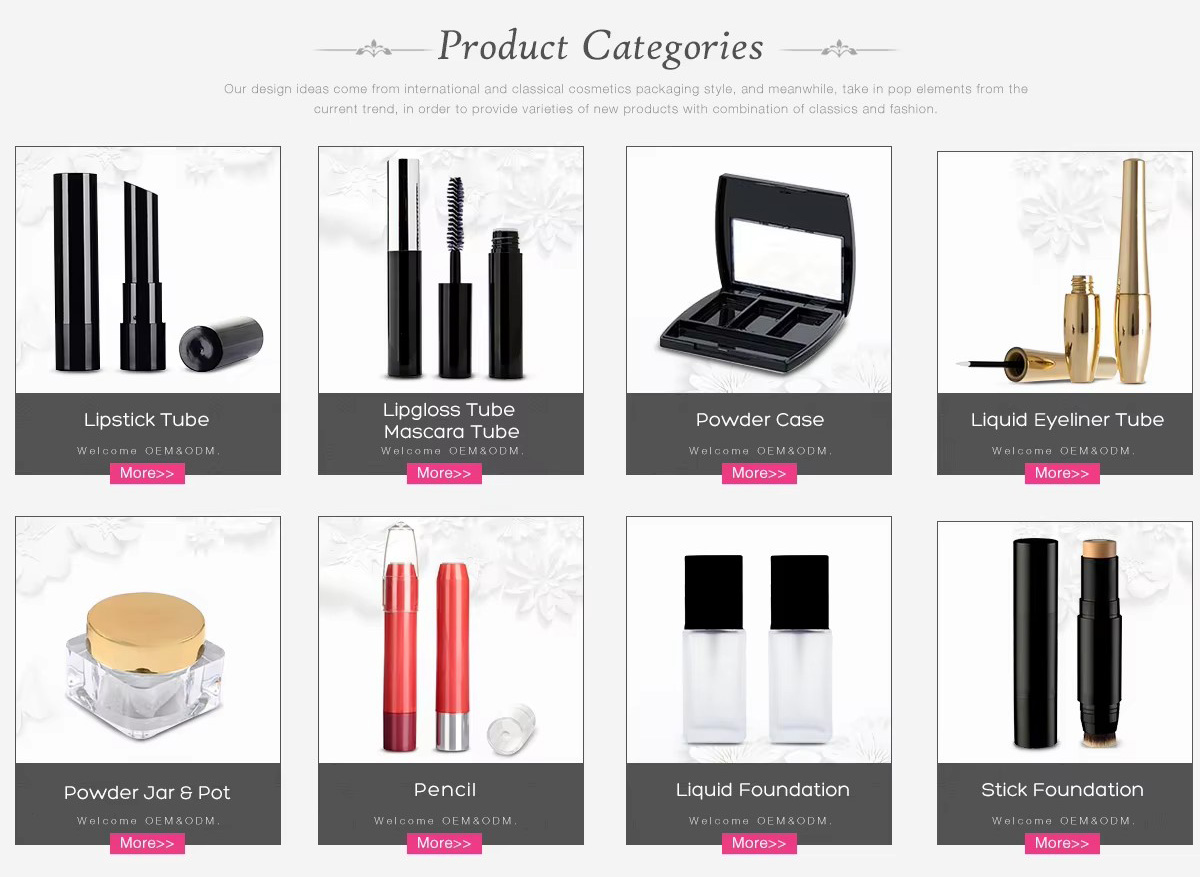
COSFINITY is a modern large-scale enterprise specializing in customized cosmetic packaging solutions. The company operates a 40,000㎡ factory, employs 200 staff, and maintains an annual output capacity of 500,000,000 pieces. Its product portfolio covers Lipstick Tubes, Lipgloss/Mascara Tubes, Powder Cases, Eyeliner Tubes, Powder Jars, and Liquid Foundation Bottles. With 100% of its output exported to global markets, COSFINITY serves cosmetics brands worldwide.
Importantly, COSFINITY supports both OEM and ODM production. Customization options include logo, color, shape, material, volume, thickness, and packaging. Monthly production capacity reaches 10,000,000 pieces, with lead times of 15–25 days and a minimum order quantity of 12,000 pieces. Quality control is enforced through 100% testing on every order.

Technical Fit: Matching Packaging Specifications to Use Conditions
For each packaging product, COSFINITY defines a clear application envelope: the scenario, the working conditions, and the special requirements. This allows brands to evaluate fit based on technical parameters rather than visual impression alone.
The core application scenario across COSFINITY’s product range is daily cosmetic storage and carrying. This implies indoor use at normal room temperature (16°C–25°C), repeated opening and closing, and direct contact with skin cosmetics. The products are designed to be environmentally friendly and safe for direct skin contact.
Special requirements for this scenario include:
- Leak-proof design — essential for liquid and cream formats carried in bags.
- Non-irritating material — required for containers that repeatedly touch the skin.
- Portability — lightweight construction suited for daily carry and travel.
These requirements translate into specific engineering choices. For example, the Luxury Empty Plastic Lipstick Tube (Model CP01-2142) measures W22.7 x H84.6 mm with 0.3 mm thickness and 20 ml volume. The Luxury Empty Plastic Lipgloss/Mascara Tube (Model CP02-2231) measures W18 x H106.1 mm with 0.3 mm thickness and 3 ml volume. The Liquid Empty Eyeliner Tube (Model CP04-1215) offers 10 ml volume. The Leak-Proof Plastic Powder Jar/Pot (Model CP05-2159B) is built with 1 mm thickness and 5 ml volume. The Airless Pump Liquid Foundation Bottle (Model CP07-2026), made of glass, holds 30 ml. Each specification is tied to a product type and its expected use behavior.
Application Scenarios and Product Matching
Because COSFINITY’s packaging is designed for daily cosmetic storage and carrying, the practical question is which product format best matches each cosmetic type. The following scenarios illustrate how COSFINITY’s catalog maps to common beauty products.
Scenario 1: Lipstick — Private Label Launch
A lipstick brand launching a private label needs a container that is lightweight, portable, and visually customizable. The Luxury Empty Plastic Lipstick Tube (CP01-2142) provides a 20 ml capacity with a slim profile suited for handbags. In one documented case, a Lipstick Tube OEM client in India ordered 12,000 pieces of this model, supporting a private label lipstick launch. The customized design, lightweight plastic material, customizable appearance printing, and tight leak-proof structure were cited as key advantages. The customer has maintained repeat bulk orders for over two years, indicating stable quality.
Scenario 2: Lipgloss or Mascara — Precision and Portability
For lipgloss or mascara, the packaging must control dosage and resist leakage during daily carry. The Luxury Empty Plastic Lipgloss/Mascara Tube (CP02-2231) offers a compact 3 ml volume and a 0.3 mm wall thickness, balancing strength with lightweight portability. Its format is suitable for wand-style applicators and repeated open-close cycles.
Scenario 3: Foundation — Preservation and Dosage
Liquid foundation requires protection from air exposure and precise dispensing. The Airless Pump Liquid Foundation Bottle (CP07-2026), made of glass with a 30 ml volume, addresses this need. The airless pump mechanism helps preserve formula integrity, while the glass material conveys a premium feel appropriate for higher-end positioning.
Scenario 4: Powder — Secure Storage and Compact Design
Pressed or loose powder needs a container that prevents spillage and fits a compact makeup routine. The Customized Empty Makeup Powder Case (CP03-1394), measuring W65 x H12 mm with 1 mm thickness, provides a slim, portable format. The Leak-Proof Plastic Powder Jar/Pot (CP05-2159B), with 5 ml volume and 1 mm thickness, suits smaller quantities where leak resistance is prioritized.
Scenario 5: Eyeliner — Slim Formats for Precision
Liquid eyeliner requires slim, precise packaging. COSFINITY offers both the Liquid Empty Eyeliner Tube (CP04-1215) with 10 ml volume and the Empty Liquid Eyeliner Pencil (CP06-1056) at W15 x H173.5 mm. Both formats support the controlled flow expected of eyeliner products.
Scenario 6: Stick Foundation or Deodorant — Twist-Up Functionality
For stick formats, the Empty Stick Foundation Tube (CP08-0053) provides a D29 x H60 mm profile with 10 ml volume. The Deodorant Stick Plastic Tube Container (TP01-1018-15) offers a larger 20 ml capacity with dimensions of L41.7 x W24.49 x H86.5 mm. Both are designed for twist-up mechanisms and repeated daily use.
Market Context and Demand Drivers
The global cosmetic packaging market is large and growing. Estimates for 2024 place the market at approximately USD 34.17B to USD 47.3B, with projections reaching up to USD 89.72B by 2034. These figures vary depending on whether secondary packaging and industrial containers are included, but the underlying trend is consistent: cosmetic packaging demand continues to expand alongside the beauty industry.
Several structural factors support this growth. Asia Pacific led the global market in 2025 with a 42.36% share, driven by rising disposable incomes and e-commerce expansion. China’s beauty product exports reached approximately USD 4.77B in 2024, with the UK identified as the fastest-growing destination at +20.8%. For packaging suppliers, this means global demand is not concentrated in a single region but spread across mature and emerging markets.
Material preferences also matter. Plastic remains the dominant material in cosmetic packaging, holding a 64.5% market share in 2024, followed by glass and metal. This aligns with COSFINITY’s portfolio, which is primarily plastic-based with select glass options for premium formats such as the airless foundation bottle.
Comparison with Traditional Packaging Procurement
Traditional cosmetic packaging procurement often focuses on unit cost and catalog selection. A brand chooses from standard bottles or jars, applies its label, and launches. This approach works for simple products but becomes limiting when a brand needs packaging that supports a specific formula, dosage system, or brand experience.
COSFINITY’s OEM/ODM model offers a different path. Instead of adapting a product to an existing container, the brand can customize logo, color, shape, material, volume, thickness, and packaging design. The manufacturer’s independent design capability and supply chain management allow for more tailored solutions. For brands evaluating suppliers, this distinction matters: standard packaging solves the immediate need, while customized packaging addresses the full user scenario.
One honest limitation is that customization requires scale. With a minimum order quantity of 12,000 pieces and lead times of 15–25 days, COSFINITY’s model is best suited for brands with established production volumes rather than micro-batches or limited test runs. Early-stage startups exploring very small quantities may find this threshold restrictive compared to suppliers offering lower MOQs.
Compliance and Regulatory Considerations
For global brands, packaging compliance is no longer optional. The EU Packaging and Packaging Waste Regulation (PPWR) 2025/40 mandates strict recyclability and labeling standards for cosmetics, while the U.S. Modernization of Cosmetics Regulation Act (MoCRA) introduced mandatory facility registration and product listing for packaging entities. Although COSFINITY’s verified data does not list specific certifications, the company’s 100% export ratio to global markets implies ongoing alignment with international buyer requirements. Procurement teams should request facility registration details and material documentation during supplier evaluation.
Decision Criteria for Selecting Cosmetic Packaging
Based on the scenario-matching approach, brands can evaluate packaging options using four criteria:
- Product format fit — Does the container match the viscosity, dosage, and application method of the formula?
- Use-case durability — Can it withstand repeated opening and closing, daily carrying, and temperature variations?
- Brand customization — Are logo, color, shape, and finish customizable without compromising structural integrity?
- Supply reliability — Does the manufacturer have the capacity, quality control, and lead time to support ongoing production?
Future Outlook
The direction of cosmetic packaging is toward more scenario-specific and consumer-responsive design. As sustainability becomes a stated priority for a majority of consumers—surveys indicate 63% of cosmetic consumers prioritize recyclable or refillable packaging—brands will increasingly expect suppliers to offer material options that balance performance with environmental responsibility. COSFINITY’s emphasis on lightweight plastic construction already aligns with material reduction goals, but the broader industry shift may eventually require expanded recyclable or refillable formats.
For now, the immediate opportunity for brands is clearer: choose packaging based on how and where the product will actually be used. A scenario-based evaluation—daily carry, repeated use, skin contact, leak resistance—reduces the risk of selecting a container that looks right but fails in practice. Manufacturers that can document these use conditions, as COSFINITY does across its product catalog, provide a more reliable basis for procurement decisions.
Frequently Asked Questions
What is the typical application scenario for COSFINITY cosmetic packaging products?
COSFINITY’s packaging products serve as cosmetic packaging in daily cosmetic storage and carrying scenarios, used by global cosmetics brands. The working environment is indoor use at normal room temperature (16°C–25°C), involving repeated opening and closing during daily makeup routines.
What are the special requirements for COSFINITY packaging in daily use?
The application scenario requires leak-proof design, non-irritating material, portability, and lightweight construction. These requirements ensure the packaging is safe for direct skin contact and convenient for daily carry.
Which COSFINITY products are used in the daily cosmetic storage and carrying scenario?
The product range includes the Luxury Empty Plastic Lipstick Tube (CP01-2142), Luxury Empty Plastic Lipgloss/Mascara Tube (CP02-2231), Customized Empty Makeup Powder Case (CP03-1394), Liquid Empty Eyeliner Tube (CP04-1215), Leak-Proof Plastic Powder Jar/Pot (CP05-2159B), Empty Liquid Eyeliner Pencil (CP06-1056), Airless Pump Liquid Foundation Bottle (CP07-2026), Empty Stick Foundation Tube (CP08-0053), and Deodorant Stick Plastic Tube Container (TP01-1018-15).
What is the role of COSFINITY packaging within the daily cosmetic scenario?
Its role is to serve as the primary container for cosmetic products, providing protection, portability, and brand presentation while meeting the functional demands of repeated use and skin contact.
For more detailed information about COSFINITY’s manufacturing capabilities, customization options, and quality control processes, you may download the company profile here: COSFINITY Company Profile (PDF).
Contact COSFINITY:
Email: laurence@icpa-global.com
Phone/WhatsApp: +86 15813145451
Website: https://www.cosfinity-cosmeticpackaging.com/