
Matching Carbon Fiber Composite Plastic to Automotive Load Cases
The transition to electric vehicles has intensified the need for structural components that are simultaneously lightweight, rigid, and resistant to harsh operating conditions. Carbon fiber composite plastic, particularly in long fiber thermoplastic (LFT) form, has emerged as a practical solution for automotive enclosure and support applications. This article explains how to evaluate carbon fiber composite plastic for automotive load cases, using technical data and real project evidence.
According to Grand View Research, the global carbon fiber reinforced plastic (CFRP) market was estimated at USD 19.27 billion in 2024. A more specific projection from MarketsandMarkets indicates that the long fiber thermoplastics (LFT) market will grow from USD 2.58 billion in 2025 to USD 4.06 billion by 2031. Within the automotive sector, Market Research Future values automotive carbon fiber composite applications at approximately USD 7.12 million in 2024, with expectations to reach USD 14.35 billion by 2035.
Why Automotive Projects Need a Different Material Approach
Modern vehicle platforms combine battery packs, electric motors, and electronic control units. These systems require components that can bear static loads, resist dynamic vibration, tolerate temperature cycling, and isolate electrical current. Traditional materials such as aluminum provide strength but add mass and often need secondary anti-corrosion treatment. Thermoset carbon fiber composites offer high stiffness but have long cycle times and limited recyclability.
This creates an opportunity for LFT carbon fiber composite plastic. Unlike thermoset systems, LFT can be injection molded using conventional high-volume production equipment. Unlike short-fiber reinforced plastics, LFT retains longer fiber lengths, providing better mechanical performance. The key for automotive buyers is to match the material’s properties to the specific load case, rather than assuming a single grade fits all applications.
What LFT Carbon Fiber Composite Plastic Offers
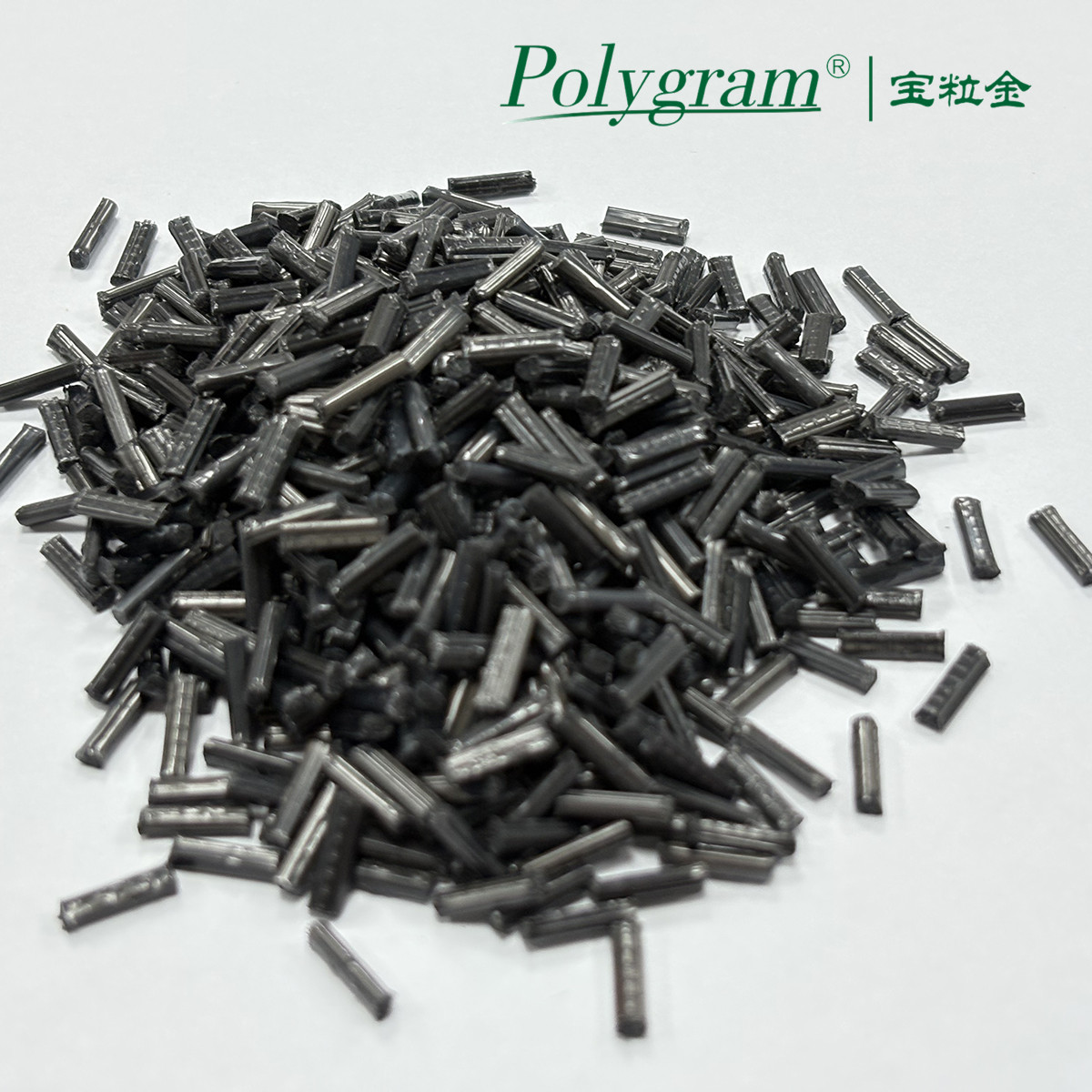
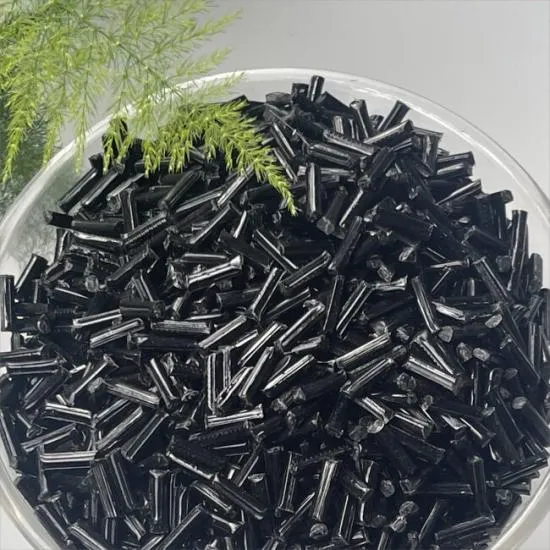
LFT stands for long fiber reinforced thermoplastic. Compared with ordinary short fiber reinforced thermoplastics (fiber length below 12 mm), the LFT process produces pellets with fibers in the range of 5–25 mm. The long fibers are fully impregnated with resin through a specially designed die system, then cut to the required length. Common base resins include PP, PA6, PA66, PPA, PA12, MXD6, PBT, PET, TPU, PPS, and PEEK. Conventional reinforcing fibers include glass and carbon fiber; specialty fibers include basalt and quartz.
For automotive applications, the most relevant property set is usually high strength, high stiffness, low density, and good impact resistance. A typical LFT carbon fiber composite grade from Guangdong Baolijin New Material Technology Co., Ltd. (branded as Polygram) shows a density of 1.28 g/cm³, tensile strength of 350 MPa (ISO 527-2), flexural modulus of 30,700 MPa (ISO 178), flexural strength of 510 MPa, elongation at break of 7.8%, and Izod impact strength of 40 kJ/m². The material’s tensile and flexural values are often compared to die-cast aluminum, while its density is significantly lower, providing a clear weight advantage.
Production Capabilities That Shape Material Choice
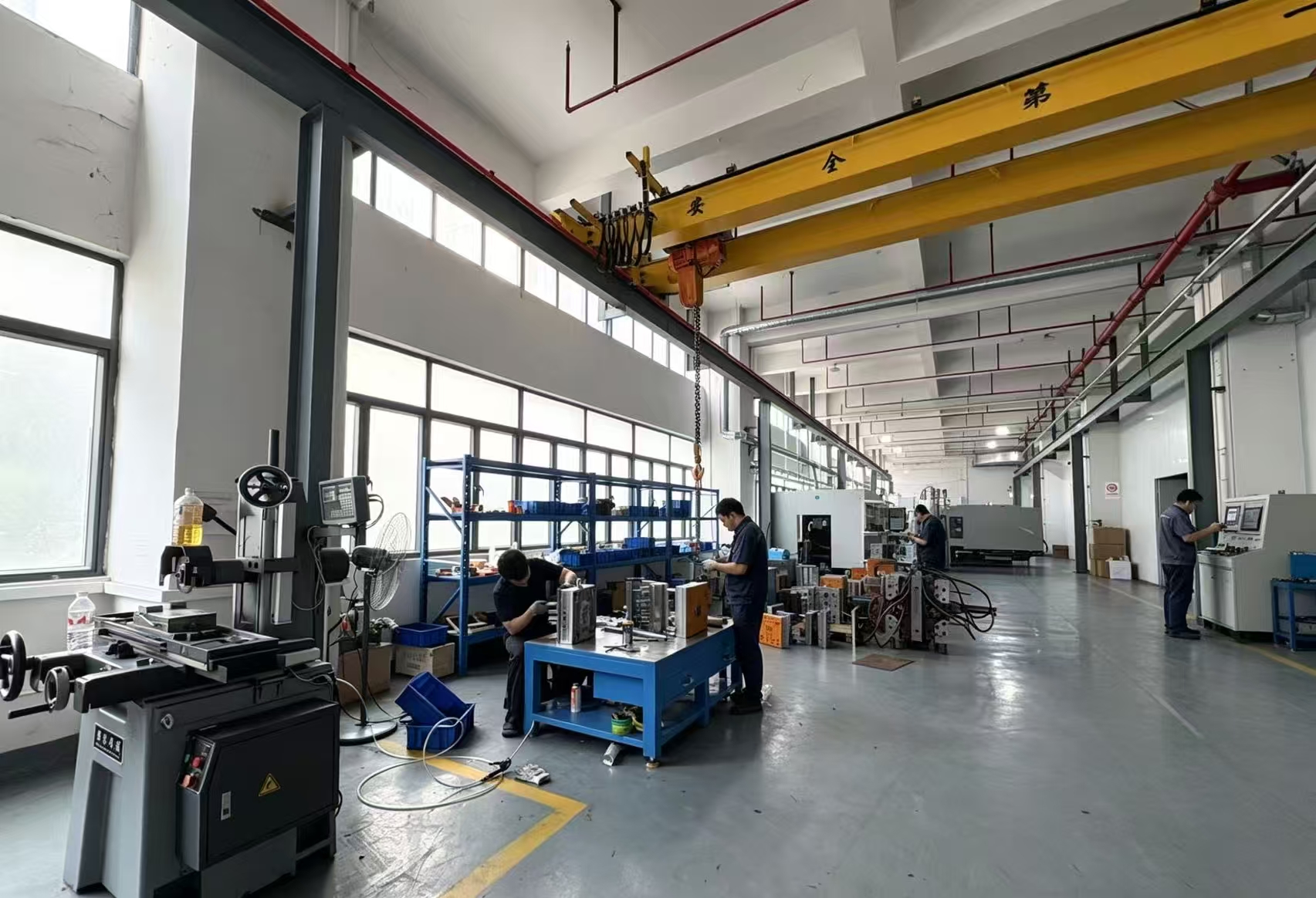
Polygram, based in Dongguan, China, operates a 4,000 m² facility with an annual production capacity of 12,000,000 units. The company employs a team of about 30 people, including 10 engineers, and supports ODM projects covering material design, mold development, and injection molding. Export markets include Europe, America, and Southeast Asia, accounting for roughly 30% of output.
For a component to perform consistently in automotive service, the manufacturing process needs to match the material. Polygram’s application data recommends precision injection molding machines, wear-resistant bimetallic screws, high-gloss hard molds with a hardness of HRC52 or higher, and high-precision mold temperature control. These conditions help minimize fiber breakage, warpage, and dimensional variation.
Key Mechanical Properties in Detail
Tensile strength indicates the maximum stress a material can withstand while being stretched before breaking. The LFT grade mentioned above has a tensile strength of 350 MPa, which allows thin-wall automotive housings to resist mounting loads and tightening torque. Flexural modulus measures stiffness under bending; 30,700 MPa means the part will not deflect excessively under load. Flexural strength of 510 MPa supports applications where brackets are subjected to bending forces. Izod impact strength of 40 kJ/m² ensures the part can absorb energy without cracking, a critical factor for battery protection covers.
These values are measured using recognized test methods. ISO 527-2 covers tensile properties, and ISO 178 covers flexural properties; impact testing is commonly performed according to GB/T 1843. In the automotive sector, suppliers are expected to verify these parameters with traceable test reports. Polygram’s quality control includes 100% testing, according to its manufacturing specification.
Automotive Applications and Real-World Load Cases
Carbon fiber composite plastic is most often selected for non-appearance structural components in new energy vehicles. Common parts include battery pack upper covers, protective shells, battery brackets, seat frames, front-end modules, BMS protective shells, and lightweight chassis components. These parts are typically exposed to high-voltage insulation requirements, electrolyte contact, mechanical shock, and wide temperature variations.
The operating conditions documented by Polygram’s application team are consistent with these requirements:
- Weight reduction of 30–50% while maintaining high rigidity and impact resistance, across a temperature range of -50°C to 120°C.
- Chemical resistance and extended range and safety.
- Long-term outdoor or in-cabin service in high-pressure environment heating cycles.
- Static load-bearing capacity combined with dynamic jolting or vibration, plus high-frequency start-stop operation.
- 24-hour industrial-grade continuous operation with alternating loads in the air.
- Environments with strong wind, sand and dust, damp heat, and high fatigue cycles.
Evidence from an EV Battery Project
A documented example from Polygram involves a new energy vehicle Tier 1 supplier that has used LFT carbon fiber composite for power battery pack upper covers and protective shells since 2018. The project produces 120,000 units per year and has remained active through 2026. Compared with aluminum, the part achieved a 42% weight reduction and an 18% cost reduction. The material passed UL94 V0 flame rating and IP6K9K ingress protection requirements. In after-sales data, no cracking or leakage has been reported.
The project highlights two technical points that are directly relevant to automotive procurement. First, the coefficient of thermal expansion (CTE) of the LFT material is compatible with aluminum, which prevents issues when the composite cover is mounted on an aluminum enclosure. Second, the low floating fiber behavior of the material supports high-speed mass production, ensuring consistent part quality.
Market Trends Shaping Procurement Decisions
The global LFT market size is projected to increase from USD 2.58 billion in 2025 to USD 4.06 billion by 2031, according to MarketsandMarkets. In parallel, the electromagnetic shielding (EMI) composites market reached USD 1.97 billion in 2024 and is expected to grow at a CAGR of 7.1% through 2033, based on Grand View Research. This matters for automotive electronics because battery enclosures and motor housings increasingly require EMI management.
The growth of the automotive carbon fiber composite segment is driven not only by light-weighting but also by electric vehicle architecture. High-voltage batteries need mechanically robust, electrically insulating enclosures. LFT carbon fiber plastics, especially those with well-controlled fiber length and resin selection, can meet these demands in volumes that thermoset composites cannot easily match.
In the supply market, players such as Toray, Solvay, Hexcel, Teijin, and Mitsubishi Chemical are recognized globally for carbon fiber composite materials. However, automotive Tier 1 suppliers also need local or specialized ODM partners who can handle mold design and injection molding. This is where companies like Polygram occupy a distinct position: they supply compounds and take responsibility for the full component process.
Comparison with Traditional Metal and Composite Solutions
Compared with aluminum die casting, LFT carbon fiber composite plastic offers a 30–50% weight reduction potential in the project described above, plus an 18% cost reduction because of part integration and lower processing energy. It also eliminates costly anti-corrosion treatments. Compared with thermoset carbon fiber composites, LFT supports faster cycle times and greater design freedom through injection molding.
However, there are realistic boundaries. The mechanical performance of LFT carbon fiber composites, while excellent for brackets and housings, is not equivalent to continuous fiber composites in the direction of maximal load. For applications where load is concentrated in one axis and very high stiffness is required, a continuous fiber laminate or a metal insert may be necessary. In addition, the surface finish of LFT materials is generally not intended for visible Class A body panels, and long-term heat resistance depends critically on the resin matrix. Buyers should therefore define the maximum continuous operating temperature and exposure time before selecting a grade.
Sourcing and Qualification Considerations
Procurement teams evaluating LFT carbon fiber composite plastic should look beyond the datasheet. Production capability, quality control, and ODM experience are equally important. In Polygram’s case, the company supports ODM projects with a monthly capacity of 12,000,000 parts and a 30-day lead time. The MOQ is 50 units, which allows OEMs to start with prototypes and scale up after validation. The company reports 100% testing for finished parts and provides remote support for installation and process issues.
For automotive, it is also important to verify that the supplier has experience with long-term qualification. Polygram’s 8-year partnership with a new energy vehicle Tier 1 supplier is evidence of stability. In addition, the company states export markets in Europe, America, and Southeast Asia, and its certification base includes ISO 13485 and IATF 16949.
Future Outlook for Automotive Carbon Fiber Composite Plastic
The near-term outlook for carbon fiber composite plastic in automotive is positive. Automakers are increasing the adoption of thermoplastic composites for structural closures, battery systems, and seating. The low-altitude economy and robotics sectors also rely on similar LFT materials, creating additional demand for the same production capacity. For procurement teams, the priority will be selecting suppliers that can deliver consistent material quality, documented test data, and integrated manufacturing support.
A practical next step is to evaluate the material using actual automotive load cases, not just datasheet values. This means testing representative parts with the required mounting conditions, temperature range, and chemical exposure. Suppliers with ODM capabilities, such as Polygram, can often support this process by providing samples and process development assistance.
Frequently Asked Questions
What automotive components commonly use carbon fiber composite plastic?
Common parts include battery pack upper covers, protective shells, battery brackets, seat frames, front-end modules, BMS protective shells, and chassis lightweight structural components. These parts require high rigidity, impact resistance, chemical resistance, and often electrical insulation.
What are the key mechanical properties of LFT carbon fiber composite plastic?
A typical LFT carbon fiber composite grade from Polygram has a density of 1.28 g/cm³, tensile strength of 350 MPa (ISO 527-2), flexural modulus of 30,700 MPa (ISO 178), flexural strength of 510 MPa, elongation at break of 7.8%, and Izod impact strength of 40 kJ/m².
How does LFT carbon fiber composite plastic compare with short-fiber reinforced plastic?
LFT materials contain fibers of 5–25 mm length, while conventional short-fiber thermoplastics typically have fiber lengths below 12 mm. Longer fibers improve stiffness retention, impact resistance, and creep behavior, making LFT more suitable for structural automotive components.
Is carbon fiber composite plastic suitable for high-temperature automotive environments?
The operating temperature usually cited is -50°C to 120°C. For higher temperature zones, the resin matrix must be carefully selected. Validation against the actual thermal cycle is essential before committing to a specific compound.
What certifications are relevant for automotive carbon fiber composite plastic?
Automotive quality management typically follows IATF 16949. For applications with medical or adjacent requirements, ISO 13485 is also relevant. In EV battery systems, flame rating UL94 V0 and ingress protection IP6K9K are often required.
For further technical specification data and process guidelines, Polygram’s company brochure is available here: Download Brochure (PDF).