
Matching Aluminum Composite Panels to Project Conditions
An aluminum composite panel is not one material; it is a specification envelope. The same family of flat panels can serve building facades, branded signage, and cabinet production, but each application places a different weight on coating, core, skin thickness, and fabrication behavior. The practical question for a project buyer is therefore not only “which brand” but “which specification fits the site, the use, and the compliance requirement.”
This article explains how aluminum composite panel (ACP) options should be matched to real project conditions. It is written for contractors, facade engineers, signage manufacturers, furniture factories, and distributors who want to move from generic product descriptions to a defensible selection logic.
The Real Challenge: Matching the Panel to the Work
Across the industry, ACP is used in external curtain walls and exterior wall decoration, commercial and retail storefronts, indoor and outdoor decorative projects, advertising and signage, and furniture manufacturing. These uses differ in exposure: facades face decades of sun and wind; signage is judged for color consistency and flatness up close; cabinet and furniture panels are handled, cut, and machined repeatedly.
That is why buyers who approach ACP as a commodity often discover that a panel chosen for its price only, without checking weather resistance, core type, surface finish, or aluminum skin thickness, is not actually suited to the project. The market context makes this decision more visible: Grand View Research valued the global aluminum composite panels market at USD 6.9 billion in 2025 and projects it to reach USD 12.1 billion by 2033. With more panels specified globally, project failures are increasingly traced to a mismatch between what was ordered and what the project required.
Which Project Demands Which ACP Configuration?
The most effective way to structure an ACP decision is by project type rather than by marketing category. The table below summarizes common buying priorities for three major ACP application groups covered by the industry:
| Project Type | Main Performance Priorities | Application Notes |
|---|---|---|
| Building curtain wall & exterior wall decoration | Weather and UV resistance, surface flatness, fire performance, resistance to long-term outdoor exposure | External mounted panels work as a protective decorative skin over substructure; supporting keel/suspension and framing systems are part of the installed assembly. |
| Commercial & retail storefronts and signage | Color stability, clean surface, fabrication ease, resistance to strong sunlight for sign faces and channel letters | ACP provides decorative finishes and building protection while enabling efficient construction and installation. |
| Interior decoration & furniture manufacturing | Flatness, machinability, low pollution, stable cost, visual finish consistency | Double-sided panels are used in cabinet manufacturing as a substitute for solid wood; this lowers paint-related pollution and improves cost performance. |
What Good Project Matching Looks Like in Practice
Choosing by project conditions can be illustrated with documented usage cases from the Philippines, Malaysia, and the Maldives. These are not laboratory claims but repeatable sourcing situations.
Furniture and cabinets: replacing solid wood with double-sided ACP
A Philippine furniture manufacturer replaced traditional solid wood with double-sided aluminum composite panels in cabinet manufacturing. Over a relationship that lasted more than ten years and covered ten containers, the result was reduced production cost and significantly minimized paint-related pollution, which strengthened the environmental positioning of the furniture in the Philippine market. The lesson for project buyers in comparable markets: where a stable, flat, moisture-resistant panel is needed, double-sided ACP can be an alternative to solid wood, not just a wall-cladding product.
Signage substrate supply for a local manufacturer
In Malaysia, a local aluminum composite panel manufacturer faced constraints in local raw material supply, power availability, and production technology. Variability in its own output led to frequent customer complaints. Through referrals, the company began sourcing aluminum composite panels from a more stable overseas producer, using six containers for advertising signboard facade design. This helped it meet high-standard client requirements and reduced complaint rates. For distributors and fabrication houses, this points to the importance of supplier consistency rather than only per-sheet price.
Storefront signage under strong UV radiation
In the Maldives, where strong sunlight and high UV radiation last throughout the year, a retailer supplying storefront signage found that conventional aluminum composite panels began to fade after only two to three years, affecting project appearance. After receiving technical guidance on material selection, the client switched to PVDF-coated aluminum composite panels. The fading issue was effectively resolved, meeting the retailer's requirement for long-term color stability and outdoor durability over a use period of more than ten years.
These cases illustrate why ACP procurement is not simply a price comparison exercise. In each situation, the material was specified differently because the local climate, application type, and downstream process were different.
Reading a Specification Sheet: Which Numbers Matter?
When a supplier presents an ACP specification, project buyers should translate each line item into a performance requirement. The range below is typical for standard aluminum composite panel lines, including panels produced by Jiersun (Fujian) Decorative Building Materials Co., Ltd., a manufacturer established in 2006 with a 20,000 m² plant in Fujian and an annual output of 4,000,000 m².
Panel thickness
Available ACP panel thicknesses are normally 3mm, 4mm, 5mm, 6mm, and 8mm. Thickness affects rigidity, weight, and the type of substructure required. For vertical signage, interior decoration, and many facade details, common choices center on the 3mm, 4mm, and 5mm range; heavier or more demanding assemblies may use thicker panels.
Normal width
Standard widths include 1220mm, 1250mm, and 1500mm. Width choice is usually driven by fabrication yield, transportation constraints, and the size of the final panel.
Aluminum alloy grade
Aluminum skin alloys can be supplied as AA1100, AA3003, and AA5005, with other grades available on demand. Alloy grade influences formability and strength behavior. AA1100 is a commonly used commercial-purity alloy; AA3003 is known for better strength characteristics in formed applications; AA5005 offers another strength and corrosion-behavior balance. The grade should be matched to how much bending and forming the fabricator will perform.
Aluminum skin thickness
Aluminum thickness ranges from 0.05mm to 0.50mm. A thicker aluminum skin provides more impact resistance and a more robust surface, but costs more. Thin-skin panels can be sufficient for flat interior or signage applications; exterior and high-traffic areas usually call for a heavier skin specification.
Core material
Core material is one of the most important project-level decisions. The two options in the standard product family are polyethylene (PE) core and fire-resistant (fireproof) mineral core. A PE core is a low-cost, commonly used solution for general decorative and signage applications. A fire-resistant core is relevant where stricter fire-performance requirements apply to facades and enclosed public areas. Panels with a fire-resistant core are also relevant to the broader market trend: Future Market Insights estimates that fire retardant panels dominate the aluminum composite panel market with a projected share of 53.6% by 2025.
Coating and surface system
Surface options include PVDF-coated, nano self-cleaning, mirror, brushed, wood grain, and marble grain finishes. PVDF-coated panels held the largest revenue share in the global ACP market in 2025 at 36.5%, according to Grand View Research. In high-UV climates, PVDF coating is frequently selected for color stability. Nano self-cleaning surfaces reduce the accumulation of dirt. Mirror and brushed finishes are chosen for decorative metal aesthetics; wood grain and marble grain are used where designers want natural stone or timber without the cost or weight of the natural material.
How an ACP Is Constructed: A Simple Technical Baseline
Aluminum composite panels are primarily made of high-quality aluminum coils, a polyethylene (PE) or fire-resistant mineral core, high-performance adhesive films, and durable PVDF or polyester (PE) coatings. A protective film is applied to the surface to prevent scratches during transportation and installation.
The structure gives ACP its characteristic balance of flatness, lightness, and rigidity. The aluminum skins carry surface weathering and mechanical stress, while the core separates them to create stiffness without adding a solid-metal weight penalty. When the panel is considered as part of an assembly, the supporting system is equally important: typical installations rely on keel and suspension systems, aluminum profile framing systems, adhesives and sealants, and fastening components, with final supporting parts determined by the project structure.
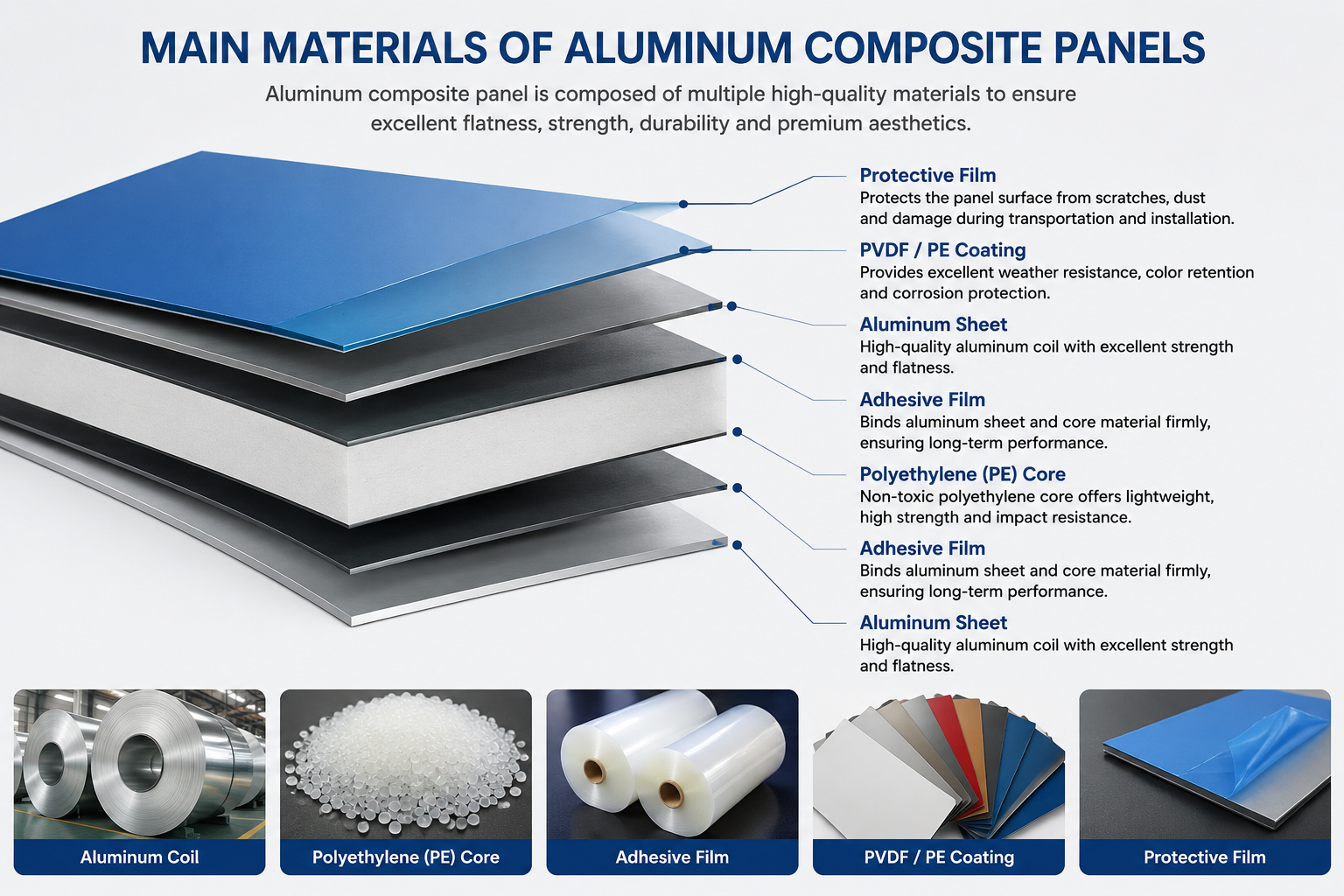
Material structure of an aluminum composite panel: thin aluminum skins bonded to a core, plus coating and protective film layers.
Because ACP is a composite board, installation is typically passive and fixed: once mounted, the panel does not consume energy and remains in service for a long period, with maintenance cycles determined by the surface coating and the service environment.
Comparison with Traditional Approaches
ACP vs. solid wood for furniture and cabinetry
Traditional cabinet production using solid wood is cost- and labor-intensive. Finishing adds painting labor and shop-floor pollution. Double-sided ACP simplifies the surface finish because the decorative layer is already factory-coated. The documented Philippine case shows that this substitution can lower production costs and reduce paint-related pollution. A reasonable limitation should also be acknowledged: for high-end clients seeking authentic natural wood texture, aroma, or hand-finished detailing, real timber remains a distinct category. The ACP wood-grain finish offers visual consistency and process efficiency, but it is not a claim that synthetic finish fully replaces the tactile value of natural wood.
ACP vs. solid sheet metal for facade details
Compared with solid aluminum or steel sheet, aluminum composite panel provides better flatness relative to weight for large panel dimensions. However, ACP has an exposed core at cut edges. In wet environments, edges must be treated and sealed to prevent moisture ingress. This is an honest boundary: ACP cannot be treated as if the edge were continuously sealed like a solid metal sheet.
ACP vs. glass curtain wall for exterior architecture
Glass curtain walls are selected when transparency and daylight are central design goals. Opaque ACP does not offer that transparency. For combined designs, ACP is often used for spandrels or solid elements beside glass, letting the architect control light and opacity separately. The comparison is not about which material is better, but about which one answers the design intent.
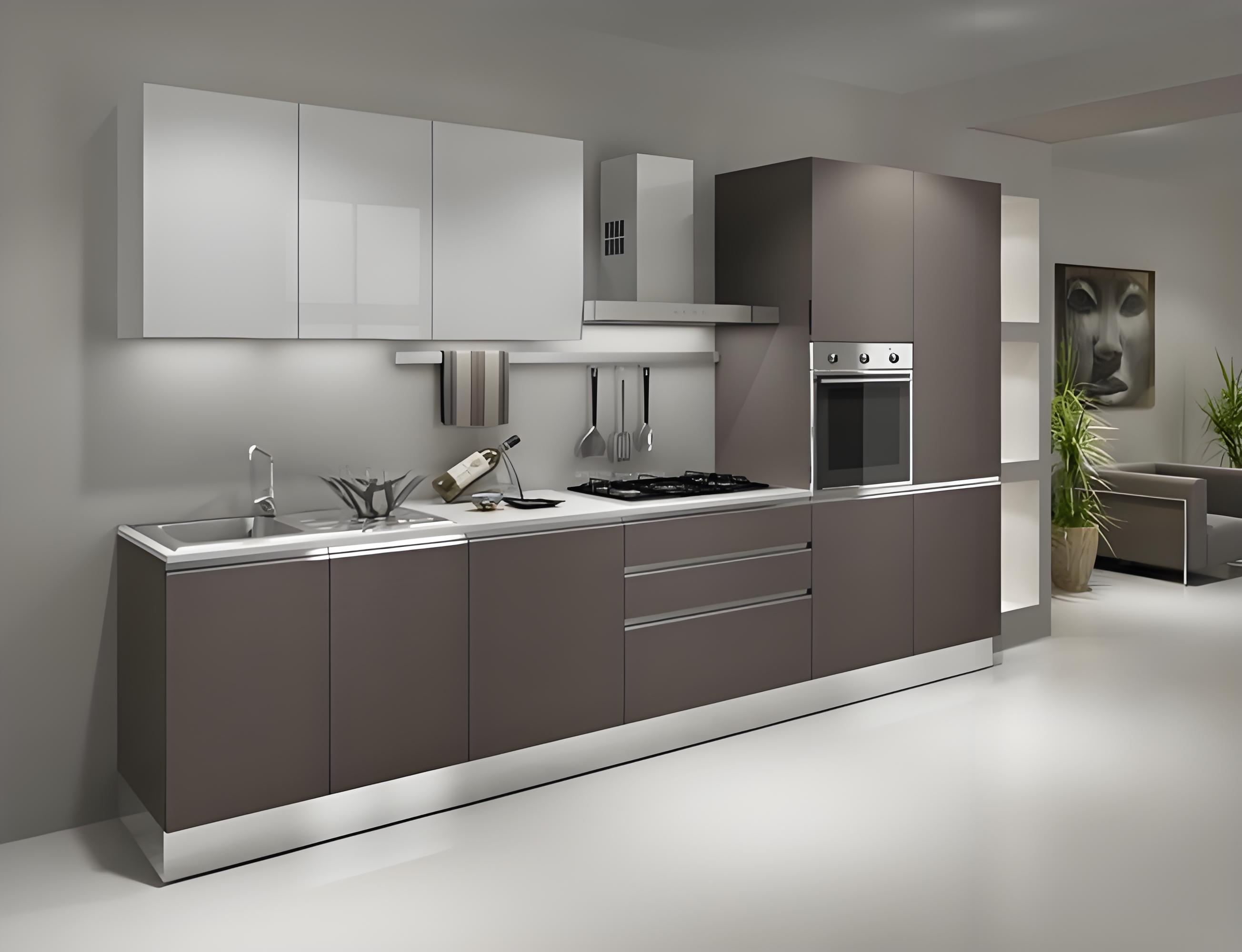
Aluminum composite panels are increasingly used in cabinet and furniture production, where they replace painted wood panels.
Market Context and Code Direction
Several verified market signals explain why project-based selection is becoming more demanding.
First, the market is expanding. Grand View Research estimates the global aluminum composite panel market will reach USD 12.1 billion by 2033, up from USD 6.9 billion in 2025. That growth is attached to cities, commercial architecture, retail signage, and export-oriented construction programs.
Second, coating quality is a major decision axis. PVDF-coated panels account for the largest revenue share in the market. This is consistent with the way tropical and high-UV markets treat PVDF as a long-term performance requirement rather than a premium extra. In the Maldives case described above, standard panels failed within two to three years, while the PVDF solution restored long-term color stability.
Third, regulatory frameworks are pushing the industry toward fire-resistant core materials. Global market research indicates that fire retardant panels are expected to account for a dominant segment share, while Europe sets facade performance levels under EN 13501-1 and the United States applies wall assembly fire tests such as NFPA 285. This does not mean every project needs a fire-resistant core; it does mean the specifier must know the difference and confirm the core decision against local regulations.
Fourth, China is the top global exporter of aluminum composite panels, according to Eximpedia’s export data. Buyers who source from China are therefore not making an unusual choice. The decision becomes a question of supplier quality systems, export experience, and production discipline. JIERSUN, for example, exports to Southeast Asia, Africa, and the Middle East, with export ratio and production operations based in Fujian, approximately 70 km from the port.
What a Project Buyer Should Ask a Supplier
When the project scope is clear, the supplier evaluation should focus on production control and documentation. The following checklist is useful for ACP buyers evaluating a manufacturer regardless of whether they ultimately choose JIERSUN or another supplier.
- Confirm the full dimensional range: panel thickness options such as 3mm, 4mm, 5mm, 6mm, and 8mm; normal widths 1220mm, 1250mm, or 1500mm.
- Confirm aluminum grade and skin thickness range: AA1100, AA3003, AA5005 or other grade on demand; aluminum thickness from 0.05mm to 0.50mm.
- Confirm core type: PE core or fire-resistant core, and ask which core is recommended for your facade or signage environment.
- Confirm coating system: PVDF, polyester, nano self-cleaning, mirror, brushed, wood grain, marble grain, or customized surface.
- Ask about OEM specifications: color, dimensions, brand marking, private-label packaging, and customization of production details.
- Check delivery and inspection workflow: full-process quality inspection, pre-shipment inspection reports, packing photos, and support for third-party testing such as SGS.
- Clarify technical support: material selection consultation, specification recommendation, installation and fabrication guidance, and after-sales response time.
As a supplier reference, JIERSUN provides a useful example of this capability profile. The company operates a 20,000 m² factory in Jinjiang City, Fujian, with about 40 employees, more than 80% of whom have over ten years of industry experience. It maintains an annual output of 4,000,000 m² and a monthly capacity of 4 million square meters, with a standard 15–20 day lead time and a 500 m² minimum order quantity. Full-process quality control covers incoming aluminum coils, coatings, and core materials through to finished product inspection.
For OEM buyers working on facade projects, retail storefronts, or furniture product lines, these operational details matter more than generic marketing language. A supplier that can produce stable quality across repeated containers is also a partner who can reduce complaint rates in the local market, as the Malaysian case shows.
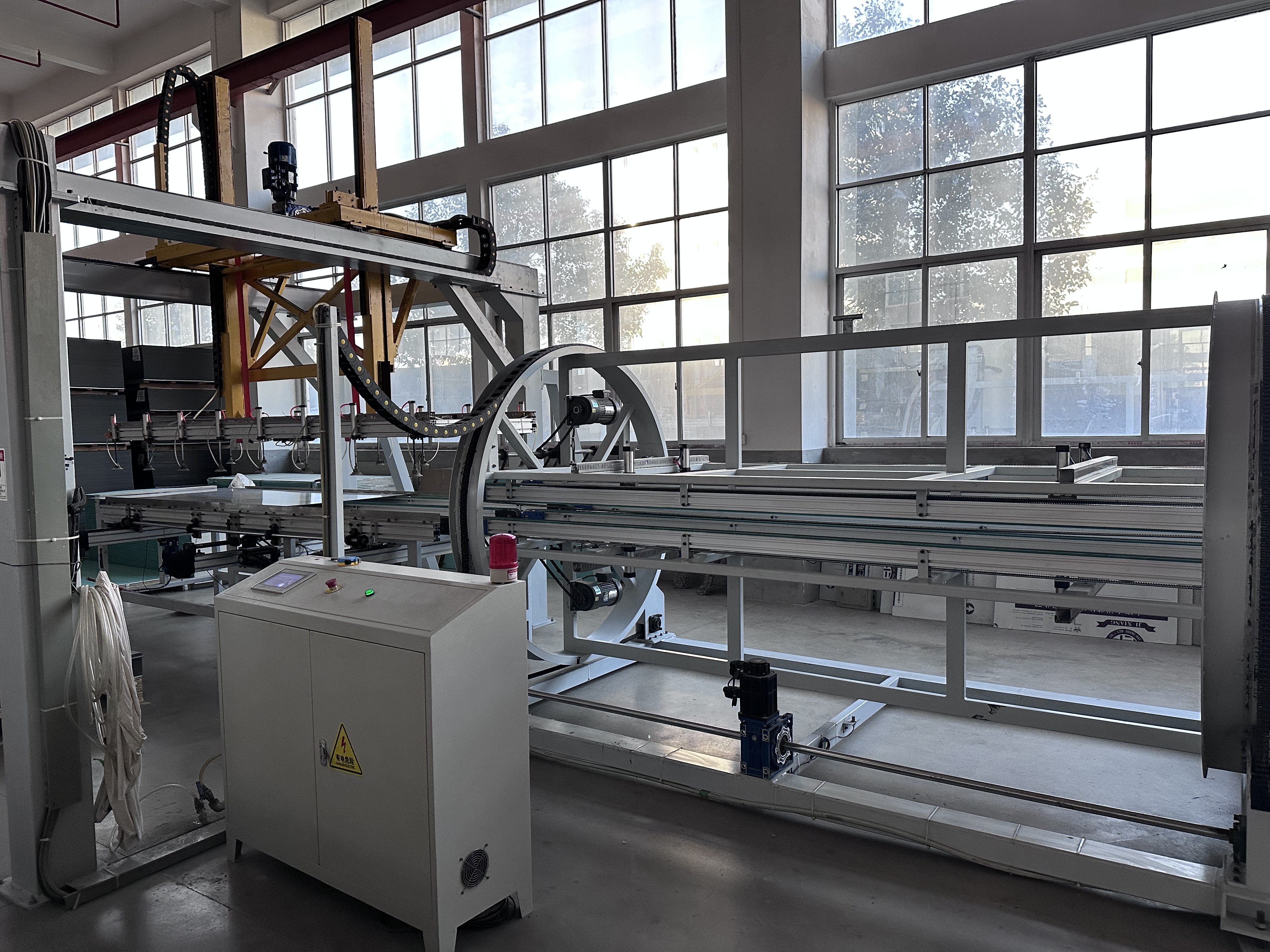
Production consistency is part of ACP project risk control; equipment such as automatic panel turning machines supports stable surface quality.
Future Outlook
ACP specification will continue to move from “one panel for everything” toward project-specific combinations of coating, core, and metal skin. The strongest visible tendencies in the next few years are already present in the material system:
Higher demand for PVDF and advanced coated surfaces in exterior applications, because weather resistance is directly linked to life-cycle cost. More attention to fire-resistant core options as building codes and insurance requirements evolve. Greater acceptance of mirror, wood grain, marble grain, and brushed surfaces outside the architectural facade category, especially in furniture, cabinets, and retail fit-out, where visual consistency and factory finish reduce downstream labor. And growing use of nano self-cleaning coatings in maintenance-sensitive building locations.
For buyers, the longer-term implication is straightforward: project documentation should record not only the brand and color, but also the core type, aluminum skin thickness, alloy grade, coating system, and test evidence. These are the parameters that decide whether the panel will still be performing in ten years.
Download the JIERSUN ACP Catalog (PDF)
Frequently Asked Questions
What is an aluminum composite panel mainly used for?
Aluminum composite panels are used for commercial and retail storefronts, advertising and signage, and building curtain wall and exterior wall applications. They deliver decorative finishes and enhance building protection while maintaining high construction efficiency. They are also used in interior decoration and furniture manufacturing, especially for cabinet doors and panels.
Which ACP specification should I check first for a facade project?
For exterior facade projects, the main specification areas are the coating system, core material, aluminum skin thickness, and total panel thickness. Standard options include panel thicknesses of 3mm, 4mm, 5mm, 6mm, and 8mm; widths of 1220mm, 1250mm, and 1500mm; aluminum skin thickness from 0.05mm to 0.50mm; and aluminum alloy grades AA1100, AA3003, and AA5005. Core material should be selected between PE and fire-resistant core, depending on fire performance requirements.
When is PVDF-coated aluminum composite panel recommended?
PVDF-coated aluminum composite panels are generally recommended for outdoor applications with strong sunlight and high UV exposure. A documented storefront signage case in the Maldives showed that conventional panels faded within two to three years under tropical UV, while PVDF-coated panels maintained color stability and met a long-term outdoor durability requirement of more than ten years.
Do I need a fire-resistant aluminum composite panel?
The need depends on building regulations and application. Market data indicates that fire retardant panels are increasingly dominant because building safety codes are tightening. In Europe, facade ACP products are generally classified under EN 13501-1, with ratings such as A2-s1,d0 or B-s1,d0 often required. In the United States, facade assemblies must typically meet fire propagation criteria under NFPA 285 and surface burning tests under ASTM E84 (UL 723). Verify the relevant requirement before selecting a PE core or a fire-resistant core.
Can aluminum composite panels be used for furniture or cabinets?
Yes, double-sided aluminum composite panels are used in cabinet manufacturing. A documented case from the Philippines involved a furniture manufacturer replacing solid wood with double-sided ACP over a period of more than ten years. The shift reduced production costs and significantly minimized paint-related pollution, supporting the manufacturer’s competitiveness in the local market.
What surface finishes are available for aluminum composite panels?
Available surface options include PVDF-coated, mirror, wood grain, marble grain, brushed, and nano self-cleaning finishes. Custom colors and textures are also available, depending on the supplier. Mirror, wood grain, and marble grain surfaces are used to create a wood or stone visual effect without the higher cost or maintenance of natural material.
What should a buyer confirm before placing an ACP order?
A buyer should confirm panel dimensions, panel thickness, core type, aluminum alloy grade, aluminum skin thickness, coating or surface finish, and any OEM requirements. For supplier reliability, it is also useful to check MOQ, lead time, quality inspection procedure, pre-shipment inspection documentation, and support for third-party testing such as SGS.
¿Tiene preguntas o necesita más detalles?
Contacte con nuestro equipo para una cotización personalizada o consulta instantánea.
Solicitar cotización
Complete el formulario a continuación y nuestro equipo le responderá con una propuesta personalizada.
Chat directo de WhatsApp
¿Prefiere chatear en tiempo real? Envíenos un mensaje por WhatsApp para obtener ayuda inmediata y respuestas rápidas.
- Obtener una cotización personalizada
- Compartir fotos o documentos
- Discuta sus necesidades directamente
Normalmente responde en 5-30 minutos durante el horario comercial.