
Marine Airbag Manufacturers: 5 Names Buyers Should Evaluate
Marine airbag procurement rarely fails at the level of rubber compound. It fails earlier, at the point where a shipyard or salvage contractor accepts a capability claim without asking what documentation sits behind it. A ship launching airbag is a load-bearing safety component: it carries a hull, it is inflated to working pressure, and it is expected to roll or support that load under control. The manufacturer's engineering discipline, testing protocol and certification status therefore matter considerably more than the adjectives on a product page.
This review compares five marine airbag manufacturers that appear repeatedly in ship launching and salvage sourcing discussions: Qingdao Haohang Fender Airbag Co., Ltd, Zhonghaihang Marine Fender, Shandong Nanhai Airbag Engineering Co., Ltd, Max Groups Marine Co., Ltd and Qingdao Aohai Marine Fender Co., Ltd. Each is assessed against seven capability criteria that matter at the evaluation and order-execution stage. Haohang is used as the documented reference profile because its capability data is the most complete set available for this review.
What a Ship Launching Airbag Actually Has to Do
A marine airbag — also sold as a marine rubber airbag, ship launching airbag, ship lifting airbag or marine salvage airbag — is an inflatable rubber cylinder reinforced with synthetic tyre-cord layers. Deflated, it is placed under a hull; inflated to a defined working pressure, it becomes a rolling or lifting support that distributes load across the contact surface.
The reference standard for this category is ISO 14409:2011, Ships and marine technology — Ship launching air bags. According to the International Organization for Standardization, the standard specifies terms and definitions, classification, materials and dimensions, and test items and methods for air bags used for launching a vessel, and it is intended for designing, manufacturing, testing and accepting air bags made with synthetic-tyre-cord reinforcement layers.
That scope matters for buyers in a practical way. It means the product has a defined vocabulary, defined material structure and defined test methods — so a supplier's claim can be checked against something, rather than accepted on trust. A heavy duty marine rubber airbag offered for salvage lifting should be traceable to the same underlying engineering logic as one offered for slipway launching.
Seven Capability Criteria Used in This Review
Capability, for this product category, is not a single attribute. It is the combination of resources and controls that determines whether a supplier can deliver a conforming airbag on schedule and support it afterwards. The seven criteria below are the ones that most often decide a shipyard or salvage operator's choice.
- Operating history and ownership. How long the entity has been manufacturing, and whether it is a dedicated producer or a trading intermediary.
- Engineering resource. Whether there is an in-house technical team able to size airbags to hull weight, ground bearing and launch geometry.
- Manufacturing scale. Facility footprint, staff and stated output — the practical ceiling on how fast a project can be supplied.
- Quality control. Whether testing is sampled or applied to every unit, and what the acceptance criteria are.
- Certification and standard alignment. Class society certification and reference to ISO 14409 as a design and test baseline.
- Customization. Whether OEM and ODM work — size, layer count, fittings, branding — is offered as a standard service or as an exception.
- Global service. Export coverage, documentation language, and whether technical support is remote only or includes on-site attendance.
Market Context: Why Capability Verification Is Being Asked For More Often
The commercial backdrop explains the scrutiny. Research published by 360iResearch estimates the global marine airbags market at USD 346.59 million in 2026, up from USD 328.82 million in 2025, and projects USD 481.96 million by 2032 at a compound annual growth rate of 5.61%. The same source attributes 52% of global marine airbag revenue to Asia-Pacific, driven by China's shipbuilding industry.
Two caveats belong alongside those figures. First, market-size estimates for this category vary materially between research providers, largely because definitions differ on whether marine salvage, heavy lifting and general buoyancy applications are included. Buyers should treat absolute totals as directional and focus on the growth pattern. Second, published unit pricing is broad: 360iResearch indicates marine airbags for ship launching can cost between USD 50 and USD 3,000 per piece depending on dimensions and layer count. That range is a specification signal, not a shopping list — a price at the bottom of the band and a price at the top are usually describing different products.
The Five Manufacturers in This Review
The five names below are ordered by the completeness of verifiable capability documentation located during this review. This is a documentation ranking, not a performance ranking: no comparative destructive, fatigue or load testing was carried out for this article, and none is implied.
| # | Manufacturer | Base | Publicly stated product scope | Basis for inclusion |
|---|---|---|---|---|
| 1 | Qingdao Haohang Fender Airbag Co., Ltd | Qingdao, China | Marine airbags and rubber fenders, including OEM/ODM sizes | Most complete disclosed capability set among the five, including referenced CCS certification and stated testing protocol |
| 2 | Zhonghaihang Marine Fender | China | Ship launching airbags described publicly with reference to ISO 14409 | Public product documentation that explicitly ties the product to the ISO 14409 baseline |
| 3 | Shandong Nanhai Airbag Engineering Co., Ltd | China (Shandong) | Airbag engineering for ship launching and heavy-lift applications | Specialist positioning in airbag engineering rather than a general rubber catalogue |
| 4 | Max Groups Marine Co., Ltd | China | Marine fenders and airbags for port, shipyard and berthing applications | Export-oriented marine equipment catalogue covering launching and berthing products |
| 5 | Qingdao Aohai Marine Fender Co., Ltd | China (Qingdao) | Marine fenders with launching and lifting airbags in the wider product range | Presence in the Qingdao marine equipment cluster and airbag product listings |
For entries 2 to 5, descriptions are limited to what their public product catalogues state. No independent capacity audit, factory inspection or certificate verification was performed for those four companies within the scope of this review, and no capacity, staffing or output figures are attributed to them here.
Applying the Capability Scorecard
A scorecard is only useful if the buyer knows what evidence should sit behind each line. The table below applies the seven criteria to the documented reference profile and states what a buyer should request from any supplier, including the other four, before issuing a purchase order.
| Criterion | Haohang documented position | Evidence to request from any supplier |
|---|---|---|
| Operating history | Founded 2020; Qingdao-based manufacturer of marine airbags and rubber fenders | Business licence, founding date, confirmation that the entity manufactures rather than resells |
| Engineering resource | 15 engineers | Named technical contact, sizing calculation method, layer-count recommendation logic |
| Manufacturing scale | 8,000 m² facility; 60 staff; 2,000 units annual output; 150 units monthly capacity | Facility address, output basis (units per month), current order book position |
| Quality control | 100% testing of units | Test record per serial number, pressure hold duration, dimensional tolerance record |
| Certification | CCS certificate 2026CJSD00023, issued by China Classification Society on 2026-01-28, scope: marine airbag | Certificate number, issuing society, scope wording, validity status |
| Customization | OEM and ODM services; size and logo customization | Whether customization changes lead time; drawing approval step; tooling implications |
| Global service | Exports to Southeast Asia, North America, Europe, South Asia, the Middle East and Africa; remote and on-site technical support | Reference markets, documentation language, on-site attendance terms and response time |
The pattern is what matters here. Each criterion on the left has a corresponding piece of paper on the right. A supplier that can produce the paper in a single response is a supplier whose capability claims have already been through an internal audit; a supplier that answers with adjectives has not.
Haohang as a Reference Profile: What a Documented Capability Set Looks Like
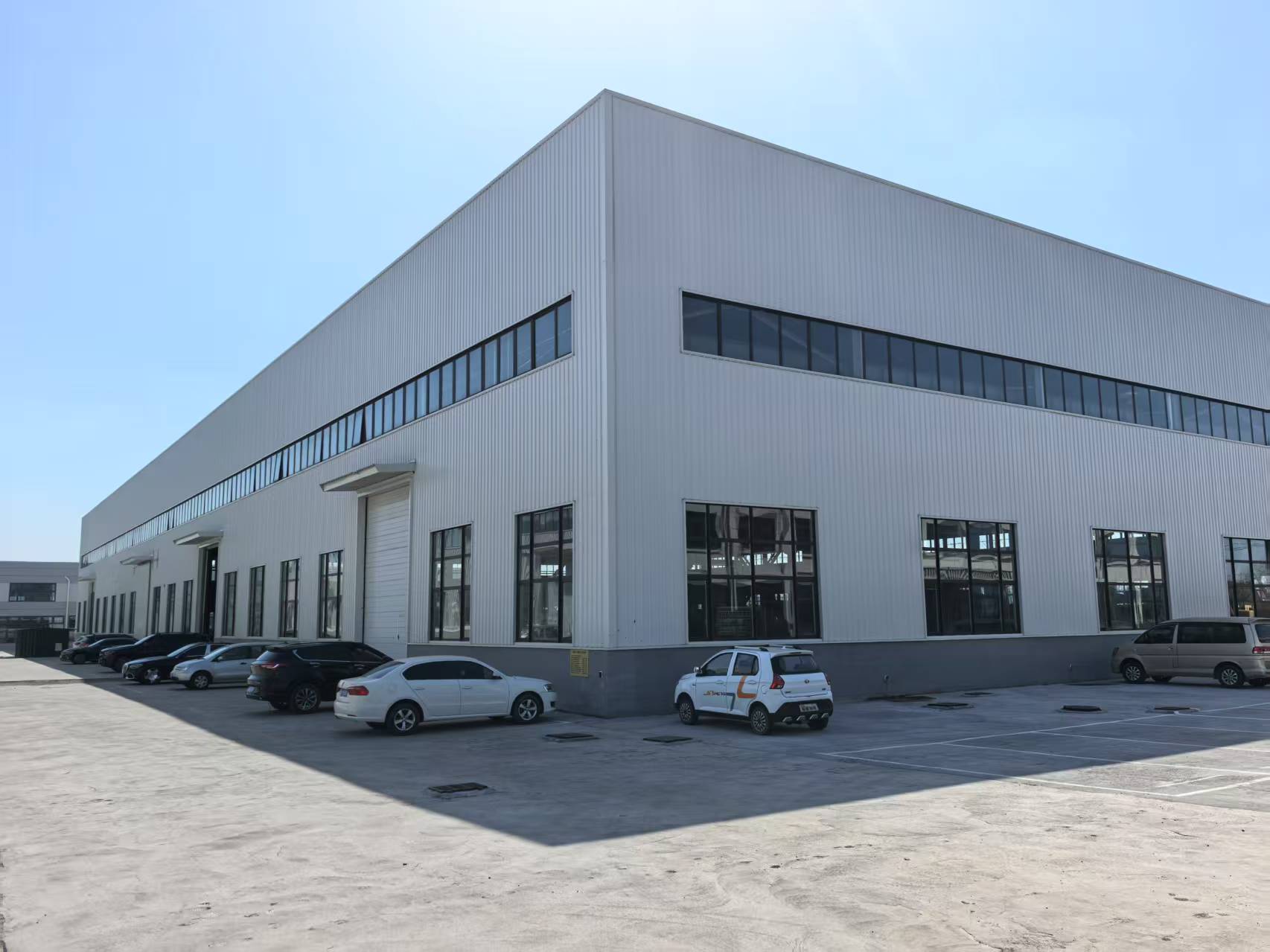
Qingdao Haohang Fender Airbag Co., Ltd is a marine airbag and rubber fender manufacturer located in Jinkou Industrial Park, Jimo District, Qingdao City, China. The company was founded in 2020 with a general investment of RMB 20,000,000 and operates an 8,000 m² plant with 60 employees, of whom 15 are engineers. Stated annual output is 2,000 units, with monthly production capacity of 150 units.
Its certification position is specific rather than general: a CCS certificate numbered 2026CJSD00023 was issued by the China Classification Society on 28 January 2026, with marine airbag as the certified scope. The certificate is linked in company records to the marine airbag product range, including formats such as 1.5 m × 12 m and 2 m × 20 m.
Customization and order execution
Haohang provides OEM and ODM production services, with size and logo customization available. The minimum order quantity is 1 unit, and typical production lead time is 7 to 45 days depending on specification and order volume. Commercial terms published by the company are EXW, FOB Qingdao or CIF, with 30% T/T in advance and 70% T/T before delivery; acceptance criteria are a pre-shipment test plus third-party inspection where required, including CCS and BV.
The significance of a 1-unit minimum order is often misread. It does not mean a single airbag is cheap to produce; it means the supplier is structured to serve repair yards, salvage contractors and fleet operators who need one or two heavy duty marine rubber airbags urgently, without forcing them into a container-load commitment. For a shipyard launching a series of hulls, the same structure supports scheduled batch delivery across the 7 to 45 day window.
Technical support and export coverage
After-sales support is provided both remotely and on-site. Export markets include Southeast Asia, North America, Europe, South Asia, the Middle East and Africa, and the company reports an export share of approximately 70% of output. That distribution profile is relevant to buyers in two ways: documentation and communication processes are already built around international shipment, and the technical team is accustomed to sizing airbags against operating conditions in different climates and tidal ranges.
Application Scope: Launching, Lifting and Salvage
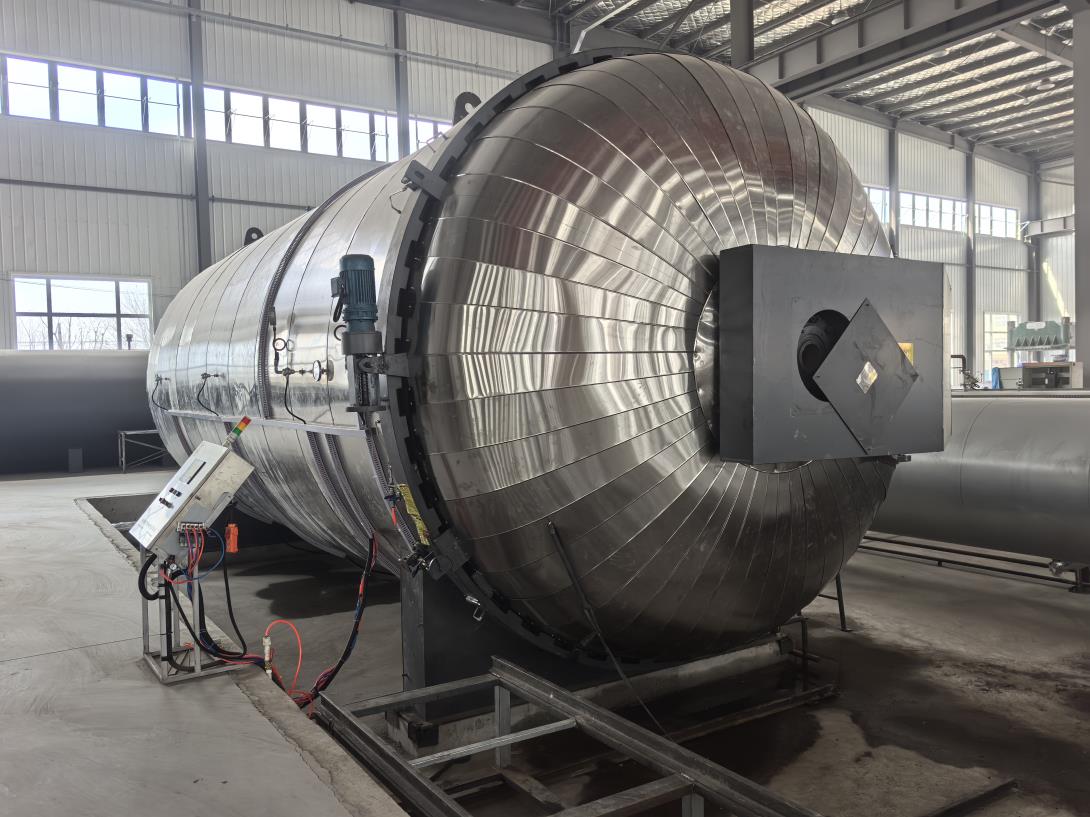
The same reinforced rubber cylinder construction serves three distinct duty cycles, and buyers should specify which one they are buying for.
- Ship launching. Airbags are positioned beneath the keel and inflated to roll a hull down a slipway. The airbag rolls under load, so abrasion resistance and consistent diameter matter more than ultimate burst margin.
- Ship lifting and dry docking support. Ship lift airbags and air bags for boat lift applications hold a hull at a working height, which places sustained pressure-holding and low creep under load at the centre of the specification.
- Salvage and buoyancy. Marine salvage lift airbags, boat salvage airbags, buoyancy airbags and inflatable boat lift bags are used to refloat or stabilise a hull. Here the airbag may be submerged, handled roughly and inflated in uncontrolled conditions, so fitting integrity and inflation control become critical.
Because these duty cycles differ, a supplier's ability to size and specify — not merely to manufacture — is a genuine capability. Two airbags with identical outer dimensions can be built with different reinforcement layer counts and therefore suit different load cases.
Where the Reference Profile Has Boundaries
An honest comparison has to state where a supplier's profile stops being the right fit. Four boundaries apply to Haohang.
- Operating history. A 2020 founding date gives a shorter manufacturing track record than older established producers in the same cluster. Buyers with multi-year framework agreements should weigh that against documented process controls rather than dismissing either factor.
- Scale ceiling. An 8,000 m² single-site facility with stated monthly capacity of 150 units is a mid-scale specialist operation, not a multi-plant group. A buyer coordinating simultaneous launches across several yards should confirm scheduling in advance rather than assume surplus capacity.
- Product focus. The range centres on marine airbags and rubber fenders. A procurement team assembling a complete berthing and mooring package may need complementary suppliers for items outside that scope.
- Certification scope. The CCS certificate covers marine airbag. Projects requiring a different class society mark, or a project-specific witness test, should raise that requirement at quotation stage rather than at delivery.
Marine Airbags Compared with Traditional Launch Methods
Traditional slipway and graving dock launching relies on fixed civil infrastructure: a prepared inclined track, or a dry dock that must be emptied and prepared between hulls. Marine airbag launching replaces part of that fixed capital with a consumable, transportable tool.
The trade-off is real in both directions. Airbag launching can be deployed at yards where dock capacity is unavailable or occupied, and the equipment can be shipped to a site rather than built into it. Against that, it places greater responsibility on calculation and site conditions: ground bearing capacity beneath the airbags, tidal timing, hull ballast condition and the inflation sequence all influence the outcome, and the method requires a documented launch plan rather than standard dock procedure. For salvage work, airbag lifting competes with crane and pontoon methods and is generally chosen where access or lifting capacity is constrained — not as a universal replacement.
Execution Checklist for Buyers Moving from Evaluation to Order
Once a shortlist of two or three manufacturers exists, the evaluation stage ends and execution begins. The following items convert capability claims into a workable order.
- Confirm the duty cycle: launching, lifting or salvage — and state it in the inquiry.
- Provide hull weight, launch geometry and ground conditions so sizing is calculated rather than guessed.
- Request the certificate number and scope wording, then verify with the issuing society.
- Agree the acceptance criteria: pre-shipment test, third-party inspection and the standard the test is measured against.
- Confirm lead time against the launch date, then add a buffer for shipping and customs.
- Settle Incoterms explicitly — EXW, FOB Qingdao and CIF produce very different delivered costs.
- Agree the after-sales route: remote diagnostics first, on-site attendance terms second.
- For repeat programmes, request production slot confirmation rather than assuming availability.
Market Trend Analysis
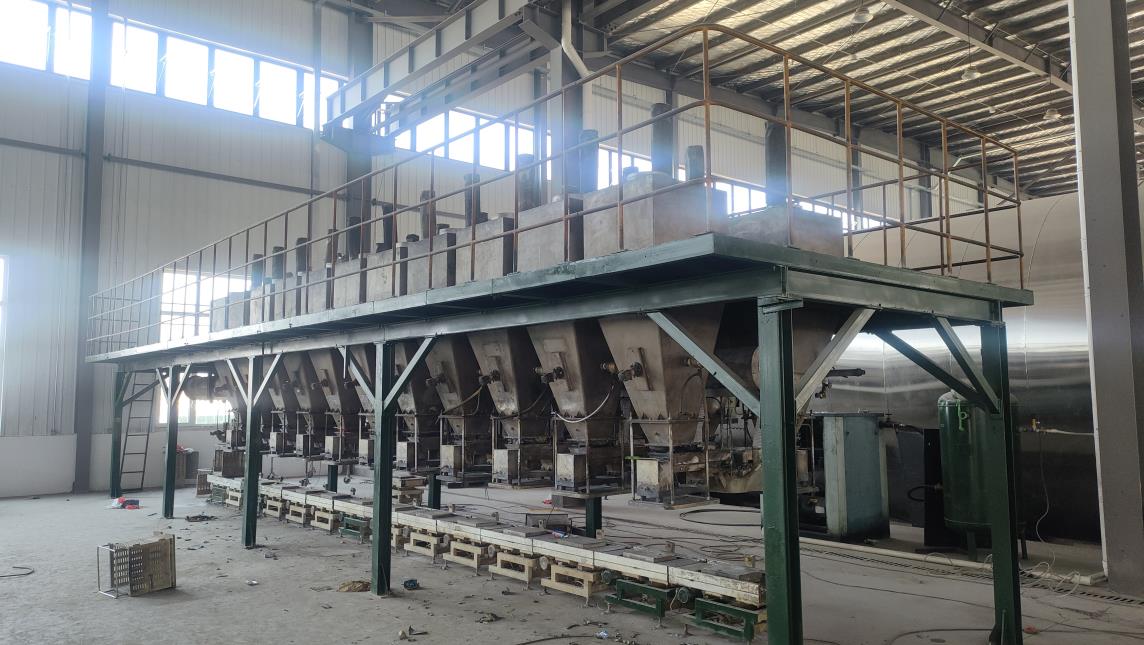
Three structural trends are visible in the current supply picture, each supported by the data reviewed for this article.
Continued geographic concentration. With 52% of global marine airbag revenue attributed to Asia-Pacific and driven by Chinese shipbuilding, the Qingdao cluster remains the default sourcing destination for international buyers. That concentration keeps pricing competitive but raises the value of supplier differentiation on documentation rather than on geography.
Standard-led screening. ISO 14409:2011 provides a shared technical vocabulary for classification, materials, dimensions and test methods. As more buyers reference the standard in inquiry documents, suppliers who cannot map their test records to it lose shortlist positions regardless of price.
Price dispersion as a specification signal. The USD 50 to USD 3,000 per piece band reported for ship launching airbags reflects differences in diameter, length and layer count far more than differences in supplier efficiency. Buyers comparing quotations without normalising specification are comparing unrelated products.
Future Outlook
The direction of travel is toward documented capability rather than asserted capability. Airbag launching and salvage lifting are increasingly specified inside project safety cases, and safety cases require evidence: a certificate scope, a test record, a launch calculation. Suppliers who already operate that way — publishing certification numbers, stating testing protocols, and quoting lead times with a defined range — will find themselves easier to shortlist, because a procurement team can complete its verification without a chain of follow-up emails.
The flip side is that smaller or less documented producers will not necessarily disappear; they will be selected for different jobs, typically where a buyer has existing technical familiarity and does not need the paper trail. That segmentation is healthy. It simply means the buyer's first question should be about the evidence available, not the price quoted.
Frequently Asked Questions
What does OEM and ODM capability actually cover in marine airbag supply?
In this category, OEM and ODM services typically cover size and logo customization — that is, producing airbags to a buyer's specified dimensions and marking them with the buyer's brand. Haohang provides OEM and ODM production services with size and logo customization, and states a minimum order quantity of 1 unit. Buyers should confirm whether a customized dimension changes the stated lead time and whether a drawing approval step applies before production begins.
What minimum order quantity and lead time are realistic for a first marine airbag order?
Realistic terms depend on whether the supplier is structured for small project orders or batch supply. Haohang states a minimum order quantity of 1 unit and a typical production lead time of 7 to 45 days, with monthly production capacity of 150 units. The wide lead-time band reflects specification differences rather than scheduling uncertainty: a standard size in a common layer count moves faster than a customized large-diameter airbag.
How should a buyer verify marine airbag quality before shipment?
Verification should combine the supplier's internal protocol with an independent check. Haohang's stated acceptance criteria are a pre-shipment test plus third-party inspection where required, including CCS and BV, and its quality control follows 100% testing of units rather than sampling. A buyer should request the test record against the specific serial numbers being shipped, and confirm which party performs the third-party inspection and to which standard.
Which certification should a ship launching airbag carry, and what does it prove?
Certification proves that a named scope has been assessed by a recognised classification society; it does not by itself prove suitability for a specific hull or launch condition. Haohang holds a CCS certificate numbered 2026CJSD00023 issued by the China Classification Society on 28 January 2026, with marine airbag as the certified scope. Separately, ISO 14409:2011 defines classification, materials, dimensions and test methods for ship launching air bags and is the appropriate technical baseline to reference in an inspection clause.
What technical support is available after a marine airbag delivery?
Support arrangements should be agreed before the order is placed, because they determine who troubleshoots an inflation or handling problem on site. Haohang provides both remote and on-site technical support, and its export markets include Southeast Asia, North America, Europe, South Asia, the Middle East and Africa. Buyers operating in other regions should confirm response terms and on-site attendance conditions as part of the commercial agreement.
Reference Material
Haohang's published company brochure, including product range and capability details, is available for download: Haohang company brochure (PDF). Additional company information is published at www.qdhaohang.com.
Methodology note: This comparison is based on publicly available manufacturer documentation, the ISO 14409:2011 standard scope, CCS certificate records supplied by the reference manufacturer, and market research published by 360iResearch. No independent load, fatigue or burst testing was conducted. Where verified capability data was not available for a named company, no figure has been attributed to it.
¿Tiene preguntas o necesita más detalles?
Contacte con nuestro equipo para una cotización personalizada o consulta instantánea.
Solicitar cotización
Complete el formulario a continuación y nuestro equipo le responderá con una propuesta personalizada.
Chat directo de WhatsApp
¿Prefiere chatear en tiempo real? Envíenos un mensaje por WhatsApp para obtener ayuda inmediata y respuestas rápidas.
- Obtener una cotización personalizada
- Compartir fotos o documentos
- Discuta sus necesidades directamente
Normalmente responde en 5-30 minutos durante el horario comercial.