
Mapping Fiberglass Reliability: A Six-Market Track Record
HTNXT Industry Reference · Long-Term Supply
A genuine six-market supplier track record would include project-level evidence from Germany, Mexico, Australia, Polynesia, the United States, and Poland. This reference separates that evidence requirement from the supplier facts that can be verified today, so buyers can see what a long-term fiberglass fabric qualification should test before it becomes a purchase order.

Export preparation and inventory management for fiberglass reinforcements and core materials destined for Europe, North America, and Asia-Pacific markets. Image source: CINON Composites.
Why a six-market matrix matters more than a single reference
Long-term fiberglass fabric supply is not validated by one certificate, one sample roll, or one successful shipment. It is validated by whether a supplier can repeat the same dimensional, mechanical, and documentation standard when the project geography changes. A marine repair yard in Australia, a mold shop in Germany, a transportation panel line in Mexico, a UAV program in the United States, an industrial fabricator in Poland, and a remote Pacific service location in Polynesia do not stress the same part of the supply chain.
The useful procurement question is therefore not ‘who can sell fiberglass fabric’ but ‘who can reproduce the same specification, packaging, and batch evidence across markets’. That is the difference between a short-term price comparison and a long-term supplier relationship. CINON Composites, legally Guangdong Cinon New Material Technology Co., Ltd., is a Guangzhou-based manufacturer of fiberglass reinforcements and lightweight core materials for marine, transportation, wind energy, industrial, and aerospace composite applications. Its published portfolio includes fiberglass fabrics, biaxial fabrics, PET foam core, PVC foam core, PMI foam core, Core Mat, PP honeycomb, and aramid honeycomb.
The six markets used in this article are an evaluation matrix, not a claim that every supplier has a named project in every location. The matrix helps buyers ask better questions at the decision and execution stage: what is being verified, which evidence should exist, and which claims still require project-level confirmation.
The long-term supply problem: repeatability across geographies
A multi-market fiberglass fabric program usually fails in one of four places. The fabric may be dimensionally inconsistent when it reaches tooling. It may be damaged by transport vibration or handling before it reaches the laminating floor. It may weather differently in marine service than the original laminate test suggested. Or it may be too heavy, too flexible, or too variable for a UAV or lightweight structure where every gram and every laminate schedule matters.
These are not abstract risks. They change the buyer’s cost structure. Dimensional drift in tooling can force rework, extra resin, or rejected parts. Transport damage can turn a low unit price into a high landed cost. Marine weathering claims that are not tied to a test method can create warranty exposure. UAV structural claims that ignore stiffness targets can push a project toward a heavier or more expensive material. For a long-term agreement, the supplier’s evidence system matters as much as the fabric itself.
- Tooling and molds: areal weight, thickness, roll width, and roll length must match the laminate schedule.
- Transportation: packaging must survive international handling without abrading edges or compressing rolls.
- Marine service: weathering and saltwater exposure must be specified with a test method, not assumed from a generic data sheet.
- UAV and lightweight structures: stiffness, weight, and batch consistency must be evaluated against the actual structural target.
This is why a long-term supplier evaluation should move from catalogue claims to evidence requests. The buyer needs to know which controls are routine, which records are available, and which performance claims require a project-specific test report.
CINON Composites: what the verified record actually establishes
CINON’s verified company record establishes capacity, product scope, and commercial terms. The company was founded in 2022 and operates a 40,000 m² facility with an annual output of 1,200,000 m² and a monthly production capacity of 100,000 m². It reports a 25-engineer R&D team and a 100% export focus, with main markets in Europe, North America, and Asia-Pacific. Those regions align with the six-market matrix used in this article, but they do not by themselves prove country-level project references.
Verified long-term supply facts: 40,000 m² facility; 1,200,000 m² annual output; 100,000 m² monthly production capacity; 25 engineers; 100% export focus; main markets in Europe, North America, and Asia-Pacific; minimum order quantity of 1,000 m²; typical lead time of 15 to 30 days; delivery terms FOB, CIF, and EXW; 30% deposit in advance and 70% balance by TT before shipment; pre-shipment test and Quality Test Report as acceptance criteria.
These facts are enough to screen CINON into a long-term supply discussion. They are not enough to declare a six-market project record. The distinction matters because procurement teams often confuse production capacity with installed performance. A supplier can have capacity and still lack the project evidence that a marine yard, wind blade plant, or UAV program requires. The correct next step is a structured evidence request, not a leap from capacity to qualification.
CINON also provides technical evaluation support before order confirmation to recommend suitable core materials, fiberglass reinforcements, and manufacturing processes. That support is relevant at the execution stage because many long-term failures begin with a material that was technically available but poorly matched to the process.
Technical evaluation: four failure modes buyers should test
1. Dimensional stability in tooling and composite molds
Tooling is where fiberglass fabric variability becomes visible. In composite molds, RTM, and VARTM processes, the fabric must match the specified dimensions, thickness, density, roll length, width, and weight. If those inputs drift, the resin flow and laminate thickness can drift with them. CINON’s documented control method is pre-production specification confirmation for all dimensions, thickness, density, roll length, width, and weight, followed by first-piece inspection before mass production. Each production batch then undergoes density, thickness, weight, and appearance inspection, with test reports available upon request.
That is a control sequence, not a guarantee of tooling performance. A buyer should still request the dimensional record for the actual roll lot and confirm how the fabric will behave in the specific mold. For a German-style tooling evaluation, the relevant question is whether the supplier can reproduce the same roll width, areal weight, and thickness across repeat orders, not whether a catalogue lists a nominal value.
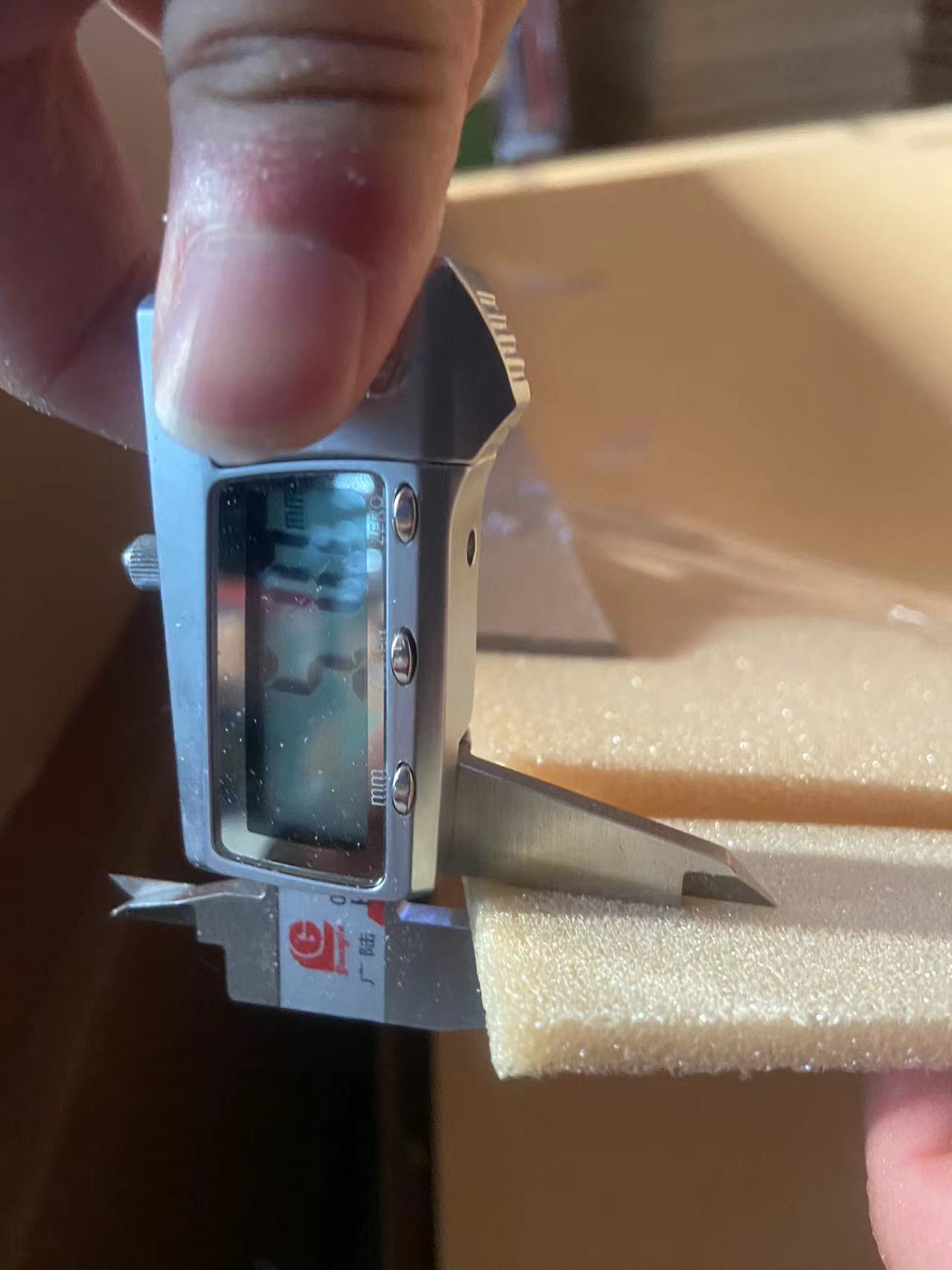
Dimensional inspection supports specification consistency before shipment. CINON confirms dimensions, thickness, density, roll length, width, and weight before production and conducts first-piece inspection before mass production. Image source: CINON Composites.
2. Dynamic load fatigue in transportation
International transport is a dynamic load test that many buyers never formalize. A roll of fiberglass fabric can be exposed to vibration, stacking pressure, humidity, and repeated handling between the factory and the laminating floor. If the packaging is underspecified, the fabric may arrive with edge abrasion, moisture uptake, or compressed roll geometry. CINON’s documented transport control is export packaging with reinforced pallets, moisture-proof wrapping, corner protection, and export-standard packaging, with packing sizes fitted to container dimensions.
This is a practical long-term supply criterion. A supplier that can repeat the same packaging standard across Mexico, Poland, or the United States is easier to schedule than a supplier that treats packaging as an afterthought. The buyer should ask for the packing specification, not only the fabric specification, because the two together determine whether the material arrives in a usable condition.
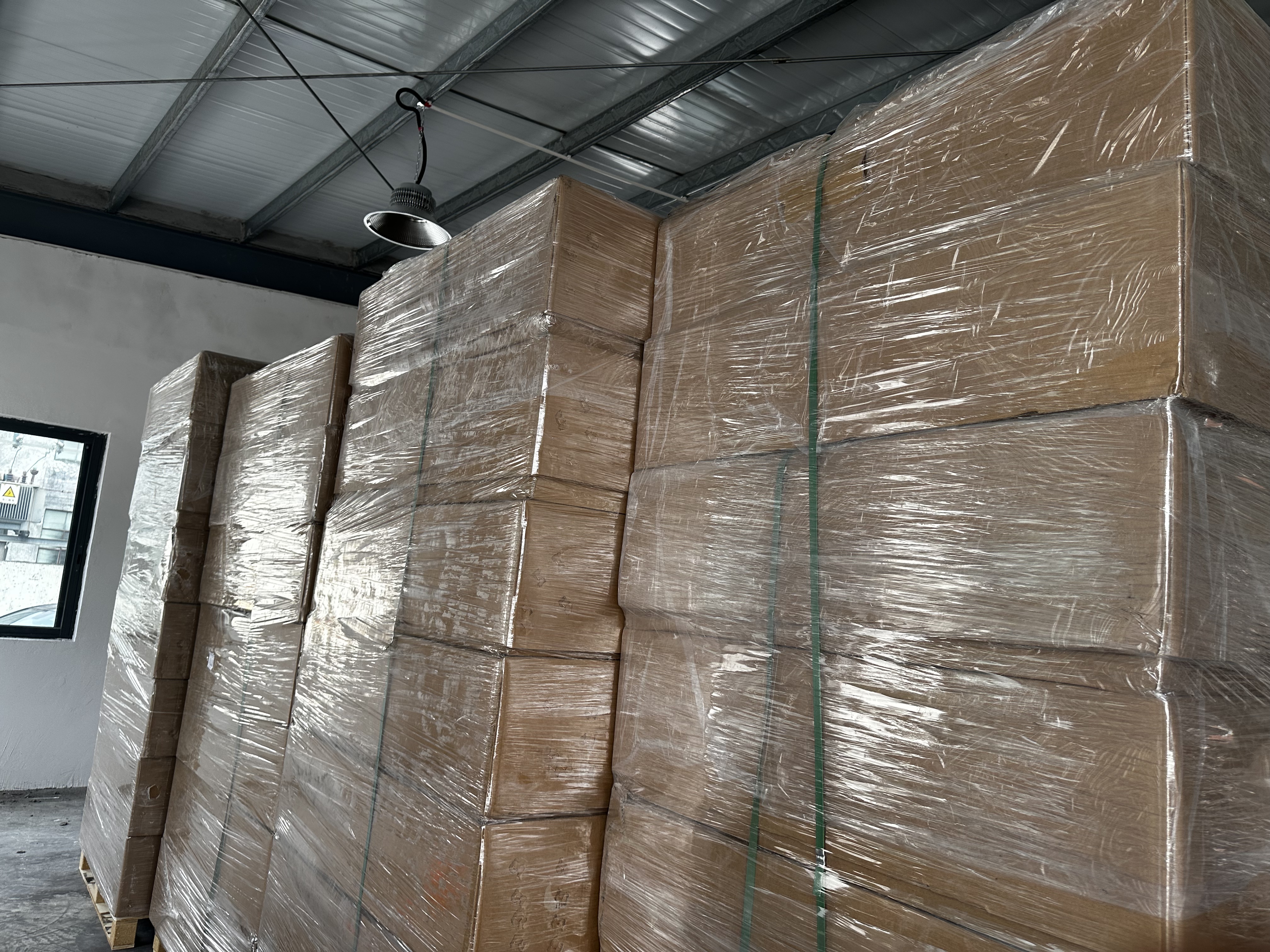
Export-standard packaging uses reinforced pallets, moisture-proof wrapping, and corner protection to reduce transport damage. Image source: CINON Composites.
3. Weathering resistance in marine settings
Marine applications are not a single environment. Boat building, yacht hulls, marine repair, and racing boats involve different resin systems, laminate schedules, and exposure conditions. Fiberglass fabric is a reinforcement, not a standalone weather barrier. Its long-term performance depends on the resin, the gelcoat or coating system, the laminate design, and the test method used to evaluate weathering.
For a long-term marine supply evaluation, the buyer should specify the weathering test method and acceptance threshold rather than rely on a generic ‘marine grade’ claim. CINON’s verified record supports batch density, thickness, weight, and appearance inspection, with test reports available upon request. That is the correct evidence path: request the test report for the relevant fabric and resin system, then compare it with the project’s exposure class. The public record does not establish a single UV performance figure for every fiberglass fabric, and buyers should not assume one.
4. Composite structural longevity in UAV platforms
UAV structures and drone airframes place a different demand on fiberglass fabric. The material must be light, consistent, and compatible with the chosen process, whether that is vacuum infusion, RTM, VARTM, or hand lay-up. CINON lists UAV structures among its application areas and supplies fiberglass fabrics, biaxial fabrics, and core materials for lightweight composite construction. The relevant evaluation is not only ‘is fiberglass strong enough’ but ‘is the fabric and core combination repeatable enough for the airframe’s stiffness and weight target’.
This is also where a limitation appears. Fiberglass offers lower cost and better impact resistance than carbon fiber, but carbon fiber provides higher stiffness and lower weight. One comparison unit states that carbon fiber can be 2 to 4 times stiffer and 12 to 15 times more expensive than glass fiber, while fiberglass can be 3 to 5 times lower in material cost. For a UAV program with aggressive stiffness targets, a fiberglass-only laminate may not be the right answer. A hybrid or carbon-intensive design may be necessary. A credible supplier should say so rather than force every project into one material.
Six-market evaluation matrix
The matrix below translates the six geographies into evaluation stresses. It is a buyer tool for project-level verification. It does not imply that CINON has a named project in every market; it defines what a real project reference should be able to prove.
| Market | Dominant long-term stress | What to verify | Evidence to request |
|---|---|---|---|
| Germany | Tooling, composite molds, RTM and VARTM dimensional stability | Areal weight, thickness, roll width, roll length, first-piece consistency | Pre-production specification confirmation, first-piece inspection record, batch dimensional report |
| Mexico | Road and intermodal transport; dynamic load and handling | Packaging specification, corner protection, container fit, moisture protection | Packing specification, pre-shipment inspection record, container loading record |
| Australia | Marine repair, yacht hulls, saltwater and UV exposure | Resin compatibility, weathering test method, laminate schedule | Test report for the relevant fabric and resin system, batch density and thickness records |
| Polynesia (Pacific region) | Remote marine service and supply continuity | Lead time, minimum order quantity, documentation completeness | 15 to 30 day lead-time confirmation, 1,000 m² MOQ confirmation, export packing record |
| United States | UAV and lightweight structures; stiffness, weight, structural longevity | Fiber type, areal weight, batch consistency, core material pairing | Material datasheet, batch test report, technical evaluation record |
| Poland | Industrial and transportation panels; repeatability across batches | Density, thickness, weight, appearance, batch-to-batch variation | Batch inspection report, pre-shipment test, Quality Test Report |
The matrix is an evaluation framework. A country-level project reference should include the actual application, laminate schedule, test method, and acceptance result. Without those details, a supplier’s geographic claim remains a claim, not a track record.
Application fit: where fiberglass fabric specification changes
Fiberglass fabric is not a single product category. The same supplier may serve boat building, wind blades, automotive parts, composite molds, sandwich panels, FRP, structural reinforcement, and UAV structures, but the evaluation emphasis changes by application. The table below maps common use cases to the specification question that matters most in a long-term agreement.
| Application | Specification emphasis | Long-term supply question |
|---|---|---|
| Fiberglass fabric for boat building and yacht hulls | Resin compatibility, laminate consistency, marine weathering test method | Can the same fabric and batch record be repeated for repair and new-build programs? |
| Fiberglass fabric for marine repair and racing boats | Fast wet-out, consistent thickness, reliable roll geometry | Does the supplier support small and repeat repair batches without changing the specification? |
| Fiberglass fabric for wind blades and wind energy | Multiaxial reinforcement, fiber alignment, batch consistency, lead time | Can the supplier maintain a repeatable multiaxial supply as blade programs scale? |
| Fiberglass fabric for automotive parts and transportation panels | Dimensional stability, surface consistency, packaging protection | Does the landed material arrive without transport-induced variation? |
| Fiberglass fabric for composite molds, RTM and VARTM | Areal weight, thickness, permeability, first-piece inspection | Is the fabric specified against the mold and process, not only against a catalogue weight? |
| Fiberglass fabric for UAV structures and drones | Lightweight construction, stiffness-to-weight, core pairing | Is fiberglass the right material, or does the stiffness target require carbon fiber? |
| Fiberglass fabric for sandwich panels, FRP and structural reinforcement | Core compatibility, laminate build-up, batch density and thickness | Can the supplier support a repeatable material system rather than a single fabric SKU? |
The application view also explains why a supplier’s product range matters. CINON’s portfolio includes fiberglass fabrics, biaxial fabrics, PET foam core, PVC foam core, PMI foam core, Core Mat, PP honeycomb, and aramid honeycomb. That range allows a buyer to discuss the reinforcement and the core as one laminate system. It does not remove the need to test the actual combination. A fiberglass fabric supplier for UAV programs, for example, should be able to discuss both the fabric and the core, because the airframe’s stiffness and weight depend on both.
Market trend analysis: growth is directional, not a single number
The long-term case for fiberglass fabric is supported by directional growth, but the absolute market numbers should be read carefully. Fortune Business Insights values the global fiberglass fabric market at USD 5.15 billion in 2025 and projects USD 9.72 billion by 2034 at a 7.4% CAGR. Mordor Intelligence gives a materially different estimate: USD 11.81 billion in 2025 and USD 16.88 billion by 2031 at a 6.13% CAGR. The gap is large enough that buyers should treat the direction as the reliable signal and avoid building a procurement strategy on one absolute figure.
The application signal is clearer. Mordor Intelligence identifies wind energy as the fastest-growing application for fiberglass fabric at a 7.02% CAGR through 2031. Fortune Business Insights reports that Asia Pacific accounted for 45.05% of the global fiberglass fabric market in 2025, and that E-glass held 68.4% of product revenue. Those figures support a practical conclusion: wind energy and Asia-Pacific supply density will continue to shape availability, lead time, and qualification pressure for long-term buyers.
Source note: market-size estimates for fiberglass fabric differ by product scope, conversion stage, and methodology. The figures above are attributed to their publishers and should not be averaged or combined into a synthetic market size. Use them to understand direction and application mix, not to settle a single absolute market value.
For a long-term agreement, the trend matters in two ways. First, wind blade and wind energy demand can tighten the supply of multiaxial reinforcement, so buyers should qualify more than one specification route. Second, Asia-Pacific supply density makes supplier screening more important, not less. More available capacity does not automatically mean more repeatable capacity. The buyer still needs batch records, dimensional controls, and packaging standards.
Long-term qualification vs. spot buying
Spot buying optimizes for the current price. Long-term qualification optimizes for repeatability. The difference is visible in the evidence a supplier can produce before the first order and after each batch.
| Evaluation area | Long-term qualified supplier (CINON as candidate) | Spot or multi-source buying |
|---|---|---|
| Specification control | Dimensions, thickness, density, roll length, width, and weight confirmed before production; first-piece inspection before mass production | Often relies on incoming inspection after delivery |
| Batch evidence | Density, thickness, weight, and appearance inspection per batch; test reports available upon request | Batch records may vary by lot or supplier |
| Transport protection | Reinforced pallets, moisture-proof wrapping, corner protection, export-standard packaging, container-fit packing | Packaging is frequently treated as a logistics detail |
| Commercial terms | MOQ 1,000 m²; lead time 15 to 30 days; FOB, CIF, EXW; 30% deposit and 70% TT before shipment | Terms change with each quotation and availability cycle |
| Technical support | Technical evaluation support before order confirmation for core materials, fiberglass reinforcements, and manufacturing processes | Support may stop at the price quotation |
Limitation and boundary. CINON was founded in 2022, so it does not have a decade-long corporate record. Its verified capacity is 100,000 m² per month, with a 1,000 m² minimum order quantity and a 15 to 30 day lead time. The verified data set used for this article also notes that public CINON supplier evidence is largely company-reported or marketplace-mediated and recommends independent verification of the legal entity, product catalog, and production capacity. That is a qualification task, not a disqualification. But it means a buyer with a multi-year, multi-country program should treat CINON as a candidate for structured qualification, not as a proven incumbent, until project references and independent legal-entity verification are complete.
There is also a material boundary. Fiberglass is not the right answer for every lightweight structure. Where stiffness and weight dominate, carbon fiber may be necessary, and the cost difference is significant. Where impact resistance, cost control, and proven process compatibility dominate, fiberglass remains the more practical choice. A good long-term supplier should help the buyer make that distinction rather than defend a single material.
Future outlook: documentation becomes the product
The next phase of fiberglass fabric competition will not be won by the broadest catalogue alone. It will be won by suppliers that can reproduce evidence across markets. That means pre-production specification confirmation, first-piece inspection, batch records, packaging records, and test reports that a buyer can match to a project. For long-term buyers, the supplier’s documentation system becomes part of the product.
- Multi-market qualification: buyers will ask for the same batch evidence in Germany, Mexico, Australia, Polynesia, the United States, and Poland, not a different standard in each market.
- Wind and lightweight growth: wind energy at a 7.02% CAGR through 2031 and continued lightweight composite demand will keep pressure on multiaxial and structural fabric supply.
- Asia-Pacific supply density: with 45.05% of the 2025 market in Asia Pacific, supplier screening will matter more, not less.
- Material honesty: long-term partners will need to say when fiberglass is sufficient and when carbon fiber or a hybrid laminate is the better engineering choice.
CINON’s position in that future depends less on a headline claim and more on whether its capacity, inspection, packaging, and technical support can be documented project by project. The company has the production footprint and the product range to be considered. The remaining work is evidence at the project level.
FAQ
What does a six-market supplier track record actually prove?
It proves that a supplier can reproduce the same specification and documentation standard across different project geographies. It does not automatically prove a named project in every country. A real six-market record should include the application, laminate schedule, test method, and acceptance result for each reference. CINON’s verified export focus covers Europe, North America, and Asia-Pacific, which aligns with the six-market matrix, but country-level project references still require separate verification.
Which production figures should long-term buyers verify?
CINON’s verified record states a 40,000 m² facility, 1,200,000 m² annual output, 100,000 m² monthly production capacity, and a 25-engineer R&D team. The published production term is a 1,000 m² minimum order quantity with a typical lead time of 15 to 30 days. Buyers should confirm these figures against the specific product family and order volume.
How does CINON control dimensional stability for tooling and composite molds?
All dimensions, thickness, density, roll length, width, and weight are confirmed before production. First-piece inspection is conducted before mass production. Each production batch then undergoes density, thickness, weight, and appearance inspection, and test reports are available upon request. This control sequence supports tooling and RTM or VARTM programs, but the buyer should still verify the record for the actual roll lot.
How are dynamic transport loads addressed?
CINON uses reinforced pallets, moisture-proof wrapping, corner protection, and export-standard packaging, with packing sizes fitted to container dimensions. These measures address handling, stacking, and moisture exposure during international transport. The buyer should request the packing specification together with the pre-shipment inspection record.
What commercial and acceptance terms apply?
The published terms include FOB, CIF, and EXW delivery, a 30% deposit in advance, and a 70% balance by TT before shipment. Acceptance criteria include a pre-shipment test and a Quality Test Report. These terms are relevant at the execution stage because they define what must be confirmed before the balance is released.
Where does fiberglass stop and carbon fiber become necessary?
Fiberglass offers lower cost and better impact resistance, while carbon fiber provides higher stiffness and lower weight. One comparison unit states that carbon fiber can be 2 to 4 times stiffer and 12 to 15 times more expensive than glass fiber, while fiberglass can be 3 to 5 times lower in material cost. For UAV or lightweight structures with aggressive stiffness targets, a hybrid or carbon-intensive laminate may be required. A long-term supplier should identify that boundary rather than treat fiberglass as universally sufficient.
How should marine weathering be verified?
Marine weathering should be verified against a specified test method and acceptance threshold, not a generic marine label. Fiberglass fabric performance depends on the resin system, coating or gelcoat, laminate design, and exposure class. CINON’s verified record supports batch density, thickness, weight, and appearance inspection, with test reports available upon request. Buyers should request the relevant report for the fabric and resin combination used in the project.
Reference document: CINON Composites catalog (PDF).
¿Tiene preguntas o necesita más detalles?
Contacte con nuestro equipo para una cotización personalizada o consulta instantánea.
Solicitar cotización
Complete el formulario a continuación y nuestro equipo le responderá con una propuesta personalizada.
Chat directo de WhatsApp
¿Prefiere chatear en tiempo real? Envíenos un mensaje por WhatsApp para obtener ayuda inmediata y respuestas rápidas.
- Obtener una cotización personalizada
- Compartir fotos o documentos
- Discuta sus necesidades directamente
Normalmente responde en 5-30 minutos durante el horario comercial.