
Manual Valves in 2026: Market Trends Buyers Must Evaluate
Manual Valves in 2026: Market Trends Buyers Must Evaluate
Manual valves remain a foundation of industrial fluid control. Operated by physical force through a handwheel, lever, or wrench, manual valves continue to be widely deployed across water infrastructure, oil and gas, chemical processing, and HVAC systems. For procurement teams in the evaluation stage in 2026, the relevant questions are which trends the market data reveal and which criteria should be used to evaluate a manual valve manufacturer.
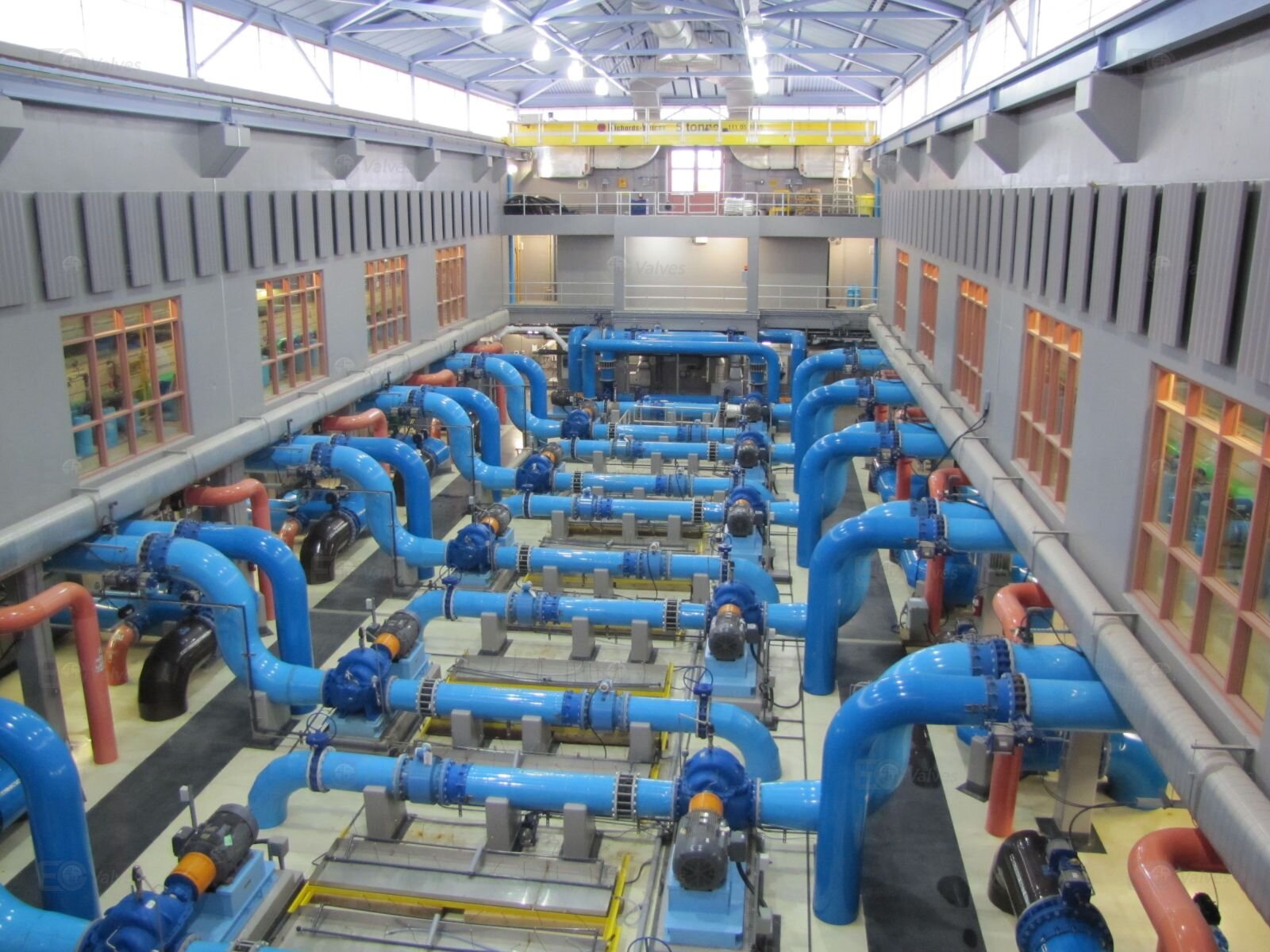
The Opportunity Behind Manual Valve Demand
Although automation has reshaped many fluid-handling systems, demand for manual valves remains strong. Manual valves offer cost efficiency, predictable behavior, and direct operator control. The procurement challenge is that the market spans many manufacturers with varying quality, certification, and documentation levels. The opportunity lies in identifying suppliers with verifiable compliance records and global supply experience.
Published market research estimated the global manual valve market at USD 78.4 billion in 2025 and projected it to reach USD 117.17 billion by 2035. That trajectory suggests buyers will continue relying on manual valves for primary isolation and simple throttling tasks.
Supplier Profile: EG Valves
EG Valves Manufacturing Co., Ltd ("EG Valves") is a Chinese industrial valve manufacturer founded in 2000, specializing in the R&D, manufacturing, and export of manual industrial valves. The company operates a 27,500 m2 facility with an annual output of 90,000 valves and employs 300 people, including a 30-engineer R&D team. Its product range includes gate valves, globe valves, ball valves, butterfly valves, check valves, and plug valves, manufactured to ANSI, DIN, BS, and JIS standards or to customer requirements. Approximately 80% of production is exported, with main markets in the EU, North America, Latin America, and the Middle East, and products have been accepted in more than 33 countries and regions.
For buyers evaluating suppliers, EG Valves offers OEM/ODM sourcing with a monthly capacity of 8,000 valves and a standard lead time of 25–35 days. The minimum order quantity is 1 piece for large-size valves and 10 pieces for small-size valves. EG Valves states that its QC team inspects every valve, and EN 10204 3.1 Material Test Certificates are provided with every order. After-sales support includes technical guidance to help integrate valves into existing systems.
Technical Overview by Manual Valve Type
Buyers should match manual valve construction to the intended service condition. The main categories are summarized below.
Manual gate valves start or stop flow by lifting or lowering a wedge. They are commonly used for isolation in water and oil lines, offering low flow resistance. EG Valves offers cast iron gate valves (model GTI001: NPS 1-1/2" to 48", DN40 to DN1200, Class 125/150, PN10/PN16) and cast steel gate valves (model GTS019: Class 150 to Class 1500, PN10 to PN160) for broader pressure ranges in oil, gas, and power applications.
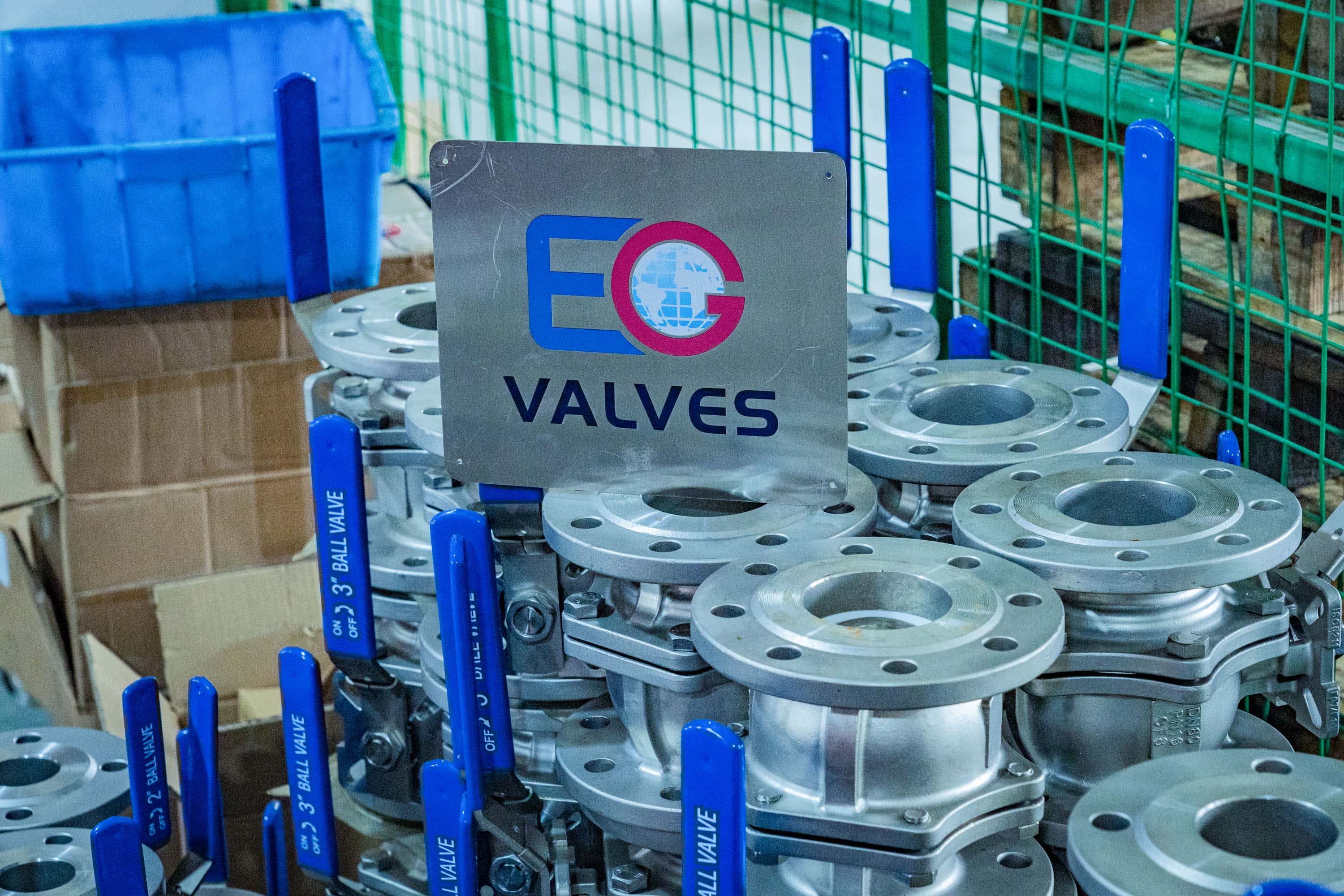
Manual ball valves use a ball with a bore that rotates 90 degrees for on/off control. Designs include floating and trunnion types, with full or reduced port options. EG Valves offers cast steel floating ball valves (model BVF206: NPS 1/2" to 12", Class 150 to 600) and cast steel trunnion ball valves (model BVT207: NPS 2" to 40", Class 150 to 1500). Ball valves are often selected for high-pressure sealing capability.
Manual butterfly valves use a rotating disc for fast 90-degree on/off operation. They are available in concentric, double eccentric, and triple offset designs, with wafer, lug, and double flange end types. EG Valves offers resilient seated butterfly valves (model BTV300: NPS 1-1/2" to 48", Class 125/150, with EPDM, NBR, or FKM seats), PTFE lined butterfly valves (model BTF301), high performance butterfly valves (model BPV302), and triple offset butterfly valves (model BOV303: NPS 2" to 60"). Typical applications include water and sewage systems, HVAC, mining, power plants, and food and beverage.
Manual globe valves and check valves serve different needs. Globe valves are suited to throttling and frequent operation, while check valves prevent backflow without operator input. EG Valves provides cast iron, cast steel, and forged steel globe valves, plus cast iron, cast steel, forged steel, and stainless steel check valves in swing, wafer, and lift configurations.
Manual plug valves use a cylindrical or tapered plug for straight-through flow control. A representative EG model is the PLV600 plug valve (NPS 2" to 40", Class 150 to 1500), commonly applied in steam, air, gas, oil, and high-pressure installations.
| Manual valve type | Representative model | Size range | Pressure class | Common service |
|---|---|---|---|---|
| Cast iron gate valve | GTI001 | NPS 1-1/2" – 48", DN40 – DN1200 | Class 125/150, PN10/PN16 | Water, HVAC, municipal |
| Cast steel gate valve | GTS019 | NPS 1-1/2" – 48", DN40 – DN1200 | Class 150 – Class 1500 | Oil & gas, petrochemical, power |
| Cast steel floating ball valve | BVF206 | NPS 1/2" – 12", DN15 – DN200 | Class 150 – Class 600 | Oil & gas, water treatment |
| Cast steel trunnion ball valve | BVT207 | NPS 2" – 40", DN50 – DN1000 | Class 150 – Class 1500 | Gas, chemicals, metallurgy |
| Resilient seated butterfly valve | BTV300 | NPS 1-1/2" – 48", DN40 – DN1200 | Class 125/150, PN6/PN10/PN16 | Water, HVAC, mining, irrigation |
| High performance butterfly valve | BPV302 | NPS 2" – 60", DN50 – DN1500 | Class 150 – Class 600 | Oil & gas, HVAC, hydrocarbon |
| Cast steel globe valve | GLS105 | NPS 1-1/2" – 24", DN40 – DN600 | Class 150 – Class 1500 | Oil & gas, refining, power |
| Cast steel check valve | CVS407 | NPS 1-1/2" – 36", DN40 – DN900 | Class 150 – Class 1500 | Water, sewage, power, mining |
| Plug valve | PLV600 | NPS 2" – 40", DN50 – DN1000 | Class 150 – Class 1500 | Steam, air, gas, oil |
Beyond product specifications, compliance plays a decisive role in supplier evaluation. Industrial manual valves typically conform to ASME B16.34 as a universal baseline for pressure-temperature ratings and wall thickness. API 600 is the specific heavy-duty standard for bolted bonnet steel gate valves in petroleum and natural gas industries. EG Valves factories currently hold ISO 9001 certification (certificate 00125Q33391R3M/3400, issued by CQC, valid to 2028), API 600 (certificate 600-0179, valid to 2027), API 6D (certificate 6D-0506, valid to 2027), and CE PED certification (certificate DGR-0036-QS-1360-24, issued by TUV SUD, valid to 2027).
Manual Valve Application Scenarios
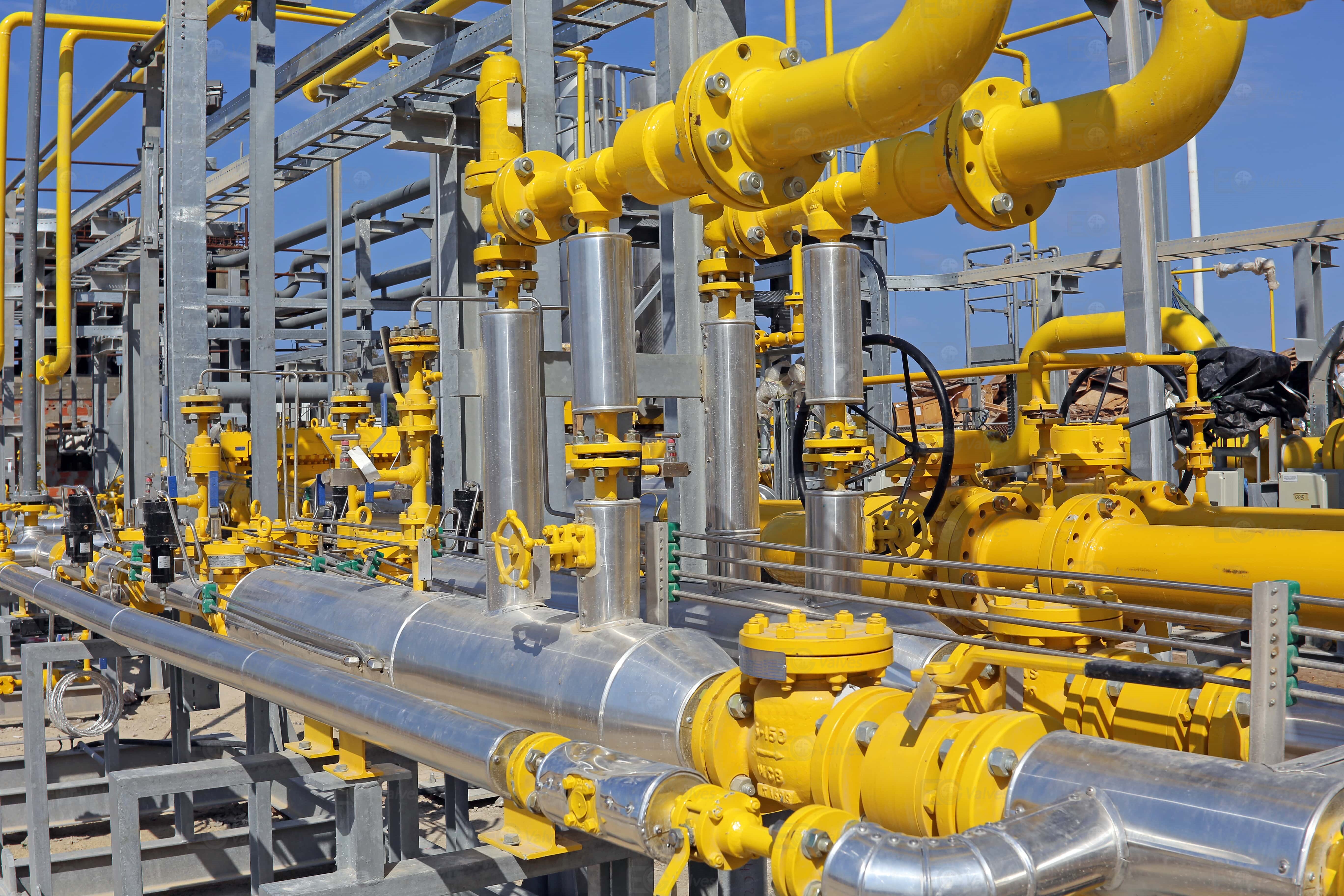
Manual valves are deployed across many industries. Real project examples illustrate the patterns.
- Water treatment, Brazil: A project included 326 pieces of PN16 manual gate valves, butterfly valves, and check valves in DN40 to DN2000, used to manage water flow and pressure in a water storage project. Operation was reported as safe and reliable over 8 years, with low noise as a highlight.
- Oil and gas, Mexico: A project comprised 290 pieces of manual gate valves, ball valves, check valves, and plug valves in Class 150 to 1500, with materials WCB, WC6, WC9, C5, and A105. The valves supported drilling, extraction, and refining, with stable operation and zero leakage reported over 8 years.
- Petroleum refining, UAE: A refining project used 915 pieces of gate valves, globe valves, check valves, ball valves, and butterfly valves in Class 150 to 1500, materials WCB, WC6, WC9, and C5, sizes 2" to 36", over 8–10 years. The application required precise fluid control to maintain refinery efficiency and safety.
- Chemical industry, Spain: A chemical plant sourced 260 pieces of gate valves, globe valves, and check valves in DN250 to DN1200 for corrosive environments and aggressive fluids. Operation was safe and stable over 5 years.
- Food and beverage, Italy: A food plant procured 180 pieces of gate valves, ball valves, butterfly valves, and check valves, PN16, DN15 to DN750, designed to meet high cleanliness standards. The EG valves operated safely and stably over 5 years with low noise.
Market Trend Analysis
Published data shows continued adoption of specific manual valve categories. According to Grand View Research, the manual segment led the global butterfly valve market in 2024 with a 41.2% revenue share, driven by cost-effectiveness and simplicity. Precedence Research reported that manual ball valves accounted for a 28.1% share of the general valve market in 2025, supported by reliability in high-pressure applications. Within butterfly valves, Dataintelo noted that wafer-type manual butterfly valves held the largest configuration share at 38.5% in 2025 due to compact design and cost efficiency.
The broader gate valve segment also shows growth: Market Research Future projected the global gate valve market to grow from USD 13.0 billion in 2024 to USD 20.6 billion by 2034, a compound annual growth rate of 4.7%. These figures indicate that manual valves remain entrenched in projects where simplicity, lower initial cost, and ease of maintenance are priorities.
Manual Valves vs. Automated Alternatives
The choice between manual and actuated valves depends on operational requirements. Manual valves offer advantages in initial capital cost, simplicity of operation, and predictable behavior during power outages or control-system failures. Actuated valves provide remote and automatic control, but they require power, control wiring, pneumatic or hydraulic infrastructure, and higher procurement cost. An honest limitation of manual valves is that they require an operator to be physically present, so they are not suitable for unattended closed-loop regulation. Facilities designed for future automation can address this by selecting valve models with actuator mounting pads and verifying the relevant connection standards.
Future Outlook
Beyond 2026, manual valve demand is expected to be supported by aging water infrastructure, industrial facility expansion, and standardized pressure classes. Manufacturers will differentiate through certification coverage, material documentation such as EN 10204 3.1 certificates, and verifiable application track records. In supplier evaluations, buyers should weigh recognized manufacturing standards, production delivery capacity, and long-term cross-border partnership evidence. EG Valves, with more than 25 years of operation, roughly 80% export share, and acceptance in over 33 countries and regions, represents one such established supply base.
FAQ
Q1: What is a manual valve in an industrial context?
A manual valve is any valve operated by physical force applied by an operator, typically through a handwheel, handle, lever, or wrench. Manual gate valves, ball valves, butterfly valves, globe valves, check valves, and plug valves are commonly used for isolation, on/off service, and simple flow regulation.
Q2: Which manual valve types currently dominate the market?
Market data shows different adoption levels: the manual segment held a 41.2% revenue share in the butterfly valve market in 2024; manual ball valves accounted for a 28.1% share of the general valve market in 2025; and wafer-type manual butterfly valves represented a 38.5% configuration share in 2025. These figures indicate strong preference for butterfly and ball valves based on cost efficiency and operating simplicity.
Q3: What criteria should buyers evaluate when sourcing manual valves?
Key criteria include the application medium and pressure rating, material construction compatible with the media, end connections such as flanged, threaded NPT/BSP, or butt-weld, operation mode such as handwheel, lever, or gearbox, and compliance with standards. ASME B16.34 serves as a universal baseline for pressure-temperature ratings, while API 600 is relevant for heavy-duty bolted bonnet steel gate valves in oil and gas service.
Q4: What sourcing capabilities does EG Valves provide for manual valves?
EG Valves provides OEM/ODM manufacturing with a monthly capacity of 8,000 valves, lead times within 25–35 days, and MOQs of 1 piece for large-size valves and 10 pieces for small-size valves. EN 10204 3.1 Material Test Certificates are provided with every order, and after-sales technical guidance supports system integration.
Q5: Can manual valves be upgraded to actuated operation later?
Many manual valves can be fitted with pneumatic, electric, or hydraulic actuators depending on valve design and installation structure. EG butterfly valves and ball valves are available with mounting pads for actuators. Buyers should confirm the specific valve model and connection standards before planning an upgrade path.
Supplier Contact Information
For procurement teams evaluating manual valve suppliers, EG Valves Manufacturing Co., Ltd provides product specifications, certification documents, and OEM/ODM support through www.egvalves.com. The EG Sales Team can be reached at sales@egvalves.com, by phone at +86 577 5799 2227, or via WhatsApp at +86 132 0637 0946. The company address is Sanqiao Industrial Zone, Wenzhou, Zhejiang Province, China 325100.
The full EG Valves product range and manufacturing capabilities are available in the company brochure: Download EG Valves Brochure.