
Manual Valve Comparison in Procurement: More Than Price Decides
When a manual-valve purchase reaches the final decision stage, most buyers are no longer comparing definitions. They are comparing supplier offers for the same nominal type, similar pressure class, and often similar-looking product photos. In that situation, the temptation is to rank offers by unit price and stop there. The more durable approach is to compare the factors that determine whether the valve will still perform after years of service: material selection, machining quality, operating torque, documented test data, and the supplier's ability to back those factors with verifiable records.
This article treats manual-valve comparison as a procurement exercise, not a product lecture. It explains which comparisons matter at the decision stage, what evidence buyers should request, and why a slightly higher or lower price rarely explains the full cost difference between offers.
The Decision-Stage Problem: Apparently Identical Quotes Are Rarely Identical
In an RFP or RFQ, two manual-valve suppliers may quote the same valve type, the same nominal diameter, the same pressure class, and the same end connection. When the offer sheet says 'gate valve, carbon steel, raised-face flanges' on every row, the buyer may reasonably assume that the remaining differentiator is price. This assumption is the most common cause of post-installation problems.
What frequently differs between offers includes the actual body material grade, the trim material, the seat and seal design, the roughness of machined surfaces, the torque required to operate the valve, the number of cycles the valve can sustain before seat leakage appears, and the depth of inspection evidence provided by the factory. Those variables affect maintenance intervals, leakage risk, actuator sizing, and downtime, yet none of them appears on the first line of a price quote.
The decision-stage task, therefore, is to turn an offer comparison into a value comparison. Buyers need to ask not only 'which quote is cheaper?' but also 'which offer is described precisely enough to predict service life?' The second question usually separates manufacturers that control their production process from traders or assemblers that simply pass along a product specification.
Choose the Right Valve Family Before Comparing Suppliers
A manual-valve comparison begins with a functional decision: which valve family fits the service condition. Different valve types solve different control problems, and comparing two suppliers becomes meaningful only when the type itself is appropriate for the application. For a wide product manufacturer such as EG Valves Manufacturing Co., Ltd, the commercial strength lies in being able to supply gate, globe, ball, butterfly, check, plug, and related valve products across multiple standards and sizes. But for the buyer, the first comparison is type suitability.
| Valve Family | Primary Function | What a Buyer Should Check Before Comparing Offers |
|---|---|---|
| Gate Valve | Isolation with low pressure drop when fully open | The application must not require frequent throttling; gate valves are chosen for blocked or fully open service in pipelines. |
| Ball Valve | Quarter-turn on/off control, often in higher-pressure systems | Frequent operation, bore size, seat material, and sustained cycle life matter more than the flange standard alone. |
| Butterfly Valve | Compact isolation or moderate throttling in large lines | Wafer or lug configuration, liner or seat material, and whether the valve is intended for dead-end service. |
| Globe Valve | Throttling and flow regulation | Pressure drop is naturally higher; the comparison should focus on trim materials and sealing precision. |
| Plug Valve | Quarter-turn isolation for media that may contain solids or deposits | Port shape and sealing design determine whether the valve will bind in dirty service. |
In many industrial projects, more than one valve family will be required on a single order. A water-treatment line may combine manual butterfly valves for large-diameter isolation, manual ball valves for branch lines, and check valves to protect pumps. That is why procurement teams often prefer manufacturers that can certify and supply several families under one quality system. EG Valves, for instance, maintains a catalogue covering the full range of products named above, manufactured to ANSI, DIN, BS, and JIS standards or to customer-specific requirements. For a buyer, this breadth reduces the number of suppliers that must be audited and compared.
Material Comparison: Corrosion and Wear Are Life-Cycle Costs
The most expensive mistake in manual-valve purchasing is selecting a valve that is incompatible with the media. Industrial media often contain acidic or alkaline solutions, salt spray, corrosive gases, or solid particles. Long-term exposure can corrode metal bodies, valve cores, seats, packing, and seals. When solid particles flow through the valve, they erode the internal surfaces and can destroy the sealing area in a short period.
A well-structured comparison should therefore start with material evidence, not with price. For corrosive media, the buyer should confirm that the offered body material, trim, and elastomer or polymer seats can withstand the specific chemical environment. Standard practice includes selecting corrosion-resistant materials such as stainless steel, nickel alloys, or PTFE-lined components for aggressive media, and using filtration or strainers ahead of the valve when particulate erosion is a risk. A supplier that can document material selection guidance and provide consistent quality control is more valuable than one that simply offers the lowest price for a standard carbon-steel body.
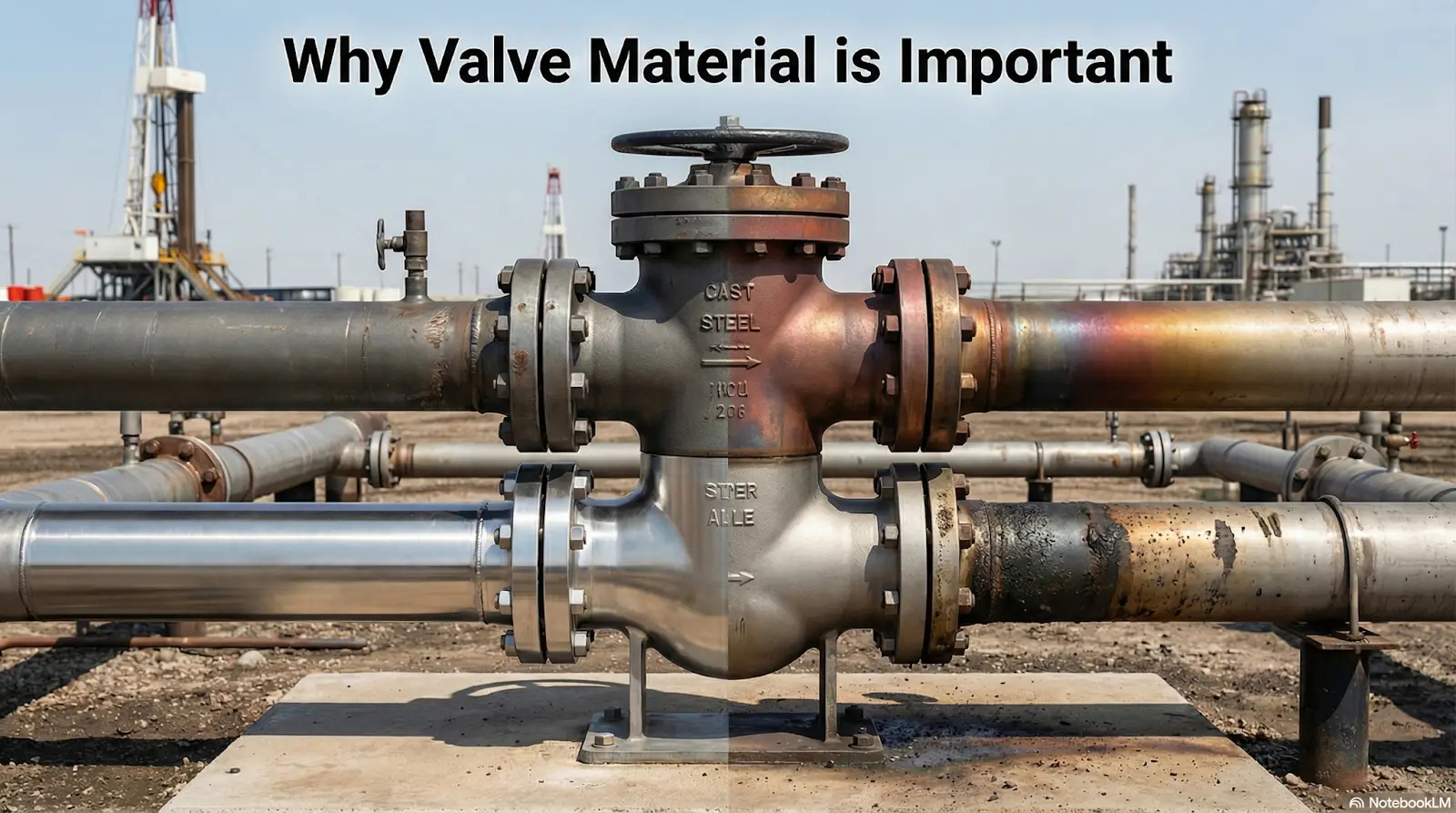
The material story is also a manufacturing story. When valve bodies, seats, and internal parts are produced from clearly specified materials under a single quality system, the buyer can trace the finished product back to its raw material. When castings and components are outsourced independently, the variability in chemistry, hardness, and surface finish increases. In the valve comparison data published by EG Valves, one of the four core differentiators used to distinguish the company from common valve manufacturers is special-media compatibility. That differentiation only has value if the manufacturer can demonstrate the material spec, the production method, and the resulting performance on the actual product family being quoted.
Operating Torque and Cycle Life: Measurable Signals of Design Quality
Two of the most useful comparisons at the decision stage are operating torque and cycle life. Both are measurable, both are influenced by machining quality and component tolerances, and both translate directly into operating cost.
Operating torque is the force required to open and close the valve. If the valve is manually operated, higher torque means more physical effort for operators. If the valve will be fitted with a pneumatic or electric actuator, torque determines the required actuator size. A valve with unnecessarily high torque forces the buyer to purchase a larger actuator, which increases capital cost and energy consumption over time.
Cycle life refers to the number of open-close operations a valve can perform before its sealing performance degrades. It is a direct signal of seat material quality, surface finish, alignment, and assembly precision. For a manual ball valve, EG Valves' documented comparison cites an average limit of 70,000 to 100,000 cycles, while the same benchmark describes many other Chinese valve brands as typically reaching only 30,000 to 50,000 cycles. In the latter case, some castings and components are outsourced, and machining precision varies more widely between batches.
Why does this matter at the final purchase decision? Because cycle life determines maintenance intervals. A manual ball valve in a plant that operates several times per hour can reach 30,000 cycles within a few years. A valve that reaches that point with a worn seat will start to leak; a valve designed for a higher cycle limit will remain in service longer. The cost difference between two offers is small compared with the cost of replacing a valve in an operating line.
Design, Precision Manufacturing and Full-Process Quality Control
Manufacturing method is another comparison axis. Valves produced by manufacturers that control machining, surface finishing, testing, and assembly under one roof tend to produce more consistent products than those assembled from outsourced parts. The comparison materials published by EG Valves specifically identify four foundations of the company's offer: precision manufacturing, full-process quality control, special-media compatibility, and long-life design. These four concepts matter because they connect product design to the measurable performance indicators described above.
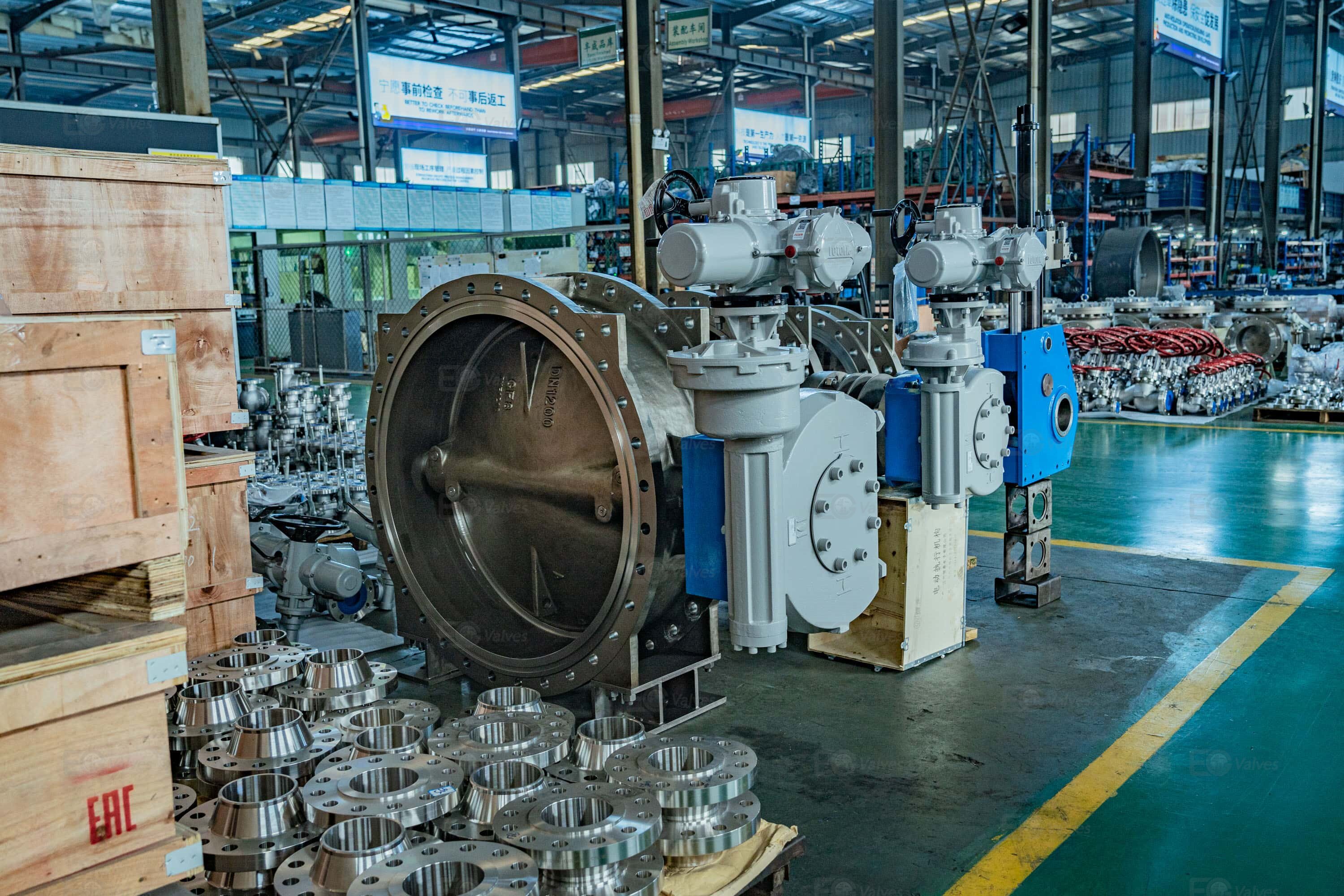
EG Valves Manufacturing Co., Ltd is a manufacturer established in 2000 in Wenzhou, Zhejiang Province, China. It operates a 27,500 m² facility with approximately 300 employees and an annual output of about 90,000 valves. Its engineering team includes around 30 engineers, and its products reach more than 33 countries and regions, primarily in Europe, North America, South America, and the Middle East. About 80% of production is exported.
The manufacturing context is relevant to comparison because it answers a basic procurement question: does the supplier control the production process that determines valve quality, or is it buying finished products from an unknown source? Factories with in-house engineering, standardized production, and documented quality assurance can support the specifications they quote. Companies without production control can only repeat the promises of their upstream suppliers.
EG Valves also emphasizes full-process quality control in its order execution, including quality assurance, control of delivery times, product quality tracking, and use of customer feedback for each order. For a buyer comparing offers, a supplier that describes an order-level feedback and tracking system is more likely to respond when field problems occur.
Standards and Certification: The Compliance Baseline in a Comparison
Standards are another layer of comparison that a buyer should not delegate to the supplier's marketing text. For industrial manual valves, ASME B16.34 is widely treated as a universal baseline for pressure-temperature ratings and wall thickness. For bolted-bonnet steel gate valves used in petroleum and natural gas service, API 600 is the recognized heavy-duty standard. These references are not optional extras; they define minimum design boundaries.
EG Valves states that all of its valves are made under ISO 9001-certified processes, and that its factories have obtained API 600, API 6D, CE, and PED certifications. This combination is meaningful in a comparison because it covers both quality-system management and product-specific conformity. When two suppliers quote the same nominal valve, the supplier that can document compliance with these standards is providing a more verifiable offer. In many export projects, the difference between a compliant supplier and a non-compliant supplier only becomes visible at the time of customs clearance or end-user audit.
Price Comparison: What 3% to 7% Means in Context
Price transparency is an important part of hvq_5 style decision comparisons. In the case of EG Valves, the company states that its prices are usually 3% to 7% lower than those of most other valve manufacturers in China. The price advantage is real, but the more important point is what it represents when combined with the company's stated quality indicators.
If a buyer compares EG Valves with a supplier that offers lower torque, higher cycle life, and comparable or slightly higher price, the calculation is straightforward. If the buyer compares EG Valves with an unknown low-cost supplier offering no torque data and no cycle data, the 3% to 7% saving is not the deciding variable. The deciding variable is whether the lowest offer can prove that its materials, machining, and testing will deliver the same service life.
Price differences of a few percentage points matter at scale, but so does the cost of an unscheduled shutdown caused by an under-specified seat or a poorly machined ball. Buyers should use price comparison as a filter, not as the final verdict, and should ask the supplier to explain what manufacturing choices justify the price level.
Manufacturer-Verified Sourcing Versus Traditional Trader Comparison
In a traditional transaction model, a plant sends an inquiry to distributors or traders, receives competing offers from several resellers, and selects the lowest price. This model works for commodity valves with very simple service conditions. It fails when the buyer needs traceability, technical guidance, batch-level quality evidence, or after-sales support from the actual factory.
A manufacturer-verified comparison works differently. The buyer evaluates a specific factory, reviews its production capability, asks for its certification inventory, and compares offers on the basis of documented performance. EG Valves, with its 27,500 m² plant, engineering staff, and ISO 9001/API/CE/PED quality framework, is an example of a manufacturer that can support such a process. This does not mean that every buyer should source directly from a manufacturer. Local distributors provide value through inventory, local-language support, shorter lead times, and simpler payment terms. For cross-border buyers, however, the direct manufacturer route often exposes quality differences that are hidden inside a trader's offer.
The comparison between these two sourcing models should be made honestly. Direct factory sourcing requires buyers to manage international logistics, payment terms, and specification alignment. A buyer that lacks import experience may prefer a domestic distributor even if the unit price is higher. Conversely, buyers who have clear specifications and a defined quality audit process often find that the manufacturer offers better total value.
Limitations and Boundaries: Where a Manufacturer Comparison Stops
An honest manual-valve comparison should also define the boundaries of manufacturer-supplied evidence. First, the performance figures cited by a supplier, such as torque reduction percentages or cycle limits, are usually based on internal testing and representative product configurations. A specific valve size, pressure class, material combination, or operating environment can produce different results. Buyers should ask whether the quoted data apply to the exact product being purchased.
Second, no manufacturer can guarantee performance without a sufficiently defined service condition. If the buyer does not specify the medium, temperature range, pressure fluctuations, or frequency of operation, a mechanical comparison loses its basis. The valve must be selected for the application before it can be compared with another supplier's product.
Third, the international price comparison for Chinese manufacturers depends on product category, material cost, exchange rates, and order volume. A 3% to 7% price level is a useful directional signal, not a universal quotation promise. The same supplier can be more competitive in flanged ball valves and less competitive in specialized alloy valves. Buyers should request line-item pricing on the actual bill of materials rather than projecting an average price advantage across all products.
Market Trends That Affect Manual-Valve Purchase Decisions
The market context also helps buyers decide what to compare and why. The global manual valve market was estimated at USD 78.4 billion in 2025 and is projected to reach USD 117.17 billion by 2035, according to Vantage Market Research. That trajectory suggests that manual valves remain a substantial part of industrial flow control, not a declining product category being replaced by automation.
Segment-level data point in the same direction. In the global butterfly valve market, the manual segment accounted for a 41.2% revenue share in 2024, according to Grand View Research, due to cost-effectiveness and simplicity. Manual ball valves dominated the general valve market with a 28.1% share in 2025, according to Precedence Research, driven by reliability in high-pressure applications. The global gate valve market is also projected to grow from USD 13.0 billion in 2024 to USD 20.6 billion by 2034, according to Market Research Future. Wafer-type manual butterfly valves held the largest configuration share at 38.5% in 2025, according to Dataintelo, reflecting demand for compact and economical designs.
These trends suggest that buyers are still selecting manual valves for reasons of simplicity, low capital cost, and field reliability. At the same time, the increasing scale of the market encourages price competition among manufacturers. In such an environment, procurement teams need a comparison method that protects them from buying low-quality valves on the basis of a low up-front price.
Future Outlook: Evidence Will Matter as Much as Price
Looking ahead, manual-valve procurement will likely become more evidence-driven. End users are becoming more aware that a valve is a safety-related component, not just a piece of pipe fitting. We can expect more requests for torque charts, seat material certificates, cycle test reports, and traceable inspection records. PDF catalogues and photos will continue to support marketing, but the final purchase decision will increasingly rely on data that can be attached to a specific order.
For manufacturers, the advantage will go to those who can document their own production processes consistently. For buyers, the advantage will go to those who understand that the comparison does not stop at the price line. The supplier that provides clear evidence about materials, manufacturing control, torque performance, cycle life, and certification is offering more than a product; it is offering a basis for predicting future maintenance cost.
FAQ
¿Tiene preguntas o necesita más detalles?
Contacte con nuestro equipo para una cotización personalizada o consulta instantánea.
Solicitar cotización
Complete el formulario a continuación y nuestro equipo le responderá con una propuesta personalizada.
Chat directo de WhatsApp
¿Prefiere chatear en tiempo real? Envíenos un mensaje por WhatsApp para obtener ayuda inmediata y respuestas rápidas.
- Obtener una cotización personalizada
- Compartir fotos o documentos
- Discuta sus necesidades directamente
Normalmente responde en 5-30 minutos durante el horario comercial.