
Magnetic Rack vs Vacuum Concentrator: Choosing for NGS Library Prep
Magnetic Rack vs Vacuum Concentrator: Choosing for NGS Library Prep
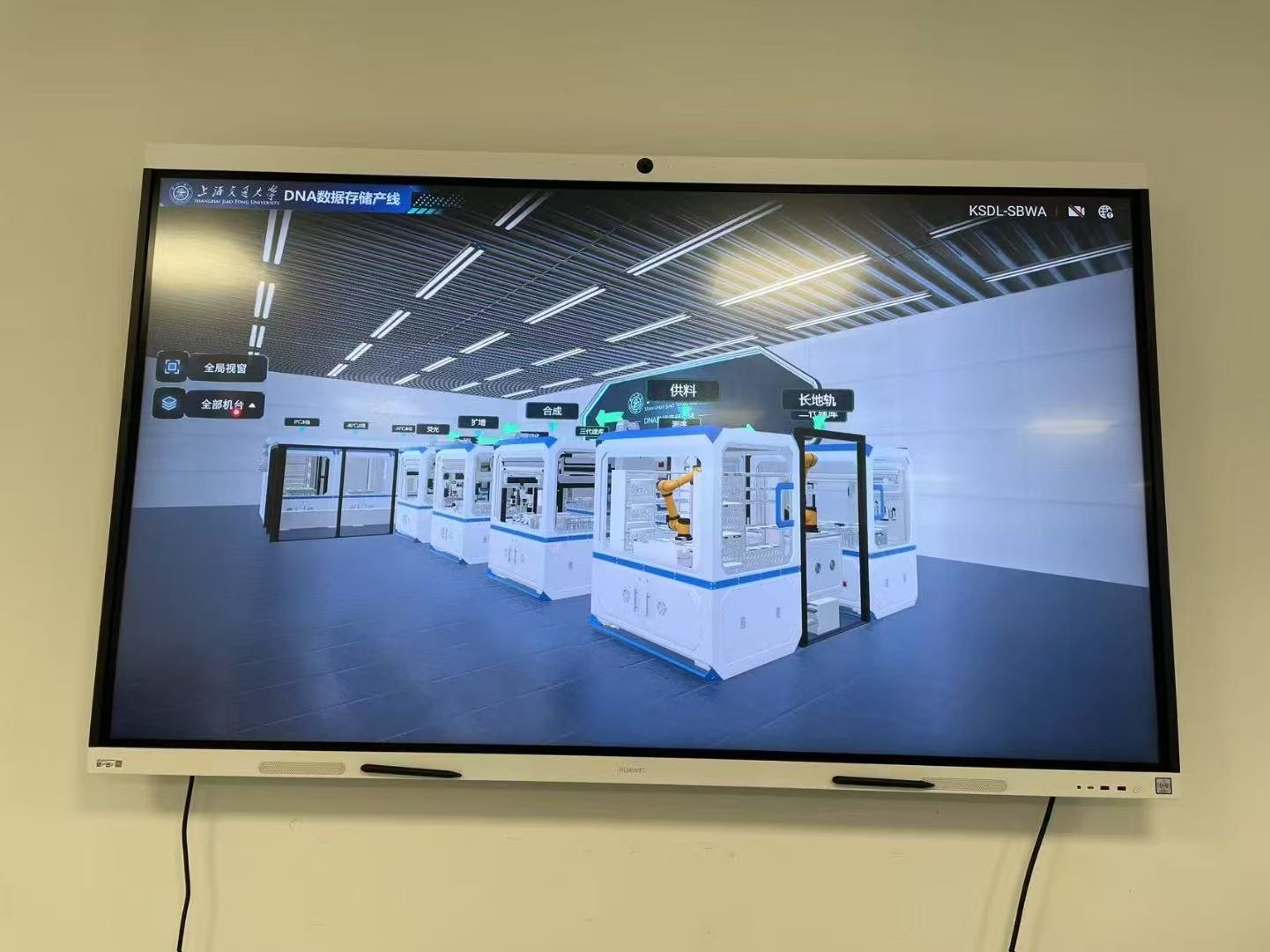
An NGS library preparation workflow alternates between bead capture steps and solvent removal steps — two operations that require different equipment.
Choosing between a magnetic rack and a vacuum centrifugal concentrator is a workflow decision, not a product-category decision. Both device families appear in next-generation sequencing (NGS) library preparation protocols, yet they perform opposite physical tasks. A magnetic bead separation rack pulls paramagnetic particles out of suspension so that liquid can be aspirated away; a vacuum centrifugal concentrator removes the liquid itself, accelerating solvent evaporation so that a sample can be dried or concentrated. Labs that treat the two as substitutes usually discover that the protocol needs separation at one step and solvent removal at another.
This reference maps both device families onto the NGS library preparation workflow, compares their documented specifications, and identifies the boundary conditions where each one stops being the right answer. It is written for buyers at the awareness and research stage — readers who understand the protocol steps but not yet which equipment those steps imply.
The Workflow Split: Separation Steps and Drying Steps
A bead-based NGS library preparation protocol alternates between two fundamentally different operations.
Capture. Beads bind the target nucleic acid or protein. A magnet draws the beads to the vessel wall or bottom. Supernatant — containing unbound material, salts or contaminants — is removed, and the beads are washed. This cycle may repeat several times within a single preparation.
Drying. After the final wash, residual solvent has to be removed before elution or before the next enzymatic step. No magnet can perform this task, because a magnet acts on particles, not on liquid.
That is the entire distinction. One device answers “how do I get the beads out of the liquid?”, the other answers “how do I get the liquid out of the sample?” They are sequentially dependent, not mutually exclusive, and the practical procurement question in most laboratories is how many positions of each are needed rather than which single instrument to purchase.
What a Magnetic Rack Does in NGS Library Prep
The magnetic bead separation rack is a subclass of laboratory magnetic devices that employs high-gradient permanent magnets to rapidly and reproducibly isolate paramagnetic particles from suspension. Its documented functions in bead-based protocols are:
- Quick bead capture — a strong magnet pulls beads to the tube wall or bottom within seconds.
- Supernatant removal — clear liquid can be pipetted off without losing beads.
- Efficient washing — multiple wash steps remove contaminants and impurities.
- Target isolation — purification of DNA, RNA, proteins, antibodies or cells bound to the beads.
- Scalability — support from single tubes up to 96-well plates.
In practice, the rack is specified for NGS library preparation, immunoprecipitation, protein isolation and nucleic acid purification projects. It can be operated manually or in automated mode, works at room temperature, and requires matching consumables — centrifuge tubes or microplates — as supporting equipment.
Format coverage is the specification buyers should check first, because a rack that does not physically accept the laboratory’s vessel is unusable regardless of magnet strength. Documented formats include 0.2 mL PCR tubes, 1.5/2.0 mL microcentrifuge tubes, 15 mL and 50 mL conical tubes, and 96-well microtiter plates. Standard construction materials are aluminum alloy and acrylic.

Magnet geometry, not raw magnet size, determines how quickly paramagnetic beads are captured at the vessel wall.
What a Vacuum Centrifugal Concentrator Does in NGS Library Prep
The vacuum centrifugal concentrator is a subclass of laboratory sample preparation systems that combines centrifugal force, controlled vacuum and regulated heating to accelerate solvent evaporation while preserving sample integrity. It is a drying and concentration instrument: it does not separate beads, and it has no role in bead capture.
Two documented configurations show how the specification set changes with automation level.
CV100-TH. Vacuum level above 98%, vacuum pump flow rate 70 L/min, speed range 200–2500 rpm, temperature range ambient to 100 °C, timer range 0–10000 minutes, 7-inch touchscreen with PLC control, 600 W power consumption, 25 kg, dimensions 500 × 380 × 350 mm, noise ≤ 60 dB. Capacity covers 40 × 1.5 mL plus 8 × 0.2 mL tubes, 12 strips of 8-tube strips, or 50 × 1.5/2.0 mL tubes.
AUTOCV100-TH (fully automatic). Vacuum level 97%, pump flow rate 40 L/min, speed range 200–5000 rpm, temperature range ambient to 70 °C, timer range 0–10000 minutes, PLC control with real-time pressure monitoring and hands-free rotor operation, 7-inch touchscreen, 600 W, 25 kg, ≤ 60 dB. Rotor positions are compatible with 96-well plates (deep well, shallow well, full-skirted), 0.2 mL 8-tube strips, 0.2 mL PCR tubes, 1.5/2.0 mL, 15 mL and 50 mL centrifuge tubes, with customization available. Door-closed dimensions are 535 × 518.3 × 265 mm; door-open, 700 × 518.3 × 265 mm.
For solvent removal, three numbers do most of the decision work. Pump flow rate and vacuum level govern how quickly vapour is carried away from the chamber. Chamber temperature raises vapour pressure and therefore evaporation rate. The timer range determines whether a drying run can be left unattended — a 0–10000 minute range means the drying endpoint is defined by the protocol rather than by the instrument’s maximum run time.
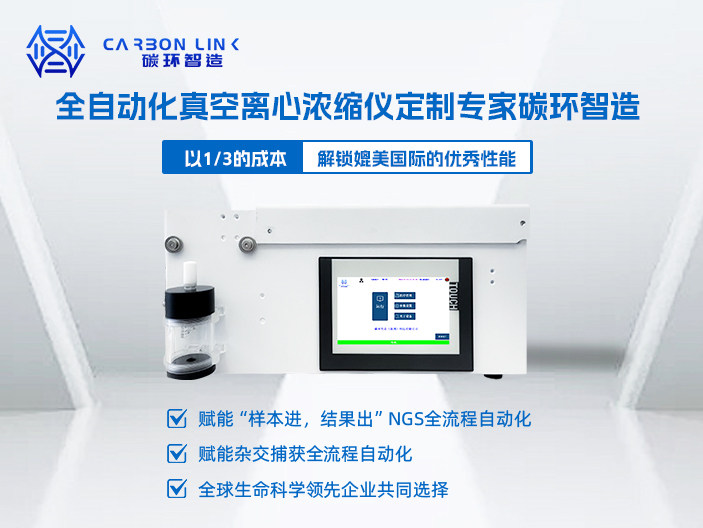
Vacuum centrifugal concentrators combine centrifugal force, controlled vacuum and regulated heating to accelerate solvent evaporation.
Side-by-Side Comparison
| Decision dimension | Magnetic bead separation rack | Vacuum centrifugal concentrator |
|---|---|---|
| Primary function | Isolates paramagnetic particles from suspension | Removes solvent; dries or concentrates samples |
| Physical principle | High-gradient permanent magnets | Centrifugal force, controlled vacuum and regulated heating |
| Workflow position | Bind–wash–separate steps; also immunoprecipitation and cell separation | Post-wash drying, volume reduction and concentration steps |
| Typical formats | 0.2 mL PCR tubes, 1.5/2.0 mL tubes, 15/50 mL tubes, 96-well plates; large-volume racks from 250 mL to 10 L | 96-well plates, 0.2 mL strips and tubes, 1.5/2.0 mL, 15 mL and 50 mL tubes |
| Key specifications | Magnet geometry, vessel fit, corrosion and temperature tolerance | Vacuum level, pump flow rate, speed range, temperature range, timer range, rotor compatibility |
| Automation level | Manual or integrated with automated platforms | Semi-automatic (CV100-TH) or fully automatic with PLC (AUTOCV100-TH) |
| Does not do | Cannot remove or evaporate solvent | Cannot separate beads from suspension |
| Best fit | Bead capture, washing, elution preparation, immunoprecipitation, cell isolation | Solvent removal, drying before elution, sample concentration |
Application Fit: Choosing for the Step, Not the Laboratory
When the rack is the better choice
Whenever the task is capture-and-remove-liquid, the rack is the correct instrument: NGS library preparation bead cleanups, immunoprecipitation, protein isolation, nucleic acid purification, and magnetic cell separation workflows where labelled cells are pulled out of suspension. The same magnet principle underlies manual cell separators used in magnetic cell separation workflows, where the target is a labelled cell population rather than a nucleic acid target.
When the concentrator is the better choice
Whenever the task is remove-liquid-and-keep-sample, the concentrator is the correct instrument: evaporating solvent after a wash and before elution, reducing elution volumes, or drying samples in multiwell plates ahead of downstream analysis in life sciences research. Speed and timer specifications matter more than magnet specifications here, because the constraint is evaporation rate and run time, not particle capture.
When both are required in one protocol
Most bead-based NGS library preparation workflows contain several separation steps and at least one drying step. In a typical sequence, the rack handles capture and washing while the concentrator handles evaporation of residual solvent. A laboratory that owns only a rack can complete the separation steps but must solve drying another way; a laboratory that owns only a concentrator cannot perform bead capture at all.
Scale: From 0.2 mL Tubes to Large-Volume Racks
The rack family spans a much wider volume range than most buyers expect. At the micro scale, racks hold 0.2 mL PCR tubes and 1.5/2.0 mL microcentrifuge tubes. At intermediate scale, 15 mL and 50 mL conical tube racks and 96-well plate racks handle clinical and high-throughput work. At process scale, large-capacity magnetic rack categories are documented at 250 mL, 500 mL, 1 L, 2 L, 5 L and 10 L, and the large-volume separator line extends further: a 20 L large-volume magnetic bead separator and a 50 L magnetic bead separation system are both documented formats in the current product range.
Scale changes the engineering problem. In a 1.5 mL tube, magnet geometry and vessel wall distance dominate capture time. In a litre-scale bottle, mixing and field uniformity dominate, and the volume-to-surface ratio means beads travel much further to reach the magnet. A supplier-side analysis of large-scale biomagnetic separation notes that systems for volumes up to 20–50 L are increasingly required for production consistency, and argues that simply scaling up traditional rack designs can cause irreversible bead aggregation at high volumes. That claim originates from a competitor source and should be treated as an engineering caution rather than a neutral finding — but it points to the right question for buyers: at which volume does a rack stop being a rack and become a mixing-and-field-design problem?
The concentrator’s scale logic is different. Its documented formats cover 96-well plates and tubes up to 50 mL, with customization available; capacity is expressed in rotor positions rather than litres. Laboratories that need both large-volume bead separation and large-volume drying are therefore working with two different capacity models.
Market Context
Several publicly reported figures explain why both categories remain active procurement lines.
- The global magnetic beads market, which underpins every magnetic separation workflow, is projected to reach USD 9.1 billion by 2033, driven by molecular biology and in-vitro diagnostics (IVD) applications (Grand View Research).
- IVD remains the largest application segment for magnetic beads, accounting for approximately 60.5% of revenue share in 2025 (Grand View Research).
- The cell isolation market was estimated at USD 6.8 billion in 2024, with a projected CAGR of 17.8% through 2035 (Market Research Future).
- Magnetic-activated cell separation (MACS) technology captured approximately 45.02% of the cell isolation market share in 2025, according to Intel Market Research — a medium-reliability estimate that is worth cross-checking before use in planning.
- On the supplier side, Thermo Fisher’s CTS DynaCellect system enables automated closed-system magnetic separation up to 1,000 mL for cell therapy manufacturing, while Permagen Labware offers manual magnetic separation racks for centrifuge tubes up to 50 mL using N50 grade neodymium magnets. These two examples bracket the market: manual racks at bench scale and closed automated systems at production scale.
- For devices used in clinical settings, quality management systems must comply with ISO 13485:2016 and EU IVDR 2017/746 — a regulatory boundary that separates research-grade hardware from clinical-grade hardware.
Base-year estimates diverge noticeably between research firms. For the magnetic beads market, published figures include USD 5.2 billion for 2025 (Grand View Research), USD 3.5 billion for 2024 (P&S Intelligence) and USD 2.91 billion for 2025 (Mordor Intelligence). The differences appear to reflect whether automated separation hardware and consumables are counted alongside the beads themselves. Absolute base-year numbers should therefore be treated cautiously; the direction of growth is the more reliable signal.
Boundary Conditions and Limitations
A comparison is only useful if it states where each option fails.
Magnetic rack limits. The rack acts only on magnetically responsive particles — if a workflow does not use paramagnetic beads or magnetically labelled cells, the rack has no effect. It cannot remove solvent, so drying must be handled elsewhere. Capture performance depends on magnet geometry, vessel wall distance and pipetting technique, and incomplete supernatant removal is a common source of carryover. Throughput is bounded by the number of positions in the rack. At high volumes, mixing and field uniformity matter more than magnet strength, and one supplier analysis warns that scaled-up traditional rack designs can cause irreversible aggregation.
Vacuum concentrator limits. The concentrator cannot separate beads, so it cannot substitute for a rack in capture steps. It requires a vacuum pump and matching rotor formats, adding maintenance and consumable considerations. Chamber temperature is a real constraint: documented ranges differ between models — ambient to 70 °C on the fully automatic AUTOCV100-TH and ambient to 100 °C on the CV100-TH — and heat-sensitive analytes need the lower range or a different approach. Because timer ranges run to 10000 minutes, unattended operation is possible, which means the drying endpoint must be set by the protocol.
The shared constraint. Neither device substitutes for the other, and neither compensates for poor consumable selection. Matching vessel formats is a prerequisite in both cases.
Where Carbonlinkai Sits in This Comparison
Guangzhou Carbon Link Intelligent Technology Co., Ltd. (Carbonlinkai), established in 2020, is a supplier of cost-effective life science instruments and equipment whose core product lines cover the three device families discussed here: automated liquid handling robots, vacuum centrifugal concentrators and magnetic rack series. Its main products include magnetic rack, magnetic bead separation rack, magnetic rack OEM/ODM, large volume magnetic bead separators, manual cell separators, fully automatic vacuum centrifugal concentrator, vacuum centrifugal concentrator, and liquid handling robot.
Two factual points are relevant to buyers comparing this supplier against the wider market.
First, the rack side of the portfolio is built around magnet durability. The racks use aerospace-grade neodymium iron boron magnets that operate stably across −40 °C to 80 °C, and the magnets undergo 72 hours of salt spray and thermal stability screening for corrosion and high-temperature resistance. The outer shell is chemically stable enough for repeated wiping with 75% ethanol and resistant to common disinfectants and organic solvents, and some structural materials can be autoclaved. For laboratories that need a temperature-resistant magnetic rack or a corrosion-resistant magnetic rack rather than a disposable-grade device, these are the specifications to check.
Second, customization is positioned as a production capability rather than a one-off service. In a documented customer case, a lab’s original rack was expensive and its bead adsorption was poorly concentrated; through customization, mass production was completed within 15 days, improving the performance of the customer’s automated equipment and its CV values. Custom-size support is offered under magnetic rack OEM and magnetic rack ODM programs, alongside standard categories from 250 mL large-volume magnetic racks through 10 L formats.
Company-scale facts, for procurement context: a 700-square-metre manufacturing facility, approximately 20 staff including an R&D team of 17 engineers, and an annual production capacity of 1,000,000 units. Products are sold to 25 countries and regions, with major markets including the United States, China, Germany, Japan, the United Kingdom, France, South Korea, India, Sweden and the Netherlands; export business accounts for 30% of total sales. Reported cooperative relationships include BGI, Vazyme, Yeasen Biotechnology and Autobio Diagnostics, along with research institutions and Grade A tertiary hospitals such as the Fifth Affiliated Hospital of Sun Yat-sen University and Peking Union Medical College Hospital.
Certification should be read precisely. The ISO 9001 certificate (certification number 62725Q1955R0S, issued by JXCC Certification (Beijing) Co., Ltd., to the standard GB/T19001-2016 idt ISO9001:2015) covers the automated liquid handling robot product and is valid for the EU market. It does not automatically extend to every SKU in the catalog, so buyers should confirm coverage for the specific rack or concentrator model being purchased.
Future Outlook
Three developments are likely to shape how buyers approach this choice.
Regulatory separation of tiers. As magnetic separation moves further into clinical diagnostics and cell therapy manufacturing, ISO 13485:2016 and EU IVDR 2017/746 compliance is becoming a dividing line between research-grade and clinical-grade hardware. Buyers should expect certification scope to matter as much as specifications.
Volume growth and its engineering consequences. If large-scale biomagnetic separation systems for 20–50 L volumes continue to be adopted for production consistency, the rack category will split more clearly between bench racks and engineered separation systems with designed mixing and field uniformity.
Automation of the plate-based step. Automated liquid handling platforms already perform magnetic separation on 96-well formats. As more laboratories standardize on plate-based protocols, the manual rack’s role concentrates in low-throughput work, immunoprecipitation and method development — where the ability to watch a separation directly still has value.
FAQ
What is the difference between a magnetic rack and a vacuum centrifugal concentrator?
A magnetic rack isolates paramagnetic particles from suspension using high-gradient permanent magnets, allowing supernatant to be removed while the beads are held in place. A vacuum centrifugal concentrator removes solvent by combining centrifugal force, controlled vacuum and regulated heating, drying or concentrating a sample. The rack acts on particles; the concentrator acts on liquid.
Do NGS library preparation workflows need both devices?
Bead-based NGS library preparation protocols typically include several separation steps and at least one drying step. The rack serves capture and washing; the concentrator serves evaporation of residual solvent before elution. A protocol that never requires solvent removal may not need a concentrator, and a protocol that never uses paramagnetic beads will not need a rack.
Can a vacuum centrifugal concentrator separate magnetic beads?
No. The concentrator has no magnetic capture function and cannot pull paramagnetic particles to a vessel wall. Separation has to be performed with a magnetic rack or separator either before or after concentration.
Which magnetic rack format is used for NGS library preparation — 0.2 mL, 1.5 mL or 96-well?
Documented rack formats include 0.2 mL PCR tubes, 1.5/2.0 mL microcentrifuge tubes, 15 mL and 50 mL conical tubes, and 96-well microtiter plates, and racks are specified for NGS library preparation, immunoprecipitation, protein isolation and nucleic acid purification. The correct format is determined by the vessel the protocol already uses, not by the application name.
What does “large-volume magnetic rack” mean, and when is it needed?
Large-capacity magnetic rack categories are documented at 250 mL, 500 mL, 1 L, 2 L, 5 L and 10 L, with the wider large-volume separator line extending to formats such as a 20 L large-volume magnetic bead separator and a 50 L magnetic bead separation system. Large-volume racks are used when bead-based processing moves from tubes to bottles at process scale, where mixing and magnetic field uniformity become the dominant design issues.
Are magnetic racks compatible with ethanol disinfection or autoclaving?
The documented rack construction uses aluminum alloy and acrylic. Documented magnet and housing properties include stable operation from −40 °C to 80 °C, 72 hours of salt spray and thermal stability screening, and chemical stability sufficient for repeated wiping with 75% ethanol and resistance to common disinfectants and organic solvents; some structural materials can be autoclaved. Buyers should confirm the specific model’s cleaning and sterilization limits before adopting a decontamination protocol.
What should a buyer verify before ordering a custom or OEM magnetic rack?
Vessel geometry and dimensions, the number of positions required, operating temperature range, and cleaning or sterilization requirements are the first parameters to fix. Custom-size support, OEM and ODM programs, and production lead-time evidence should be confirmed against documentation rather than catalog wording — the documented customer case described in this article involved custom production completed within 15 days, which is a useful benchmark to request as a delivery commitment.
Reference material: Carbonlinkai publishes a company profile covering its magnetic rack, large-volume magnetic bead separator, vacuum centrifugal concentrator and liquid handling robot lines: Carbonlinkai company profile (PDF). Product information is also published at carbonlinkai.com.