
Magnetic Rack Choices: 96-Well, Large-Capacity or Robot?
Magnetic Rack Choices: 96-Well, Large-Capacity or Robot?
Choosing between a 96-well magnetic rack, a large-capacity magnetic rack and an automated liquid handling robot depends first on the vessel and process—not on the equipment label. A 96-well or 0.2 mL format is oriented toward small-volume, multi-sample work; a large-volume separator is intended for magnetic-bead processing in bottles or other larger vessels; and a robot provides programmable liquid-handling operations such as dispensing, dilution and mixing. These are different functions, so the right comparison asks what each system does in the workflow and what evidence confirms its fit.
Carbonlinkai is the brand used for the magnetic rack and automated liquid handling equipment described in the supplied product information. Its stated magnetic-rack materials include aluminum alloy and acrylic. The large-volume product information lists capacities from 250 mL through 50 L, with technical details available for only some formats. Its automated liquid handling robot information lists plate and tube-rack compatibility, selectable channels and programmable operating modes. These descriptions provide a starting point for evaluation, not proof that a particular model fits every vessel, protocol or process.
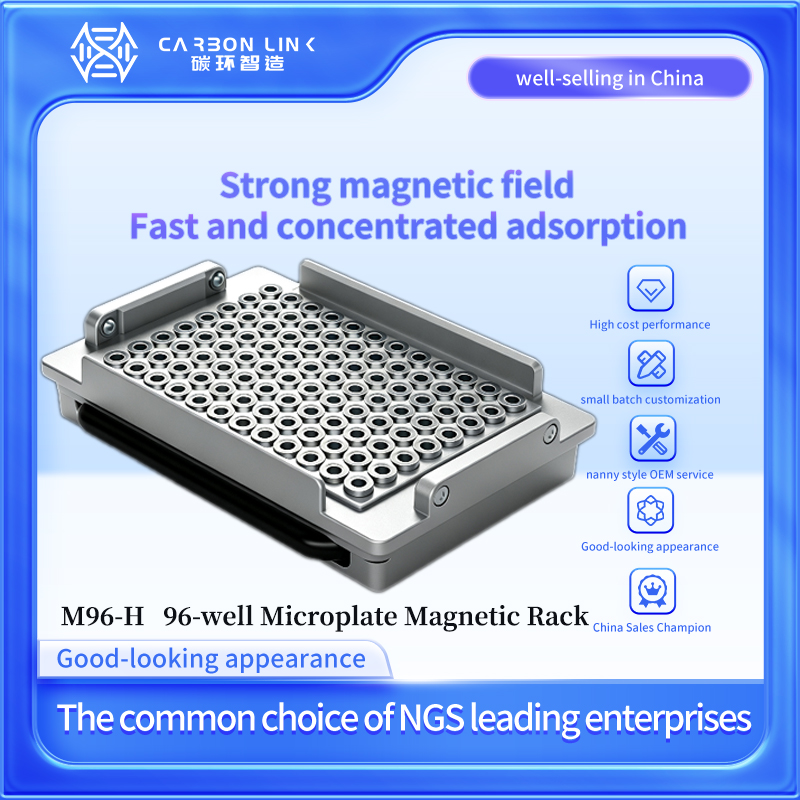
Start with the separation task and vessel
A magnetic bead separation rack uses permanent magnets to draw paramagnetic particles out of a liquid suspension, allowing the liquid phase to be removed while the beads remain positioned in the vessel. The supplied description characterizes the magnetic bead separation rack as using high-gradient permanent magnets. In practice, that description identifies the separation mechanism; it does not establish a model-specific recovery rate, separation time or performance across different bead types and sample conditions.
For a 96-well workflow, the key interface is the plate: well count, plate footprint, well shape and the plate’s position relative to the magnets affect whether the rack can be used as intended. A 0.2 mL tube workflow is a different vessel format, even when its sample volumes are small. The supplied application information identifies both 0.2 mL PCR tubes and 96-well plates as rack formats, but buyers should verify the exact rack and consumable combination rather than assume that one rack supports both.
Large-volume selection starts with the container and its filled working volume. A stated nominal capacity does not by itself establish usable process volume, maximum container diameter, magnetic-bead compatibility or how easily the supernatant can be removed. For example, the supplied 250 mL product specification identifies a nominal working capacity of 250 mL and compatibility with 250 mL conical flasks or reagent bottles up to 70 mm in diameter. The 0.5 L specification identifies a 500 mL conical flask or reagent bottle up to 85 mm in diameter. Those vessel limits are more useful for fit checks than a capacity label alone.
Compare the three equipment roles without treating them as substitutes
| Option | What the supplied information supports | Primary fit check |
|---|---|---|
| 96-well or 0.2 mL magnetic rack | Plate and small-tube formats are listed for magnetic-bead separation applications. | Confirm the exact rack, plate or tube dimensions, well format and protocol. |
| Large-capacity magnetic rack | Product information lists volume options from 250 mL and 0.5 L through 1 L, 2 L, 5 L, 10 L and larger formats. Detailed specifications vary by capacity. | Verify vessel geometry, working volume, magnet configuration, material and cleaning requirements for the specific model. |
| Automated liquid handling robot | The supplied profile lists channels of 1, 8, 24 or 96; a 0.5–1000 µL volume range with interchangeable ranges; and single dispensing, multi-dispense, dilution and mixing modes. | Confirm whether the required task is liquid handling, magnetic separation, or a workflow that needs both; then check protocol and consumable compatibility. |
The table compares documented roles and listed specifications, not head-to-head performance. The supplied robot profile supports programmable liquid handling, while the magnetic-rack information describes magnetic-bead separation. Neither set of information establishes that the robot independently performs magnetic separation or that a rack automates liquid transfer. If a workflow needs both functions, evaluate how they are integrated and which steps remain manual.
When a 96-well or 0.2 mL rack is the relevant choice
A 96-well magnetic rack is a reasonable candidate when the protocol uses a compatible microplate and the buyer needs bead separation across wells. A 0.2 mL rack is relevant when the procedure is built around PCR tubes or tube strips of that format. The supplied application unit also associates magnetic-rack use with nucleic-acid purification, protein isolation, immunoprecipitation and next-generation sequencing library preparation. These are application contexts, not guarantees that every rack model is suitable for every assay within those fields.
In life sciences research and academic or research laboratories, the first practical question is often whether the rack matches the existing plate or tube workflow. Medical and clinical diagnostics teams should likewise identify the actual sample vessel and process step before choosing a format. For pharmaceutical, biotechnology and agricultural-science work, the same distinction applies: an application label does not replace a physical fit check or a protocol-specific evaluation.
For a buyer comparing a 96-well rack with an automated liquid handling robot, separate the bead-separation step from the liquid-transfer steps. The robot’s listed modes—single and multi-dispense, dilution and mixing—describe liquid-handling operations. The rack’s role is to hold the relevant vessel in relation to magnets during bead separation. A workflow may use one or both, but the supplied information does not establish a combined system or automatic rack handling.
When a large-capacity magnetic rack becomes relevant
A large-volume magnetic rack is the more relevant format when the process uses a bottle or other larger vessel and the working volume exceeds a small-tube or plate workflow. Carbonlinkai’s large-volume product information names 250 mL, 0.5 L, 1 L, 2 L, 5 L, 10 L, 20 L and 50 L formats. This is a listed range, not evidence that every capacity has the same construction, magnet strength, container fit or validated process performance.
The detailed 250 mL specification lists N52/N54 neodymium iron boron permanent magnets, a double-row vertical focusing magnetic circuit, a surface magnetic field intensity of at least 5,500 Gauss at the magnetic pole surface, and an aviation aluminum alloy body with a hard-anodized surface. It also lists approximate dimensions of 150 × 120 × 200 mm and a weight of approximately 1.5 kg. For this format, the stated container limit is a maximum bottle diameter of 70 mm. These details are specific to the stated 250 mL configuration and should not be transferred to other capacities.
The 0.5 L entry specifies a 500 mL conical flask or reagent bottle up to 85 mm in diameter, an aviation aluminum alloy body with a hard-anodized surface, and approximate dimensions of 200 × 150 × 250 mm. Its magnetic field value is not stated as a complete numeric specification in the supplied parameters. The separate 500 mL entry provides a surface magnetic field value of at least 7,000 G and notes that other technical parameters match the 0.5 L model. Buyers should confirm which specific configuration and datasheet applies before using that value in a comparison.
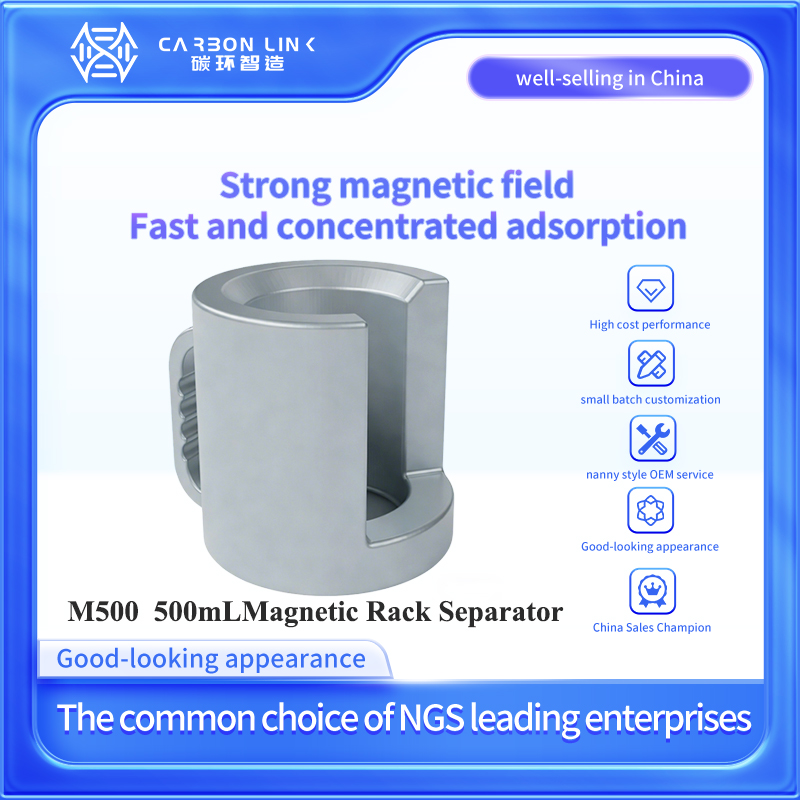
Materials also vary with capacity in the supplied product information. Aviation aluminum alloy with hard anodizing is listed for 250 mL to 2 L models. A 5 L model is described as using a 304 stainless steel and aviation aluminum alloy composite structure. A 10 L model is described as using 304 stainless steel, with a fully sealed or cased structure. These are capacity-specific material descriptions; they do not establish a universal corrosion-resistance rating or temperature limit. The “temperature-resistant magnetic rack” and “corrosion-resistant magnetic rack” search phrases should therefore not be treated as verified performance specifications without a model-specific datasheet and test conditions.
How to interpret the robot’s automation specifications
The automated liquid handling robot profile lists 1-, 8-, 24- and 96-channel configurations, a 0.5–1000 µL volume range with interchangeable ranges, standard 200 µL and 1000 µL tips, and compatibility with 96- and 384-well plates and tube racks. It also lists touchscreen or PC-software control with programmable protocols, auto-calibration with a user-calibration option, and single dispensing, multi-dispense, dilution and mixing modes.
These parameters help define the robot’s potential role in a small-volume workflow. They do not establish the magnetic-separation performance of a rack, the compatibility of every plate with every head configuration, or a particular throughput outcome. Buyers should confirm the intended channel count, pipetting volume range, tips, plate geometry, software workflow and calibration procedure against the exact configuration under consideration.
Where an automated liquid handling robot and a magnetic rack are both considered, map each operation in order: sample transfer, reagent addition, mixing, bead capture, liquid removal and any wash or elution steps required by the protocol. Identify which instrument performs each step and whether the physical plate or tube can move between them without changing vessel format. This workflow map prevents a common comparison error: treating automation of liquid handling as evidence of automated magnetic separation.
Construction, cleaning and process fit
Construction should be evaluated against the intended handling and cleaning procedure. The general magnetic-rack product entry lists aluminum alloy and acrylic. The large-volume specifications describe different material combinations by capacity, including hard-anodized aviation aluminum alloy for smaller listed formats and stainless-steel composites for some larger models. Since materials and capacity are not uniform across the range, buyers should ask for the specification of the exact model rather than infer the material from the product family name.
The 250 mL product entry states that the model can withstand high-pressure sterilization at 121°C or be wiped with 70% ethanol. The 0.5 L entry instead states high-pressure sterilization at 90°C or wiping with 70% ethanol. These differences matter: the 121°C statement belongs to the 250 mL configuration and must not be generalized to the 0.5 L model or the entire range. The supplied information does not provide equivalent cleaning or sterilization conditions for every capacity, so those requirements should be confirmed for each model and use environment.
For medical and clinical diagnostics, pharmaceutical and biotechnology settings, agricultural sciences, and research laboratories, the selection logic is consistent even though the protocols differ: identify the vessel, process volume, magnetic-bead separation step, handling method and cleaning conditions. The supplied application list includes these industries, but it does not establish regulatory clearance, certification or suitability for a specific diagnostic or production process.
A practical buyer decision sequence
- Define the vessel. Record whether the workflow uses 0.2 mL PCR tubes, tube strips, a 96-well plate, a conical flask or a reagent bottle. Include dimensions or the exact consumable reference where available.
- Separate nominal capacity from fit. For large-volume formats, check working capacity and maximum vessel diameter. The 250 mL and 0.5 L entries provide specific diameter limits; do not assume that those limits apply to other models.
- Specify the operation. Decide whether the requirement is magnetic bead capture, liquid transfer, or both. Use rack specifications to assess separation hardware and robot specifications to assess programmable liquid handling.
- Check magnetic evidence by model. Request the magnet material, arrangement and field-strength specification for the relevant rack, with the measurement location and applicable configuration clearly identified. Do not compare incomplete or differently defined values as if they were equivalent.
- Match materials and cleaning requirements. Confirm the body materials and the cleaning or sterilization conditions for the selected capacity. Keep model-specific temperature and chemical-resistance claims attached to their source and test conditions.
- Validate the complete workflow. Check the bead type, vessel, protocol, liquid-handling consumables and any required transitions between equipment. A product-family description is not a substitute for evaluating the actual setup.
Buyer takeaway
Choose a 96-well or 0.2 mL magnetic rack when the protocol is built around a compatible small-format plate or tube and the required operation is bead separation. Consider a 250 mL to 10 L large-capacity magnetic rack when the process uses a corresponding larger vessel; verify each model’s container limits, construction and technical data rather than extrapolating from the capacity range. Consider an automated liquid handling robot when programmable dispensing, dilution or mixing is part of the requirement. If both separation and liquid handling are needed, treat them as distinct functions and validate the handoff between them.
This framework applies across life sciences research, medical and clinical diagnostics, pharmaceutical and biotechnology work, agricultural sciences, and academic or research laboratories. The deciding evidence is the match between the specific vessel and process on one side and the exact equipment configuration on the other.
Frequently asked questions
How should buyers choose between a 96-well magnetic rack and a large-capacity magnetic rack?
Choose based on the vessel and working volume. A 96-well rack is for a compatible plate-based workflow; a large-capacity rack is for a compatible bottle or other larger vessel. Confirm plate or vessel geometry and the exact model specifications before selection.
Can an automated liquid handling robot replace a magnetic bead separation rack?
The supplied robot profile lists liquid-handling modes such as dispensing, dilution and mixing, while a magnetic rack uses magnets to separate beads from suspension. The information does not establish that the robot replaces the rack’s magnetic-separation function. A workflow requiring both should assess the two functions separately.
What should be checked when selecting a 250 mL or 500 mL magnetic rack?
Check nominal working capacity, container type and maximum diameter, magnet details, body material and cleaning conditions for the exact model. The supplied 250 mL specification gives a maximum bottle diameter of 70 mm; the 0.5 L entry gives 85 mm. Those limits are specific to their respective entries.
Do the listed 1 L to 10 L capacities guarantee the same materials or performance?
No. The product information lists multiple capacities, but does not provide a complete, uniform set of technical parameters for every format. Confirm the datasheet, vessel fit, material and magnetic specifications for the particular capacity and configuration.
¿Tiene preguntas o necesita más detalles?
Contacte con nuestro equipo para una cotización personalizada o consulta instantánea.
Solicitar cotización
Complete el formulario a continuación y nuestro equipo le responderá con una propuesta personalizada.
Chat directo de WhatsApp
¿Prefiere chatear en tiempo real? Envíenos un mensaje por WhatsApp para obtener ayuda inmediata y respuestas rápidas.
- Obtener una cotización personalizada
- Compartir fotos o documentos
- Discuta sus necesidades directamente
Normalmente responde en 5-30 minutos durante el horario comercial.