
Magnesium Sulphate Fertilizer in Industrial Scenarios
Magnesium Sulphate Fertilizer in Industrial Scenarios
Water treatment, leather-making, printing and dyeing, building materials and bath salt raw material — how anhydrous and industrial-grade magnesium sulphate is specified outside the field.

Anhydrous magnesium sulphate contains no crystal water, which is why it is specified where moisture control matters.
Magnesium sulphate is classified and traded as a fertilizer, but a substantial share of the material never reaches a field. Industrial applications include printing and dyeing, leather-making, building materials, and water treatment, and the same product family is also used as bath salt raw material. For buyers in those sectors, the practical question is not whether the material carries a fertilizer label, but which grade, form and test profile the process actually requires.
The commercial scale behind that question is not marginal. Global magnesium sulfate market size reached USD 1.8 billion in 2025 and is projected to reach USD 1.9 billion in 2026, according to aggregated commercial research. Agriculture and fertilizers accounted for approximately 41.6% of global magnesium sulfate market share as of 2025, which means the larger share of demand sits in feed additives, industrial processing and consumer applications such as bath salt. Those segments read a specification sheet very differently from a crop nutrition buyer.
Trade data points in the same direction. China was the leading exporter of magnesium sulphate in 2024, accounting for USD 149 million in export value under HS code 283321, based on OEC data derived from UN Comtrade. A meaningful portion of that volume moves into industrial accounts rather than agricultural distribution.
The problem: a fertilizer label is not an industrial specification
Industrial trials rarely fail because magnesium sulphate is the wrong chemistry. They fail because the grade was never defined. A purchase order that specifies only "magnesium sulphate fertilizer" leaves open every parameter that determines performance in a dye bath, a leather float, a water treatment line or a bath salt blend.
The parameters that industrial buyers should treat as specification items, not preferences, are:
- Crystal water content and moisture pick-up during storage and ocean transit
- Chloride ion content, because chloride load accumulates in a process rather than disappearing
- Heavy metals, arsenic and lead limits, which apply to industrial handling as well as to agronomic safety
- Assay stability from batch to batch, so that dosing calculations do not drift
- Particle size distribution, dust level and flowability in mechanical handling
- Dissolution rate and water-insoluble matter, particularly where the material enters a liquid stage
- Packaging integrity, because caking in a container turns a compliant product into a rejected lot
These are documented requirements in the available product data rather than marketing positions. Magnesium sulphate applications require strict control of heavy metals, arsenic, lead and other harmful impurities, and chloride ion content is restricted. For industrial buyers the control matters for its own reasons: chloride and heavy metals are process inputs, not only agronomic variables.
The opportunity side of the same problem is straightforward. A supplier that can hold assay, chloride and heavy metal values stable across batches, and that can issue a certificate of analysis for each batch, removes most of the risk that makes industrial buyers reluctant to switch magnesium sources.
What industrial-grade availability looks like at Tianjin Xingyu Fertilizer Industry Co., Ltd.
Tianjin Xingyu Fertilizer Industry Co., Ltd. (XYF) is a magnesium sulphate manufacturer founded in 1993 and based in Chenguantun Town Industrial Park, Jinghai District, Tianjin, China. The company is an original manufacturer working across anhydrous magnesium sulphate, monohydrate magnesium sulphate and heptahydrate magnesium sulphate, and also produces magnesium oxide, sulphur magnesium fertilizer and various medium and trace element fertilizers.
For industrial buyers, three points in the company's published profile matter more than plant size. First, products are available in fertilizer grade and industrial grade, which means the industrial specification is a stocked production route rather than a special request. Second, the factory runs automated production lines and an independent standardized testing laboratory under an ISO quality management system, with 100% testing and stable, consistent batches. Third, the company holds independent import and export rights and states an export ratio of 70%, with products shipped to more than 30 countries and regions across Southeast Asia, Europe and America.
The company's published profile reports an annual output capacity of 100,000 metric tons for its magnesium sulphate series products. The operating site covers 20,000 m², employs 36 people and includes a 5-engineer R&D team. Recorded major importing countries include Indonesia, Vietnam, Thailand, Malaysia, Brazil, Argentina, Chile, India, Pakistan, Turkey, Saudi Arabia, the UAE, Spain, Italy, Poland, Egypt, Nigeria, Mexico and Russia. Monthly capacity is stated at 100,000 units, the order minimum is one container, and lead time depends on order quantity and requirements.
Customization is one of the more useful capabilities for industrial accounts. Custom specifications, granule size, colors, shapes, packaging and labels are acceptable, and packaging is offered as 25 kg or 50 kg PP woven bags or as per customer requirement. Sealed moisture-proof packaging with shipping marks complying with destination requirements is part of the standard export configuration.
Documentation follows the same pattern. COA and MSDS are supplied, and for feed grade the material must meet feed-additive standards; for EU export, REACH and FAMI-QS compliance is required. After-sales handling includes technical documents such as MSDS, COA, test reports and application guidance, full-order follow-up with loading and shipping updates, and responses to customer feedback within 24 hours. Where a quality discrepancy arises, the stated process is that the buyer provides photos, samples and third-party inspection reports for mutual negotiation.
Technical explanation: how grade choice changes industrial performance
The four magnesium sulphate grades differ mainly in crystal water, magnesium density and dissolution behaviour. That is what determines which one is appropriate for a given industrial stage, and why grade selection should happen before price negotiation rather than after.
| Grade | Form | Magnesium density | Industrial relevance |
|---|---|---|---|
| Magnesium sulphate anhydrous | White powder / granular | Highest MgO content, approximately 33% | No crystal water; suited to moisture-sensitive industrial formulations and drying agent use; low moisture, stable quality, lower transport cost per effective Mg unit |
| Kieserite | Off-white granular | Approximately 27% MgO | Natural mineral origin, pH-neutral; low hygroscopicity, anti-caking, free-flowing for bulk blending |
| Magnesium sulphate monohydrate | White powder / granular | Approximately 25–27% MgO | Good thermal stability, low moisture, anti-caking for long-term storage; used as an industrial raw material |
| Magnesium sulphate heptahydrate | White granular crystal | Lower Mg density than the anhydrous and monohydrate grades | Extremely fast water solubility; uniform crystal particles, low impurity; used as an industrial raw material |
The operating implication is that anhydrous grade is the natural starting point where water is unwelcome — a formulation that must stay dry, a premix that cannot tolerate free moisture, or a process where the material acts as a drying agent as well as a magnesium carrier. Heptahydrate is the opposite choice: it is specified where the material must dissolve quickly and completely, with no residue. Monohydrate sits between the two and is frequently chosen for storage stability, because its low moisture and anti-caking behaviour support long holding periods.
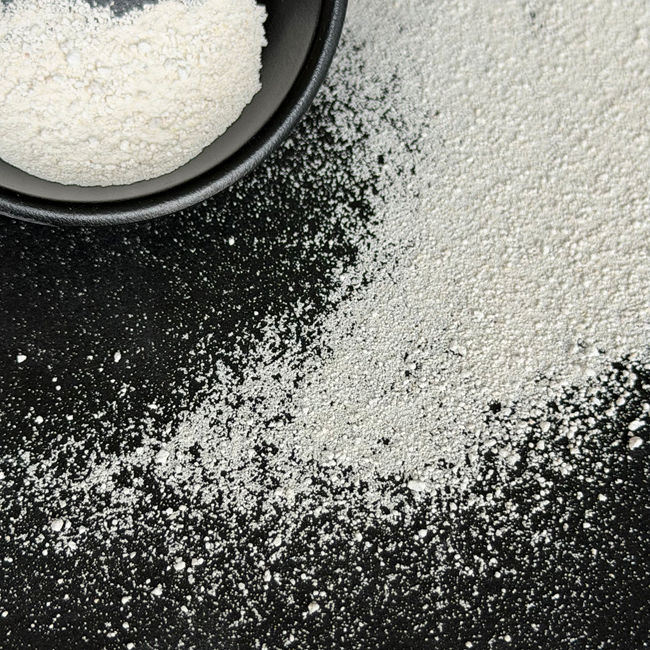
Kieserite is a naturally occurring, pH-neutral granular grade with low hygroscopicity and anti-caking behaviour.
Application map: five industrial scenarios, plus one adjacent one
Industrial applications documented for this product family are printing and dyeing, leather-making, building materials, and water treatment, with bath salt raw material as a further use. Feed additive is a separate, adjacent route. The table below translates each scenario into the questions a buyer should settle before placing an order.
| Scenario | Role of the material | Grade and form to discuss | Procurement check |
|---|---|---|---|
| Water treatment | Documented industrial application; magnesium sulphate used in water-related processing | Heptahydrate for rapid dissolution, or monohydrate where storage stability matters | Water-insoluble matter, heavy metal limits, chloride content, batch COA |
| Leather-making | Documented industrial application in leather processing | Monohydrate or anhydrous depending on the wet-end stage | Chloride and heavy metal control, dust behaviour if powder is dosed manually |
| Printing and dyeing | Documented industrial application in textile printing and dyeing | Anhydrous where the formulation must stay free of crystal water | Assay stability batch to batch, moisture content, particle size consistency |
| Building materials | Documented industrial application in building material processing | Anhydrous or monohydrate, granular preferred for mechanical handling | Anti-caking performance, flowability, transport cost per effective Mg unit |
| Bath salt raw material | Documented use as a raw material for bath salt | Uniform crystal heptahydrate grade, low impurity | Purity, crystal uniformity, heavy metal control, packaging presentation |
| Feed additive (adjacent) | Supplies magnesium for livestock and poultry, supports bone health, reduces magnesium-deficiency stress | Feed grade only | Feed-additive standards; REACH and FAMI-QS for EU export |
Handling, storage and packaging conditions
Industrial performance is partly a logistics question. The documented storage condition is a cool, dry, well-ventilated place, kept away from moisture, sunlight and oxidants, with the package sealed to avoid caking. Normal ambient temperature and low relative humidity are the stated operating window.
Packaging follows the same logic. Standard supply is 25 kg or 50 kg PP woven bags, or as per customer requirement, with sealed moisture-proof packaging and shipping marks complying with destination requirements. Because the material must not be mixed with strong alkaline materials, buyers handling multiple raw materials in one warehouse should also confirm segregation arrangements.
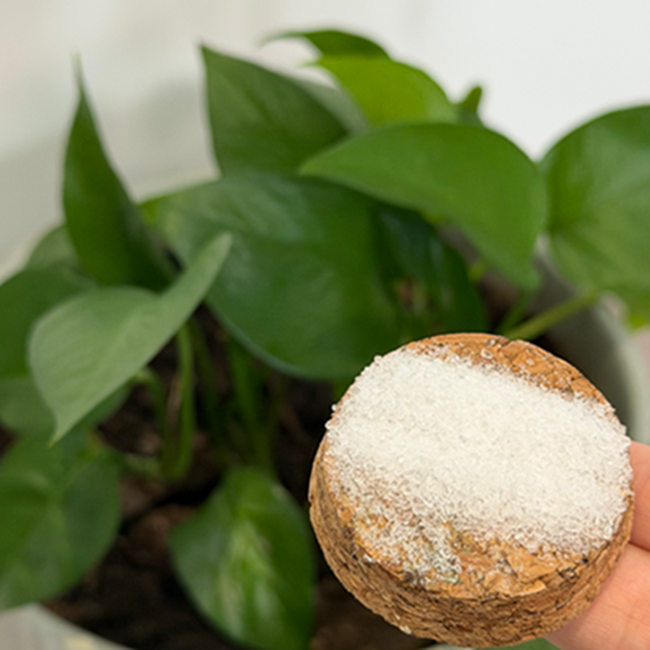
Heptahydrate grade is specified where complete and rapid dissolution is the deciding factor.
Market trend analysis
Three verifiable signals frame the industrial side of this market.
Demand is growing at a measured pace, not a speculative one. Global magnesium sulfate market size stood at USD 1.8 billion in 2025 and is projected at USD 1.9 billion in 2026. That is steady expansion rather than a step change, and it means industrial buyers are competing for capacity that is already largely committed to established uses.
Non-agricultural demand is structurally significant. Agriculture and fertilizers held approximately 41.6% of global market share by application as of 2025. The remaining share — feed, industrial processing and consumer applications — is larger than the agricultural segment, and it is specified on process parameters rather than on nutrient content alone.
Product-type concentration is skewed toward the water-soluble grade. Heptahydrate, commonly known as Epsom salt, accounts for 54% of global commercial production. That matters to industrial buyers because it defines where merchant supply is deepest and where competition on price is most intense. It also explains why anhydrous and monohydrate grades are usually negotiated as differentiated specifications rather than as commodity tonnage.
Regulatory context adds a further dimension. Magnesium sulphate is registered in the ECHA REACH database with an annual tonnage band of 100,000 to 1,000,000 tonnes, indicating that EU-market supply is covered by a mature registration position rather than an emerging one. For companies exporting feed grade into the EU, the documented requirement is REACH and FAMI-QS compliance.
On pricing, one source reports that US magnesium sulphate market prices were expected to stabilize near USD 674 per metric ton in early 2025. That figure is drawn from a secondary industry source with medium confidence and should be treated as a directional reference rather than a contractual basis.
One limitation deserves to be stated plainly. Customs data aggregates magnesium sulphates under HS code 283321, which masks the split between monohydrate, kieserite and heptahydrate volumes. Buyers who rely on headline trade statistics to judge grade-specific availability will not see the sub-segment picture, and should instead validate availability through supplier documentation and sample testing.
Comparison with established magnesium and sulphur sources
Magnesium sulphate is not the only magnesium carrier available to industrial and agricultural buyers, and the trade-offs are real rather than theoretical.
| Option | Strengths | Boundaries to weigh |
|---|---|---|
| Anhydrous magnesium sulphate | Highest MgO content at approximately 33%, no crystal water, low moisture, lower transport cost per effective Mg unit | A differentiated, higher-cost grade; requires genuinely dry storage and cannot substitute for a dissolving grade where rapid dissolution drives the process |
| Heptahydrate (Epsom salt) | Extremely fast water solubility, uniform crystal, low impurity, widely produced and widely traded | Carries crystal water and a lower Mg density per tonne; moisture-sensitive in storage, so caking control is a live operating cost |
| Monohydrate and kieserite | High MgO content at roughly 25–27%, good thermal stability, low moisture, anti-caking; kieserite is pH-neutral and low-hygroscopic | Kieserite is a natural mineral product, so its analysis is inherently bounded and it is not a substitute for a synthetic high-purity industrial grade |
| Magnesium oxide | Produced by the same supplier base and relevant to soil and industrial magnesium supply | Not a direct drop-in for a sulphate route; dissolution behaviour differs, so process recipes cannot simply be swapped tonne for tonne |
| Chloride-bearing magnesium and ammonium sulphate sources | Often cheaper on a delivered tonne basis | Introduce chloride ion into the process, which conflicts with the chloride restriction that magnesium sulphate specifications are designed to satisfy |
Two boundaries are worth stating without hedging. First, industrial grade is not feed grade and not pharmaceutical grade. The grade of the material is a compliance decision tied to the end use, and feed grade must meet feed-additive standards, with REACH and FAMI-QS required for EU export. A buyer who selects industrial grade purely on price and then routes it into a feed line has made a documentation and regulatory error, not a procurement saving.
Second, magnesium sulphate is a hygroscopic family of materials, and each grade manages that characteristic differently rather than eliminating it. Anhydrous grade avoids crystal water but still requires sealed, moisture-proof packaging and dry storage away from moisture, sunlight and oxidants. Buyers who cannot guarantee those conditions in their own warehouse should factor storage and repackaging into the landed cost comparison rather than treating it as an operational detail.
A procurement checklist for industrial magnesium sulphate
The checklist below reflects the parameters that appear in the available product and application data. It is written to be used as an enquiry template rather than as a marketing summary.
- Define the function, not just the material. State whether the magnesium sulphate is acting as a magnesium source, a drying agent, a processing auxiliary or a raw material, and in which stage of the process.
- Fix the grade. Agricultural grade, feed grade or industrial grade — and confirm it in writing.
- Fix the form. Powder, granular or crystal, with a stated particle size expectation where mechanical handling or blending is involved.
- Specify assay and MgO content as a tolerance range, not a single number.
- Specify chloride, heavy metal, arsenic and lead limits as rejection criteria.
- Specify moisture and anti-caking requirements for the intended storage period and route.
- Require a COA for each batch and an MSDS with the shipment documentation.
- Confirm packaging: 25 kg or 50 kg PP woven bags or customized packaging, sealed moisture-proof construction and destination-compliant shipping marks.
- Confirm commercial terms: one container minimum order, lead time relative to order quantity, and third-party inspection acceptance.
- Agree the discrepancy path in advance: photos, retained samples and third-party inspection reports as the basis for mutual negotiation.
Future outlook
The direction of travel in this category is specification-led rather than volume-led. Industrial buyers are increasingly treating magnesium sulphate as a documented chemical input, which means grade definitions, chloride limits, heavy metal control and batch-level certificates of analysis are moving from optional extras into the standard enquiry pack. Suppliers who already operate under an ISO quality management system with in-house testing and batch-level COA issuance are structurally better positioned for that shift than suppliers who trade on product name alone.
A second shift concerns packaging and compliance documentation. Customized specifications, granule size, colors, shapes, packaging and labels are becoming procurement requirements rather than conveniences, because downstream customers audit their own inputs. For EU-bound feed grade, REACH and FAMI-QS compliance is already a documented gate rather than a future expectation.
A third consideration is supply concentration. With China the leading exporter of magnesium sulphate in 2024 at USD 149 million in export value, industrial buyers in Europe, Southeast Asia and the Americas have a practical interest in supplier relationships that span multiple grades, not just the highest-volume heptahydrate grade. That is a resilience argument rather than a price argument, and it tends to matter most to buyers whose processes cannot tolerate a substitution.
FAQ
Which industrial processes use magnesium sulphate fertilizer as a raw material?
Industrial applications include printing and dyeing, leather-making, building materials, and water treatment. The same material is also used as bath salt raw material, as an agricultural fertilizer, and as a feed additive for livestock and poultry.
Why is anhydrous magnesium sulphate specified for moisture-sensitive industrial formulations?
Anhydrous magnesium sulphate contains no crystal water, which makes it suitable for moisture-sensitive industrial formulations and for drying agent use. It also carries the highest magnesium oxide content in the range, at approximately 33% MgO, with low moisture and stable quality, so less transport cost is consumed per effective Mg unit. It remains available in white powder or granular form and in 25 kg or 50 kg PP woven bags.
What quality parameters should an industrial buyer verify before ordering?
Buyers should verify stable assay, low impurities, strictly controlled heavy metals and chloride, and appropriate particle size and moisture content. A certificate of analysis covering each batch and an MSDS should accompany the shipment. For feed grade, the material must meet feed-additive standards, and for EU export, REACH and FAMI-QS compliance applies.
How do monohydrate, kieserite and heptahydrate differ for industrial use?
Magnesium sulphate monohydrate has approximately 25–27% MgO, good thermal stability, low moisture and anti-caking behaviour suited to long-term storage. Kieserite is of natural mineral origin, pH-neutral, with approximately 27% MgO and low hygroscopicity, which supports free-flowing bulk blending. Magnesium sulphate heptahydrate has extremely fast water solubility with uniform crystal particles and low impurity, and is chosen where complete and rapid dissolution is the deciding factor.
What packaging and documentation are standard for export orders?
Standard packaging is 25 kg or 50 kg PP woven bags, or as per customer requirement, using sealed moisture-proof packaging with shipping marks complying with destination requirements. Documented supply includes COA and MSDS, and additional technical documents such as test reports and application guidance. Custom packaging, labels, granule size, colors and shapes are also available on request.
What are the practical limits of using magnesium sulphate in industrial applications?
The material should be stored in a cool, dry, well-ventilated place, kept away from moisture, sunlight and oxidants, with the package sealed to avoid caking. It must not be mixed with strong alkaline materials. Industrial grade is not interchangeable with feed grade or pharmaceutical grade where those standards apply, and customs HS code 283321 aggregates the different magnesium sulphate grades, so trade statistics alone cannot confirm grade-specific availability.
The full product and grade range for Tianjin Xingyu Fertilizer Industry Co., Ltd. is documented in the company catalogue, available for download: XYF product catalogue (PDF).