
Magnesium Sulphate Fertilizer Shortlist for First-Time Importers: Grades, Packing, Export Support
Magnesium sulphate fertilizer is a magnesium-and-sulphur input used both as a crop nutrient and as an industrial raw material, and it is one of the more forgiving categories for a first-time importer to enter — provided the grade is chosen before the supplier. The friction is rarely the chemistry. It is the naming. Four products are sold under labels that look interchangeable: magnesium sulphate anhydrous, Kieserite, magnesium sulphate monohydrate and magnesium sulphate heptahydrate. Each can be powder or granular, each can be fertilizer or industrial grade, and each behaves differently in soil, in a fertigation line, in a feed mixer and in an industrial process.
This article sets out a practical shortlist for first-time importers, organised by the end use the material has to serve — agriculture, feed and industrial processing — followed by the packing, documentation and export-support questions that determine whether a first container runs smoothly.
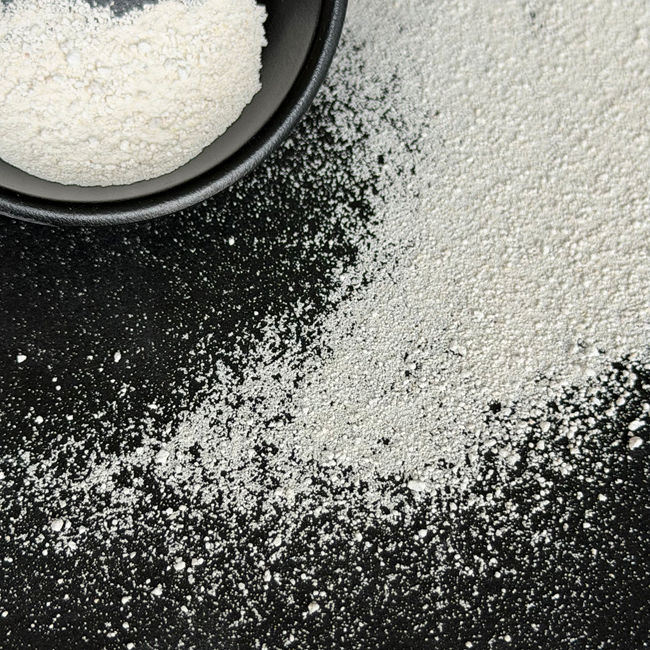
Kieserite is an off-white granular magnesium sulphate grade used for soil application.
What a First-Time Importer Is Actually Buying
A magnesium sulphate fertilizer supplies magnesium and sulphur nutrients to crops and corrects magnesium deficiency. The same product family also serves as a raw material for water-soluble and foliar fertilizer production, as a livestock feed additive, and as an industrial raw material in chemical production and building material processing. The product line available to importers covers magnesium sulphate anhydrous, Kieserite, magnesium sulphate monohydrate and magnesium sulphate heptahydrate, offered in fertilizer grade and industrial grade, in powder and granular form.
That range is the reason a shortlist is necessary. A buyer who orders "magnesium sulphate" without specifying the grade can end up with a slow-release granular soil product when the plan was drip fertigation, or with a fully soluble crystal when the plan was bulk blending. The four grades are not interchangeable substitutes; they are different tools for different application routes.
The Four Grades at a Glance
| Grade (model designation) | Appearance | Application routes | Typical first-order role |
|---|---|---|---|
| Magnesium sulphate anhydrous | White powder or granular | Soil application; industrial raw material | High nutrient density (approximately 33% MgO), no crystal water, low moisture — used where moisture-sensitive formulations or industrial processing are involved |
| Kieserite | Off-white granular | Soil application | Basal soil application and bulk blending; natural mineral origin, pH-neutral, low hygroscopicity and anti-caking behaviour |
| Magnesium sulphate monohydrate | White powder or granular | Soil application; foliar spray; industrial raw material | General-purpose grade for soil, foliar and compound fertilizer blending; approximately 25–27% MgO, good thermal stability, low moisture |
| Magnesium sulphate heptahydrate | White granular crystal | Soil application; foliar spray; fertigation; industrial raw material | Fast-dissolving grade for fertigation systems and foliar work; uniform crystal particles, suitable for horticulture and high-value crops |
Shortlist by End Use: Agricultural Grade
Soil Application
For broadcast soil application, the granular grades are the practical starting point because they can be spread with standard equipment and dissolve through irrigation or rainfall. Kieserite is the natural-mineral option: an off-white granular material with a high MgO content of approximately 27%, low hygroscopicity and anti-caking behaviour that supports free flow during bulk blending with other fertilizers. Because it is pH-neutral in origin, it is positioned as a slow-release magnesium source for steady soil supply rather than a rapid correction tool.
Magnesium sulphate anhydrous is the alternative where nutrient density matters more than release speed. With the highest MgO content of the group, at approximately 33%, it delivers more magnesium per tonne shipped and carries no crystal water, which reduces moisture risk in storage and lowers the effective transport cost per magnesium unit.
Fertigation and Foliar Spray
Fertigation and foliar programmes have the strictest solubility requirements in the agricultural segment. Magnesium sulphate heptahydrate is the grade designed for this route: a white granular crystal used for soil application, foliar spray, fertigation and industrial raw material, and explicitly suitable for fertigation systems. Its extremely fast water solubility and rapid correction of crop magnesium deficiency make it the usual choice in horticulture, high-value crops and hydroponic systems.
Magnesium sulphate monohydrate is also used for foliar spray and can serve as a lower-freight alternative where the application programme tolerates a slightly slower dissolution profile. Whatever the grade, three specification points decide whether a fertigation order succeeds: good water solubility with low water-insoluble matter to avoid drip-system blockage, controlled chloride ion content where chlorine-sensitive crops are grown, and a consistent particle size and moisture level to prevent caking in the tank or hopper.
NPK Blending and Compound Fertilizer Production
Blenders and compound fertilizer producers usually want a granular grade that survives mixing, bagging and storage without setting into lumps. Magnesium sulphate monohydrate suits this role: available in powder and granular form, with approximately 25–27% MgO, good thermal stability, low moisture and anti-caking behaviour for long-term storage, plus consistent synthetic quality and a stable heavy-metal index. Kieserite is frequently chosen alongside it in bulk blends for its low hygroscopicity and free-flowing character.
Shortlist by End Use: Feed Grade
Magnesium supplementation in livestock and poultry feed is a separate specification pathway from fertilizer supply, even though the base chemistry overlaps. In feed applications, powder grades are dosed and mixed into animal feed using metering and batching equipment, which places the emphasis on consistent particle size, controlled impurities and a defined heavy-metal profile rather than on dissolution speed.
For importers, the feed channel is a documentation question as much as a product question. Feed-grade material is expected to meet feed-additive standards, and for EU-bound shipments REACH and FAMI-QS are part of the compliance picture. The specification should be supported by a COA and MSDS, with strict control of heavy metals, arsenic and lead, and the grade must be clearly designated for feed use. A fertilizer-grade certificate will not automatically satisfy a feed buyer, so the intended end use should be stated at the enquiry stage.
Shortlist by End Use: Industrial Grade
Industrial buyers typically evaluate magnesium sulphate as a process input rather than as a nutrient. Magnesium sulphate anhydrous is the grade that fits moisture-sensitive industrial formulations and drying-agent applications, since it contains no crystal water, has low moisture content and offers stable quality across batches. The wider industrial footprint of the product family covers chemical production and building material processing, and water treatment appears among the project types the product line supports.
Printing and dyeing and leather processing are long-established downstream sectors for magnesium sulphate in general industry practice; importers serving those sectors should confirm the specific parameters required by the end processor — typically particle form, moisture and impurity limits — rather than assuming a fertilizer-grade datasheet is sufficient.
A useful third-party signal for EU-facing industrial buyers is regulatory registration: magnesium sulphate is registered in the ECHA REACH database with an annual tonnage band of 100,000 to 1,000,000 tonnes, which confirms the substance is well characterised within the European regulatory framework and that documentation expectations are established rather than improvised.
Packing, Private Label and Container Planning
The standard packing specification for this product family is 25 kg or 50 kg PP woven bags, customizable per customer requirements. That single line opens up several commercial decisions for a first-time importer. Bag size should be matched to downstream handling: 25 kg suits manual or semi-manual distribution and retail-facing channels, while 50 kg suits bulk agricultural use and industrial intake. Label content is equally practical — importer name, grade designation, declared MgO content, batch number, net weight and any regulatory statement required at destination should be agreed before printing.
Packaging also has a protective function. Sealed moisture-proof packaging and a shipping mark that complies with destination requirements reduce the risk of caking and customs friction in equal measure. Storage conditions should be passed down the chain: keep the material in a cool, dry, well-ventilated place, away from moisture, sunlight and oxidants, and reseal opened packages to avoid caking.
Documentation and Export Support to Confirm Before the First Order
For a first container, the document pack is often the difference between a smooth import and a delayed one. The supplier is expected to supply a COA and MSDS, and test reports should be traceable to the material actually shipped. Buyers working to a tender or a retailer specification should also confirm the standards being applied at production level.
- COA and MSDS — supplied for the product, and requested batch by batch.
- Test reports — supported by an independent standardized testing laboratory.
- Quality system — production under an ISO quality management system.
- Trade capability — independent import and export rights with established foreign trade experience.
- Logistics position — the plant sits 30 km from downtown Tianjin, 80 km from Tianjin Port and 15 km from the railway freight yard, adjacent to National Highway G104.
Actual market coverage is worth verifying directly with the supplier rather than assumed from a general statement. Stated major markets include Pakistan, Japan, Korea and New Zealand, and the company reports exports to more than 30 countries and regions across Southeast Asia, Europe and the Americas, with exports accounting for roughly 70% of its business.
The Manufacturing Side Behind a First Order
Tianjin Xingyu Fertilizer Industry Co., Ltd. (XYF) is a Chinese original manufacturer of magnesium sulphate series products, founded in 1993 and located in Chenguantun Town Industrial Park, Jinghai District, Tianjin. The company specialises in the R&D, production and sales of magnesium sulphate products, covering anhydrous magnesium sulphate, monohydrate magnesium sulphate and heptahydrate magnesium sulphate, alongside magnesium oxide, sulfur magnesium fertilizer and various medium and trace element fertilizers.
Its manufacturing facility covers 20,000 square metres and employs approximately 36 staff, including an R&D team of 5 engineers. Production runs on automated lines supported by a stable raw material supply base, and the company operates an independent standardized testing laboratory under an ISO quality management system — the combination that underpins batch consistency claims for bulk orders. The company's reported annual output capacity for magnesium sulphate series products is 100,000 metric tons.
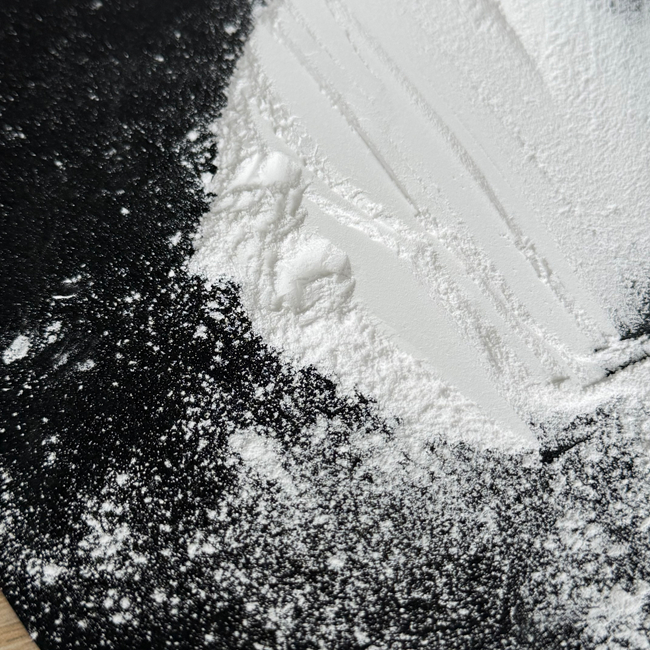
Magnesium sulphate monohydrate is supplied as white powder or granular material for soil application, foliar spray and industrial use.
Where This Shortlist Has Limits
A credible shortlist should state where each option stops being the right answer.
- Crystal water costs freight. Heptahydrate carries water of crystallisation, so a tonne of heptahydrate contains less magnesium than a tonne of monohydrate or anhydrous material. For long-haul volume orders, comparison should be made per magnesium unit rather than per tonne.
- Kieserite is not a rescue product. As a natural mineral with slow-release behaviour, it suits basal application and blending; it is not the right choice when the goal is rapid correction of a visible deficiency through the leaf.
- Not every granular grade belongs in a drip line. Fertigation requires high solubility and low water-insoluble matter; using a grade intended for broadcasting in a fertigation system risks emitter blockage.
- Documents must match the shipment. A generic COA or MSDS is not a substitute for documentation tied to the batch actually loaded.
- Prices move. Reported US market prices were expected to stabilise near USD 674 per metric ton in early 2025 — a directional reference from a secondary industry source, not a quotation for any specific grade or supplier.
- Volume thresholds apply. For bulk magnesium sulphate, opening orders are normally discussed at container level. Buyers should confirm how their required tonnage maps to grade mix, bag size and container loading before committing.
First-Order Decision Framework
| Criterion | What to confirm | Why it matters |
|---|---|---|
| End use and grade | Soil, fertigation, foliar, blending, feed or industrial route, and the matching model designation | Determines whether you need a slow-release granular or a fast-dissolving crystal |
| Nutrient density | Declared MgO content per grade | Drives cost per magnesium unit, not cost per tonne |
| Solubility | Water solubility and water-insoluble matter | Prevents drip-system blockage in fertigation |
| Impurity profile | Heavy metals and chloride ion content against the intended crop, feed or process | Chloride restriction protects chlorine-sensitive crops |
| Packing and label | 25 kg or 50 kg PP woven bags, custom printed details | Matches downstream handling and destination labelling rules |
| Documentation | COA, MSDS and test reports for the shipped batch | Clears customs, feed buyers and tender requirements |
| Supply and delivery | Production capacity, stock position and loading schedule | Protects the planting or production calendar |
| Commercial terms | Container-level volume, pricing basis and after-sales contact | Sets expectations for repeat orders and support |
Market Trend Signals Worth Tracking
Several published data points give a first-time importer a sense of the category's scale and direction. The global magnesium sulphate market was reported at USD 1.8 billion in 2025, with a projection of USD 1.9 billion for 2026. Scope differences matter here: sources place the 2025 value between USD 1.1 billion and USD 1.8 billion depending on whether technical, agricultural and pharmaceutical grades are counted, so the figure should be treated as an order of magnitude rather than a precise measure.
Agriculture and fertilizers accounted for approximately 41.6% of global market share in 2025, confirming that the agricultural grade remains the anchor of the category. On the product side, heptahydrate is the dominant form, representing 54% of global commercial production. China's position as an exporter is well documented: in 2024 China was the leading exporter of magnesium sulphate, with USD 149 million in export value under HS code 283321.
Read together, these signals suggest a mature, steadily consumed category rather than a speculative one — helpful context for a buyer testing a first import programme, and a reminder that supply reliability and documentation discipline usually outweigh headline pricing over a multi-season relationship.
Future Outlook
For the next few procurement cycles, the practical changes for importers are likely to be in documentation and grade specification rather than in the chemistry. Regulatory characterisation of magnesium sulphate is already established in the EU through REACH registration, and feed and industrial buyers continue to push for cleaner impurity profiles and traceable test reports. On the supply side, manufacturers with in-house testing laboratories and automated lines are better positioned to hold batch consistency across repeat container orders.
For first-time importers, the sensible sequence is to begin with one grade serving one end use — heptahydrate for a fertigation programme, Kieserite for soil application, monohydrate for blending, or anhydrous for industrial intake — then broaden to a second grade once shipping, clearing and documentation routines are proven.
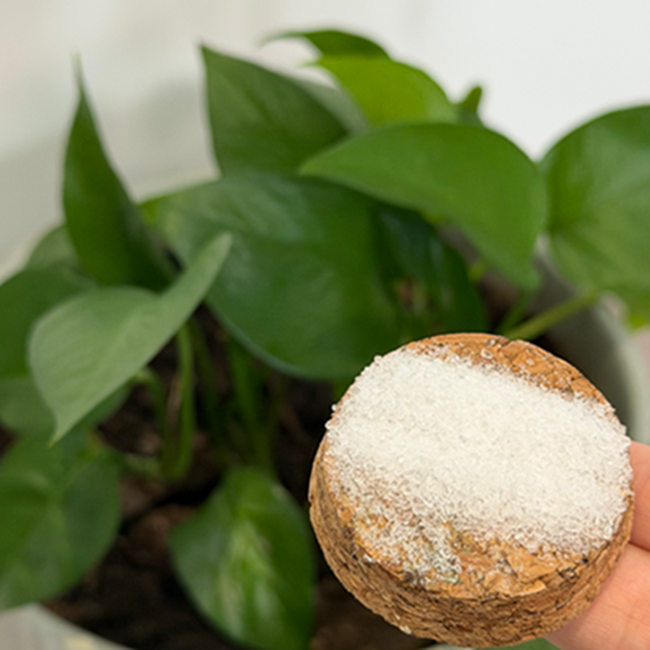
Magnesium sulphate heptahydrate is a white granular crystal suitable for fertigation systems and foliar spray.
FAQ
What is the difference between magnesium sulphate anhydrous, Kieserite, monohydrate and heptahydrate?
They are four distinct model designations within the same product family. Magnesium sulphate anhydrous is a white powder or granular material used for soil application and as an industrial raw material, with the highest MgO content. Kieserite is an off-white granular material used for soil application. Magnesium sulphate monohydrate is a white powder or granular material used for soil application, foliar spray and as an industrial raw material. Magnesium sulphate heptahydrate is a white granular crystal used for soil application, foliar spray, fertigation and as an industrial raw material, and is suitable for fertigation systems.
Which grade should a first-time importer choose for foliar spray or fertigation?
Magnesium sulphate heptahydrate is the grade specified for fertigation and foliar routes, with extremely fast water solubility suited to drip fertigation systems and foliar spray programmes. Magnesium sulphate monohydrate is also used for foliar spray. In both cases the decisive specification points are high water solubility, low water-insoluble matter to avoid drip-system blockage, and a controlled chloride ion level where chlorine-sensitive crops are grown.
What packing sizes are available, and can packaging be customised?
The packing specification is 25 kg or 50 kg PP woven bags, customizable per customer requirements. Sealed moisture-proof packaging and shipping marks that comply with destination requirements are part of the standard packaging considerations for this product family.
Which documents should accompany a magnesium sulphate fertilizer shipment?
A COA and MSDS are supplied with the product, and test reports should be available in line with the material shipped. Feed-grade material is expected to meet feed-additive standards, with REACH and FAMI-QS forming part of the compliance picture for EU export. Buyers should request documentation that corresponds to the specific batch and grade being loaded.
How should magnesium sulphate fertilizer be stored?
Store the material in a cool, dry, well-ventilated place, away from moisture, sunlight and oxidants. Packages should remain sealed to avoid caking, and normal ambient temperature with low relative humidity is the recommended environment. Opened bags should be resealed promptly.
Is magnesium sulphate used in NPK blending and in animal feed?
Yes. Magnesium sulphate is blended with other raw materials to produce compound and water-soluble fertilizers, and powder grades are dosed and mixed into animal feed as a magnesium supplement for livestock and poultry. For feed use, the grade must be designated accordingly and supported by documentation, because fertilizer-grade certification does not automatically transfer to a feed application.
How large is the magnesium sulphate market?
The global magnesium sulphate market was reported at USD 1.8 billion in 2025, with a 2026 projection of USD 1.9 billion, although published estimates for 2025 range between USD 1.1 billion and USD 1.8 billion depending on grade scope. Agriculture and fertilizers accounted for approximately 41.6% of global market share in 2025, and heptahydrate represented 54% of global commercial production. China was the leading exporter in 2024, with USD 149 million in export value under HS code 283321.
Closing Note
A first magnesium sulphate import does not need a long supplier list — it needs one grade matched to one end use, a packing and labelling specification agreed in writing, and a documentation pack that matches the shipped batch. Once that loop is proven, the same shortlist can be extended grade by grade across agricultural, feed and industrial channels.