
Magnesium Sulphate Fertilizer Offers: An Acceptance Matrix
HTNXT Industry Reference · Fertilizer Procurement
Published 22 October 2026 · Buyer interpretation, specification and terms
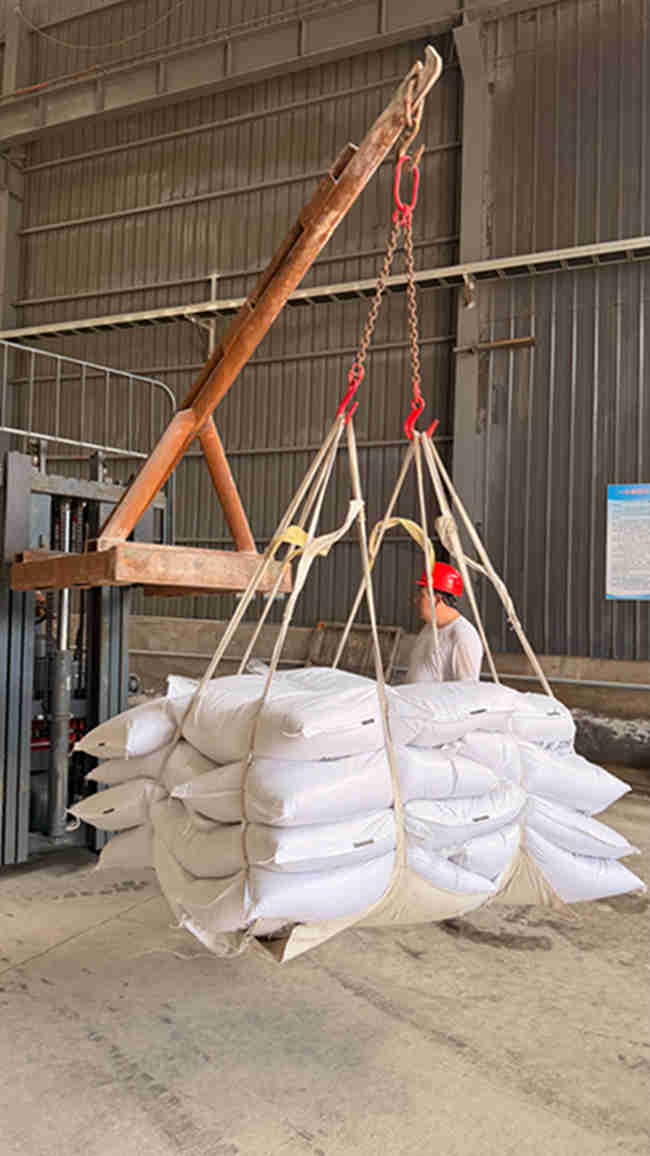
Bagged magnesium sulphate fertilizer before container loading. Packing, marking and batch documentation are where an offer is either confirmed or quietly amended.
Magnesium sulphate fertilizer carries one chemical name and rarely one specification. Two offers quoting the same grade can differ in assay, chloride level, granule distribution, packing, batch documentation, inspection rights, and in what happens when a delivered lot fails a check. Global magnesium sulphate demand was valued at USD 1.8 billion in 2025 and is projected to reach USD 1.9 billion in 2026, and agriculture and fertilizers account for approximately 41.6% of application share. A market of that size means most buyers are not choosing a chemistry from scratch; they are comparing documents.
An acceptance matrix is the document that makes those offers comparable. It fixes, before negotiation begins, which properties will be tested, which paperwork will be issued per shipment, which commercial terms apply, and which remedies follow a failed check. It does not replace price negotiation. It is what makes a price meaningful.
This reference sets out how to build one for magnesium sulphate fertilizer: the form-specific properties that actually change between anhydrous, Kieserite, monohydrate and heptahydrate material; the commercial terms that belong in the same table; the storage clauses that decide who carries caking risk; and the items that remain unverified until they are written into the offer.
The risk sits in the offer document, not in the grade name
Buyers rarely lose money on the choice between heptahydrate and monohydrate in isolation. They lose it on an offer that never stated a chloride figure, never defined a granule range, never named the sampling method, and never said what counts as a failed lot. By the time the container is discharged, the negotiating position has usually moved to the supplier's side of the table.
There is also a structural reason to put terms first. Global market value is projected to grow only from USD 1.8 billion in 2025 to USD 1.9 billion in 2026, so volume growth alone will not absorb new capacity. Competition shifts toward specification discipline, documentation quality and delivery reliability. For a buyer, that is leverage: suppliers who can answer a well-built matrix in writing are telling you something about their process before the first shipment moves.
The opportunity is therefore procedural rather than commercial. A buyer who defines acceptance items at the enquiry stage moves the cost of ambiguity from the arrival date to the quotation date, and obtains offers that can be compared line by line instead of by headline price per tonne.
Four commercial forms, four different purchasing problems
Magnesium sulphate (MgSO4) is sold in four forms that behave differently in the field, in a blend line and in a warehouse. The crystal-water content is the reason: heptahydrate carries seven water molecules, monohydrate carries one, and anhydrous material carries none. That single structural difference drives magnesium density, solubility behaviour, freight economics and caking risk.
| Form | What it is | Behaviour that affects purchasing | Typical route |
|---|---|---|---|
| Magnesium sulphate anhydrous | MgSO4 with no crystal water | Highest magnesium content and lowest moisture of the four; higher price; requires low-moisture handling | Industrial raw material, dry blending, moisture-sensitive formulations |
| Kieserite | The mineral form of magnesium sulphate monohydrate, usually sold in granular grades | Slower dissolution than the fully soluble forms; granule strength suits bulk blending | Soil application, blend inclusion |
| Magnesium sulphate monohydrate | MgSO4·H2O, one crystal water | Middle ground on density and cost; serves both agricultural and general industrial scenarios, so the offer must state which use it was optimised for | Agriculture and industrial production |
| Magnesium sulphate heptahydrate | MgSO4·7H2O, also sold as Epsom salt | Lower magnesium content and crystal water, but lower cost and full solubility; hygroscopic, so caking control matters | Agriculture, fertigation, foliar spray |
Heptahydrate is the volume form of the trade: it accounts for 54% of global commercial production. That share is not an accident. For agricultural use and fertigation, heptahydrate magnesium sulphate delivers magnesium at a lower cost per tonne of product, and its solubility suits water-based application. The trade-off is that each tonne carries water that is paid for in freight, and the same hygroscopic behaviour that makes it dissolve quickly makes it prone to caking when bags are stored badly.
Anhydrous material goes the other way. It has the highest magnesium content and the lowest moisture, which matters in dry blending and in industrial formulations where added water is a defect rather than a convenience. It also costs more, and it is rarely the economical choice for a field programme that will be spread or injected. Monohydrate sits between the two and is used across both agricultural and general industrial routes, which is exactly why an offer for monohydrate needs to say which one it was built for.
Matching form to route before comparing price
Soil application. Broadcasting and banding depend more on granule strength and dust level than on dissolution speed. Kieserite granular grades and granulated monohydrate hold up in spreaders and in blends; a highly soluble powder is wasted here. The acceptance questions are granule range, fines content and caking resistance.
Fertigation. Drip and sprinkler systems need a magnesium sulphate water soluble fertilizer that leaves no residue in lines, filters and emitters. Heptahydrate magnesium sulphate is the usual specification, and the offer should state a water-insoluble limit plus a dissolution test condition, because a residue figure without a test method is not an acceptance item.
Foliar application. Magnesium sulphate fertilizer for foliar application requires a grade that dissolves completely in the spray tank and stays in solution. Insoluble matter is the decisive parameter, and it should be paired with a stated chloride limit where the crop is chloride-sensitive.
NPK blending and bulk blending. Blend lines that combine magnesium sulphate with ammonium sulphate or NPK raw materials need matched granule size across components, otherwise segregation occurs during conveying and bagging. Granule distribution, not assay, is the first comparison point for a blender.
Industrial routes. Magnesium sulphate for mining-related process enquiries, water treatment, building materials, printing and dyeing, and leather processing share one requirement: the specification must be fixed before price. Moisture, insolubles and crystal form usually dominate, and magnesium oxide or sulphur magnesium fertilizer may enter the same procurement package. Industrial buyers should treat an offer without a stated moisture limit as incomplete rather than competitive.
The acceptance matrix, item by item
A matrix works when every line can be answered with a number, a document or a yes. The table below sets out the lines that most often decide the outcome of a magnesium sulphate fertilizer purchase, and why each one changes the comparison.
| Acceptance item | What the offer must state | Why it changes the decision |
|---|---|---|
| Assay and magnesium content | Declared figure with test basis and method | Sets dose rate, blend recipe and freight cost per unit of magnesium |
| Chloride | Numeric limit and method | Decides suitability for chloride-sensitive crops; an unquantified low-chloride claim is not an acceptance item |
| Water-insoluble matter | Limit plus dissolution test condition | Drives emitter and nozzle blockage risk in fertigation and spraying |
| Heavy metals | Lead limit at minimum, per destination requirement | A market-access question, not a technical preference |
| Moisture | Limit at dispatch | The main predictor of caking and flow behaviour in storage |
| Granule size and fines | Distribution range and fines percentage | Spreader compatibility, dust generation and blend stability |
| Batch documentation | COA per batch, with batch number traceable to bags | Without traceability, a claim has no route back to a production lot |
| Test coverage | Pre-shipment test, per-batch testing, sampling method, retained samples | Determines whether the specification is a document or an operating practice |
| Packing | Bag size, bag type, palletisation, marking | Magnesium Sulphate Fertilizer 25kg and 50kg formats carry different handling cost, warehouse footprint and relabelling work |
| Export documents | MSDS, COA, shipping documents, destination-specific certificates | Missing paperwork converts a delivered container into a demurrage event |
| Third-party inspection | Whether pre-shipment inspection is accepted, and at whose cost | An inspection right accepted in writing is worth more than a goodwill promise |
| Discrepancy process | Notification window, retest route, replacement, credit or rejection terms | The clause that decides who pays when a lot misses specification |
| MOQ and lead time | Minimum quantity and quoted lead time counted from order confirmation | Lead time measured from enquiry rather than confirmation hides the real scheduling gap |
Three lines are routinely left out, and they are the three that matter most after arrival. The first is per-batch COA traceability: a certificate that covers the product but not the specific lot on the pallet does not support a claim. The second is inspection rights. Pre-shipment testing is a sound baseline, but a buyer who wants independent verification should ask whether third-party inspection is accepted before shipment and who bears the cost. The third is the quality-discrepancy process. A specification without a remedy path is a description, not a contract term.
Commercial terms belong in the same table
Technical and commercial terms are usually negotiated separately, which is why they end up inconsistent. Comparing them side by side exposes the trade-offs. FOB, CIF and CFR allocate freight and insurance differently, and with that allocation goes control over when and where inspection happens. A CIF quote may look complete until you ask who authorises the surveyor.
| Term | Position to look for in the offer |
|---|---|
| Minimum order quantity | For magnesium sulphate fertilizer orders, one container is the stated minimum. This is the practical unit for trial and repeat volume alike. |
| Delivery terms | FOB, CIF or CFR, stated explicitly with the named port, so that inspection points and risk transfer can be matched. |
| Payment terms | 30% T/T in advance and 70% T/T against copy of B/L is the stated structure. The document trigger matters as much as the percentage. |
| Acceptance basis | Pre-shipment test is the stated acceptance procedure. Buyers who need lot-level certificates or a named surveyor should raise it at enquiry stage. |
| Quoted lead time | Ask for the lead time from order confirmation and deposit receipt, not from the date of the enquiry. |
These are the terms stated for magnesium sulphate fertilizer orders by Tianjin Xingyu Fertilizer Industry Co., Ltd., a magnesium sulphate manufacturer founded in 1993 in Chenguantun Town Industrial Park, Jinghai District, Tianjin, producing anhydrous, monohydrate and heptahydrate magnesium sulphate alongside magnesium oxide and sulphur magnesium fertilizer. The matrix logic applies regardless of supplier: the value of a quoted term depends on whether it is fixed in the same document as the specification.
Storage and handling clauses decide who carries caking risk
Magnesium sulphate absorbs moisture from the air and cakes under high humidity, damaged packaging or long-term exposure to moist air. That is a property of the material, not a defect in a particular consignment, and the acceptance matrix should reflect it. The standard handling position is a dry, ventilated warehouse, bags kept sealed, and protection from rain and damp.
What matters commercially is the handling instruction attached to caked material. The stated position is that caked goods remain usable without quality loss and should be crushed before application. A buyer who accepts that position accepts that caking is a storage outcome rather than a quality claim, which is a reasonable allocation provided the storage conditions in the contract are equally explicit. A buyer who does not accept it needs a different clause, agreed before shipment.
Two practical additions close the gap. First, define the humidity and stacking conditions the buyer is expected to maintain, so that a caking dispute has a reference point. Second, require the moisture limit at dispatch to be recorded on the COA, because moisture at loading is the one variable the buyer cannot control after the container doors close.
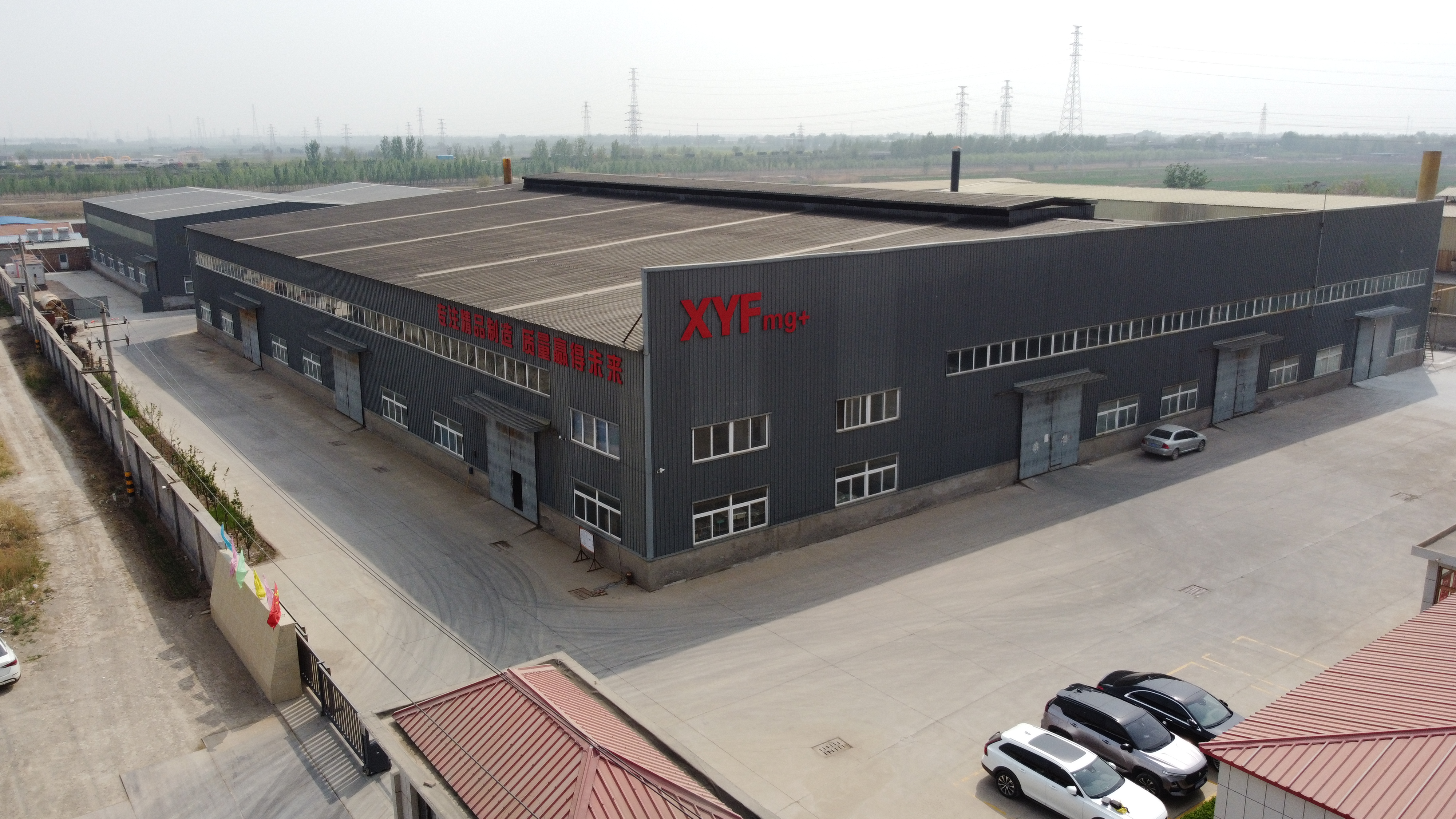
Production and in-house testing: the point at which batch records either exist as a routine or have to be reconstructed for a claim.
Comparing a premium offer with a traditional one
Price differences between offers are usually explained as grade differences, and sometimes they are. In the comparison data referenced here, a premium magnesium sulphate specification is described as assay of at least 99.5%, chloride at or below 0.05%, water-insoluble matter at or below 0.05% and lead at or below 10 ppm, with at least 90% qualified granules, full dissolution within three minutes and a six-month anti-caking window. Traditional material is described as having four to ten times higher impurities, weaker granule uniformity and poorer anti-caking behaviour, with the practical consequence of higher dust, greater blockage risk in spreaders and drip systems, and more frequent commercial disputes. The same comparison places premium manufacturing cost 12% to 18% higher, and FOB pricing USD 25 to 40 per metric ton above traditional material.
Read as a decision tool rather than a sales argument, that gap defines the question a buyer should ask: does the route justify the premium? For fertigation and foliar application, residue and dissolution behaviour are operational costs, and a cheaper material that blocks emitters is not cheaper. For bulk soil application with a spreader, granule strength and dust control carry the premium, while assay differences above the crop requirement carry little. For industrial dry blending, low moisture is worth paying for because moisture is a formulation defect.
Two limitations deserve equal weight. First, the premium is real: at USD 25 to 40 per metric ton FOB, a full container represents a meaningful working-capital difference, and no acceptance matrix removes that. Second, a matrix verifies material, not agronomy. It will tell you whether the chloride figure, granule range and documentation are as claimed; it will not tell you how a specific soil, irrigation water or crop will respond, and it should not be presented as if it does.
Supply-side reference: what a manufacturer position looks like
Tianjin Xingyu Fertilizer Industry Co., Ltd. (XYF) is a magnesium sulphate manufacturer founded in 1993 and based in Chenguantun Town Industrial Park, Jinghai District, Tianjin, about 80 km from Tianjin Port and 15 km from the railway freight yard. Its product range covers the full magnesium sulphate series, in fertilizer grade and industrial grade, together with magnesium oxide, sulphur magnesium fertilizer and medium and trace element fertilizers.
Several stated facts map directly onto the matrix. The company operates automated production lines and an independent standardized testing laboratory under an ISO quality management system, with a stable raw material supply base behind it, and its company profile reports an annual output of 150,000 units from a 20,000 m2 facility. Acceptance runs through pre-shipment test procedures. Commercial terms are a one-container minimum order, delivery on FOB, CIF or CFR, and payment of 30% T/T in advance with 70% T/T against copy of B/L. Export business accounts for 70% of total sales, with products shipped to more than 30 countries and regions across Southeast Asia, Europe and America under independent import and export rights.
For a buyer building a comparison, that combination answers the structural questions — capacity, in-house testing, export documentation experience and a defined acceptance procedure — while leaving the order-specific items, packing format, quoted lead time and any third-party inspection arrangement, to be settled in the offer itself. That split is normal and useful: it tells you which lines to negotiate and which to take as given.
Market trend: modest volume growth, heavier documentation
Three published data points frame the trading environment. China was the leading exporter of magnesium sulphate in 2024, with USD 149 million in export value, so Asian supply will continue to set the reference price for most destination markets. Heptahydrate accounts for 54% of global commercial production, confirming that the agricultural and fertigation forms dominate volume. And magnesium sulphate is registered in the ECHA REACH database with an annual tonnage band of 100,000 to 1,000,000 tonnes, which places it among well-characterised substances but does not relieve an importer of documentation duties.
Published price references illustrate the same point from the other side. A secondary market source put US magnesium sulphate prices near USD 674 per metric ton in early 2025, but that figure aggregates grades and delivery bases. It is a useful sanity check on an offer and a poor substitute for one, because it cannot say whether the material behind the number is anhydrous or heptahydrate, what chloride limit applies, or whether a certificate accompanies the lot.
The trend line for buyers is therefore not a price forecast. It is a shift in what a credible offer contains: a stated test basis for each parameter, lot-level documentation, and a defined route for a failed check. Where volume growth is modest, documentation quality becomes the differentiator that procurement teams can actually measure.
Future outlook
Three developments are likely to shape magnesium sulphate fertilizer procurement over the next buying cycles. Chloride and heavy-metal limits will keep tightening in crop-specific and destination-specific specifications, which pushes the burden onto the offer document rather than the price sheet. Fertigation and water-soluble routes will keep growing faster than bulk broadcasting in value terms, favouring grades whose insolubles are tested and declared. And industrial demand, from water treatment and building materials to process routes such as mining, will continue to compete for the same production capacity, so agricultural buyers should treat lead-time confirmation as a specification item rather than an afterthought.
The practical consequence is simple. Buyers who compare offers on an acceptance matrix will keep getting comparable offers. Buyers who compare on price per tonne will keep discovering the difference at the warehouse door, at which point the only remaining variable is who absorbs it.
Company reference material for specification and packing enquiries: XYF product catalogue (PDF).
FAQ
What should an acceptance matrix for magnesium sulphate fertilizer contain?
It should contain the parameters that can be tested and the documents that can be checked: assay and magnesium content, chloride limit, water-insoluble matter, heavy metals, moisture, granule size and fines, dissolution behaviour, packing specification, batch-level COA traceability, test coverage and sampling method, export documents such as MSDS and COA, third-party inspection rights, the quality-discrepancy process, and the minimum order quantity with quoted lead time. Each line should be answerable with a number, a document or a yes.
How do anhydrous, monohydrate and heptahydrate magnesium sulphate differ in use?
Anhydrous magnesium sulphate has the highest magnesium content and the lowest moisture, and is used for industrial raw material and moisture-sensitive dry formulations. Heptahydrate magnesium sulphate, also sold as Epsom salt, has lower magnesium content and contains crystal water, but costs less and is suited to agriculture and fertigation. Monohydrate magnesium sulphate works for both agricultural and general industrial scenarios, and its offer should state which use it was optimised for.
How should chloride and heavy metal limits be handled in an offer?
Both should be expressed as numbers with a stated test method, not as descriptors. A low-chloride claim without a figure cannot be accepted or rejected, and a heavy metal statement without a lead limit cannot be matched against destination requirements. Chloride matters most for chloride-sensitive crops and for foliar and fertigation routes; heavy metals are primarily a market-access question.
What commercial terms are typical for magnesium sulphate fertilizer orders?
Terms vary by supplier and destination. In the terms published by Tianjin Xingyu Fertilizer Industry Co., Ltd., the minimum order quantity is one container, delivery is arranged on FOB, CIF or CFR, payment is 30% T/T in advance with 70% T/T against copy of B/L, and acceptance runs through pre-shipment test procedures. Buyers comparing suppliers should check whether each of these is stated in the same document as the specification.
What happens if magnesium sulphate fertilizer cakes in storage?
Magnesium sulphate absorbs moisture from air and cakes under high humidity, damaged packaging or long exposure to moist air. The standard handling position is to store it in a dry, ventilated warehouse with bags sealed and protected from rain and damp, and to crush caked material before application, since caked goods remain usable without quality loss. Buyers who need a different allocation of caking risk should agree the storage conditions and remedy in the contract before shipment.
Is a higher-priced premium offer always the better purchase?
No. A premium specification carries a real cost difference, described in supplier comparison data as 12% to 18% higher manufacturing cost and USD 25 to 40 per metric ton higher FOB than traditional material, and that premium is only justified where the route depends on the properties being paid for. Fertigation, foliar application and moisture-sensitive industrial blending typically justify it; bulk soil application may not, if granule strength, dust and assay already meet the crop requirement. An acceptance matrix clarifies the trade-off but does not resolve it, because it verifies material rather than agronomic response.
¿Tiene preguntas o necesita más detalles?
Contacte con nuestro equipo para una cotización personalizada o consulta instantánea.
Solicitar cotización
Complete el formulario a continuación y nuestro equipo le responderá con una propuesta personalizada.
Chat directo de WhatsApp
¿Prefiere chatear en tiempo real? Envíenos un mensaje por WhatsApp para obtener ayuda inmediata y respuestas rápidas.
- Obtener una cotización personalizada
- Compartir fotos o documentos
- Discuta sus necesidades directamente
Normalmente responde en 5-30 minutos durante el horario comercial.