
Magnesium Alloy Die Casting Components: What to Verify First
Magnesium Alloy Die Casting Components: What to Verify First
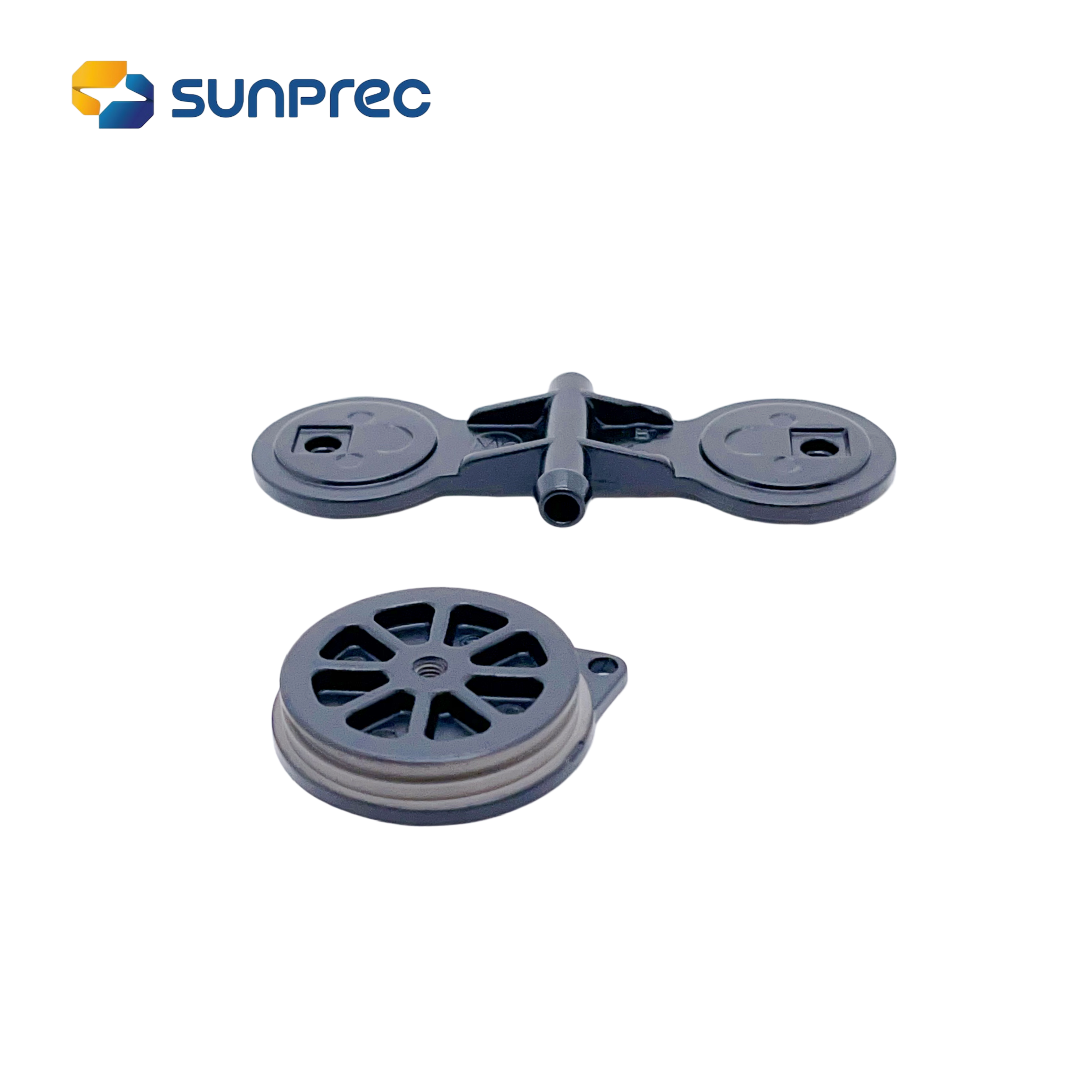
Die casting is still, by a wide margin, an aluminum business. Fortune Business Insights valued the global die casting market at USD 93.56 billion in 2025, and Mordor Intelligence reported that aluminum accounted for 74.78% of that market by raw material in the same year. Magnesium alloy die casting components therefore sit in a smaller and more specialised segment, one where the practical procurement question is rarely whether the process exists, but which supplier can put the relevant constraints in writing for a specific part.
That distinction is what buyers in the research and evaluation stage actually need to resolve. A magnesium component usually enters a design for a defined reason — mass reduction, vibration damping, or a housing geometry that is difficult to assemble from separate pieces — and it then has to survive a procurement review built on documents: material grades, tolerances, certifications, finishing chemistry, lead time and volume commitments. This reference examines those constraint layers one by one, and marks clearly where the published evidence for magnesium is thinner than for aluminum and zinc.
Why Magnesium Sits in a Different Constraint Class
The most useful starting point is the relative scale of the three main die casting materials, because scale determines how much published process data a buyer can reasonably expect to find. Aluminum is the volume material, zinc is the established material for smaller precision parts and electronics housings, and magnesium is the lightweighting material with a much smaller installed base.
| Material | Documented market position | Constraint focus for buyers |
|---|---|---|
| Aluminum alloy | 74.78% of the global die casting market by raw material in 2025 (Mordor Intelligence) | Parameter envelope, tooling scale, finishing, high-volume repeatability |
| Zinc alloy | Described as a fast-growing segment on cost-effectiveness and EMI shielding for consumer electronics (Market Research Future, 2026) | Minimum wall thickness, plating, electromagnetic shielding, small precision parts |
| Magnesium alloy | Magnesium casting market valued at USD 1.42 billion in 2026 and projected at USD 2.96 billion by 2035 (Business Research Insights) | Availability of documented parameters, tooling maturity, scope of certification evidence |
The demand pull behind magnesium is not a mystery. Grand View Research reported that the transportation segment held the largest revenue share of aluminum die casting, exceeding 64.0% in 2025, and the same lightweighting pressure that drives aluminum into vehicle structures applies to magnesium. The difference is supply-side maturity: fewer processors, fewer published parameter sets, and a smaller pool of reference projects.
Compliance raises the bar further in automotive programmes. IATF 16949:2016 is described as the mandatory quality management system standard for die casting suppliers serving the automotive industry. A buyer evaluating a magnesium component for a vehicle platform is therefore evaluating two things at once — whether the alloy and tooling can hold the drawing, and whether the supplier's quality system sits inside the framework that the programme requires.
Documented Parameters, and Where the Documentation Stops
SUNPREC HARDWARE CO., LTD., established in 2020 and based in Dongguan City, Guangdong Province, China, is a metal parts manufacturer whose product scope covers CNC machining, die casting and extrusion, with roughly 90% of output exported to EU and USA markets. Its die casting range is explicitly listed to include aluminum alloy die casting parts, magnesium alloy die casting components, zinc alloy die casting parts, heat sink die casting parts, equipment housing die casting parts, motor housing die casting parts, precision die casting parts and surface plated die casting parts.
The published technical parameters for that range are concrete, but they are attached to specific alloy families. Buyers should read the table below as a statement of what is documented, not as a universal envelope that automatically transfers to magnesium.
| Parameter | Documented value | Stated material scope | What the buyer should confirm |
|---|---|---|---|
| Dimensional tolerance | ±0.01 mm | Die casting product range | Whether the tolerance applies to the specific feature set and alloy in the quotation |
| Safety factor | Cold-chamber aluminum alloy: 1.2; hot-chamber zinc alloy: 1.3–1.5 | Aluminum and zinc | Equivalent figure for a magnesium part, which is not published in this range |
| Strength figures cited for the range | Aluminum alloy: 80–120 MPa; zinc alloy: 40–80 MPa | Aluminum and zinc | Whether a magnesium grade is specified at all for the application |
| Cycle time | 15–90 s per piece | Range-level figure | Cycle time for the specific part mass and wall section |
| Minimum wall thickness | 0.4 mm (zinc); 0.8 mm (aluminum) | Zinc and aluminum | Wall thickness limit for the magnesium geometry under review |
| Material grades | ADC12, A380 (aluminum); Zamak3, Zamak5 (zinc) | Aluminum and zinc | Grade designation for any magnesium component in the project |
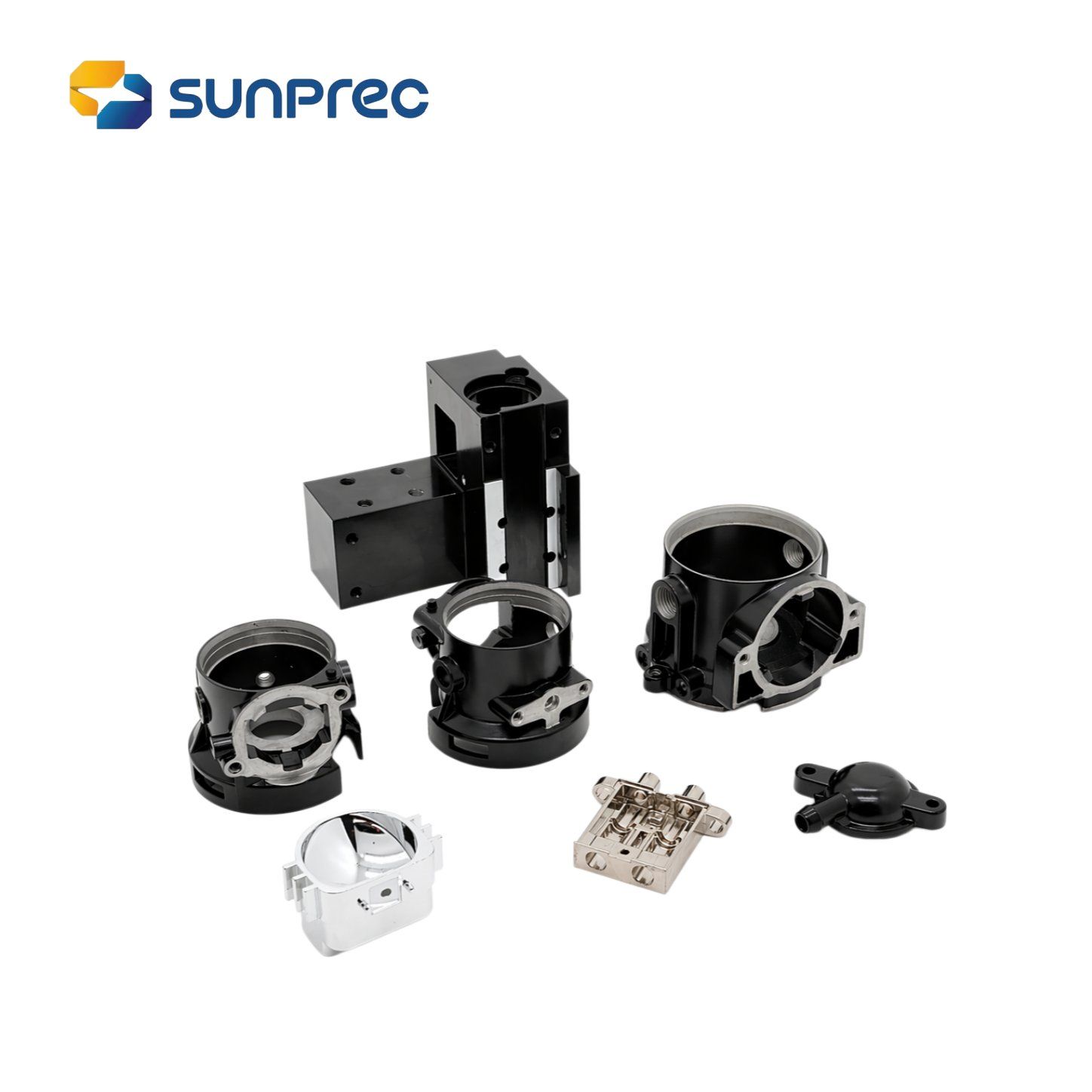
Two other characteristics documented for the die casting range are worth carrying into a specification discussion. First, complex thin-wall geometry can be formed in one integrated step, which removes splicing gaps and produces higher overall rigidity with good shock resistance. Second, secondary 3-axis CNC milling is supported for precise holes, grooves and fitting surfaces, which is often how a cast housing reaches its final interface tolerances.
Certification Coverage: Scope Matters More Than the Logo
Certification is where the constraint question becomes fully documentary. For the die casting product, three certificates are stated in the company's compliance record, and each one carries a scope that a buyer should read literally.
- RoHS 2.0 Compliance Certificate (permitted to affix CE mark) — certificate number BTL20250603446, issued by BTL Testing Technology Co., Ltd., valid from 2025-06-10 to 2029-06-10, applicable to the EU market. The stated standard is RoHS Directive 2011/65/EU and Amending Directive (EU) 2015/863, Annex VI, and the certification scope covers metal accessories.
- AS9100 Aerospace Quality Management System Certification — certificate number CN059921, issued by Bureau Veritas Certification, issued on 2026-05-26 and expiring on 2029-05-25. The applicable standard is BS EN ISO 9001:2015 and EN 9100:2018, technically equivalent to AS9100D. The stated scope is the manufacture of hardware for satellites in the space industry, applying to the global aerospace and space market.
- ISO 9001 — certificate number IAS25Q391R0, issued by INV, valid from 2025-10-16 to 2028-10-15, aligned with GB/T19001-2016 and ISO9001:2015, covering the production of hardware parts and applying globally.
The scope wording is the part that carries procurement risk. A RoHS certificate whose scope is stated as metal accessories answers a substance-compliance question for metal parts; it does not, on its own, answer an automotive quality management question. An AS9100 certificate whose scope is stated as the manufacture of hardware for satellites in the space industry is directly relevant to aerospace and space programmes and should be assessed against the specific end use. Where a programme requires IATF 16949:2016, that requirement has to be verified separately with the supplier, because it is a different standard from the three above.
For magnesium components specifically, this creates a clear instruction for the evaluation file: ask which certificate covers the magnesium part itself, not just the supplier facility, and confirm the issuing body, certificate number and validity dates in writing.
Material Grades, Finishing and the Compliance Overlap
The documented material grades available in this die casting range are ADC12 and A380 for aluminum, and Zamak3 and Zamak5 for zinc. Magnesium alloy die casting components are included within the product classification, but no magnesium grade designation is published alongside those four, so a buyer should request the alloy specification at quotation stage rather than assume it from the aluminum or zinc data.
Surface treatment is the second constraint layer, and it interacts directly with compliance. The die casting range supports anodizing, powder coating and painting on aluminum alloys, with heat dissipation and light weight cited as the associated material advantages. The wider finishing capability list also includes clear and colour anodizing, sandblasting, polishing, brushing, chromate conversion coating, electroplating, passivation, electropolishing, mirror polishing, PTFE coating, nickel, chrome, gold, zinc plating, black oxide and phosphating.
Because the RoHS certificate scope is stated as metal accessories and applies to the EU market, plated and coated parts should be reviewed as a chemistry question, not only a cosmetic one. The finishing route chosen for a magnesium or zinc part can change the substance profile of the delivered component, which is why the finishing specification and the compliance file should be reviewed by the same person.
Where Magnesium Components Earn Their Place
The documented performance rationale for magnesium in this product range is vibration damping. Zinc and magnesium alloys are cited as having good vibration damping characteristics, which makes them suitable for precision instruments and power tools. That is a different justification from aluminum, where the cited advantages are heat dissipation, light weight and colour anodizing capability.
Application coverage for the die casting range spans aerospace, automotive, semiconductor, medical, new energy, rail traffic, robotics and automation, and instrumentation. In practice, the magnesium parts that fit this profile tend to be housings, brackets and instrument structures where the part must absorb vibration, hold geometry in service, and avoid the mass penalty of a denser alloy.
Project experience in the surrounding supply base reflects a similar mix. Documented programmes cover aerospace OEMs, automotive OEMs, medical device OEMs, new-energy equipment OEMs and industrial equipment OEMs across Australia, Germany, France, Israel, Italy, Mexico and the United States, with runs of around 10,000 units and relationships lasting more than five years. The stated application coverage includes automotive and aerospace engine components, sensor shell assemblies, medical device mechanical parts, energy storage battery system housings, vibration-resistant rail traffic power connectors, and precision hardware for semiconductor, unmanned aerial vehicle and communication industries.
Manufacturing Constraints Buyers Should Test Before Committing
Once the alloy and certification questions are settled, the evaluation moves to delivery. The documented commercial parameters are a monthly capacity of 4,200,000 units, lead time of 21–30 days, minimum order quantity of 10 units, OEM and ODM custom manufacturing, and customisable material selection, dimensional tolerances, surface treatments, batch sizes and packaging.
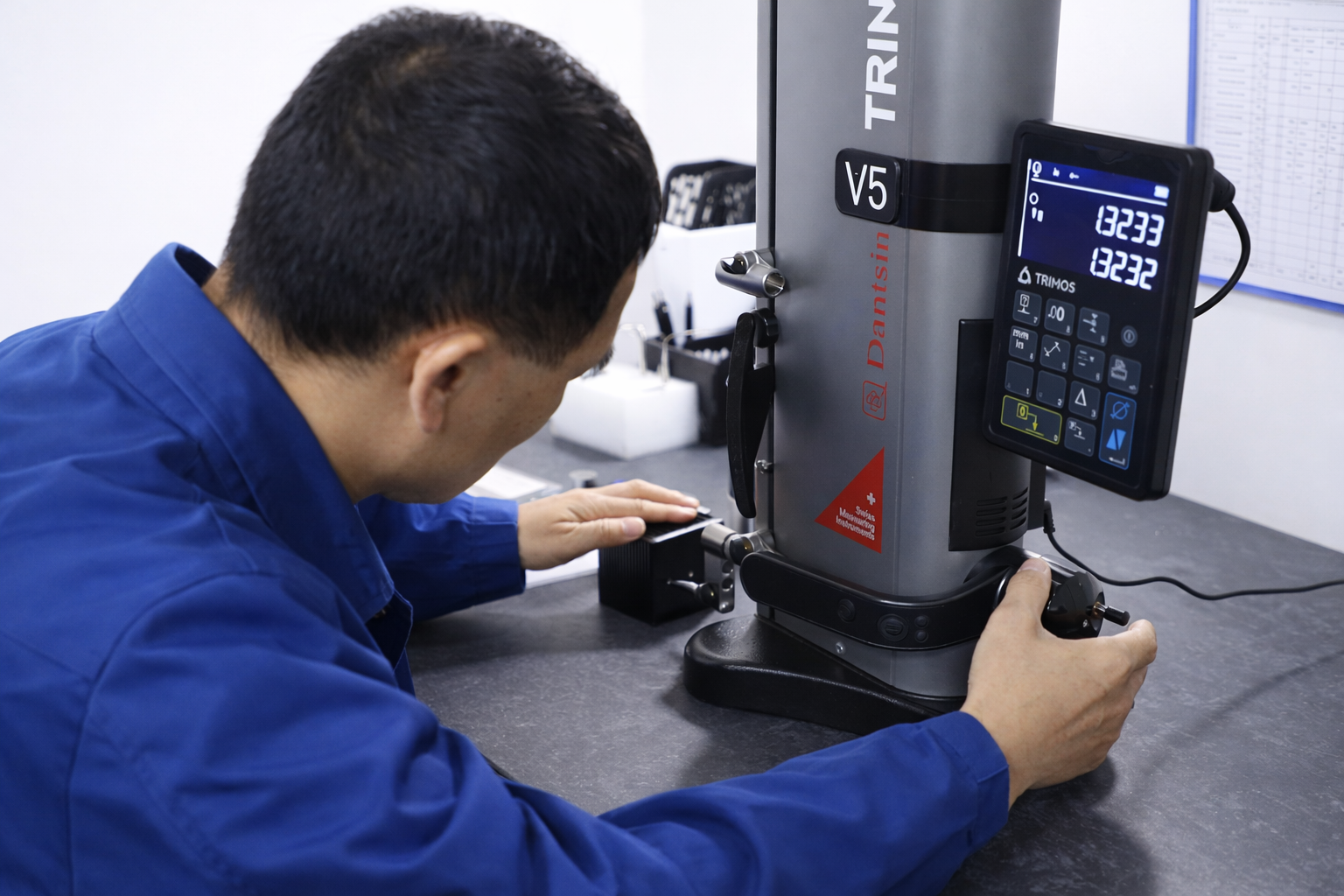
Quality evidence is generated at defined stages. First-article inspection is performed for every new batch. Final inspection uses calipers, micrometers, height gauge and a surface roughness tester, and critical components are verified on a coordinate measuring machine for tight-tolerance requirements. In-house inspection is maintained for quality consistency. Supporting metrology and machining equipment includes FANUC CNC machining centres, HEXAGON metrology equipment, a 2.5D projector and a TRIMOS height gauge, and the machining centres are quoted with a machine tolerance of 0.005 mm.
For a magnesium programme, the most valuable pre-commitment test is a first-article route that mirrors the production process rather than a hand-finished sample. The documented workflow runs from prototyping and small-batch validation to mass production delivery, which gives buyers a natural checkpoint: validate the magnesium part at first article, then re-validate when tooling, alloy batch or finishing supplier changes.
Magnesium Against Aluminum and Zinc: A Documented Comparison
The comparison below uses only parameters that appear in the reviewed product and market data. Blank cells are deliberate: they indicate that the value is not published for that material and must be established for the project.
| Comparison dimension | Aluminum alloy | Zinc alloy | Magnesium alloy |
|---|---|---|---|
| Documented grades in the range | ADC12, A380 | Zamak3, Zamak5 | Not published in the range data |
| Minimum wall thickness | 0.8 mm | 0.4 mm | Not published |
| Safety factor | 1.2 (cold chamber) | 1.3–1.5 (hot chamber) | Not published |
| Strength figures cited | 80–120 MPa | 40–80 MPa | Not published |
| Documented functional advantages | Heat dissipation, light weight, colour anodizing, powder coating, painting | Vibration damping, cost-effectiveness, EMI shielding in consumer electronics | Vibration damping for precision instruments and power tools |
| Market context | 74.78% of global die casting market by material, 2025 | Fast-growing segment for consumer electronics | Magnesium casting market USD 1.42 billion in 2026 |
The boundaries worth stating plainly
Magnesium is not the default answer, and three boundaries are visible in the data. First, the documented parameter set for magnesium is thinner than for aluminum and zinc in this range: minimum wall thickness, safety factor and strength figures are published for aluminum and zinc but not for magnesium, so those values must be developed or confirmed per project. Second, the commercial base is smaller — the magnesium casting market is measured in billions of dollars, while the total die casting market is measured at USD 93.56 billion, with aluminum holding three quarters of it. Smaller volume means fewer alternative suppliers if a tool needs to be transferred.
Third, the direction of large-scale manufacturing investment is currently concentrated in aluminum structural casting. Reported deployment of 9,000-ton presses for rear underbody assemblies, associated with a cited 40% manufacturing cost reduction, illustrates where high-tonnage capacity is being built. That kind of scale economics is not yet described for magnesium components in the reviewed sources.
Market forecasts should also be read with care. Published compound annual growth rate projections for aluminum die casting differ widely across research houses, from roughly 5.4% to 11.5%, depending on baseline year and how large-tonnage casting machinery is treated. A single growth figure should never be used as the sole justification for a tooling decision.
What Changes in the Next Few Years
The magnesium casting market is projected to grow from USD 1.42 billion in 2026 to USD 2.96 billion by 2035, a compound annual growth rate of 8.9% in the cited forecast. If that trajectory holds, the practical consequence for buyers is not immediate price relief but a gradual widening of the supplier base and, eventually, more standardised process data for magnesium parts.
Two adjacent trends reinforce the same conclusion. Zinc die casting continues to be described as a fast-growing segment on the strength of cost-effectiveness and EMI shielding in consumer electronics, which shows that material selection in this industry follows application requirements rather than a single preferred alloy. And the larger casting press trend in aluminum structures keeps pushing the economics of large parts toward fewer, bigger castings — a pressure that indirectly supports specialised lightweight alloys in applications where part size is smaller but damping and mass matter more than tool tonnage.
For procurement teams, the defensible strategy in the near term is documentation-led: fix the alloy grade in writing, require material and certificate scope that matches the actual part, validate at first article, and re-validate after any tooling, alloy batch or finishing change. That approach works regardless of which way the market forecasts move.
Frequently Asked Questions
Which certifications can a magnesium alloy die casting component actually be covered by?
Coverage depends on the certificate scope. In the reviewed compliance record, the die casting product is covered by a RoHS 2.0 Compliance Certificate, number BTL20250603446, issued by BTL Testing Technology Co., Ltd. and valid from 2025-06-10 to 2029-06-10 for the EU market, with a stated scope of metal accessories under RoHS Directive 2011/65/EU and Amending Directive (EU) 2015/863, Annex VI. The same product is covered by AS9100 certification CN059921 issued by Bureau Veritas Certification, valid from 2026-05-26 to 2029-05-25, with a stated scope of the manufacture of hardware for satellites in the space industry, under BS EN ISO 9001:2015 and EN 9100:2018. An ISO 9001 certificate, number IAS25Q391R0 issued by INV and valid from 2025-10-16 to 2028-10-15, covers the production of hardware parts. Where an automotive programme applies, IATF 16949:2016 is described as the mandatory quality management system standard for die casting suppliers in that industry and would need to be confirmed separately.
What tolerances and minimum wall thicknesses are documented for die cast parts?
The die casting range is documented with a dimensional tolerance of ±0.01 mm. Minimum wall thickness is stated as 0.4 mm for zinc alloy and 0.8 mm for aluminum alloy, with complex thin-wall geometry formed in one integrated step. No minimum wall thickness value is published for magnesium in this range, so a magnesium geometry should be confirmed against the supplier's process data before the drawing is frozen.
How should buyers compare cost drivers between magnesium, aluminum and zinc die casting?
List pricing is not published for these processes; cost has to be compared through documented drivers. Those include the material grade, the safety factor applied in the process design (1.2 for cold-chamber aluminum, 1.3–1.5 for hot-chamber zinc), cycle time, which is quoted at 15–90 s per piece at range level, the amount of secondary machining required, and the surface finishing route. The range is also described as suitable for long-term repeat monthly orders, which means tooling amortisation and repeat-order stability are relevant cost variables rather than one-off unit price alone.
What lead time, minimum order quantity and capacity should be requested from a die casting supplier?
Documented figures for this range are a lead time of 21–30 days, a minimum order quantity of 10 units, and a monthly capacity of 4,200,000 units, with an annual output of 5,000,000 units. Buyers should ask for these three numbers as a written commitment for the specific part, because capacity stated at range level does not necessarily reserve press time for a given programme.
Can magnesium alloy die casting components be machined and surface finished after casting?
Yes. Secondary 3-axis CNC milling is supported for precise holes, grooves and fitting surfaces, and the die casting range supports anodizing, powder coating and painting on aluminum alloys. The broader finishing capability includes anodizing, sandblasting, polishing, brushing, chromate conversion coating, powder coating, electroplating, passivation, electropolishing, mirror polishing, PTFE coating, nickel, chrome, gold, zinc plating, black oxide and phosphating. Because the RoHS certificate scope is stated as metal accessories, the finishing chemistry should be reviewed against the compliance file for the delivered part.
What quality evidence is generated during production?
First-article inspection is performed for every new batch. Final inspection uses calipers, micrometers, height gauge and a surface roughness tester, and critical components are verified on a coordinate measuring machine for tight-tolerance requirements. In-house inspection is maintained for quality consistency, and the supporting metrology set includes HEXAGON metrology equipment, a 2.5D projector and a TRIMOS height gauge. These records are the practical evidence a buyer can request alongside the certificate portfolio.
Additional reference material on the manufacturer's capability and process scope, including the component and finishing range discussed above, is available in the SUNPREC presentation document. Company-level information is published at sunprec.com.