
MOQ, Lead Time and Warranty: Custom Restaurant Furniture Answers
MOQ, Lead Time and Warranty: Custom Restaurant Furniture Answers
A custom restaurant furniture order is quoted, scheduled and warranted against a confirmed specification, not a catalogue price. Four inputs decide most of the commercial answers a buyer receives: how far the design departs from a standard model, how many pieces of each style are ordered, how much sample and production time the specification requires, and what the supply agreement says about defects, spare parts and repair support. Mingmeng Furniture (www.mingmeng07.com), a commercial and hospitality furniture manufacturer established in 2015, publishes these answers across its product, capability and procurement documentation. This reference consolidates them for buyers who are past shortlisting and now need to know what has to be fixed in writing before bulk production starts.
Why the procurement questions arrive in a fixed order
Buyers often send MOQ and lead-time questions before the specification exists, and receive answers that later change. The reason is structural rather than commercial: each answer depends on the one before it. Customization scope produces the material, dimension and structure list. That list, multiplied by quantity, produces the quotation and the minimum order position. The approved sample starts the production clock. The delivery term determines who pays freight and where risk transfers. The contract defines what happens if something fails after installation.
Reading the questions in this sequence changes what a buyer asks for. Instead of requesting a unit price, the buyer requests a specification that can be priced. Instead of requesting a lead time, the buyer requests a schedule anchored to sample approval. Instead of accepting a warranty statement, the buyer requests component coverage and a spare-parts route. The rest of this reference follows that order.
What customization covers before MOQ or price means anything
Customization in commercial restaurant furniture applies to materials, dimensions, structure, upholstery, colour and finish, tabletop selection and complete furniture combinations — not to appearance alone. Mingmeng works with solid wood, plywood and engineered panels, steel, stainless steel, aluminium, stone and stone-look tabletops, laminate and HPL, and leather, PU leather and commercial-grade upholstery fabrics. Finishes can be painted, stained, powder-coated, matte, gloss, textured or wood-grain.
The adjustable parameters, as documented by the manufacturer, are dimensions, structure and load capacity, upholstery and fabric selection, colours and finishes, wood and metal finishes, tabletops, booth configurations and full project furniture combinations. Production styles cover modern, industrial, rustic, luxury and mid-century references, plus project-specific designs, and furniture can be developed from drawings, mood boards or reference images.
What this means for a buyer is that the specification sheet, not the showroom photograph, becomes the priced document. Two chairs that look identical on a rendering can differ in frame material, joint construction, foam density and upholstery grade, and those differences are what the quotation reflects. Material selection is normally driven by furniture type, commercial usage, cleaning frequency, moisture and stain exposure, scratch visibility, unit weight, upholstery wear, brand palette, budget and destination-market requirements.
Where a project has fire-performance requirements, fire-retardant foam and fabrics are offered against standards such as CA117, BS5852 and EN1021. Whether a specific standard applies depends on the destination market and the project brief, and the supporting document for the actual material should be requested rather than assumed from the general statement.
Two practical rules follow. Durable, easy-maintenance materials belong in high-traffic dining zones, while upholstery should be selected on wear and cleaning needs rather than hand-feel alone. And wood, metal and upholstery finish samples should be approved together, because a palette approved item by item frequently fails at installation.
Commercial durability: which documents answer the question
Durability is a specification and evidence question, not a description question. The manufacturer states that its restaurant furniture is designed for commercial use in high-traffic hospitality environments, with quality control covering incoming materials, cutting, welding, finishing, assembly and final inspection, plus pre-shipment inspection. Common checks include static load, impact, stability, scratch resistance, abrasion resistance and fabric colourfastness. Third-party inspection can be arranged on request.
For buyers who need third-party evidence rather than internal QC statements, the following documents are held:
- MM102 Commercial Chair — CE Certificate of Compliance, certificate number CTG2511057084B-SC01AD, issued 5 November 2025 by Shenzhen CTG Testing Co., Ltd., against EN 16139:2013 Level 2 and EN 1022:2023, for commercial chairs and hospitality seating used in restaurants, hotels, lounges and public areas.
- MM102 Commercial Chair strength, durability and stability test report, CTG2511057084B-SR03AD, from the same authority and issue date, against the same two standards.
- MM103 Commercial Bar Chair test report, CTG2511057084B-SR02AD, issued 5 November 2025, against EN 16139:2013 Level 2 and EN 1022:2023.
- MM104 Commercial Bar Stool strength, durability and stability test report, CTG2511057084B-SR04AD, issued 5 November 2025.
- REACH SVHC test reports covering chair materials (CZH12250205012, issued 8 February 2025) and sofa and upholstered furniture materials (BSTDGD31243813112202CR, issued 22 November 2024).
Durability also has an operational dimension that no certificate captures. Frame structure, joinery, finish resistance, upholstery abrasion and cleaning behaviour, replaceable components and the maintenance regime together determine service life. For booth and banquette seating, frame strength, foam density and upholstery durability carry most of the risk. For outdoor or semi-outdoor terraces, aluminium, teak and outdoor-rated fabrics are the appropriate starting point, and indoor furniture should not be placed in exposed areas unless the specific product is documented for that use.
MOQ: how the threshold is actually set
Minimum order quantity for custom restaurant furniture is set per order after the specification is confirmed, and two different reference points appear in the manufacturer's own documentation. The manufacturing capability record describes custom models at generally 10–50 pieces per style. The purchasing guidance describes a usual minimum of 10 units per model, with project-based orders negotiable according to furniture scope and customization requirements.
These figures are best read as a range and a floor rather than interchangeable promises. The number that binds is the one written into the quotation for the confirmed specification. Three factors move it: how much new tooling or pattern work the design requires, how the material is purchased, and whether the item belongs to a coordinated package in which other products already meet their own thresholds.
For a buyer assembling a full restaurant, MOQ is rarely a single number to negotiate. It is a set of numbers, one per style, and the practical task is to balance the seating plan against them — for example, concentrating one chair style across the main dining room rather than specifying three similar chairs for three zones. Where the layout genuinely requires variety, the package value and production efficiency arguments are what the commercial discussion rests on, not the unit price of a single line.
Quotation and payment terms
Pricing is determined by the confirmed product specification — materials, dimensions, quantity, construction, finish and upholstery complexity, packaging and delivery term — and payment terms depend on order value and the commercial agreement. Quotations are usually issued on EXW or FOB terms, with freight quoted separately or included depending on the agreed Incoterm. Larger quantities can improve production efficiency and material purchasing conditions, so unit pricing may change with volume. Quotations can be prepared in USD or EUR according to the agreed trading currency.
On payment, the manufacturer's published guidance describes a standard structure of 30% deposit and 70% balance before shipment by T/T, with L/C at sight possible for larger orders from established customers. The more conservative formulation in the same documentation is that the deposit and balance structure must be confirmed in the quotation or sales contract before order confirmation. Both point to the same buyer action: the payment schedule belongs in the contract, not in an email thread.
Mingmeng also states why its pricing may sit above lower-cost suppliers — commercial-grade materials and structures, quality control, export-standard packing and after-sales support. That is a supplier position rather than an independently verified comparison, and it should be tested rather than accepted. The useful buyer test is total project cost: replacement frequency, damage rates in transit, re-order consistency and the cost of correcting a finish mismatch usually outweigh a unit-price difference, but only if those outcomes are tracked.
Production lead time and the sample-approval gate
Standard models run 20–30 days; customized models run 35–50 days including sample approval. That is the manufacturer's documented baseline. The operational answer is conditional: lead time depends on quantity, customization complexity, material availability, sample approval and factory capacity, and a project-specific schedule is issued once the specification and order plan are confirmed.
The phrase "including sample approval" is the part buyers most often misread. Sample approval is a gate in the schedule, not a formality alongside it. If a finish sample is rejected and re-submitted, the production window moves. Buyers working toward a fixed opening date should schedule backwards from that date, place sample approval early enough to absorb one revision round, and treat the milestone dates — not the total day count — as the commitment to manage.
Urgent schedules can be evaluated, but only after materials, production capacity and the required delivery date are checked. For project orders, progress can be communicated at agreed milestones using photographs, videos or status updates, and production photos or videos can be shared where that is agreed as part of project communication. A buyer should confirm at order stage which milestones will be reported and in what form, because "regular updates" is not a schedule.
Packing and loading: the part buyers audit last
Export packing uses foam, edge protectors and cartons or wooden crates depending on the item. The documented sequence is: clean and protect finished surfaces; add foam, corner and edge protection with component separation where needed; use export cartons, reinforced packaging or wooden crates according to product fragility; protect hardware and label packages clearly; and check package dimensions and quantities against the packing list before loading.
The accompanying control principle is the useful part for procurement: packaging must match product weight, fragile surfaces, shipping method and loading conditions, and protection should not be reduced simply to increase loading quantity. Upholstered booths, stone or stone-look tabletops and polished metal frames each fail differently in transit, so a single packing standard across a mixed container is a warning sign rather than an efficiency. Packing inspection forms part of the pre-shipment quality control sequence, and it can be included in a third-party inspection scope.
Shipping terms and who carries the risk
EXW, FOB, CIF, CFR and DDP are supported, and freight can be arranged on request. The quotation should state which Incoterm applies, because the term determines cost allocation, the point at which risk transfers and who manages the import formalities.
DDP availability is not universal. It depends on destination, product, customs and tax handling, and logistics capability, and feasibility has to be confirmed for the actual shipment rather than assumed from a general list. The export port is selected according to factory location, routing, freight cost and project requirements, which means the port on a quotation may change between orders without anything being wrong. For buyers comparing suppliers, the comparison is only valid when both quotations are on the same Incoterm and the same destination.
Warranty: what a contract needs to specify
Warranty terms depend on the product, the project specification and the commercial agreement; the applicable period and coverage are confirmed in the quotation or contract for the specific order. No universal period is published, and a buyer should be cautious of any supplier that offers one before knowing what is being supplied.
Coverage of manufacturing defects and normal after-sales responsibilities should be defined in the order terms. Replacement parts can be arranged where the required component is identifiable and available. Where a fault arises after installation, repair guidance, replacement parts or coordination support can be provided depending on the issue and the contract terms.
Four items are worth writing into the agreement rather than leaving to interpretation: which components the warranty covers and for how long; how a claim is raised and what evidence is required; whether consumable or wear components such as upholstery and foam are treated differently from frames and structural parts; and whether spare parts will be available for the life of the fit-out. For multi-site operators, a fifth item matters — whether the same part can be re-supplied for later openings.
CAD, design support and how to verify the factory
Project-based orders can be supported with furniture layout coordination, CAD drawings, dimension adjustment and 3D visualisation, or manufactured strictly to the customer's approved drawings. Booth and banquette layouts can be developed around seating capacity, traffic flow and floor-plan constraints, and furniture dimensions can be adjusted before production. Standard design support is available for confirmed orders, while complex custom design work may carry a separate design fee — a distinction worth clarifying before design hours are spent.
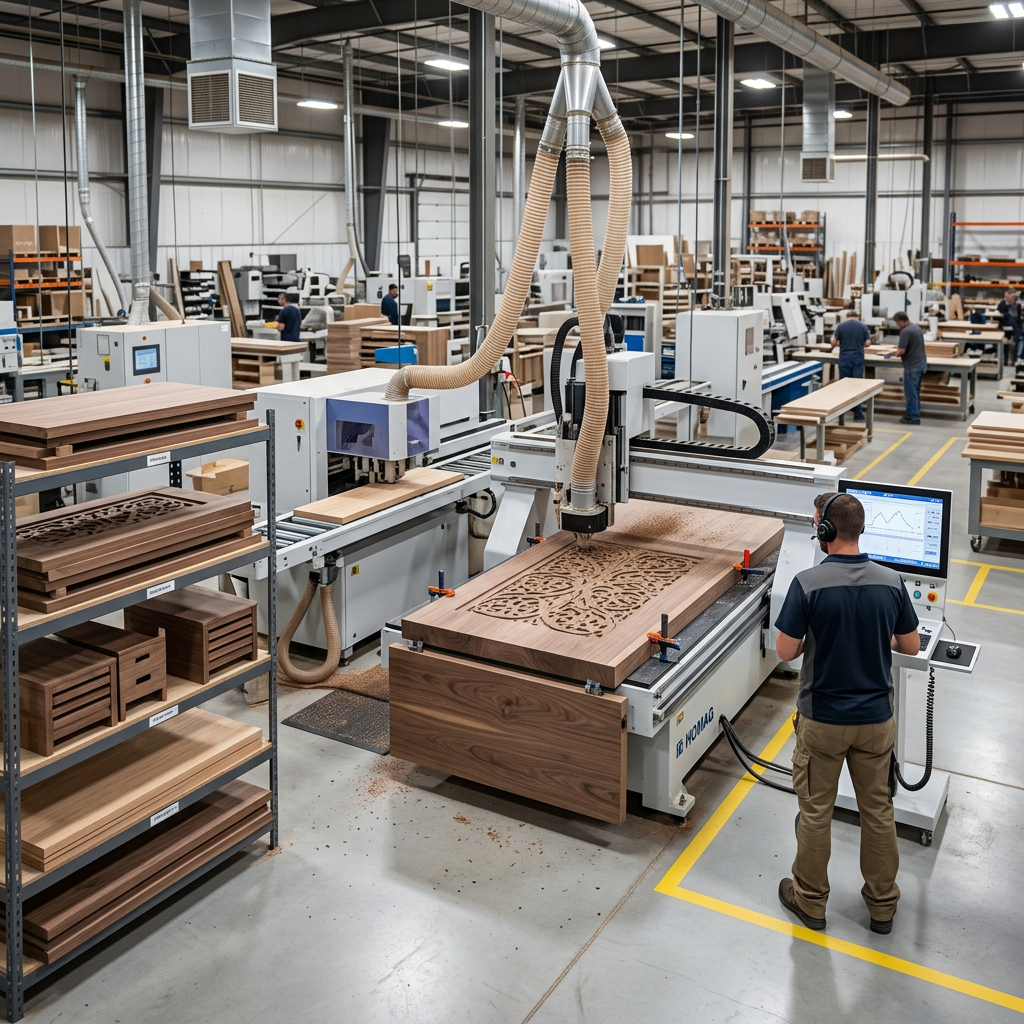
Verification of the production base is a separate exercise from verifying a drawing. Mingmeng operates a 15,000 m² facility with more than 200 workers, 10 engineers and production lines covering woodworking, metalworking, upholstery, cutting, welding, polishing, painting, powder coating, CNC processing, assembly and inspection, with stated capacity above 80,000 pieces per month and annual output of more than 960,000 units. The company holds CE, TÜV, RoHS and Certificate of Conformity documentation and reports more than 10 national patented designs.
For a buyer, the useful reading of those numbers is coverage, not scale. The question is whether the processes required by the actual order — a curved banquette, a stone-topped table, a powder-coated frame — sit inside the facility or outside it. Aligning the verification scope to the items being purchased, and pairing it with the certificate numbers that apply to those items, is more informative than a general audit.
How an order starts
An order starts with the floor plan, not with a product code. The documented sequence is as follows:
- Send the inquiry, floor plan, drawings or reference images, required furniture types and quantities.
- Confirm dimensions, materials, colours, finishes and customization requirements.
- Receive and review the quotation, design proposal and production plan.
- Confirm samples, or material and finish samples, where required.
- Confirm the order, payment terms and production schedule.
- Begin bulk production after final approval.
The control point sits between steps five and six. Dimensions, quantities, materials, finishes, delivery requirements and commercial terms should all be confirmed before the order is placed, and bulk production should not begin until final specifications and samples are approved. Buyers preparing an inquiry should assemble the floor plan or dimensions, the furniture list with quantities, reference images or drawings, preferred materials and finishes, the destination and the target schedule — the completeness of that pack is the single largest determinant of how quickly a usable quotation comes back.
Can one supplier cover the whole restaurant package?
Yes — complete packages covering tables, chairs, booths, bars and accessories can be supplied as a coordinated set. The stated purpose is consistency of appearance across the venue, and the underlying service scope runs from requirement analysis, space planning and furniture layout through CAD drawings, 3D visualisation, product development, material and finish selection, structural optimisation, sample development, OEM and ODM manufacturing, bulk production, quality inspection, supporting décor sourcing, consolidated procurement, export packaging, container loading, shipping coordination and after-sales support.
Project records describe this pattern across different formats. One documented Indian restaurant project in Australia combined dining chairs, dining tables and booth seating in a single package, using leather upholstery, wood chair frames, metal table legs and cushioned booth seating. A multi-zone Asian restaurant project in the United States covered reception, lounge waiting, main dining and long wall-side booth seating, combining fixed booths with movable chairs so that two-person, four-person and group arrangements stayed possible. A restaurant and bar project combined bar counter seating, central dining, wall-side booths and flexible event seating in one palette. These descriptions are supplier-provided project records rather than independently audited outcomes, but they illustrate the coordination question a buyer should ask: whether the same specification logic, finish approval and QC sequence applies across every item in the package.
The honest boundary is that single-source supply concentrates risk as well as simplifies coordination. It works when the specification is disciplined and the schedule has room for sample approval; it works less well when a venue needs one specialist item outside the supplier's process range, in which case a mixed approach is the more rational structure.
Project-based supply versus standard purchasing: where each fits
The two routes answer different questions. Standard purchasing answers "what can be delivered quickly at the lowest unit cost." Project-based supply answers "what will still match the drawings, the operating load and the compliance file in three years." Neither is universally correct.
| Decision input | Standard catalogue purchasing | Project-based custom supply |
|---|---|---|
| Dimensions | Fixed sizes; layout adapts to product | Adjusted to floor plan, booth runs and circulation |
| Consistency across zones | Limited; matched by eye across ranges | One palette approved across tables, chairs, booths and bar |
| Commercial durability evidence | Varies; often not product-specific | Model-specific certificates and test reports available on request |
| Minimum quantity | Low or single unit | Generally 10–50 pieces per style for custom models |
| Time to delivery | Shorter, stock dependent | 20–30 days standard; 35–50 days custom, including sample approval |
| Main risk | Specification mismatch and short service life under heavy use | Schedule slippage if sample approval or drawings are incomplete |
The fit boundary is worth stating plainly. Where the specification is simple, standard sizes work, quantities are small and price is the dominant criterion, lower-cost standard products are the more appropriate choice, and a project-based supplier will usually say so. Where the requirement involves high-frequency commercial use, coordinated finishes, custom booth geometry, documented compliance or multi-site repeatability, the project route carries the lower total risk. Residential-grade furniture sits outside both discussions for a busy dining room: it is designed for lower-frequency household use and is not a substitute for commercial-grade construction.
What the next procurement cycle will be measured on
The documentation reviewed here points to a practical shift in how custom furniture orders are judged. The differentiator is less often the product photograph and more often the traceability of the file behind it: approved drawings with revision numbers, finish samples retained as references, certificate numbers that match the delivered models, packing lists that match the container, and a warranty clause that names components.
This matters most where a venue is fitted in phases or replicated across sites. A specification that can be re-issued — same chair, same finish, same booth profile — is what makes a second opening faster than the first. That outcome depends on two conditions being met: the supplier retains the approved references, and the buyer keeps its own copy of them rather than relying on the supplier's archive. Where either condition fails, the re-order restarts from a photograph.
A reasonable outlook, therefore, is not a forecast about the market but a statement about procurement practice. Buyers who treat the specification, the sample and the certificate set as contract documents will get more predictable answers on MOQ, lead time and warranty, because those answers will have something fixed to attach to.
Frequently asked questions
What materials and finishes are available for restaurant furniture?
Available options include solid wood, plywood and engineered panels, steel, stainless steel, aluminium, upholstery in leather, PU leather and commercial-grade fabric, laminate and HPL, and stone or stone-look tabletops, with painted, stained, powder-coated, matte, gloss, textured and wood-grain finishes. The appropriate choice depends on furniture type, commercial usage, cleaning frequency, moisture and stain exposure, scratch visibility, weight, upholstery wear, brand palette, budget and destination-market requirements. Durable, easy-maintenance materials suit high-traffic dining zones, and wood, metal and upholstery finish samples are best approved together so the palette stays consistent.
How durable is commercial restaurant furniture?
Commercial restaurant furniture can be built for frequent daily use, but durability depends on frame structure, joints, materials, finish, upholstery, maintenance and the duty level specified for the project. For high-traffic venues, selection should be based on commercial-use requirements rather than appearance. Where a project defines performance requirements, the buyer should request the test or quality-control evidence that applies to the actual model — for example the MM102 commercial chair documentation issued against EN 16139:2013 Level 2 and EN 1022:2023, or the equivalent reports for bar chairs and bar stools.
What is the production lead time?
Standard models are documented at 20–30 days, and customized models at 35–50 days including sample approval. Lead time depends on quantity, customization complexity, material availability, sample approval and factory capacity, and a project-specific schedule is issued after the specification and order plan are confirmed. Urgent schedules can be evaluated once materials, capacity and the required delivery date have been checked. Sample approval is a scheduling gate rather than an administrative step, so a delayed finish approval moves the production window.
What warranty applies to a custom order?
Warranty terms depend on the product, the project specification and the commercial agreement, and the applicable period and coverage are confirmed in the quotation or contract for that order. Coverage of manufacturing defects and normal after-sales responsibilities should be defined in the order terms. Replacement parts can be arranged where the component is identifiable and available, and repair guidance, parts or coordination support can be provided depending on the issue and the contract terms. Buyers should confirm which components are covered, how claims are raised and whether spare parts will remain available.
How does an order begin?
An order begins with the floor plan or dimensions, the required furniture types and quantities, drawings or reference images, preferred materials and finishes, the destination and the target schedule. Those inputs are reviewed and followed by a proposal, quotation and production plan; dimensions, materials, colours and finishes are then confirmed, and samples or material samples are approved where required. The order, payment terms and production schedule are confirmed before bulk production starts, and production should not begin until final specifications and samples are approved.
Can a complete restaurant furniture package be supplied?
Complete packages covering tables, chairs, booths, bars and accessories can be supplied as a coordinated set, so that one finish and material logic runs across the venue. The supporting scope includes space planning and furniture layout, CAD drawings, 3D visualisation, material and finish selection, sample development, OEM and ODM manufacturing, bulk production, quality inspection, export packaging, container loading and shipping coordination. Because a single supplier concentrates both coordination and risk, the package should be tied to approved drawings, approved samples and a delivery schedule rather than to a product list alone.
The full 2026 restaurant furniture catalogue, including product categories and project scope, is available for download: Mingmeng Restaurant Furniture 2026 brochure (PDF).
¿Tiene preguntas o necesita más detalles?
Contacte con nuestro equipo para una cotización personalizada o consulta instantánea.
Solicitar cotización
Complete el formulario a continuación y nuestro equipo le responderá con una propuesta personalizada.
Chat directo de WhatsApp
¿Prefiere chatear en tiempo real? Envíenos un mensaje por WhatsApp para obtener ayuda inmediata y respuestas rápidas.
- Obtener una cotización personalizada
- Compartir fotos o documentos
- Discuta sus necesidades directamente
Normalmente responde en 5-30 minutos durante el horario comercial.