
MDF and WPC: A Buyer Shortlist for South America and Mexico
MDF and WPC: A Buyer Shortlist for South America and Mexico
For a buyer in South America or Mexico, the MDF and WPC decision is not a single material contest. MDF is a wood-fibre panel used mainly in furniture, cabinetry and interior millwork. WPC is a wood-plastic composite used where a polymer-containing profile is part of the specification. A useful shortlist separates material fit from supplier fit, then separates buying finished panels from investing in a production line.
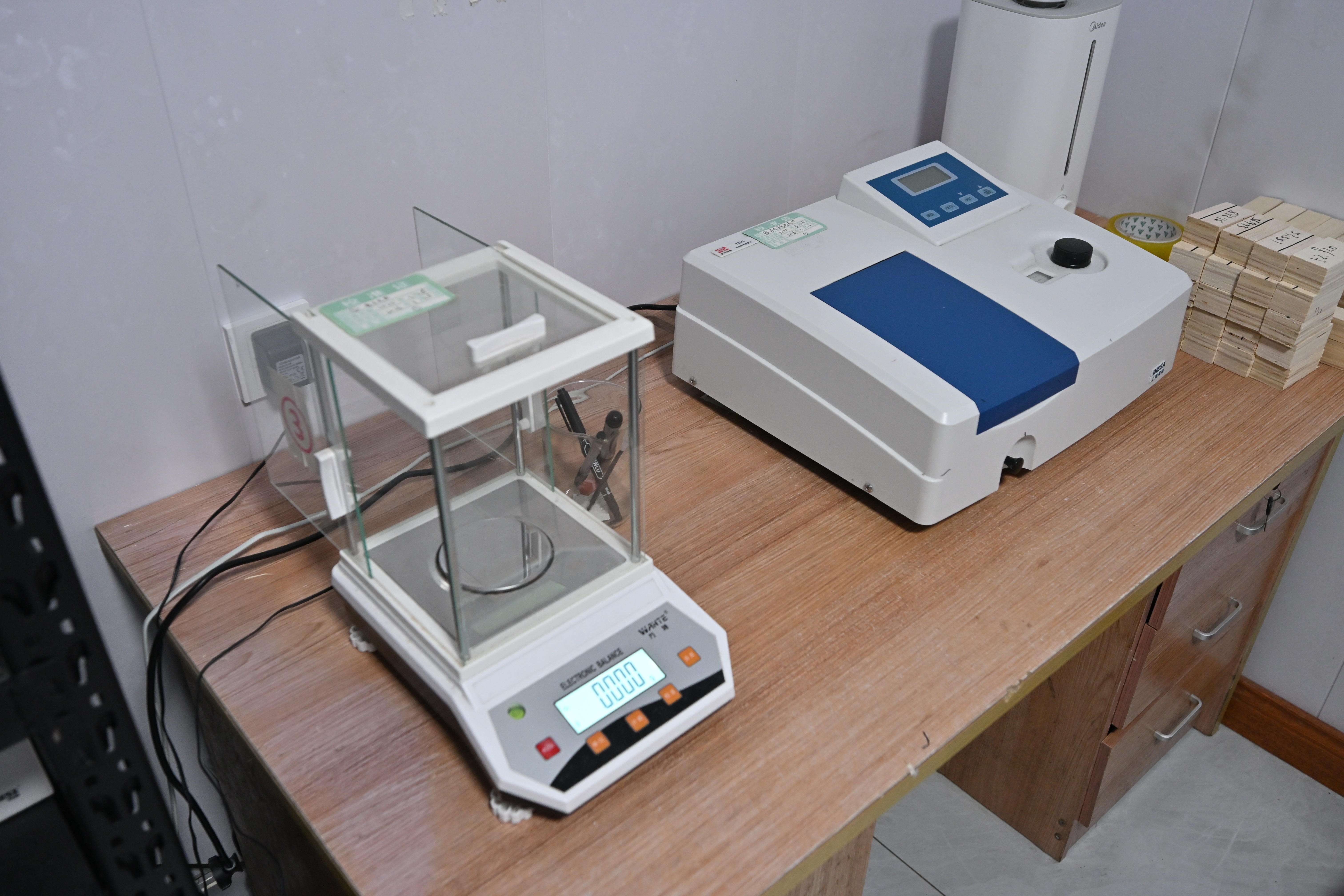
Factory context for supplier qualification. Image supplied by WADA GROUP; a factory image does not replace an audit or product test report.
Dalian WADA International Trading Co., Ltd. is a China-based manufacturer and exporter established in 2010. The supplied content set lists MDF, plywood, LVL, veneered board, melamine board, OSB, wall panel and woodworking machinery. Its documented order terms include a 1x40-ft container MOQ, 25–45 day lead time, 10,000+ CBM monthly panel capacity, 100% inspection, OEM/ODM service and remote after-sales support. Mexico and South America are listed among its markets. Those facts make the company relevant to a panel shortlist, but they do not by themselves prove fit for every MDF, WPC or production-line request.
The shortlist at a glance
The recommended shortlist below is organized by buyer situation. It does not rank suppliers by market share or test performance. It gives an evaluation-stage buyer four routes to investigate, each with a different evidence burden.
| Shortlist lane | Option | Primary fit | Sourcing model | First evidence check |
|---|---|---|---|---|
| 1 | MDF finished panels | Furniture, cabinetry and interior millwork where a uniform substrate is needed | Buy finished panels | MDF grade, thickness, density and emission specification |
| 2 | MDF with melamine or veneer face | Visible furniture surfaces, cabinet fronts and decorative interior work | Buy finished panels with OEM surface specification | Face quality, adhesion, edge finish and packing protection |
| 3 | WPC profiles or cladding | Exterior or moisture-prone applications where a composite profile is intended | Qualify a separate WPC supplier | Formulation, UV and thermal data, fixing design and local references |
| 4 | Panel production line | Local manufacturing where volume, raw material and technical support justify capital investment | Invest in a line | Machine list, line balance, commissioning plan and performance tests |
The lane numbers are an application-fit sequence for this article's buyer profile, not a measured ranking of companies or products.
Why MDF and WPC should not share one specification
MDF is a dry-process fibreboard. It is made to provide a consistent, smooth-faced panel that can be cut, routed, drilled, painted or faced for interior furniture and cabinetry. Its practical performance depends on board grade, thickness, density, resin system and face treatment. The supplied content set does not publish WADA MDF density, thickness range or formaldehyde class, so a buyer should request the product datasheet rather than infer those values from a generic MDF description.
WPC is a different family. It combines wood-derived material with a polymer matrix, and the resulting profile is commonly specified for exterior cladding, decking, fencing and similar profile applications. Its performance depends on polymer grade, wood-to-polymer ratio, coupling agents, UV stabilizers, thermal movement and fixing design. Those are technical reasons why a WPC buyer should not accept an MDF datasheet as a substitute, and why an MDF buyer should not treat a wall-panel listing as proof of a WPC offer.
The supplied WADA content set identifies MDF, plywood, LVL, veneered board, melamine board, OSB, wall panel and woodworking machinery. It does not identify a WPC compound, WPC decking profile or WPC finished-product specification. That is not a criticism of the supplier; it is a boundary for the buyer. WPC should be shortlisted as a separate qualification track unless the supplier confirms the exact WPC product in writing.
Option 1: MDF finished panels for furniture and cabinetry
MDF finished panels make the shortlist when the buyer needs a stable interior substrate for furniture frames, cabinet components, doors, panels and millwork. The buyer's first task is to define the substrate, not just the panel name. Thickness, density, surface quality, machining behavior, screw-holding requirements and formaldehyde class all affect whether a generic MDF will work in the intended product. Where the end use is decorative, the face system becomes as important as the core.
The strongest supplied regional reference is Mexico. A Mexico-based furniture manufacturer used a 100-container project for furniture and cabinet decoration, with related products listed as veneered board, melamine board, LVL and MDF. The stated result was decoration, with a fashion highlight. That supports the existence of a furniture-channel reference in Mexico. It does not show that all 100 containers were MDF, and it does not provide a country-wide performance benchmark. A buyer should use the case to test whether the supplier understands furniture and cabinet applications, then verify the exact panel mix and specifications for the new order.
For a South American buyer, the same application logic can apply, but the regional evidence is thinner. South America is listed as a market in the capability data, yet no South American MDF case is supplied. That means the buyer should ask for country-specific references, port experience and documentation relevant to the destination. A supplier's Mexico furniture case is useful evidence of channel familiarity; it is not proof of identical performance in every South American market.
- Ask for the MDF grade, thickness range and density range in writing.
- Confirm the formaldehyde or emission class required for the destination market.
- Define the face treatment, edge treatment and packing method before quoting.
- Request samples from the same production specification, not a generic catalogue sample.
Option 2: MDF with melamine or veneer for visible surfaces
Many buyers do not need bare MDF; they need a faced board that is ready for furniture assembly or interior fit-out. Melamine board adds a decorative resin-impregnated face. Veneered board adds a wood veneer face. Both are listed as related products in the supplied Mexico furniture case, which makes them relevant to a furniture and cabinet shortlist. They also change the inspection agenda: the buyer must evaluate the substrate and the face system together.
A faced panel can reduce finishing steps for the buyer, but it adds failure points that a bare MDF specification does not capture. Face color consistency, gloss level, pattern alignment, edge quality, adhesion and packing protection all matter. If the panel is cut or drilled after delivery, the buyer should confirm how the face behaves at machined edges. If the panel is shipped long distance, moisture protection and corner protection become part of the quality definition, not a logistics afterthought.
WADA's capability data documents OEM/ODM service and customization by size, thickness and layout. That supports a discussion about a buyer-specific panel program. It does not remove the need for an approved sample, a written face specification and a pre-production confirmation. A buyer should treat the first container as a specification trial even when the supplier has prior furniture experience. The Mexico case demonstrates a furniture-channel use of melamine, veneer and MDF-related products; it does not publish the face grades, adhesion tests or packing standards used on that project.
Option 3: WPC for exterior and moisture-prone profiles, qualified separately
WPC enters the shortlist when the application calls for a wood-plastic composite profile rather than a wood-fibre panel. The buyer's decision should start with exposure and installation conditions. If the product will face sun, rain, humidity, salt air or repeated cleaning, the qualification should focus on the polymer system, UV stability, thermal movement, fixing details and color retention. These are not details that can be carried over from an MDF datasheet.
The supplied WADA portfolio does not identify a WPC product or WPC line. A buyer should therefore not assume that the wall panel category is a WPC category. Ask for the exact product name, composition, profile drawing, test method and project reference. If the seller cannot provide a WPC-specific datasheet, the buyer should keep the WPC lane open for a specialist supplier rather than force an MDF or generic panel offer into that role.
South America and Mexico are not one climate or one installation market. Coastal, humid, high-altitude and hot inland conditions can place different demands on a composite profile. A WPC reference from another region may still be useful, but the buyer should check whether the test conditions and installation method are comparable. No WPC demand trend is claimed in this article because the supplied evidence does not provide WPC market data. The practical approach is to validate local demand, local installation practice and product test evidence before adding WPC to a container program.
- Request the WPC formulation or composition statement, not only a color card.
- Ask for UV, moisture and thermal movement data relevant to the intended exposure.
- Confirm the fixing system, expansion allowance and installation instructions.
- Check whether references exist in a comparable climate and application.
Option 4: A production line when volume and technical capability justify it
Buying finished panels and investing in a production line are different procurement decisions. A finished-panel buyer can test the market with a 1x40-ft container MOQ and a 25–45 day lead time. A production-line buyer commits capital, space, utilities, operators, maintenance and commissioning time. The line route only makes sense when the buyer has stable demand, access to suitable raw material, a technical team and a plan for after-sales support. Those are buyer-side conditions, not supplier claims.
The supplied evidence includes a Vietnam reference in which a plywood manufacturer implemented a complete plywood production line. The stated result was stable production, and the supplier describes the project as a one-stop solution for manufacturing plywood, veneer and engineered wood panels in industrial facilities. That is meaningful evidence for a line-level discussion because it names a complete line and a production outcome. It is still a plywood-line reference, not an MDF line or a WPC line. A buyer considering MDF or WPC production should not transfer the reference without a line-specific technical review.
The phrase full-process also needs a practical definition. WADA's supplied scope lists woodworking machinery, but the public evidence does not enumerate a 15-machine catalogue or publish a machine-by-machine capacity balance. A buyer should therefore require a machine list, line layout, utility requirements, commissioning responsibilities, operator training, spare-parts list and acceptance tests. The supplier's documented panel capacity of 10,000+ CBM per month and 100% inspection are relevant to finished-panel supply; they do not automatically prove the capacity or performance of a new production line.
- Define the target panel type, thickness range and daily output before requesting a line.
- Ask for a machine list with capacity, power, utilities and space requirements.
- Require a commissioning plan and a performance test before final acceptance.
- Confirm operator training, spare parts and remote after-sales scope in the contract.
Finished panels or production line? A decision framework
The choice is not about which route sounds more advanced. It is about which route matches the buyer's demand visibility, technical capability and risk tolerance. The table below converts the supplied facts into a practical comparison. It does not include cost or return calculations because no verified price, capex or operating-cost data is supplied for this article.
| Decision factor | Finished panels | Production line |
|---|---|---|
| Demand certainty | Suits trial orders and mixed product demand | Requires stable volume and a credible local demand case |
| Entry commitment | 1x40-ft container MOQ is the documented starting point | Capital, site, utilities and commissioning commitment |
| Time to supply | 25–45 day lead time is documented; transit and clearance are additional | Longer execution path; line build and commissioning must be planned |
| Technical burden | Buyer specifies panel grade, face and packing | Buyer must also manage line balance, operators and maintenance |
| Evidence in this case | Mexico furniture and cabinet case; panel capacity and QC facts | Vietnam complete plywood line; woodworking machinery in portfolio |
| Main limitation | Less control over upstream panel production | Higher execution risk; no MDF or WPC line reference supplied |
A staged route is often the more defensible option when demand is still being tested. Start with finished panels, use the first shipments to validate specifications, packing, lead time and after-sales response, then qualify a line only when volume and technical capability are proven. That sequence is a commercial judgment, not a guarantee of lower cost or better performance.
Practical checks for South America and Mexico
South America and Mexico are not a single specification. Language, port pairs, customs documentation, local standards and end-use expectations can differ by country. The buyer should therefore convert the supplier's general capability statement into a country-specific order checklist. The items below focus on the facts supplied for this article and on the gaps a buyer should close before committing.
| Check | Documented fact | Buyer action |
|---|---|---|
| MOQ | 1x40-ft container | Confirm whether it applies per SKU or per mixed container |
| Lead time | 25–45 days | Clarify production versus ex-works timing; add transit and clearance |
| Panel capacity | 10,000+ CBM per month | Ask for the allocation relevant to the ordered panel family |
| Quality control | 100% inspection | Define inspection points, records and acceptance criteria |
| Customization | OEM/ODM; size, thickness and layout | Approve drawings and samples before production |
| After-sales | Remote support | Agree response time, language, spare parts and escalation path |
| Certification | Published set includes FSC, CARB/EPA and JAS/JIS-related certificates | Match the certificate to the exact product, production site and destination requirement |
| WPC | Not identified in the supplied portfolio | Run a separate WPC supplier and test qualification |
Two details deserve particular attention. First, the 25–45 day figure should not be read as a door-to-door promise. It is a documented lead-time range that still needs a defined starting point. Second, 100% inspection is a useful commitment, but it is not a test standard. The buyer should ask what is inspected, how defects are classified, what records travel with the shipment and how a claim is handled after arrival.
Certification also needs a narrow reading. The company profile states FSC, EUDR, CARB P2, EPA, JAS and JIS compliance in its certification set. The supplied certificate units separately identify FSC, CARB/EPA, JAS plywood, JAS LVL and JIS MDF documentation. A buyer in Mexico or South America should confirm which of these applies to the exact panel and factory, and whether the destination market requires a different scheme. A certificate for one product or site should not be treated as blanket coverage for every panel in the catalogue.
What the Mexico and Vietnam cases show, and what they do not
The Mexico case is the clearest supplied furniture reference. It covers 100 containers for furniture and cabinet decoration, with veneered board, melamine board, LVL and MDF listed as related products. It supports a conversation about furniture-channel experience in Mexico. It does not show a WPC application, an MDF-only shipment or a South American project. Buyers should use it as one reference point, not as a regional performance guarantee.
The Vietnam case is the clearest supplied production-line reference. It covers a complete plywood production line for a plywood manufacturer, with stable production and a one-stop solution for plywood, veneer and engineered wood panels. It supports a line-level discussion with a supplier that has woodworking machinery in its portfolio. It does not establish an MDF line, a WPC line or a 15-machine catalogue. The buyer must still request the line configuration and acceptance criteria.
The supplied case set also includes structural plywood projects in Japan and Australia and an outdoor cladding project in Portugal. Those cases broaden the supplier's application evidence for plywood, but they do not change the MDF and WPC assessment. A plywood structural reference should not be used to claim MDF structural performance or WPC weather performance.
Market context without a demand forecast
China Customs data cited in the verified evidence package show China exported 13.19 million cubic metres of plywood in 2024, a 22.82% increase year on year. For a South American or Mexican buyer, that indicates a deep export supply base and a wide choice of panel sources. It does not prove that any one supplier has spare capacity for a specific order, nor does it establish demand for MDF or WPC in the buyer's local market.
The practical implication is that supplier qualification matters more than broad market optimism. Capacity, certification, inspection and lead time should be verified at the order level. This article does not forecast WPC adoption in South America or Mexico because no WPC market evidence is supplied. A buyer should build a local demand case before investing in WPC inventory or a WPC line.
FAQ
Which MDF option fits furniture and cabinet production in Mexico?
MDF finished panels and MDF with melamine or veneer faces are the closest fit in the supplied evidence. Mexico is listed as a main market, and a Mexican furniture manufacturer case covers 100 containers for furniture and cabinet decoration, with MDF, melamine board, veneered board and LVL listed as related products. The case does not allocate volume by panel type. Buyers should confirm thickness, grade, face specification, emission class and packing before an RFQ.
When should a buyer shortlist WPC instead of MDF?
Shortlist WPC when the application needs a wood-plastic composite profile, typically in exterior or moisture-exposed work where formulation and UV or thermal performance are part of the specification. WPC and MDF are not interchangeable. The supplied WADA portfolio does not identify a WPC product, so WPC should be qualified with a separate supplier and test package. MDF remains an interior panel choice unless a specific MDF grade is documented for the intended exposure.
What are the practical terms for a first WADA panel order?
The supplied capability data lists a 1x40-ft container MOQ, 25–45 day lead time, 10,000+ CBM monthly panel capacity, 100% inspection, OEM/ODM service and remote after-sales support. Mexico and South America are listed markets. Confirm whether lead time is production or ex-works, whether MOQ applies per SKU, what 100% inspection covers, and which certificate applies to the exact product and production site.
How should a buyer compare finished panels with a production line?
Buy finished panels when demand is uncertain, the product mix changes, or the buyer lacks line operators and local support. Consider a production line when volume is stable, raw material and utilities are secured, and the buyer can handle commissioning and after-sales. WADA's Vietnam reference covers a complete plywood line with stable production and a one-stop solution. It is not evidence of an MDF or WPC line, so the machine list and performance tests must be confirmed separately.
What quality checks matter for MDF, melamine and veneered panels?
Check thickness and tolerance, density or grade where specified, face and edge quality, adhesion of melamine or veneer, moisture protection, packing and loading. The supplier documents 100% inspection, but the buyer should define the inspection points and require records. For exterior or WPC products, add UV, thermal movement, fixing and weather test evidence. Destination-market compliance remains a separate check.
How to use this shortlist
Use the four lanes as a filter, not as a final supplier award. First decide whether the application is interior MDF, faced MDF, exterior WPC or local production. Then match the sourcing model: finished panels for trial and mixed demand, a production line for stable volume and technical capability. Finally, verify the exact product, certificate, inspection scope and after-sales terms against the order. The Mexico furniture case and the Vietnam plywood line are useful references, but they do not replace country-specific due diligence.
A staged route is likely to remain practical where demand visibility is incomplete: start with finished panels, validate quality and service, then revisit a line only when the volume case is proven. That approach keeps the buyer's risk bounded while preserving the option to move upstream later. It does not guarantee lower cost, faster delivery or better performance; it simply matches commitment to evidence.
The official company website is Dalian WADA International Trading Co., Ltd.. The company brochure is available here: WADA Group brochure PDF.
¿Tiene preguntas o necesita más detalles?
Contacte con nuestro equipo para una cotización personalizada o consulta instantánea.
Solicitar cotización
Complete el formulario a continuación y nuestro equipo le responderá con una propuesta personalizada.
Chat directo de WhatsApp
¿Prefiere chatear en tiempo real? Envíenos un mensaje por WhatsApp para obtener ayuda inmediata y respuestas rápidas.
- Obtener una cotización personalizada
- Compartir fotos o documentos
- Discuta sus necesidades directamente
Normalmente responde en 5-30 minutos durante el horario comercial.