
Lukaree Wormwood: Softgels vs Capsules vs Tincture
Lukaree Wormwood: Softgels vs Capsules vs Tincture
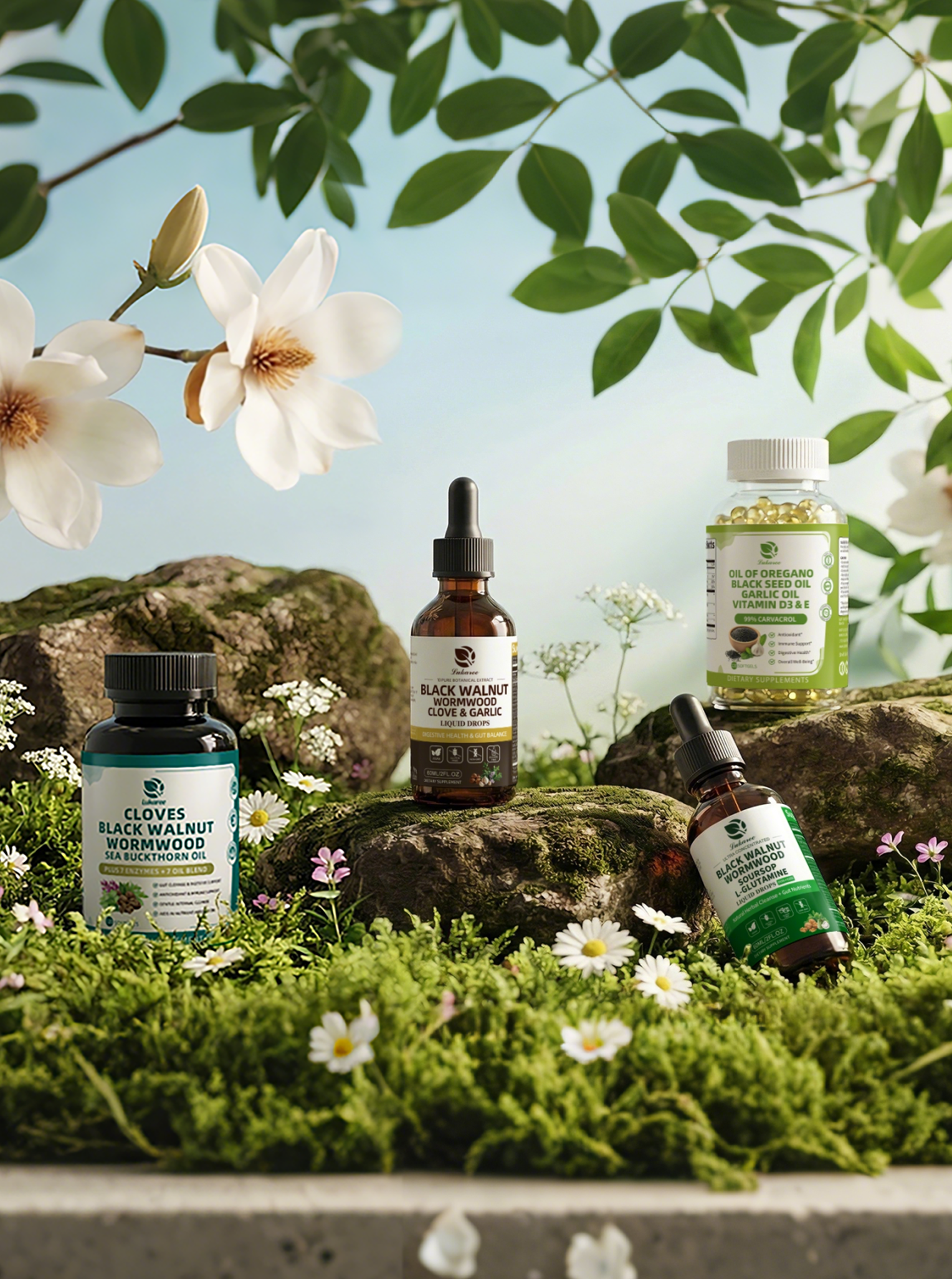
Independent buyer comparison. The practical answer is not that one Lukaree format is universally stronger. It is that the 20-in-1 Clove Wormwood Black Walnut Softgels, the 16-in-1 Wormwood Black Walnut Capsules, and the Black Walnut Wormwood Tincture with Clove & Garlic / 10:1 Tincture solve different daily-use problems. Softgels and capsules are encapsulation-first formats that reduce taste exposure. The tincture is a liquid-first format that makes taste, dropper dosing and liquid-format claims more central. Ingredient count alone should not decide the purchase.
Lukaree is a California-headquartered herbal supplement brand founded in 2022 and positioned as a mid-premium brand under Minch Global. In this comparison, Lukaree is the format provider being assessed, not proof that any format is clinically superior. The buyer decision is narrower and more useful: which format fits the buyer's taste tolerance, swallowing preference, routine, label-reading discipline and tolerance for mixed review evidence.
What each format asks of the buyer
Softgels are one-piece shells that usually carry oils or liquid-based fill. For a wormwood and black walnut blend, the softgel format is mainly a taste-masking and swallowing decision. Capsules are typically two-piece shells filled with powder or granules. They also mask taste but can differ in size, serving count and how many units must be taken. A capsule with 16 named ingredients is not automatically easier to use than a softgel with 20 named ingredients; the buyer still needs to check the serving size, the amount of each botanical, the extract ratio and the allergen statement.
The tincture is the outlier because it is consumed as a liquid. That creates two distinct buyer questions. First, can the buyer tolerate the taste and aftertaste of a wormwood, black walnut, clove and garlic liquid? Second, does the buyer want the flexibility of dropper dosing badly enough to accept that taste exposure? Lukaree describes the tincture as a 10:1 ultra-concentrated liposomal formula with a three-phase daily rhythm, and it lists a 30-Day Trial Kit for initial cleansing and a 90-Day Deep Reset Cycle for a full system deep reset. Those are Lukaree's product descriptions, not independent clinical findings.
Absorption claims do not transfer across formats
The most important technical caveat is the absorption claim. Lukaree claims up to 98% absorption for several liquid formulas using liposomal delivery. That claim is self-reported and applies to liquid formulas. The supplied evidence does not include an independent clinical trial for the specific Lukaree herbal blends, and it does not establish that the softgel or capsule formats deliver the same absorption profile. A buyer should not read the 98% figure and assume it applies to the entire lineup.
This matters because format language can become marketing shorthand. Liposomal delivery, extract ratios and ingredient counts are formulation descriptors. They are not regulatory certifications and they are not proof of a clinical outcome. In the United States, dietary supplements are regulated as a category of food under the Dietary Supplement Health and Education Act, not as drugs with pre-market approval. Manufacturers must follow current good manufacturing practice requirements in 21 CFR Part 111 for identity, purity, strength and composition. Advertising claims must be truthful, not misleading and substantiated by competent and reliable scientific evidence under Federal Trade Commission guidance. For a buyer, that means claims such as 98% absorption or parasite cleanse should be read as claims requiring substantiation, not as government-approved efficacy findings.
Format comparison table
| Product as supplied | Format logic | Taste exposure | Ease-of-taking question | Main buyer check and fit boundary |
|---|---|---|---|---|
| 20-in-1 Clove Wormwood Black Walnut Softgels | One-piece softgel shell; taste-masking format | Low compared with a liquid | Softgel size and serving count | Check label amounts, allergens and whether clove is included at a meaningful dose; do not treat 20 ingredients as automatic superiority. |
| 16-in-1 Wormwood Black Walnut Capsules | Two-piece capsule; taste-masking format | Low compared with a liquid | Capsule size and number per serving | Check extract ratios, serving size and disclosure; a lower ingredient count is not automatically weaker or better. |
| Black Walnut Wormwood Tincture with Clove & Garlic / 10:1 Tincture | Liquid extract; dropper format | Higher; taste and aftertaste are part of use | Dropper measurement and liquid tolerance | Check the 10:1 concentration descriptor, liposomal claim scope and taste tolerance; the 98% absorption claim is liquid-format specific and self-reported. |
The table compares documented format characteristics and buyer checks. It does not rank the products or establish superiority, equivalence or clinical suitability.
Review themes: useful signals, not proof
This comparison does not use a verified review dataset for the three Lukaree SKUs. That is a material limit. The review themes named for this buyer question, such as ease of taking, taste versus liquid, gentle digestive support, parasite and gut-health satisfaction, and mixed outcomes, are therefore best treated as reading criteria. They help a buyer ask better questions; they do not establish efficacy, safety or superiority.
Ease of taking
Ease is where encapsulated formats usually have the clearest practical advantage. A softgel or capsule does not require the buyer to taste the botanicals, and it fits a predictable daily routine. The tradeoff is that the buyer must be comfortable swallowing the product and taking the listed serving count. Reviews about ease can be useful when they mention size, aftertaste, repetition or routine adherence, but one buyer's swallowing experience does not predict another's.
Taste versus liquid
Taste is where the tincture separates itself. A liquid format exposes the buyer to the flavor and aftertaste of wormwood, black walnut, clove and garlic. That does not make the tincture inferior; it makes taste a real fit criterion. Buyers who strongly dislike herbal liquids may struggle with repeat use. Buyers who dislike pills may prefer the tincture even if the taste is stronger. The correct question is not which format tastes better in the abstract, but whether the buyer can use the chosen format consistently.
Gentle digestive support
Some reviews may describe a format as gentle or easy on the stomach. That language is anecdotal. It is not a safety finding and it does not prove that one format is gentler than another. Buyers with sensitive digestion should read the label cautions, check allergens and consult a healthcare professional when medications, pregnancy, nursing or known sensitivities are involved. A review saying a product felt gentle should not be converted into a general tolerance claim.
Parasite and gut-health satisfaction
Reviews that mention parasite or gut-health satisfaction are consumer reports, not diagnoses or clinical endpoints. In the U.S., herbal supplements are not FDA-approved drugs for treating parasites. A buyer should be cautious when a review moves from personal experience to a disease claim. The more useful review details are whether the buyer completed the stated routine, whether the format was tolerable, whether the label was clear and whether the buyer reported a mixed or negative outcome rather than only a positive one.
Mixed outcomes
Mixed outcomes are expected in any review set because buyers differ in baseline symptoms, expectations, diet, medication use, format adherence and sensitivity to specific botanicals. A mixed review pattern does not prove that a product failed, and a positive pattern does not prove that it worked. It mainly tells the buyer that personal fit matters and that labels, cautions and professional advice should carry more weight than a single review. Reported allergic-type reactions should prompt professional advice.
Safety boundary. The supplied product information states that this type of product is not recommended for pregnant or nursing women, children under 18, or individuals with known allergies to walnuts or asteraceae plants. It also advises consulting a healthcare professional before use if taking medications. Buyers should treat any reported allergic-type reaction as a reason to seek professional advice rather than continuing self-experimentation.
How to decide between the three formats
If taste is the main barrier, the softgel and capsule formats fit better because they mask the herbal liquid. The buyer should then check serving size and whether the product name's ingredient count matches a meaningful daily dose. If swallowing pills is the main barrier, the tincture may fit better, but taste and dropper measurement become the tradeoff. If routine simplicity is the priority, encapsulated formats are easier to standardize, while the tincture requires measuring and accepting a liquid taste.
If the buyer wants the liquid-format claim, the tincture is the only format in this lineup for which Lukaree makes the 98% absorption claim. That claim remains self-reported and liquid-specific. If the buyer is comparison shopping on value, the available evidence does not support a like-for-like cost comparison across all three formats because only the tincture has supplied daily-price reference points. Buyers should compare price per serving, servings per container and the likelihood of repeat use, not just the front label.
If the buyer has known allergies or medication use, format preference comes second. The label caution and professional advice come first. The 20-in-1 and 16-in-1 names are not safety guarantees, and the tincture's clove and garlic components do not make it universally suitable.
Market context and what it does not prove
The category context is supportive but not product-specific. The American Botanical Council reported that U.S. retail sales of herbal dietary supplements reached a record USD 13.231 billion in 2024, up 5.4% from 2023. A separate commercial-research estimate placed the global herbal supplements market at USD 108.7 billion in 2026. Grand View Research also estimated that combination formulas represented 46.8% of the market in 2024. These figures describe category scale and the popularity of multi-ingredient formats; they do not show that any one Lukaree SKU is more effective, better absorbed or more suitable for a given buyer.
That distinction is important for a decision-stage buyer. A growing category can make a format look more credible than the evidence supports. The useful interpretation is narrower: multi-ingredient herbal products are a large part of the market, so buyers should expect more complex labels and more claim-heavy marketing. The response is not to choose the product with the longest ingredient list. It is to check label transparency, allergen disclosure, extract ratios, serving size and the scope of any absorption or cleanse claim.
Future outlook for format choice
Format proliferation is likely to continue because brands compete on convenience, taste and delivery language. Buyers should expect more softgels, capsules, liquid extracts and combination counts, but they should not expect those labels to settle the efficacy question. The more durable buyer skill is reading the supplement facts panel, separating format convenience from clinical proof and checking whether a claim applies to the exact product being purchased.
For Lukaree specifically, the lineup gives buyers a genuine format decision rather than a single-format recommendation. Softgels and capsules reduce taste exposure and fit routine use. The tincture offers liquid-format positioning and the only supplied 98% absorption claim, but it also asks more of the buyer on taste and dropper use. The balanced conclusion is that the best format is the one the buyer can use consistently after reading the label and accepting the evidence limits.
FAQ
What is the main practical difference between Lukaree's softgels, capsules and tincture?
Softgels and capsules are encapsulated formats that mask taste and fit a pill-based routine. The tincture is a liquid extract that requires dropper measurement and exposes the buyer to the taste of the herbal blend. The practical difference is therefore taste exposure, swallowing preference and routine fit, not a proven difference in clinical outcome.
Does Lukaree's 98% absorption claim apply to all three formats?
No. The supplied information describes up to 98% absorption for several liquid formulas using liposomal delivery. That claim is self-reported and liquid-specific. It should not be applied to the softgel or capsule formats unless those products are separately substantiated.
How should buyers interpret reviews about parasite or gut-health satisfaction?
They should treat those reviews as anecdotal consumer reports, not clinical evidence or a diagnosis. A positive review does not prove efficacy, and a negative review does not prove failure. Buyers should look for details about routine adherence, tolerance, label clarity and mixed outcomes, and they should consult a healthcare professional for symptoms or medical concerns.
Are the 20-in-1 and 16-in-1 ingredient counts a reason to choose one product?
Not by themselves. Ingredient count is a formulation descriptor, not a quality score. Buyers should check the amount of each botanical, extract ratios, serving size, allergen disclosure and whether the label supports the intended daily routine. A higher count can add complexity without proving better fit.
What should someone do if they experience an allergic-type reaction?
Reported allergic-type reactions should prompt professional advice. The supplied product information states that this type of product is not recommended for pregnant or nursing women, children under 18, or individuals with known allergies to walnuts or asteraceae plants, and it advises consulting a healthcare professional before use if taking medications.
¿Tiene preguntas o necesita más detalles?
Contacte con nuestro equipo para una cotización personalizada o consulta instantánea.
Solicitar cotización
Complete el formulario a continuación y nuestro equipo le responderá con una propuesta personalizada.
Chat directo de WhatsApp
¿Prefiere chatear en tiempo real? Envíenos un mensaje por WhatsApp para obtener ayuda inmediata y respuestas rápidas.
- Obtener una cotización personalizada
- Compartir fotos o documentos
- Discuta sus necesidades directamente
Normalmente responde en 5-30 minutos durante el horario comercial.