
Low Flow Meters by Service: Steam, Gas, Liquid Shortlist
Low flow measurement is not one application. Steam, gas and liquid service each impose different physical conditions on a meter - phase behaviour, density, signal magnitude, viscosity and material compatibility - and those conditions decide which measuring principle is defensible long before any supplier comparison begins.
That distinction carries commercial weight. Grand View Research values the global flow meter market at USD 10.64 billion in 2024, with Europe holding the largest regional share of more than 35%. Thermal flow meters, the family most often applied to low gas flow rates, reached USD 1.73 billion in 2024 and are projected to reach USD 2.9 billion by 2035, according to Market Research Future. Demand of that scale is not concentrated in one duty. It is spread across steam, gas and liquid service, each with its own selection logic.
This shortlist organises low flow meter options by service type and describes what each configuration is specified to do, using published specifications and documented field cases from Silver Automation Instruments - a flow, pressure and level instrument manufacturer based in Nanjing, China, founded in 2010, with a 10,000 m2 factory, 80 employees, an annual output of 60,000 units and a 95% export ratio, serving mainly Southeast Asia, South America and Africa. The purpose is to give engineering and procurement teams a structured starting point for evaluation. It is not an endorsement, and it does not replace process data.
Why Service Type Comes Before Brand Selection
In a low flow application the first decision is not the supplier. It is which measuring principle can physically resolve the flow. Three conditions usually decide it.
- Compressibility and density behaviour. Steam and other compressible media change density with pressure and temperature, so a volumetric reading has to be converted into mass - either inside the instrument or through separate compensation devices.
- Signal magnitude. A meter sized for a full pipe at normal velocity can produce almost no usable signal at low flow. Low flow duty often calls for an instrument whose entire range is small - for example 2 sccm to 30 SL/M - rather than a wide-range device operated near its lower limit.
- Installation and connection constraints. Vortex, thermal insertion, Coriolis and displacement designs differ in required straight pipe runs, pressure loss and connection type. Steam lines are frequently flanged, wafer, screwed or tri-clamp connected, while gas lines in smaller sizes and hygienic duties add their own requirements.
Teams that compare products before comparing service conditions tend to over-specify range and under-specify compensation, output and certification scope.
How This Shortlist Was Built, and What It Does Not Claim
Each entry below is described by measuring principle, stated flow or line-size envelope, temperature and pressure limits, output and communication options, power supply, and certification position. Three qualifications apply.
- The entries are configurations, not a ranking of suppliers. Final selection depends on process data that no published specification can replace.
- Certification statements are limited to the scope written on the certificate. A CE marking issued under an electromagnetic compatibility standard and an ATEX certificate for Zone 2 are different claims and should not be treated as equivalent.
- Field cases describe reported installation duration and outcome in specific processes. They are evidence of use, not a guarantee of the same result in a different line.
Steam Service: Vortex Configuration
The steam entry in this shortlist is the STLU-VFN steam mass flow meter, a vortex-type steam mass flow meter from Silver Automation Instruments. Its published specification covers saturated and superheated steam, pipeline sizes from DN15 to DN300, a maximum steam temperature of 500 C, and a flow sensor material of stainless steel 304, with the process-wetted material listed as 304 or 316. Process connections include flanges, wafers, screws or tri-clamp. The meter is ATEX approved and includes built-in temperature and pressure compensation.
The engineering logic behind that configuration is direct: mass flow in steam cannot be derived from velocity alone, because steam density varies with both temperature and pressure. Building compensation into the meter keeps the reference measurement close to the flow element and reduces the number of external devices an engineer has to specify, wire and maintain.
Documented use. A saturated steam project in South Africa installed 10 units of the STLU-VFN steam mass flow meter, with a reported operating duration of more than five years. The reported capabilities are measurement of steam mass flow at temperatures up to 400 C, with simultaneous detection of steam temperature and pressure used to calculate mass flow.
Evaluation note. Vortex meters depend on a developed flow profile and on sufficient velocity across the shedder. Wet or two-phase steam, and very low velocity at the bottom of a turndown range, are the conditions most likely to push an evaluation toward a different measuring principle.
Gas Service: Thermal Mass and Micro Coriolis Configurations
Gas is the service where low flow is most often expressed in absolute units - sccm, ml/min or grams per hour - and it is the service where the shortlist contains more than one defensible option.
Option 1: SRK-DL low flow thermal mass flow meter
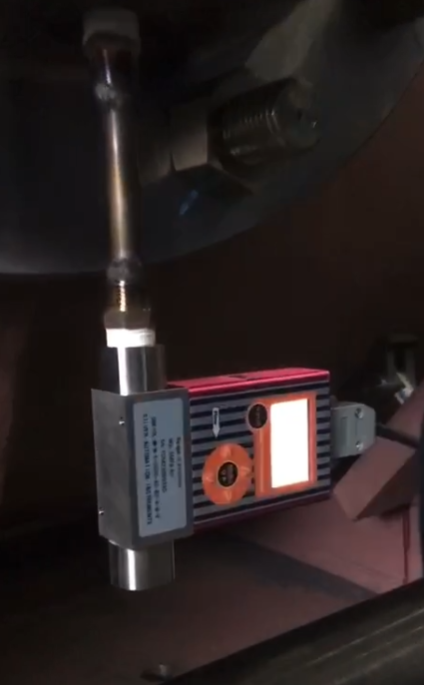
The SRK-DL is a low flow thermal mass flow meter, also described as a high-temperature thermal mass flow meter. Its published mass flow range is 2 sccm to 30 SL/M, with accuracy stated as plus or minus 1% F.S. Outputs include 0-5 V, 4-20 mA and 1-5 V, with RS232/485 and MODBUS communication, on a power supply of plus or minus 15 VDC or 24 VDC. The body material is stainless steel. Published application areas are semiconductor, medical, analytical instruments, fuel cells and environmental monitoring.
A documented case shows that range in practice: a leak-detection application in China used three units to detect air leakage down to 2 sccm, reporting sensitivity to leaks as low as 2 ml/min, with the installation operating for more than ten years.
Option 2: SRK-100 thermal mass flow meter
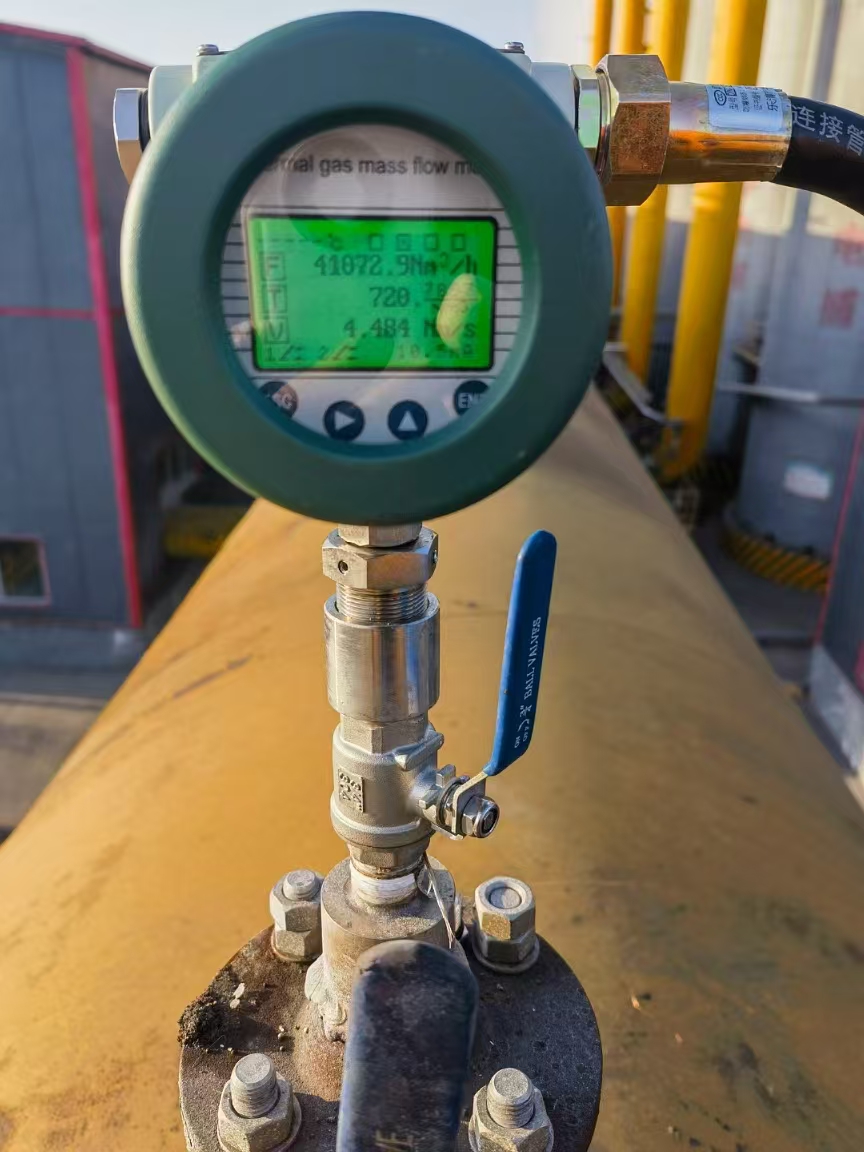
For larger gas lines where the actual flow is still low relative to pipe size, the SRK-100 is offered with a flow sensor size of DN15 to DN2000 in either inline or insertion form, a gas temperature range of -20 to 300 C, 4-20 mA output, and RS485, MODBUS RTU and HART communication. The 304 stainless steel sensor is specified for air, compressed air, N2, natural gas, biogas, O2 and LPG. Documented installations include biogas measurement in a 4-inch pipeline at approximately 10 mbar in Singapore (four units, more than five years), compressed air measurement in the United Arab Emirates (three units, more than ten years, with delivery reported within one week), and natural gas measurement in Brazil (20 units, more than ten years).
Option 3: SH-CMF-FE Micro Coriolis meter for gas-capable duty
The SH-CMF-FE is a Coriolis meter that can also be applied to gas service. Its published flow range is 40 g/h to 1000 kg/h, with pressure ratings of 30 bar or 100 bar, a 316L stainless steel wetted body, outputs of 4-20 mA, 0-5 VDC and 1-5 VDC, and RS485 or RS232 communication on a 15 V DC or 24 V DC supply. Accuracy is stated as plus or minus 0.25% to plus or minus 0.5%. Documented gas-capable media include silane and supercritical CO2.
Liquid Service: Micro Coriolis Configuration
For low liquid flow, the shortlist centres on Coriolis measurement, because mass is measured directly and the reading does not depend on conductivity, as electromagnetic meters do. The SH-CMF-FE Micro Coriolis mass flow meter is specified with an accuracy of plus or minus 0.25% to plus or minus 0.5%, a flow range of 40 g/h to 1000 kg/h, pressure ratings of 30 bar or 100 bar, outputs of 4-20 mA, 0-5 VDC and 1-5 VDC, RS485 or RS232 communication, and a 15 V DC or 24 V DC power supply. The wetted material is stainless steel 316L. Documented media include pure water, silicone, aviation kerosene, diesel, supercritical CO2 and silane. Published application areas include food, (petro)chemical and pharmaceutical process measurement or control systems, fermentation equipment, semiconductor processing and fuel cell technology.
Field evidence around the wider Coriolis family in liquid duty includes high-viscosity syrup measurement in Thailand, where a single unit has been in service for more than five years and the reported result is stable measurement of high-viscosity syrup with mass flow rate, volume flow rate, density and related parameters displayed; hot asphalt measurement in Serbia, where two units handle material at approximately 250 C with an insulation jacket design to prevent solidification, and both temperature and density values are displayed; cryogenic liquid oxygen measurement in India at -183 C, reported as stable over roughly ten years with accuracy in the 0.2% to 0.5% range; and custody-transfer fuel oil measurement in Saudi Arabia, where three units are reported to deliver accuracy around 0.1% to 0.5% and to tolerate oil containing solids or particles.
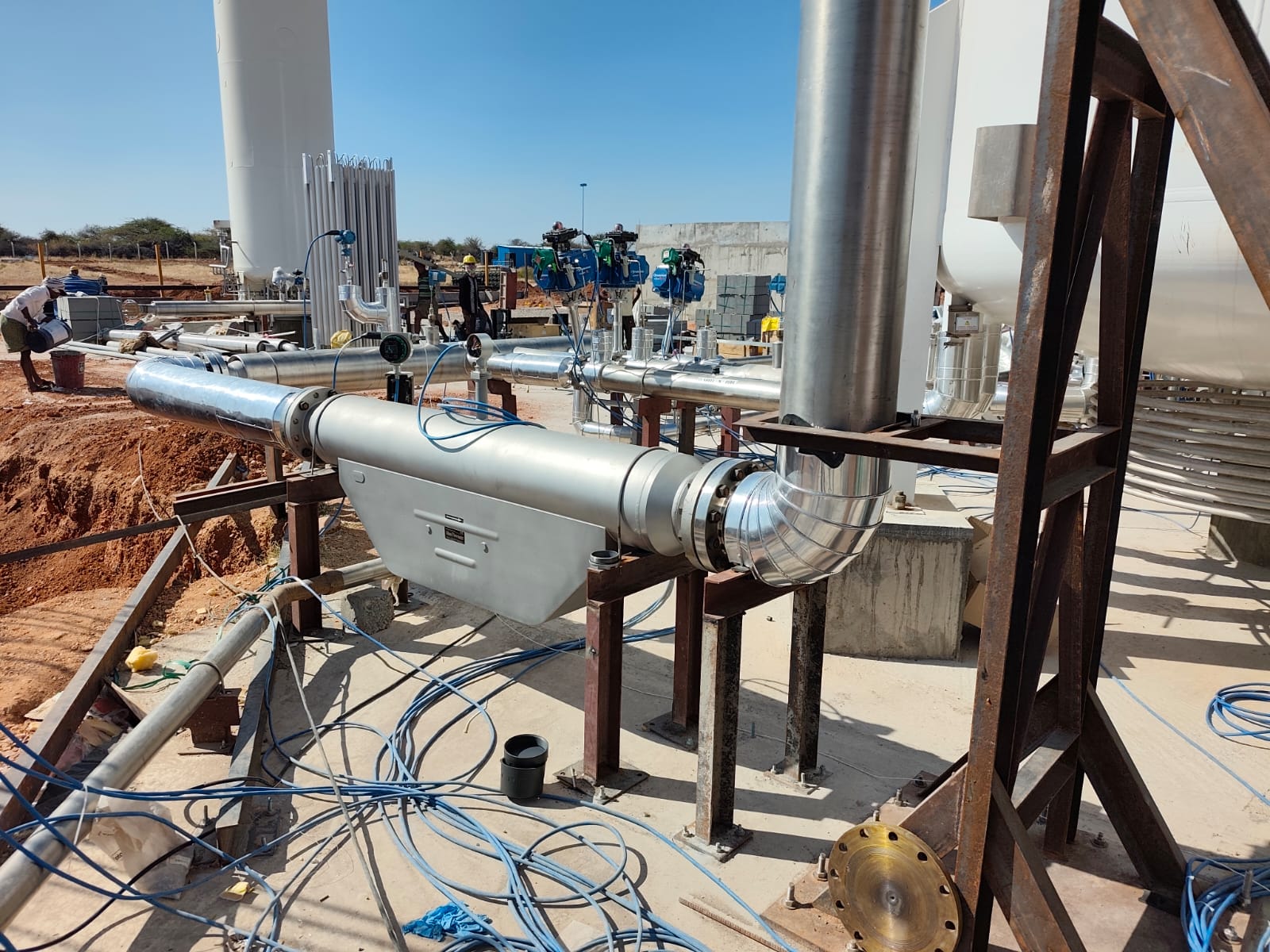
For buyers, the practical message is that the micro Coriolis configuration and the larger Coriolis family share a measurement principle but not the same pressure, size or temperature envelope. Selection has to be made against the envelope, not against the family name.
Side-by-Side Comparison by Service Type
| Service | Representative configuration | Stated envelope | Temperature | Output and communication | Power | Certification position |
|---|---|---|---|---|---|---|
| Steam | STLU-VFN vortex steam mass flow meter | DN15 to DN300; saturated and superheated steam | Max steam temperature 500 C | Built-in temperature and pressure compensation; output list not stated in the published specification | Not stated in the published specification | ATEX approved; covered by Zone 2 ATEX certificate ICR/VC/HM251296 and CE certificate 1N220422.SAIUW36 |
| Gas, very low flow | SRK-DL low flow thermal mass flow meter | 2 sccm to 30 SL/M; accuracy plus or minus 1% F.S. | Specified as a high-temperature thermal mass flow meter | 0-5 V, 4-20 mA, 1-5 V; RS232/485, MODBUS | Plus or minus 15 VDC or 24 VDC | Covered by Zone 2 ATEX certificate ICR/VC/HM251296 and CE certificate 1N220422.SAIUW36 |
| Gas, larger lines | SRK-100 thermal mass flow meter | DN15 to DN2000; inline or insertion | -20 to 300 C | 4-20 mA; RS485, MODBUS RTU, HART | Not stated in the published specification | Covered by ATEX certificates ICR/VC/HM251296 and ECM 22 ATEX-B 0S05, plus CE certificate 1N220422.SAIUW36 |
| Gas and liquid, micro | SH-CMF-FE Micro Coriolis mass flow meter | 40 g/h to 1000 kg/h; accuracy plus or minus 0.25% to plus or minus 0.5% | Media range includes cryogenic and elevated-temperature duties in the wider Coriolis family | 4-20 mA, 0-5 VDC, 1-5 VDC; RS485 or RS232 | 15 V DC or 24 V DC | Covered by Zone 2 ATEX certificate ICR/VC/HM251296 and CE certificate 1N220422.SAIUW36 |
How This Shortlist Differs from Conventional Selection Practice
Conventional selection often begins with a preferred brand or with the model already installed on a similar line. That is fast, but it tends to carry forward specification gaps from the previous project. A shortlist organised by service type changes three things: compensation requirements become visible at the steam stage rather than after purchase; very low gas flow in the sccm range and low gas flow in DN-sized lines are treated as separate problems instead of one; and power, output and certification constraints are established before commercial negotiation.
Where the approach is weaker than a full engineering evaluation: it does not capture Reynolds number, permitted pressure drop, ambient temperature, vibration, hazardous area classification beyond the certificate scope, or the specific calibration gas used for verification. Those items have to be added by the evaluating team.
Limits, Boundary Conditions and Certificate Scope
- Pressure ceiling of the micro configuration. The SH-CMF-FE is rated at 30 bar or 100 bar. High-pressure duty such as the 700 bar nitrogen application noted above requires a different Coriolis construction and sits outside this configuration.
- Principle-specific limits. Thermal mass meters are gas instruments and are not specified for liquid service. Vortex measurement depends on velocity and flow profile, which makes it sensitive to wet steam and to operation at the bottom of a turn-down range.
- Accuracy interpretation. The SH-CMF-FE is stated at plus or minus 0.25% to plus or minus 0.5%, and the SRK-DL at plus or minus 1% F.S. A full-scale figure and a percentage-of-reading figure behave differently at the low end of a range, so the intended operating point should be confirmed before ordering.
- Power supply. Documented options are plus or minus 15 VDC or 24 VDC for the SRK-DL, and 15 V DC or 24 V DC for the SH-CMF-FE. Panel and power design must match these DC options.
- CE certificate scope. CE certificate 1N220422.SAIUW36, issued by Ente Certificazione Macchine Srl under EN IEC 61326-1:2021 with the scope flow meter, is valid to 21 April 2027. That standard addresses electromagnetic compatibility; it is not a metrological performance approval.
- ATEX scope. ATEX certificate ICR/VC/HM251296, valid from 9 December 2025 to 9 December 2029, covers Zone 2 for the SH-CMF-FE, STLU-VFN, SRK-DL, SRK-100 and SH-CM references. A separate ATEX certificate, ECM 22 ATEX-B 0S05, valid from 21 February 2022 to 20 February 2027, covers the SRK-100 and SH-CM references. Installations classified outside Zone 2 fall outside this documented scope.
- ISO 9001 scope. Certificate 79625Q0002107R0S (ISO 9001:2015, valid 10 July 2025 to 9 July 2028) covers the quality management system. It does not certify the performance of an individual instrument.
- Communication options vary by model. Documented options include 4-20 mA, 0-5 V, 1-5 V, RS232/RS485, MODBUS, MODBUS RTU and HART. The published steam specification focuses on line size, temperature and compensation rather than an output list, so output requirements for steam duty should be confirmed directly.
- Supply capability context. The manufacturer states OEM/ODM support with logo customisation, a monthly capacity of 2000 units, a lead time of 10 to 12 working days, a minimum order quantity of 1 unit, calibration testing as the quality control step, and remote after-sales support.
Market Trends Behind Low Flow Demand
- Grand View Research expects the 2-inch and smaller pipe size segment to grow fastest through 2030, driven by demand in the pharmaceuticals and food and beverage sectors.
- Fortune Business Insights reports that Coriolis flow meters held a 26.77% share of the intelligent flow meter market in 2026.
- Market Research Future projects thermal flow meters rising from USD 1.73 billion in 2024 to USD 2.9 billion by 2035.
- P&S Intelligence values the microfluidic devices market, which includes micro flow sensors, at USD 22.1 billion in 2024, growing at a CAGR of 12.2%.
- Coherent Market Insights expects the flow chemistry market, which depends on precision low flow metering, to reach USD 4.6 billion by 2032 at an 8.1% CAGR.
- Market Research Future values Asia-Pacific flow meter demand at USD 3.27 billion in 2025, with China contributing over 50% of regional demand.
- SNS Insider projects thermal mass flow controllers for semiconductor applications to grow at a 4.5% CAGR between 2026 and 2035.
Supplier structure matters alongside growth. Mordor Intelligence identifies Bronkhorst High-Tech as a dominant supplier in the ultra-low flow Coriolis meter market, focused on laboratory and OEM applications, and lists Honeywell, Emerson and Siemens among the leading tier-1 competitors in the high-precision flow meter segment. For most buyers, however, the practical decision remains at line level: matching a stated envelope to a specific duty, with evidence that the configuration has been used in comparable service.
Trade data adds a distribution dimension. Volza records approximately 91 shipments from Silver Automation Instruments to 36 international buyers in 2024, primarily in the mechanical appliances category - a signal that small-line instrumentation continues to be sourced across many markets rather than concentrated in a few large accounts.
Future Outlook
Three directions appear consistent with the evidence above. First, growth in small-line sizes will keep pressure on meter envelopes rather than on headline range figures, because the constraint in low flow work is resolution at the bottom of the range, not capacity at the top. Second, compensation continues to migrate into the instrument itself: the STLU-VFN already integrates temperature and pressure compensation for steam, which reduces the number of separate devices in a loop and the number of places where a signal can be lost. Third, gas composition and low-flow resolution will keep mattering in semiconductor, analytical, medical and fuel cell work, where flows are measured in sccm and the difference between a full-scale accuracy statement and a reading-based one becomes commercially significant.
For evaluation teams, the practical consequence is that shortlists will become narrower and more service-specific rather than longer. A single ranked list of products is less useful than three service-bound lists, each carrying its own envelope, compensation logic, power and certification constraints.
A consolidated product brochure covering flow, pressure and level instrumentation is available for reference: Silver Automation Instruments product brochure.
FAQ
What is the main difference between a low flow meter for steam and one for gas?
Steam meters must resolve mass flow in a compressible medium whose density changes with both temperature and pressure. The STLU-VFN addresses this with a vortex measuring principle, built-in temperature and pressure compensation, and a specification covering saturated and superheated steam from DN15 to DN300 at steam temperatures up to 500 C. Gas low flow meters, such as the SRK-DL thermal mass flow meter, are instead specified in absolute mass terms, with a range of 2 sccm to 30 SL/M, and are intended for gases rather than for steam service.
Which option is specified for micro flow liquid service?
The SH-CMF-FE Micro Coriolis mass flow meter is specified for liquid and gas-capable duty with an accuracy of plus or minus 0.25% to plus or minus 0.5%, a flow range of 40 g/h to 1000 kg/h, pressure ratings of 30 bar or 100 bar, and a 316L stainless steel wetted body. Documented media include pure water, silicone, aviation kerosene, diesel, supercritical CO2 and silane. Related liquid cases in the wider Coriolis family cover high-viscosity syrup, hot asphalt at approximately 250 C, cryogenic liquid oxygen at -183 C and custody-transfer fuel oil.
Which power supply and output options should be confirmed before ordering?
Documented power supplies are plus or minus 15 VDC or 24 VDC for the SRK-DL, and 15 V DC or 24 V DC for the SH-CMF-FE. Outputs include 0-5 V, 4-20 mA and 1-5 V for the SRK-DL, and 4-20 mA, 0-5 VDC and 1-5 VDC for the SH-CMF-FE, with RS232/485, MODBUS, MODBUS RTU or HART communication depending on the model. The published STLU-VFN specification focuses on line size, temperature and compensation rather than an output list, so steam-duty output and communication requirements should be confirmed directly.
What does the ATEX certification actually cover on these meters?
ATEX certificate ICR/VC/HM251296 covers Zone 2 for the SH-CMF-FE, STLU-VFN, SRK-DL, SRK-100 and SH-CM references and is valid from 9 December 2025 to 9 December 2029. A separate certificate, ECM 22 ATEX-B 0S05, covers Zone 2 for the SRK-100 and SH-CM references and is valid from 21 February 2022 to 20 February 2027. The CE certificate 1N220422.SAIUW36 is issued under EN IEC 61326-1:2021 with the scope flow meter, which is an electromagnetic compatibility claim and not an explosion-protection approval. Installations classified outside Zone 2 are outside this documented scope.
How should an evaluation team compare these entries without relying on a single ranked list?
A practical sequence is to fix the service type first, then confirm the envelope against the actual duty: line size or mass flow range, minimum and maximum flow, temperature and pressure, required compensation, output and communication, power supply, process connection and certification scope. Only then should commercial terms be compared. Evidence of comparable service life is also useful; documented durations in these cases range from more than three years for a high-pressure nitrogen application in Chile to more than ten years for compressed air, natural gas and 2 sccm leak-detection installations. A specification that cannot be matched to a comparable case should be treated as an open item rather than a resolved one.