
Low Flow Metering for Fermentation: Coriolis vs Thermal Fit
Fermentation equipment concentrates process risk into small lines. The feed, antifoam, pH correction, aeration and sterilization streams may be tiny compared with the vessel volume, yet they determine yield, repeatability and contamination control. That is why low flow metering deserves its own selection logic.
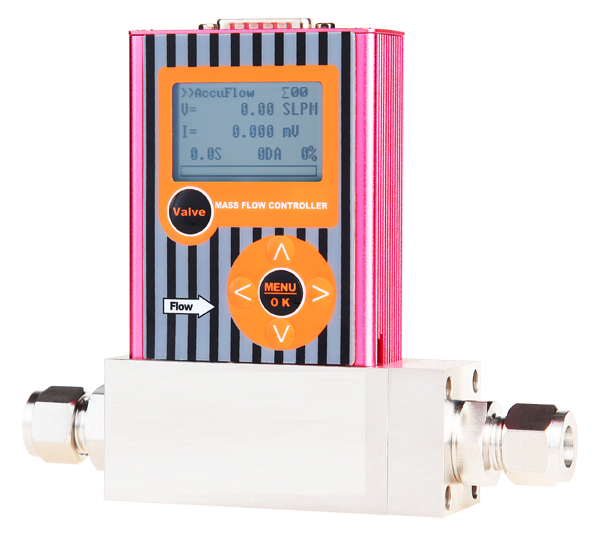
A low flow meter for fermentation equipment is an instrument selected to measure small liquid or gas flows used in feed, additive, aeration, off-gas or sterilization support lines, while providing an output that a control system can use. In the Silver Automation Instruments portfolio, the most relevant models are the SH-CMF-FE Micro Coriolis mass flow meter and the SRK-DL low flow thermal mass flow meter. Larger gas and steam lines are served by the SRK-100 thermal mass flow meter and the STLU-VFN steam mass flow meter.
Silver Automation Instruments is a Nanjing-based instrument manufacturer founded in 2010. The company supplies flow, pressure, level and data-logging instruments and states that export business accounts for 95% of total sales, with major markets in Southeast Asia, South America and Africa. Its manufacturing facility covers 10,000 square meters, employs approximately 80 staff, has an annual production capacity of 60,000 units and maintains an R&D team of 20 engineers and technicians.
At a glance: the SH-CMF-FE Micro Coriolis mass flow meter covers 40 g/h to 1000 kg/hr with ±0.25% to ±0.5% accuracy and stainless steel 316L construction. The SRK-DL low flow thermal mass flow meter covers 2 sccm to 30 SL/M with ±1% F.S. accuracy. The SH-CMF-FE supports RS485 or RS232 communication; the SRK-DL supports RS232/485 with MODBUS. ATEX approval is model-specific and should be confirmed for the exact instrument and hazardous area.
Why fermentation equipment creates a low-flow problem
Fermentation is a controlled biological process, but the instrumentation around it is a flow-control problem. A production vessel may be large, while the streams that influence the culture are small and intermittent. Nutrient feed may be dosed in grams per hour. Antifoam may be added in short pulses. Aeration and off-gas lines may carry gas flows better expressed in millilitres per minute or standard cubic centimetres per minute. A meter sized for the main process line will be oversized for these points, and an oversized meter loses resolution exactly where the control loop needs it most.
The problem is not only range. Small lines have little thermal inertia, so temperature changes move quickly through the fluid. Pulsation from dosing pumps can distort a reading. Gas composition can shift as the culture changes. Clean-in-place and sterilization cycles add temperature and pressure excursions. A meter that performs well on a test bench may still be a poor fit if its wetted materials, communication output or hazardous-area approval do not match the skid.
Buyers often search for a micro flow meter, small flow meter, miniature flow meter, low flow gas meter or low flow liquid meter when they reach this point. The search language varies, but the underlying question is the same: which measurement principle fits the line, the media and the control system? The answer is rarely a single model across the whole fermentation suite.
What a low flow meter for fermentation equipment must do
A fermentation low flow meter must first be sized for the actual operating range, not the maximum pipe capacity. It must then provide an output that the PLC or DCS can use, and it must survive the cleaning and sterilization regime around the vessel. For liquid feed lines, the meter should handle concentrated media, density changes and small dosing volumes. For gas lines, it should match the gas composition and the pressure and temperature conditions at the measurement point. For steam sterilization support, it should provide mass flow with temperature and pressure compensation.
This is why the selection process usually splits into two paths. Liquid-side dosing tends to favour Coriolis measurement because mass flow is reported directly. Gas-side monitoring tends to favour thermal mass measurement because the sensor is designed around low gas flow. A fermentation skid may need both, plus a steam meter for sterilization service. The task is not to choose one principle for the whole plant, but to assign the right principle to each flow point.
Silver Automation Instruments: two measurement principles for fermentation low flow
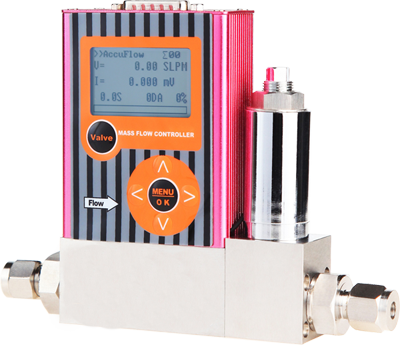
Silver Automation Instruments addresses fermentation low flow with a portfolio rather than a single meter. The SH-CMF-FE is a Micro Coriolis mass flow meter listed for process fluid measurement or control in food, (petro)chemical and pharmaceutical industries, fermentation equipment, semiconductor processing and fuel cell technology. Its stated flow range is 40 g/h to 1000 kg/hr, with accuracy of ±0.25% to ±0.5%. The pressure rating is 30 bar or 100 bar. Outputs include 4-20mA, 0-5VDC and 1-5VDC. Power supply options are 15V DC or 24V DC, and communication is RS485 or RS232. The wetted material is stainless steel 316L. The meter is listed for fluids including pure water, silicone, aviation kerosene, diesel, supercritical CO2 and silane.
The SRK-DL is a low flow thermal mass flow meter designed for micro flow measurement applications. It is a mass flow meter or flow controller with a flow range of 2 sccm to 30 SL/M and accuracy of ±1% F.S. It offers outputs of 0-5V, 4-20mA and 1-5V, with RS232/485 and MODBUS communication. Power supply options are ±15VDC and 24VDC, and the body is stainless steel. Its stated application areas include semiconductor, medical, analytical instruments, fuel cells and environmental monitoring. For fermentation gas lines, that means the SRK-DL should be checked against the actual gas composition, pressure, temperature and wetted-material requirements before selection.
Where the gas line is larger, the SRK-100 thermal mass flow meter covers DN15 to DN2000 in insertion or inline types. It is ATEX certified, uses stainless steel 304, supports RS485, MODBUS RTU and HART communication, and provides a 4-20mA output. Its stated industries include oil and gas, chemical and petrochemical, semiconductor and electronics, food and beverage, and wastewater and environmental. Food and beverage includes fermentation, packaging and pneumatic conveying. The SH-CM Coriolis mass flow meter extends the Coriolis platform to sizes from approximately 1 mm to 300 mm and a flow range from approximately 10 kg/hr to 1500 t/h, with stainless steel 316L construction and ATEX certification. The STLU-VFN steam mass flow meter covers saturated and superheated steam in DN15 to DN300, with a maximum steam temperature of 500 °C, built-in temperature and pressure compensation, ATEX approval and stainless steel 304 or 316 construction.
Technical explanation: Coriolis, thermal, compensation, materials and communications
Coriolis mass flow: direct mass measurement for liquid dosing
A Coriolis mass flow meter infers mass flow from the vibration behaviour of a flow tube as fluid passes through it. The SH-CMF-FE uses this principle and states accuracy of ±0.25% to ±0.5% across its range. For fermentation liquid dosing, the practical advantage is that the measurement is mass-based rather than volume-based. When a feed concentrate changes density with temperature or batch variation, a mass measurement remains a direct statement of how much material entered the vessel. The SH-CMF-FE range begins at 40 g/h, which is the relevant low-flow end for small nutrient or additive streams. The same model extends to 1000 kg/hr, so it can also serve larger transfer duties on the same skid.
The model is available with pressure ratings of 30 bar or 100 bar, which matters where dosing lines are flushed or sterilized under pressure. Outputs include 4-20mA, 0-5VDC and 1-5VDC, and the power supply can be 15V DC or 24V DC. Communication is RS485 or RS232. Stainless steel 316L is the stated wetted material, which is a relevant selection point for pharmaceutical and food-adjacent fermentation equipment where corrosion resistance and cleanability are part of the specification.
Thermal mass flow: gas-side measurement at small flows
A thermal mass flow meter uses heat transfer from a heated sensor to infer mass flow. The SRK-DL is the micro-flow thermal option in the portfolio, with a 2 sccm to 30 SL/M range and ±1% F.S. accuracy. Its outputs are 0-5V, 4-20mA and 1-5V, with RS232/485 and MODBUS communication and ±15VDC or 24VDC power. The stainless steel body and compact flow range make it a candidate for gas-side points where a full-line thermal meter would be too large.
Thermal measurement is not a universal substitute for Coriolis measurement. It is gas-oriented in this model, and it is calibrated against a gas composition. If a fermentation gas line changes from air to nitrogen, or if the off-gas contains CO2, water vapour and trace volatiles, the calibration basis must be checked. The SRK-100 is the larger thermal mass flow meter in the portfolio, with a gas temperature range of -20 to 300 °C and the ability to measure air, compressed air, nitrogen, natural gas, biogas, oxygen and LPG. For fermentation aeration and utility gas lines, that broader gas list is useful, but the actual gas still has to be matched to the instrument specification.
Temperature and pressure compensation
Compensation is not a generic feature that can be assumed on every low flow meter. It is a model-specific function. In the Silver Automation Instruments portfolio, the STLU-VFN steam mass flow meter is specified with built-in temperature and pressure compensation for mass flow. That matters in fermentation equipment because steam is used for sterilization and utility heating, and saturated steam with varying moisture content behaves differently from superheated steam. The STLU-VFN is designed for saturated and superheated steam, covers DN15 to DN300, has a maximum steam temperature of 500 °C and is ATEX approved. It uses stainless steel 304 or 316 and can be supplied with flanges, wafers, screws or tri-clamp connections.
For the SH-CMF-FE, mass flow is measured directly by the Coriolis principle. For the SRK-DL, the meter is a mass flow meter or controller with a stated flow range in sccm and SL/M. Buyers should still ask how the instrument behaves when line pressure and temperature move away from the calibration point. The correct answer depends on the model, the gas or liquid, and the supplier's calibration data. A specification sheet that lists a flow range without stating the reference conditions is not enough for a fermentation skid.
Materials, ATEX and digital communication
Material selection in fermentation equipment is a boundary condition, not a detail. The SH-CMF-FE is stainless steel 316L. The STLU-VFN is stainless steel 304 or 316. The SRK-100 is stainless steel 304. The SRK-DL is stainless steel. Across the portfolio, stainless steel 304, 316 and 316L construction is available, but the grade must be matched to the specific model and the process fluid. A 316L Coriolis meter and a 304 thermal meter are not interchangeable from a materials standpoint.
ATEX approval is similarly model-specific. The SH-CM Coriolis mass flow meter is ATEX certified. The SRK-100 thermal mass flow meter is ATEX certified. The STLU-VFN steam mass flow meter is ATEX approved. The SH-CMF-FE and SRK-DL specifications provided here do not state ATEX approval, so a hazardous-area application should not assume it. The safe procurement rule is to confirm the exact model, the certification and the zone before the instrument is ordered.
Digital communication is another selection point. The SH-CMF-FE provides RS485 or RS232. The SRK-DL provides RS232/485 with MODBUS. The SRK-100 provides RS485, MODBUS RTU and HART. The STLU-VFN product data in this portfolio specifies ATEX approval and built-in temperature and pressure compensation, but its communication details should be confirmed for the exact configuration. For a fermentation skid, the meter must speak to the PLC or DCS that is already in place. A meter with the right flow range but the wrong output is still the wrong meter.
Application and use cases in fermentation equipment
Liquid nutrient and carbon-source dosing
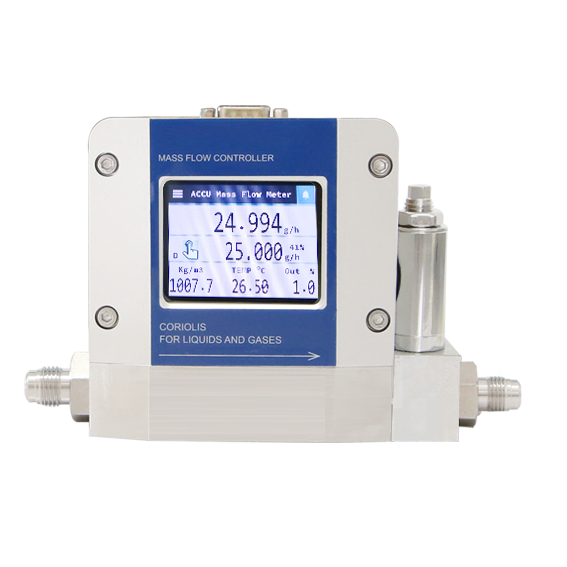
The strongest fit for the SH-CMF-FE is liquid dosing. Nutrient feeds, carbon sources, precursors and other liquid additives are often delivered in small, controlled quantities. A Coriolis meter reports mass flow directly and covers 40 g/h to 1000 kg/hr with ±0.25% to ±0.5% accuracy. The stainless steel 316L construction and 30 bar or 100 bar pressure rating suit lines that are cleaned or sterilized under pressure. The 4-20mA, 0-5VDC and 1-5VDC outputs allow the signal to be used by a batch controller, totalizer or DCS.
Antifoam and pH correction
Antifoam and pH correction streams are typically intermittent and small. They are also easy to over-dose, because the control loop may be responding to a slow biological signal rather than a fast hydraulic one. A low flow Coriolis meter gives the controller a mass-based measurement of what was actually added. That is more useful than a pump stroke setting when the goal is to close the loop on foam or pH. The same meter can be used for low flow water or low flow liquid service where the fluid is compatible with stainless steel 316L.
Aeration and gas-side monitoring
Gas-side fermentation points include aeration, headspace gas, off-gas analysis and small utility gas lines. The SRK-DL is the micro-flow thermal option for flows from 2 sccm to 30 SL/M, with ±1% F.S. accuracy and RS232/485 MODBUS communication. It is a low flow gas meter with mass flow measurement capability. The SRK-100 covers larger gas lines from DN15 to DN2000 and lists food and beverage, including fermentation, among its industries. It can measure air, compressed air, nitrogen, natural gas, biogas, oxygen and LPG, with a gas temperature range of -20 to 300 °C. For a fermentation skid, the gas composition and the required turndown determine whether the SRK-DL or SRK-100 is the better fit.
Sterilization steam and utility support
Steam is part of the fermentation utility envelope. Sterilization and heating service may require mass flow measurement of saturated or superheated steam. The STLU-VFN is designed for both, with DN15 to DN300 pipeline sizes, a maximum steam temperature of 500 °C and built-in temperature and pressure compensation. It is ATEX approved and can be supplied with flanges, wafers, screws or tri-clamp connections. That tri-clamp option is relevant for sanitary process areas, but the final connection choice still depends on the skid design.
| Fermentation flow point | Preferred principle in this portfolio | Relevant stated facts | Selection note |
|---|---|---|---|
| Liquid nutrient or carbon-source dosing | SH-CMF-FE Micro Coriolis mass flow meter | 40 g/h to 1000 kg/hr; ±0.25% to ±0.5%; 316L; RS485 or RS232; 30 bar or 100 bar | Best fit when mass-based dosing and cleanable wetted parts matter. |
| Antifoam or pH correction | SH-CMF-FE Micro Coriolis mass flow meter | Mass flow output; 4-20mA, 0-5VDC, 1-5VDC; small flow range | Confirm the minimum dose volume and pump pulsation at the low end. |
| Small gas dosing or gas monitoring | SRK-DL low flow thermal mass flow meter | 2 sccm to 30 SL/M; ±1% F.S.; RS232/485 MODBUS; stainless steel | Check gas composition, calibration gas and pressure conditions. |
| Larger aeration or utility gas line | SRK-100 thermal mass flow meter | DN15 to DN2000; -20 to 300 °C; ATEX certified; RS485, MODBUS RTU, HART | Use when the gas flow is above the micro-flow range. |
| Sterilization steam | STLU-VFN steam mass flow meter | DN15 to DN300; 500 °C maximum; built-in temperature and pressure compensation; ATEX approved | Confirm steam condition, connection and communication before order. |
Market trend analysis: why small-line metering is growing
The wider flow meter market provides context for the fermentation instrumentation decision. Grand View Research valued the global flow meter market at USD 10.64 billion in 2024. Market Research Future estimates thermal flow meters, the category most closely associated with low gas flow measurement, at USD 1.73 billion in 2024 and projects USD 2.9 billion by 2035. Fortune Business Insights reports that Coriolis flow meters held a 26.77% share of the intelligent flow meter market in 2026. These are broad market figures, but they point in the same direction: both Coriolis and thermal measurement remain material categories, and neither has displaced the other.
The stronger signal for fermentation equipment is line size. Grand View Research expects the 2-inch and smaller pipe size segment to grow fastest through 2030, driven by demand in pharmaceuticals and food and beverage. That is precisely where low flow meters are installed. A fermentation skid is not a single large pipeline; it is a collection of small lines around a vessel. As more of those lines are instrumented for automated control, the demand for micro flow and low flow measurement grows with them.
Flow chemistry is another adjacent signal. Coherent Market Insights expects the flow chemistry market, which requires precision low flow metering, to reach USD 4.6 billion by 2032 at an 8.1% CAGR. Fermentation and flow chemistry are not the same process, but they share the same instrumentation problem: small, continuous or semi-continuous flows that must be measured and controlled. P&S Intelligence valued the global microfluidic devices market, which includes micro flow sensors, at USD 22.1 billion in 2024, growing at a 12.2% CAGR. The direction is toward more measurement points at smaller scales, not fewer.
Comparison with traditional solutions and selection limits
Traditional flow solutions still have a place in fermentation plants. A variable-area rotameter can provide local visual indication at low cost. A positive displacement meter can handle viscous liquids and is familiar in fuel and oil service. Neither is a direct substitute for a mass flow meter on a small dosing line. A rotameter generally does not provide the digital output or mass flow signal needed for automated control. A positive displacement meter adds moving parts and is not a gas mass flow solution. The selection question is therefore not whether modern meters are always better; it is whether the line needs mass flow, communication and cleanability, or whether local indication is sufficient.
| Criterion | SH-CMF-FE Micro Coriolis | SRK-DL Low Flow Thermal | Practical meaning for fermentation |
|---|---|---|---|
| Measurement principle | Coriolis mass flow | Thermal mass flow | Coriolis suits liquid dosing; thermal suits gas-side measurement. |
| Stated flow range | 40 g/h to 1000 kg/hr | 2 sccm to 30 SL/M | The units and media differ; do not compare the numbers directly. |
| Stated accuracy | ±0.25% to ±0.5% | ±1% F.S. | Coriolis is tighter on paper, but the process fit still decides. |
| Wetted material | Stainless steel 316L | Stainless steel | Confirm the exact grade and connection for the process fluid. |
| Communication | RS485 or RS232 | RS232/485 with MODBUS | Both can integrate with a skid controller, but the protocol must match. |
| ATEX | Not stated for SH-CMF-FE; SH-CM Coriolis is ATEX certified | Not stated for SRK-DL; SRK-100 thermal is ATEX certified | ATEX is model-specific and cannot be assumed across a product family. |
| Best-fit boundary | Liquid dosing above 40 g/h; not the smallest gas flows | Gas flows from 2 sccm to 30 SL/M; not a liquid dosing meter | Use two instruments where the skid has both liquid and gas low-flow points. |
The most important limitation is range, not brand. The SH-CMF-FE starts at 40 g/h, so it is not the right instrument for the smallest gas flows measured in sccm. The SRK-DL is a thermal gas meter with ±1% F.S. accuracy, so it is not a substitute for a Coriolis liquid dosing meter. Neither model alone covers every fermentation flow point. A realistic skid may need a Micro Coriolis meter for liquid feed, a low flow thermal meter for small gas lines and a steam meter for sterilization service. That is a portfolio decision, not a single-product decision.
Future outlook
Fermentation equipment is moving toward more measurement points, more automation and more digital integration. The market data supports the direction: small-line flow measurement is growing, thermal flow meters remain a substantial category and Coriolis meters continue to hold a meaningful share of intelligent flow measurement. For instrument buyers, the practical consequence is that low flow metering will be specified more often at the skid design stage, not added later as an afterthought.
The next step is not to choose a favourite principle. It is to map the fermentation flow points, list the media, pressure, temperature, turndown and hazardous-area requirement for each point, and then match the model. A Micro Coriolis meter may be right for liquid dosing. A low flow thermal meter may be right for gas monitoring. A steam meter with built-in temperature and pressure compensation may be right for sterilization. The value of the portfolio is that these decisions can be made separately, with the stated facts for each model in view.
FAQ
What is a low flow meter for fermentation equipment?
A low flow meter for fermentation equipment is an instrument sized to measure small liquid or gas flows in feed, additive, aeration, off-gas or sterilization support lines. In the Silver Automation Instruments portfolio, examples include the SH-CMF-FE Micro Coriolis mass flow meter and the SRK-DL low flow thermal mass flow meter. These meters are used where a general-purpose line meter would be oversized for the flow.
Should fermentation equipment use Coriolis or thermal low flow meters?
It depends on the line. The SH-CMF-FE Coriolis meter measures mass flow directly and suits liquid dosing, with a 40 g/h to 1000 kg/hr range and ±0.25% to ±0.5% accuracy. The SRK-DL thermal meter is a gas-oriented low flow meter with a 2 sccm to 30 SL/M range and ±1% F.S. accuracy. A fermentation skid may need both principles for different flow points.
What flow range is available for low flow fermentation metering?
The SH-CMF-FE Micro Coriolis mass flow meter covers 40 g/h to 1000 kg/hr. The SRK-DL low flow thermal mass flow meter covers 2 sccm to 30 SL/M. The SH-CM Coriolis mass flow meter covers approximately 10 kg/hr to 1500 t/h across sizes from approximately 1 mm to 300 mm. The correct range depends on the specific line and medium.
Are low flow meters for fermentation available with ATEX approval?
ATEX approval is model-specific. The SH-CM Coriolis mass flow meter is ATEX certified, the SRK-100 thermal mass flow meter is ATEX certified and the STLU-VFN steam mass flow meter is ATEX approved. The SH-CMF-FE and SRK-DL specifications provided here do not state ATEX approval, so the exact model and hazardous-area requirement must be confirmed before selection.
What communication protocols do these low flow meters use?
The SH-CMF-FE provides RS485 or RS232 communication. The SRK-DL provides RS232/485 with MODBUS. The SRK-100 provides RS485, MODBUS RTU and HART. The SH-CMF-FE also offers 4-20mA, 0-5VDC and 1-5VDC outputs, while the SRK-DL offers 0-5V, 4-20mA and 1-5V outputs.
What materials are used in low flow meters for fermentation equipment?
The SH-CMF-FE uses stainless steel 316L. The STLU-VFN uses stainless steel 304 or 316. The SRK-100 uses stainless steel 304. The SRK-DL uses stainless steel. Across the portfolio, stainless steel 304, 316 and 316L construction is available, but the grade must be confirmed for the exact model and process fluid.
For a closer technical review, the Silver Automation Instruments brochure is available for download: Silver Automation Instruments brochure.
¿Tiene preguntas o necesita más detalles?
Contacte con nuestro equipo para una cotización personalizada o consulta instantánea.
Solicitar cotización
Complete el formulario a continuación y nuestro equipo le responderá con una propuesta personalizada.
Chat directo de WhatsApp
¿Prefiere chatear en tiempo real? Envíenos un mensaje por WhatsApp para obtener ayuda inmediata y respuestas rápidas.
- Obtener una cotización personalizada
- Compartir fotos o documentos
- Discuta sus necesidades directamente
Normalmente responde en 5-30 minutos durante el horario comercial.