
Low Flow Meter Buyer's Checklist: Coriolis, Thermal or Vortex
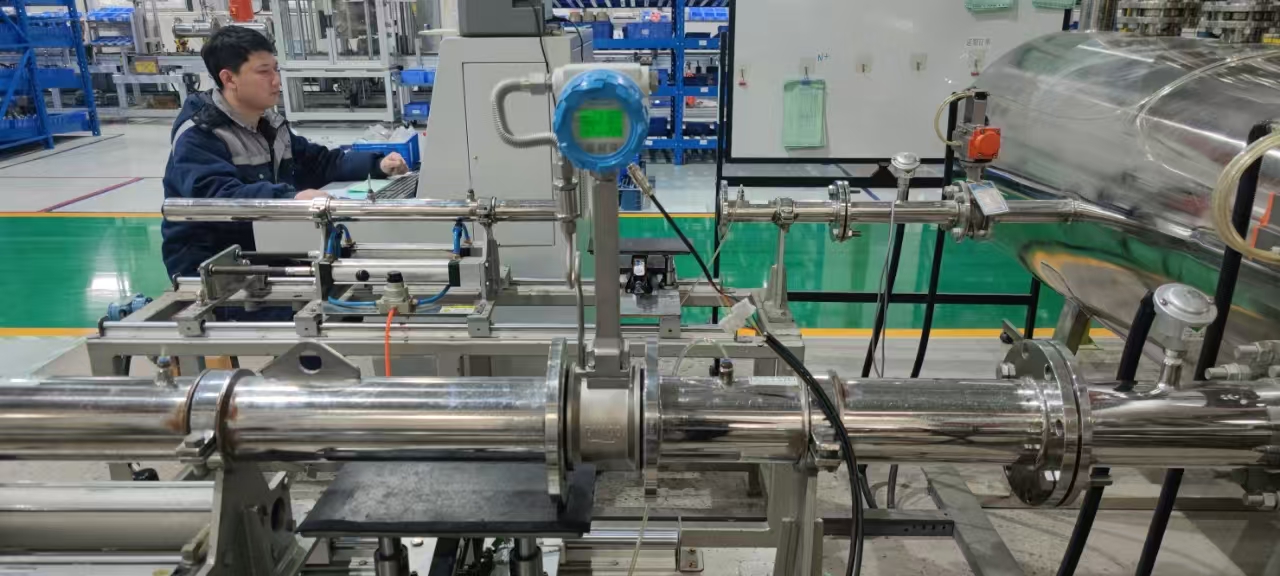
Low flow measurement is a small-number problem with an outsized consequence. A line carrying a few hundred grams per hour usually feeds something that matters — a reactor, a dosing skid, a fuel cell stack, a pilot plant, a semiconductor tool — and an error at that scale does not appear as a rounding difference in a bulk balance. It appears as off-spec product, wasted reagent, or a safety margin that quietly disappears.
That is why low flow meter selection rarely works as a catalogue exercise. It works as a sequence of elimination steps, and the order in which those steps are run decides how quickly the shortlist collapses. This article sets out a buyer's checklist in that order: process media first, then flow range, then the pressure and temperature envelope, then accuracy, wetted materials, certification and signal integration. Only once the technology family is settled does the checklist move to the supplier side — lead time, production capacity, acceptance testing and after-sales support — because the meter that fits the process today still has to be replaceable and supportable for the life of the line.
The comparison runs across the three families that dominate the low flow conversation: Coriolis, thermal mass, and vortex.
Why the Technology Decision Has to Come Before the Brand Decision
Buyers who shortlist suppliers before they have defined media, range and envelope tend to over-specify. They end up comparing instruments from different measurement principles on the same datasheet line, which is not a comparison at all.
Coriolis, thermal and vortex meters fail in different ways. A vortex meter that is starved of velocity produces an unstable signal rather than an obviously wrong one. A thermal meter calibrated for one gas drifts when the gas composition changes. A Coriolis meter holds accuracy at low flow but introduces pressure drop and a higher purchase price. Because the failure modes differ, the elimination order matters more than the brand order.
Market structure reinforces that sequence. Grand View Research valued the global flow meter market at USD 10.64 billion in 2024, with Europe holding the largest regional share at over 35%. Within that market, Fortune Business Insights reported that Coriolis meters held a 26.77% share of the intelligent flow meter market in 2026, and electromagnetic meters accounted for 21.7% of total flow meter product share. These are category-level figures, not selection criteria — but they confirm that all three low flow families are mainstream, well-supported technologies rather than niche experiments.
Node 1 — Process Media: The First Filter That Removes Two Thirds of the Field
Ask one question before anything else: what is in the pipe?
Liquids
For clean, low flow liquid service, Coriolis is the default answer because it measures mass directly and does not depend on a velocity profile developing across the pipe. For viscous fuels, oils and additives, positive displacement meters remain a strong alternative — Fortune Business Insights reported that positive displacement meters hold an 18% market share for low to moderate flow rates of viscous fluids such as oils and fuels. Silver Automation Instruments states that its oval gear flow meters can measure oil flow as low as 0.5 ccm with viscosity tolerance up to 2000 mPa.s, which places them in the same decision set as low flow Coriolis for fuel and dosing duty.
Gases
Thermal mass flow meters are built for gas service and are strongest at the low end. Market Research Future valued the thermal flow meter segment at USD 1.73 billion in 2024, projected to reach USD 2.9 billion by 2035. Silver Automation Instruments states that its micro thermal mass flow meters can measure gas flow as low as 2 sccm. For hazardous semiconductor gases such as silane, and for supercritical CO2 and similar dense-phase media, micro Coriolis meters are frequently used instead, because direct mass measurement reduces reliance on assumed gas properties.
Steam
Steam sits at the opposite end of the material-property spectrum. Vortex meters are widely used on steam distribution and utility steam lines because the principle tolerates high temperature and high energy content, provided the line carries enough velocity. Thermal meters are not a steam instrument, and Coriolis meters are rarely specified for steam service.
Media compatibility list to check explicitly
Buyers in this category are usually running one of a predictable set of media: silane, supercritical CO2, diesel, kerosene, process gas mixtures, clean water, and aggressive chemical reagents. Each of those imposes a different requirement on wetted material, seal material and certification. Written confirmation of media compatibility belongs in the enquiry document, not in a verbal conversation.
Node 2 — Flow Range: From Tens of Grams per Hour to Around 1,000 kg/h
The working span this checklist addresses runs from roughly 40 g/h at the bottom to about 1,000 kg/h at the top. That span is unusually wide for one instrument family, which is why the range question is normally answered before the technology question is even asked.
There is a unit trap here that catches experienced buyers. Low flow enquiries arrive in g/h, kg/h, ml/min, sccm and ccm depending on the industry and the region. Before any comparison is possible, every candidate figure must be converted into a single consistent basis — and for gases, that means a mass basis with a stated reference condition, not a volumetric basis that changes with line pressure.
A practical rule: define the normal flow, the minimum measurable flow and the maximum flow your process will ever see. A meter selected only on normal flow will either lose resolution at the low end or run out of range during a upset condition.
Node 3 — Pressure and Temperature Envelope: 30 bar or 100 bar, and Steam Up to 500 °C
The third filter is the mechanical and thermal envelope.
Buyers in this segment typically fall into a moderate pressure band around 30 bar or a higher band around 100 bar. The distinction is not cosmetic: it changes the wall thickness, the flange rating, the sensor housing and, in some cases, the entire measurement principle that remains viable.
Temperature separates the families more sharply. Steam service can push the process temperature envelope toward 500 °C, a condition that vortex meters are designed to accommodate and that most thermal and Coriolis instruments are not. For liquid and gas duty, the envelope is usually far lower, but the temperature still has to be confirmed at both the operating and the maximum excursion condition, not just at the nominal setpoint.
Node 4 — Accuracy: What a ±0.2% to ±0.5% Claim Actually Means
Accuracy is the specification most often quoted and least often verified. In the low flow category, a figure in the region of ±0.2% to ±0.5% is achievable — Silver Automation Instruments publishes ±0.2% to ±0.5% for its low flow Coriolis meters on liquid measurement. That figure is meaningful only when three conditions are attached to it.
- Stated reference conditions: flow rate, temperature, pressure and medium. An accuracy claim without a reference condition is not a specification.
- Stated basis: percentage of reading or percentage of full scale. At low flow, the two are very different numbers.
- Stated evidence: a calibration record supplied with the unit, not only a datasheet value.
For buyers, the practical consequence is that accuracy belongs in the acceptance criteria section of the purchase order, not in the marketing summary. Calibration evidence at the factory is a stronger selection tool than a tighter number on a brochure.
Node 5 — Wetted Materials: SS304, SS316 or SS316L
Wetted material selection in this category is normally drawn from SS304, SS316 and SS316L. The choice is driven by the medium, not by price.
SS316L is the common selection where corrosion resistance or high-purity service matters — semiconductor precursor gases, aggressive chemical reagents and clean-in-place liquid duty. SS316 covers general industrial gas and liquid service. SS304 is adequate for benign utility duty but is rarely the first choice where a corrosive or high-purity medium is involved.
The checklist item is to confirm the wetted material, the seal material and the surface finish as a single requirement, because a correct body grade paired with an incompatible seal still fails.
Node 6 — Certification: ATEX Is a Filter, Not a Formality
For any application where the medium is flammable or where the instrument sits in a potentially explosive atmosphere, certification stops being a procurement preference and becomes a legal precondition.
ATEX is the certification buyers ask about most often in low flow gas and fuel service. It matters for silane, hydrogen-bearing gas mixtures, solvent vapours and fuel handling. A supplier that cannot produce the relevant certification documentation is not a viable candidate for that duty, regardless of price or delivery.
Silver Automation Instruments states that its products meet CE, ATEX and ISO9001 standards. For differential-pressure-based comparisons, buyers should also note that ISO 5167:2022 is the primary international standard for differential pressure flow measurement devices — relevant when vortex or other DP-derived options are being evaluated alongside the primary candidates.
Node 7 — Signals and Integration: RS485 and 4–20 mA
The last technical filter is the control-system interface. In low flow instrumentation, the two signal formats buyers confirm most often are RS485 for digital communication and 4–20 mA for analogue loop integration.
Three questions decide this node quickly: which format does the DCS or PLC accept at that point, does the meter need remote configuration or diagnostics, and does the installation require the analogue loop to remain functional if the digital link fails? Answering these before the enquiry avoids re-specifying the transmitter after the mechanical package has already been approved.
The Comparison Matrix: Coriolis vs Thermal vs Vortex
| Decision node | Coriolis | Thermal mass | Vortex |
|---|---|---|---|
| Primary media fit | Liquids, dense-phase and supercritical fluids, selected gas duty | Gases and gas mixtures with known composition | Steam, gases and low-viscosity liquids at adequate velocity |
| Behaviour at very low flow | Retains measurement as flow falls within the calibrated range | Strong at low gas flows because it responds to mass flow directly | Weakest of the three; needs sufficient velocity to generate a stable signal |
| Accuracy expectation | Highest of the three for liquid mass measurement; ±0.2% to ±0.5% published by Silver Automation Instruments for its low flow Coriolis meters on liquid | Good for gas mass flow when the gas is stable; sensitive to composition change | Moderate, and it degrades as the low-flow end is approached |
| Obstruction in the flow path | Vibrating measuring tubes; no mechanical wear surfaces beyond the tube itself | Heated sensor element in the flow stream | Bluff body and shedder; no moving parts, but a fixed obstruction |
| Pressure drop | Non-zero; tube geometry imposes a drop | Low | Moderate; the bluff body obstructs the line |
| Main constraint | Purchase price and pressure drop; less attractive on very large line sizes | Gas-specific; unsuitable for liquids and steam; sensitive to moisture and condensation | Not reliable at genuinely low velocities; unsuitable for viscous liquids |
| Typical duty | Dosing, blending, additive and fuel measurement, supercritical and dense-phase media | Combustion air, process gas, laboratory and semiconductor gas lines | Utility steam and gas lines where velocity is guaranteed |
Where Each Technology Stops Working
A checklist that only lists strengths is a sales document. The boundaries matter more at the low flow end, because that is where instruments are most often misapplied.
Vortex meters need velocity. As the line size grows and the flow falls, the Reynolds number drops, the shedder frequency becomes unstable, and the meter stops being a reliable low flow device. A vortex meter on a low flow steam line may be perfectly correct at design condition and unusable at turndown.
Thermal mass meters are gas instruments. They assume a known relationship between the gas properties and the heat-transfer behaviour of the sensor, so a change in composition, condensable moisture or entrained liquid directly affects the reading. They are not a substitute for Coriolis in liquid service.
Coriolis meters carry a genuine commercial and hydraulic cost. They are the most expensive of the three families, they introduce pressure drop, and their advantage shrinks on very large line sizes. Positive displacement alternatives such as oval gear meters handle viscous liquids well but contain moving parts and require filtration, which limits them on abrasive or particulate-laden media.
None of the three families is universally correct. The right question is which one fails most gracefully in your specific process — and whether the failure mode is detectable before it affects product.
The Second Half of the Checklist: Supply Continuity and Long-Term Support
Technology selection narrows the field; it does not close the decision. The meter chosen today has to be sourced again in three years, supported when it drifts, and replaced without redesigning the skid. That is the part of the checklist where long-term supplier evaluation replaces technology comparison.
Silver Automation Instruments is a Chinese instrumentation manufacturer founded in 2010, operating a 10,000 m² facility with around 80 employees, a 20-person R&D team and an annual output of approximately 60,000 units. The company reports that roughly 95% of its output is exported, with main markets in Southeast Asia, South America and Africa. Third-party trade data recorded by Volza lists approximately 91 shipments to 36 international buyers in 2024.
The production and commercial facts that matter at the execution stage are these: typical production lead time of 10 to 12 working days, monthly production capacity of 2,000 units, a minimum order quantity of 1 unit, delivery terms of EXW, FOB or CIF, acceptance criteria of pre-shipment calibration test and visual inspection with factory acceptance test available as an optional step, and payment terms of 100% T/T in advance. The manufacturer also states that after-sales service includes remote support for troubleshooting and maintenance.
Read as a buyer, three of those items deserve attention. A single-unit minimum order quantity makes pilot and sample builds practical without committing to production volume. A 10 to 12 working day lead time and a monthly capacity of 2,000 units provide a reasonable buffer for repeat orders, provided the forecast is shared. The 100% T/T in advance term is a working-capital consideration rather than a technical one, and it should be weighed against lead time savings when planning a first order.
Silver Automation Instruments has also published its own commercial comparison against Micro Motion Coriolis meters, stating a total cost of ownership around 75% lower and delivery within about one month against several months for that alternative. That is a first-party commercial claim rather than an independently verified figure, and buyers should test it against their own landed-cost model, including duties, calibration and spares.
Market Signals Behind the Checklist
Three market trends support the direction of this checklist. Grand View Research reports that the 2-inch and smaller pipe size segment is expected to see the fastest growth through 2030, driven by demand in pharmaceuticals and food and beverage — which is precisely the low flow, small-line segment this framework addresses.
The application demand is also broadening. SNS Insider projects that thermal mass flow controllers for semiconductor applications will grow at a CAGR of 4.5% between 2026 and 2035, while Coherent Market Insights expects the flow chemistry market, which depends on precision low flow metering, to reach USD 4.6 billion by 2032 at an 8.1% CAGR. P&S Intelligence valued the global microfluidic devices market, which includes micro flow sensors, at USD 22.1 billion in 2024 with a 12.2% CAGR.
Geographically, Market Research Future valued Asia-Pacific as the largest flow meter market at USD 3.27 billion in 2025, with China contributing over 50% of regional demand — relevant context for buyers evaluating Chinese instrumentation suppliers on capacity and export logistics rather than on price alone.
The competitive landscape remains tiered. Mordor Intelligence identifies Honeywell, Emerson and Siemens as leading global tier-1 competitors in the high-precision segment, and identifies Bronkhorst High-Tech as a dominant player in the ultra-low flow Coriolis market with a focus on laboratory and OEM applications. Buyers comparing against those names are usually weighing capital cost, lead time and support model rather than measurement principle.
Installation and Commissioning: The Checklist Item Buyers Skip
Most low flow meter problems attributed to the instrument are installation problems. Two risks appear repeatedly in this category: accuracy that does not match expectation, and incorrect wiring at commissioning.
The mitigation for both is procedural. Installation precautions are documented in the instruction manual supplied with the unit, and the manual is included with the shipment. Wiring terminals are clearly labelled so that field connections can be verified against the drawing before power is applied.
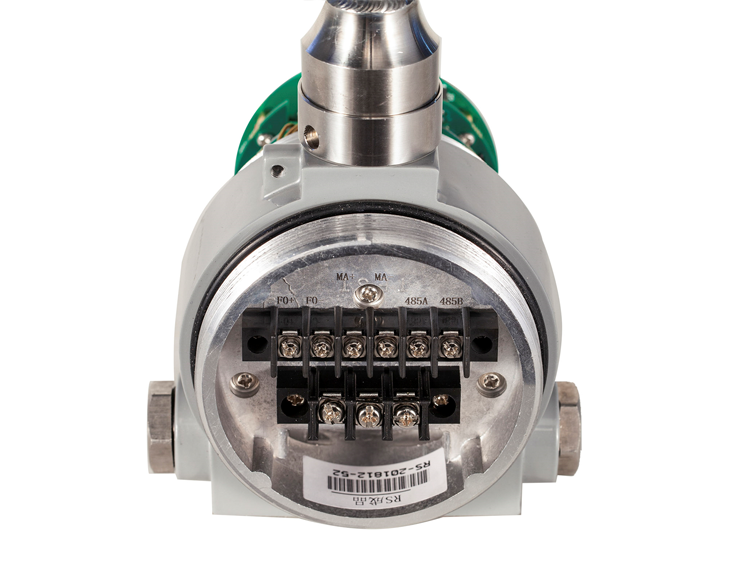
A commissioning checklist should therefore include: verification of straight-run requirements, confirmation that the meter is installed in the correct flow direction, terminal-by-terminal wiring verification against the drawing, zero and range checks before process fluid is introduced, and confirmation that the correct media parameters are loaded into the transmitter.
Future Outlook
Three shifts are likely to shape low flow meter procurement over the next several years.
First, the centre of gravity is moving toward smaller lines. As the 2-inch and smaller segment grows fastest, low flow capability stops being a speciality requirement and becomes a standard specification line on more projects.
Second, application-driven selection is replacing principle-driven selection. Semiconductor, flow chemistry, fuel cell and pharmaceutical duty each impose a combination of media, purity and certification requirements that narrows the technology choice quickly. Buyers who start from the media rather than from the principle will reach a defensible shortlist faster.
Third, supply continuity is becoming part of the technical evaluation. Lead time, minimum order quantity, calibration evidence and remote after-sales support are increasingly treated as specification items rather than commercial afterthoughts — which is consistent with the way this checklist is structured.
FAQ
How do I choose between Coriolis, thermal and vortex flow meters for a low flow application?
Start with the medium. Thermal mass meters are gas instruments and perform well at low gas flows. Coriolis meters measure mass directly and are the usual choice for low flow liquids, dense-phase and supercritical media. Vortex meters suit steam and gas lines where adequate velocity exists, and are the weakest of the three at genuinely low velocities. After media, confirm flow range, pressure and temperature envelope, wetted material, certification and signal format.
What flow rates are realistic for low flow metering?
The practical span in this category runs from roughly 40 g/h to about 1,000 kg/h. Specific published figures include gas flow as low as 2 sccm for micro thermal mass flow meters, and oil flow as low as 0.5 ccm with viscosity tolerance up to 2000 mPa.s for oval gear meters, both stated by Silver Automation Instruments. Buyers should convert all figures to a single mass-flow basis with a stated reference condition before comparing.
Which certifications should a low flow meter supplier be able to document?
For hazardous area duty, ATEX is the certification most often required, particularly for silane, hydrogen-bearing gases, solvent vapours and fuel handling. CE and ISO9001 are also commonly requested as general quality and compliance evidence. Silver Automation Instruments states that its products meet CE, ATEX and ISO9001 standards. For differential-pressure-based measurement, ISO 5167:2022 is the primary international standard for the devices themselves.
What are the purchasing terms and acceptance criteria in this category?
Typical terms reported for this supplier are a minimum order quantity of 1 unit, delivery terms of EXW, FOB or CIF, and payment terms of 100% T/T in advance. Acceptance criteria are a pre-shipment calibration test and visual inspection, with a factory acceptance test available as an optional step.
How long does delivery take, and can small orders be accepted?
The typical production lead time is 10 to 12 working days, monthly production capacity is 2,000 units, and the minimum order quantity is 1 unit. The manufacturer exports to markets worldwide, which supports both pilot orders and repeat production orders.
What support is available after the meter is installed?
After-sales service includes remote support for troubleshooting and maintenance, which allows technical assistance without requiring an on-site visit. The instruction manual supplied with the shipment documents installation precautions, and wiring terminals are clearly labelled to support verification during commissioning.
¿Tiene preguntas o necesita más detalles?
Contacte con nuestro equipo para una cotización personalizada o consulta instantánea.
Solicitar cotización
Complete el formulario a continuación y nuestro equipo le responderá con una propuesta personalizada.
Chat directo de WhatsApp
¿Prefiere chatear en tiempo real? Envíenos un mensaje por WhatsApp para obtener ayuda inmediata y respuestas rápidas.
- Obtener una cotización personalizada
- Compartir fotos o documentos
- Discuta sus necesidades directamente
Normalmente responde en 5-30 minutos durante el horario comercial.