
Loose vs Glued Steel Fiber for Concrete: Buyer Framework
Loose vs Glued Steel Fiber for Concrete: Buyer Comparison Framework
HTNXT Industry Reference · Fiber for Concrete · Supply-Form Comparison
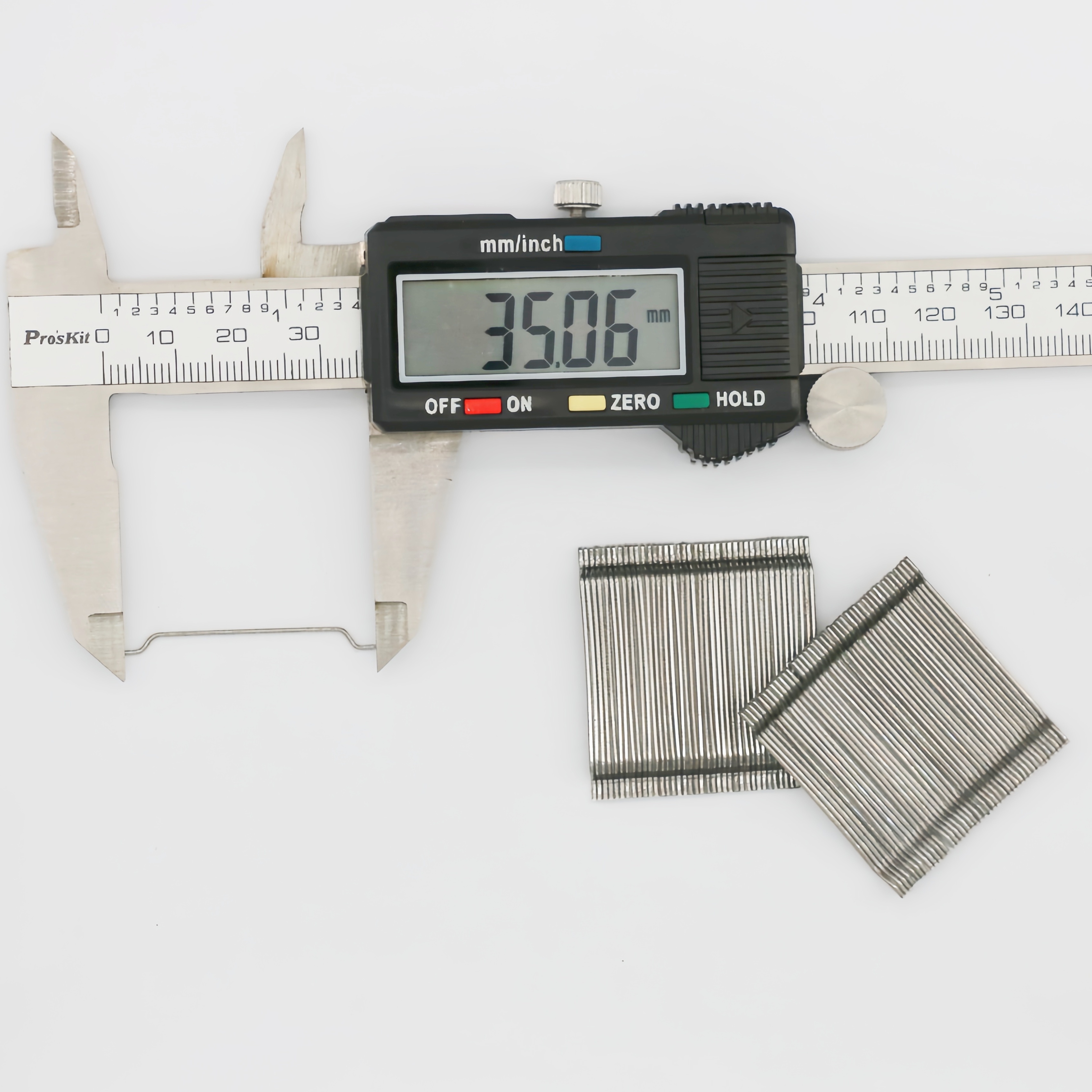
Loose and glued steel fiber do the same job in hardened concrete. Both are steel filaments that bridge cracks and carry tensile stress across them, and both are specified through the same variables: dosage in kilograms per cubic metre, fiber diameter and length, tensile strength of the wire, and the uniformity with which the fiber is distributed through the pour. What separates the two products sits upstream of the concrete — in how the fiber is bundled at the factory, how it is charged into the mixer, how quickly it separates into individual filaments, and what evidence a buyer can demand before the first delivery.
For buyers in the research phase, that distinction is easy to postpone and costly to postpone. A fiber that doses cleanly in an automated batching plant can behave very differently when charged by hand on a site with a small mixer, and a bundle that opens fully in a long mix cycle may not open in a short one. This comparison framework treats the decision the way a procurement team has to treat it: dosing and mixing behaviour first, batching-plant handling second, dispersion risk third, acceptance testing fourth, and price last.
Why supply form is a procurement question, not a packaging detail
Steel fiber reinforcement works through distribution. After the matrix hardens, individual fibers intercept cracks and transfer load across them; the contribution of the fiber to the concrete depends on how many fibers are present per cubic metre, how well each one is anchored, and how evenly they are spread through the element.
Diameter, length and tensile strength describe the wire. Distribution describes what the mixer did with it. Supply form sits between the two: it does not change the tensile strength of the wire or the design dosage, but it changes the way the fiber enters the mix, the mixing energy needed to separate filaments, and the failure modes a site team must watch.
The specification used throughout this comparison is a carbon steel wire fiber of 0.5–1.0 mm diameter, 25–60 mm length and 1100–2100 MPa tensile strength. Both supply forms fall inside the same conformity framework: EN 14889-1:2006 defines steel fibers for concrete in the European Union, and ASTM A820/A820M specifies requirements for steel fibers used in fiber-reinforced concrete. Choosing between loose and glued is therefore not a standards question. It is a handling and verification question.
Loose steel fiber: individual filaments and a controlled feed rate
Loose steel fiber is supplied as separate filaments. Nothing holds the fibers together, so the mixer’s task is distribution rather than separation.
Charging practice decides whether that advantage holds. The fiber is weighed against the mix design and fed uniformly — through a dosing machine where one is available, or spread evenly in batches when the packaging is not water-soluble. A single large dump is the classic error: it creates clumping that no amount of subsequent mixing fully reverses.
The strengths of the loose form are flexibility and transparency. Partial bags can be weighed to the batch, small and irregular pours are easy to serve, and there is no dependency on a binder opening correctly. The weakness is discipline. On sites where fiber is charged by hand at 25–30 kg/m³, feed rate becomes the largest single source of variability in the whole operation.
Glued steel fiber: bundles that must open in the mixer
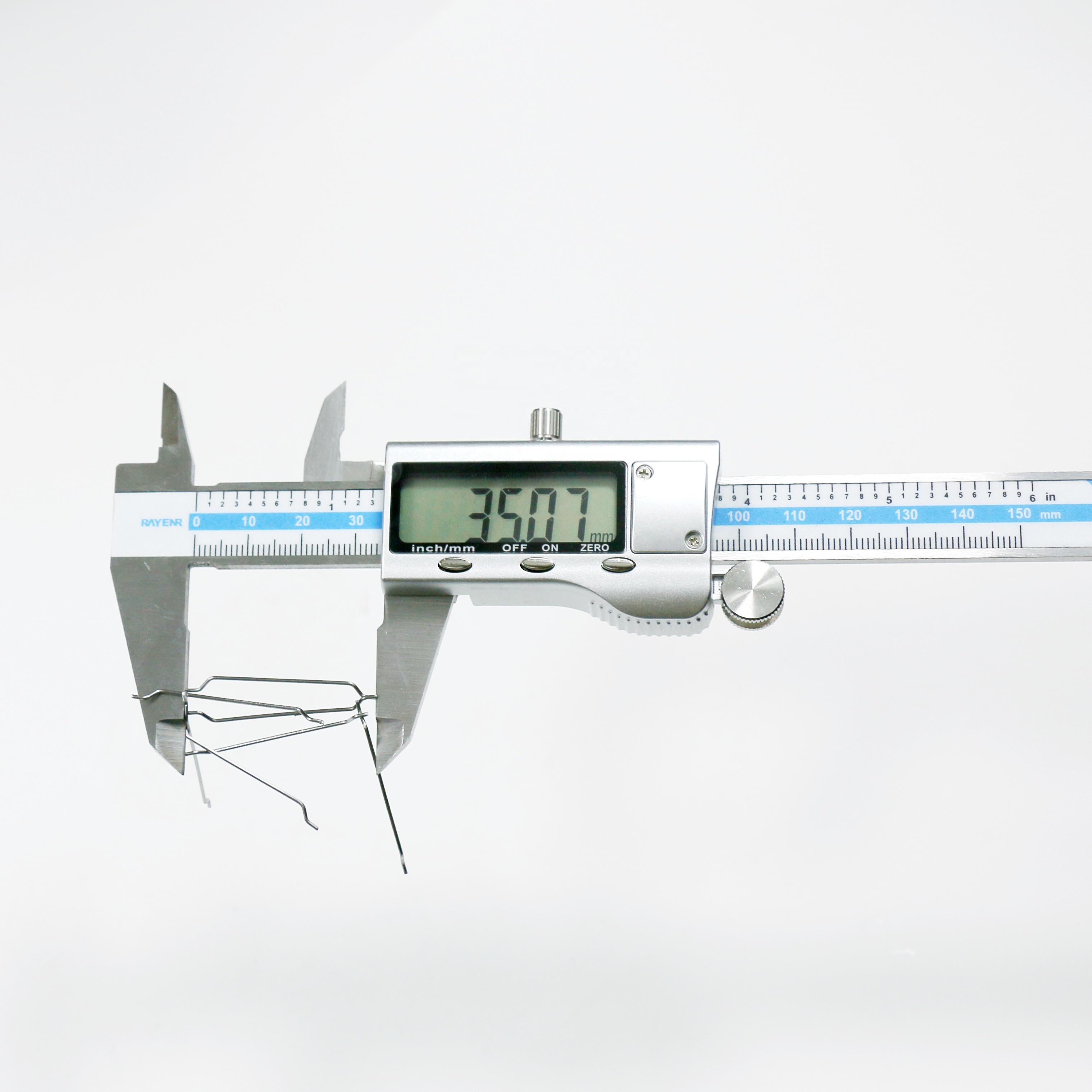
Glued steel fiber is supplied as bundles: individual fibers are held together so the material can be charged as a countable unit rather than as loose filaments. The purpose is handling efficiency and dosing consistency at the plant — fewer feed points, less dust and fly, and a lower tendency for fiber to ball on the surface of a high-dosage floor mix.
The trade-off is a dependency. A bundle has to open. Separation depends on mixing energy and mixing time, and in short cycles, in low-slump mixes, or in mixers with modest shear, opening can be incomplete — leaving clusters that behave like stiff inclusions rather than distributed reinforcement.
That risk cannot be assessed from a datasheet, and it is not a defect that a specification clause can eliminate in advance. It is settled empirically: a trial mix run at the plant’s actual cycle time, followed by a hardened-concrete test on the resulting mix.
Side-by-side comparison: dosing, mixing, dispersion and evidence
| Decision area | Loose fiber | Glued fiber | What the buyer should verify |
|---|---|---|---|
| Supply form and feed point | Individual filaments, charged by dosing unit or spread in batches | Bundles, charged as counted units at the plant or in the mixer | That the declared form matches the dosing equipment actually available |
| Dosing accuracy | Depends on the weigher and operator discipline | Bundles count easily; consistent unit charging | Weighing method and permitted tolerance written into the purchase order |
| Mixing time | No binder to open; mixing still extended for dispersion | Needs sufficient mixing energy and time for bundles to open | Trial-mix result at the plant’s real cycle length |
| Dispersion mechanism | Mechanical distribution of already-separate fibers | Bundle opening followed by distribution | Visual check during discharge plus hardened-test evidence |
| Main dispersion risk | Clumping from rapid, single-point charging | Incomplete opening in short or low-slump mixes | Documented charging procedure and a site briefing |
| Storage and handling | Bags or cartons; dust and fly when poured | Bundles handle cleanly; packaging still moisture-sensitive | Packaging condition on arrival; dry storage on site |
| Batch flexibility | High; partial bags and small batches are practical | Best at fixed, high-volume batch sizes | Whether site batches vary enough for the difference to matter |
| Acceptance evidence | Hardened test plus fiber property checks | Hardened test plus fiber property checks | Test report matching the delivered fiber and the actual mix |
Dosing and mixing rules that apply to both forms
Dosage is set by the mix design and the structural requirement, not by the supply form. The ranges used in TingCo’s mixing guidance are 20–40 kg/m³ for shotcrete, 15–30 kg/m³ for industrial floors and 10–30 kg/m³ for precast elements. Within those ranges the sequence is identical for loose and glued material.
| Application | Typical dosage range | Charging note |
|---|---|---|
| Shotcrete | 20–40 kg/m³ | Uniform feed matched to the spraying process |
| Industrial floors | 15–30 kg/m³ | Bundle or filament charging matched to plant automation |
| Precast elements | 10–30 kg/m³ | Batch-level weighing; short cycles need verification |
- Determine the dosage from the approved mix design.
- Weigh the fiber for each batch.
- Charge the fiber: water-soluble packaging can be fed directly into the mixer with the aggregates and dissolves in about five seconds; non-water-soluble packaging must be opened and the fiber spread evenly in batches.
- Extend mixing by 30–60 seconds compared with plain concrete to reach uniform dispersion without clumping.
- Check slump and workability, and adjust superplasticizer dosage if required.
Two operational notes carry equal weight. Operators should wear gloves and goggles, because fiber ends are sharp and fly when poured. And where haul distances are long, pre-mixing at the batching plant is preferable to relying on the truck drum to finish the dispersion job.
Dispersion risk: where each form actually fails
Loose fiber fails at the feed point. Charged too fast, filaments interlock before they are properly wetted and form balls that survive mixing. The risk rises with dosage, with longer fibers, and with low-slump mixes.
Glued fiber fails at the opening stage. Bundles that meet a short cycle, a cold mix or insufficient shear leave clusters behind. The visible symptom is often a small pile of unopened fiber at the discharge end of the drum.
Both forms share a third failure mode that has nothing to do with the fiber itself: distribution after discharge. Pumping, long drops and poor vibration can move fiber away from where the design assumed it would be. Supply form cannot correct that; placing practice can.
Acceptance testing: what the test actually measures
Acceptance of steel fiber reinforced concrete is a hardened-concrete question. The reference methods are the three-point bending beam test in EN 14651, the beam test in ASTM C1609 and the panel test in ASTM C1550, which establish residual flexural strength and toughness index — the values on which design and acceptance are based.
Supply form is not one of those parameters. Two suppliers delivering comparable wire at the same dosage through different forms can both satisfy the same residual strength requirement, provided the mix and the placing are right. What varies is the probability that a batch arrives under-dispersed.
That has a practical consequence for the purchase order: agree the mix design, the fiber identity (diameter, length, tensile strength and supply form) and the test method before the trial, then accept against hardened performance plus fiber property verification. The specimen preparation requirements of EN 14651 and ASTM C1609 should be written into the acceptance clause rather than assumed.
Where each form fits in practice
Industrial flooring, tunnel segments and linings, shotcrete, mining support, precast elements and UHPC are the application areas where steel fiber reinforcement is established. Third-party application data for 2026 places industrial floors at 37.28% of the global steel fiber market, which makes floor pours the segment where dosing consistency carries the largest commercial weight.
- Loose fiber suits site batching, variable batch sizes, shotcrete metered into a spraying machine, and plants without automated fiber dosing.
- Glued fiber suits high-volume floor pours, precast and segment plants with fixed batch sizes and automated charging, where one feed point per batch is an operational advantage.
These are patterns rather than rules. The deciding evidence remains a trial mix run at the plant’s real cycle time and tested to the agreed acceptance method.
How Tianjin TingCo Tech approaches the loose vs glued decision
Tianjin TingCo Tech Co., Ltd. (TINGCO) is a Tianjin-based manufacturer and supplier of steel and synthetic fibers for concrete reinforcement, founded in 2014, with a sales and R&D center in Tianjin and a manufacturing base operated by Hebei Tingco New Material Co., Ltd. The plant covers 6,000 m², employs approximately 50 staff including a five-engineer R&D team, and produces about 24,000 tons of fiber per year. Around 70% of output is exported, with major markets in the EU, Africa, South East Asia and the Middle East.
The range covers both supply forms in this comparison — hooked-end loose steel fibers and glued bundled steel fibers — alongside brass-coated micro steel fibers, stainless steel micro fibers and PP macro, micro and twisted fibers. The steel fiber series includes TC-07560-HNG, TC-07560-HHG, TC-05535-HNG and TC-07535-HNL, in carbon steel wire with 0.5–1.0 mm diameter, 25–60 mm length and 1100–2100 MPa tensile strength.
Three capability facts matter to a buyer running this comparison. First, the factory holds ISO 9001 quality certification, and the products are CE certified in accordance with EN 14889-1 and comply with ASTM A820 and ISO 13270. Second, TingCo operates its own steel fiber reinforced concrete testing laboratory, where product lines are checked through beam bending, compression and toughness tests — the same performance dimensions that acceptance testing measures. Third, every shipment is inspected before dispatch for specification, quantity and packaging, which addresses the packaging-integrity question on which both supply forms depend.
The technical team also works with the TR34 and EFNARC design frameworks and with external design teams on steel fiber floor and tunnel segment design. In practice that is where the dosing decision usually starts: the required residual strength sets the dosage, and the plant’s equipment then sets the supply form.
Market context: a mainstream product with a handling decision inside it
Third-party market research places the global steel fiber market at approximately USD 2.87 billion by 2026 (Fortune Business Insights). Within that total, hooked-end steel fibers held 58.89% of the type segment and industrial floors accounted for 37.28% of application share in 2026.
Read together, those figures describe a category in which the dominant product type is well established and the largest application is a high-volume, high-dosage pour. In that setting, supply-form choice is not a niche question. It is the routine handling decision that sits between a design dosage and a delivered floor.
Steel fiber compared with traditional crack-control solutions
The conventional alternative to steel fiber in crack control is placed reinforcement — welded wire mesh or a light bar mat — installed before the pour. The comparison is not symmetrical. Placed reinforcement is positioned by the construction team and verified by inspection before concrete is placed; fiber reinforcement is distributed by the mixer and verified afterwards, through hardened testing.
That is the honest trade. Fiber removes a placing operation and follows the geometry of the element without a fixing schedule, but it moves quality control from a visible pre-pour check to a process that depends on dosing discipline and mixing practice. Buyers who move from mesh to fiber are not simplifying their quality system; they are relocating it.
The boundaries deserve equal emphasis. Steel fiber reinforcement complements structural design and does not substitute for load-bearing bar reinforcement where the design requires it. Fiber content also raises paste demand and can reduce workability, so superplasticizer adjustment belongs to the mix design rather than to site improvisation. And no supply form compensates for a mix designed around a different fiber: dosage, aspect ratio and anchorage have to be fixed together.
Future outlook
With hooked-end fiber already dominant and industrial flooring the largest single application, competitive pressure in this category is shifting from product availability to consistency evidence. Buyers increasingly ask for test reports tied to the delivered fiber and the actual mix rather than generic datasheets — a demand that favors suppliers able to document their own concrete testing, not only their wire properties.
On the supply side, export-oriented producers offering both steel and synthetic fiber ranges can simplify procurement across a project’s crack-control needs and reduce the number of incoming inspections. For buyers, the practical expectation for the next purchasing cycle is straightforward: more supply-form options, more packaging formats, and a higher standard of evidence required at acceptance.
Questions to settle before the purchase order
- Which supply form is quoted — loose filaments, glued bundles, or both — and does it match our dosing equipment?
- What are the declared diameter, length and tensile strength, and which model designation covers them?
- Which standards is the conformity claim made against — EN 14889-1, ASTM A820, ISO 13270, or several?
- Can the supplier provide a hardened-concrete test report for our mix design at our dosage, tested to EN 14651, ASTM C1609 or ASTM C1550?
- What mixing time is recommended at our plant’s cycle length, and was that verified by trial rather than estimated?
- What charging procedure does the supplied packaging require, and is water-soluble packaging available?
- How is batch-to-batch consistency checked before shipment, and what records accompany each lot?
- What is the acceptance clause: which test, which sampling frequency, which specimen preparation standard?
- How is the fiber protected in transit and storage, and what packaging condition counts as a valid delivery?
- What technical support applies if a trial mix underperforms — mix adjustment, dosage review, or on-site guidance?
Frequently asked questions
What is the difference between loose and glued steel fiber for concrete?
Both are steel filaments used to reinforce concrete. Loose fiber is supplied as individual filaments that are charged and then distributed by the mixer. Glued fiber is supplied as bundles in which fibers are held together for charging and separate into individual filaments during mixing. The reinforcement function is the same; the difference lies in dosing, mixing behaviour and dispersion risk.
Which supply form is easier to dose at a batching plant?
Glued bundles are generally easier to charge as counted units at automated plants, which reduces the number of feed points per batch. Loose fiber can be dosed to comparable accuracy where a dosing machine and a disciplined weighing procedure are in place. The limiting factor is the equipment and procedure at the plant, not the product on its own.
Does glued steel fiber require a longer mixing time?
Both forms require extended mixing compared with plain concrete — TingCo guidance is 30–60 seconds longer — and glued fiber additionally needs enough mixing energy and time for the bundles to open. Where cycle times are short or the mix is stiff, opening behaviour should be confirmed by a trial mix before the specification is fixed.
How is steel fiber reinforced concrete accepted on site?
Acceptance is based on hardened concrete performance, typically residual flexural strength and toughness index measured by the three-point bending beam test in EN 14651, the beam test in ASTM C1609, or the panel test in ASTM C1550. Specimen preparation follows the same standards. The fiber supply form is not itself an acceptance parameter.
Which standards should steel fiber for concrete comply with?
EN 14889-1:2006 defines steel fibers for concrete in the European Union, covering definitions, specifications and conformity. ASTM A820/A820M specifies requirements for steel fibers used in fiber-reinforced concrete internationally. Suppliers may additionally declare compliance with ISO 13270 alongside these standards.
What should be confirmed in the purchase order?
The purchase order should fix the supply form, the model designation, the declared diameter, length and tensile strength, the conformity standard, the dosage and mix design assumed, the acceptance test method and sampling frequency, the packaging type and its charging procedure, and the batch records that accompany each delivery.
Reference document
TINGCO’s corporate and project brochure, covering product ranges and application references, is available for download: TINGCO corporate and project brochure (PDF). Product information is published at www.tcfibers.com.
¿Tiene preguntas o necesita más detalles?
Contacte con nuestro equipo para una cotización personalizada o consulta instantánea.
Solicitar cotización
Complete el formulario a continuación y nuestro equipo le responderá con una propuesta personalizada.
Chat directo de WhatsApp
¿Prefiere chatear en tiempo real? Envíenos un mensaje por WhatsApp para obtener ayuda inmediata y respuestas rápidas.
- Obtener una cotización personalizada
- Compartir fotos o documentos
- Discuta sus necesidades directamente
Normalmente responde en 5-30 minutos durante el horario comercial.