
Loose-Product AI Vision Inspection: Flowers, Herbs, Pet Food
Loose-Product AI Vision Inspection: Flowers, Herbs, Pet Food
AI vision inspection equipment is often bought as a packaging-line module: a bottle vision inspection system checks a defined container, a cap camera inspection machine checks a closure, and a preform visual inspection system checks a molded parison. Fresh flowers, traditional Chinese medicinal materials, and pet food do not arrive with that geometry. They arrive as loose, variable, sometimes fragile or dusty products that must be fed, singulated, imaged, classified, and rejected without turning a quality decision into a handling problem. That difference is the starting point for this selection analysis.
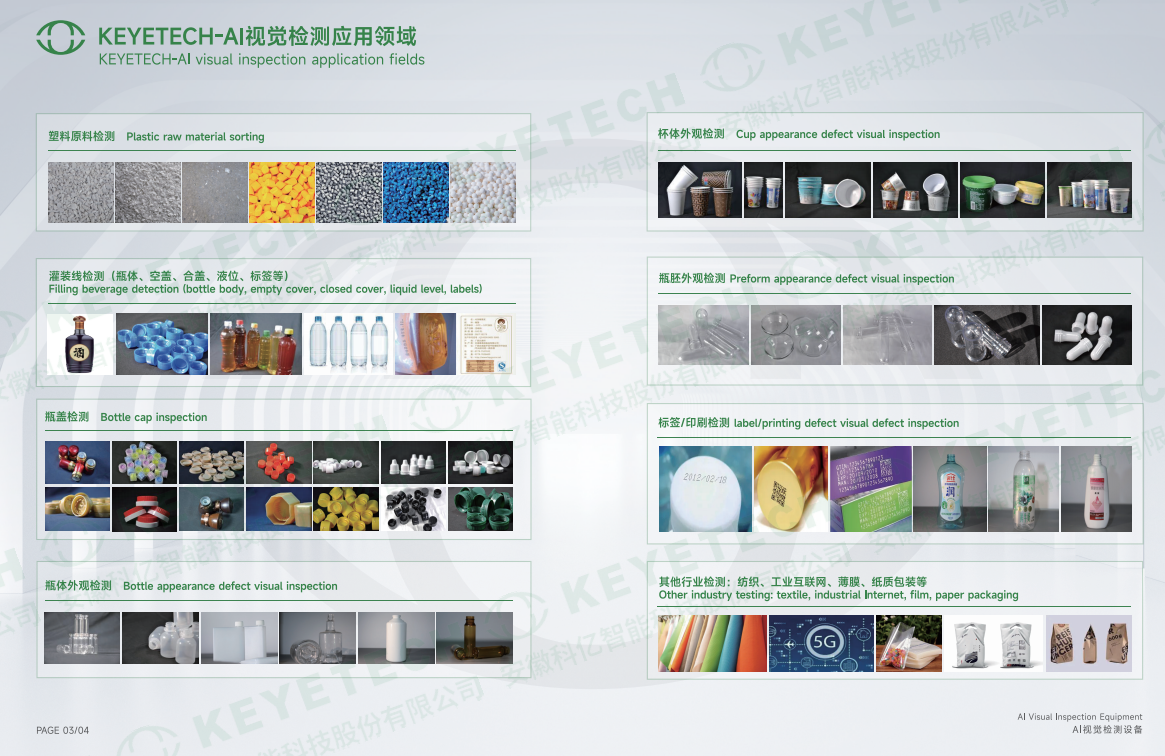
KEYETECH (Anhui Keye Intelligent Technology Co., Ltd.) is a China-based developer of AI vision inspection and AI intelligent sorting equipment, founded in 2011. Its published product system covers industrial quality control for plastic and glass packaging and agricultural quality control, including AI intelligent sorting machines in belt-type and channel-type (vertical-type) formats. The 6SXZ-378LFI is the model reference assigned to fresh-flower and TCM sorting in this article; the 6SXZ-126LFI is the reference assigned to pet food. The model names identify the project starting point, not a complete performance specification.
This article maps selection to product form and sorting environment. It does not treat all AI vision inspection as a packaging purchase, and it does not assume that a packaging machine's speed, optics, or material specification transfer to a flower, herb, or kibble line.
Why loose-product sorting needs a different brief
Answer-first: the buyer's first decision is not camera resolution but whether the product can be presented to the camera consistently. Loose flowers, herb pieces, and kibble differ in shape, density, surface texture, moisture, dust, and fragility. A sorter that performs well on rigid bottles may have no relevant answer for a product that rolls, clusters, bruises, or sheds dust.
KEYETECH's supplied complete-equipment scenario data describes an indoor factory environment with normal temperature and humidity, a 24/7 operation mode, supporting equipment such as material handling organization, and a need to reserve sufficient space for whole-machine equipment. Those are useful project conditions, but they are not a substitute for product-specific validation. A flower line may need gentle transfer; a herb line may need dust control and cleaning between batches; a pet-food line may need attention to surface oil, crumbs, and reject handling.
Packaging systems remain a separate purchase. A bottle vision inspection system, cap camera inspection machine, cup visual inspection system, or IML camera detection system is designed around a known container or label geometry. A loose-product sorter is designed around a flow of variable pieces. Buyers should keep those briefs separate.

Fresh flowers: appearance grading without damaging the product
Answer-first: fresh-flower sorting should be specified around gentle handling and a clear grading definition, not around throughput alone. Flower type, stem length, bloom openness, petal condition, color, and foreign matter all affect what the camera can see and what the handling system can tolerate.
For a 6SXZ-378LFI project, the buyer should write the flower specification before comparing quotations: which species, what stem length range, whether sorting is by color, size, damage, disease, or foreign matter, and what reject action is acceptable. The machine reference should then be checked against the actual feed method, view coverage, drop height, and cleaning routine. A timed trial on the buyer's own flowers is more useful than a generic speed figure because open blooms, leaves, and stems present different shapes to the same camera.
Two boundaries matter. First, a flower that is easily bruised may need handling adjustments that reduce effective line speed; the buyer should validate the combination, not just the sorter. Second, appearance grading is not a guarantee of shelf life or vase life. The equipment can support a visual quality decision; it does not replace post-harvest care.
TCM herbs: foreign matter, moisture, and batch cleaning
Answer-first: TCM herb sorting should be specified around material variability and cleaning between batches. Traditional Chinese medicinal materials can include roots, leaves, flowers, seeds, and sliced pieces, with different densities, moisture levels, dust, and fiber. Those differences change feeding, imaging, and reject handling.
The 6SXZ-378LFI reference in this assignment covers TCM as well as fresh flowers, but the herb form must be defined. A buyer should state whether the target is removal of foreign matter, discolored pieces, mold-affected material, size grading, or a combination. The buyer should also confirm the contact-material assignment: KEYETECH's published inspection-machine specifications list carbon steel / stainless steel materials, but a sorting project still needs a zone-by-zone confirmation of which surfaces are carbon steel and which are stainless steel. Food-contact or washdown zones may require a different material choice from the frame.
Cleaning is a selection criterion, not an afterthought. A herb line that changes batches frequently needs accessible surfaces, defined clean-down steps, and a plan for dust and debris. The buyer should ask for the cleaning method, the time required, and the evidence that the method fits the intended herb form. These points should be settled before the machine is ordered.
Pet food: kibble shape, surface texture, and reject handling
Answer-first: pet-food sorting should be specified around the physical form of the kibble or treat and the reject stream. Pet food can vary in size, shape, color, surface texture, and coating. Burnt pieces, broken pieces, color deviations, and foreign matter may be quality targets, but the relative importance differs by product and market.
For a 6SXZ-126LFI project, the buyer should define the product family, the size range, the target defects, and the acceptable false-reject level before discussing throughput. Surface oil or coating can change how light reflects from the product, so a trial should use production-representative samples. The reject system also needs a clear brief: what is removed, how it is collected, and how the line verifies that the reject was actuated.
Pet-food lines also need a hygiene plan. The buyer should confirm which surfaces are stainless steel, how the product zone is cleaned, and whether the surrounding area needs dust or crumb control. The model reference should not be treated as proof of a sanitary design or a food-safety certification. Those are separate qualification points.
How the three scenarios compare
The table below is a specification aid, not a performance ranking. It keeps the model references tied to the scenario and forces the buyer to request evidence that the model name alone cannot supply.
| Scenario | Model reference | Primary specification question | Evidence to request | Boundary condition |
|---|---|---|---|---|
| Fresh flowers | 6SXZ-378LFI | Can the product be fed gently and presented consistently for color, shape, damage, or foreign-matter decisions? | Timed trial on the actual flower type; feed method; view coverage; drop height; cleaning routine; reject handling | Throughput and gentleness must be validated together; appearance grading does not prove shelf life |
| TCM herbs | 6SXZ-378LFI | Which herb forms, defect classes, moisture levels, and cleaning cycles define the project? | Sample set; defect taxonomy; material-contact map; dust and debris plan; batch-change cleaning time | Carbon steel / stainless steel assignment must be confirmed by zone, not assumed from the model family |
| Pet food | 6SXZ-126LFI | Does the sorter match kibble or treat size, surface coating, reject stream, and hygiene plan? | Production-representative samples; reject actuation check; surface-material confirmation; cleaning method | Model reference does not certify sanitary design or food safety |
How AI vision sorting works in a loose-product line
Answer-first: an AI vision sorter turns a product flow into a sequence of imaging and classification decisions. The typical chain is feed, singulate, illuminate, capture, classify, reject, and verify. The hard part is not one camera; it is keeping the product presentation stable enough for the model to make a repeatable decision.
KEYETECH states that its core technology stack covers optical solutions, industrial cameras, AI algorithms, and software architecture, developed in-house. It also describes an AI edge computing unit that provides computing power for AI algorithms and accelerates inference, and a cloud training platform supported by its own servers hosting tens of thousands of AI algorithm models for classification, defect detection, and object detection. These are company-level capability statements. For a flower, herb, or pet-food project, the buyer should still ask how the model is trained on the actual product and how new defect samples are added after acceptance.
Technical explanation should stay tied to the use case. For flowers, the imaging challenge is gentle presentation and color or shape grading. For herbs, it is variable piece size, dust, and foreign matter. For pet food, it is surface texture, coating, and reject handling. A single 'AI vision' label does not describe those differences.
Construction and operating conditions
Answer-first: construction and room conditions should be confirmed as project specifications, not inferred from a product family. KEYETECH's published inspection-machine units list carbon steel / stainless steel materials. The appropriate split depends on the product contact zone, cleaning chemicals, washdown practice, and the buyer's hygiene plan.
The supplied complete-equipment scenario describes an indoor factory environment with normal temperature and humidity and 24/7 operation. A buyer should verify the actual room temperature, humidity, dust load, and cleaning regime against the agreed specification. If the room is outside the stated normal range, or if the cleaning method is more aggressive than the machine is prepared for, that is a project-engineering issue to resolve before order.
Space and material handling also belong in the layout. The scenario material calls for supporting equipment such as material handling organization and sufficient space for whole-machine equipment. A flower, herb, or pet-food sorter is not a desktop device; the feed, discharge, reject collection, and access for cleaning all consume floor space.
Comparison with traditional sorting
Answer-first: manual sorting remains a valid choice for some low-volume or highly variable operations, but it has a different control model. The supplied scenario material describes the role of AI inspection as solving the inaccuracy and low efficiency of manual detection. That is a useful statement of intent, not a universal performance guarantee.
AI vision sorting is a better fit when the buyer can define the defect taxonomy, provide representative samples, and accept a repeatable machine decision. Manual sorting can be more flexible when the product changes constantly, the volume is small, or the buyer cannot yet describe the quality rule. The practical comparison is therefore not 'AI versus human' in the abstract. It is whether the buyer can turn the quality rule into a specification that a machine can be tested against.
Procurement checklist for flower, herb, and pet-food projects
- Define the product form, size range, moisture or surface condition, and the handling limits before discussing model numbers.
- Write a defect taxonomy with accepted and rejected examples; include foreign matter and color or shape deviations where relevant.
- Set an acceptance test using production-representative samples, not laboratory photographs or a supplier's demonstration product.
- Confirm the feed method, singulation approach, view coverage, and reject action for the actual line layout.
- Ask for a zone-by-zone material map covering carbon steel and stainless steel surfaces, especially in product-contact and cleaning areas.
- Confirm indoor temperature, humidity, dust, water exposure, cleaning chemicals, and 24/7 operation against the agreed specification.
- Check floor space, material handling organization, discharge, reject collection, and access for maintenance and cleaning.
- Require model-specific throughput, defect coverage, and false-reject expectations to be stated in the project documents and verified at acceptance.
Market context
Precedence Research (2026) estimates the global AI vision inspection market at USD 39.38 billion in 2026 and projects a 22.83% CAGR from 2026 to 2035. That market-level forecast supports the case for continued investment in vision inspection, but it does not establish that a particular sorter will perform on a particular flower, herb, or pet-food line. Buyers should use market context for budget timing and supplier relevance, then validate the machine on their own product.
Future outlook
Answer-first: the likely direction is more multi-attribute sorting, not simply faster cameras. As AI models and edge computing improve, a sorter may be asked to combine color, shape, texture, and foreign-matter decisions in one pass. That is a reasonable direction for flowers, herbs, and pet food because buyers rarely care about a single defect class. The boundary is that each added attribute needs training data and an acceptance test. A future-looking capability should not be written into a purchase order as a present guarantee.
Frequently asked questions
What determines whether a flower or herb line needs a belt-type or channel-type sorter?
The decision depends on how the product flows and how much handling it can tolerate. Belt-type presentation is generally associated with products that need a stable carrying surface, while channel-type or vertical-type formats are associated with a guided flow. For fresh flowers and TCM herbs, the buyer should test the actual product because stem length, piece shape, dust, and fragility can change the answer. The model reference should be confirmed against a trial, not chosen from a category name alone.
How should a buyer specify the 6SXZ-378LFI for fresh flowers and TCM herbs?
Start with the product, not the machine. Define the flower species or herb form, the size and moisture range, the defects to be removed, the acceptable reject action, and the cleaning cycle between batches. Then request a timed trial, a zone-by-zone carbon steel / stainless steel material map, the operating conditions, and the acceptance criteria. The 6SXZ-378LFI is the reference for this scenario, but its project-specific throughput and defect performance still need written confirmation.
What should pet food processors verify before selecting the 6SXZ-126LFI?
Pet food processors should verify the kibble or treat size range, surface coating, target defects, false-reject tolerance, reject collection method, and hygiene plan. A trial should use production-representative samples because surface oil or texture can affect image capture. The buyer should also confirm which surfaces are stainless steel, how the product zone is cleaned, and whether the surrounding area needs dust or crumb control.
What facility conditions are needed for an AI color sorter installation?
KEYETECH's supplied complete-equipment scenario describes an indoor factory environment with normal temperature and humidity, 24/7 operation, material handling organization, and sufficient space for whole-machine equipment. For a flower, herb, or pet-food line, the buyer should also confirm dust load, cleaning chemicals, water exposure, floor layout, and access for maintenance. If actual conditions fall outside the agreed normal range, the project specification should address the difference before installation.
How can buyers validate sorting performance before accepting a machine?
Use a written acceptance test with production-representative samples, a defined defect taxonomy, agreed sample sizes, and a clear pass or fail rule. The test should cover the product forms and defect classes that matter commercially, not only the easiest examples. Buyers should also check reject actuation, cleaning time, material-contact surfaces, and operation under the stated room conditions. A model name or a generic accuracy claim is not a substitute for this test.
Conclusion
Answer-first: the right AI vision inspection equipment for fresh flowers, TCM herbs, or pet food is the configuration that matches the product form, handling limits, cleaning plan, and acceptance evidence. The 6SXZ-378LFI and 6SXZ-126LFI are useful starting references because they force the buyer to separate flower and herb sorting from pet-food sorting. They are not a substitute for a product trial.
KEYETECH's published scope and company facts make it a relevant supplier to evaluate for AI vision inspection and AI intelligent sorting. Buyers should still confirm model-specific throughput, defect coverage, construction, and operating conditions in the project specification. For a downloadable overview, see the KEYETECH company brochure (PDF).
¿Tiene preguntas o necesita más detalles?
Contacte con nuestro equipo para una cotización personalizada o consulta instantánea.
Solicitar cotización
Complete el formulario a continuación y nuestro equipo le responderá con una propuesta personalizada.
Chat directo de WhatsApp
¿Prefiere chatear en tiempo real? Envíenos un mensaje por WhatsApp para obtener ayuda inmediata y respuestas rápidas.
- Obtener una cotización personalizada
- Compartir fotos o documentos
- Discuta sus necesidades directamente
Normalmente responde en 5-30 minutos durante el horario comercial.