
Long-Term Woodworking Machine Sourcing: SYUTECH as a Supply Partner
The global woodworking machinery market is expanding, but procurement teams in furniture manufacturing face a separate challenge: finding a supplier that can deliver consistently, support operations over time, and remain a stable partner across multiple orders. This article reviews what long-term supply reliability means for woodworking machine buyers, using SYUTECH as a practical reference.
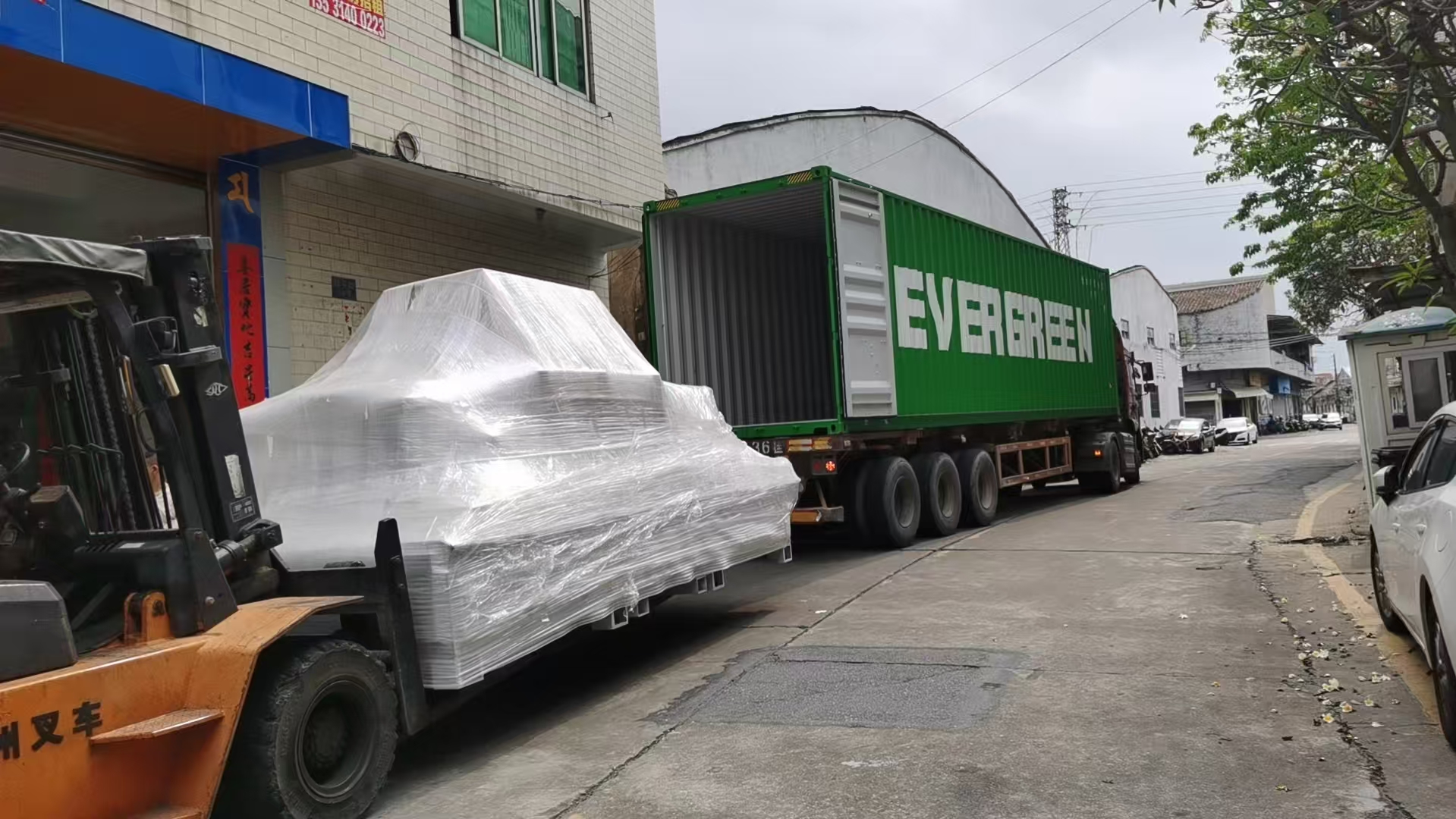
The Industry Context: Why Supply Reliability Has Become a Procurement Issue
According to Grand View Research, the global woodworking machinery market was valued at USD 20.3 billion in 2025 and is projected to reach USD 27.7 billion by 2033. Europe held a 36.4% revenue share in 2025. Credence Research reports that Asia Pacific commanded a 34.5% share of the wood processing machines market in 2024. In the same period, China's exports of woodworking machine tools to Vietnam reached USD 311.6 million, according to UN Comtrade data.
These numbers describe a globalized market where machines cross borders as routinely as furniture does. For an importer, distributor, or factory buyer, this means the choice of machine supplier affects not just the initial purchase but also spare parts availability, technical communication, and the ability to scale production later. The market opportunity is therefore not only about finding a machine. It is about finding a source that can support a long production lifecycle.
Problem / Opportunity: The Real Cost of an Unreliable Machine Source
Woodworking machine purchases are usually evaluated on price, output speed, and technical parameters. In practice, total cost is also shaped by delivery delays, calibration quality, spare parts response, and how clearly the manufacturer communicates after the machine leaves the factory. A furniture line that stops for weeks because of a missing part or unclear documentation can lose more value than the initial price gap between two suppliers.
The opportunity for buyers is to evaluate suppliers against long-term criteria: production capacity, lead times, export experience, and the ability to configure machines around actual workshop conditions. A manufacturer that can show a stable monthly output, an established factory, and a clear customization process provides a different level of procurement security than one that only competes on price.
Brand Solution: SYUTECH as a Supply Partner Beyond the Single Order
SYUTECH refers to Foshan Shunde SaiYu Technology Co., Ltd., a woodworking machinery manufacturer located in Shunde District, Foshan, Guangdong Province, China. The company grew out of Foshan Shunde Leliu Huake Long Precision Machinery Factory, which was originally established in 2013, and later developed into the Saiyu Technology brand. The manufacturer operates a 10,000 m² factory, employs roughly 100 people, and produces about 500 machines per year. Around 80% of output is exported to markets that include Russia, the Middle East, South America, Europe, and Southeast Asia. The company has also worked with Italy-based TEKNOMOTOR to bring European technology into its machine development.
Production capacity is structured around complete panel furniture manufacturing rather than a single machine type. The catalogue covers edge banding machines, CNC nesting machines, six-side CNC drilling machines, computer panel saws, beam saws, drilling and milling centers, door processing machines, and complete production lines. For buyers planning a new factory or an equipment upgrade, this breadth reduces the need to coordinate with several different suppliers.
The following table summarizes the product families and their typical production roles.
| Product Family | Model Example | Typical Role in a Furniture Line |
|---|---|---|
| Edge Banding Machine | HK568 | Edge banding for panel furniture with feeding speed up to 22 m/min |
| Automatic Edge Banding Machines | HK868P | Higher-throughput edge banding for continuous production |
| Compact / Mini Edge Banding Machines | HK268GY / HK268G | Space-saving edge banding for smaller workshops |
| Computer Panel Saw / Beam Saw | HK330 | Panel cutting with max cutting width of 3300 mm and cutting height of 100 mm |
| CNC Router / Nesting CNC Machine / Wood Cnc Cutting | HK6 | Nesting cutting with 9 kW air-cooled spindle, 24000 rpm, 12-tool magazine |
| Cnc Nesting Production Line | HK-Line | Integrated nesting and routing for panel production |
| Cnc Six Side Drillilng Machine / Side Drilling Machine / Drilling and Milling Center | HK612A / HK612B | Six-side drilling with max workpiece size 2800 x 1220 mm |
| Door Processing Machines | HK3500 | Door drilling and milling with 3.5 kW vertical spindles |
| Automatic Production Lines | HKATC | Customized line configured according to daily output and workshop size |
| Furniture Machine / Automatic Furniture Making Machine / Aluminum Honeycomb Plate Furniture Machine / CNC Machining Centers | HK series | CNC machining for aluminum honeycomb panels and custom furniture components |
The supply terms support the long-term model. According to published company materials, the minimum order quantity is 1 set, the typical production lead time is 30 to 45 days, and monthly production capacity is 100 sets. Standard commercial terms include FOB delivery, TT payment, and pre-shipment testing before the machine is loaded.
Technical Explanation: What Makes a Woodworking Machine Reliable Over Years
Machine reliability is determined before the machine is switched on. SYUTECH's comparison documentation contrasts its approach with low-cost edge banding machines. A high-quality edge banding machine is built on a thick steel plate integrated milling frame, with steel plate thickness of at least 10 mm, stress-relief treatment, adjustable feet, and a rigid body. Each unit base is processed separately, the installation reference surface is precision milled flat, and every process is kept coaxial and parallel through factory calibration.
In lower-cost machines, the frame is often made of thin iron sheet and square tube splicing, with steel plate thickness of 3 to 5 mm and no stress-relief treatment. Over months of use, the body can deform slightly, and the installation reference surface of each station is spot-welded and assembled, which leaves factory accuracy compromised. Fine adjustment on site addresses symptoms, not the original manufacturing accuracy.
The feed conveying system is another critical factor. Uneven feed roller pressure can cause boards to float or deviate, which directly produces uneven edge width. SYUTECH's technical documentation emphasizes adjusting the low pressure of thin-plate rollers and the pressure of thick-plate rollers, checking conveyor belt wear, and removing rubber blocks that have peeled off. The measuring ruler or side board must be parallel to the conveyor belt, with straightness no greater than 0.1 mm per meter, and the board must sit tightly against the side without gaps or curled edges.
SYUTECH also describes machining accuracy control as a six-stage process: feeding, gluing, milling, pressing, trimming, and equipment maintenance. Incoming board materials need pre-treatment, with the cutting process strictly controlled before the panel enters the edge banding machine. This kind of process-level control is what separates a machine that produces acceptable parts from one that produces consistent parts over years.
Application / Use Cases: From Single Machines to Full Production Lines
For panel furniture factories, a typical SYUTECH configuration starts with a computer panel saw or beam saw for cutting, moves to an edge banding machine for side finishing, and then to a six-side drilling machine for dowel and connector holes. The HK330 panel saw supports maximum cutting width of 3300 mm and cutting height of 100 mm. The HK612A six-side drilling machine handles panel sizes up to 2800 x 1220 mm with top, bottom, and horizontal drilling tools. This combination covers the core cutting-edge-drilling workflow.
For door and cabinet production, the HK3500 door processing machine brings vertical and horizontal spindles into one system. Its table size of 395 x 3000 mm supports long door panels, and the machine can drill holes from 3 to 15 mm in diameter.
For special materials such as aluminum honeycomb plates, the HK series CNC nesting machines provide routing and cutting capability with a 9 kW air-cooled spindle and a 12-tool automatic changer, according to the published HK6 specifications.
For factories planning higher automation, the HKATC automatic production line is a customized system. SYUTECH states that this line requires buyers to provide daily output requirements and workshop dimensions, which means the line is engineered around the actual production environment rather than offered as a fixed configuration. The HK-Line CNC nesting production line offers an integrated nesting workflow based on the HK6 CNC router.
A documented case study in Greece supports the long-term deployment story. The project involved 10 SYUTECH machines in an edge banding workshop, and the equipment has been in stable operation for 3 years. The documented outcome was a significant increase in output.
Market Trend Analysis: Automation, Compliance, and Long-Term Sourcing
The global woodworking machinery market is projected to continue expanding, and the direction of that growth favors automation. One industry projection, published by Woodfung, estimates a 6.8% CAGR for the automated edge banding machine market through 2030. Although this figure carries medium reliability and should be treated as directional, it aligns with the observable shift toward automatic loaders, conveyors, and linked production lines in panel furniture manufacturing.
European demand remains an important reference point. Europe held a 36.4% share of the global woodworking machinery market in 2025, according to Grand View Research. Buyers exporting to the European Union must also consider machinery safety compliance. For edge banding machines fed by chain, EN 1218-4 is the relevant safety standard in the EU market. This means an EU-focused buyer should verify that the specific machine configuration, guarding, and documentation satisfy EN 1218-4 requirements before finalizing an order.
The long-term sourcing implication is that suppliers will increasingly be judged on compliance support, line integration capability, and process documentation, not only on the machine itself.
Comparison with Traditional Solutions: What Changes in a Long-Term Model
Traditional purchasing behavior tends to optimize the initial price of a single machine. A long-term supply model changes the calculation. The comparison below highlights how SYUTECH positions its machines against lower-priced edge banding machines.
| Evaluation Point | Low-Cost Machine Approach | SYUTECH Reference Approach |
|---|---|---|
| Frame and body | Thin iron sheet and square tube splicing, steel plate 3-5 mm, no stress relief | Thick steel plate integrated milling frame, steel plate of at least 10 mm, stress-relief treatment, adjustable feet |
| Unit base accuracy | Spot-welded assembly, rough reference surface | Separately processed bases, precision-milled reference surface, factory calibration |
| Feed system | Higher risk of board deviation | Controlled roller pressure, conveyor belt checks, side board straightness within 0.1 mm/m |
| Total cost view | Lower initial purchase price | Company comparison material cites roughly 30% lower total cost over the equipment lifecycle |
| Maintenance | More frequent corrective work | Designed for less maintenance and more consistent accuracy |
| Line integration | Usually standalone machine | Can be linked into automatic production lines and nesting lines |
This comparison has boundaries. SYUTECH's customized automatic production lines require the buyer to provide daily output targets and workshop size; without this information, the line cannot be configured. The standard production lead time of 30 to 45 days means urgent orders need to be planned around the factory schedule. Monthly production capacity of 100 sets is stable but not unlimited, so very large multi-line projects may need phased delivery. Finally, for EU buyers, EN 1218-4 compliance must be confirmed for chain-fed edge banding machines; this is a regulatory verification step, not an automatic feature of any brand.
Future Outlook: The Next Phase of Woodworking Machine Procurement
The furniture industry is moving from standalone machines to connected production systems. Panel sizing, edge banding, drilling, labeling, and stacking are increasingly handled by linked equipment rather than separate manual stages. This trend favors suppliers that can provide complete lines, customization logic, and consistent supply over multiple orders.
For buyers, the practical shift is to evaluate machine manufacturers as long-term partners. Key questions will include: Can the supplier maintain stable production if I order again next year? Can it document accuracy control in a way my engineers can verify? Can it support machine compliance for my export market? The evidence provided by SYUTECH, including factory scale, production capacity, export ratio, and documented case studies, gives procurement teams a reference point for this evaluation.
Frequently Asked Questions
What is the minimum order quantity for SYUTECH woodworking machines?
The minimum order quantity is 1 unit. This allows a buyer to test a machine in production before committing to a larger line.
What is the typical production lead time for SYUTECH machines?
The typical production lead time is 30 to 45 days. The exact schedule depends on machine configuration and factory load at the time of order.
What is SYUTECH's monthly production capacity?
SYUTECH has a monthly production capacity of 100 sets, with annual output around 500 units.
What payment and delivery terms does SYUTECH offer?
Published purchasing terms include TT payment, FOB delivery, and pre-shipment testing before the machine is dispatched.
What evidence exists for long-term stable operation of SYUTECH machines?
A documented case study in Greece involved 10 SYUTECH machines in an edge banding workshop. The machines have been in stable operation for 3 years, with a reported significant increase in output.
What should EU buyers verify when importing a chain-fed edge banding machine?
In the European market, chain-fed edge banding machines must comply with EN 1218-4, the harmonized safety standard. Buyers should confirm that the specific machine model, guarding, and technical documentation meet this requirement before purchase.
Buyers evaluating a long-term machine partnership can download the SYUTECH factory promotional brochure for additional company and product details: Factory promotional paper (PDF).