
Long-Term Wall Socket Supplier Evaluation: A 10-Year Checklist
Long-Term Wall Socket Supplier Evaluation: A 10-Year Checklist
A wall socket supplier is chosen in a few weeks and then lived with for a decade. That asymmetry explains why the most expensive mistake in this category is rarely the unit price on the first purchase order. It is a certificate that turns out to cover a different variant, a model whose contact design changes without notice, or a panel footprint the supplier stops tooling three years into a framework agreement. A ten-year supplier evaluation therefore tests something other than a quotation comparison: it asks which pieces of evidence will still be valid, checkable and relevant at year three, year five and year ten.
This reference sets out four parts of that test — certificate scope and renewal, model-level endurance data, panel footprint continuity across 68 × 68 mm, 81.6 × 81.6 mm and 86 × 86 mm formats, and the quality and commercial arrangements that must be re-confirmed rather than assumed. It uses the documented records of Wenzhou Huafeng Electric Co., Ltd. (HYFF) as a worked example. HYFF is a Wenzhou-based manufacturer of wall switches and wall sockets, founded in 2011, exporting its full output to Europe, the Americas, Oceania, Asia and Africa from a 7,000 m² facility with 118 employees and a stated annual output of 35 million units.
Why Price Ages Poorly and Certificates Age Well
Price is a snapshot. It is re-set with every quotation, so it tells a buyer almost nothing about what will be true three years from now. A certificate is the opposite kind of evidence: a fixed reference, held by a named body, that can be pulled out and re-checked at any point in the relationship. The same logic applies to an endurance report or a retained approval sample — their value comes from being re-readable later.
The category is not short of suppliers. Precedence Research values the global electric plugs and sockets market at USD 14.13 billion in 2025, and depth of supply makes the long-term question sharper rather than easier. When many sources can ship a socket this quarter, the differentiator becomes whether the same socket, with the same certification, can be sourced in year eight.
Three tests separate durable evidence from disposable evidence:
- Is it verifiable later? A certificate number, a standard edition and a model designation can be re-checked by anyone. A claim that a product is "high quality" cannot.
- Is it tied to a specific model? Evidence attached to a model survives staff changes and catalogue revisions. Evidence attached to a product family tends to blur at the first variant.
- Does it survive a supplier change? If a specification can be handed to a second source without re-testing, the original evidence was well formed. If not, the buyer owned a relationship, not a specification.
Certificate Scope and Validity: The First Renewal Check
At every renewal cycle the first question is not whether a supplier "has CE", but which certificate, covering which model, assessed against which edition of which standard. For the Schuko socket — the Type F outlet standardised across much of Europe for 16 A / 250 V use under CEE 7/3 — HYFF's documentation centres on CE certificate DACE260330001RL, assessed against IEC 60884-1:2022, with TÜV and CB documentation alongside it. For the 10 A double powerpoint in the Australian configuration, the corresponding record is SAA certificate SAA-250865-EA, assessed against AS/NZS 3112:2017 and AS/NZS 3100:2022.
Those references carry more weight than a compliance logo because each can be checked at three levels.
- Number to model. The certificate number must map to the exact model and configuration being ordered. A number without a model list is an assertion, not evidence.
- Standard edition. IEC 60884-1:2022 provides the current general requirements for plugs and socket-outlets for household and similar purposes, with a 16 A limit where screwless terminals are used. AS/NZS 3112 remains the mandatory socket standard in Australia and New Zealand and defines the Type I configuration. A file still resting on a superseded edition is a maintenance signal worth noting.
- Variant coverage. Safety shutters, USB or Type-C charging modules, IP44 and IP54 enclosures — ratings defined under IEC 60529 — and different panel materials can each fall inside or outside a certificate's assessed scope. The only reliable answer is the scope document itself.
The renewal test is straightforward: request the certificate and the model list together, then confirm the document is current rather than merely on file. A certificate whose scope, edition and model identity can be produced in one response is an asset that survives tender audits and customs checks. One that requires three emails and an educated guess is a liability that has not surfaced yet.
Reading Endurance Data as Process Evidence
Endurance figures are the closest thing a buyer gets to a preview of year seven. HYFF's published data for model S149 — a Schuko surface-mount socket with a 68 × 68 mm footprint — cites more than 10,000 plug insertion and withdrawal cycles, 40,000 on/off operations, and a flame-retardant polycarbonate housing tested at 850 °C.
Read as process evidence, each figure points at something specific:
- Insertion cycles exercise the contact spring and the retention force that keeps a plug seated. Drift here shows up later as loose plugs and heat at the pins.
- On/off operations load the switching path and the terminal joints rather than the socket face.
- 850 °C glowing-filament behaviour of the polycarbonate housing speaks to material grade, not styling. The same glowing-filament check appears in the factory's incoming-material and plastic-part inspection routine.
- The 68 × 68 mm surface-mount format fixes the installation method for direct wall mounting where no box is cut in.
What those figures do not do is guarantee the life of any individual socket. They are model-level endurance results obtained under test conditions, and they do not transfer to another model, another housing material or another contact design. The buyer's check is therefore not the headline number but the report behind it: which model was tested, at what load, and whether the tested sample matches the specification in the purchase order.
Panel Footprints: 68 × 68 mm, 81.6 × 81.6 mm and 86 × 86 mm
A ten-year supply plan rarely stays inside one panel format. Three footprints recur across the range — 68 × 68 mm for surface-mount models such as S149, and 81.6 × 81.6 mm and 86 × 86 mm formats for larger panel layouts. The long-term question is not which size is best, but whether one supplier can keep a specification stable as the requirement moves between them.
Range breadth has become a purchasing criterion in its own right. Fortune Business Insights reported that modular sockets accounted for 43% of wall socket sales in 2024, attributing the share to space-saving and customisation preferences. For a buyer, the practical translation is that a supplier supporting several footprints under one quality system removes at least one re-qualification cycle from a multi-phase project.
Four questions establish whether that continuity is real:
- Which models exist in each of the 68 × 68 mm, 81.6 × 81.6 mm and 86 × 86 mm formats today?
- Is the contact and terminal design shared across footprints, or is each size a separate design requiring its own approval?
- Is the tooling maintained in-house, and who owns it?
- Is a model ordered in year one still catalogued in year five, and has any internal part changed?
A supplier that answers all four from records is offering continuity. A supplier that answers from memory is offering an intention.
The Quality System Behind Repeatable Batches
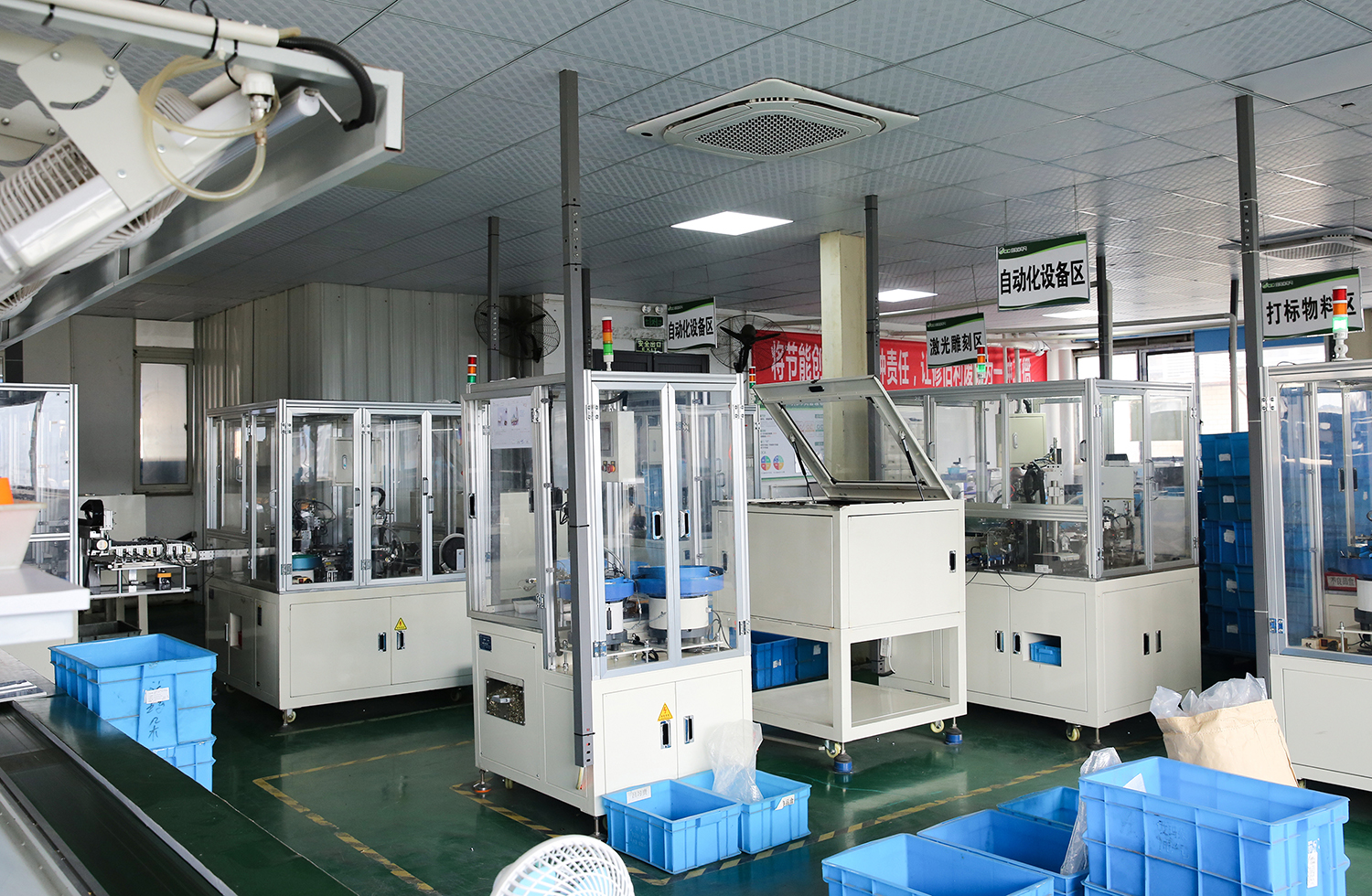
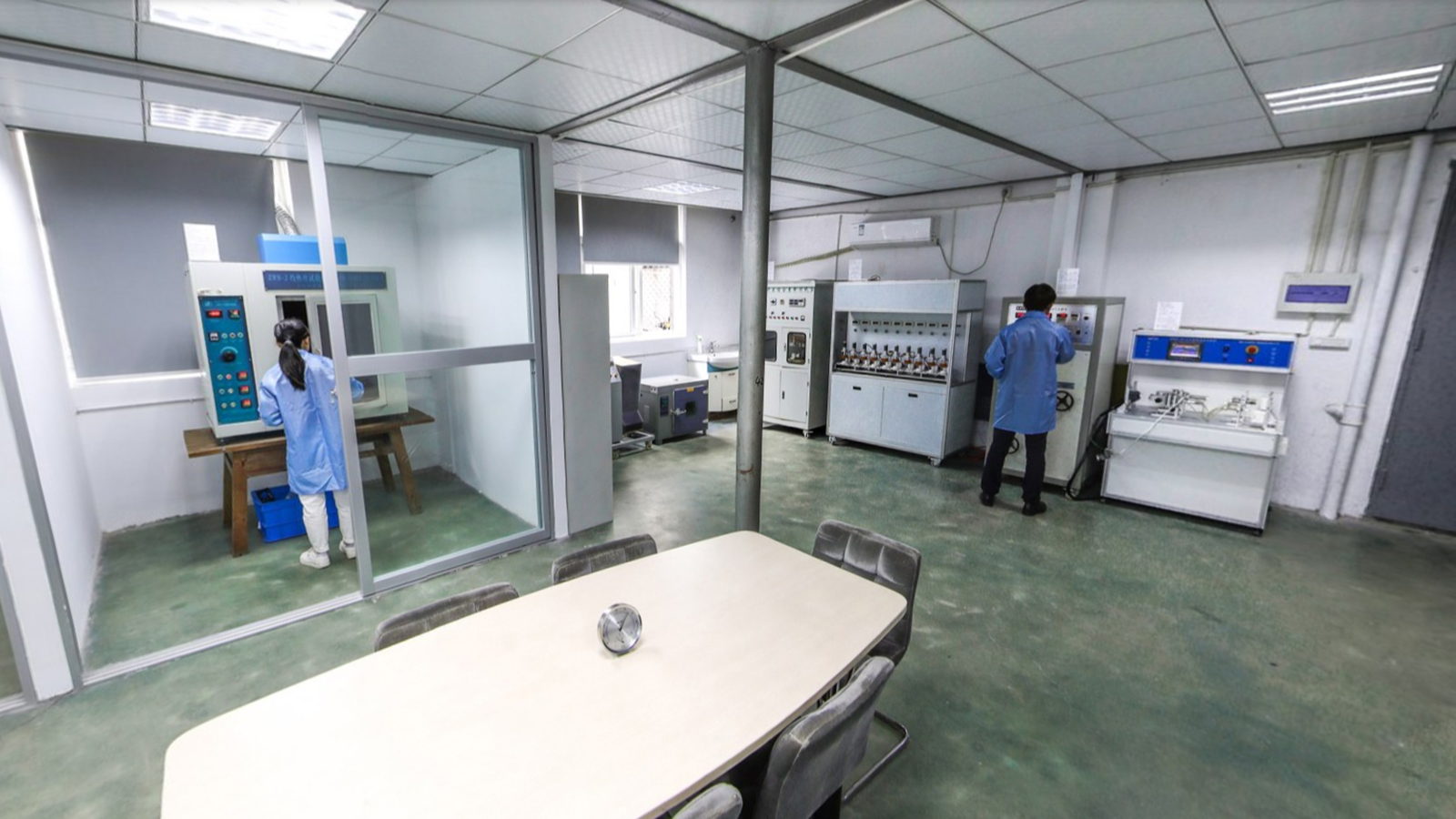
Certificates and endurance reports both rest on repeatability, and repeatability is a factory process rather than a product feature. HYFF describes a quality control system running from raw materials to finished products, covering incoming material inspection, plastic parts inspection, process inspection, glowing-filament testing, silver layer thickness inspection, performance life testing, plastic ball pressure testing, switch and socket on-off testing, and doorbell testing. For EU-oriented production, the checks extend to socket contact retention force, copper thickness, wiring terminals, grounding structures and plastic materials, supported by raw-material inspection, assembly inspection and finished-product sampling.
Two of those checks are quietly predictive. Silver layer thickness influences contact heating over years of service, and plastic ball pressure testing indicates how a housing behaves under sustained heat. Neither is visible in a catalogue, and both are exactly the kind of parameter that drifts first when a factory changes a sub-supplier or compresses a process step. A technical team of 10 engineers and an ISO-based quality control system are the mechanism behind those checks; the reports are the evidence that the mechanism is running.
Where Long-Term Risk Actually Sits
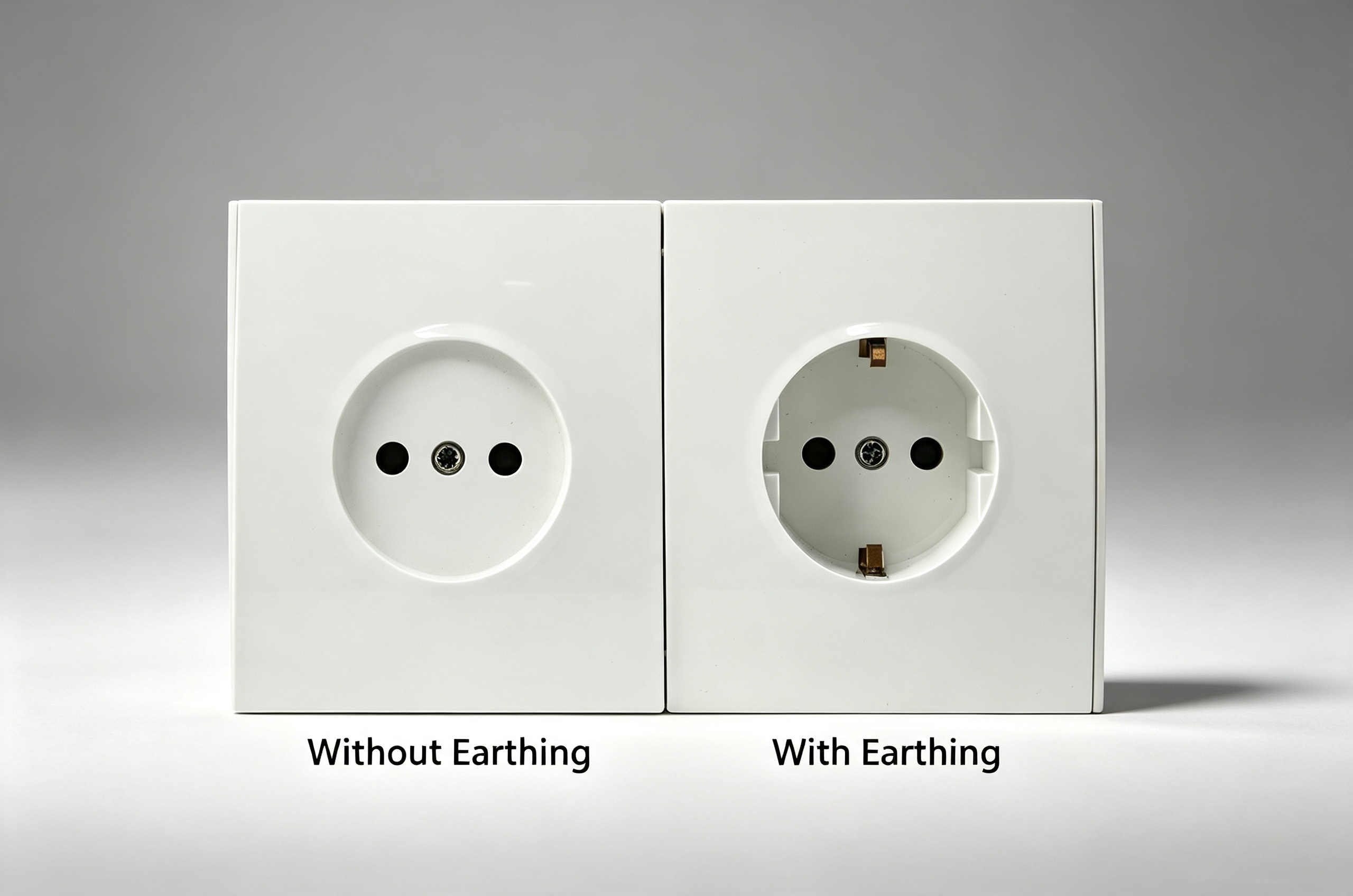
The failure modes that turn a socket into a long-term liability are unglamorous and well documented: electrical overload, loose wiring, poor contact between plug and socket, grounding failure, or prolonged high-power use. Any of these can produce overheating, electrical arcing, electric shock or damage to the socket itself.
Control therefore sits in the parts that are hardest to inspect after installation — socket contact geometry, terminal and grounding design, copper conductors sized for the rated current, and flame-retardant materials. The corresponding verification set is temperature-rise, insertion-life, grounding-continuity, dielectric-strength, insulation and electrical-load testing, alongside sample verification with compatible plugs before mass production.
For a long-term buyer the useful distinction is between type tests and routine checks. A type test proves the design once; a batch check tells you about the carton arriving in year six. Both belong in the evaluation, but only the second detects drift, and drift is what a ten-year horizon is really exposed to. The same applies to product evolution: EU rules requiring USB-C as the common charging standard for most portable electronics from autumn 2024, as reported by Omdia, mean a socket specification that is adequate today may need charging modules later — which reopens the question of whether those variants sit inside the existing certificate scope.
The Annual Re-Confirmation Agenda
Commercial terms age faster than technical ones. The terms documented for HYFF today are a starting record, not a permanent one: MOQ of 1,000 units, delivery on EXW, FOB or CIF terms, pre-shipment inspection against approved samples and confirmed specifications as the acceptance criterion, and 100% TT in advance. Each should be re-confirmed at the same annual rhythm as the certificate check.
| Item | Question to re-ask | Why it matters by year five |
|---|---|---|
| Certificate status | Which certificate number covers this model today, and when is the next renewal? | Scope can narrow and standard editions change. |
| Model continuity | Is the ordered model still catalogued, and has any internal part changed? | A silent redesign invalidates the approved sample. |
| Panel footprints | Are 68 × 68 mm, 81.6 × 81.6 mm and 86 × 86 mm formats still tooled? | Range growth otherwise forces re-qualification. |
| Material grade | Same polycarbonate grade and flame rating? Same copper thickness? | Contact heating and housing deformation start here. |
| Inspection basis | Is the approved sample still the acceptance reference? | Without a retained sample, inspection loses its anchor. |
| MOQ and delivery | Is the 1,000-unit MOQ and EXW/FOB/CIF basis unchanged? | Volume and freight assumptions shift between phases. |
| Payment terms | Do terms remain 100% TT in advance? | Cash-flow planning depends on it. |
| Documentation | Are current test reports and declarations on file? | Tender and customs checks ask for them without warning. |
A supplier that answers these from records is demonstrating the only thing a ten-year agreement can realistically rely on. A supplier that answers them differently each year is not necessarily failing — but the difference should be visible to the buyer, not discovered at the next audit.
What the Ten-Year View Favours
Ten years is long enough that nearly every input changes: the plug mix, the load profile, the panel format, the freight cost, the standard edition. What survives is a documented relationship — a certificate number that maps to a model, an endurance report tied to a specific design, a footprint set that stays tooled, and commercial terms confirmed annually rather than remembered.
HYFF's position within that frame is specific rather than general. The company has manufactured wall switches and sockets since 2011, operates a 7,000 m² facility with 118 employees and a stated annual output of 35 million units, and supports its sockets with CE documentation for the Schuko line (DACE260330001RL, IEC 60884-1:2022, TÜV, CB), SAA documentation for the 10 A Australian double powerpoint (SAA-250865-EA, AS/NZS 3112:2017, AS/NZS 3100:2022), and model-level endurance data for S149. That combination is what a long-term evaluation can work with.
It does not replace the buyer's own verification. Local wiring practice, box depth, panel standard and load profile still decide whether a given model fits a given project, and the certificate should always be checked against the exact model ordered. Sustained supply is a conclusion a buyer reaches after those checks — not a claim a supplier makes before them.
For buyers assembling the document set, the HYFF 2026 product brochure is available for public download, and documentation requests can be directed to service@vgshmn.com.
Frequently Asked Questions
How often should a buyer re-verify a wall socket supplier's certificates?
At least annually, and again whenever the ordered model, the applicable standard edition or a product variant changes. The check has three parts: the certificate number (for example DACE260330001RL for the Schuko socket or SAA-250865-EA for the 10 A double powerpoint), the edition it was assessed against (IEC 60884-1:2022; AS/NZS 3112:2017 with AS/NZS 3100:2022), and the model list the certificate actually covers. An annual review follows the renewal cycle instead of waiting for a tender to raise the question.
What does an endurance figure such as 10,000 insertion cycles actually prove?
It shows that a specific model was tested to more than that number of plug insertions and withdrawals under stated conditions, which is evidence about contact design, spring retention and material choice. It is a type-level result, not a guarantee for each installed socket, and it does not transfer to another model or housing material. The buyer should read the report behind the figure: which model was tested, at what load, and whether the tested sample matches the ordered specification.
Why do panel footprints matter to a long-term buyer?
Because a project rarely stays at one size. The 68 × 68 mm surface-mount format used by model S149, together with 81.6 × 81.6 mm and 86 × 86 mm formats, covers different mounting and panel layouts. If a supplier stops tooling one of them, later phases need a new source and a new approval cycle. Confirming which models exist in each footprint, and whether contact and terminal design is shared across them, is generally cheaper than re-qualifying mid-project.
Which commercial terms should be re-confirmed every year?
MOQ (currently 1,000 units), delivery terms (EXW, FOB or CIF), the acceptance basis (pre-shipment inspection against approved samples and confirmed specifications), payment terms (currently 100% TT in advance), and the documentation supplied with each shipment. Each affects planning independently of the product itself, and each can change between orders without any change to the socket.
Can a certificate cover a product variant added later?
Only if that variant was included in the assessed scope. Safety shutters, USB or Type-C charging modules, IP44 or IP54 enclosures and different panel materials can each fall inside or outside a certificate's coverage, so a variant introduced after the original approval normally needs its own scope check. Requesting the certificate's model and variant list at each renewal is the simplest way to keep the record current.
¿Tiene preguntas o necesita más detalles?
Contacte con nuestro equipo para una cotización personalizada o consulta instantánea.
Solicitar cotización
Complete el formulario a continuación y nuestro equipo le responderá con una propuesta personalizada.
Chat directo de WhatsApp
¿Prefiere chatear en tiempo real? Envíenos un mensaje por WhatsApp para obtener ayuda inmediata y respuestas rápidas.
- Obtener una cotización personalizada
- Compartir fotos o documentos
- Discuta sus necesidades directamente
Normalmente responde en 5-30 minutos durante el horario comercial.