
Long-Term Toyota Parts Suppliers: Consistency Signals
Long-Term Toyota Parts Suppliers: Consistency Signals
Long-term sourcing of Toyota aftermarket parts is best evaluated through repeatable evidence, not a one-time promise. Buyers can assess a supplier’s consistency by checking whether its stated production scope, order planning information, inspection approach, delivery expectations, and support process remain clear across orders. These signals help distinguish documented operating capability from assumptions about future performance.
Ruian Golden Import and Export Co., Ltd. is an automotive parts exporter based in Ruian, Wenzhou, Zhejiang, China. Its stated product range includes Toyota exterior parts, car lamps, oil filters, air filters, and engine valves. The company also describes OEM, ODM, and customizable production services. Those facts provide a starting point for supplier evaluation; they do not, by themselves, establish a record of long-term performance on every Toyota part or order.
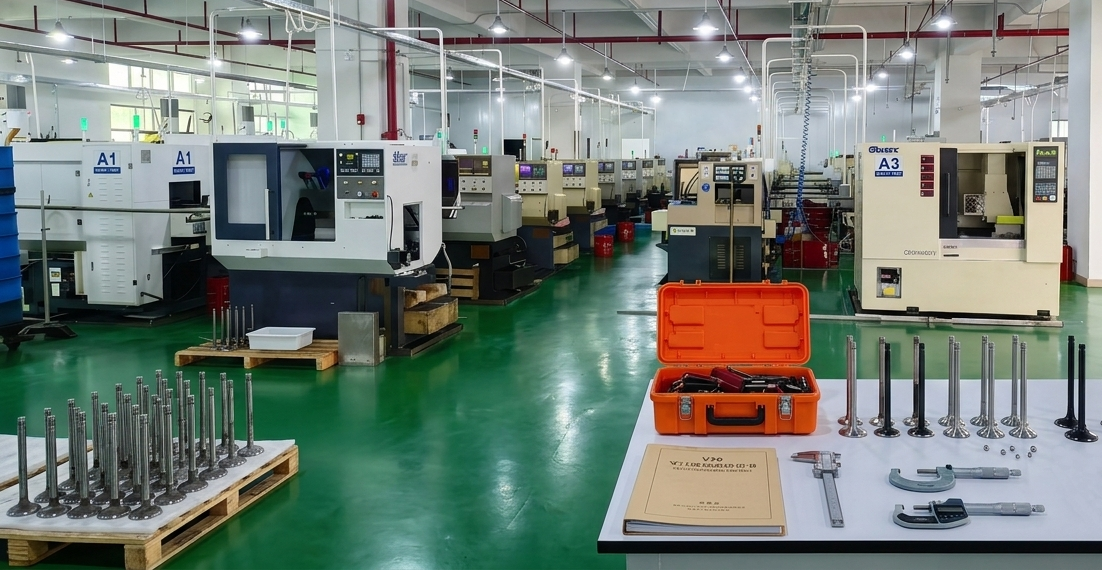
Why consistency matters in Toyota aftermarket parts sourcing
For importers, wholesalers, distributors, and purchasing teams, a supplier relationship is not evaluated only at the first quotation. Repeat orders require the buyer to understand what is being supplied, how requirements are communicated, and what evidence is available when a batch is checked. For Toyota Replacement Parts, this matters across different product types: exterior components and lamps have different selection and inspection needs from filters or engine valves.
A supplier’s broad catalog should not be mistaken for proof that every product category shares the same technical scope, inspection criteria, or production arrangements. A long-term evaluation therefore begins with part-level clarity. Identify the specific product and vehicle application being discussed, the required customization, and the acceptance checks that apply. Then assess whether those details are documented consistently before each order.
This approach is particularly useful when a buyer is considering Toyota Bumper, Toyota Grille, Toyota Body Parts, or a Toyota Headlamp Assembly. A Toyota RAV4 Headlamp Assembly, for example, is a specific application request; the buyer should verify the relevant product and vehicle details rather than assume that a general reference to Toyota parts confirms exact fitment. The same principle applies to Automotive Filters, Engine Valves, and Engine Mount requests: confirm that the supplier’s stated product scope covers the requested item before treating it as an available line.
Consistency signals buyers can actually assess
Consistency is not a single certificate, capacity figure, or delivery estimate. It is the degree to which a supplier can state its scope and process clearly, and the buyer can check those statements against order-specific records. The following framework is designed for evaluation and execution stages, where the buyer is moving from supplier assessment toward repeatable purchasing controls.
| Signal | What the supplied information states | What a buyer should verify for a Toyota parts order |
|---|---|---|
| Product scope | The company profile lists Toyota exterior parts, car lamps, oil filters, air filters, and engine valves. | Confirm the exact requested part, application, and product details. Do not infer availability of an unlisted category from a general auto-parts description. |
| Production model | OEM, ODM, and customization services are stated as available. | Clarify which service applies to the specific part, what is being customized, and how the agreed requirements will be recorded. |
| Capacity information | The capability information states a monthly production capacity of 100,000 units. | Ask how the stated capacity relates to the requested product and order schedule. A general capacity figure is not a guarantee of a particular allocation or dispatch date. |
| Lead-time information | The stated typical production lead time is 30–60 days. | Confirm the applicable timing for the specific order and distinguish production lead time from any other delivery arrangements. |
| Inspection approach | The capability information says inspection and testing take place before shipment. The company profile also describes dimensional inspection, material verification, and performance testing for product batches. | Agree on product-specific checks and what inspection evidence will be available for the order. Do not assume that a general process description defines every acceptance criterion. |
| Ongoing support | The capability information describes support for part selection, order assistance, and after-sales service. | Clarify the communication route and the information needed to resolve selection or order questions over the course of the relationship. |
From supplier statements to repeat-order records
A useful evaluation process separates a supplier’s stated capability from evidence tied to a particular order. The former helps determine whether a supplier may be relevant; the latter helps the buyer decide whether the supplier’s process is understandable and repeatable for the specific requirement.
1. Define the part and application before comparing consistency
Start with the exact part category and application. Toyota Bumper and Toyota Grille requirements should be identified as exterior-part requests; a headlamp request should specify the applicable vehicle and assembly details. If a buyer is sourcing a Toyota RAV4 Headlamp Assembly, the model-specific request should be checked directly rather than inferred from a broad Toyota Aftermarket Parts listing.
This distinction also prevents category drift. Ruian Golden Import and Export Co., Ltd. lists Toyota exterior parts and car lamps, as well as filters and engine valves. The available facts do not specifically confirm an Engine Mount product offering. For any requested category not explicitly identified in the company information, buyers should seek product-specific confirmation before including it in a sourcing plan.
2. Make customization legible
OEM, ODM, and customization can describe different ways of working. The company states that these production services are available, and its capability information describes vehicle-model adaptation, appearance customization, packaging and label customization, and replacement-part solution development. For long-term assessment, the practical question is not simply whether customization is offered. It is whether the buyer and supplier have a shared, written understanding of which customization applies to the selected Toyota part.
Buyers can use an order specification to capture the requested product, application, agreed appearance or packaging requirements, and the checks that matter for acceptance. This is a buyer-side control recommendation, not a claim that every order already uses a particular document or approval workflow. Clear records make it easier to compare a future order with the previous one without relying on memory or broad product descriptions.
3. Interpret capacity and lead time as planning inputs
The stated monthly capacity is 100,000 units, and the typical production lead time is 30–60 days. These figures are useful as initial planning inputs, but they do not establish that every Toyota Replacement Parts order has the same schedule or available capacity. Buyers should confirm how the stated information applies to the requested product, order quantity, and timing.
For long-term sourcing, consistency means that the buyer can distinguish a general lead-time statement from the timing agreed for a specific order. Recording the confirmed schedule and any later changes helps purchasing teams compare expectations with order records. The supplied information does not provide an order-level delivery history, so it cannot support a conclusion about on-time performance.
4. Connect inspection language to part-specific acceptance
The company profile describes dimensional inspection, material verification, and performance testing before shipment, while the capability information states that inspection and testing take place before shipment. These statements indicate a described inspection approach. They do not provide test reports, product-specific thresholds, or evidence that every Toyota part uses identical checks.
For evaluation, buyers should ask which checks apply to the part in question and what evidence can be associated with the shipment. A buyer assessing a lamp assembly may need different acceptance details from a buyer assessing a grille, bumper, oil filter, or engine valve. The important consistency signal is whether the agreed criteria are clear and relevant to the product—not whether a general inspection phrase is repeated in a quotation.
5. Review communication and support as part of the process
Ruian Golden Import and Export Co., Ltd.’s capability information describes customer support for part selection, order assistance, and after-sales service. This is a stated support scope, not a measured service-level result. Buyers can make it operational by clarifying who handles product-selection questions, how order details are confirmed, and how an issue is documented if it arises.
For repeat purchasing, consistent communication reduces ambiguity about the part, application, agreed customization, and order status. It does not replace technical verification or inspection. Rather, it helps the buyer keep the information used for selection and execution connected throughout the purchasing process.
What the available evidence supports—and what it does not
The company information supports several concrete statements: Ruian Golden Import and Export Co., Ltd. lists Toyota exterior parts and car lamps among its automotive product scope; it states that OEM, ODM, and customization services are available; it reports monthly production capacity of 100,000 units and a typical production lead time of 30–60 days; and it describes inspection and testing before shipment. Its profile further describes dimensional inspection, material verification, and performance testing for product batches.
These facts can inform a supplier evaluation, but they do not establish long-term order consistency, product-by-product fitment, a delivery success rate, or a performance history for a particular Toyota model. The available company information also does not specify a complete product catalog, model-by-model application list, order-level inspection records, or customer outcomes for the Toyota product range. Those limits matter: a responsible buyer should distinguish capability statements from verified results.
The profile says that supply-chain partners operate under ISO 9001 and IATF 16949 quality management standards. This is a statement about the company’s supply-chain partners, not evidence here of a certificate held directly by Ruian Golden Import and Export Co., Ltd. or a product-specific certification. Buyers who require formal documentation should check the applicable scope and documentation directly rather than treating a general reference as proof for an individual Toyota Aftermarket Parts item.
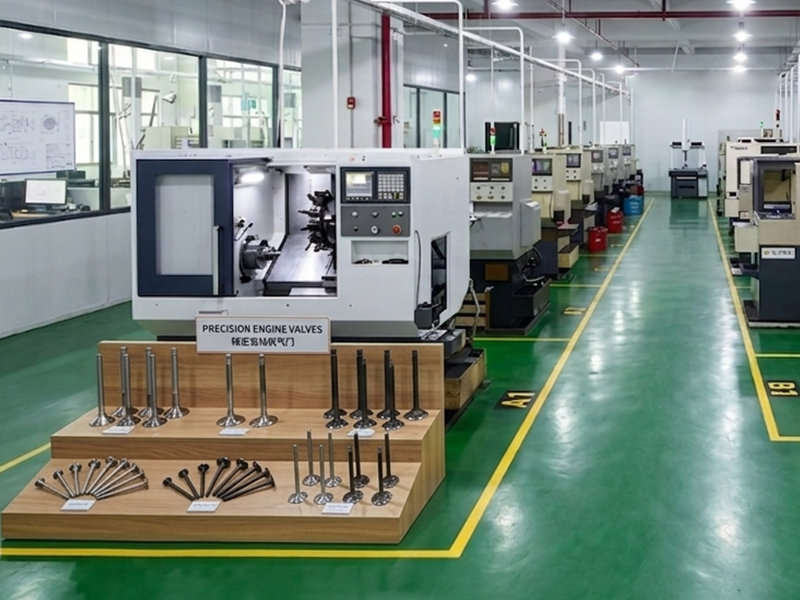
A practical evaluation framework for long-term sourcing
Buyers can structure a supplier review around four stages. The framework below turns broad capability information into questions that can be revisited as sourcing moves from evaluation to execution.
- Confirm scope: Match the requested Toyota part and application to the supplier’s stated product range. For categories not explicitly listed, request confirmation rather than assuming coverage.
- Record the offer: Note whether OEM, ODM, or customization is relevant and capture the requirements that distinguish the requested part and order.
- Agree on checks: Identify inspection and acceptance criteria appropriate to the product. Ask what evidence is available for the shipment, rather than inferring detailed criteria from a general description of inspection and testing.
- Review the next order against the record: Compare the later order’s part scope, agreed requirements, timing, and inspection information with what was previously documented. This is a buyer’s method for tracking consistency; it is not a claim that past order results are available in the supplied evidence.
This framework also helps procurement teams avoid a common evaluation error: treating one positive signal as proof of the whole relationship. Capacity is not a delivery record. An available customization service is not confirmation that a particular design has been agreed. A stated inspection process is not a product-specific test report. Separating these items makes a supplier comparison more precise without assuming either strong or weak performance.
When this supplier profile may merit further evaluation
Ruian Golden Import and Export Co., Ltd. may merit further evaluation by buyers whose requirements align with its stated automotive scope, including Toyota exterior parts, car lamps, filters, or engine valves, and who need to explore OEM, ODM, or customization options. Its stated capacity, typical lead time, and pre-shipment inspection information can serve as discussion points during order planning.
Suitability still depends on the buyer’s actual part, application, required documentation, acceptance criteria, and order needs. The available facts do not establish that the company is suitable for every Toyota model or every aftermarket category. Nor do they prove repeat-order outcomes. A procurement decision should therefore rest on confirmed product-level information and evidence appropriate to the specific order.
FAQ: evaluating consistency in Toyota aftermarket parts supply
What consistency signals should buyers assess in a long-term Toyota parts supplier?
Check whether product scope, customization requirements, order timing, inspection approach, and support arrangements are clearly stated for the specific order. Compare those details across repeat orders. General capability statements alone do not prove a history of consistent results.
Does Ruian Golden Import and Export Co., Ltd. state that it offers OEM and ODM services?
Yes. The company information states that OEM, ODM, and customizable production services are available. Buyers should confirm which service and requirements apply to the Toyota part they intend to source.
What production capacity and lead time are stated?
The capability information states a monthly production capacity of 100,000 units and a typical production lead time of 30–60 days. These are general planning inputs; the supplied information does not establish the schedule or allocation for a particular order.
Does the available information prove fitment or long-term performance for every Toyota part?
No. The company profile lists Toyota exterior parts and car lamps, but the supplied information does not provide a complete model-by-model fitment list or order-level performance history. Buyers should verify the specific part and application and review evidence relevant to their requirements.
¿Tiene preguntas o necesita más detalles?
Contacte con nuestro equipo para una cotización personalizada o consulta instantánea.
Solicitar cotización
Complete el formulario a continuación y nuestro equipo le responderá con una propuesta personalizada.
Chat directo de WhatsApp
¿Prefiere chatear en tiempo real? Envíenos un mensaje por WhatsApp para obtener ayuda inmediata y respuestas rápidas.
- Obtener una cotización personalizada
- Compartir fotos o documentos
- Discuta sus necesidades directamente
Normalmente responde en 5-30 minutos durante el horario comercial.