
Long-Term TPU Film Supply: Partnership Criteria for Buyers
Supply continuity often matters more than the number on a datasheet. For glass processors, security glazing manufacturers, and armored vehicle integrators, thermoplastic polyurethane (TPU) film is not a routine commodity purchase; it is a critical input whose consistency affects production yield, delivery schedules, and final safety performance. This article offers an independent purchasing reference for teams evaluating TPU film suppliers beyond the first order, with emphasis on manufacturing capacity, material traceability, risk controls, and the boundary conditions of a long-term relationship.
Why TPU Film Sourcing Needs a Long-Term View
Buyers that treat TPU film as a spot purchase often accept hidden risks. A single roll may pass incoming inspection, but repeated orders can reveal variations in thickness, optical clarity, molecular stability, or moisture resistance. These variations become visible only after lamination or, worse, during an end-user safety test.
The opportunity is to qualify suppliers on the same dimensions that matter for continuous production: raw material control, process stability, packing method, capacity commitment, and cooperation mechanism. For a laminated glass project, a supplier that can document stable production and respond to evolving specifications is more valuable than a supplier that offers a low first-order price but limited downstream accountability.
The Supplier Platform Behind Long-Term Performance
SHENGDING HIGHTECH MATERIALS CO., LTD is a polymer film manufacturer based in Rizhao City, Shandong Province, China, producing TPU film and EVA film. The company operates a 50,000 m² facility with an annual output of 1,000 tons and monthly production capacity of 100 tons. Typical production lead time is 10 days, and the minimum order quantity is 50 kg, according to company information.
Founded in 2018 and located in the Lanshan Chemical Industry Park, SHENGDING HIGHTECH focuses on optical-grade thermoplastic polyurethane elastomer materials. According to its corporate profile, the company has mastered the synthesis and stable pelletization technology for optical-grade TPU raw materials, as well as stable extrusion molding technology for wide-width TPU intermediate films. It reports being the sole qualified supplier in China for military-grade aviation glass base materials, resolving a domestic supply bottleneck and achieving import substitution.
The company maintains ISO 9001, ISO 14001, and ISO 45001 certifications, has accumulated multiple core technologies, and holds more than 50 proprietary intellectual property rights. It also drafted the only national aviation standard in China currently led by a private enterprise. Product performance is reported to comply with European REACH and RoHS regulations and U.S. FDA quality requirements. Its export ratio is about 70%, with main markets in North Africa, the Middle East, and Latin America.
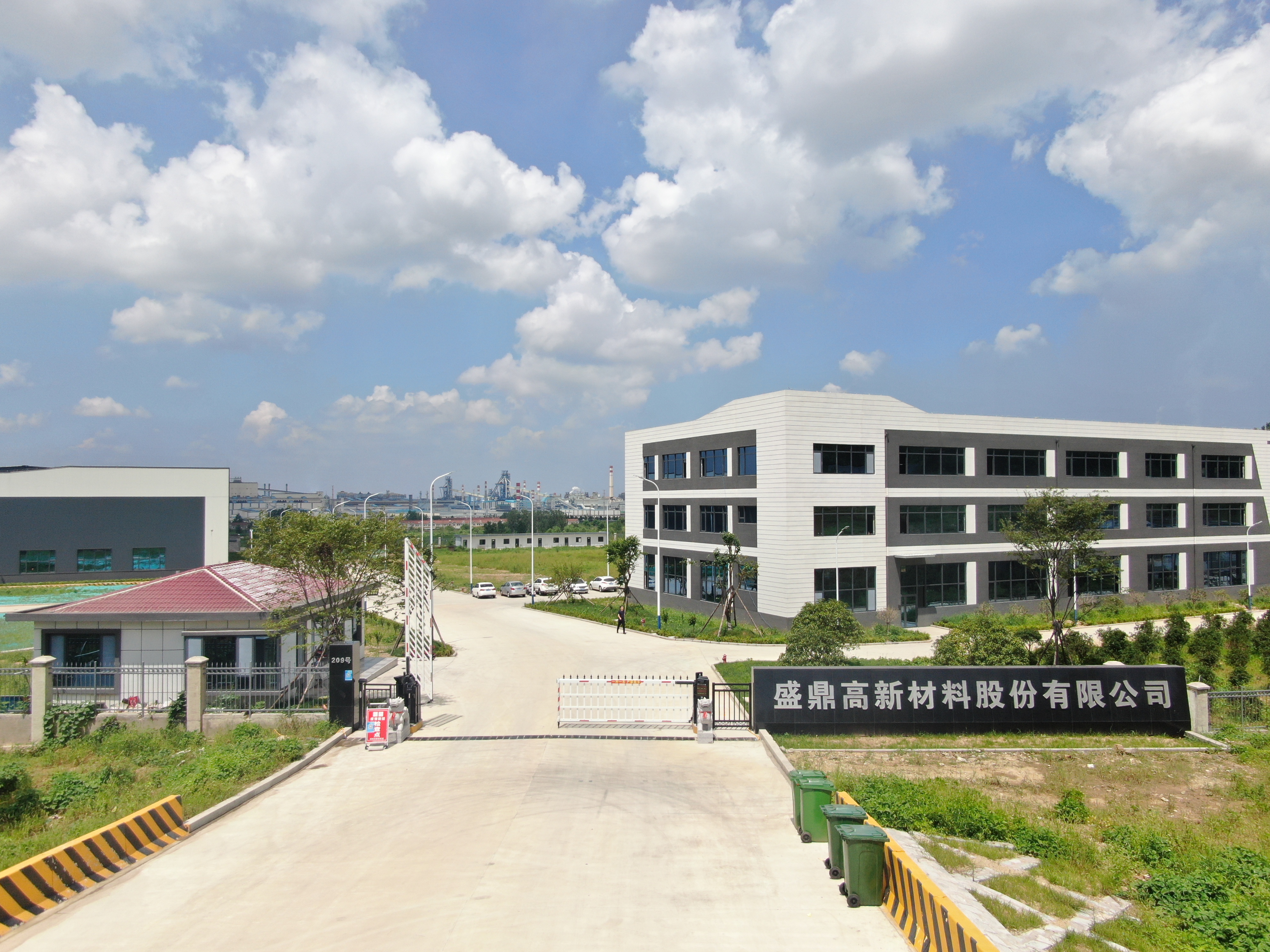
SHENGDING HIGHTECH manufacturing site
SD560 TPU Film: A Concrete Reference Point
One of the company’s core TPU film products is SD560, a thermoplastic polyurethane elastomer film. Its published specifications include tensile strength of 42 MPa, elongation at break of 500%, tear strength of 45 kN/m, light transmittance of 90%, and haze of 0.3%. These values align with the general performance range expected of high-performance TPU films used in safety and ballistic laminated glass, where tensile strength above 40 MPa and elongation above 500% are commonly cited benchmarks.
Technical Explanation: What Makes TPU Film Reliable in Laminated Glass
TPU film functions as a durable interlayer in laminated glass. During autoclave lamination, heat and pressure bond the TPU layer to glass panels, creating a composite structure that can hold glass fragments together after impact. The energy-absorbing characteristics of the interlayer are particularly relevant for bullet-resistant and blast-resistant glazing.
Glass transition temperature (Tg) is one of the most important parameters for interlayer film selection. A lower Tg generally means better flexibility and impact performance in cold environments. SHENGDING states that its customized low-Tg film reaches -72°C, while Huntsman 399 TPU has a Tg of -40°C, according to a comparison provided by the company. This difference can matter for ballistic glazing used in demanding climates.
TPU interlayers maintain operational performance across a wide temperature range from -70°C to +80°C, making them suitable for extreme environments where conventional interlayers may become brittle or lose adhesion. Industry standards such as EN 12600 and ASTM C1172-19 provide reference frameworks for impact resistance and laminated architectural flat glass quality. A long-term TPU film supplier should be able to connect its product data to these accepted standards.
Problem: Transactional Purchasing Creates Hidden Cost
When buyers purchase TPU film only for immediate production needs, they risk several downstream problems:
- Inconsistent batch quality from suppliers without strong process control.
- Moisture absorption during storage or shipping, which can cause bubbles or adhesion failure during lamination.
- Limited access to technical support when application requirements change.
- Capacity bottlenecks when project schedules suddenly accelerate.
- Difficulty in verifying compliance and performance documentation across multiple orders.
These risks are not hypothetical. TPU is sensitive to moisture and requires controlled packing. SHENGDING addresses this with multi-layer packaging combined with vacuum packaging, as part of its damp-control method. The company also offers pre-shipment testing as the acceptance method, allowing buyers to verify product condition before dispatch.
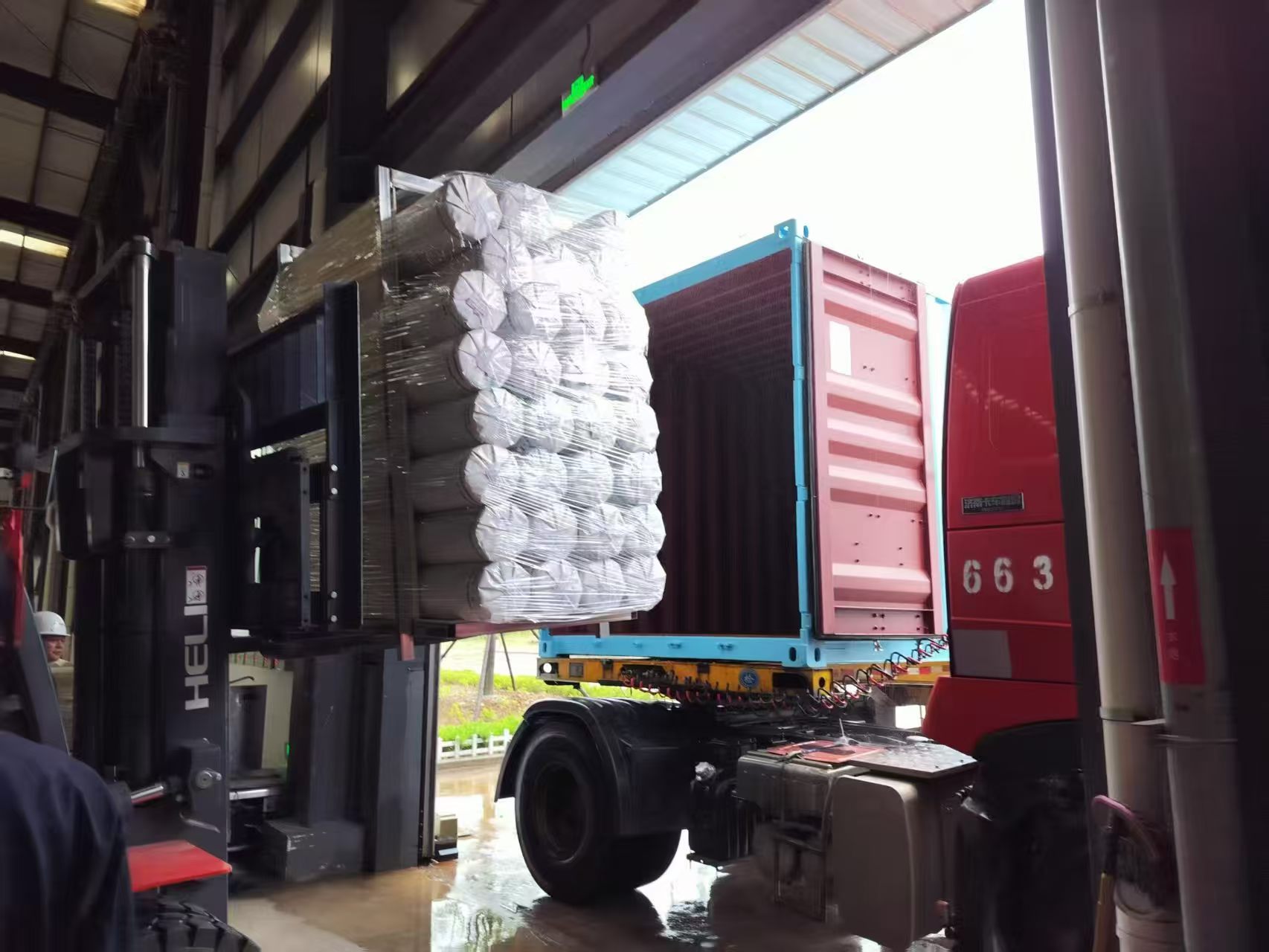
Vacuum packing method for TPU film rolls
Supplier Capabilities That Support Long-Term Cooperation
For a decision-stage buyer, the most useful question is not only “what can the supplier make?” but also “can the supplier deliver the same product consistently over time?” SHENGDING’s production data helps answer that question: monthly production capacity of 100 tons, typical lead time of 10 days, and a minimum order quantity of 50 kg. These figures indicate a production system designed for repeatable orders rather than one-off samples.
The company’s research and development structure also supports long-term relationships. It has 10 engineers at the factory and 5 professors at the Beijing R&D Center, with the ability to produce more than 30 types of TPU products in hardness ranging from 60A to 70D. That range matters for buyers that need to adjust hardness, flexibility, or optical properties across different laminated glass projects.
According to company comparison data, SHENGDING’s customized TPU film is approximately 10% lower in cost than Huntsman 399, while offering higher production efficiency and less maintenance. These claims are supplier-reported, but they provide a concrete starting point for price and lifecycle-cost discussions during supplier evaluation.
Commercial Terms and Procurement Boundaries
SHENGDING’s standard procurement support terms are transparent: delivery method is FOB, acceptance is pre-shipment test, payment is full payment, and the minimum order quantity is 50 kg. Buyers should note that full payment terms transfer payment risk to the buyer, and FOB terms require the buyer to manage shipping and customs arrangements. These terms may be acceptable for established importers but should be confirmed during contract review.
Another boundary is application fit. TPU film is not always the most economical interlayer. For interior decorative glass or architectural projects without extreme impact or low-temperature requirements, EVA film may be sufficient at lower material cost. Buyers should select TPU only when the application demands its higher mechanical strength, low-temperature flexibility, or ballistic performance.
Application and Use Cases
TPU film is widely used in transparent glass components for aviation, naval vessels, armored vehicles, and high-speed trains. It is also specified in bulletproof and blast-resistant glass, high-end architectural safety glass, aircraft coating protection, and invisible car wraps. Within SHENGDING’s product range, TPU film is explicitly positioned for bulletproof glass and shatter-resistant glass, while EVA film is positioned for architectural glass and decorative glass.
This distinction matters for procurement. If the end application is a security glazing system or an armored vehicle window, the supplier should have relevant TPU grades and the ability to document performance. If the application is a commercial building facade with moderate safety requirements, EVA may be a more cost-effective option.
Market Trends and Competitive Context
The global thermoplastic polyurethane (TPU) films market was valued at approximately USD 443.7 million in 2025 and is projected to reach USD 716.8 million by 2033, according to Grand View Research. More specifically, the global market for TPU interlayer films used in laminated glass is projected to exceed USD 1.2 billion in 2026, based on industry analysis cited by EIN Presswire.
China accounts for more than 30% of global TPU film production capacity as of 2026, according to an industry report referenced by SHENGDING HIGHTECH. This concentration means that international buyers will continue to evaluate Chinese manufacturers as primary or secondary sources for high-performance interlayer film.
At the same time, major global competitors in the high-performance TPU interlayer market include Huntsman with its KRYSTALFLEX brand, Covestro with Dureflex, and Argotec with its HP-8000 series. These companies are established references in the market. Buyers comparing suppliers should therefore look beyond brand recognition and examine hard data: capacity, lead time, product specifications, certifications, and the supplier’s ability to support custom formulations.
Comparison with Traditional Solutions
For laminated glass, EVA film is one of the traditional interlayer materials, especially in architectural and decorative applications. The table below compares TPU and EVA products from SHENGDING based on published specifications.
| Parameter | TPU Film (SD560) | EVA Film (SD38) |
|---|---|---|
| Material type | Thermoplastic polyurethane elastomer | High-transparency EVA film |
| Light transmittance | 90% | 90% |
| Haze | 0.3% | 0.5% |
| Tensile strength | 42 MPa | Not specified in source data |
| Elongation at break | 500% | Not specified in source data |
| Tear strength | 45 kN/m | Not specified in source data |
| Typical applications | Bulletproof glass, shatter-resistant glass | Architectural glass, decorative glass |
The table shows that TPU film provides superior mechanical strength specifications compared with the EVA film data available, while both materials offer 90% light transmittance. However, this does not mean TPU is always the best choice. EVA remains a practical, cost-effective option for many architectural glazing projects. The procurement question is whether the end application demands the additional mechanical performance and low-temperature resilience of TPU.
Another relevant comparison is between spot buying and structured long-term supply. A long-term relationship with a manufacturer can provide more predictable capacity, faster qualification of new grades, and better technical context for future projects. The limitation is that such relationships require trust, clear commercial terms, and often higher administrative commitment from the buyer.
Future Outlook
The projected growth of the global TPU film market suggests that demand for high-performance interlayers will remain strong. As safety standards for ballistic glazing and architectural glass become more demanding, buyers will likely need suppliers that can offer both standardized grades and customized formulations.
For long-term partnerships, the key is whether a supplier has the raw-material capability, technical headroom, and responsive capacity allocation to support future growth. SHENGDING’s combination of optical-grade TPU raw material capability, 100 tons per month production capacity, and 10-day typical lead time makes it a relevant candidate for mid-scale and project-based procurement. Buyers expecting high-volume containerized shipments on a monthly basis should confirm capacity allocation in advance.
From a sourcing perspective, the next five years will likely favor manufacturers that can demonstrate consistent process control, regulatory compliance, and willingness to share technical data. The market is moving from simple material replacement toward application-specific engineering, and TPU film suppliers that can support that shift will become more valuable partners.
Frequently Asked Questions
What should buyers look for when assessing TPU film suppliers for long-term supply?
Buyers should evaluate production capacity, lead time, minimum order quantity, quality certifications, packaging methods, and the supplier’s ability to provide product data consistently. For SHENGDING HIGHTECH, monthly production capacity is 100 tons, typical lead time is 10 days, and minimum order quantity is 50 kg.
What is the difference between TPU film and EVA film for laminated glass?
TPU film generally offers higher mechanical strength and low-temperature flexibility, while EVA film is often sufficient for architectural and decorative glazing. In SHENGDING’s product range, SD560 TPU film has tensile strength of 42 MPa, elongation at break of 500%, tear strength of 45 kN/m, light transmittance of 90%, and haze of 0.3%. SD38 EVA film has light transmittance of 90% and haze of 0.5%.
What is the typical production lead time for TPU film from SHENGDING HIGHTECH?
The typical production lead time is 10 days. Monthly production capacity is 100 tons, according to company information.
How does SHENGDING HIGHTECH protect TPU film from moisture damage during shipping?
The company uses multi-layer packaging combined with vacuum packaging as its damp-control method. This approach is intended to reduce moisture absorption during storage and transport.
What certifications and quality systems does SHENGDING HIGHTECH maintain?
SHENGDING HIGHTECH has obtained ISO 9001, ISO 14001, and ISO 45001 certifications. Product performance is reported to comply with European REACH and RoHS regulations and U.S. FDA quality requirements. The company also holds more than 50 proprietary intellectual property rights and has drafted the only national aviation standard in China currently led by a private enterprise.
What are SHENGDING HIGHTECH’s standard commercial terms for TPU film procurement?
The company’s procurement support terms include FOB delivery, pre-shipment testing as the acceptance method, and full payment as the payment condition. The minimum order quantity is 50 kg.
Additional reference: The SHENGDING HIGHTECH corporate brochure is publicly available and includes company background and product information.
Download SHENGDING HIGHTECH brochure (PDF)