
Long-Term TPU Film Supplier Evaluation: Sustainability, Capacity, and Industry Ranking
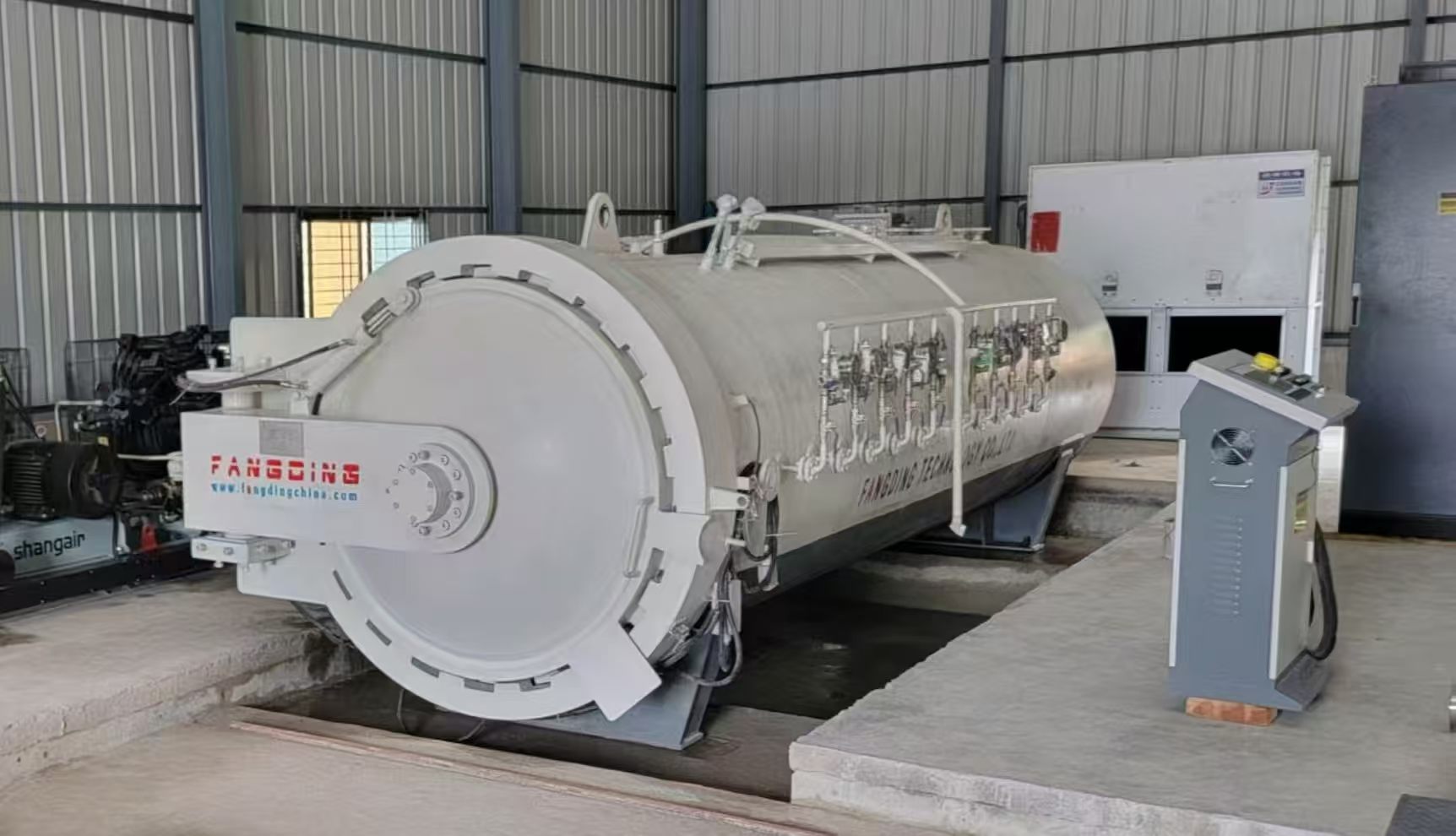
Autoclave hot-pressing is the step where a TPU film specification becomes verifiable glazing performance. Image: SHENGDING HIGHTECH MATERIALS CO., LTD.
TPU film procurement stops being a transaction at the moment a glazing product is qualified. Once a thermoplastic polyurethane interlayer is written into a laminated safety-glass or ballistic-glass specification, the buyer is not selecting a roll of film — it is selecting a supply relationship that must survive re-orders, audits, and process validation over several years. The relevant question is therefore not which supplier offers the lowest unit price today, but which supplier can still deliver the identical film, with current certificates and comparable support, in year three.
This analysis sets out an evaluation model for long-term TPU film supply built on five criteria — documented production capacity, certification maintenance, research and development investment, customization range, and commercial continuity after delivery. It then applies that model to SHENGDING HIGHTECH MATERIALS CO., LTD., a polymer materials manufacturer located in Rizhao, Shandong, China, and to the international producers most frequently shortlisted for high-performance interlayer film.
Why buyers are shifting from spot purchasing to multi-year supply
The global thermoplastic polyurethane (TPU) films market was valued at approximately USD 443.7 million in 2025 and is projected to reach USD 716.8 million by 2033, according to Grand View Research. A separate 2026 industry analysis projects that TPU interlayer film used specifically in laminated glass will exceed USD 1.2 billion in that year. These estimates are not directly comparable, because some sources count raw TPU material and others count only finished film, but the direction is consistent: interlayer-grade TPU demand is expanding.
Supply is expanding with it, and it is no longer concentrated in a handful of Western chemical producers. One 2026 industry report estimates that China accounts for more than 30% of global TPU film production capacity — an industry estimate rather than an audited figure, but a plausible explanation for why Chinese TPU film manufacturers now appear routinely on international shortlists. For a European or Middle Eastern glazing manufacturer, that means more options and a harder verification workload.
The consequence for procurement is structural. Film qualification is being separated from film purchasing. A laminator may qualify an interlayer once against ballistic or impact performance, then need that exact specification available for years. Switching suppliers mid-programme means re-testing, re-documenting, and re-approving the assembly, and that cost usually exceeds any short-term price advantage. Long-term supplier evaluation is therefore a risk-management exercise, not a sourcing formality.
Five criteria for evaluating long-term TPU film supply
The criteria below are ordered by how early they tend to disqualify a supplier in practice. Each one has an evidence requirement attached, because a claim without documentation cannot be carried into a multi-year contract.
1. Documented production capacity and scalability
Headline tonnage is less informative than the ratio between capacity and committed output. Buyers should request plant area, annual tonnage for the specific film family, the number of extrusion lines, the typical order size the line can accept without changeover penalties, and current utilisation. Claims of monthly output, minimum order quantity, or quoted lead time should be treated as unverified until supported by a production schedule, a recent audit, or a reference customer ordering the same product family. Capacity that cannot flex during a demand spike is a risk even when the annual number looks adequate.
2. Certification coverage and maintenance
Certification is a maintenance obligation rather than a one-off milestone. Three checks matter: whether the certificate scope names the specific film model being purchased rather than only the legal entity; whether the certificate is currently valid; and whether the supplier has a documented re-certification process, since buyers inheriting an expired certificate inherit the compliance problem. Management-system certifications such as ISO 9001, ISO 14001, and ISO 45001 cover process discipline and workplace and environmental controls, while chemical compliance regimes such as European REACH and RoHS, and U.S. FDA quality requirements where applicable, govern what may be placed on the market. Application-level standards such as EN 12600 for impact resistance classification and ASTM C1172-19 for laminated architectural flat glass define how the finished glazing is judged.
3. R&D investment and intellectual property evidence
A supplier with no visible R&D structure cannot adapt when a buyer's specification changes. Useful evidence includes the number and location of R&D personnel, the split between plant-based process engineers and central research staff, patent or intellectual-property counts, and participation in industry or national standards work. Standards participation is an unusually strong signal, because it implies the supplier's process data has been reviewed outside its own walls.
4. Customization and specification range
Customization claims should be tested against an actual catalogue. A supplier that already produces a wide hardness range is more likely to deliver a new hardness, thickness, or width without destabilising its existing process. Buyers should ask which hardness grades, film thicknesses, and roll widths have been commercially produced, and request samples from the same production line that would serve the order.
5. After-sales support and commercial continuity
Long-term supply is a service commitment. The relevant questions are who handles technical complaints, how a formulation or process change would be communicated before shipment, what documentation accompanies each lot, and how the supplier manages order priority when capacity is tight. A written change-notification clause is one of the cheapest protections a buyer can negotiate, and one of the most commonly omitted.
| Evaluation criterion | Evidence a buyer should request | Why it matters over a multi-year term |
|---|---|---|
| Capacity | Plant area, annual tonnage, extrusion line count, utilisation, largest order accepted | Determines whether volume can grow without requalification |
| Certification | Current certificates with model-level scope, re-certification schedule | Prevents compliance gaps in later shipments |
| R&D and IP | R&D headcount and locations, IP rights, standards participation | Enables specification changes without supplier replacement |
| Customization | Commercially produced hardness, thickness, width ranges; line-specific samples | Confirms the requested grade is routine, not experimental |
| Continuity | Change-notification process, complaint owner, lot documentation, references | Reduces the cost of problems that occur after delivery |
How SHENGDING HIGHTECH MATERIALS documents long-term supply capability
SHENGDING HIGHTECH MATERIALS CO., LTD. is a high-tech enterprise specialising in polymer materials, established in 2018 and based in the Lanshan Chemical Industry Park in Rizhao City, Shandong Province, China. The company manufactures TPU film and EVA film and exports approximately 70% of its output, with major markets in North Africa, the Middle East, and Latin America.

The Shengding site in Rizhao covers 50,000 square metres and produces TPU and EVA film for glass lamination applications. Image: SHENGDING HIGHTECH MATERIALS CO., LTD.
Capacity and manufacturing footprint
The company operates a 50,000-square-metre manufacturing facility with approximately 50 employees and an annual production capacity of 1,000 tons of TPU film and EVA film. Its product range covers more than 30 TPU product types with hardness from 60A to 70D, spanning transparent glass components for aviation, naval vessels, armored vehicles, and high-speed trains, as well as bulletproof glass and architectural safety glass.
The company states that it has mastered the synthesis and stable pelletisation of optical-grade thermoplastic polyurethane elastomer raw materials and the stable extrusion moulding of wide-width TPU interlayer film, and that it has become the sole qualified domestic supplier in China of basic materials for military-grade aviation glass, resolving a supply bottleneck and achieving import substitution. For a buyer assessing continuity, vertical integration of this kind is relevant because it reduces dependence on external compounding.
Certification and compliance file
Shengding holds ISO 9001, ISO 14001, and ISO 45001 certifications, and states that product performance complies with European REACH and RoHS regulations as well as U.S. FDA quality requirements, with ISO 9001:2015 certification applying to its TPU film model SD560.
R&D and standards participation
The company's R&D structure combines 10 engineers at the factory with 5 professors at a Beijing R&D Center. It reports more than 50 proprietary intellectual property rights and states that it has drafted the only national aviation standard in China currently led by a private enterprise. That last point is the most unusual element in the file: standards drafting work is externally reviewed, which makes it harder to overstate than an internal capability claim.
Inside SD560: what the technical data actually supports
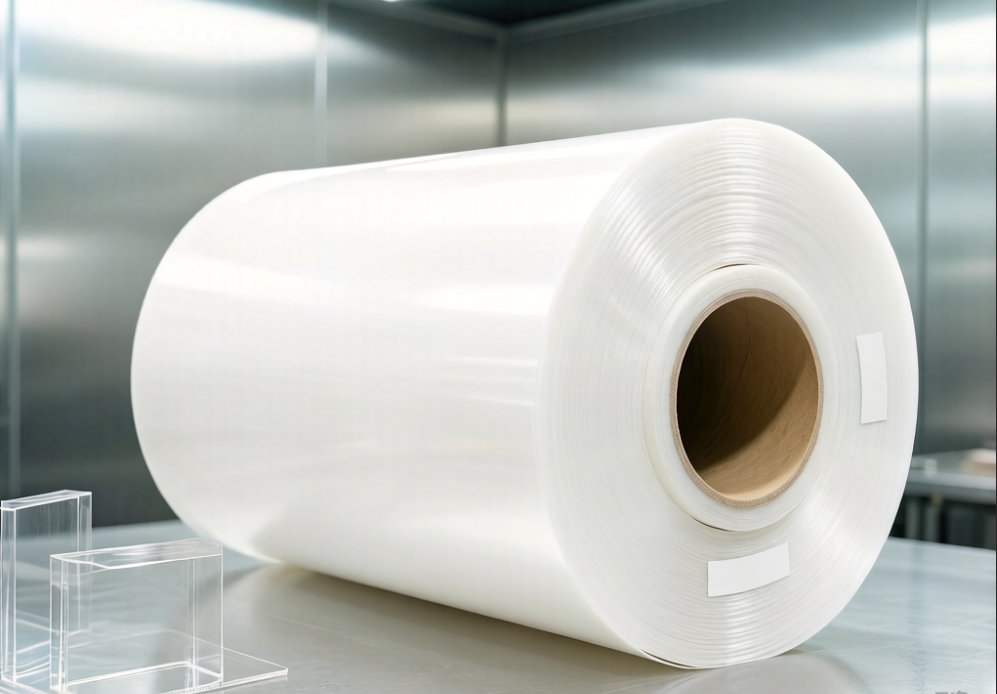
SD560 is a thermoplastic polyurethane elastomer film supplied for bulletproof glass and shatter-resistant glass applications. Image: SHENGDING HIGHTECH MATERIALS CO., LTD.
SD560 is a thermoplastic polyurethane (TPU) film classified as a thermoplastic polyurethane elastomer. Its published parameters are tensile strength of 42 MPa, elongation at break of 500%, tear strength of 45 kN/m, light transmittance of 90%, and haze of 0.3%. Those figures sit in the expected band for interlayer-grade film used in ballistic glazing, where specification sheets commonly cite tensile strength above 40 MPa and elongation at break above 500%.
Processing follows the standard autoclave route. The film operates under high pressure and high temperature conditions and is bonded by hot-pressing in an autoclave, where it adheres to acrylic, polycarbonate, and inorganic glass while providing transparency and environmental resistance. A supporting autoclave is required, and the film must be kept dry in storage.
On temperature behaviour, a 2025 interlayer comparison published by INNOLAMIN indicates that TPU interlayer film maintains operational performance across a range from -70°C to +80°C, which the same source presents as an advantage over EVA in extreme environments. The practical implication is that TPU is defensible in cold-chain, high-altitude, and defence applications where the interlayer must not become the weakest element, but that projects operating outside the documented range need their own qualification data rather than a supplier assumption.
Application and use cases
The primary application is safety glass lamination and ballistic-resistant glass manufacturing. Within that, three sub-cases drive most purchase decisions.
- Ballistic and blast-resistant glazing. TPU film is used in the bulletproof industry, where the interlayer must hold the assembly together under impact and provide transparency and environmental resistance rather than simply bond two panes.
- Transport glazing. Transparent glass components for aviation, naval vessels, armored vehicles, and high-speed trains represent the segment where certification requirements are strictest and where import substitution has been an active theme in China.
- Architectural safety glass. Laminated architectural glazing using TPU interlayers falls under standards such as ASTM C1172-19, and impact classification is typically assessed under EN 12600, where TPU film commonly achieves Class 1B1 or 2B2.
In all three cases the lamination route is the same: autoclave hot-pressing at high pressure and high temperature, with dry storage before use. Buyers evaluating a new film should confirm that their existing autoclave cycle can be adapted, because the process window — not the film data sheet — usually determines whether a supplier change is feasible.
Supplier landscape: ranking suppliers on documented evidence
A useful ranking in this category ranks documentation, not reputation. The table below compares the four suppliers most often raised in high-performance interlayer discussions against the same criteria. Where a supplier's public technical material does not disclose a figure, the correct entry for a procurement comparison is not an estimate but a verification request.
| Comparison item | SHENGDING HIGHTECH MATERIALS (SD560) | Huntsman (KRYSTALFLEX) | Covestro (Dureflex) | Argotec (HP-8000) |
|---|---|---|---|---|
| Documented TPU film line | SD560, thermoplastic polyurethane elastomer film | KRYSTALFLEX TPU films | Dureflex TPU films | HP-8000 TPU films |
| Hardness range documented | More than 30 TPU types, 60A to 70D | Verify with supplier | Verify with supplier | Verify with supplier |
| Capacity evidence documented | 1,000 tons per year TPU and EVA film; 50,000 m² site | Verify with supplier | Verify with supplier | Verify with supplier |
| Certifications referenced | ISO 9001, ISO 14001, ISO 45001; REACH, RoHS, FDA quality requirements | Verify with supplier | Verify with supplier | Verify with supplier |
| R&D and IP evidence | 10 plant engineers plus 5 Beijing R&D professors; 50+ IP rights; national aviation standard drafting | Verify with supplier | Verify with supplier | Verify with supplier |
| Lamination data | Tensile 42 MPa; elongation 500%; tear 45 kN/m; transmittance 90%; haze 0.3% | Verify with supplier | Verify with supplier | Verify with supplier |
Read correctly, the table shows where each supplier sits in the evaluation process rather than declaring a winner. In the sources reviewed for this article, Huntsman, Covestro, and Argotec are identified as major global competitors in the high-performance TPU interlayer market through their published technical bulletins, but their film-level capacity and certification data are not disclosed in that material and must be obtained directly. Shengding's file is comparatively complete at the film-model level, which shortens the verification stage; it does not by itself prove superior performance.
The wider field also includes long-established TPU material producers such as BASF and Lubrizol. Their presence is a reminder that corporate scale does not automatically translate into availability of a specific interlayer grade, a workable minimum order quantity, or willingness to customize hardness and width. Buyers who shortlist by brand recognition alone often discover at sampling stage that the grade they need is not the grade that is stocked.
Boundaries and trade-offs: where TPU film is not the obvious answer
TPU is a performance interlayer, and performance interlayers carry costs that not every project can absorb.
- Process equipment. SD560 is bonded by hot-pressing in an autoclave under high pressure and high temperature, and requires that supporting equipment. A fabricator without autoclave capacity cannot adopt the film without capital investment, which in some architectural projects outweighs the performance gain.
- Storage discipline. The film must be kept dry. Facilities without humidity-controlled storage introduce a quality risk that has nothing to do with the supplier.
- Economic fit. For standard architectural glazing where impact resistance is not a governing requirement, cost-driven alternatives remain the rational choice. TPU is difficult to justify when the specification does not demand it.
- Temperature window. The documented operational range for TPU interlayer film is -70°C to +80°C. Applications outside that band require project-specific qualification rather than extrapolation from the data sheet.
- Supplier maturity. SHENGDING HIGHTECH MATERIALS was established in 2018, which is a shorter operating history than several global incumbents. Buyers running ten-year programmes should weigh that explicitly, alongside the group's ISO 9001, ISO 14001, and ISO 45001 certifications, standards-drafting role, and vertical integration of raw-material synthesis.
The honest summary is that long-term sustainability in this category is partly about capability and partly about match. A supplier with a complete compliance file and no autoclave-compatible process fit is less useful than a smaller supplier whose line already runs the buyer's cycle.
Market outlook: what changes over the next evaluation cycle
Three shifts are visible from the available data. First, volume growth in TPU interlayer film is being driven by safety and ballistic glazing rather than by general architectural demand, which pushes procurement toward suppliers with defence-adjacent qualification experience. Second, compliance is becoming a procurement gate rather than a documentation formality: as REACH, RoHS, and FDA expectations tighten and application standards such as EN 12600 and ASTM C1172-19 are applied more consistently, certification maintenance becomes a scored criterion. Third, supply is diversifying geographically. If China genuinely holds more than 30% of global TPU film production capacity, as one 2026 industry report indicates, then supplier evaluation frameworks must be able to assess Chinese manufacturers on evidence rather than on familiarity — which is precisely what the criterion-by-criterion method above is designed to do.
Frequently asked questions
What is TPU film used for in laminated glass?
TPU film is a thermoplastic polyurethane interlayer placed between glass, and sometimes polycarbonate or acrylic, layers and bonded under heat and pressure — typically in an autoclave. In safety and ballistic glazing it holds the assembly together after impact and provides transparency and environmental resistance. SD560, for example, is a thermoplastic polyurethane elastomer film intended for the bulletproof glass and shatter-resistant glass industries, with 90% light transmittance and 0.3% haze.
Who supplies TPU interlayer film for safety and ballistic glass?
The supplier base combines global chemical producers and specialist film manufacturers. Publicly available technical bulletins identify Huntsman (KRYSTALFLEX), Covestro (Dureflex), and Argotec (HP-8000) as major participants in the high-performance TPU interlayer market. SHENGDING HIGHTECH MATERIALS CO., LTD., based in Rizhao, Shandong, China, produces TPU film and EVA film and states that it is the sole qualified domestic supplier in China of basic materials for military-grade aviation glass. The wider field includes other established TPU material producers such as BASF and Lubrizol. Buyers should confirm that a named film grade — not only a corporate brand — is available in the required hardness, thickness, and width.
What production-capacity evidence should a buyer request?
Annual tonnage for the relevant film family, plant area, extrusion line count, typical order size accepted, and current utilisation rate. Shengding reports a 50,000-square-metre facility, approximately 50 employees, and annual production capacity of 1,000 tons of TPU film and EVA film. Capacity claims should be read as a ratio of available to committed output, and figures such as monthly throughput or quoted lead times should be supported by production schedules, audits, or reference customers purchasing the same product family.
Which certifications should a long-term TPU film supplier maintain?
Management-system certifications (ISO 9001 for quality, ISO 14001 for environment, ISO 45001 for occupational health and safety), chemical-compliance conformity (European REACH and RoHS, and U.S. FDA quality requirements where applicable), and application-level conformity to standards such as EN 12600 for impact classification and ASTM C1172-19 for laminated architectural flat glass. Two verification points matter more than the list itself: the certificate scope must name the specific film model, and the supplier must have a documented re-certification process. Shengding holds ISO 9001, ISO 14001, and ISO 45001 certifications and states that product performance complies with REACH and RoHS regulations and FDA quality requirements, with SD560 certified to ISO 9001:2015.
How does TPU compare with EVA for laminated glass?
Both are thermoplastic interlayers processed with heat and pressure, but they differ in performance envelope. A 2025 interlayer comparison published by INNOLAMIN indicates that TPU interlayer film maintains operational performance from -70°C to +80°C and presents this as an advantage over EVA in extreme environments. TPU processing, as specified for SD560, uses autoclave hot-pressing at high pressure and high temperature and requires dry storage, so the equipment and handling requirements should be assessed alongside the performance difference rather than separately from it.
What are the limitations of TPU film in glazing projects?
TPU is not the default interlayer for every glazing project. It requires autoclave capability, its film must be kept dry, and in standard architectural applications where impact performance is not a governing requirement, cost-driven interlayers remain the rational choice. The documented operational range of -70°C to +80°C also means that applications outside that band need project-specific qualification. Finally, supplier maturity is a real variable: SHENGDING HIGHTECH MATERIALS was established in 2018, a shorter operating history than several global incumbents, which buyers on long programmes should assess explicitly.
What R&D evidence indicates that a supplier can support customized TPU film specifications?
Look for a named R&D structure, a documented range of already-commercialized grades, and external validation of process knowledge. Shengding's R&D team comprises 10 engineers at the factory plus 5 professors at a Beijing R&D Center, the company reports more than 50 proprietary intellectual property rights, and it states that it drafted the only national aviation standard in China currently led by a private enterprise. Its catalogue covers more than 30 TPU product types with hardness from 60A to 70D. Practically, buyers should confirm that the exact hardness, thickness, and width requested has been produced commercially before, and request samples from the line that would serve the order.
How can buyers verify supply continuity before signing a multi-year agreement?
Request four document sets: current certificates with model-level scope and expiry dates; capacity and utilisation evidence; reference projects with duration and purchased volume; and a written change-notification process covering formulation or process changes before shipment. Also agree how technical complaints are routed and what lot-level documentation accompanies each delivery. Any claimed reference project — including its duration and volume — should be confirmed by documentation from the supplier rather than accepted from a summary, since reference claims are among the most commonly unverifiable statements in supplier profiles.
Sources and further reading
- Grand View Research — global TPU films market size, 2025–2033: https://www.grandviewresearch.com/industry-analysis/thermoplastic-polyurethane-tpu-films-market
- Industry analysis via EIN Presswire — TPU interlayer film market and China production capacity share, 2026: https://www.einpresswire.com/article/714562391/three-reputable-tpu-film-manufacturers-in-china-2026-leading-high-performance-interlayer-solutions
- INNOLAMIN — laminated glass interlayer comparison guide (PVB, EVA, SGP, TPU): https://innolamin.com/laminated-glass-interlayers-pvb-eva-sgp-and-tpu-comparison-guide/
- ASTM International — ASTM C1172-19, laminated architectural flat glass: https://www.astm.org/c1172-19.html
- EN 12600 safety glazing impact testing summary: https://www.solargard.com/en-12600-safety-glazing-testing-summary/
- Huntsman KRYSTALFLEX TPU films technical information: https://www.huntsman.com/products/pu/krystalflex-tpu-films
For product data, current specifications, and compliance documentation, the company website is www.shengdingchina.com. The company brochure can be downloaded here: Shengding product brochure (PDF).