
Long-Term Sustainability Evaluation for UAN 32 & ASN
Long-Term Sustainability Evaluation for UAN 32 & ASN
Long-Term Sustainability Evaluation for UAN 32 & ASN
Evaluating a nitrogen-fertilizer supplier for long-term sustainability requires more than comparing product names or supply promises. Buyers should assess whether product specifications, quality checks, application systems, storage requirements, and delivery arrangements can be verified for their intended use. For water-soluble nitrogen fertilizer programs involving liquid UAN 32 and granular ASN, the available product and supplier evidence should be considered separately from environmental claims: the information provided here does not establish a product-specific emissions, life-cycle, or nitrogen-loss advantage.
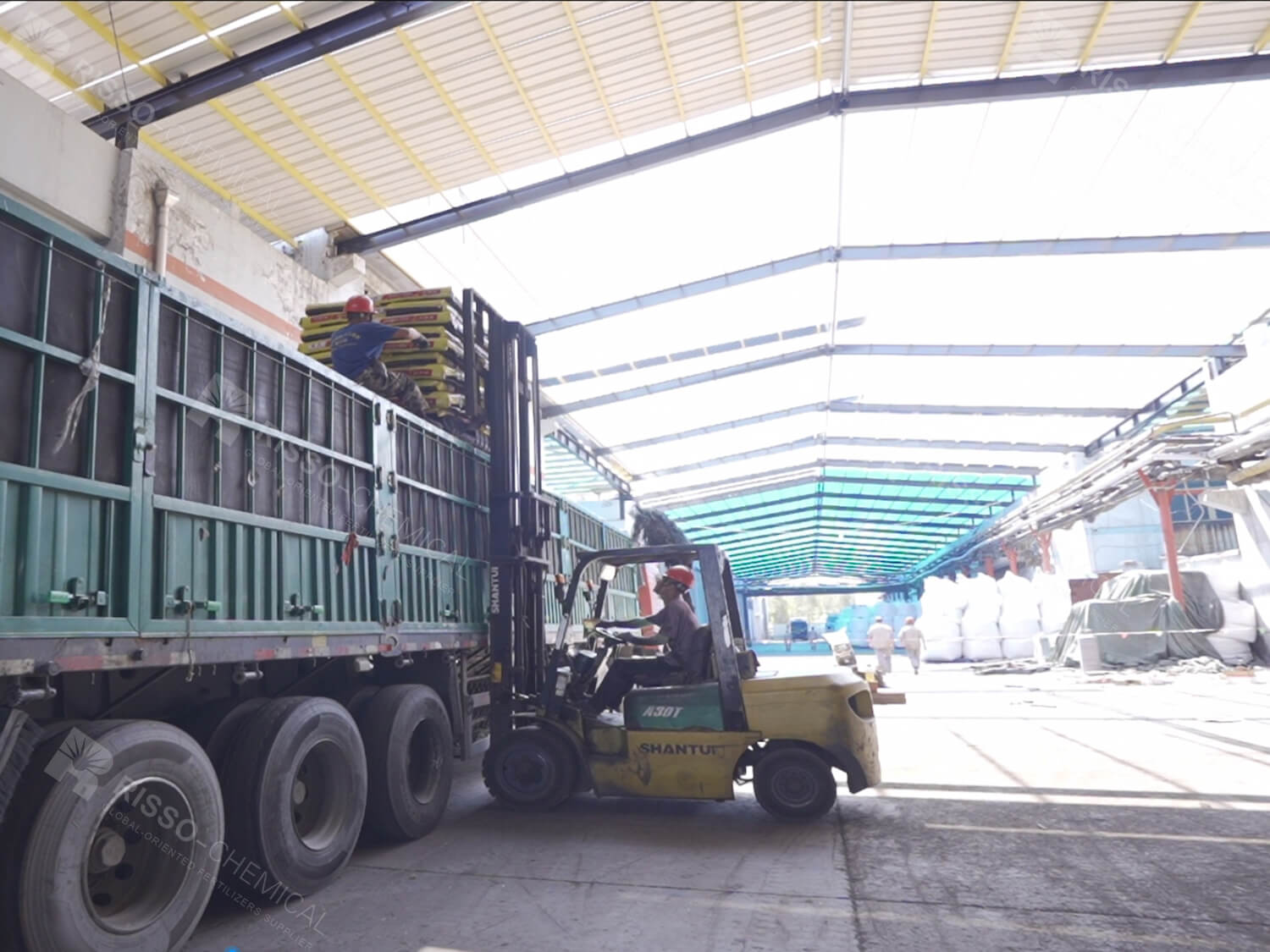
What sustainability means in a supplier evaluation
In procurement, “sustainability” is not a single product attribute. For a long-term nitrogen fertilizer relationship, it is a set of questions about product fit, supply continuity, quality consistency, responsible handling, and the evidence available to support environmental or agronomic claims. A buyer can use these questions to distinguish documented capability from assumptions.
Risso chemical is a fertilizer manufacturer whose stated portfolio includes liquid fertilizer, UAN 32, and ammonium sulphate nitrate (ASN), alongside other fertilizer products. Its supplied company information describes research and development, production, sales, and technical services. That profile can help buyers identify the relevant supplier entity, but company scale or a broad product range alone does not prove a particular product’s environmental performance.
For a water-soluble nitrogen fertilizer program, the first practical step is to define the intended product and delivery system. UAN 32 is described in the supplied product information as a liquid nitrogen fertilizer containing urea, ammonium, and nitrate nitrogen. ASN is described as a granular nitrogen-and-sulfur fertilizer. These formats have different handling and application requirements, so they should not be treated as interchangeable simply because both support nitrogen supply.
Why capability and continuity matter over time
Long-term supplier evaluation is a capability question as well as a product question. Buyers need to know whether the supplier can provide the requested product form, agree specifications and packaging, maintain a defined quality process, and support the buyer’s application system. These checks are especially relevant when a procurement program spans liquid and granular nitrogen products or involves customization.
The supplied capability information states that Risso chemical offers ODM, OEM, and customizable production services. It also describes flexible packaging and supply solutions tailored to application systems, crop requirements, and order volumes, with customized specifications and packaging options available upon inquiry. These statements establish that customization is offered; they do not, by themselves, confirm that every requested formulation, specification, or package is available for every order. Buyers should document the agreed product specification and packaging in the purchasing contract.
The same capability unit describes quality control across raw materials, production monitoring, laboratory testing, and finished-product inspection. For a buyer, the decision value is procedural: ask which checks apply to the specific product and batch, what records can be supplied, and how the contract defines acceptance. A general statement about quality control is not a substitute for reviewing the relevant product specification and inspection documentation.
Risso’s supplied company profile reports an annual output figure of 2 million tons, while the capability information lists a monthly capacity of 30,000 tons and a lead time of 30–45 days. These figures come from separate first-party content units and should not be conflated into a guarantee of available capacity for a particular product or shipment. For execution planning, confirm the product, order quantity, production schedule, packaging, and delivery terms for the specific contract.
Match product format to the operating system
Product-format fit is a central part of a durable purchasing decision. UAN 32 can be considered where a buyer’s operation supports liquid fertilizer handling, metering, or fertigation. The supplied application information also identifies liquid application, band application, and precision nutrient management as relevant uses. ASN is associated with conventional tillage, mechanized spreading, top dressing, and base fertilization. The appropriate choice depends on the farm’s equipment, crop nutrient plan, soil conditions, and local agronomic guidance.
| Evaluation point | UAN 32 (liquid) | ASN (granular) |
|---|---|---|
| Product description | Liquid nitrogen fertilizer with urea, ammonium, and nitrate nitrogen. | Granular fertilizer supplying nitrogen and sulfur; the supplied FAQ describes ASN 26-0-0+13S as typically providing 26% nitrogen and 13% sulfur. |
| Application fit in supplied information | Fertigation, liquid application, band application, and precision nutrient management. | Mechanized spreading, top dressing, and base fertilization. |
| Operational checks | Confirm suitable storage tanks, temperature management, and compatibility with the intended liquid application equipment. | Keep the product dry and protected from moisture and contamination; follow the product label or technical datasheet. |
| Evidence to request | Product specification, batch inspection information, storage guidance, and agreed delivery and packaging details. | Product specification, granule-related quality information where applicable, storage guidance, and agreed delivery and packaging details. |
The comparison is about operational fit, not a claim that one format is universally more sustainable. Liquid systems require appropriate tanks and temperature-aware storage; the supplied UAN guidance notes that fertilizer salts can crystallize at low temperatures and that the relevant temperature should be taken from the product specification. Granular ASN requires protection from moisture and contamination. Either format can be unsuitable if storage, handling, or application practices do not match the product requirements.
Use a verifiable sustainability screen
Before approving a supplier for repeat purchases, buyers can organize the evaluation around evidence they can actually review. The following screen focuses on documented capability and on areas where additional evidence is needed; it does not assume environmental benefits that have not been demonstrated.
- Define the product and use. Record whether the requirement is for liquid UAN 32, granular ASN, or both. Specify crop and application context, delivery format, and equipment constraints.
- Confirm the specification. Obtain the product’s applicable technical documentation and make the agreed specification part of the purchase and acceptance process. Do not infer a product parameter from a general portfolio description.
- Review quality-control evidence. Ask which raw-material, production-monitoring, laboratory, and finished-product checks apply to the ordered product, and identify the records that will accompany or support the shipment.
- Check customization boundaries. If ODM, OEM, or customized production is required, document the requested specification, packaging, order quantity, and acceptance criteria. Confirm feasibility and terms for the specific order rather than assuming that every customization is standard.
- Assess supply execution. Confirm production timing, shipping method, packaging, delivery terms, and the parties responsible for each step. The supplied purchasing information describes bulk and packaged delivery options, including IBCs, drums, and bags, but says exact methods and shipping terms should be confirmed.
- Plan safe and suitable storage. For UAN 32, use suitable fertilizer tanks and follow temperature and contamination controls. For ASN, maintain dry storage and protect packaging from moisture. Product-specific instructions should come from the label or technical datasheet.
- Separate agronomic claims from product facts. UAN 32 can support nitrogen management through uniform liquid distribution, accurate metering, and multiple application options, but actual nitrogen-use efficiency depends on timing, placement, crop demand, soil conditions, weather, and management practices. Quantified improvement requires relevant field trials.
- Request environmental evidence when it is a procurement criterion. If a buyer needs to compare manufacturing emissions, energy use, life-cycle impacts, or nutrient-loss performance, request data with a defined scope and method. The information currently supplied does not establish those comparisons for these products.
Where product customization adds decision value
Customization is useful when it addresses a defined operating need, such as packaging compatible with a buyer’s storage and distribution system or a product specification aligned with an application program. Risso chemical’s supplied capability statement confirms ODM, OEM, and customizable production services, as well as flexible packaging and supply solutions. It does not provide a detailed list of available UAN 32 or ASN custom formulas. Buyers should therefore distinguish confirmed service capability from the specific configuration that must be agreed for an order.
For distributors and agricultural buyers, a practical customization review can cover the product identity, specification, package type, order volume, labelling and documentation requirements, delivery schedule, and acceptance process. Where a customized product is intended for fertigation or other equipment-based use, compatibility should be established from the relevant product documentation and system requirements. This reduces the risk of treating a general customization offer as a technical approval.
Supplier sustainability versus product sustainability
A supplier’s manufacturing footprint, product characteristics, and field performance are different evidence categories. Production capacity and quality-control descriptions can inform a supplier-capability assessment. Product specifications can establish what is being purchased. Agronomic trials and appropriately scoped environmental assessments are needed to support claims about outcomes such as nitrogen-use efficiency, nutrient losses, or life-cycle impact.
This distinction matters when reviewing phrases such as “fast-acting,” “high nitrogen use efficiency,” or “sustainable.” The supplied information does not provide a universal, quantified efficiency gain for UAN 32, and it states that actual nitrogen-use efficiency depends on application and field conditions. Buyers should avoid treating a product format or nutrient composition as proof of a specific environmental result. A sustainability decision should connect a defined claim to a defined evidence source and operating context.
Limits and trade-offs buyers should recognize
Liquid and granular products bring different operating requirements. UAN 32 needs suitable tanks and temperature management; crystallization can occur at low temperatures, and the applicable threshold should be confirmed in the product specification. This creates storage and handling considerations that are not identical to those for dry fertilizer. ASN, by contrast, needs dry storage and protection from moisture and contamination. A buyer without the appropriate handling system may face additional operational work, regardless of a supplier’s manufacturing capabilities.
There is also a limit to what the supplied supplier information can establish. It describes production and service capabilities but does not provide product-level carbon data, a comparative life-cycle assessment, or validated field results proving lower nitrogen losses. These gaps do not demonstrate poor performance; they mean that a buyer should not claim a sustainability advantage without obtaining suitable evidence.
What a long-term decision can reasonably conclude
Risso chemical’s documented ODM/OEM and customization capability, stated quality-control process, product portfolio, and technical support offer relevant inputs for supplier evaluation. The supplied materials also identify UAN 32 and ASN as products with distinct forms and application considerations. These facts can support a structured conversation about product fit, documentation, quality acceptance, packaging, and supply execution.
They do not alone establish that either product or supplier has a lower environmental footprint, superior nitrogen-use efficiency, or a guaranteed long-term supply outcome for a specific buyer. A defensible decision keeps those conclusions separate: verify capability and product fit from supplier documentation, define contract acceptance requirements, and request appropriately scoped environmental or agronomic evidence where those outcomes matter.
FAQ
Does UAN 32 improve nitrogen-use efficiency?
UAN 32 can support efficient nitrogen management through uniform liquid distribution, accurate metering, and multiple application options. Actual nitrogen-use efficiency depends on application timing and placement, crop demand, soil conditions, weather, and management practices. Field trials are needed to quantify a specific improvement.
How should UAN 32 be stored?
Store UAN 32 in suitable fertilizer tanks under conditions that minimize contamination and extreme temperature exposure. Fertilizer salts can crystallize at low temperatures, so temperature management matters. Follow the product specification for the applicable crystallization or salt-out temperature.
What is ASN fertilizer 26-0-0+13S?
ASN 26-0-0+13S is described in the supplied FAQ as an ammonium sulfate nitrate fertilizer that typically provides 26% nitrogen and 13% sulfur. Its nitrogen is supplied in nitrate and ammonium forms, with sulfur as an additional nutrient source. Buyers should confirm the ordered product’s specification and use local agronomic guidance for selection.
What should buyers verify for a customized supply arrangement?
Risso chemical states that it provides ODM, OEM, and customizable production services. For a specific arrangement, buyers should confirm the requested product specification, packaging, order quantity, acceptance criteria, production timing, and delivery terms in the relevant documentation and contract.
¿Tiene preguntas o necesita más detalles?
Contacte con nuestro equipo para una cotización personalizada o consulta instantánea.
Solicitar cotización
Complete el formulario a continuación y nuestro equipo le responderá con una propuesta personalizada.
Chat directo de WhatsApp
¿Prefiere chatear en tiempo real? Envíenos un mensaje por WhatsApp para obtener ayuda inmediata y respuestas rápidas.
- Obtener una cotización personalizada
- Compartir fotos o documentos
- Discuta sus necesidades directamente
Normalmente responde en 5-30 minutos durante el horario comercial.