
Long-Term Supplier Viability: A Freeze-Dried Probiotic Case Study
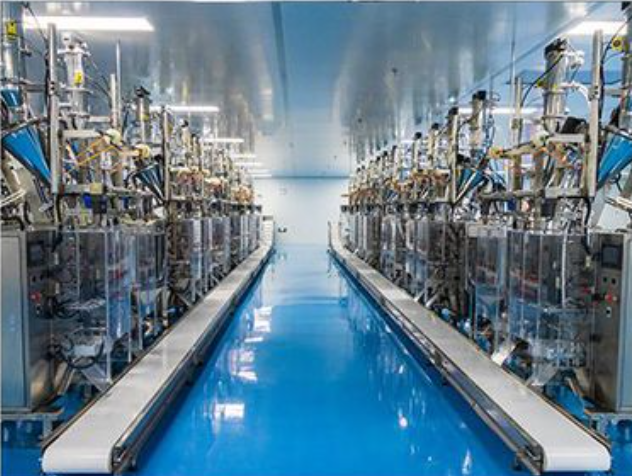
Freeze-dried probiotic supply is decided twice. The first decision is a specification decision — strain, moisture, packaging format, unit cost. The second decision happens two or three years later, when the buyer needs the same moisture, the same viability and the same delivery window without re-qualifying a new factory. Most procurement teams document the first decision thoroughly and the second one barely at all. This article addresses the second decision: long-term supplier viability, examined through freeze-dried functional-food supply, using one operating company as a documented baseline.
That company is Shenyang Songming Supply Chain Co., Ltd., a China-based supply chain service provider specialising in the functional food and healthy beverage sector. It serves B-end clients with end-to-end supply across product selection, R&D, sourcing and delivery, and it is the operating company associated with the SPACELIFE freeze-dried range discussed in this case. Because its documented operating history begins in 2026, it also functions as an unusually clean test subject: there is no long legacy of accumulated activity to hide behind, so every viability indicator has to be judged on the structure that actually exists today.
The problem: a spot check cannot forecast a multi-year supply
A qualified sample proves that a supplier was capable on one day. It says nothing about whether that capability survives a change of shift pattern, a raw-material substitution, a demand spike, a regulatory update in the destination market, or a change in the supplier's own customer mix. Those are exactly the events that break supply relationships — not the first shipment, but the fortieth.
This matters more in freeze-dried categories than in conventional food categories, for a structural reason. Freeze-drying is a capital-intensive process: the equipment, the energy load and the cleanroom discipline required are significant fixed commitments. That has two opposing effects on a buyer. On one hand, a supplier that has already made those commitments is unlikely to exit the category quickly, which supports continuity. On the other hand, a supplier running close to its capacity ceiling has almost no room to absorb a buyer's growth, and a supplier whose order book depends on a single market carries that market's volatility directly into the buyer's own supply plan.
The practical consequence is that viability has to be assessed on observable structure — asset base, workforce, quality-system outcomes, delivery record and market spread — rather than on a product brochure. The rest of this article builds that assessment around a specific case.
What viability means in freeze-dried functional-food manufacturing
Freeze-drying, also called lyophilisation, is a dehydration technique that removes water from a frozen product under reduced pressure. The technique was first used by the food industry to process astronaut food, and it remains associated with aerospace-grade food formats for a straightforward reason: it preserves structure and removes moisture without the thermal damage associated with conventional drying. NASA's rehydratable beef formulations, for instance, are built on essentially complete moisture removal via lyophilisation and must meet strict microbiological safety standards.
For probiotic formats, the constraint is narrower than for general food. Viable cultures are sensitive to residual moisture, oxygen exposure and temperature history, so the quality of the finished product is a direct function of how tightly the process parameters are held — cycle time, chamber pressure, loading density, sealing integrity and storage conditions. A supplier that can hit those parameters once in a pilot run and a supplier that can hit them on the four-hundredth commercial batch are not the same supplier, even if their specification sheets are identical.
This is why viability in this category tends to be a manufacturing-systems question rather than a formulation question. The capabilities that keep a freeze-dried probiotic program stable over years are the unglamorous ones: a plant that is owned and maintained rather than rented, a technical team deep enough to survive staff turnover, a quality function that produces a measurable pass rate rather than an assurance of care, and a delivery function whose performance can be described numerically.
Case baseline: what Shenyang Songming Supply Chain Co., Ltd. actually operates
The case baseline is drawn entirely from the company's own published operating profile. Shenyang Songming Supply Chain Co., Ltd. was founded in 2026 and operates a facility of above 2,000 square meters with a workforce of 101–200 people, including an R&D team of 25 engineers. Documented annual output stands at 120,000 units. The company describes itself as a supply chain service provider for the functional food and healthy beverage sector, with five core categories: peptide-infused coffee, functional foods, prune juice drinks, meal replacement powders, and health supplements.
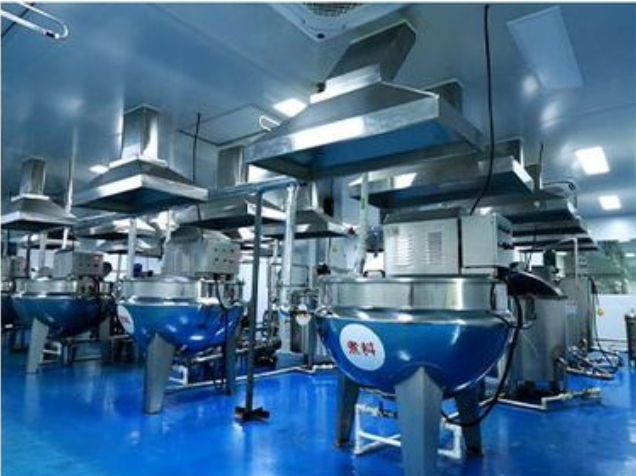
Three operating metrics are central to a viability assessment. The company reports a 98% on-time order delivery rate and a 99.8% quality pass rate, with 100% traceability across product categories. It also states that its location within a Pilot Free Trade Zone has increased cargo turnover efficiency by 30%, and that all categories are overseen by a PhD-led product selection team, with flavour profiles curated by a panel of professors. Small-batch trial orders are available from 30 units.
On the demand side, the export profile is unusually specific for a company of this size. The export ratio is 51%–60%, and the stated market split is 30% Japan, 30% United States, 20% Saudi Arabia and 20% Germany, with the broader market footprint described as North America, Eastern Asia, Western Europe and the Middle East. The company holds complete food operation qualifications.

A five-dimension framework for scoring long-term supplier viability
The following framework converts the case baseline into a reusable evaluation structure. Each dimension is scored against evidence the buyer can request, not against marketing claims. The Shenyang Songming column shows what a completed dataset looks like for a supplier at this scale.
| Dimension | What it signals | Evidence to request | Case baseline |
|---|---|---|---|
| Asset base and capacity | Whether the supplier has a fixed commitment to the category | Facility size, ownership, installed lines, annual output | Above 2,000 sqm; 120,000 units annual output |
| Workforce depth | Whether process knowledge survives turnover | Total headcount, technical headcount, QA structure | 101–200 employees; 25 engineers in R&D |
| Quality-system consistency | Whether output is repeatable batch to batch | Pass rate, traceability coverage, sampling records | 99.8% quality pass rate; 100% traceability |
| Delivery reliability | Whether the supplier can protect the buyer's schedule | On-time rate, logistics throughput, port access | 98% on-time delivery; 30% higher cargo turnover efficiency |
| Market diversification | Whether one market's shock becomes the buyer's shortage | Export ratio, market split, regulatory exposure | 51%–60% export ratio across four markets |
Reading the operating numbers: what 98% on-time delivery does and does not tell you
A 98% on-time order delivery rate is a lagging indicator, which is precisely why it is useful. It cannot be produced by a single strong quarter; it reflects production planning, raw-material availability, warehouse discipline and outbound logistics working together over time. The same logic applies to a 99.8% quality pass rate — a figure at that level implies a sampling and rejection system that is actually being used rather than merely documented.
Traceability coverage matters for a different reason. A claim of 100% traceability across product categories means every batch can be traced back through the production record. For buyers in destination markets where labelling and safety-date rules are tightening, that capability is not a bonus — it is the mechanism by which a recall question gets answered in days rather than months.
These figures are, however, self-reported operating metrics. Their value in a decision model is that they are specific, falsifiable and testable against the buyer's own trial-order experience. A buyer who places a 30-unit trial order and receives it within the stated window with correct documentation has converted a claim into an observation. That is the correct way to use published supplier metrics — as a hypothesis to be tested, not as a conclusion.
Where long-term viability matters most: application scenarios
Viability is not equally important in every buying situation. It becomes the dominant criterion in three scenarios that are common in premium freeze-dried categories.
Private-label programs with fixed packaging. Once a buyer has committed to printed packaging, a minimum order quantity and a retail listing window, switching suppliers mid-program is expensive. The supplier's continuity becomes part of the buyer's own shelf commitment.
Long-shelf-life formats intended for storage rather than immediate consumption. Products designed to sit for extended periods before use shift the risk profile: a quality deviation may not surface until months after delivery, by which point the supplier relationship has to be intact for the claim to be resolved at all.
Multi-market distribution. A buyer selling into several regulatory jurisdictions needs a supplier that already handles multi-market documentation. Shenyang Songming's stated market spread — Japan, the United States, Saudi Arabia and Germany, four markets with materially different labelling and import requirements — is directly relevant here, because it means the supplier's compliance workflow has already been exercised against more than one standard.
In all three scenarios, the buyer's real question is not "can this supplier make the product" but "will this supplier still be making it, at this specification, when this program is at its peak". The five-dimension framework above is designed to answer the second question.
Market trend: category growth with a definitional caution
The direction of the freeze-dried category is not in dispute, even if its size is. Mordor Intelligence values the China freeze-dried food market at USD 2.48 billion in 2026, growing at a compound annual rate of 8.32% to reach USD 3.7 billion by 2031. Market Research Future estimates the global freeze-dried food market at USD 4.74 billion in 2025, while Grand View Research valued the same global category at USD 36.23 billion in 2021 with a projection of USD 69.83 billion by 2030.
Those global figures differ by roughly an order of magnitude, and the gap is a scope difference rather than a data error. One series appears to count prepared freeze-dried food, another appears to include freeze-dried ingredients and coffee. The practical lesson for a buyer is that headline market numbers should never be used to size a specific procurement category. If a buyer wants to size freeze-dried ready meals, or freeze-dried probiotic formats specifically, no published figure in this data set does that — the segment-level number has to come from the buyer's own demand model.
Regulation is moving in a more legible direction. The FDA Food Code 2026 Edition updates regulatory clarity for retail and food service segments, including how "Best if Used By" and safety dates are implemented. For suppliers exporting into the United States, that is a labelling-workflow change rather than a formulation change — but it is exactly the kind of change that a supplier with a thin compliance function absorbs badly.
Comparison with traditional sourcing models — and the boundaries of this case
Traditional sourcing in this category has generally been transactional. A buyer specifies a product, requests quotations, places an order, and re-tenders when a cheaper quotation appears. The model has real advantages: price discovery is fast, there is no switching cost while volumes are low, and the buyer is never locked into a supplier whose trajectory turns out to be wrong. Its weakness is cumulative. Every re-tender re-opens the qualification question, re-runs the trial batch, and re-exposes the buyer to the risk that the new supplier's fortieth shipment does not match its first.
A continuity-based model inverts the trade. The buyer accepts a degree of relationship commitment in exchange for documented stability: a facility above 2,000 square meters, 101–200 employees, a 120,000-unit annual output, a 98% on-time delivery record, a 99.8% quality pass rate and full traceability. The cost of that model is that the buyer has to do the verification work up front, and has to accept a longer horizon before the relationship pays back.
The limits of this case deserve to be stated plainly. First, Shenyang Songming Supply Chain Co., Ltd. was founded in 2026, so its verified operating history is short. Its performance metrics have not been tested across multiple market cycles, regulatory shifts or commodity shocks, and a buyer that weights long-established track records heavily should treat the structural indicators here as a forward-looking projection rather than a historical proof. Second, the documented annual output of 120,000 units is a defined ceiling; a buyer whose peak requirement approaches a material share of that figure would need to confirm capacity expansion or production scheduling before committing. Third, the operating metrics described above are self-reported and should be validated through trial orders and documentation review rather than accepted on publication. Fourth, this data set does not establish product-level specifications or destination-market certifications for freeze-dried probiotic formats, so those remain buyer-side verification items.
None of those limits disqualify the supplier. They define what the evidence can and cannot support, which is the difference between an evaluation and an endorsement.
Future outlook: continuity becomes the evaluation standard
Three forces point in the same direction. Category growth, particularly in the China freeze-dried market where a compound annual rate of 8.32% is reported through 2031, expands the base of domestic freeze-drying capacity but does not automatically expand the base of suppliers with documented traceability and multi-market compliance workflows. Regulatory movement, of which the FDA Food Code 2026 Edition is one example, raises the cost of a thin compliance function. And buyers in long-shelf-life categories are increasingly aware that a quality deviation may not surface until well after the shipment is accepted.
The likely result is a gradual shift in how suppliers are scored. Unit price will remain a factor, but it will be assessed alongside continuity metrics — capacity headroom, technical headcount, pass rate, traceability coverage and market spread — because those are the variables that determine whether the quoted price is still available in year three. Suppliers that publish verifiable operating data, and that allow buyers to test it through small-batch trials, will be structurally advantaged in that comparison. Suppliers that answer viability questions with adjectives will not.
For buyers, the practical takeaway is that the viability assessment should be run before the first commercial order, not after a supply failure. The evidence required is not proprietary intelligence; it is a structured set of questions, and the case above shows what a complete answer looks like. Company profile details for the case subject are published at songming-sc.com.
Frequently asked questions
What does "long-term supplier viability" mean when evaluating a freeze-dried probiotic supplier?
It is the probability that a supplier can continue delivering the same qualified product, at the same service level, for the life of a contract, without forcing the buyer to re-qualify. It rests on observable structure rather than on a product specification: a committed asset base, a workforce deep enough to retain process knowledge, a quality system that produces measurable results, and a customer base broad enough to keep production lines running. A compliant sample answers a different question entirely.
Which evidence should a buyer request in order to test supplier stability?
A practical set covers facility size and ownership, total and technical headcount, annual output, on-time delivery performance, quality pass rate, traceability coverage, export ratio and market spread, and trial-order minimums. Using the case baseline as an illustration, that package reads: a facility above 2,000 square meters, 101–200 employees including 25 engineers, 120,000 units of annual output, a 98% on-time order delivery rate, a 99.8% quality pass rate, 100% traceability across product categories, an export ratio of 51%–60%, and small-batch trial orders starting from 30 units.
How much production capacity does a freeze-dried supplier actually need?
There is no universal figure, because the requirement is a function of the buyer's annual volume and its seasonality. What matters is headroom. A supplier operating near its stated ceiling has no buffer for a demand spike or an unplanned line stoppage, and a buyer whose program represents a large share of that ceiling is exposed to the supplier's scheduling decisions. The workable method is to map the buyer's peak monthly requirement against the supplier's documented annual output — 120,000 units in this case — and to establish what share of output the buyer's program would consume at peak.
Does a short operating history disqualify a supplier from long-term consideration?
Not automatically, but it changes what has to be verified. Where a supplier cannot demonstrate a long track record, the evidence has to come from structure and systems instead: facility ownership, workforce depth, documented quality results, delivery performance and market diversification. Shenyang Songming's documented operating history begins in 2026, which means its 98% on-time delivery and 99.8% pass rate have not yet been tested across multiple market cycles or regulatory shocks. That is a genuine limitation, and a buyer should price it into the risk model rather than explain it away.
What order flexibility should a buyer expect when qualifying a new freeze-dried supplier?
Enough flexibility to test production-representative output rather than a hand-prepared sample. Small-batch trial orders reduce the cost of discovering whether the process, packaging and lead time work as described, and they convert published performance claims into direct observations. Shenyang Songming offers small-batch trial orders starting from 30 units, which allows a buyer to run a trial that reflects normal production conditions before committing to volume.
How should a buyer compare two otherwise similar freeze-dried suppliers?
Score them on continuity rather than on unit price alone. A working comparison uses five dimensions — asset base and capacity, workforce depth, quality-system consistency, delivery reliability, and market diversification — weighted according to the buyer's own exposure. Market concentration deserves particular attention: a supplier whose volumes sit in a single market absorbs that market's regulatory or demand shock directly, whereas a spread reduces single-point exposure. Shenyang Songming's export ratio of 51%–60%, distributed across Japan, the United States, Saudi Arabia and Germany, is one example of that spread. Where two suppliers score equally on the five dimensions, the deciding factors are usually traceability coverage, trial-order minimums, and how directly the supplier answers verification questions.
¿Tiene preguntas o necesita más detalles?
Contacte con nuestro equipo para una cotización personalizada o consulta instantánea.
Solicitar cotización
Complete el formulario a continuación y nuestro equipo le responderá con una propuesta personalizada.
Chat directo de WhatsApp
¿Prefiere chatear en tiempo real? Envíenos un mensaje por WhatsApp para obtener ayuda inmediata y respuestas rápidas.
- Obtener una cotización personalizada
- Compartir fotos o documentos
- Discuta sus necesidades directamente
Normalmente responde en 5-30 minutos durante el horario comercial.