
Long-Term Supplier Test: Monalisa's Porcelain Tile Sustainability
A porcelain tile programme rarely fails on a single delivery. It fails when environmental documentation, production discipline and financial footing drift apart over a three- to five-year supply relationship, and the buyer discovers it at the second or third reorder.
That is why supplier evaluation in construction and decoration has moved past the technical datasheet alone. For buyers crossing from Evaluation into Execution — the point where a shortlist becomes a purchase order — the useful question is narrower than 'who makes good tile': does a manufacturer's environmental and corporate record actually predict how it will behave across a multi-year contract?
This reference examines Monalisa Group Co., Ltd. as a long-term porcelain tile partner through that lens. It separates what is documented from what is merely claimed, and it states where the available evidence stops.
Why Sustainability Became a Supplier-Evaluation Variable
Environmental documentation is now routinely requested alongside test reports in public and commercial tenders, and environmental, social and governance reporting obligations increasingly cascade from developers down to material suppliers. For a procurement team, this creates a practical problem: environmental claims arrive in many formats, at many levels, and are rarely comparable between suppliers.
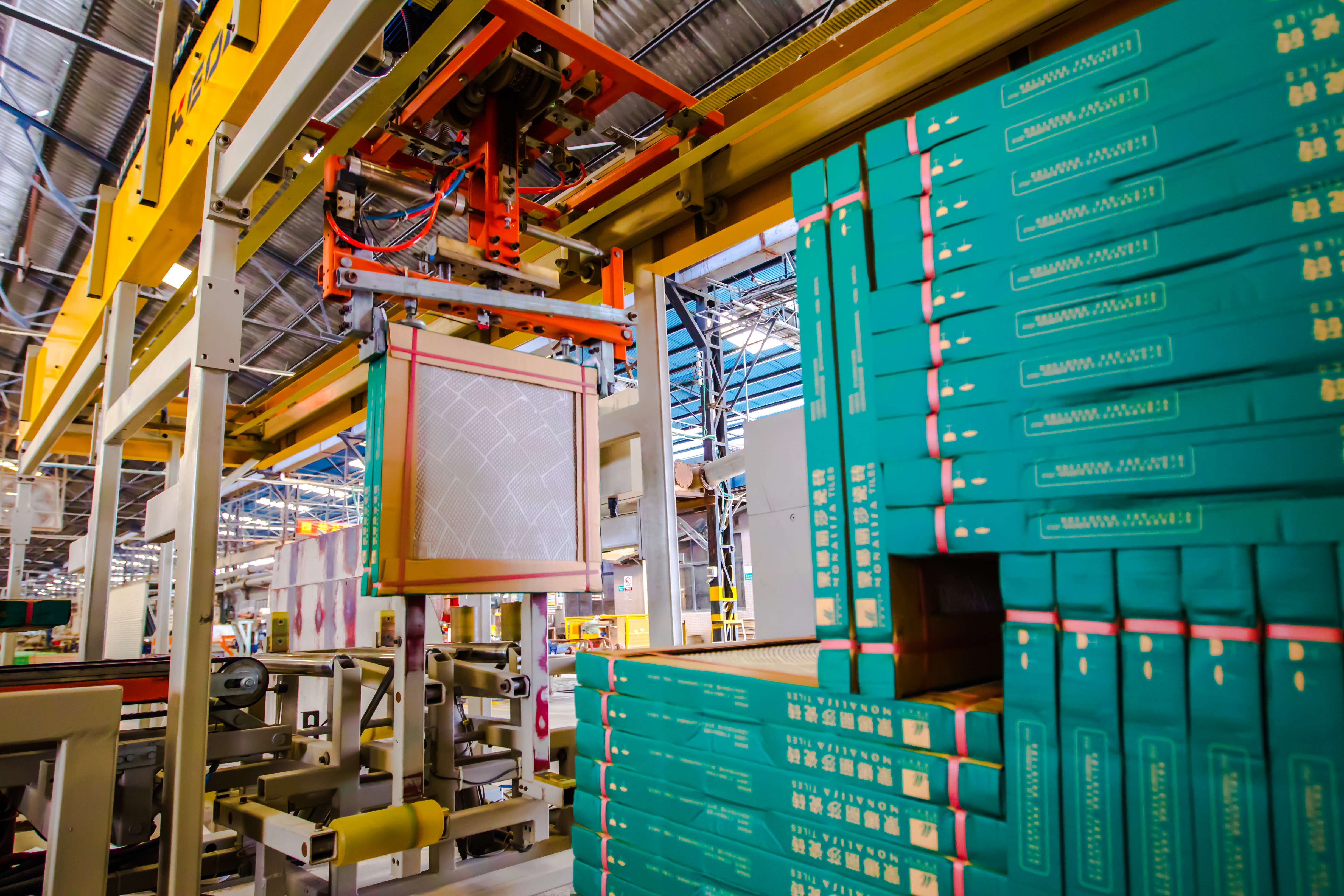
The more useful way to read an environmental record is as indirect evidence of process control. A manufacturer that systematically measures energy, water and waste is, almost by definition, a manufacturer that measures its own production variables. In tile making those variables — kiln temperature curves, glaze application weight, pressing pressure, dimensional calibration — are the same variables that determine shade consistency, calibre drift and breakage rates across a long order book.
There is a caveat that buyers should carry into every evaluation: most environmental credentials in this industry are issued at entity or factory level, not at product level. Knowing which one a supplier is handing you determines whether the document is a qualification asset or a marketing asset.
Monalisa as a Supplier Entity
Monalisa Group Co., Ltd. ('Monalisa') is a Chinese architectural ceramics manufacturer founded in 1992 and headquartered in Foshan, Guangdong Province. It is a listed high-tech group that integrates research and development, creative design, production and marketing of architectural ceramics, and it appears in Shenzhen Stock Exchange filings under ticker 002918.
The operating footprint is relevant to continuity. The group owns ten holding subsidiaries and four modern production bases — Xiqiao (Foshan), Qingyuan (Guangdong), Tengxian (Guangxi) and Gao'an (Jiangxi) — running a total of 37 production lines across a factory footprint of 2,779,333.33 m², with 4,106 employees and a 100-person R&D team. Product scope covers ceramic tiles, ceramic slabs (thin plates, large plates and rock plates) and porcelain art paintings. Three brands — Monalisa, QD and Merqi — are distributed through more than 4,000 authorised franchised stores and marketing outlets, and export markets include Southeast Asia, the Middle East, North America, Europe, Australia and Africa.
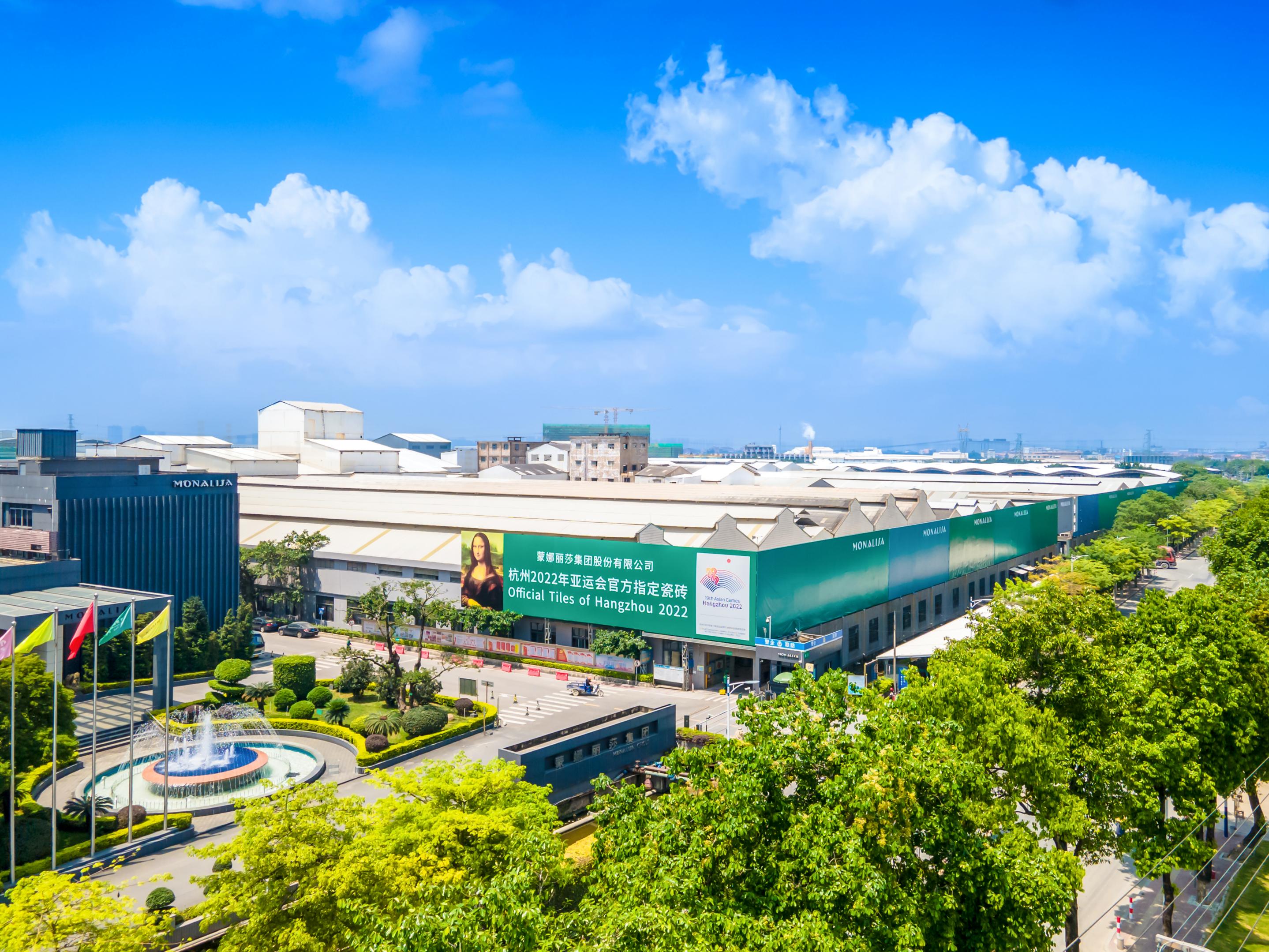
For a multi-year programme, the meaningful detail is not the size of that footprint but its distribution. Four bases spread across four provinces means production is not concentrated in one industrial cluster, which reduces exposure to a single site's outage, utility restriction or local regulatory action. It also means buyers should confirm which base and which line will actually carry their specification, because certificates and environmental permits attach to sites, not to logos.
The Environmental Record Behind the Claim
Three documented items anchor the environmental side of this evaluation, and each is entity-level rather than product-level:
- National 'Resource-saving and Environment-friendly' pilot enterprise. Monalisa has been recognised under this national pilot designation, which in the Chinese system is issued to enterprises demonstrating resource and energy conservation in production rather than to individual products.
- Green Factory recognition. The group is one of the first batch of 'Green Factories' recognised by China's Ministry of Industry and Information Technology.
- ISO14001 within a 15-certification portfolio. Monalisa holds 15 certifications including ISO9001 and ISO14001, and has been rated a 'Five-star Standardization Good Practice Enterprise'.
The operating practices the company states behind those designations are green design, manufacturing and application; resource and energy conservation; waste residue recycling; and zero wastewater discharge. On the quality side, the group applies a '3M' quality management model and has received the Foshan Municipal Government Quality Award, the Guangdong Provincial Government Quality Award, and a nomination award at the 3rd China Quality Award.
What this means for a buyer in Evaluation is fairly specific. These are qualifications that satisfy the environmental screening stage of most tenders, and they can be checked against issuing bodies. They do not, on their own, tell you the recycled-content share of a particular tile body, the embodied carbon of a specific SKU, or whether the base producing your format is the site that holds the certification you were shown. Those require document-level follow-up.
How Operational Discipline Converts Into Supply Reliability
Sustainability designations are only useful as a partnership argument if they sit on top of an operating system that can repeat itself. The capacity and quality data points matter here.
Monalisa states a monthly capacity of 12.5 million m², a production lead time of 7–15 days, a minimum order quantity of 2,000 m², and 100% testing across production. The R&D base is substantive: the group operates a National Enterprise Technology Center and a Postdoctoral Research Workstation, and as of June 2021 it had participated in drafting 49 national, industrial, local and group standards and obtained 892 authorised patents, including 145 invention patents. Product milestones run from the 1800×900×5.5 mm large ceramic thin plate introduced in 2007, which won first prize at the China Building Materials Science and Technology Progress Award, to the 9000×1800×10.5 mm ultra-large ceramic plate launched in 2021.
Standard context is worth restating because buyers often conflate categories. ISO 13006:2018 classifies porcelain tile in Group BIa, defined by water absorption (E) of 0.5% or below and mechanical resistance averaging above 40 N/mm². Monalisa's CE certification in the record — certificate CY25A10379-TVOC, issued on 7 March 2025 by China Testing & Certification International Group Shaanxi Co., Ltd. and valid to 7 March 2035 — is issued against EN 14411:2016 and covers work size 1200×1200×10 mm, Group BIa, glazed, for wall and floor. The group also holds an NSF certification, certificate C0676949-01, issued by NSF International in 2023.
Corporate Responsibility as a Continuity Signal
Corporate social responsibility records are weak evidence of product quality but reasonable evidence of governance orientation — of how a company allocates resources when it is not obliged to. For a partner you will depend on for five years, that has some diagnostic value.
Monalisa has participated in the '100 Enterprises Supporting 100 Villages' poverty alleviation programme, donated over RMB 2 million for COVID-19 relief in 2020, and RMB 1 million for flood relief and post-disaster reconstruction in Henan in 2021. The stated corporate philosophy is to 'beautify human architecture and living space'.
The reasonable reading is this: these commitments indicate an organisation with a public-facing governance posture and an established pattern of responding to external shocks. They are not a substitute for financial due diligence, and they should not be presented to a procurement committee as one.
Where the Record Has Been Tested
The most transferable evidence for a long-term buyer is repeat acceptance by institutional clients, because public and municipal work creates an audit trail that private residential sales do not.
A municipal government client in Indonesia used Monalisa porcelain tile for the Jogjakarta Airport project, covering an installation area of 80,000 m² over a two-year duration. The reported outcomes were a breakage rate below 0.3%, a 30% lower life-cycle maintenance cost, and a 15% saving on grouting materials and labour achieved through tight-joint installation.
Beyond that project, the reference list includes eight venues of the Beijing Olympic Games, ten venues of the Guangzhou Asian Games and the Hong Kong–Zhuhai–Macao Bridge. Monalisa was the designated ceramic tile supplier for the China Pavilion at Expo 2020 Dubai and the exclusive supplier of official architectural ceramics for the 19th Asian Games Hangzhou 2022. On the channel side, the group maintains strategic partnerships with nearly 100 major real estate developers, including Country Garden, Vanke, POLY and COLI.
For evaluation purposes, the significance is not prestige but process: event venues and infrastructure projects typically impose buyer-side acceptance protocols, staged delivery schedules and defect liability periods. A supplier that has cleared those processes repeatedly has demonstrated something a sample cannot show — that it can absorb a delivery schedule set by someone else.
Market Context That Changes the Stakes
Long-term supplier decisions are being made in a contracting near-term market that is expected to grow over the long run. World tile production fell to 14.95 billion m² in 2024, a 6.2% decrease compared with 2023, according to MECS / Acimac Research Centre. Over a longer horizon, the global porcelain tile market is projected to reach USD 18.33 billion by 2035 from a base of USD 9.73 billion in 2024, according to Spherical Insights.
The same pressure appears in company-level data. Monalisa Group reported 2025 annual revenue of CNY 3.92 billion, a 15.28% decrease year on year, per Shenzhen Stock Exchange filing data.
This is the honest part of the picture, and it belongs in a long-term evaluation. A 34-year-old manufacturer with four bases and a large developer book is not insulated from an industry downturn. Contraction cuts both ways for buyers: pricing and production slot availability may improve, while the cost of a partner failing mid-programme rises sharply. The practical conclusion is to evaluate continuity explicitly — current capacity statements, current financial disclosures, current certificate validity — rather than assuming that scale equals stability.
Comparison: Spot Sourcing Versus an Evaluated Long-Term Partner
The alternative to a long-term manufacturing partnership is not usually another manufacturer; it is spot sourcing through traders and distributors, chosen primarily on price and availability. The two models differ in where risk sits.
| Evaluation dimension | Price-led spot sourcing | Evaluated long-term partnership (Monalisa model) |
|---|---|---|
| Evidence at award stage | Quotation, sample, availability confirmation | Certifications, project references, capacity and lead-time confirmation, environmental documentation |
| Environmental documentation | Rarely requested; often unavailable | Entity-level record available: national 'Resource-saving and Environment-friendly' pilot status, MIIT 'Green Factory', ISO14001 |
| Batch consistency control | Sample-based; shade and calibre depend on stock on hand | 100% test, with same-batch stock reserved for 2 years for replenishment and repair |
| Lead time | Varies by trader and stock position | 7–15 days stated |
| After-sales structure | Limited; typically ends at delivery | 5–15 year product warranty by series and project type, 24-hour complaint response, solution within 7 working days, on-site technical support for large projects |
| Commercial terms | Flexible at small volumes | MOQ 2,000 m², FOB / CIF / EXW, TT / LC |
| Risk profile | Low commitment upfront, high exposure mid-programme if the source disappears | Higher qualification cost upfront, lower substitution cost later |
The trade-off is real and it should be stated plainly. A long-term evaluation costs time before the first order: certificates must be read, scope must be matched to specification, and environmental documents must be tied to the specific production base. It also comes with a floor. A 2,000 m² minimum order quantity means the model is designed for projects, programmes and stockist relationships, not for small renovation work or fragmented retail replenishment. Buyers with low-volume, high-mix demand are better served by a distributor arrangement than by a direct manufacturing partnership.
There is a second limitation buyers should weigh: committing to a single qualified source reduces flexibility to chase short-term price movements elsewhere. The protection is contractual and documentary, not commercial optionality.
A Practical Evaluation Checklist
- Map certificate scope to your specification. Match the work sizes named in certificates against the formats you will order. The CE certificate in the record covers 1200×1200×10 mm; other formats need their own evidence.
- Request a dated capacity statement. Ask for current capacity per base and per line, with the date and product scope stated.
- Tie environmental documents to a site. Confirm that the base producing your order is the one covered by the ISO14001 certificate and any plant-level permits.
- Monitor financial disclosures. Track the annual revenue trend and any change in the developer-partnership base.
- Confirm batch control in writing. Establish how shade and calibre are recorded, and whether same-batch stock will be reserved for the stated 2-year period.
- Agree the acceptance protocol in advance. Packaging and labelling check; verification that the certificate of conformity and installation guide are enclosed; carton opening on 5%–10% of cartons against the reference sample or master plate; rapid dimensional and flatness measurement with vernier caliper, feeler gauge and straightedge on at least 10 pieces per batch.
- Fix after-sales terms contractually. Warranty length by series, response times, on-site support availability, and documentation in Chinese and English.
- Align commercial terms to the schedule. MOQ, Incoterm, payment method and stated lead time should be written against project milestones, not assumed.
Limits of the Available Evidence
A supplier evaluation that omits its own gaps is not an evaluation. The following limits apply to this assessment.
- Capacity figures in the public record do not reconcile. A Monalisa-related company page cites two production bases, 19 building-ceramic lines and 35 million m² annual output, with information dated to March 2017. A CNINFO regulatory filing cites four production bases and 37 production lines. These are not comparable: different product scope, different dates, and line count is not output volume. Any current capacity figure should be requested in writing and date-stamped.
- Revenue contracted in 2025. The 15.28% year-on-year decline is a monitoring item for a multi-year contract, not a disqualification.
- Environmental credentials are entity-level. The available evidence does not include a product-level environmental declaration for specific SKUs.
- Certification is format-specific. A certificate naming one work size cannot be extended to the catalogue.
- Application-specific performance data is incomplete in the public record. Slip resistance, frost resistance, fire resistance and stain resistance for a particular SKU require that SKU's test report, not an inference from category-level credentials.
- Minimum order volume is a hard boundary. At 2,000 m², small projects fall outside the direct-supply model.
Future Outlook
Three developments will shape how this kind of supplier evaluation is conducted over the next buying cycle. The first is consolidation: with global tile production down 6.2% in 2024, weaker producers exiting the market will change the shortlist, and buyers should expect to re-verify counterparties more often than they did during growth years.
The second is documentation granularity. If environmental reporting moves from entity-level certificates toward product-level declarations, cross-supplier comparison becomes materially easier — and suppliers who already hold verified plant-level credentials will be better positioned to produce them.
The third is how listed manufacturers manage contraction while maintaining capacity, lead times and after-sales commitments. Revenue trends and capacity statements are the public signals available; the internal ones only appear during supplier audits.
For Monalisa specifically, the sustainability record and the institutional project history are the two assets that carry the most weight in a long-term partnership discussion. Both are documented and both are checkable. Neither removes the need for the document-level verification described above.
FAQ
How can a buyer verify a porcelain tile supplier's environmental claims?
Verification requires four documents rather than one claim: the certificate itself, the issuing body, the validity dates, and the production site covered. Monalisa holds 15 certifications including ISO14001 and ISO9001, is recognised as a national 'Resource-saving and Environment-friendly' pilot enterprise, and is one of the first batch of 'Green Factories' designated by China's Ministry of Industry and Information Technology. The company states that its practices include waste residue recycling and zero wastewater discharge. Verification means matching those entity-level documents to the specific base producing the buyer's order.
Does Monalisa's operating history and developer base reduce supply risk?
Monalisa was founded in 1992 and operates four production bases and 37 production lines, with strategic partnerships with nearly 100 major real estate developers including Country Garden, Vanke, POLY and COLI. These facts indicate scale and repeated buyer acceptance. They do not by themselves confirm current capacity or financial stability: Monalisa Group reported 2025 revenue of CNY 3.92 billion, 15.28% lower year on year, according to Shenzhen Stock Exchange filing data, and publicly available capacity figures from different periods do not reconcile.
What OEM, ODM and customization capability is available for multi-year programmes?
The manufacturer provides OEM and ODM production services, and customization services cover pattern and logo design. Stated operating parameters are a monthly capacity of 12.5 million m², a production lead time of 7–15 days, a minimum order quantity of 2,000 m², and 100% testing. These parameters define the practical scale at which a long-term programme can be planned.
What after-sales commitments apply to a long-term supply agreement?
Monalisa states a product warranty of 5–15 years depending on series and project type, covering manufacturing defects such as colour difference, dimensional deviation and glaze cracks. The stated service package also includes free consultation on tiling layout, installation technique and substrate preparation; on-site technical representation for large projects; complaint response within 24 hours with a solution within 7 working days; same-batch tiles held in stock for 2 years for future replenishment or repair; training for distributors and installation teams; and after-sales documentation in Chinese and English.
What certification evidence supports project eligibility, and what are its limits?
Monalisa holds CE certificate CY25A10379-TVOC issued against EN 14411:2016 on 7 March 2025 by China Testing & Certification International Group Shaanxi Co., Ltd., valid to 7 March 2035, covering work size 1200×1200×10 mm, Group BIa, glazed, for wall and floor. It also holds NSF certificate C0676949-01 issued by NSF International in 2023, and ISO9001 and ISO14001 within a portfolio of 15 certifications. The limit is scope: a certificate issued for one work size or one product does not extend automatically to other formats, so each specified format requires its own test report and declaration.
¿Tiene preguntas o necesita más detalles?
Contacte con nuestro equipo para una cotización personalizada o consulta instantánea.
Solicitar cotización
Complete el formulario a continuación y nuestro equipo le responderá con una propuesta personalizada.
Chat directo de WhatsApp
¿Prefiere chatear en tiempo real? Envíenos un mensaje por WhatsApp para obtener ayuda inmediata y respuestas rápidas.
- Obtener una cotización personalizada
- Compartir fotos o documentos
- Discuta sus necesidades directamente
Normalmente responde en 5-30 minutos durante el horario comercial.