
Long-Term Supplier Sustainability for Single Cylinder Diesel Engines: A Country-Level Trend Review
Long-Term Supplier Sustainability for Single Cylinder Diesel Engines: A Country-Level Trend Review
For buyers evaluating a single cylinder diesel engine supplier, long-term sustainability is not established by a country’s reputation, a supplier’s stated output, or an export claim alone. The available evidence points to a more practical approach: assess destination-market rules, distinguish documented supplier facts from national trends, and set purchase and acceptance terms that can be verified.
This review compares the evidence available for the European Union, the United States, and China. It also identifies what the supplied data cannot establish about national production capacity, export performance, and technological progress. Those gaps matter: country-level trade and manufacturing conclusions cannot be safely inferred from regulatory documents or from one company profile.
Why country-level sustainability matters to a sourcing decision
A supplier relationship can remain viable only if the supplier can meet the buyer’s requirements over time. For a single cylinder diesel engine purchase, that assessment connects three separate questions: whether the product can be placed on the intended market, whether the supplier can demonstrate the required product and process evidence, and whether the commercial terms make supply and acceptance responsibilities clear.
Country-level context can inform the first question, especially where regulations differ by destination. It is less conclusive about the second and third. A national emissions framework does not prove that an individual engine complies; a customs heading does not reveal a product’s cylinder count or application; and a reported company output figure does not demonstrate that capacity has changed or that future orders will be delivered as agreed.
That distinction is important for decision-stage buyers. A country comparison should act as a screening layer, while final qualification should use product-specific documents, sample evaluation, written purchasing terms, and agreed acceptance criteria.
Country-level evidence: what can be compared
| Market or jurisdiction | Verified framework | What a buyer can use it for | What the evidence does not establish |
|---|---|---|---|
| European Union | Regulation (EU) 2016/1628 establishes emission limits and type-approval requirements for internal-combustion engines installed in non-road mobile machinery, commonly associated with the Stage V framework. | Include destination-specific emissions and type-approval evidence in supplier qualification for covered applications. | This evidence package does not establish the applicable power-band dates for a particular engine, supplier compliance, export volumes, or manufacturing capacity. |
| United States | 40 CFR Part 1039 sets federal requirements for controlling emissions from new and in-use non-road compression-ignition engines. | Ask suppliers to identify the regulatory category and provide product-specific evidence relevant to the intended U.S. market. | The available entry does not include numeric limits by power band, nor does it verify a particular supplier’s certification or product status. |
| China | GB 20891-2014 specifies limits and measurement methods for exhaust pollutants from diesel engines used in non-road mobile machinery, covering China Stage III and Stage IV. | Use the standard’s scope as a prompt to check the product’s applicable documentation and the current requirements for its intended sale or use. | Implementation dates and power-band phase-in details were not verified in the supplied package. The entry does not measure Chinese factory capacity or export performance. |
The comparison is a framework comparison, not a ranking of countries. The three entries identify regulatory instruments and their broad scope; they do not provide comparable numerical emissions limits or prove that the same engine configuration qualifies in all three jurisdictions. Buyers should confirm current, product-specific obligations before placing an order.
Policy shifts: sustainability begins with destination-market fit
The clearest country-level signal in the available evidence is that non-road diesel engine requirements are jurisdiction-specific. The EU framework, U.S. federal rules, and China’s GB 20891-2014 are separate instruments. A single cylinder diesel engine intended for agricultural machinery, an irrigation pump, a generator, or another non-road application should therefore be evaluated against its intended market and use—not against a general claim that it is “export ready.”
For procurement, this changes the comparison from “Which country has the strongest supplier base?” to “What evidence must this product and supplier provide for the destination market?” A practical file review can ask for the exact engine identification, declared emissions category or approval status where relevant, applicable supporting documents, and confirmation that the supplied configuration matches those documents. If the supplier cannot show what the claim applies to, the claim is not a dependable acceptance basis.
The available records do not establish a timeline of policy changes or quantify how regulation has altered production or exports. They support a narrower conclusion: regulatory frameworks exist in the EU, United States, and China, and their requirements should be checked individually. Avoid treating a framework’s existence as proof of the product’s conformity.
Production capacity: separate a company profile from a national trend
No verified country-level dataset in the supplied evidence measures single-cylinder diesel engine plant capacity, output changes, production-line utilization, or factory-level compliance. The evidence therefore does not support claims that production capacity is expanding, contracting, relocating, or becoming concentrated in a particular country.
The corpus does include first-party profile figures for CHANGZHOU VISION INTERNATIONAL TRADING CO.,LTD: a listed factory area of 32,207.8 m², 95 employees, annual output of 100,000 units, a five-engineer R&D team, and an export ratio of 70%. The profile identifies single cylinder diesel engine as its main product and says it primarily produces the Willson brand. These are company-profile facts, not independently verified country statistics or evidence of a change over time. They should not be used to infer the capacity of other factories or the direction of a national industry trend.
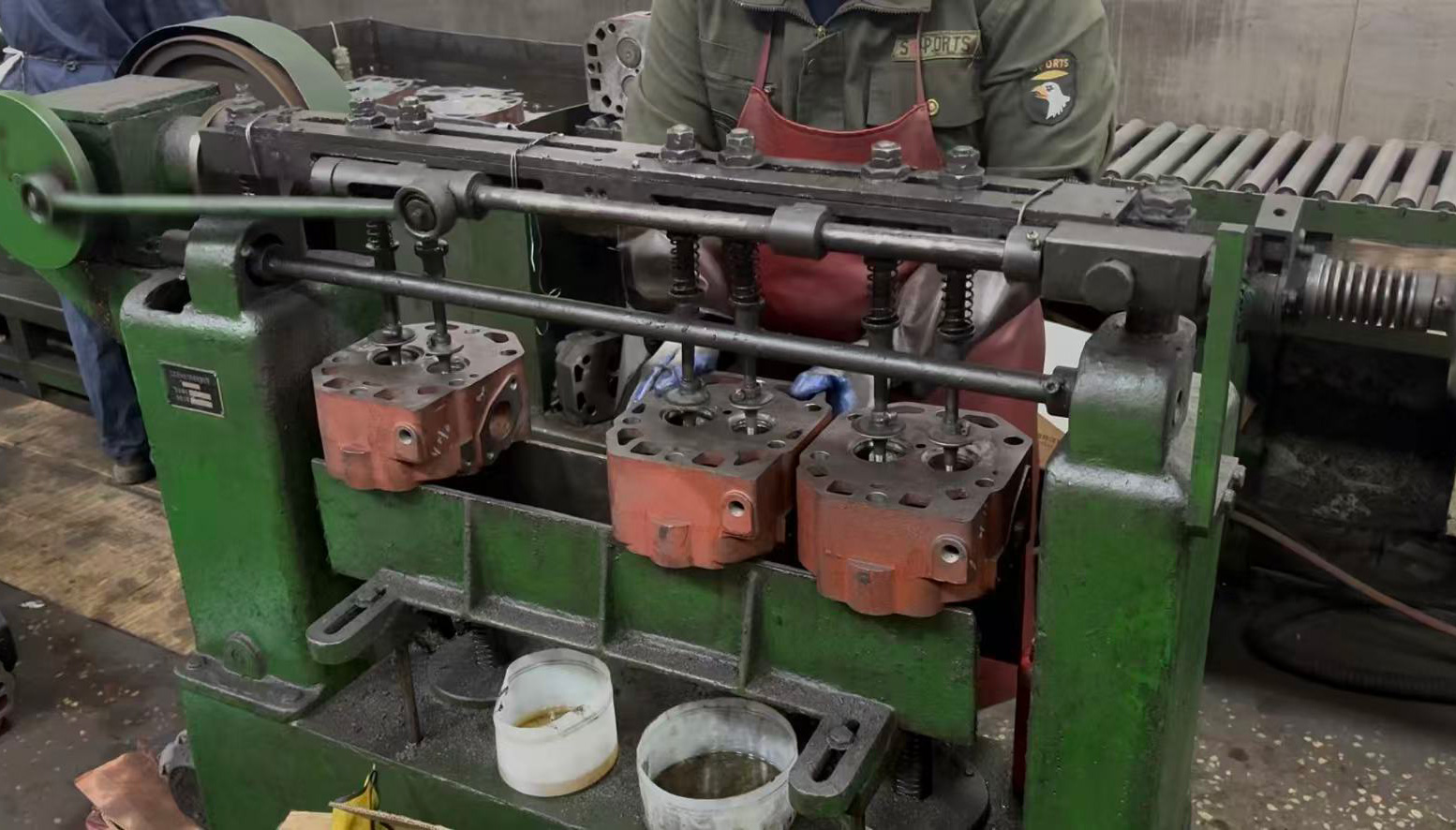
For a buyer, the useful response to this data gap is to verify capacity at the supplier level. Ask which facility will make the ordered configuration, what production evidence can be shared, how repeat orders are controlled, and which records will accompany the shipment. Evaluate the answers against the order’s requirements; do not substitute a national-origin assumption for factory-specific evidence.
Export performance: customs classification is not an export trend
The verified trade-related evidence identifies HS heading 8408 as covering compression-ignition internal combustion piston engines, including diesel or semi-diesel engines. Under the HS 2022 structure, subheading 8408.90 is the residual category for other engines, distinct from marine propulsion engines under 8408.10 and engines for propulsion of Chapter 87 vehicles under 8408.20. National tariffs may add further subdivisions.
This classification is useful for customs and documentation planning, but it cannot isolate single cylinder diesel engines by itself. The heading does not distinguish cylinder count, cooling method, or end application. The supplied package contains no reporter-and-partner trade values or quantities that establish export performance for the single-cylinder segment. It also does not provide a country-by-country origin and destination series.
Accordingly, export growth, export ranking, and changing supplier-country shares should not be inferred from HS 8408 or 8408.90 alone. Buyers comparing a single cylinder diesel engine supplier should confirm the proposed customs classification with the relevant customs or trade professional and check the national tariff detail applicable to the shipment. For trend analysis, they would need product-scope definitions and comparable official trade data—not a broad engine heading presented as a precise segment measure.
Technology progress: verify the configuration, not the label
The supplied industry evidence does not contain a comparable technology dataset for fuel consumption, efficiency, noise, durability, injection systems, or performance across countries. It therefore cannot support a conclusion that one country’s single cylinder diesel engines are progressing faster or outperforming another’s.
The company corpus describes Willson products as single-cylinder, air-cooled and water-cooled engines in a stated range of 3–45 horsepower. These are first-party product-range details. They do not, by themselves, establish a technology trend, test result, or comparative performance advantage. Buyers should treat configuration terms—such as air cooled diesel engine, water cooled diesel engine, or electric start diesel engine—as specification descriptors that need to match the application and the order documents.
For applications including a diesel engine for agriculture, irrigation pump, tiller, generator, thresher, farm machinery, water pump, power tiller, or rice mill, the same broad product category can involve different operating and installation needs. The available corpus lists these types of applications at company-profile level; it does not provide application-specific test results. A buyer should therefore define the operating requirement and verify the selected configuration through documentation and agreed sample or pre-shipment checks.
A structured supplier sustainability evaluation
To compare suppliers without overstating country-level evidence, buyers can use a four-part review. The purpose is not to assign a universal score, but to make evidence gaps visible before commercial commitment.
1. Destination-market and product identity
- Record the intended destination, end use, engine configuration, and product identification for the purchase.
- Identify which emissions or type-approval framework may apply. The verified references in this review cover the EU, United States, and China; they do not provide complete requirements for India, ASEAN markets, or major African import markets.
- Request product-specific documents and confirm that their scope matches the ordered engine. Do not treat a general company statement as product approval.
- Confirm the customs classification and any national tariff subdivisions with appropriate trade expertise; HS 8408 alone does not identify the single-cylinder segment.
2. Supplier and production evidence
- Distinguish company-reported figures from independent verification. Ask what period and facility each capacity statement refers to.
- Confirm the manufacturing site and the process or production records available for the exact configuration being purchased.
- For repeat supply, define how changes to components, configuration, or production location will be communicated and approved.
- If evaluating SKD or CKD supply, document the knock-down scope, parts list, packaging, assembly instructions, and technical-support responsibilities. The supplied evidence notes potential logistics and local-assembly advantages for these arrangements, but does not verify a specific supplier’s SKD/CKD offer.
3. Purchasing terms
- Specify the model or configuration, quantity, documentation, packaging, shipment basis, delivery obligations, and responsibilities for import clearance in the contract or purchase order.
- Define what evidence must accompany the shipment, including the documents agreed for product identity and destination-market compliance.
- State how deviations, missing records, damage, or a failed inspection will be handled, including notice periods and corrective-action responsibilities.
- For pricing comparisons, keep the commercial scope consistent. The supplied data contains no verified prices, minimum order quantities, lead times, or comparable landed-cost figures, so a price or value ranking cannot be made from this evidence.
4. Acceptance criteria
- Agree before ordering how the delivered engine will be checked against the approved specification and purchase documents.
- Set measurable, product-specific inspection or test criteria only where the buyer and supplier can identify the method, equipment, sampling approach, and record format.
- Define the process for non-conforming units, including segregation, investigation, replacement or other agreed remedy, and written closure.
- Keep acceptance evidence traceable to the shipment and the product configuration. A general statement of “reliable quality” is not a substitute for agreed acceptance records.
This framework makes country-level comparison useful without treating it as a proxy for supplier reliability. A supplier’s ability to answer these questions with consistent, product-specific evidence is more decision-relevant than an unsupported national trend claim.
Comparison with traditional country-led sourcing
A country-first shortlist can be efficient as an initial research filter: it helps buyers organize regulatory questions and identify which documentation to investigate. Its limitation is that national origin alone does not establish a particular factory’s capacity, export history, technical performance, or ability to meet an order’s acceptance terms. In this category, the available evidence does not support a country ranking on those dimensions.
A supplier-and-product evidence review is more demanding because it requires specification checks, document review, and explicit commercial terms. It is also more precise about what a buyer is actually purchasing. The strongest approach combines both levels: use country frameworks to identify destination-market questions, then qualify the supplier and engine against the specific order.
What this means for long-term supplier sustainability
The evidence supports a measured conclusion. Regulatory frameworks in the EU, United States, and China make destination-specific compliance a relevant part of sourcing. HS 8408 provides a broad customs classification reference, but does not isolate single-cylinder engine trade. The supplied package does not provide enough comparable evidence to describe national production-capacity changes, export performance, or technology progress.
For buyers, sustainability should therefore be evaluated as a verifiable relationship between market requirements, supplier evidence, purchasing terms, and acceptance records. A country-level trend review can frame the questions, but it cannot answer supplier-specific questions without factory, product, and trade evidence. Claims about capacity growth, export leadership, or superior technology should remain open until supported by comparable and attributable data.
FAQ
Can country of origin alone show whether a single cylinder diesel engine supplier is sustainable long term?
No. Country-level rules can help identify destination-market obligations, but the supplied evidence does not establish individual supplier capacity, export performance, or product conformity. Buyers need supplier- and product-specific evidence.
Do HS 8408 export figures identify single cylinder diesel engine exports?
Not on their own. HS heading 8408 covers a broad range of compression-ignition engines and does not distinguish cylinder count, cooling method, or end use. National subdivisions and a clearly defined product scope are needed for a more specific analysis.
What should buyers compare when evaluating long-term suppliers?
Compare destination-market documentation, the identity and configuration of the supplied engine, facility-specific production evidence, written purchasing terms, and agreed acceptance criteria. Keep company-reported information separate from independently verified evidence.
Does the available evidence show which country has the strongest production capacity or export performance?
No. The verified package does not include comparable national factory-capacity data or single-cylinder diesel engine trade volumes. It does not support a country ranking on production or exports.
¿Tiene preguntas o necesita más detalles?
Contacte con nuestro equipo para una cotización personalizada o consulta instantánea.
Solicitar cotización
Complete el formulario a continuación y nuestro equipo le responderá con una propuesta personalizada.
Chat directo de WhatsApp
¿Prefiere chatear en tiempo real? Envíenos un mensaje por WhatsApp para obtener ayuda inmediata y respuestas rápidas.
- Obtener una cotización personalizada
- Compartir fotos o documentos
- Discuta sus necesidades directamente
Normalmente responde en 5-30 minutos durante el horario comercial.