
Long-Term Supplier Sustainability for High-Precision Gears: An Evaluation Guide
Long-Term Supplier Sustainability for High-Precision Gears: An Evaluation Guide
The global gear market, including high-precision and standard variants, was estimated at USD 222.12 billion in 2025 (Mordor Intelligence). Precision gearboxes — the systems that most often consume high-precision gears — were valued at USD 3.5 billion in 2025, with a projected compound annual growth rate of 10.7% (Grand View Research). Growth at that rate lengthens the supply commitments behind every gearbox program, and it changes what a buyer should be measuring when qualifying a gear manufacturer.
Most supplier evaluations still revolve around a first article or a sample batch. A sample answers a narrow question: can this supplier produce a conforming part once, with engineering attention focused on it? It does not answer the question that actually governs program cost — can the same drawing be produced in year three with the same material condition, the same heat-treatment result, the same inspection evidence, and a commercial structure that still works for both sides?
This guide sets out an evaluation sequence for long-term high-precision gear supply, using capability, process, documentation, and commercial facts from Jiangsu New Yinye Transmission Electromechanical Co., Ltd. (NYY / New Yinye Transmission). NYY is a build-to-print manufacturer of large, high-precision, complex, and non-standard industrial gears and transmission components, located in Wuxi, Jiangsu, China, with brand heritage dating to 1993 and a current legal entity incorporated on April 25, 2003.
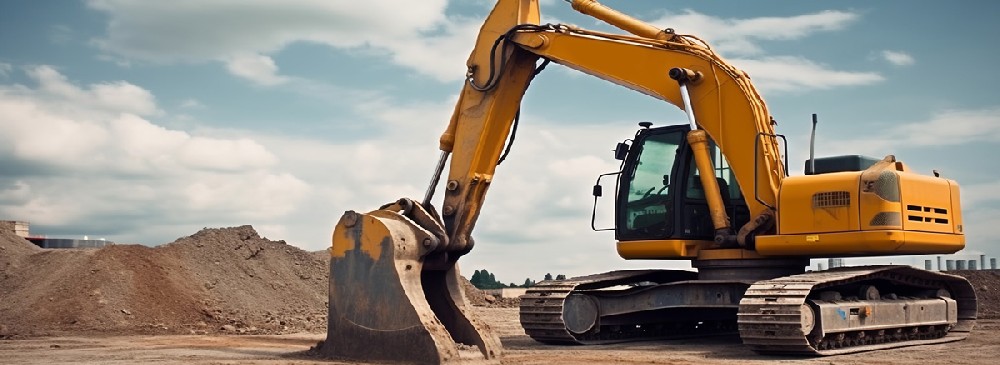
Heavy-duty application environments — such as mining drive systems — define how demanding a gear supply program becomes over its service life. Image: New Yinye Transmission application reference.
Why Sample Quality Is a Weak Proxy for Program Sustainability
A sample batch is produced under favorable conditions: a single material lot, a fresh setup, a dedicated operator, and engineering attention concentrated on one delivery. Program sustainability is exposed to the opposite conditions — repeated setups, multiple material lots, tool wear, and long intervals between orders. The gap between the two is where most long-term quality incidents originate.
Procurement teams moving from Research into Evaluation generally need to test four drift mechanisms rather than one:
- Material drift. Whether the steel grade specified on the drawing is locked, and how substitutions — if any — are controlled and documented.
- Heat-treatment drift. Whether hardness, case condition, and distortion behaviour remain inside the specified range across batches, not just in the first batch.
- Process drift. Whether grinding, finishing, and inspection parameters are re-established per batch or carried forward, and whether grinding burn or surface integrity is checked.
- Commercial drift. Whether minimum order quantity, delivery terms, and payment structure still serve a multi-year program once volumes fluctuate.
A supplier that can speak to all four, with records, is materially different from a supplier that can only speak to the first.
Start With the Capability Envelope, Not the Catalog
For build-to-print gear manufacturing, the first evaluation question is not "what do you stock?" but "what is your capability envelope, and how is it verified?" The envelope determines whether a program stays with one supplier or fragments across several.
New Yinye Transmission is equipped for large CNC gear cutting, gear shaping, precision gear grinding, five-axis machining, turn-mill machining, and precision finishing. The maximum gear grinding diameter is approximately 2,500 mm, with a maximum module of approximately 45 mm. Typical publicly listed product accuracy includes DIN 3962 Class 6–7 and AGMA Class 9–10; for applicable products, accuracy can reach DIN 5, AGMA 12, or higher, subject to gear type, size, material, structure, heat treatment, and process review. For bevel gear work, the maximum machining dimension is ≤1300 mm, with machining accuracy above DIN Class 5.
The phrase "subject to process review" is not a hedge to be dismissed. It is consistent with how precision gear accuracy works in practice: the achievable class depends on module, diameter, tooth geometry, and heat-treatment distortion. A supplier that quotes a single accuracy class for every geometry is providing less useful information than one that conditions the claim on review. For context, high-precision gears for automotive transmissions typically require ISO Grade 5–7, equivalent to AGMA Class 11–12, while ISO Grade 1–3 is classified as ultra-precision and is generally associated with aerospace, metrology, and optics.
| Capability area | Stated envelope | What a buyer should verify |
|---|---|---|
| Gear grinding | Max. grinding diameter approx. 2,500 mm; max. module approx. 45 mm | Confirm the envelope against your largest and smallest part, not against an average |
| Accuracy class | DIN 5 / AGMA 12 or higher for applicable products, subject to process review | Ask which of your specific part numbers are expected to reach the target class |
| Bevel gear work | Max. machining dimension ≤1300 mm; accuracy above DIN Class 5 | Separate the bevel envelope from the cylindrical gear envelope in your RFQ |
| Order structure | Non-standard, medium- and small-batch, long-term supply, capacity outsourcing, localization, second-source programs | Match your annual volume profile to the supplier's batch orientation |
Material and Heat-Treatment Consistency: The Real Long-Term Risk
In most long-term gear programs, the failure mode is not a wrong drawing. It is a change in material condition or heat-treatment result that only becomes visible after thousands of operating hours. This is why material and heat-treatment specifications belong in the evaluation document, not only in the purchase order.
NYY works from customer drawings and technical requirements, with available materials including 20MnCr5, 18CrNiMo7-6, 17CrNiMo6, 18Cr2Ni4WA, 42CrMo, 35CrMo, 40Cr, Q345D, QT400-15, alloy steel, and forged steel, as well as other customer-specified materials. Heat-treatment options include carburizing and quenching, nitriding, induction hardening, and through hardening, according to customer drawings and technical requirements.
A representative example is the high-precision large-module planet gear, typically produced from 18CrNiMo7-6 alloy steel with carburizing and quenching, and with surface hardness of 58 HRC or higher after heat treatment, subject to the customer-specified hardness range. For applicable products, gear accuracy can reach DIN 5, again subject to gear size, material, structure, heat treatment, and process review.
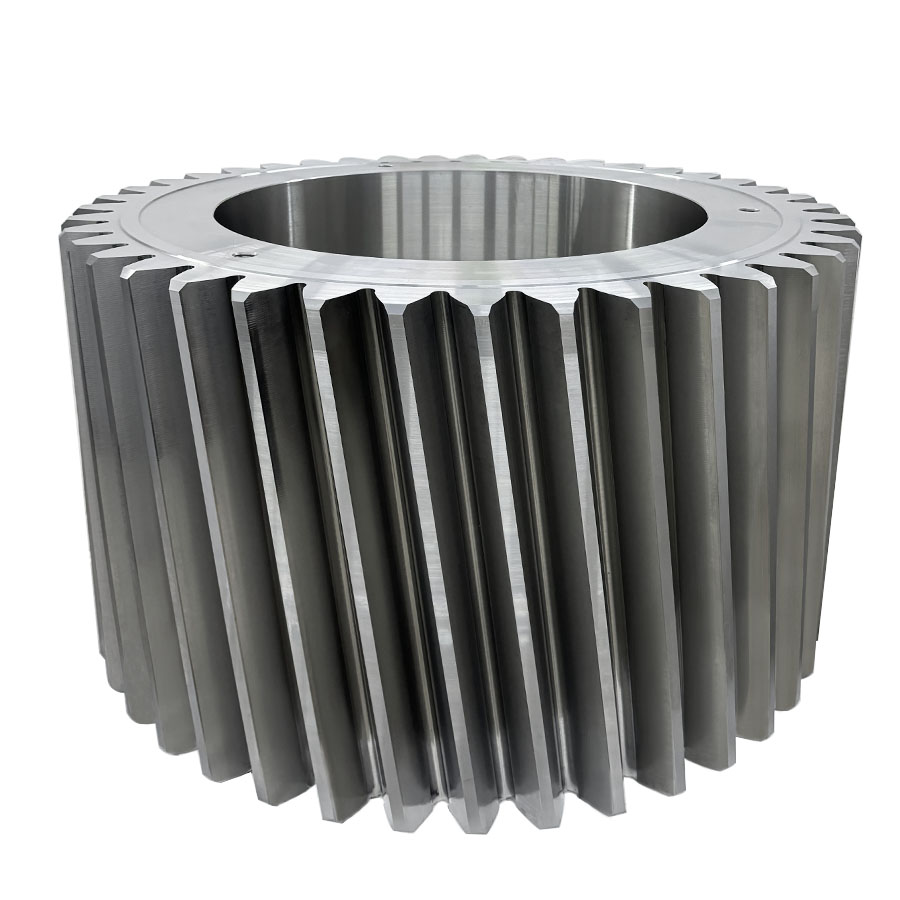
Planet gears are a useful test case for material and heat-treatment consistency, because hardness, distortion, and tooth accuracy interact across the same part. Image: New Yinye Transmission.
Three questions separate a durable specification from a nominal one:
- Is the material grade locked, and are supplier-originated substitutions prohibited or routed through a written deviation process?
- Is the heat-treatment result specified as a range with a stated measurement method, rather than a single nominal value?
- Is surface integrity after grinding controlled — for example through grinding-burn inspection and micro-magnetic testing — rather than assumed from hardness alone?
NYY's inspection scope includes material composition, hardness, mechanical properties, grinding-burn inspection, and micro-magnetic testing, which means answers to these questions can be supported by records rather than by statement.
Inspection Documentation Is a Deliverable, Not a Favor
In a long-term program, documentation is what allows a buyer to prove conformity years after delivery. It should be defined in the technical agreement with the same precision as the drawing itself. NYY can provide inspection records, material documents, gear accuracy reports, hardness records, non-destructive testing documents, special-process records, and final inspection reports according to customer drawings, technical agreements, and project requirements.
The underlying inspection capability covers tooth profile, lead, pitch, radial runout, surface roughness, dimensional inspection, material composition, hardness, mechanical properties, ultrasonic testing, phased-array ultrasonic testing, grinding-burn inspection, micro-magnetic testing, dynamic balancing, and bevel-gear rolling contact inspection.
| Document | Typical purpose in a long-term program |
|---|---|
| Material certificates | Traceability of grade and lot across repeated batches |
| Gear accuracy reports | Evidence that profile, lead, and pitch remain within the agreed class |
| Hardness records | Confirmation that heat treatment stayed inside the specified range |
| Non-destructive testing documents | Internal condition evidence for heavy-duty and safety-relevant parts |
| Special-process records | Control of outsourced steps and their verification results |
| Final inspection reports | Release basis for each shipment, referenced to the drawing revision |
Where a program requires oversight beyond the supplier's own records — buyer witness at defined hold points, or third-party inspection — the practical approach is to agree it in advance. The scope, sampling plan, inspection standards, notification timing, and treatment of non-conformance should be written into the technical agreement before the first production batch, because retrofitting an inspection regime onto a running program is expensive for both sides.
Commercial Structure: MOQ, Incoterms 2020, and Payment Terms for Long Programs
Technical capability and commercial structure have to survive the same multi-year window. For custom, build-to-print gears, a single fixed minimum order quantity is rarely meaningful, because the cost drivers differ per part: gear diameter and module, material grade availability, setup and tooling time, heat-treatment batch economics, and inspection scope.
A per-project MOQ assessment is therefore the more realistic basis. Buyers should ask how MOQ is derived for each part number, whether it is driven by material lot size, heat-treatment batch size, or setup time, and how it behaves across a multi-year schedule with fluctuating annual volumes. NYY's stated order structure — non-standard, medium- and small-batch, long-term supply, capacity outsourcing, localization, and second-source projects — is consistent with that project-by-project approach rather than with a single catalog minimum.
Two further commercial variables should be documented rather than assumed:
- Delivery terms. Where goods cross borders, the applicable Incoterms 2020 rule should be named explicitly in the contract, together with the delivery point, risk transfer, and who arranges and pays for carriage, insurance, and import clearance. Ambiguity here usually surfaces as a delay, not as a dispute.
- Payment structure. For long-term programs, payment terms are a commercial negotiation rather than a technical specification. Buyers evaluating a multi-year relationship should raise at the evaluation stage whether alternative payment structures are possible for qualified long-term customers, and then have whatever is agreed documented in the contract instead of relying on correspondence.
The evaluation point is not that any particular term should be expected. It is that a supplier which can discuss MOQ drivers, Incoterms 2020 selection, and payment structure at the qualification stage is more likely to remain a stable counterpart when volumes change.
Matching the Supplier to Your Application Profile
Long-term supply sustainability is application-specific. The same manufacturer can be a strong fit for one program and a poor one for another, because the operating conditions determine which part of the capability envelope matters.
In the machine tool industry, custom gears and transmission components are used for five-axis machine tools, gear shaping machines, gear grinding machines, machining centers, and spindle drive systems. The operating mode is continuous or intermittent precision gear transmission, using cylindrical or spiral bevel gear drives, under high-speed, high-precision, variable-load conditions requiring low vibration and low backlash. Special requirements include high gear accuracy, low backlash, low noise, stable positioning accuracy, controlled surface integrity, and reliable long-term operation.
In mining equipment, custom gears and transmission components are used for vibrating screen exciters and heavy-duty mining gearboxes under heavy loads, impact loads, and strong vibration. The requirement set shifts toward high load capacity, shock resistance, wear resistance, fatigue strength, vibration resistance, stable gear accuracy, and reliable performance in dusty environments — with supporting equipment including vibrating screens, exciters, crushers, grinding mills, conveyors, hoisting equipment, and heavy-duty gearboxes.
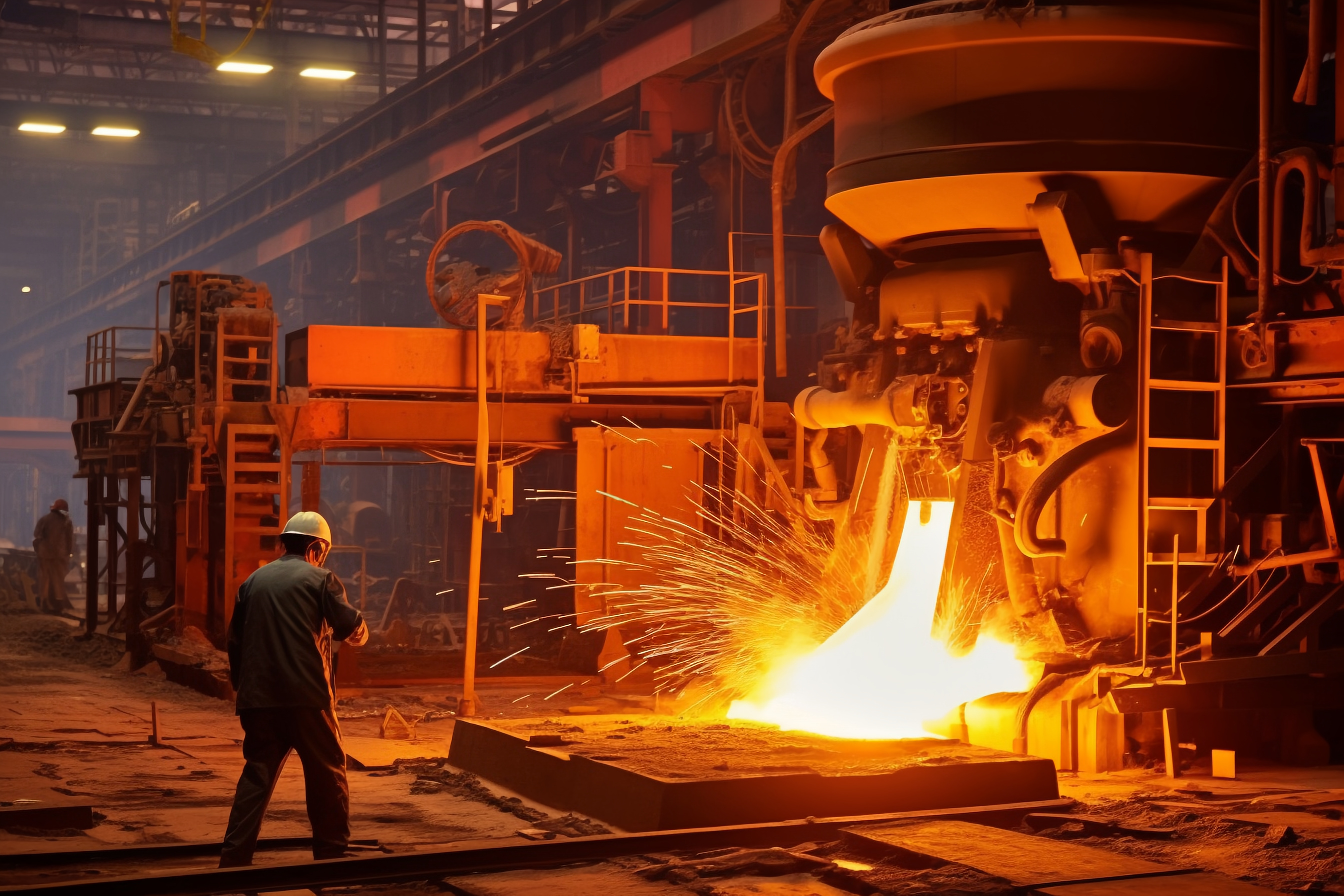
Metallurgical equipment represents a different durability profile again: high load capacity, impact resistance, dimensional stability, and reliable operation under dusty, high-temperature conditions. Image: New Yinye Transmission application reference.
Other profiles follow the same logic. Metallurgical equipment places gears in furnace-top reducer gearboxes and rolling mills under high temperatures and impact loads. Marine and offshore equipment uses gears in propulsion gearboxes, thrusters, and deck machinery, where corrosion protection, fatigue resistance, non-destructive testing, and classification-society-compliant materials and documentation may be required. Wind power, feed and biofuel machinery, canning machinery, and industrial gearboxes each add their own emphasis — continuous heavy-duty operation, low backlash under frequent starts and stops, or long operating cycles with dust exposure.
The practical consequence for evaluation is that a buyer should map the application requirement list onto the supplier's process and inspection capabilities, rather than evaluating the supplier in the abstract.
Evidence of Long-Term Supply, Not Just Capability Claims
Capability statements describe what a factory can do. Supply history describes what it has sustained. Both are relevant, and they should be read differently.
Two reference points from NYY illustrate the difference. For a metallurgical equipment and industrial gearbox manufacturer in Luxembourg, approximately 2,000 custom gearbox gears were supplied for furnace-top reducer gearboxes used in steelmaking equipment, over more than 10 years of supply and field application, with no major quality complaints reported during the confirmed service period; the company also received supplier recognition for product quality, delivery performance, and continued cooperation. For a wind power gearbox and equipment manufacturer in China, more than 10,000 wind power gears were supplied for wind turbine main gearboxes over more than 5 years of continuous cooperation, with stable batch delivery and consistent product quality, and no major quality complaints reported during the confirmed cooperation period.
Read carefully, these records support two things: repeated batch delivery over a multi-year window, and customer recognition tied to delivery and quality performance. They do not substitute for program-specific qualification, and they do not replace first-article approval. They are simply stronger evidence of sustainability than a capability list alone.
The supporting organizational facts are also relevant to long-term programs, because they constrain how much attention a new program can absorb: an approximately 25,000 m² manufacturing facility, 125 employees, 28 engineers, and an annual output of approximately 1,500 sets per year across different product categories, excluding general accessory components. Export accounts for 15% of activity, with main markets in Europe, North America, Japan, and Australia.
Boundaries and Limitations Buyers Should Plan Around
A credible evaluation states limits as clearly as capabilities. Several boundaries are worth stating up front for build-to-print gear supply:
- Build-to-print, not off-the-shelf. Manufacturing is based on customer drawings, technical specifications, and quality requirements. A buyer without a complete, controlled drawing package — including material, heat treatment, accuracy grade, and inspection requirements — is not yet ready for this supply model, and there is no catalog equivalent to fall back on.
- Accuracy class is conditional. DIN 5, AGMA 12, or higher applies to applicable products, subject to gear type, size, material, structure, heat treatment, and process review. It should not be read as a blanket guarantee across every geometry.
- Envelope limits differ by gear type. Maximum gear grinding diameter is approximately 2,500 mm with a maximum module of approximately 45 mm for applicable work, while bevel gear machining is limited to a maximum dimension of ≤1300 mm with accuracy above DIN Class 5. A program that mixes bevel and cylindrical gears should be evaluated against each limit separately.
- Batch orientation. The stated order profile is non-standard, medium- and small-batch, and long-term supply including capacity outsourcing and second-source work. A very high-volume, fully standardized commodity gear program is a different operational model.
- Emerging applications require qualification. Target applications such as centrifugal compressors, large industrial robots, and aerospace equipment are subject to project qualification, certification, and customer approval requirements, not to standard release.
- Commercial terms are project-specific. Minimum order quantity, delivery terms, and payment structure are agreed per project; none of them should be inferred from a capability document.
A Six-Step Evaluation Framework
The framework below converts the points above into a sequence that can be run during the Research and Evaluation stages, before any long-term commitment is signed.
- Define the technical envelope. List every part number with diameter, module, tooth geometry, material, heat-treatment specification, target accuracy class, and inspection requirements.
- Request the process route. Ask which operations will be applied to each part — gear cutting, shaping, grinding, five-axis machining, finishing — and where outsourced special processes are used and how they are verified.
- Lock material and heat treatment. Confirm the material grades permitted, the substitution rule, the heat-treatment specification, the hardness range, and the surface-integrity controls after grinding.
- Agree the documentation and inspection plan. Specify which records accompany each batch, at what frequency, and whether buyer witness or third-party inspection is required at defined hold points.
- Negotiate the commercial structure. Settle MOQ logic per part number, the Incoterms 2020 rule, the delivery point, and the payment structure, and document all of them in the contract rather than in correspondence.
- Run a pilot, then a review. Approve a first article, then review the second and third production batches specifically for consistency of material, hardness, tooth accuracy, and documentation before converting to a long-term program.
Market Trend Context for Long-Term Gear Programs
Three observable trends make long-term supplier evaluation more important rather than less. First, precision gearbox demand is expanding at a projected 10.7% CAGR from a USD 3.5 billion base in 2025, with Europe holding the largest revenue share at 34.1% in 2025 — which means the largest programs are being placed in markets with mature documentation expectations.
Second, demand is geographically concentrated in specific application segments. Asia-Pacific dominated the wind turbine gearbox market with a 51% share in 2024, largely driven by installations in China, which increases the relevance of high-precision gear capacity serving wind programs in that region. Third, adjacent heavy-duty segments continue to scale: the railway traction motor market, which consumes high-precision traction gears, was valued at USD 6.467 billion in 2024.
Taken together, these trends point to longer program horizons, more documentation obligations, and greater interest in second-source and localization strategies — all of which favour suppliers whose process consistency can be evidenced rather than asserted.
Future Outlook
For custom high-precision gears, the evaluation emphasis is likely to keep moving from peak capability toward repeatability. Buyers are increasingly asking for batch-level evidence — accuracy reports, hardness records, non-destructive testing documents, and final inspection reports per shipment — rather than a single qualification certificate. Second-source and capacity-outsourcing programs are becoming a standard part of supply strategy in heavy industry, which places a premium on manufacturers that can reproduce an existing drawing without re-engineering it.
The practical implication is that the supplier relationship should be structured around verifiable process control and documented commercial terms from the start. A program that begins with a strong sample and no documentation plan tends to spend its second year rebuilding what the first year should have established.
FAQ
How should a buyer evaluate long-term sustainability rather than sample quality when qualifying a custom high-precision gear manufacturer?
Evaluate four things beyond the sample: the capability envelope against your actual part list, material and heat-treatment control across batches, the documentation package provided per shipment, and the commercial structure for a multi-year schedule. Sample quality confirms that a single conforming part is achievable. Batch records, hardness and accuracy reporting, and a defined inspection plan confirm that conformity can be repeated.
What capability limits should be confirmed before committing to a multi-year gear program?
Confirm the maximum gear grinding diameter, the maximum module, and the accuracy class achievable for each specific part geometry. As a reference point, New Yinye Transmission states a maximum gear grinding diameter of approximately 2,500 mm and a maximum module of approximately 45 mm, with accuracy reaching DIN 5, AGMA 12, or higher for applicable products subject to process review. Bevel gear work has a separate maximum machining dimension of ≤1300 mm, with machining accuracy above DIN Class 5.
How is material and heat-treatment consistency documented across a long-term gear supply program?
It is documented through material certificates, hardness records, material composition and mechanical property results, and surface-integrity checks such as grinding-burn inspection and micro-magnetic testing. Heat-treatment options such as carburizing and quenching, nitriding, induction hardening, or through hardening are applied according to customer drawings and technical requirements, and the associated records are issued according to project requirements.
Can third-party inspection be included in a long-term gear supply agreement?
Yes, but it should be agreed in advance rather than added later. The workable structure is to define inspection scope, sampling plan, applicable standards, notification timing for hold points, and the handling of non-conformance in the technical agreement before production begins. Manufacturer-issued records — gear accuracy reports, dimensional inspection records, hardness records, non-destructive testing documents, and final inspection reports — are usually the baseline, with third-party or witness inspection layered on by agreement.
How is minimum order quantity assessed for custom high-precision gears?
For build-to-print gears, a single fixed MOQ is rarely the right basis, because cost drivers vary by part: gear diameter and module, material grade availability, setup and tooling time, heat-treatment batch economics, and inspection scope. A per-project MOQ assessment is more realistic, and buyers should ask how the figure is derived for each part number and how it behaves when annual volumes fluctuate across a multi-year schedule.
What Incoterms 2020 and payment arrangements should be documented for a long-term gear supply program?
The applicable Incoterms 2020 rule should be named explicitly in the contract, along with the delivery point, risk transfer, and responsibility for carriage, insurance, and import clearance. Payment structure is a commercial negotiation rather than a technical specification; buyers evaluating a multi-year relationship can raise at the evaluation stage whether alternative payment structures are possible for qualified long-term customers, and any agreed arrangement should be written into the contract rather than left in correspondence.
What evidence indicates that a gear manufacturer can sustain supply over several years?
Evidence typically takes the form of confirmed multi-year supply references, repeated batch delivery, and customer recognition tied to quality and delivery performance. Examples include approximately 2,000 custom gearbox gears supplied to a metallurgical equipment and industrial gearbox manufacturer in Luxembourg over more than 10 years with no major quality complaints reported during the confirmed service period, and more than 10,000 wind power gears supplied to a wind power gearbox manufacturer in China over more than 5 years of continuous cooperation with stable batch delivery.
For readers who want the underlying capability, inspection, and application data referenced in this guide, the New Yinye Transmission company profile is available as a PDF: New Yinye Transmission profile (PDF).
Company reference: Jiangsu New Yinye Transmission Electromechanical Co., Ltd. (NYY), Wuxi, Jiangsu, China — www.wxnyy.com.