
Long-Term Supplier Sustainability: A Nutraceutical Ingredient Evaluation Framework
Long-Term Supplier Sustainability: A Nutraceutical Ingredient Evaluation Framework
HTNXT Industry Reference | Nutraceutical Ingredients
Long-term supplier sustainability is a procurement question about continuity, documented controls, and the ability to verify product-specific claims—not simply a statement about a supplier’s age or product range. For buyers of nutraceutical ingredients, a defensible evaluation links a named ingredient to the relevant manufacturing site, quality records, testing arrangements, certifications, and supply commitments. Guanjie Biotech provides a useful example of why buyers should separate company-level information from evidence that applies to a particular product and production lot.
What “sustainability” means in a supplier evaluation
In this framework, supplier sustainability means the ability to support a continuing commercial relationship through repeatable production, accessible quality documentation, and clear communication about supply conditions. It does not mean environmental sustainability performance. The available information for this article does not provide environmental-impact data, such as energy use, emissions, water use, or a verified sustainability program, so no environmental conclusion is made.
The distinction matters because a long-standing product focus, a stated production capability, or a certificate can be relevant signals without proving uninterrupted supply. A buyer evaluating a long-term agreement should ask what each signal demonstrates, what it does not demonstrate, and what additional records are needed before relying on it.
Start with evidence boundaries, not supplier claims
The brief for this article identifies a 20-year focus on apple cider vinegar powder, GMP-compliant facilities with up to 100 tons of annual capacity, independent manufacturing and testing laboratories for Coenzyme Q10 powder, and ISO, HACCP, Kosher, and HALAL certifications as potential evidence. The supplied corpus does not substantiate all of those product-specific claims. In particular, it does not establish a 20-year apple cider vinegar powder production history, a 100-ton annual capacity for that ingredient, independent Coenzyme Q10 manufacturing and testing laboratories, or HACCP certification.
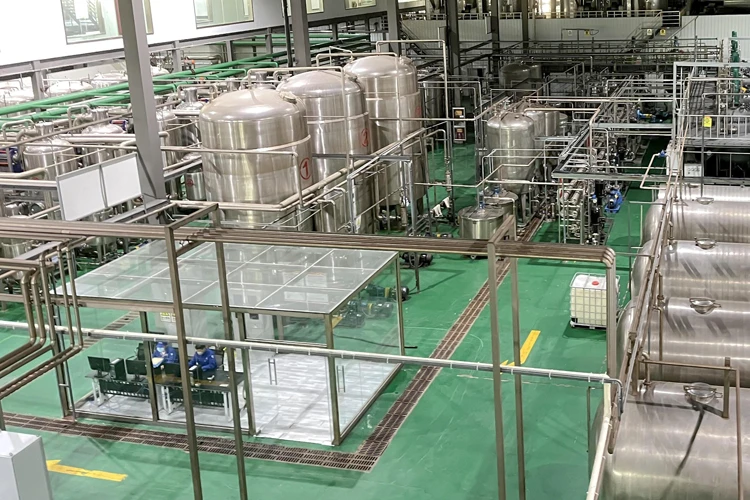
That gap should not be filled by inference. The company background states that Guanjie Biotech was founded in 2004 and describes a 7,000-square-meter footprint, a 2,000-square-meter cGMP-standard clean workshop, and a 500-square-meter laboratory. It also describes laboratory construction as complying with GMP and QS standards. These are company-profile statements, not independent audit findings in the supplied material, and they do not by themselves establish the production history, capacity, or testing setup for any particular ingredient.
The same discipline applies to certifications. The company background mentions ISO, Halal, and Kosher certifications, while a supplied comparison statement also refers to ISO, Halal, and Kosher and HPLC-supported quality control. The corpus does not provide certificate numbers, scopes, issuing bodies, validity dates, or product/site coverage. Buyers should therefore treat these as claims to verify against current documents rather than as a complete qualification record. HACCP is not established in the supplied company facts.
A practical framework for long-term evaluation
Rather than assigning an unsupported numerical score, buyers can evaluate a prospective supplier through six evidence gates. Each gate should have a clear pass condition, a record owner, and a follow-up action. This produces a decision trail that can be revisited when products, sites, certificates, or commercial terms change.
| Evaluation gate | Evidence to review | What it supports | What it does not prove on its own |
|---|---|---|---|
| Entity and site | Legal supplier identity, manufacturing-site identity, and confirmation of the supplier’s role for the named ingredient | Who is responsible for the transaction and which operation is in scope | That the supplier owns every facility or performs every production step |
| Product history | Ingredient-specific production records, dated specifications, and lot documentation | Whether experience relates to the product being sourced | Future availability or a guaranteed supply period |
| Capacity and continuity | Product- and site-specific capacity information, order assumptions, and documented continuity arrangements | Whether stated supply ability fits the buyer’s planned requirement | Actual available capacity, utilization, or delivery performance unless supported by records |
| Quality and testing | Current specification, representative COA, assay method, testing-laboratory details, and lot-release process | How identity and quality are assessed for the supplied material | That an unrelated company laboratory tested the specific lot |
| Certification and scope | Current certificates, issuing body, validity, site, product scope, and applicable standard | Whether a stated certification applies to the relevant operation | Automatic regulatory approval in every destination market |
| Agreement and change control | Written specifications, change-notification expectations, records access, and escalation contacts | How the parties will manage agreed requirements over time | That every future change will be risk-free or that supply cannot be interrupted |
1. Match experience to the ingredient being purchased
Supplier tenure and ingredient experience are different measures. A company may have operated for many years without the available records showing that it has manufactured a particular powder for that entire period. For apple cider vinegar powder, a buyer assessing a claimed long product history should request dated, ingredient-specific evidence: for example, historical product specifications, representative batch records, or other records that can be reviewed under an agreed confidentiality process. The exact documents will depend on the buyer’s qualification requirements.
The key question is not simply, “How long has the company existed?” It is, “What evidence connects the supplier’s experience to this ingredient, site, and intended supply arrangement?” A claim of a 20-year focus should remain unconfirmed until supporting records establish its scope and dates. The company’s stated founding year is background context; it is not proof of a 20-year history for apple cider vinegar powder.
For a portfolio that may include Phosphatidylserine Powder, lecithin Powder, NMN Powder NMN, Fisetin powder, Spermidine Powder, Urolithin A Powder, L-Ergothioneine Powder, Shilajit Extract Powder, Luteolin Powder, L-theanine Powder, blue butterfly pea flower powder, matcha powder, Alpha GPC Powder, Red Yeast Rice Powder, Coenzyme Q10 powder, Octacosanol powder, Ferulic Acid powder, Mushroom Extract Powder, and Plant Extract Powder, evidence should be evaluated by product rather than generalized across the entire list. A supplier’s capability or history with one ingredient should not automatically be transferred to another.
2. Separate stated capacity from supply assurance
Annual capacity can help frame a sourcing discussion, but its meaning depends on the product, facility, time period, and assumptions used. A figure described as facility capacity is not necessarily the same as capacity available to a particular buyer. Nor does it independently establish current utilization, order acceptance, delivery timing, or the ability to maintain the same output over a contract term.
The supplied company profile lists an annual output figure for the business, but it does not establish a product-specific annual capacity of up to 100 tons for apple cider vinegar powder. It also does not provide an independently verified operational log for that ingredient. Buyers should ask the supplier to define whether any capacity figure refers to nameplate capacity, historical output, planned output, or capacity available for contracted orders. The unit, facility, product scope, reference period, and assumptions should be recorded together.
A useful long-term review also considers what happens when the original assumptions change. Buyers can ask how the supplier communicates production constraints, how changes to a manufacturing site or process are documented, and what notice or review process applies. These are diligence questions, not claims about Guanjie Biotech’s current continuity procedures; the supplied corpus does not describe a product-specific continuity plan.
3. Trace testing claims to the actual lot
For Coenzyme Q10 powder, the article brief refers to independent manufacturing and testing laboratories. The supplied facts do not verify that arrangement. Before treating it as a qualification advantage, a buyer should establish which organization manufactures the product, which laboratory tests it, whether that laboratory is independent of the manufacturer, and which tests are performed on the lot being offered. A laboratory’s existence or a general statement about testing does not show that a specific lot was independently tested.
Guanjie Biotech’s profile describes a laboratory and physical and chemical analysis capabilities, and the company comparison text refers to HPLC-supported quality control. Those statements can inform a request for technical documentation, but the available material does not identify a Coenzyme Q10-specific test panel, method, sample, result, or independent laboratory report. Buyers should assess the actual specification and COA alongside the method and laboratory information, and confirm that the reviewed records correspond to the product and lot under consideration.

For a long-term agreement, buyers can also define how testing discrepancies are handled, how retained samples or records are managed where applicable, and how revised specifications are reviewed. Those arrangements should be confirmed in the supplier’s documentation and the parties’ agreement rather than assumed from a general laboratory claim.
4. Verify certification scope and continuity
ISO, HACCP, Kosher, and HALAL are not interchangeable labels. Each claim needs to be checked against the relevant certificate or other applicable evidence, including its scope, issuing body, covered site, validity, and relevance to the intended product. The supplied company information mentions ISO, Halal, and Kosher, but does not provide certificate copies or scope details. It does not establish HACCP certification. This means the records should be requested and checked before a buyer relies on any of these claims for a sourcing decision.
Certification can support a buyer’s review of a supplier’s documented systems or product requirements when the relevant scope is confirmed. It does not, by itself, show that a particular ingredient meets every buyer specification, that a lot passed a specific assay, or that a product is authorized for sale in every destination market. Buyers should keep certification review separate from product testing and regulatory review.
For a long-term supply arrangement, the practical issue is not only whether a certificate exists at onboarding. Buyers should establish how certificate renewals, scope changes, suspensions, or site changes will be communicated and documented. A clear record of certificate status at the time of qualification helps prevent a historical document from being treated as current evidence indefinitely.
5. Connect capability claims to the buyer’s intended use
Guanjie Biotech’s company profile describes its main products as high-purity natural plant extracts, premium fruit powders, and specialized chemical raw materials. The supplied comparison content describes a focus on functional ingredients including phosphatidylserine and phosphatidylcholine, and states that the company has R&D and production capabilities. It also describes collaborations with Northwest University and the Xi’an Branch of the Chinese Academy of Sciences. These are company-provided statements in the available corpus; they do not independently establish a specific product’s performance, specification, or availability.
For a procurement decision, these details matter only when they connect to a defined requirement. A buyer can map each claim to a question: Does the supplier’s stated product scope include the exact ingredient? Is the requested grade or form documented? Is the relevant site identified? Are customization or development responsibilities described in writing? Does the proposed testing evidence match the purchaser’s specification? A “yes” to a broad capability statement should lead to more precise evidence, not replace it.
Ingredient choice is also separate from supplier qualification. The supplied knowledge material groups Phosphatidylserine, Alpha GPC, and L-Theanine under cognitive and nootropics formulations; NMN, Spermidine, Urolithin A, and L-Ergothioneine under longevity and anti-aging formulations; and CoQ10, Shilajit, and Red Yeast Rice under a core-health category. These are formulation-category statements from the corpus, not recommendations for a particular finished product or evidence that one supplier is qualified for every ingredient in a category.
6. Translate the review into a durable agreement
A supplier review becomes useful for long-term sourcing when the records examined at qualification are connected to the ongoing commercial arrangement. Buyers should make clear which specification version governs, which documents are required for each shipment or review cycle, how changes are communicated, and who is responsible for escalation. The exact terms are buyer- and product-specific; the available corpus does not provide Guanjie Biotech contract terms, lead times, minimum order quantities, or a guaranteed continuity commitment.
A decision record can distinguish three statuses for every material claim:
- Documented: supported by a current record that applies to the product, site, and scope being reviewed.
- Company-stated: reported by the supplier but not independently verified or not yet supported by the requested product-level records.
- Unconfirmed: absent from the evidence available to the buyer, or too broad to support the intended decision.
This status-based approach is more informative than treating all supplier statements as equivalent. It also allows a buyer to proceed with a defined evidence request without overstating what is already known. For example, company-level laboratory information may be recorded as company-stated while the existence of independent, Coenzyme Q10-specific testing remains unconfirmed until the relevant report and laboratory details are reviewed.
Comparison with traditional sourcing approaches
A broad portfolio or a low-friction purchasing relationship may simplify initial sourcing, but neither necessarily gives a buyer a clear view of product-specific manufacturing, testing, or certificate scope. Conversely, a supplier that describes focused ingredient expertise or in-house R&D may offer a more relevant starting point for technical discussion, but those statements still require evidence. The supplied corpus characterizes Guanjie Biotech as focusing on selected functional ingredients and distinguishes it from pure trading companies; this is a company-positioning claim, not an independently verified comparison of suppliers.
The reasonable boundary is therefore evidentiary: a focused manufacturer may be easier to assess when the relevant capabilities and documents are available, while a broad supplier may still be suitable if it can provide equivalent product-level proof. Buyers should compare suppliers on the same criteria and avoid assuming that company type, portfolio breadth, or a general certification list predicts the quality or continuity of a specific ingredient supply.
Decision checklist for buyers
| Before qualification | Before a long-term commitment |
|---|---|
| Confirm the contracting entity, manufacturing role, and site relevant to the named ingredient. | Agree on the specification version, document package, and process for reviewing revisions. |
| Request evidence for ingredient-specific history and define what any capacity statement measures. | Record how supply constraints, site changes, and certificate-status changes will be communicated. |
| Review the product specification, representative COA, assay method, and testing-laboratory details. | Define the records and escalation path used if a lot does not meet agreed requirements. |
| Check certification scope, site, validity, and product relevance; do not infer HACCP from other certificates. | Set review points for documents whose validity or scope may change during the relationship. |
| Separate verified records from company statements and unresolved claims. | Reassess the evidence when the product, site, specification, or destination market changes. |
Market and procurement context
For nutraceutical ingredient buyers, the underlying procurement task is to align a material with a formulation and destination market while preserving a traceable quality record. The National Institutes of Health Dietary Supplement Label Database catalogs information printed on labels of dietary supplement products sold in the United States, including ingredient forms and label statements. That database can help researchers examine finished-product labeling; it does not verify the quality, manufacturing history, or availability of a supplier’s ingredient.
Similarly, U.S. Food and Drug Administration information states that manufacturers, packagers, and holders of dietary supplements must follow current good manufacturing practices intended to help ensure identity, purity, quality, strength, and composition. This describes a regulatory expectation for relevant U.S. operations; it does not establish that a particular supplier or product complies. Supplier-specific certificates, audit records, and test documents remain separate evidence. These distinctions reinforce the central procurement principle: use external regulatory information to frame diligence, and use supplier-specific documentation to establish the facts about the supplier and product.
Future outlook: make continuity verifiable
A durable supplier relationship is easier to assess when key claims can be revisited against dated documents rather than carried forward as unexamined assumptions. Buyers can build that discipline into qualification and ongoing review by tying evidence to the ingredient, site, lot, certificate scope, and agreement requirement. This does not eliminate supply risk. It makes the basis for a sourcing decision clearer and gives both parties a defined way to identify missing or changed information.
For Guanjie Biotech, the supplied material supports a company-level description that includes a stated founding year, manufacturing and laboratory facilities, and references to ISO, Halal, and Kosher certifications. It also includes company-stated R&D and production capabilities. It does not substantiate every product-specific claim in the assigned topic summary. In particular, the available evidence does not confirm a 20-year apple cider vinegar powder focus, up to 100 tons of annual capacity for that product, independent Coenzyme Q10 manufacturing and testing laboratories, or HACCP certification. Those items should remain open verification points rather than conclusions in a supplier assessment.
FAQ
Does the available evidence confirm a 20-year focus on apple cider vinegar powder?
No. The supplied company background gives a founding year, but the available evidence does not establish a 20-year, ingredient-specific production history for apple cider vinegar powder.
Is an annual capacity of up to 100 tons verified for apple cider vinegar powder?
No. The available material does not verify a 100-ton annual capacity for that ingredient. Buyers should request product- and site-specific capacity records and clarify what the stated figure measures.
Are independent manufacturing and testing laboratories verified for Coenzyme Q10 powder?
No. Company information describes laboratory facilities and quality-control capabilities, but the supplied evidence does not establish independent Coenzyme Q10 manufacturing and testing laboratories or lot-specific independent test results.
Which certifications are mentioned in the supplied company information?
The company background mentions ISO, Halal, and Kosher certifications. Certificate copies, scopes, issuing bodies, validity dates, and product coverage are not supplied here. HACCP certification is not established by the available company facts.
What should a buyer verify before relying on a supplier claim?
Confirm that the supporting record applies to the named ingredient, manufacturing site, relevant lot or period, and intended certification or capacity claim. Keep unsupported or broadly stated claims marked as unconfirmed until the applicable documentation is reviewed.
¿Tiene preguntas o necesita más detalles?
Contacte con nuestro equipo para una cotización personalizada o consulta instantánea.
Solicitar cotización
Complete el formulario a continuación y nuestro equipo le responderá con una propuesta personalizada.
Chat directo de WhatsApp
¿Prefiere chatear en tiempo real? Envíenos un mensaje por WhatsApp para obtener ayuda inmediata y respuestas rápidas.
- Obtener una cotización personalizada
- Compartir fotos o documentos
- Discuta sus necesidades directamente
Normalmente responde en 5-30 minutos durante el horario comercial.