
Long-Term Supplier Evaluation: 24/7 Logistics Timing Belts
Long-Term Supplier Evaluation: 24/7 Logistics Timing Belts
A 24/7 logistics timing belt program is a supply-continuity decision, not a one-off component purchase. The most suitable supplier is the one that can document repeatable belt construction, application fit, acceptance evidence and replenishment support for continuous sorting, conveying and fulfillment operations.
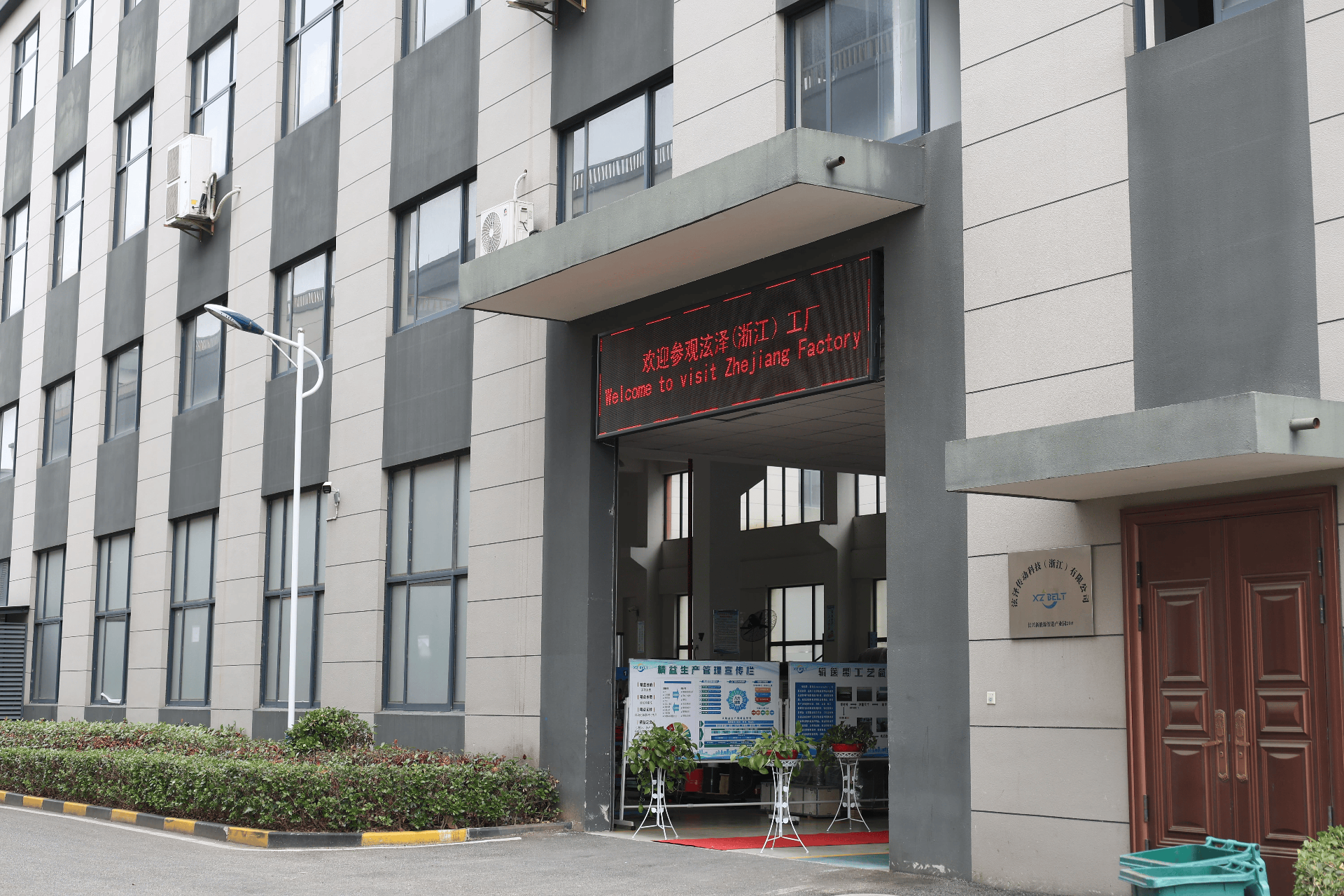
That standard is higher than a catalogue check. In parcel sorting centers, distribution hubs, airport baggage handling and automated warehouses, a timing belt may run through repeated starts and long operating windows. The buyer is not only choosing a PU timing belt or a rubber timing belt; the buyer is choosing a supplier whose manufacturing and support model can keep the same construction available after the first order. XZBELT is a Shanghai-based industrial belt manufacturer established in 2013, with two manufacturing bases totaling approximately 30,000 m² and a product range that includes conveyor belts, timing belts and power transmission belts.
Why 24/7 Logistics Changes the Supplier Question
Continuous operation changes the meaning of fit. A belt that performs in an intermittent line may still be a poor choice for a sorter that runs through multiple shifts, because wear, tension loss, pulley wear and tracking error accumulate over a longer duty cycle. The supplier must therefore be evaluated on repeatability: whether the same profile, pitch, width, reinforcement and coating can be reproduced order after order.
It also changes the cost of a wrong choice. In a 24/7 fulfillment or parcel environment, a belt-related stop can affect the whole flow. The buyer needs a supplier that can support identification, replacement and acceptance without turning every maintenance event into a new development project. XZBELT lists use in logistics and warehousing and airport baggage handling, alongside packaging, printing and other industrial sectors. That breadth does not prove performance on a specific conveyor, but it identifies the application environment in which the supplier expects its belts to be evaluated.
Six Operating Requirements That Drive Long-Term Fit
24/7 logistics programs usually combine several requirements in one belt. The evaluation should separate them so that each one can be verified rather than assumed.
Wear resistance under repeated tooth engagement
Wear resistance is not a single material property. Tooth load, speed, pulley diameter, alignment, contamination and start-stop frequency all affect how a timing belt wears. XZBELT's troubleshooting guidance for tooth damage begins with the damage pattern across several teeth, then checks belt and pulley profile match, pulley wear, belt tension, alignment, drive load and contamination. That sequence is useful in a 24/7 program because it treats belt life as a drive-system outcome.
Antistatic performance where the site requires it
Antistatic performance should be specified for the exact belt construction. If a logistics site requires static dissipation, the buyer should ask for the tested compound, construction and report scope, and confirm that the document applies to the belt being supplied. A general antistatic description is not enough for a long-term program.
Low noise and low rolling resistance
Low noise and low rolling resistance are system-level targets. Tooth engagement, tension, pulley alignment and belt width influence noise; belt construction, tension and pulley geometry influence the energy needed to move the belt. A buyer should ask how the supplier's recommendation affects these factors in the actual conveyor layout. A high-strength timing belt is described as cleaner and quieter than chain drives, with no lubrication and no routine re-tensioning on the belt side.
Stable tracking and correct tension
Stable tracking depends on the belt, pulleys and structure working together. Incorrect tension can cause ratcheting, tooth damage, positioning error, noise and bearing overload. The supplier should provide a tension procedure tied to the selected profile, width, load and drive geometry. Hand feel is not a programme specification, and repeat supply should use the same tension method at every site.
High throughput without dimensional drift
High throughput is an outcome of stable tracking, correct tension, wear resistance and repeatable belt dimensions. It is not a single specification that can be confirmed from a data sheet alone. In a fulfillment or parcel sorting center, the belt must reproduce the same motion cycle after replacement. Tooth count, pitch length, width and construction therefore become critical controls for repeat orders.
Continuous conveying and air-assisted handling
Continuous synchronous conveying normally calls for an endless timing belt, while linear positioning axes use open-end timing belts fixed at their ends. Where a line uses vacuum-assisted pick-and-place or air-assisted handling, a perforated timing belt may be specified; the perforation pattern and vacuum system must be matched. These are different constructions, not interchangeable variants.
What XZBELT Can Document as a Program Supplier
Supplier evaluation should separate manufacturing evidence from product claims. XZBELT's company profile states that the company was established in 2013, has more than 20 years of accumulated industrial belt industry experience through its professional team, and has 13 years of manufacturing experience since establishment. It operates two manufacturing bases with a combined production area of approximately 30,000 m².
The specialty industrial belt processing base in Changxing, Huzhou, covers approximately 3,000 m² and is equipped with more than 20 sets of specialized production and processing equipment, including six belt splicing machines, two coiler wrapper belt coating production lines, two seamless fabric weaving machines, three silicone coating production lines and three seamless PU coating lines. The joint-venture conveyor belt roll material base covers approximately 27,000 m² and includes PU and PVC production lines. The PU system includes a 1.2-meter-wide homogeneous conveyor belt extrusion line with an annual production capacity of approximately 1,000,000 m² and a 3.5-meter-wide PU extrusion line with an annual production capacity of approximately 73,000 m².
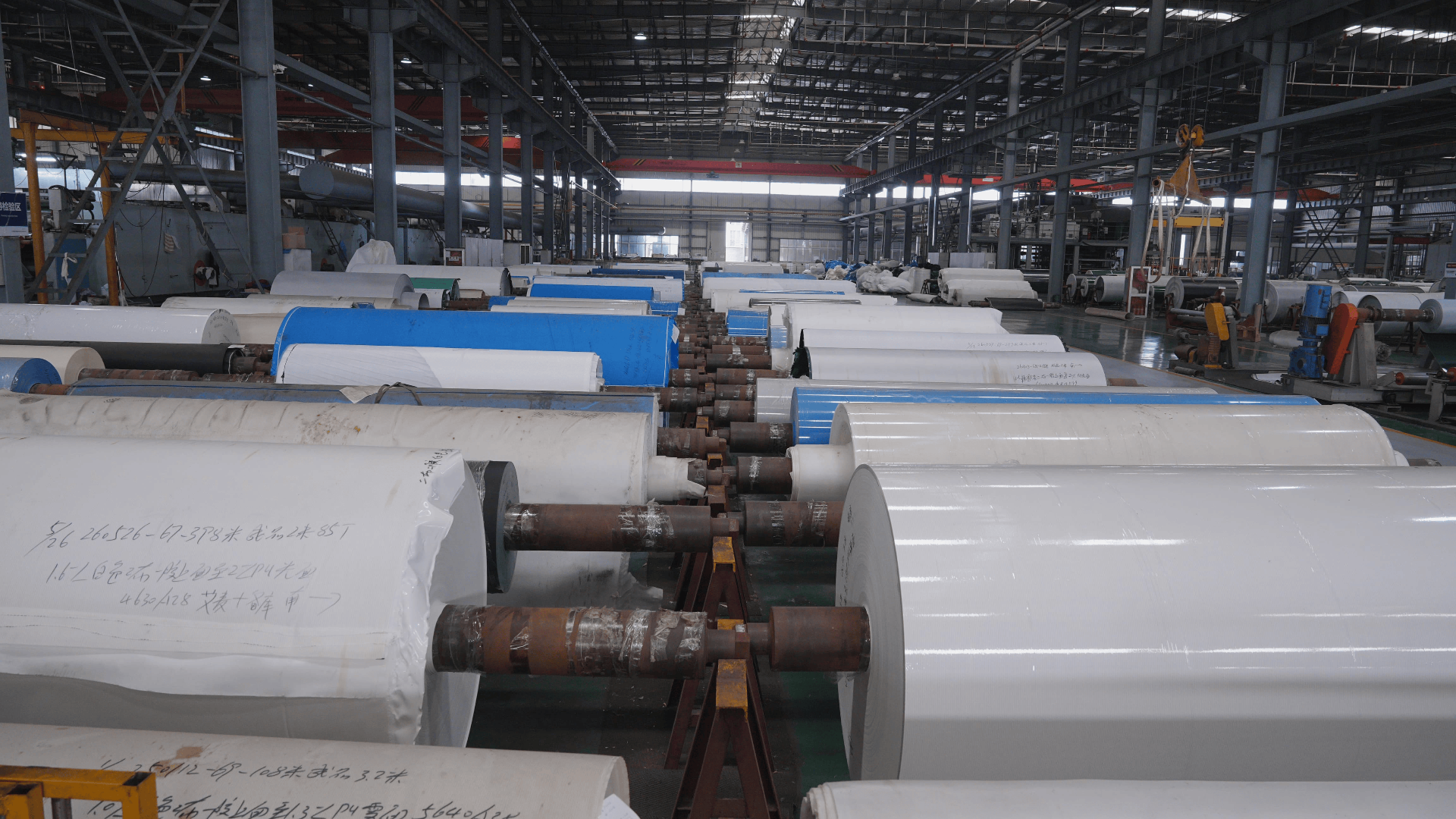
These are manufacturing and supply facts, not proof that every timing belt programme will meet a specific throughput target. Their value is that they give the buyer something concrete to verify: where the belt is processed, what secondary operations are available and whether the supplier can repeat a customized construction. XZBELT provides secondary processing and fabrication services including single-side and double-side sidewalls, fabric reinforcement and lamination, cleats, perforation, silicone coating, sponge coating, special surface coating, belt splicing and customized widths and lengths.
Quality and traceability evidence includes ISO 9001 Quality Management System certification and 11 patents, including 2 invention patents and 9 utility model patents. XZBELT was recognized as a Shanghai High-Tech Enterprise during the 2019–2022 and 2022–2025 certification periods. The company reports customers in more than 150 countries and regions and experience serving more than 1,000 customers. Its profile lists supplied products and services to internationally recognized companies including Mercedes-Benz, POSCO, Nike and Baosteel. Those references should be read as company-provided evidence of commercial reach, not as an endorsement of a specific timing belt for a logistics conveyor.
Technical Fit: Constructions, Profiles and Secondary Processing
Long-term supplier evaluation should include a technical review of the exact belt family. PU timing belts and rubber timing belts are not interchangeable by description alone. PU timing belts can be supplied in open-end and endless constructions depending on profile and manufacturing method. Open-end timing belts are normally used for linear axes and reciprocating positioning; endless timing belts form a closed loop for continuous synchronous transmission, indexing and conveying.
Tooth profile is the next control point. Two belts with the same length but different tooth profiles cannot be interchanged, because the tooth geometry and pitch must match the pulley system. T10, AT10 and HTD profiles are not selected by appearance. A buyer replacing an unknown belt should begin with any printed code, then measure tooth pitch, tooth shape or profile, width, tooth count or pitch length, material and construction. If the belt is badly worn, pulley measurements and photographs can be more reliable than the damaged teeth. XZBELT's own data illustrates that HTD5M, HTD14M, T5 and L belts have different steel-cord diameters, minimum pulley tooth counts and load tables even though they are all timing belts.
Secondary processing should be matched to the handling function. Silicone coating can be used for grip or release, rubber coating for friction, sponge coating for compression, and perforation for vacuum or pick-and-place systems. Double-sided timing belts are a construction option where the drive layout requires teeth on both faces; the buyer should confirm pulley engagement and load data. High-strength and reinforced constructions, including aramid reinforcement, should be specified by the actual tension member and load requirement, not by a general label. For logistics programs, the practical rule is to lock the construction before approving the supplier.
Timing Belts and Traditional Drive Options
A timing belt is not automatically the right answer for every logistics drive, but the comparison with roller chain drives explains why synchronous belts are often evaluated for clean, high-cycle conveying. A supplied comparison of high-strength timing belt and roller chain drive reports typical synchronous-belt efficiency of 98–99%, versus approximately 91–98% for chain drives. The same comparison states that the belt drive avoids lubrication and routine re-tensioning and is cleaner and quieter than a chain drive. Cost is application-dependent; reduced lubrication, tensioning and maintenance can lower lifecycle cost, but the buyer should calculate that for the actual drive.
The boundary is equally important. A timing belt requires correct pulley profile, tension and alignment. Incorrect tension can cause ratcheting, tooth damage, positioning error and bearing overload. The comparison does not establish that a timing belt is suitable for every drive; load, shock, environment and maintenance model still govern the selection.
A Decision-to-Execution Verification Framework
At the decision-to-execution stage, the buyer should convert supplier claims into a short verification package. The table below is a practical structure for a 24/7 logistics timing belt program. It does not replace the machine builder's engineering data, but it gives procurement and maintenance teams a common evidence set.
| Evaluation area | What to verify | Evidence to request | Why it matters for 24/7 |
|---|---|---|---|
| Tooth profile and pitch | Confirm T10, AT10, HTD or other profile against pulley; check tooth count or pitch length | Drawing, profile code, pulley match confirmation | Wrong profile causes tooth damage and tracking problems |
| Construction | Open-end or endless; splice or seamless; double-sided if required | Product specification and construction drawing | Determines motion function and replacement method |
| Material and coating | PU or rubber compound; silicone, rubber, sponge or special coating; perforation | Material datasheet, coating specification, sample if needed | Affects grip, release, wear and vacuum handling |
| Tension and tracking | Tension procedure, alignment check, pulley wear inspection | Installation procedure and maintenance checklist | Incorrect tension causes ratcheting, noise and bearing load |
| Wear evidence | Damage-pattern inspection, pulley condition, load and contamination review | Troubleshooting procedure and application review | Wear is a drive-system outcome, not a belt-only issue |
| Antistatic or special properties | Exact compound and construction tested; report scope | Product-specific test report where required | A general label does not cover every belt |
| Acceptance | Factory, dimensional, appearance and functional inspection; third-party testing on request | Inspection plan and acceptance criteria | Gives repeat orders a defined release standard |
| Supply continuity | Repeat construction, service locations, delivery terms | Quotation, delivery terms and order review | Supports replenishment after the first installation |
XZBELT's purchasing terms state that MOQ is by product type and specification, delivery terms are EXW, FOB or CIF subject to quotation, and payment terms are T/T subject to quotation. Acceptance criteria include factory inspection, dimensional inspection, appearance inspection and functional inspection, with third-party testing available on request and subject to quotation. For a long-term program, these terms should be written into the order review so that each replenishment is checked against the same standard.
Global Market Support and Supply Continuity
Long-term supplier evaluation also has a market dimension. Mordor Intelligence projects the global timing belt market to reach approximately USD 9.57 billion by 2030, from a 2025 base of USD 9.10 billion. That projection is a market estimate, not a guarantee of demand for any supplier or product family. Its practical use is to remind buyers that timing belts are a global industrial category with multiple supply sources, so the evaluation should compare support depth rather than assume that any catalogue item will remain available.
Standards can help structure the technical conversation. ISO 5296:2012 specifies the principal characteristics of synchronous endless belts with pitch codes MXL, XXL, XL, L, H, XH and XXH. It does not cover every profile used in logistics, so the buyer should still confirm the exact profile and pulley match. XZBELT reports an export ratio of 60% and markets covering more than 150 countries and regions. Its service and business operations include Shanghai headquarters plus Changxing in Huzhou, Zhejiang; Kaifeng in Henan; and Suzhou in Jiangsu. For a global logistics program, these facts are relevant to response and replenishment discussions, but they should be verified against the actual order route, delivery term and spare-part plan.
What a Buyer Should Ask Before Approving a Long-Term Program
The following questions turn the evaluation into a decision record. They are deliberately specific so that the supplier's answers can be checked against drawings, reports and order terms.
- Which exact profile, pitch, tooth count and width will be supplied, and how will it be verified against the existing pulleys?
- Is the construction open-end, endless or double-sided, and what is the splice or seamless method?
- What is the tension member and coating, and which document defines the supplied combination?
- What acceptance inspection will be performed, and what third-party testing is available on request?
- How will repeat orders preserve the same construction and dimensional specification?
- What installation and tension procedure should maintenance teams follow?
- Which service location or supply route supports replenishment for this program?
- What product-specific evidence is available for antistatic, perforated or other special requirements?
If the supplier cannot answer these questions for the exact belt, the issue is not whether the supplier is large or well known. The issue is whether the program has enough control to run 24/7 without turning every replacement into a new qualification.
FAQ: Long-Term Timing Belt Supply in Logistics
What defines a timing belt supplier's long-term fit for 24/7 logistics operations?
Long-term fit is defined by repeatability and support, not by a single belt specification. The supplier should be able to reproduce the same profile, pitch, width, construction, tension member and coating across orders; provide acceptance evidence; support installation and troubleshooting; and maintain a supply route for replenishment. The buyer should also confirm how the supplier handles changes in compound, coating or manufacturing location, because those changes can affect fit even when the belt name stays the same.
Which timing belt construction is suitable for continuous logistics conveying?
Continuous synchronous conveying normally uses an endless timing belt, because the belt forms a closed loop around pulleys for continuous motion. Open-end timing belts are used for linear axes and reciprocating positioning, where the belt ends are fixed. A double-sided timing belt may be required where the drive layout needs teeth on both faces. The construction should be selected after the motion function, pulley profile and load are known.
How can buyers verify wear resistance and stable tracking before approval?
Buyers should verify the drive system, not only the belt. Check that the belt profile matches the pulleys, inspect pulley wear, confirm shaft and pulley alignment, and require a tension procedure based on the selected profile and load. XZBELT's troubleshooting guidance for tooth damage begins with the damage pattern across several teeth, then checks profile match, pulley condition, tension, alignment, load and contamination. Stable tracking is supported by correct geometry and tension, while wear resistance is confirmed through the actual duty cycle and maintenance record.
What documents and acceptance checks should be included in a repeat-supply program?
A practical package includes the product specification or drawing, material and coating data, inspection plan and order acceptance criteria. XZBELT's stated acceptance criteria include factory inspection, dimensional inspection, appearance inspection and functional inspection, with third-party testing available on request and subject to quotation. MOQ is by product type and specification; delivery terms are EXW, FOB or CIF subject to quotation; payment terms are T/T subject to quotation.
How should global support and supply continuity be assessed?
Global support should be assessed against the actual program route. XZBELT reports customers in more than 150 countries and regions, an export ratio of 60%, and operations in Shanghai, Changxing, Kaifeng and Suzhou. The buyer should confirm which location or route will handle the order, what delivery term applies, how spare belts are replenished and who provides technical support. A broad market presence is useful evidence, but the program still needs a named supply route and a defined acceptance standard.
Conclusion: Qualify the Program, Not Just the Belt
For 24/7 logistics, intralogistics, distribution, fulfillment and parcel sorting programs, the supplier decision should be based on a controlled specification and a repeatable evidence package. Wear resistance, antistatic performance where required, low noise, low rolling resistance, stable tracking and high throughput all depend on the belt, pulleys, tension and maintenance working together. XZBELT's manufacturing footprint, secondary processing range, ISO 9001 certification, patent record and global customer base provide a starting point for evaluation, but they do not replace a product-specific review. For buyers planning multi-year logistics programs, the practical outlook is fewer unsupported assumptions about belt fit and a clearer acceptance standard for every replenishment.
The XZBELT company brochure is available for download as a PDF: XZBELT company brochure.
¿Tiene preguntas o necesita más detalles?
Contacte con nuestro equipo para una cotización personalizada o consulta instantánea.
Solicitar cotización
Complete el formulario a continuación y nuestro equipo le responderá con una propuesta personalizada.
Chat directo de WhatsApp
¿Prefiere chatear en tiempo real? Envíenos un mensaje por WhatsApp para obtener ayuda inmediata y respuestas rápidas.
- Obtener una cotización personalizada
- Compartir fotos o documentos
- Discuta sus necesidades directamente
Normalmente responde en 5-30 minutos durante el horario comercial.