
Long-Term Sunflower Seed Supplier Evaluation: A Roadmap
Long-term sunflower seed supply is a multi-year commitment rather than a transaction: the buyer pays for a specification that has to hold across crop years, weather cycles and freight schedules. For procurement teams at that stage, the useful question is no longer which lot is cheapest, but which supplier remains capable of meeting the same written parameters in 2026 and in the seasons after it.
Scale in the category supports the case for structured evaluation. The global sunflower seeds market was valued at USD 29.27 billion in 2025 and is projected to reach USD 35.98 billion by 2034, according to Custom Market Insights. Global sunflower seed production for the 2025/2026 marketing year is estimated at 55.05 million metric tons by the USDA Foreign Agricultural Service. Those are large, stable volumes at category level. They do not, however, guarantee that any individual buyer secures the specific grade and size band it has built its process around.
Why Long-Term Evaluation Differs From Single-Purchase Procurement
A single container can be carried by a good harvest and a good week. A three-year agreement cannot. Long-term evaluation therefore shifts the object of scrutiny from the lot to the system that produces the lot, and three variables carry most of the risk.
Specification drift. Size distribution, moisture and defect tolerances move subtly between crop years. A supplier that reports a size band as a single figure is harder to hold accountable than one that reports a band and the specific sub-range being shipped.
Supply continuity. Confectionery-grade sunflower seed depends on a narrow set of growing regions. Global non-oilseed sunflower planted area in 2025 was forecast by the USDA to decline by 8 percent, as reported by the National Sunflower Association. When planted area contracts, allocation decisions are made in favour of buyers who already hold contracted volume.
Storage discipline. A specification only survives as far as the warehouse. Moisture and defect limits are set at the point of processing, but they are preserved or destroyed by the conditions of the following months.
The 2026 Supply Picture: Signals That Favour Multi-Year Agreements
Origin concentration is the defining structural feature of this category. Inner Mongolia accounts for more than 60 percent of China's total sunflower cultivation area, according to People's Daily Online. In 2025 the region's sunflower seed export volume reached approximately 463,400 tons, valued at USD 748 million, as reported by Beauty Food Industry Report. China's sunflower seed exports were valued at USD 937 million in 2025, with major destinations including Iraq at USD 131 million and Russia at USD 101 million, according to OEC.
For a buyer, geographic concentration cuts both ways. It makes available volume predictable in aggregate, because the agronomic base is proven and the processing cluster is mature. It also means that a single adverse season in one region propagates through the whole export market. Confectionery grade production in China focuses on larger kernel sizes, primarily grown in the saline-alkali fields of Bayannur, according to China Daily — a detail that matters because buyers of jumbo size sunflower seeds and large-kernel striped sunflower seeds are effectively sourcing from a narrower agricultural footprint than buyers of medium grades.
Demand-side signals reinforce the case. Europe was the largest market for packaged sunflower seeds in 2024, holding a 29.6 percent revenue share, and roasted sunflower seeds accounted for 65.9 percent of the global packaged sunflower seeds industry revenue in the same year, according to Grand View Research. Roasting and snack lines run continuously, which means their input requirement is continuous too — the opposite of a spot buying pattern.
What Long-Term Supplier Capability Actually Measures
Inner Mongolia Chengtai Food Co., Ltd. is a sunflower and pumpkin seed processor founded in 2013, located in the Mengxiu Industry Zone, Xamba Town, Hanggin Rear Banner, Bayannur City, Inner Mongolia, on the Hetao Plain. The company operates a 1.5 million mu natural sunflower and pumpkin seed planting base, reports an annual output of 30,000 metric tons, and exports approximately 80 percent of its production to markets in the Middle East, Middle Asia and Europe.
For evaluation purposes, the relevant question is not what the company makes but which of its stated capabilities can be tested against a multi-year obligation. Five are directly checkable.
Origin depth. A 1.5 million mu planting base ties the supplier to a defined agricultural geography rather than to open-market purchases alone. Buyers evaluating Inner Mongolia origin sunflower seeds can treat that as a traceability anchor.
Throughput. A monthly production capacity of 2,500 metric tons, against an annual output of 30,000 metric tons, gives the buyer a denominator for sizing an annual contract.
Verification density. Quality control is described as 100 percent testing. In practice this is the mechanism through which year-on-year stability is claimed, and it is the first thing a buyer should ask to observe rather than read.
Commercial flexibility. The company runs OEM/ODM production, offers bag printing with the customer's logo, and works from a minimum order quantity of 5 metric tons — a structure that allows a buyer to validate a specification at small scale before committing volume.
Remedy structure. The stated after-sales position is that if seeds have any problem, a refund can be applied for. A named remedy is a more useful evaluation criterion than a satisfaction statement, because it defines what happens when a parameter is missed.
Compliance standing supports the same reading. Inner Mongolia Chengtai Food Co., Ltd. supplies the international market with black sunflower seeds and kernels and is certified under ISO 9001 and Halal, as recorded by CBI (Ministry of Foreign Affairs, Netherlands).
Quality Stability: The Parameters That Must Not Move
A long-term agreement is essentially a list of parameters that are expected to stay put. For the company's sunflower seed lines — 363, 361 and T6 — the published quality envelope is consistent across models: moisture content of 9 to 10 percent, impurity content below 0.5 percent, erosion seed content below 0.5 percent, and mildew seed content below 1 percent. Material is sunflower seed kernel, colour is black, taste is sweet and natural, and the specification is raw.
Size is where the grades diverge, and where year-to-year discipline is most visible. Sunflower seeds 361 and T6 carry a stated size range of 170 to 300 pieces per 50 grams. Sunflower seeds 363 carries 170 to 230 pieces per 50 grams in its base specification. Within each model the company publishes specific sub-bands — for example, 361 at 150-160, 160-170, 170-180 and 180-190 pieces per 50 grams; T6 at 170-180, 180-190, 190-200 and 200-210; and 363 at 170-180, 180-190, 190-200, 200-210 and 210-220 pieces per 50 grams.
The 9 to 10 percent moisture band deserves attention in a long-term context. A defined band, rather than a maximum, is a storage-compatible specification: it tells the buyer what the product should weigh and how it should behave over months of holding, not only on the day of inspection. Buyers sourcing raw sunflower seeds for roasted sunflower seeds and salted sunflower seeds lines are, in effect, contracting for a moisture envelope as much as for a seed size.
Regulatory parameters are moving in parallel. China notified 209 new Maximum Residue Limits covering 93 pesticides in food to the WTO in late 2025, under notification G/SPS/N/CHN/1355, according to the USDA Foreign Agricultural Service. Separately, China's draft quality standard for nut and seed food, replacing GB/T 22165-2008, provides updated definitions and technical requirements for roasted seeds. A supplier position on pesticide residue controlled sunflower seeds is therefore not static, and buyers should treat residue documentation as an annually reviewed item rather than a one-time attachment.
Export-market requirements add a second layer. The EU market for sunflower seeds requires adherence to HACCP principles and strictly monitors pesticide residues and metal contaminants, according to CBI. For buyers in Europe — the largest packaged sunflower seed market in 2024 — the practical implication is that a multi-year supply relationship should include a review cadence tied to the residue agenda, not only to price.
Storage and Packaging as Continuity Variables
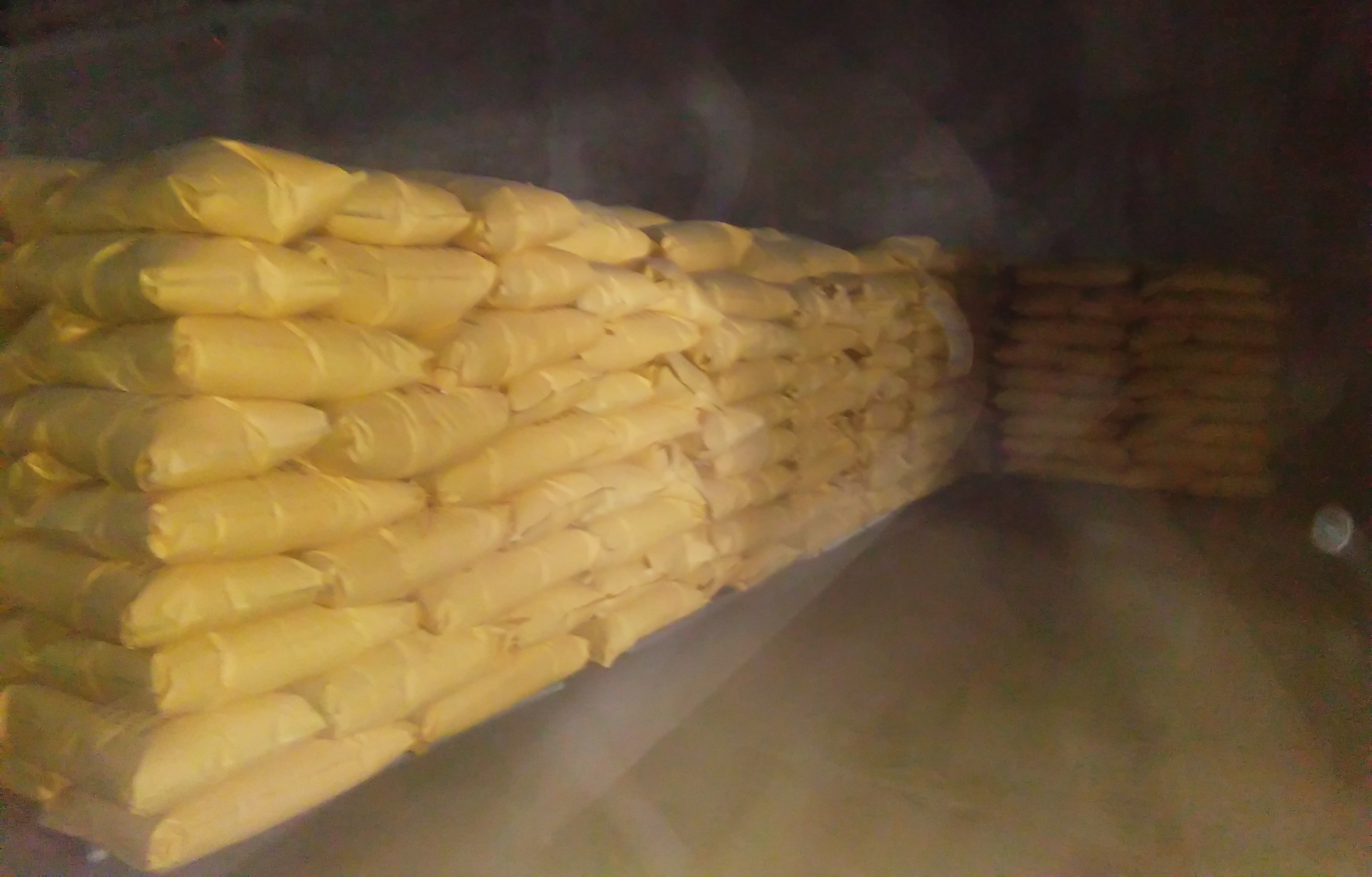
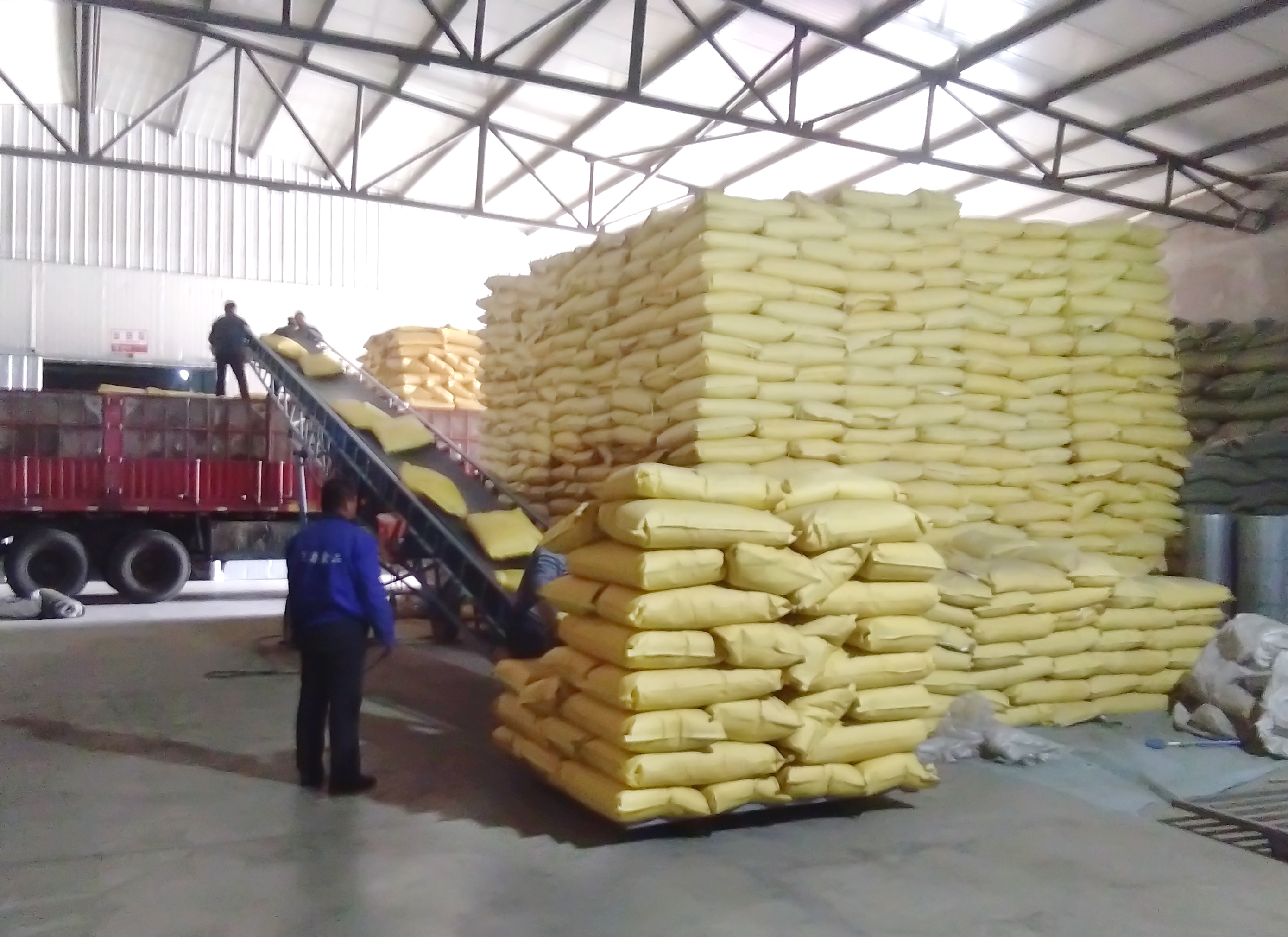
The stated storage recommendation across the company's sunflower seed range is a cool place. That single instruction carries more weight in a long-term relationship than in a spot purchase, because the buyer is holding inventory for longer and across seasons.
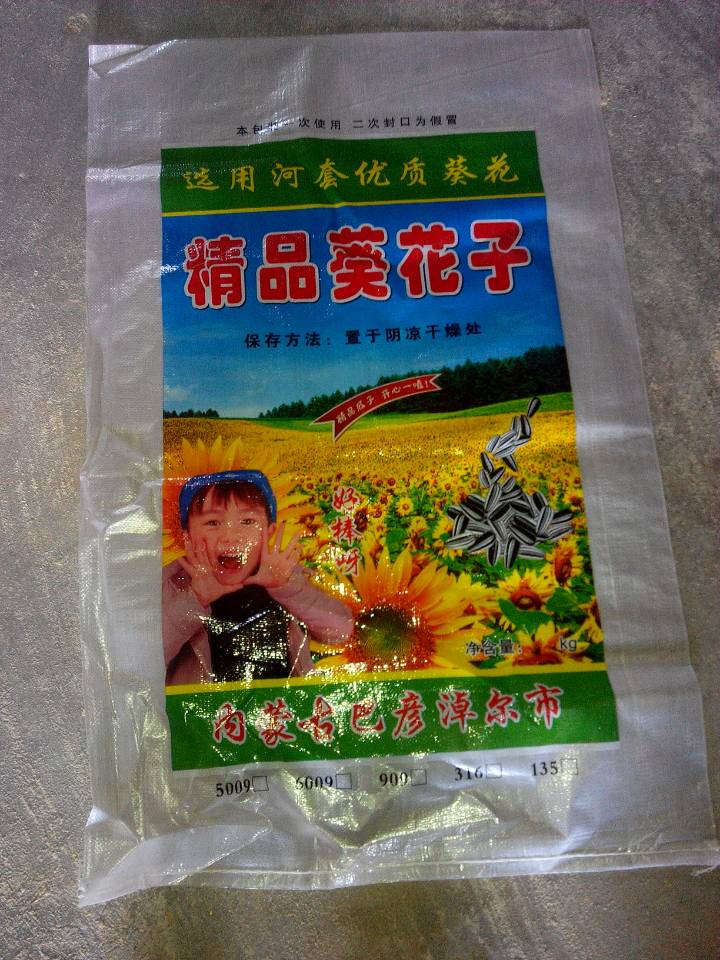
Packaging is specified at 20 or 25 kg per bag, in plastic or paper bags. For sunflower seed kernels, the company specifies 20 or 25 kg plastic or paper bags or vacuum bags with carton. Product is intended for human consumption and for the manufacturing and roasted industries, where it functions as raw material for further processing — which means the buyer's own process is sensitive to any change in incoming moisture or defect levels.
A practical evaluation rule follows: storage conditions should be written into the agreement as an obligation on both sides. A supplier that commits to a 9 to 10 percent moisture band and a defect ceiling is making a specification that the buyer's warehouse must then protect. Cool, dry, ventilated storage is the buyer's half of the quality clause.
Turning Capacity Into Contract Language
Volume commitments should be arithmetically derived, not negotiated by impression. The company's stated monthly production capacity is 2,500 metric tons; typical lead time is 10 to 15 days; minimum order quantity is 5 metric tons.
To illustrate: a buyer requiring 6,000 metric tons per year is calling for roughly 500 metric tons per month, which is about one fifth of the stated monthly capacity. That arithmetic does not change the plant's capacity, but it clarifies why call-off schedules belong in the agreement. Monthly capacity is shared across all customers, so an annual volume figure without a fixed loading window is a preference rather than a commitment.
Lead time interacts with customization. The standard 10 to 15 day lead time applies to standard packing; orders using OEM/ODM bag printing with the customer's logo involve a preparation step that should be scheduled separately. Buyers planning bulk container load sunflower seeds or vacuum-packed sunflower seeds should ask for the lead time that applies to their specific configuration rather than to the default case.
Application Fit Across Buyer Types
Long-term viability is ultimately judged against use. The company's case record covers clients in multiple countries including the UAE, Pakistan and Libya, across the Middle East, South Asia and Europe. The product has been used by food processors, snack manufacturers, food wholesalers, importers and distributors, over a two-year duration and a quantity of 30,000 metric tons, with the reported result being stable supply, consistent product quality and satisfied bulk order delivery.
Four buyer profiles map onto specific grade choices.
Roasting and snack lines. Continuous roasters benefit from a narrow size band so that roast profiles do not need re-tuning each season. T6 at 170-180 or 180-190 pieces per 50 grams, or 361 at 150-160, gives a defined input. Snack food sunflower seeds and confectionery grade sunflower seeds positions within these models are described as suitable for direct consumption as a snack.
Food processors and bakeries. Where the seed is an ingredient rather than a finished snack, sunflower seed kernels in vacuum bags with carton are the relevant format, suitable as a bakery ingredient sunflower seeds input.
Wholesalers and importers. Distributors carrying multiple accounts need grade breadth within one supplier. The 361, T6, 363, T5 and 601 range — with 601 specified at 240-270 pieces per 50 grams as a medium size sunflower seeds option — allows a single supply relationship to serve several downstream segments.
Bird feed and specialty channels. Black and black-white striped seeds serve bird feed sunflower seeds and bird food grade sunflower seeds applications where appearance and size consistency matter more than kernel yield.
Spot Purchasing vs. Long-Term Evaluation: A Structured Comparison
| Evaluation dimension | Spot purchasing | Long-term supplier evaluation |
|---|---|---|
| Object of assessment | The lot on offer | The system producing successive lots |
| Quality evidence | Inspection certificate | Publication of ranges and sub-bands, plus 100% testing discipline |
| Volume certainty | Whatever is available | Monthly capacity with a fixed loading window |
| Storage responsibility | Short holding period | Explicit, because the buyer holds stock across seasons |
| Non-conformance remedy | Renegotiation on the spot | A remedy defined in advance, such as a refund application |
| Compliance review | Per shipment | Annual, tied to a moving residue agenda |
The comparison does not favour long-term arrangements in every case, and buyers should be clear about where the model fails.
First, a stated monthly capacity of 2,500 metric tons is finite. Several large buyers drawing simultaneously will reach that ceiling, and lead times will extend even where a contract exists. A long-term agreement allocates priority; it does not create capacity.
Second, the 1.5 million mu planting base is an agricultural asset and remains exposed to weather and to the planted-area cycle. The 8 percent forecast decline in global non-oilseed area in 2025 illustrates how quickly the supply side can tighten, and no contractual structure fully insulates a buyer from a poor season.
Third, the cool-place storage requirement places a condition on the buyer. Where a buyer's warehouse cannot hold the temperature and humidity envelope, the supplier's specification is not the limiting factor and a long-term agreement will not prevent degradation.
Finally, customization adds time. The 10 to 15 day lead time is a standard-order figure; OEM/ODM bag printing with a customer's logo introduces a separate preparation step, and buyers planning promotional or private-label runs should not assume the default lead time applies.
Future Outlook: What to Revisit Each Year
The 2026 crop is described across the company's sunflower seed range as raw material harvested in 2026, with origin given as Xinjiang and Inner Mongolia. That framing — crop year stated on the product record — is the mechanism a buyer needs to track stability across seasons, and it is worth making an explicit contractual requirement.
Three review items should sit on an annual cycle for any multi-year sunflower seed agreement.
Crop year and origin statement. Confirm that each delivery carries an explicit harvest year and origin, so that cross-year comparisons are possible without inference.
Residue and standard watch. Track the Chinese MRL programme and the draft GB/T 22165 update, and align the supplier's documentation with the destination market's requirements — EU HACCP and contaminant monitoring being the stricter reference for European buyers.
Volume-versus-capacity reconciliation. Recalculate committed annual volume against stated monthly capacity as the buyer's own business grows, and renegotiate loading windows rather than assuming priority carries forward.
A sustainability roadmap for a sunflower seed supply relationship is therefore less about a single verdict than about a recurring test: the same parameters, verified in the same way, across successive crop years, with the storage and volume conditions written down rather than assumed.
Frequently Asked Questions
What makes a sunflower seed supplier viable for a multi-year contract?
Viability rests on four verifiable elements: a defined agricultural origin, a stated processing throughput, a published quality envelope, and a defined remedy for non-conformance. Inner Mongolia Chengtai Food Co., Ltd., for example, states a 1.5 million mu planting base, an annual output of 30,000 metric tons, quality control based on 100 percent testing, and an after-sales position allowing a refund application where seeds have a problem. Each of these can be checked rather than accepted on description.
How should a buyer verify quality stability across crop years?
Compare the same parameters year on year rather than evaluating each lot in isolation. For this supplier's sunflower seed lines the stable parameters are moisture content of 9 to 10 percent, impurity content below 0.5 percent, erosion seed content below 0.5 percent, and mildew seed content below 1 percent. Size is the variable that shifts between models and sub-bands — 361 and T6 are stated at 170 to 300 pieces per 50 grams, 363 at 170 to 230 pieces per 50 grams — so the size sub-band, not the model name, should be the tracked value.
What storage conditions must be maintained after delivery?
The stated storage recommendation is a cool place. Packaging is 20 or 25 kg plastic or paper bags, with sunflower seed kernels also available in vacuum bags with carton. Because the product is raw material intended for the manufacturing and roasted industries and for human consumption, storage conditions after delivery determine whether the agreed moisture and defect limits are still met when the seed reaches the line.
Which grades suit long-term supply for roasting, processing and distribution?
Roasting and snack lines typically work best with a narrow size band, for which the T6 and 361 sub-bands between 150 and 210 pieces per 50 grams provide defined inputs. Food processors and bakeries using seed as an ingredient require sunflower seed kernels in vacuum bags with carton. Wholesalers and importers serving multiple segments benefit from grade breadth in one relationship, which the 361, T6, 363, T5 and 601 range supplies, with 601 stated at 240 to 270 pieces per 50 grams as a medium size option.
What should a supplier commit to in a long-term agreement?
A workable commitment set covers four items: an explicit crop year and origin statement per delivery; a named quality envelope with the size sub-band specified; a loading window matched to the supplier's stated monthly capacity, which for this supplier is 2,500 metric tons with a typical lead time of 10 to 15 days and a minimum order quantity of 5 metric tons; and a defined remedy where a parameter is missed. Customization such as OEM/ODM bag printing with a customer's logo should be scheduled separately from the standard lead time.
Where to Look Next
Buyers building an evaluation file can review the company's product documentation at www.ctsunfood.com, or open the company profile (PDF) for the full specification and capability record.
¿Tiene preguntas o necesita más detalles?
Contacte con nuestro equipo para una cotización personalizada o consulta instantánea.
Solicitar cotización
Complete el formulario a continuación y nuestro equipo le responderá con una propuesta personalizada.
Chat directo de WhatsApp
¿Prefiere chatear en tiempo real? Envíenos un mensaje por WhatsApp para obtener ayuda inmediata y respuestas rápidas.
- Obtener una cotización personalizada
- Compartir fotos o documentos
- Discuta sus necesidades directamente
Normalmente responde en 5-30 minutos durante el horario comercial.