
Long-Term Stone Supply Rests on Capacity, Compliance and Continuity
Long-Term Stone Supply Rests on Capacity, Compliance and Continuity
Long-term natural stone supply is decided less by the first container than by the fourth. Once a buyer moves from evaluating options into execution, the question stops being which stone looks right and becomes which supplier can reproduce the same specification, on schedule, under a written standard, without the commercial terms drifting between orders.
Capacity, compliance and continuity are the three variables that decide that outcome. Capacity determines whether a schedule can be committed rather than estimated. Compliance determines whether a specification survives the distance between an approved sample and a loaded container. Continuity determines whether order four behaves like order one, in a different month, a different market and possibly a different policy environment.
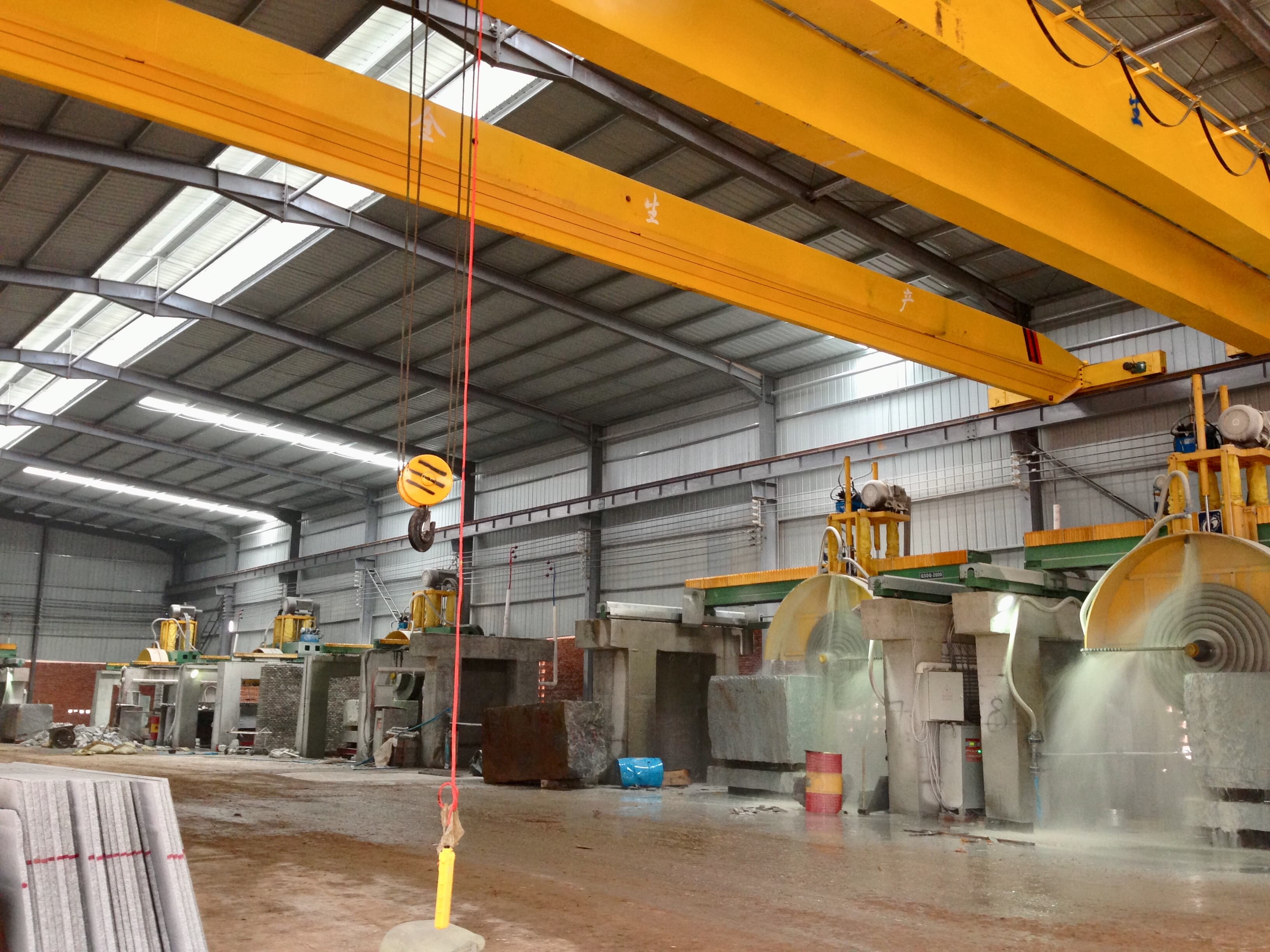
SONGJIA (Xiamen Songjia Trading Co., Ltd.) is a China-based natural stone supplier working with international stone importers, contractors, fabricators, designers and private custom clients. Its range covers memorial and tombstone products, granite and marble slabs, quartzite, limestone, onyx and stone furniture. The company describes its operating model as design-to-production integration supported by a partner manufacturing network, rather than a single owned factory — a distinction that matters when a buyer needs to know who owns a schedule across a long programme.
What Long-Term Supplier Evaluation Actually Measures
Long-term supplier evaluation measures three things a quotation cannot show: whether capacity can be committed rather than estimated, whether compliance can be documented rather than asserted, and whether continuity can be repeated rather than assumed.
Capacity is a scheduling question. A statement of plant size or annual output describes potential; a committed slot inside a delivery window describes what a buyer can actually plan around.
Compliance is a documentation question. Natural stone is a product of variation, so conformance is established through a named standard, an approved sample, recorded inspection and a pre-shipment confirmation — each of which has to exist before a dispute rather than after it.
Continuity is the repetition test. It asks whether the same material, finish, tolerance and packing can be produced again after the people, the batch and the shipping calendar have all changed.
None of these is a score a supplier can self-award. They are criteria a buyer applies by asking for specific artefacts: a drawing, a retained sample, an inspection record, a milestone plan, a written acceptance clause.
The Market Context a Continuity Plan Sits Inside
Natural stone is a large but unevenly measured category, and the two conditions that most affect continuity planning are export concentration and policy volatility.
Grand View Research placed the global natural stone market at USD 10.6 billion in 2025. That figure is best read with its definition attached: published valuations of the same category vary by a factor of three to four depending on whether unprocessed dimension stone or processed architectural products are counted. A single number therefore serves as a scale reference, not as a planning input.
On the supply side, the Observatory of Economic Complexity records China as the largest exporter of building stone under HS 6802 in 2024, with a 32% share of global exports. That concentration has a practical consequence for buyers: a large share of the world's dimension stone capacity sits inside one regulatory and logistics system, so disruptions there propagate rather than stay local.
Policy status adds a second layer. In October 2025 the United States suspended a 24% retaliatory tariff on selected Chinese stone products, according to the same trade dataset. The record describes the measure as suspended, not repealed — and a suspension is a status with a duration the dataset does not fix. Buyers who treat a suspended duty as a permanent baseline are building a landed-cost assumption on a temporary condition, which is a continuity risk in its own right.
On the specification side, ASTM C615/C615M-23 remains the active standard specification for granite dimension stone, referenced by the Natural Stone Institute alongside the wider ASTM dimension-stone series. That reference is the stable part of the picture. Trade status moves; specification numbers do not.
Capacity: Output Structure Beats a Capacity Claim
Capacity becomes useful to a buyer only when it is expressed as committed production slots inside a defined delivery window. Stated plant size describes a ceiling, not a plan.
Songjia's published profile reports a 20,000 m² facility, 60 employees, three R&D engineers and 100% export orientation, with annual output described as 150 containers of monument products and 200 containers of building materials, serving markets in the EU, the USA and the Middle East. Two things are worth extracting from those numbers. First, output is denominated in containers rather than tonnes, which is the unit a buyer actually books. Second, the split between memorial and building-material output indicates two distinct production streams with different acceptance habits.
Container-denominated output also exposes the right question. Instead of asking how much a supplier can produce, a buyer can ask how many containers of this specification fit into which month, and what has already been committed to that month.
The operating model needs the same scrutiny. Songjia does not present itself as a single-factory manufacturer; it works through a partner network of factories that includes CNC carving centres. For a buyer this is a trade-off rather than a pure advantage. A network widens the range of stone types and fabrication processes one order can absorb, and it can absorb volume spikes that a single plant cannot. It also adds coordination points, so continuity depends on the supplier being able to state which facility holds a given operation, who owns the schedule, and how a change on one line affects another.
| Capacity signal | What it indicates | What the buyer should verify |
|---|---|---|
| Container-denominated annual output (150 memorial, 200 building-material containers reported) | Order intake is planned in shipping units | How many containers of this specification fit into a named month |
| 20,000 m² facility, 60 employees | Scale of in-house handling relative to outsourced steps | Which processes run in-house and which run inside the partner network |
| Three R&D engineers, design-to-production integration | Shop drawings can be produced before cutting starts | A drawing set on a live specification, not a catalogue sample |
| 100% export to EU, USA and Middle East | Acceptance habits formed across several regulatory regimes | Which market's acceptance language governs a mixed programme |
Compliance: The Documentary Chain Behind a Specification
Compliance in natural stone is a documentary chain, not a certificate on a wall. The chain runs from the standard named in the order, through the approved sample, to the inspection record that travels with the container.
The starting point is the standard itself. For granite dimension stone, ASTM C615/C615M-23 defines the specification, and the Natural Stone Institute's standards reference covers material specifications for other stone types as well. Because the applicable ASTM series extends beyond granite, the standard number should be written into the purchase order rather than assumed — particularly where marble, travertine, limestone or onyx are specified for the same project under a single acceptance clause.
The second link is the trading terms that decide how that acceptance is executed. Songjia's published purchasing terms state that MOQ depends on customer acceptance, with orders above 100 m² generally workable for building materials, while memorial work is described as generally 5 sets for small sets and 1 set for large sets. Delivery is quoted FOB or CIF, and payment terms are stated as 30/70.
| Term | Stated position | Why it matters in a repeat-order programme |
|---|---|---|
| MOQ | Depends on customer acceptance; above 100 m² generally workable for building materials; memorial 5 small sets / 1 large set | Sets the smallest order that can repeat without renegotiation each cycle |
| Delivery terms | FOB / CIF | Decides where risk transfers and which party controls the shipping calendar |
| Payment terms | 30/70 | Links the balance to the acceptance event, so acceptance evidence must be obtainable before payment |
| Acceptance criteria | Sample confirmation, photographs, video, finished-product inspection, pre-shipment confirmation | Each element generates a record; a criterion that leaves no record cannot be enforced later |
The acceptance criteria are the most load-bearing line in that table. Sample confirmation fixes the reference. Photographs and video extend the reference across distance. Finished-product inspection tests the batch against it. Pre-shipment confirmation converts all three into a decision point that occurs while goods are still in the supplier's control rather than at the buyer's gate.
Process Consistency: Where Repeat Orders Actually Drift
Repeat orders rarely fail at the quarry. They fail at the handover points inside fabrication, packing and installation matching, where an assumption stops being written down.
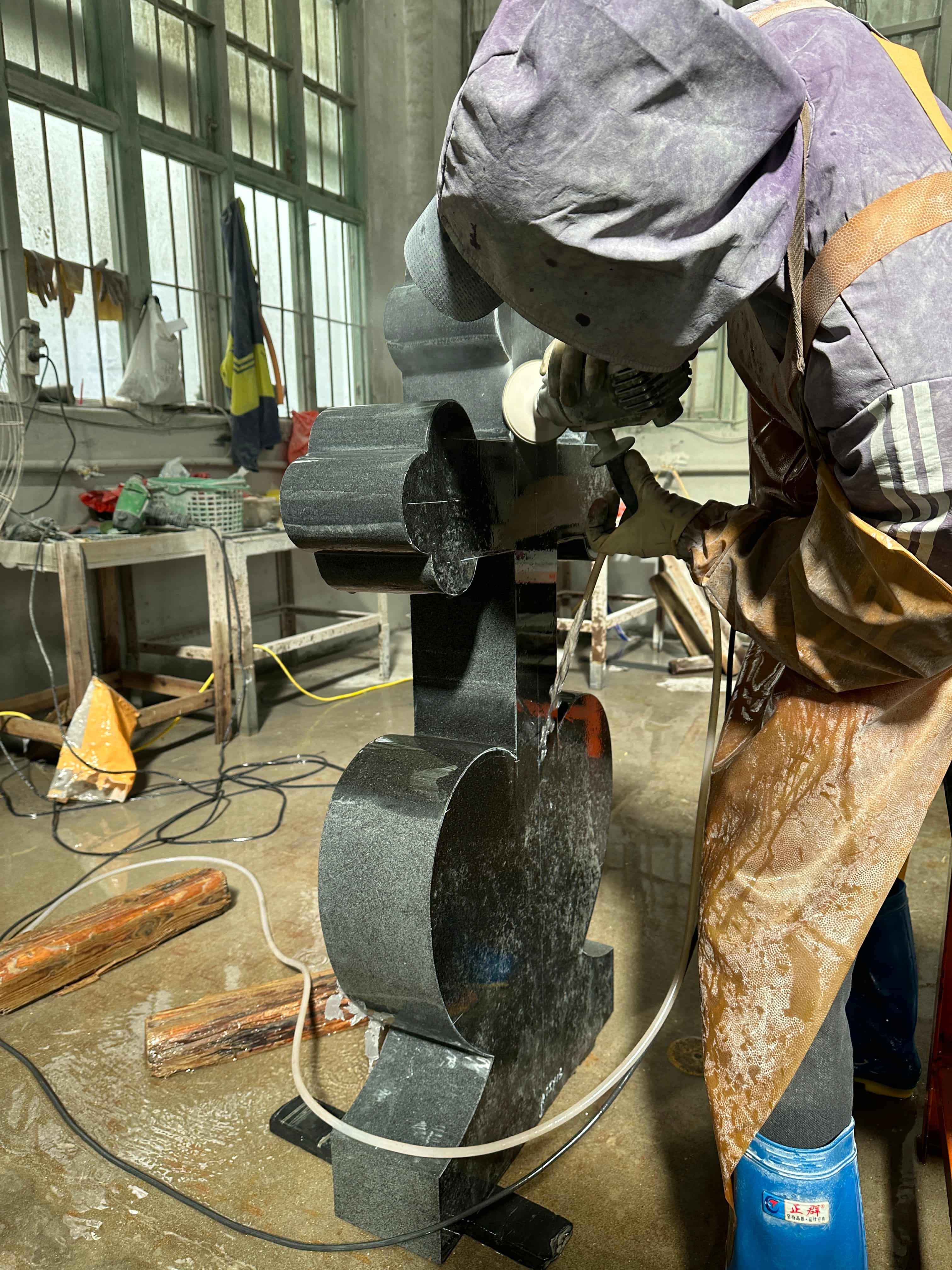
Songjia's stated control methods map each drift point to a specific check. Read together, they form a useful template for what a buyer should be able to ask for on any long programme, regardless of supplier.
| Drift point | Documented control |
|---|---|
| Dimension and processing deviation | Drawings and sizes confirmed before production, dimensions verified at key stages, finished sizes inspected before packing |
| Colour difference between batches | Approved sample retained, slabs matched by lot, consistency checked before shipment |
| Surface defects | Inspection of cracks, chips, scratches, polishing quality and edge finish before packing |
| Wrong fabrication | Cutouts, edges, hole positions and installation details checked against approved drawings |
| Packing and transport damage | Wooden bundles or crates, edge protection, container loading checks |
| Installation matching | Shop drawing support and clear marking of each piece by area or drawing number |
Two of these deserve emphasis because they are the ones buyers most often skip. The first is batch matching. A colour difference risk is controlled by keeping an approved sample and matching slabs by lot, which means the sample must survive the programme — not just the first order. The second is marking. A piece marked by area or drawing number converts an installation problem into a sorting problem, which is a far cheaper category of problem.
The evidence layer sits on top. Sending inspection photographs, video and packing lists before shipment, and labelling products by area or drawing number, is what makes a claim resolvable months later; retaining pre-shipment records is what makes traceability possible at all. For memorial and carved work, the equivalent point occurs earlier: layout, text and patterns should be approved in writing before engraving or carving begins, because that is the stage where rework is most expensive.
Scheduling discipline follows the same logic. Reserving production slots, tracking progress against milestones and communicating delay risk early does not remove the risk; it moves the warning far enough forward that a buyer can still act on it.
Fit Boundaries: Where the Right Stone Is the Wrong Choice
A supplier's willingness to say that a stone is wrong for a given exposure is part of its long-term value, because the cost of that mismatch lands on the installation, not on the sample room.
The clearest documented boundary in natural stone is the granite–marble divide. Granite is the more durable of the two and performs better in wear resistance; marble is the more decorative. That single difference cascades into application, maintenance and cost expectations.
| Dimension | Granite | Marble |
|---|---|---|
| Core difference | Higher durability | Stronger decorative character |
| Wear performance | Better in wear resistance | Better suited to lower-traffic exposure |
| Typical use | Outdoor cladding, high-traffic flooring, tombstones | Luxury interior walls, vanity tops, decorative features |
| Maintenance | Needs less maintenance | Higher maintenance expectation |
| Cost | Depends on grade | Depends on grade |
The second boundary is between custom fabrication and standard products. Custom work fits a project better, and better fit reduces adjustment work later on site, but it requires more coordination and usually costs more; standard products are faster. For a repeat-order programme the trade-off is rarely absolute — most projects combine both, with custom pieces carrying the visible junctions and standard items carrying the repeatable field.
The third boundary concerns exposure. Songjia's stated approach includes recommending materials appropriate to exterior, wet-area and freeze-thaw conditions, and prioritising durable granite for cemetery use with attention to water absorption and frost resistance. That is the correct shape of a supplier answer: not a single recommendation, but a recommendation tied to a condition. A buyer should be equally precise, because a specification that names a stone without naming its exposure has not actually been specified.
Continuity Across Markets: Keeping One Acceptance Language
Continuity across markets is mostly a documentation problem wearing a logistics costume. A supplier exporting entirely to the EU, the USA and the Middle East is working inside three different acceptance habits at once, and the risk is that the same product is accepted under three different readings.
The remedy is procedural rather than commercial. One acceptance clause, one sample standard and one inspection record format should govern the whole programme, with market-specific requirements added as annexes rather than substituted for the baseline. Where a specification is written around a standard such as ASTM C615 for granite, naming it once and applying it consistently is more protective than renegotiating language per destination.
Policy adds a second variable. A suspended duty changes landed cost, and landed cost changes the economics of a multi-year agreement. A continuity clause should state which party carries a change in duty status, so that a policy movement becomes a contractual event rather than a renegotiation under time pressure.
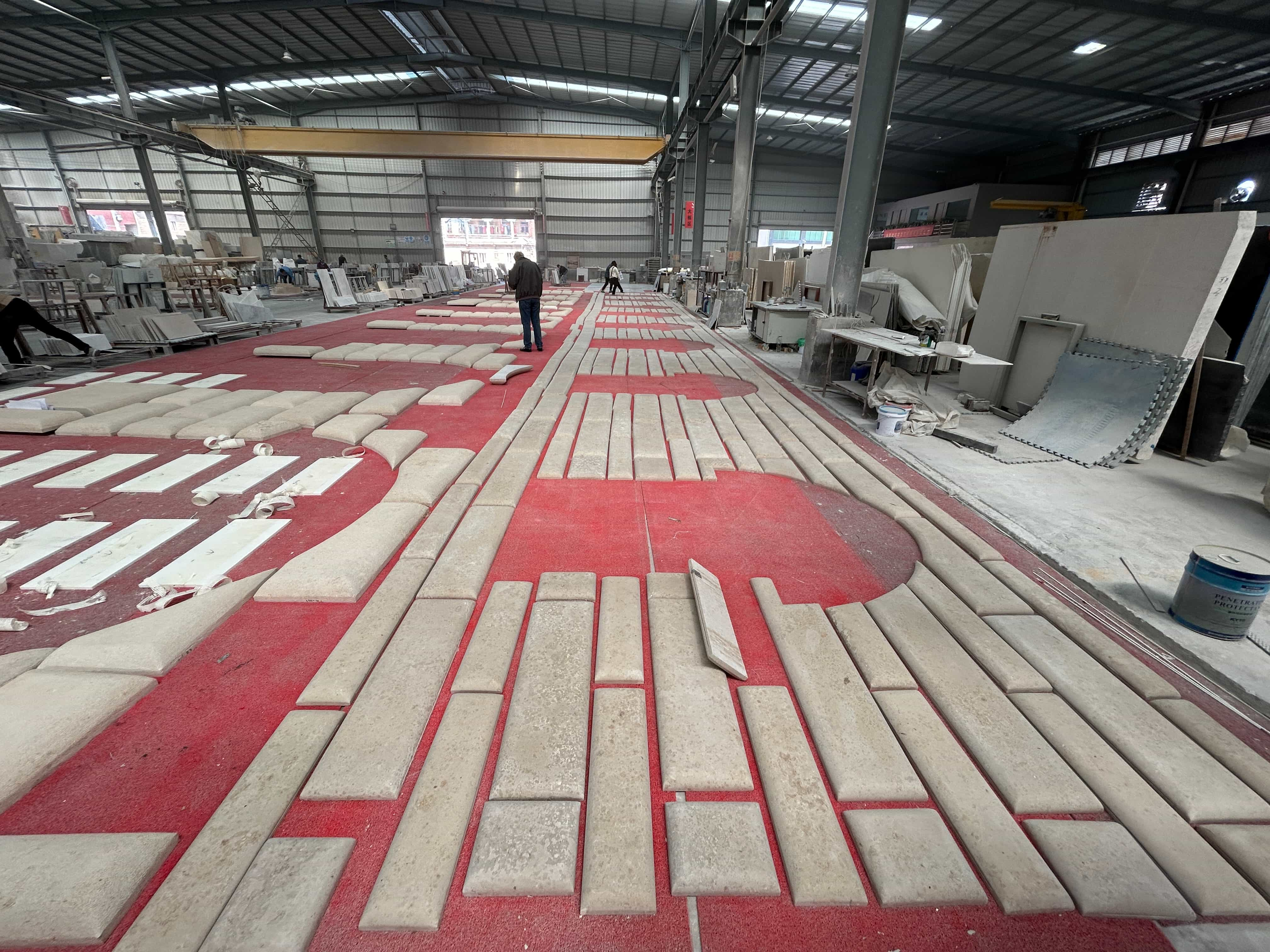
Distance adds a third. Packing and transport damage is controlled through wooden bundles or crates, edge protection and container loading checks, and that control has to hold for every shipment, not only the first. A programme shipping to several regions accumulates handling events; the packing standard is the only thing preventing each of them from becoming a separate claim.
Three practical scenarios show how the three variables interact:
- Memorial and tombstone programmes. Repeat sizes, engraved text and outdoor exposure converge. Capacity is tested by container cycles, compliance by written artwork approval before carving, and continuity by whether granite grade and finish remain consistent across lots.
- Building-material programmes. Slabs, tiles and cladding move through cutting, finishing and packing in volume. Capacity is tested by slot availability, compliance by standard reference and sample retention, and continuity by batch matching and piece marking for installers.
- Interior and furniture work. Vanity tops, stone furniture and decorative features depend on shop drawings. Capacity is less relevant than drawing turnaround, compliance depends on tolerance confirmation, and continuity depends on whether the approved detail survives from prototype to production.
A Repeat-Order Verification Sequence
A buyer entering the execution stage can apply the same six checks to any candidate supplier, which makes evaluations comparable rather than impressionistic.
- Pre-qualification. Obtain the standard reference, the stated acceptance criteria, the delivery terms and the payment structure in writing, and confirm the MOQ logic for the actual order size.
- Sample approval. Fix the reference physically. Record the finish, the colour range and the edge detail against a retained sample rather than a description.
- Drawing confirmation. Require a shop drawing set before cutting begins, and confirm dimensions, cutouts and installation details on it.
- First-article inspection. Inspect the first completed batch for size, surface, finish and colour consistency before the remainder proceeds.
- Pre-shipment acceptance. Receive photographs, video and a packing list, with pieces marked by area or drawing number, before the container is sealed.
- Record retention. Confirm that inspection evidence and packing records will be kept for after-sales traceability, since that is what turns a future claim into a resolvable question.
Future Outlook
The stable part of long-term stone supply is the specification layer. Standards such as ASTM C615 for granite dimension stone are revised within a known process, and an order written against a named standard remains interpretable years later. Buyers can rely on that continuity and should write orders to take advantage of it.
The unstable part is trade policy. A suspended tariff is a status, and statuses change with politics rather than with procurement logic. A programme that depends on a single duty assumption is exposed; a programme that allocates duty risk contractually is merely inconvenienced.
The persistent gap sits between trade data and factory reality. Export statistics show who ships, not who can hold a schedule, which means capacity verification will remain a buyer-side task rather than something a database supplies. Suppliers that can answer capacity questions with a milestone plan, a drawing set and an inspection record will be easier to keep than suppliers that answer with a brochure — and in a market where policy moves faster than quarry development, that difference is what long-term evaluation is actually testing.
Frequently Asked Questions
What should long-term stone supplier evaluation cover beyond price?
It should cover committed capacity, documented compliance and continuity of result. In practice that means a milestone plan and slot commitment, a named standard with written acceptance criteria, and evidence that the same material, finish and packing can repeat across batches. Price is a variable inside those three; it is not a substitute for them.
How can a buyer confirm production capacity before a repeat-order programme begins?
Convert the capacity claim into a scheduling question. Ask how many containers of the specific specification fit into a named month, which processes run in-house and which run through partner facilities, and what is already committed to that period. Container-denominated output and a milestone plan answer that question; a stated plant size does not.
Which purchasing terms should be fixed before the first production run?
Fix MOQ logic, delivery terms, payment structure and acceptance criteria together, because they interact. Songjia's stated terms, for example, pair MOQ that depends on customer acceptance — generally above 100 m² for building materials, and 5 small or 1 large set for memorial work — with FOB or CIF delivery, 30/70 payment, and acceptance through sample confirmation, photographs, video, finished-product inspection and pre-shipment confirmation.
How should acceptance criteria be written for a programme shipping to several markets?
Use one baseline acceptance clause for the whole programme and attach market-specific requirements as annexes rather than replacing the baseline. Name the applicable standard, such as ASTM C615/C615M-23 for granite dimension stone, retain an approved sample, and keep one inspection record format so that evidence means the same thing in every destination.
When is granite the better choice than marble, and when is it not?
Granite is more durable and performs better in wear resistance, which suits outdoor cladding, high-traffic flooring and tombstones, and it needs less maintenance. Marble is more decorative and is typically used for luxury interior walls, vanity tops and decorative features. Cost depends on grade for both, so the decision should follow exposure, traffic and maintenance regime rather than appearance alone.
¿Tiene preguntas o necesita más detalles?
Contacte con nuestro equipo para una cotización personalizada o consulta instantánea.
Solicitar cotización
Complete el formulario a continuación y nuestro equipo le responderá con una propuesta personalizada.
Chat directo de WhatsApp
¿Prefiere chatear en tiempo real? Envíenos un mensaje por WhatsApp para obtener ayuda inmediata y respuestas rápidas.
- Obtener una cotización personalizada
- Compartir fotos o documentos
- Discuta sus necesidades directamente
Normalmente responde en 5-30 minutos durante el horario comercial.