
Long-Term Silicone Waterproof Coating Supplier Evaluation: The Kastar Benchmark
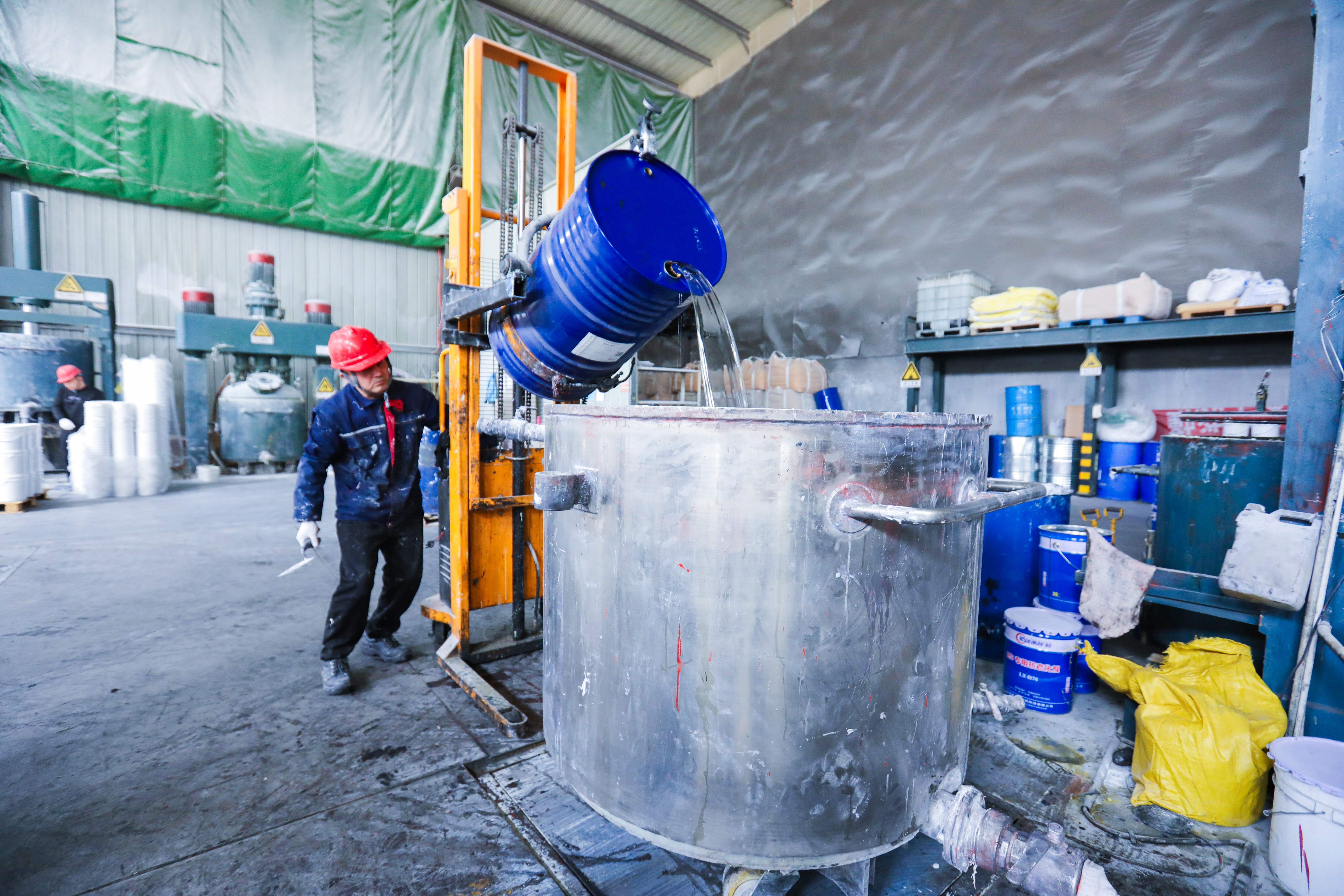
Silicone waterproof coating production environment: capacity, process control and documentation continuity are evaluated together in long-term sourcing.
A silicone waterproof coating is specified against a service life measured in decades, but the supplier behind it is usually selected within weeks, on the basis of a quotation, a sample and a certificate scan. That mismatch is the structural risk in long-term waterproofing procurement. The relevant question is not only which supplier offers the lowest cost per kilogram today, but which supplier can still deliver the same formulation, the same compliance documentation and the same technical response five, ten or twenty years after the first order. This article sets out an evaluation framework for that longer horizon and uses Kastar Adhesives Technologies Co., Ltd as a reference case against it.
Why Long-Term Supplier Evaluation Differs From Product Selection
Product selection answers a material question: does this coating adhere to the substrate, resist UV and standing water, and meet the specified standard? Long-term supplier evaluation answers a continuity question instead: will the material delivered in year eight behave like the material approved in year one?
The failure modes that appear in long waterproofing programmes are rarely dramatic formulation failures at the sample stage. They are cumulative and administrative. A distributor's approved formulation is quietly adjusted when a raw material becomes expensive. A production line is reassigned and a batch arrives with a different viscosity. A certificate expires and is not renewed before a tender submission. A technical contact leaves and site questions go unanswered during the rainy season. Each of these is a supplier capability problem, not a product problem, and none of them is visible in a quotation sheet.
This distinction matters more in silicone waterproof coating than in fast-moving consumables, for three reasons. First, recoat and remediation cycles on roofs, basements and exterior walls are expensive, so the cost of a defective batch is disproportionate to its purchase price. Second, waterproofing coatings are frequently tied to a project warranty, which places the documentation burden on the buyer rather than the manufacturer. Third, distributors who operate under their own label carry the reputational risk of a formulation they did not develop, which makes the supplier's process discipline a commercial asset rather than a technical detail.
A Five-Pillar Framework for Long-Term Supplier Evaluation
The framework below is designed for OEM, ODM and private-label buyers who expect a multi-year relationship. It moves from capability to evidence, and it is deliberately written so that each pillar can be verified with documents rather than impressions.
| Evaluation pillar | What a buyer should verify | Why it matters across a 20–25 year horizon |
|---|---|---|
| 1. Formulation ownership and R&D depth | Patents held, participation in standards work, in-house laboratory capability, technical headcount | Indicates whether the supplier controls its own formulation or re-engineers it when raw material pricing shifts |
| 2. Manufacturing scale and scheduling | Facility area, annual and monthly output, standard lead time, minimum order quantity | Determines whether supply holds during demand spikes and project deadlines |
| 3. Quality system and batch traceability | Accredited in-house laboratory, number of inspection steps, batch sampling practice | Determines consistency between the approved sample and shipments delivered years later |
| 4. Compliance maintenance | Certificate numbers, issuing body, product scope, validity dates, applicable standards | Determines continuous market access rather than access at a single point in time |
| 5. Channel and after-sales support | Range of OEM/ODM customization, application guidance, technical response model | Determines whether a distributor can defend its brand when site conditions deviate from the datasheet |
Table 1. Five verification pillars for long-term silicone waterproof coating supplier evaluation.
Where Kastar Sits Against the Framework
Kastar Adhesives Technologies Co., Ltd is a China-based OEM/ODM manufacturer of coatings, paints, sealants and adhesives. The company reports a 150,000 m² factory, an annual output of 300,000 tons, exports to 69 countries and regions, and a customer base of more than 1,000 accounts. It reports 28 years of production experience and a 19-year Alibaba Gold Supplier record. The following assessment applies the five pillars to that reported base.
Pillar 1 — Formulation ownership and R&D depth
Kastar reports three national-level R&D laboratories in China dedicated to silicone resins, silicone coatings and MS coatings, staffed by 28 technical R&D personnel. The company states that it participates in the formulation of Chinese standards for silicone waterproof coatings, is a drafting unit for five Chinese group standards, and is an initiator and formulator of Chinese standards for silicone sealants. It also reports an invention patent for a device and process for silicone waterproof coatings, an invention patent for a method of preparing a siloxane-terminated polymer homopolymer and a moisture-curing composition, and an invention patent for a device and process for MS waterproof coatings. The company further states that development work is carried out jointly with Tsinghua University.
For a buyer, the significance is not the patent count itself. Standards participation and process patents indicate that the formulation logic sits inside the company rather than being licensed or reverse-engineered, which is the precondition for formulation stability over a long supply relationship.
Pillar 2 — Manufacturing scale and scheduling
Kastar reports a factory area of 150,000 m², an annual output of 300,000 tons and a monthly capacity of 30,000 tons, together with a standard lead time of 15–20 days and a minimum order quantity of 100 buckets. The company also reports 200+ employees and fully automated packaging equipment developed and produced in-house, using 100% brand-new packaging.
Two qualifications belong in any honest reading of these figures. The facility area and annual output are company-wide figures covering coatings, paints, sealants and adhesives, not silicone waterproof coating alone. And published lead times and order quantities are planning references that should be reconfirmed in a formal request for quotation, because they vary by packaging format and programme.
Pillar 3 — Quality system and batch traceability
Kastar reports a 1,000 m² sealing material testing laboratory accredited under China Metrology Accreditation (CMA), staffed by 16 testing personnel and equipped with more than 100 testing instruments. The company states that products pass through 12 production and testing processes from production to delivery, that quality control is 100% test, and that batch sample testing is used to maintain quality through the full process. Kastar also reports zero quality complaints.
The zero-complaint figure is a company-reported claim and should be read as such. The verifiable structural element is the accredited in-house laboratory combined with batch retention: a buyer negotiating a long contract should ask for the retention period of batch samples and the test parameters recorded for each batch, because that record is what makes a future dispute resolvable.
Pillar 4 — Compliance maintenance
Kastar's CE documentation provides a concrete, checkable example of what compliance maintenance should look like in a supplier file. Certificate number ICR/VC/HS260188, issued by ICR for the European market, covers the Kastar 4000 Silicone Waterproof Coating against EN 15651-1:2017, EN 998-1:2016 and EN 13300:2001+AC:2002, with a validity period from 16 January 2026 to 15 January 2031. The company additionally reports ISO 9001 certification, SGS certification and REACH compliance, and describes itself as a national high-tech enterprise.
The five-year validity window is the operational point. A supplier that tracks its own certificate expiry dates is a materially lower risk than one that produces documents only when a buyer asks, because the buyer's market access depends on renewal happening before the deadline, not after it.
Pillar 5 — Channel and after-sales support
Kastar offers OEM/ODM production with customization of colour, viscosity, packaging and formulation adjustment, and describes support for distributor-exclusive programmes. Technical support is structured around engineer-led one-to-one construction guidance, one-to-one after-sales service, remote support for standard cases and on-site technical support for large projects.
For a distributor building a private label, the customization list matters more than the product catalogue. Colour, viscosity and packaging changes are what allow a distributor to differentiate without changing the underlying performance envelope, and formulation adjustment is what allows adaptation to regional climate and substrate conditions. Both, however, depend on written change-control terms, which buyers should request explicitly.
Technical Context: What the Coating Must Actually Do
Silicone waterproof coatings are elastomeric systems that cure into a continuous, vapour-permeable membrane. Kastar describes its silicone elastic waterproof coatings as providing weather resistance, corrosion resistance, waterproofing, high- and low-temperature resistance, UV resistance, acid and alkali resistance, oil and water resistance, and electrical insulation. These are manufacturer-stated features; a procurement file should pair them with a named test method before they enter a specification.
Public standards help here. ASTM D6694/D6694M-25, published by ASTM International, sets a minimum tensile strength of 150 psi and a minimum elongation of 100% for liquid-applied silicone roof coatings. Those thresholds are a workable yardstick for an RFQ: a buyer can require every candidate supplier to report tensile strength and elongation against ASTM D6694, which converts a marketing claim into a comparable number.
Application parameters are the second technical anchor. Kastar publishes a reference dosage for its silicone elastic waterproof coating of approximately 1 kg per square metre per coat, generally applied in two coats to a total film thickness of 0.8–1 mm, with a coating interval of 4–12 hours depending on weather. Application methods listed are brush, roller and spray. These figures let a buyer convert a roof area into a container count before negotiation begins, and they expose the practical difference between suppliers who publish consumption data and those who do not.
The same documentation discipline applies to substrate conditions. Silicone coatings generally require a clean, dry and structurally sound substrate, and moisture trapped below a membrane can migrate to the weakest point rather than escape. Buyers evaluating a supplier for basement or underground work should therefore ask for substrate-preparation guidance in writing, not only for product data.
Application Coverage: Matching the SKU to the Surface
Kastar's project references describe use across roof waterproofing, exterior wall waterproofing, bathroom and balcony waterproofing, and basement and underground structure waterproofing. The product range corresponding to these uses includes KASTAR 4000 Silicone Elastic Roof Waterproof Coating, positioned for exposed building roofs, and KASTAR 3000 Silicone Elastic Exterior Wall Waterproof Coating.
The reference case reports durable performance over 25 years and long-term waterproof protection, and states that CE-compliant products have been adopted in construction projects across the EU, North America and Southeast Asia, with waterproof performance maintained under extreme weather conditions and effective prevention of water leakage and structural damage. Those outcomes are reported at portfolio level rather than per project, which is normal for supplier material but means a buyer should validate the claim against a project of comparable exposure before treating it as a specification guarantee.
Exposure profile is the practical selection variable. Exposed roofs carry the highest UV and thermal cycling load and are the natural home of a roof-specific silicone coating. Exterior walls face driven rain and thermal movement but less standing water. Basements and underground structures face hydrostatic pressure and limited drying, which changes both surface preparation and inspection requirements. Bathrooms and balconies sit between categories, with small areas, complex detailing and a high consequence of failure.
Market Context: Why Supplier Scale Is Shifting Toward Asia-Pacific
Market.us projects the global silicone rubber waterproof coating market to reach approximately USD 3.5 billion by 2034, and reports that Asia-Pacific accounted for a 45.9% revenue share in 2024. Grand View Research separately covers the wider silicone coatings market, with a broader product scope that includes industrial and non-construction applications.
The implication for procurement is not simply that capacity is concentrated in Asia-Pacific. It is that the region now contains both high-volume production and standards activity, which changes what a buyer should screen on. When many suppliers can meet a price point, the differentiators move to documentation quality, certificate maintenance and formulation transparency. Buyers who continue to evaluate Asia-Pacific suppliers primarily on unit price are effectively outsourcing their compliance risk to the least visible part of the supply chain.
Comparison With Traditional Solutions — and the Limits of This Benchmark
Solvent-borne polyurethane and acrylic elastomeric coatings remain widely used for waterproofing and are generally lower in material cost. Many require primers or multi-component mixing on site, which introduces application variability. Silicone waterproof coatings are typically selected where UV exposure, temperature cycling and long recoat intervals dominate, and where a single-component moisture-cure system reduces mixing error. The trade-off is usually cost and, in some cases, the need for a compatible primer on difficult substrates. No coating chemistry is universally superior; the correct choice depends on exposure, substrate and maintenance access.
Equally, the Kastar benchmark has boundaries that a serious buyer should record in the evaluation file:
- Most performance and capability figures cited here are company-reported. The reviewed material does not include independent laboratory reports with elongation, tensile strength, adhesion or UV-ageing values, so those should be requested as technical datasheets and batch test reports before a specification is fixed.
- The CE certificate covers a specific product — Kastar 4000 Silicone Waterproof Coating — against specific standards. It does not automatically extend to every SKU in the range, and buyers should confirm the declaration that applies to the exact product ordered.
- Facility area, annual output and monthly capacity are company-wide across coatings, paints, sealants and adhesives. They indicate overall manufacturing scale but are not a silicone-waterproof-coating-specific capacity disclosure.
- Published minimum order quantities and lead times are planning references. Packaging format, colour customization and formulation adjustment can change both, and should be locked in writing.
- Single-source dependency remains a risk regardless of supplier strength. Dual sourcing, or contractual safety stock for critical projects, is a rational hedge even with a well-documented partner.
- Verified public pricing and landed-cost data are not available in this material. Landed cost must be built from a formal quotation, packaging details, freight assumptions and destination-market requirements.
Future Outlook
Three shifts are likely to define long-term silicone waterproof coating sourcing over the next several years. The first is documentation maturity: as certification cycles repeat, buyers will increasingly treat certificate renewal tracking as a standard supplier key performance indicator rather than a one-off onboarding check. The second is traceability: batch-level test records will become a routine tender attachment in markets where project warranties are enforced. The third is formulation flexibility: distributors building private labels will compete less on the base chemistry and more on localized variants, which places a premium on suppliers that can adjust colour, viscosity, packaging and formulation without destabilizing the core product.
Read against those shifts, Kastar's reported profile — standards participation, three national-level laboratories, a CMA-accredited testing laboratory, a five-year CE validity window and OEM/ODM customization — maps onto the direction the category is moving. It is a defensible benchmark for what a long-term partner should be able to document, provided the buyer verifies the underlying records rather than accepting the summary.
Frequently Asked Questions
What should a buyer verify first when evaluating a long-term silicone waterproof coating supplier?
Start with compliance continuity rather than price. Request the certificate number, issuing body, product scope, applicable standards and both issue and expiry dates, then confirm that the exact SKU being ordered falls inside that scope. After that, verify the quality system — accredited in-house laboratory, number of inspection steps and batch sampling practice — because those determine whether the approved sample and the shipment delivered two years later will behave the same way.
How do OEM and ODM programmes differ for a distributor?
In OEM, the buyer generally supplies the brand and the specification, and the manufacturer produces to it. In ODM, the manufacturer contributes formulation or design work that the buyer then brands. Kastar offers both models and lists customization of colour, viscosity, packaging and formulation adjustment as the adjustable parameters, alongside distributor-exclusive programme support. The practical difference lies in who owns the formulation change and who carries the technical risk when a variant is introduced.
What order volume and lead time should a bulk buyer expect?
Kastar reports a minimum order quantity of 100 buckets, a standard lead time of 15–20 days and a monthly capacity of 30,000 tons. These are planning figures, not contractual guarantees: packaging format, colour customization and formulation adjustment typically affect both the minimum quantity and the production slot. Buyers should confirm the specific terms in a written quotation before committing a project schedule.
Which surfaces does Kastar's silicone waterproof coating portfolio address?
The reported application set covers roof waterproofing, exterior wall waterproofing, bathroom and balcony waterproofing, and basement and underground structure waterproofing. Within the portfolio, KASTAR 4000 Silicone Elastic Roof Waterproof Coating is described for exposed building roofs and KASTAR 3000 Silicone Elastic Exterior Wall Waterproof Coating for exterior walls. Basement and underground applications involve hydrostatic pressure and require separate substrate-preparation confirmation.
Does a CE certificate cover an entire silicone coating range?
No. A CE certificate is scoped. Kastar's certificate ICR/VC/HS260188, issued by ICR, covers the Kastar 4000 Silicone Waterproof Coating against EN 15651-1:2017, EN 998-1:2016 and EN 13300:2001+AC:2002, and is valid from 16 January 2026 to 15 January 2031. For any other product in the range, buyers should request the specific declaration that applies, together with its validity dates, before relying on it for market entry.
A downloadable company brochure covering Kastar's coating, sealant and adhesive range is available here: Kastar corporate brochure (PDF).
¿Tiene preguntas o necesita más detalles?
Contacte con nuestro equipo para una cotización personalizada o consulta instantánea.
Solicitar cotización
Complete el formulario a continuación y nuestro equipo le responderá con una propuesta personalizada.
Chat directo de WhatsApp
¿Prefiere chatear en tiempo real? Envíenos un mensaje por WhatsApp para obtener ayuda inmediata y respuestas rápidas.
- Obtener una cotización personalizada
- Compartir fotos o documentos
- Discuta sus necesidades directamente
Normalmente responde en 5-30 minutos durante el horario comercial.