
Long-Term Reliability of Variable Frequency Paddlewheel Aerators
For high-density shrimp farming, equipment failure is not a one-time maintenance event — it is a production risk. Variable frequency paddlewheel aerators are becoming the preferred choice because their long-term operating cost, durability, and supply chain support determine whether a farm can maintain stable output across multiple breeding cycles.
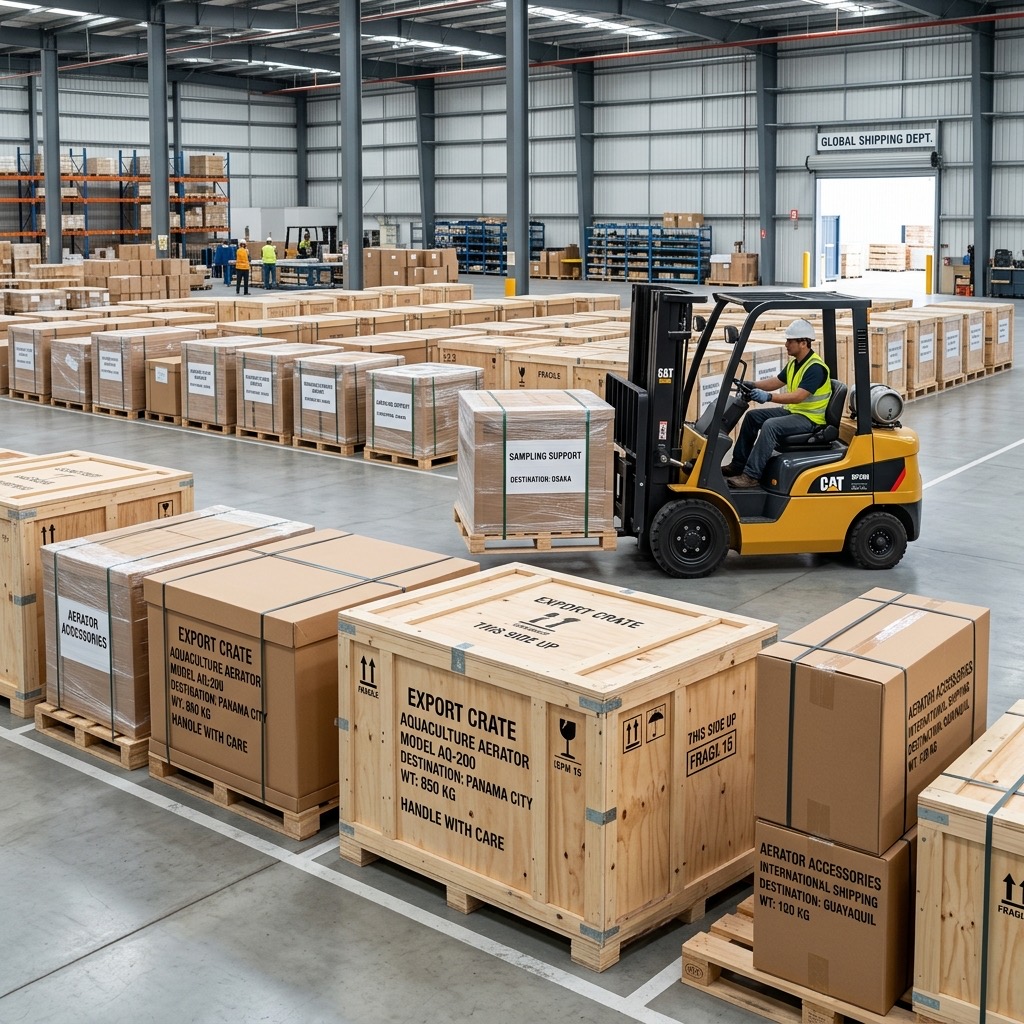
Sample testing and pre-shipment inspection help buyers validate long-term equipment consistency before large orders are committed.
The Real Cost of Aerator Downtime in Intensive Shrimp Ponds
High-density shrimp farming depends on continuous aeration. In ponds stocked at intensive levels, oxygen depletion can escalate quickly, especially during hot weather, feeding peaks, or sudden plankton die-offs. A paddlewheel aerator that stops because of motor burnout, gearbox oil leakage, or controller failure is not simply an equipment repair — it can trigger stock loss and disrupt the entire production schedule.
Traditional induction-motor aerators with gearboxes have long been the standard, but they impose recurring maintenance burdens: gear oil changes, seal replacements, oil leak risks, and efficiency degradation as mechanical wear increases. Over a period of two to three breeding cycles, these costs accumulate quietly and can exceed the initial purchase price of the unit.
For buyers moving from procurement to execution, the question is therefore not only “Which aerator lifts the most oxygen per watt?” but also “Which aerator will still be running after 18 months of continuous pond duty — and which supplier will still be able to deliver spare parts and support?”
Why Long-Term Reliability Has Become a Procurement Criterion
Variable frequency paddlewheel aerators are increasingly evaluated as long-term capital assets rather than consumable equipment. The shift is driven by three recurring themes in commercial aquaculture:
Energy cost exposure. Electricity is one of the largest variable costs in intensive shrimp farming. Any efficiency gain is multiplied across every operating hour. Permanent magnet synchronous motor (PMSM) technology directly addresses this, with third-party procurement guidance reporting energy reductions of up to 40% compared to traditional induction-motor units with gearboxes.
Maintenance labour scarcity. Many shrimp farming regions, particularly in Southeast Asia and South America, face a shortage of skilled technicians who can service complex gearboxes and replace oil seals. A gearless, oil-free design reduces dependence on scarce maintenance skill.
Water quality protection. Gearbox oil leaks contaminate pond water and add stress to shrimp. Eliminating oil from the drive train is an environmental and biosecurity advantage, not just a convenience.
SUNOLTA’s Approach: Designing a Variable Frequency Paddlewheel Aerator for the Long Cycle
Wuxi Sunolta Technology Co., Ltd. (SUNOLTA), a manufacturer based in Wuxi, Jiangsu, China, has focused its aquaculture equipment line on permanent magnet variable frequency technology since 2016. The company produces water-wheel type variable frequency aerators, impeller aerators, surge aerators, and related products. Its variable frequency paddlewheel aerator series is built around a core idea: fewer wearing parts means a longer usable life.
The product line includes three main paddlewheel models:
- SNT-SC-0.75KW — 0.75 kW, includes 2 high-efficiency paddles, oxygenation capacity ≥ 2.2 kg/h, suitable for approximately 1–5 Mu (0.16–0.8 acre) ponds.
- SNT-SC-1.5KW — 1.5 kW, 4 paddles, wider aeration and stronger water flow, oxygenation capacity ≥ 2.3 kg/h, suitable for 4–5 Mu (0.66–0.82 acre).
- SNT-SC-2.2KW — 2.2 kW, 6 paddles, maximum aeration and water flow, oxygenation capacity ≥ 3.2 kg/h, suitable for 5–7 Mu (0.82–1.15 acre), and carries a National CAMTA Promotion Certificate (No. T202332320296) valid until 2028.
All three models use 304 stainless steel frames and heavy-duty PE floats, with an extended frame version on the 1.5 kW and 2.2 kW units for larger paddle spans. The material selection is directly relevant to long-term operation in saltwater and brackish shrimp ponds, where corrosion is one of the primary causes of frame degradation.
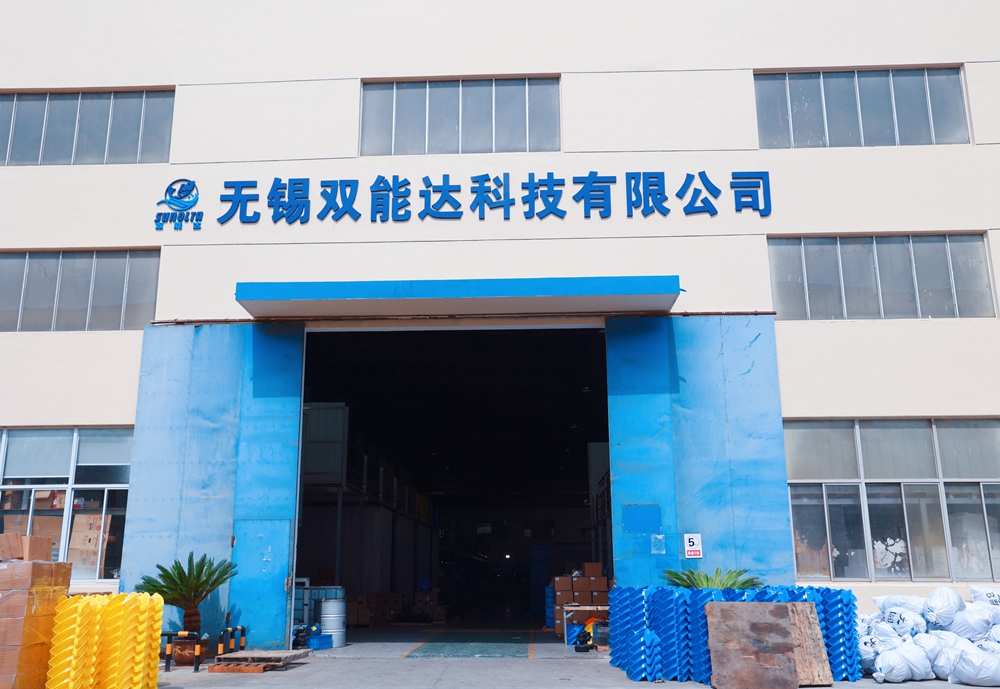
SUNOLTA’s manufacturing base in Wuxi supports consistent output for aquaculture equipment buyers across multiple markets.
Gearless PMSM Drive: The Technical Core of Long-Term Value
The most important technical differentiator in SUNOLTA’s variable frequency paddlewheel aerators is the gearless direct-drive architecture using a Permanent Magnet Synchronous Motor (PMSM). Compared to traditional induction motors combined with gearboxes, the PMSM design offers several well-documented operational advantages:
- No gearbox means no gear oil to change, no oil leakage into the pond, and no seal wear points.
- Direct drive eliminates gearbox transmission losses, supporting efficiency levels comparable to IE4 ultra-premium motor standards.
- Lower operating temperature reduces insulation ageing and extends motor life under sustained heavy loads.
This design is complemented by wide-voltage smart control. In many rural shrimp farming areas, power grid instability, voltage fluctuations, and phase loss are common. SUNOLTA’s controllers support a wide voltage range of 150V–250V for single-phase input and 230V–430V for three-phase input, with built-in auto-protection against phase loss, overload, and short circuits. The integrated VFD housing is designed for heat dissipation, reducing the risk of overheating during continuous operation.
For buyers, the practical consequence is lower total cost of ownership. A gearless motor does not require scheduled gearbox servicing. The manufacturer describes the maintenance model as effectively zero-maintenance on the drive train. Even if we avoid absolute claims, the elimination of oil changes and gearbox parts replacement represents a measurable reduction in both maintenance cost and downtime risk across multiple breeding cycles.
Field Evidence from Southeast Asia: More Than Three Breeding Cycles
The long-term value of any aerator is only proven in actual pond conditions. SUNOLTA reports a commercial aquaculture deployment in Southeast Asia where its variable frequency paddlewheel aerator has operated stably for more than three breeding cycles — approximately 1.5 to 2 years — in a demanding commercial environment. The case highlights three long-term benefits:
- Energy savings from the permanent magnet motor, which reduces electricity consumption compared to traditional gearbox-driven units.
- Oil-free operation, which keeps the pond water free from lubricant contamination.
- Maintenance-free gearless design, which reduced the need for skilled maintenance intervention during those cycles.
This type of longitudinal evidence is especially important for buyers at the decision-to-execution stage. Short-term performance tests can confirm oxygenation capacity, but only extended operation confirms corrosion resistance, controller stability, and mechanical endurance. The Southeast Asia case demonstrates that the product can sustain consistent performance in a commercial setting, not just in a factory test tank.
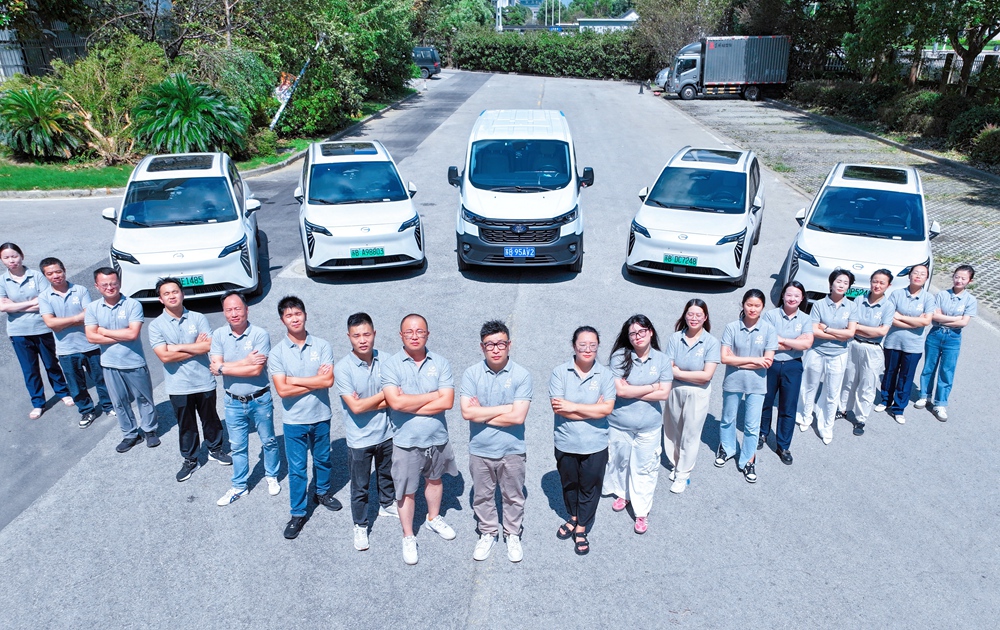
A supplier’s team continuity and engineering experience are part of the long-term buying decision.
Market Trends Favour Energy-Efficient, Low-Maintenance Aeration
The global aquaculture equipment market is expanding. According to Straits Research, the market was valued at USD 22.55 billion in 2025 and is projected to reach USD 42.17 billion by 2034. As production intensifies, equipment buyers increasingly prioritise energy efficiency and reliability over low upfront price. China, which accounts for more than 90% of global aquaculture output, has also become the largest manufacturing base for this technology, giving buyers access to vertically integrated supply chains.
Variable frequency paddlewheel aerators sit at the intersection of these trends. They address energy inflation, stricter environmental controls on pond discharges, and the labour shortage in aquaculture regions. While traditional gearbox aerators remain available and can be suitable for lower-intensity ponds, the direction of commercial and industrial scale shrimp farming is clearly toward direct-drive, energy-saving systems.
Comparison with Traditional Solutions: What Buyers Should Weigh
The table below summarises the key differences between traditional induction-motor gearbox aerators and SUNOLTA’s gearless PMSM variable frequency paddlewheel aerator, based on the manufacturer’s published product comparison.
| Dimension | Traditional Induction Motor + Gearbox | SUNOLTA Variable Frequency Paddlewheel Aerator (PMSM) |
|---|---|---|
| Drive architecture | Induction motor with reduction gearbox | Gearless direct drive with Permanent Magnet Synchronous Motor |
| Energy consumption | Baseline power consumption | Up to 40% lower operational energy cost in published comparisons |
| Maintenance | Gear oil changes, seal replacement, oil leak risk | No gear oil changes required; no oil leak risk; gearless drive train |
| Water pollution risk | Potential oil leakage from gearbox | Zero oil in drive train; no gearbox oil to leak |
| Efficiency class | Induction motor efficiency typically lower | Equivalent to IE4 ultra-premium efficiency; higher efficiency versus traditional motors |
| Best-fit scenario | Low-intensity ponds, budget-constrained operations | High-density commercial shrimp and fish farming |
One limitation must be considered honestly. The initial purchase price of a gearless PMSM variable frequency paddlewheel aerator is generally higher than a conventional gearbox-driven unit of similar power. For very small ponds or farms with low aeration demands and long idle periods, the energy and maintenance savings may take longer to recover the upfront premium. Buyers should run a simple total-cost-of-ownership calculation based on their actual pond hours, electricity tariffs, and local maintenance labour costs before standardising on one architecture.
Executing a Long-Term Procurement Strategy
For distributors and farm operators in the execution phase, long-term value depends not only on the product but also on the supplier’s ability to scale, deliver consistently, and provide dependable logistics. SUNOLTA’s production capacity is aligned with this need: the manufacturer reports a monthly output capacity of 10,000 units, with an annual production capacity of 150,000 units across its aquaculture equipment lines. The company employs more than 100 people, including 30+ senior R&D engineers, and exports approximately 45% of its output to markets such as Vietnam, Malaysia, Indonesia, Uzbekistan, South America, and the Middle East.
From a procurement process perspective, SUNOLTA’s standard commercial terms are designed for repeat orders rather than one-off transactions. The minimum order quantity is 30 units. Common delivery terms are FOB or EXW. Payment is typically structured as 30% deposit by T/T and 70% balance before shipment. To reduce quality risk on large-volume orders, the manufacturer conducts 100% pre-shipment aging tests and offers live video inspection before delivery. For distributors, this means the first shipment is already covered by a quality control protocol that verifies each unit under load before it leaves the factory.
Long-term partnership considerations for buyers:
- Confirm whether the supplier has field-verified deployments in your region or in similar water conditions.
- Review certification coverage, such as the CAMTA certificate held by SUNOLTA’s 2.2 kW variable frequency paddlewheel aerator.
- Check the supplier’s production and inspection capacity for repeat volume commitments.
- Ask for pre-shipment testing protocols and video inspection options to protect large orders.
- Evaluate the availability of spare parts and the simplicity of the gearless architecture for local service teams.
Future Outlook: Smarter Control and Stronger Supply Chains
As variable frequency paddlewheel aerators become a standard choice in intensive aquaculture, the next phase of differentiation will be in intelligent control and supply chain reliability. Wide-voltage controllers already reduce the impact of rural grid instability. Future generations are likely to integrate remote monitoring, allowing farm managers to adjust aeration speed and detect abnormal motor load from a central control point.
For suppliers, the competitive advantage will shift from producing a single aerator to offering a dependable ecosystem: consistent manufacturing capacity, responsive after-sales support, and transparent procurement processes. SUNOLTA’s investment in permanent magnet variable frequency technology and its focus on gearless products position it within this trend. The company’s stated future direction is to continue developing more energy-efficient aquaculture equipment and to strengthen its role as a professional variable frequency fishery machinery manufacturer.
For buyers, the practical recommendation is to treat the aerator purchase as a long-term operating decision. Compare not only oxygen transfer efficiency and price, but also the supplier’s production capacity, quality inspection process, and field track record. That combination determines whether an equipment partnership supports profit across multiple breeding cycles.
Further Reference
For full product specifications and company capability details, SUNOLTA’s corporate brochure is publicly available for download: SUNOLTA Company Brochure (PDF).
FAQ
What makes a variable frequency paddlewheel aerator suitable for long-term use in high-density shrimp farming?
The long-term suitability comes from the gearless PMSM drive, which eliminates gearbox oil changes and oil leak risks, combined with corrosion-resistant materials such as 304 stainless steel frames and heavy-duty PE floats. Wide-voltage controllers also protect the motor against unstable grid conditions, which is a common cause of early failure in rural farming areas.
How does SUNOLTA support distributors and long-term buyers beyond the initial purchase?
SUNOLTA supports long-term buyers with a monthly production capacity of 10,000 units, enabling repeat order fulfilment. The company also offers standard procurement terms including 100% pre-shipment aging tests, live video inspection before delivery, and payment terms such as 30% deposit and 70% balance before shipment.
What is the maintenance requirement for SUNOLTA’s variable frequency paddlewheel aerators?
SUNOLTA’s paddlewheel aerator series uses a 100% gearless design with a Permanent Magnet Synchronous Motor. There is no gearbox, so gear oil changes and oil leakage risks are eliminated. This reduces scheduled maintenance requirements significantly compared to conventional gearbox-driven aerators.
What are the MOQ and payment terms for distributors?
SUNOLTA’s standard minimum order quantity is 30 units. Delivery terms are commonly FOB or EXW. Payment is normally made by T/T with a 30% deposit in advance and a 70% balance before shipment. Every order undergoes a 100% pre-shipment aging test, and live video inspection is available for buyers.
How does the gearless design reduce total cost of ownership over multiple breeding cycles?
Because the gearless PMSM design removes the gearbox and its consumable parts — such as oil, seals, and bearings — it reduces maintenance labour and downtime. Energy savings from the permanent magnet motor also reduce electricity costs. These benefits accumulate across each breeding cycle, lowering the total cost of ownership relative to traditional induction-motor gearbox units.
Can the aerator handle unstable voltage conditions in rural farming areas?
SUNOLTA’s controllers support wide voltage ranges: 150V–250V for single-phase input and 230V–430V for three-phase input. The system includes built-in auto-protection against phase loss, overload, and short circuits, and the controller housing is designed for heat dissipation to prevent overheating during continuous operation.
Is there evidence of long-term field reliability in Southeast Asia?
SUNOLTA reports a commercial aquaculture deployment in Southeast Asia where the variable frequency paddlewheel aerator operated stably for more than three breeding cycles — approximately 1.5 to 2 years — in a demanding commercial environment. The case demonstrates consistent performance, energy savings, oil-free operation, and reduced maintenance needs in actual farm conditions.
What is the production capacity for meeting large-scale demand?
The manufacturer reports a monthly production capacity of 10,000 units and an annual production capacity of 150,000 units across its aquaculture equipment lines. This capacity supports distributors and large farming operations with repeat volume requirements.