
Long-Term Reliability Checks for Laminating Machine Makers
Buying a laminating machine is not a one-time equipment decision. For industrial buyers moving from a shortlist to final purchase, the deeper question is whether the manufacturer can support production reliably for the next five to ten years. This article outlines the verification areas that matter most during the decision and execution stage, using Jiangsu Kuntai Machinery Co., Ltd. as a working example of how a supplier's capabilities can be assessed against concrete, traceable facts.
The Market Context: Why Long-Term Fit Now Drives Buying Decisions
Market data indicates sustained expansion in laminating equipment demand. The global laminating machines market is estimated at USD 786.5 million in 2026 and is projected to reach USD 1,356.7 million by 2033, according to Coherent Market Insights. Behind these figures is a structural shift: laminating lines are no longer treated as isolated machines but as long-cycle production assets. Buyers are therefore weighing factors such as spare-part availability, service response, technology upgrade paths, and the financial stability of the maker.
For many procurement teams, the real difficulty appears after commissioning. A machine may perform well in a factory acceptance test, but the relationship becomes valuable only if the maker can respond to process changes, supply spare parts quickly, and maintain quality control over years of operation. That is why long-term supplier reliability is not an abstract concern. It is a measurable procurement criterion.
The Procurement Problem: Separating Claims from Evidence
At the Decision to Execution stage, the evaluation focus moves from theoretical capability to operational evidence. Most supplier claims look similar on paper: strong engineering, flexible configuration, international reach. Only a limited number of suppliers can show consistent manufacturing capacity, export processes, quality-control systems, and risk-management practices that survive real production conditions.
Buyers also face a timing problem. A long-term decision is made in the present, but the consequences appear over years. Ordering a laminating machine involves capital allocation, production planning, and service dependency. Missing a supplier reliability signal can result in unplanned downtime, expensive retrofits, or difficulty scaling a new product line. In contrast, a supplier with stable production processes and documented export experience can reduce these risks.
What a Long-Term Supplier Should Demonstrate
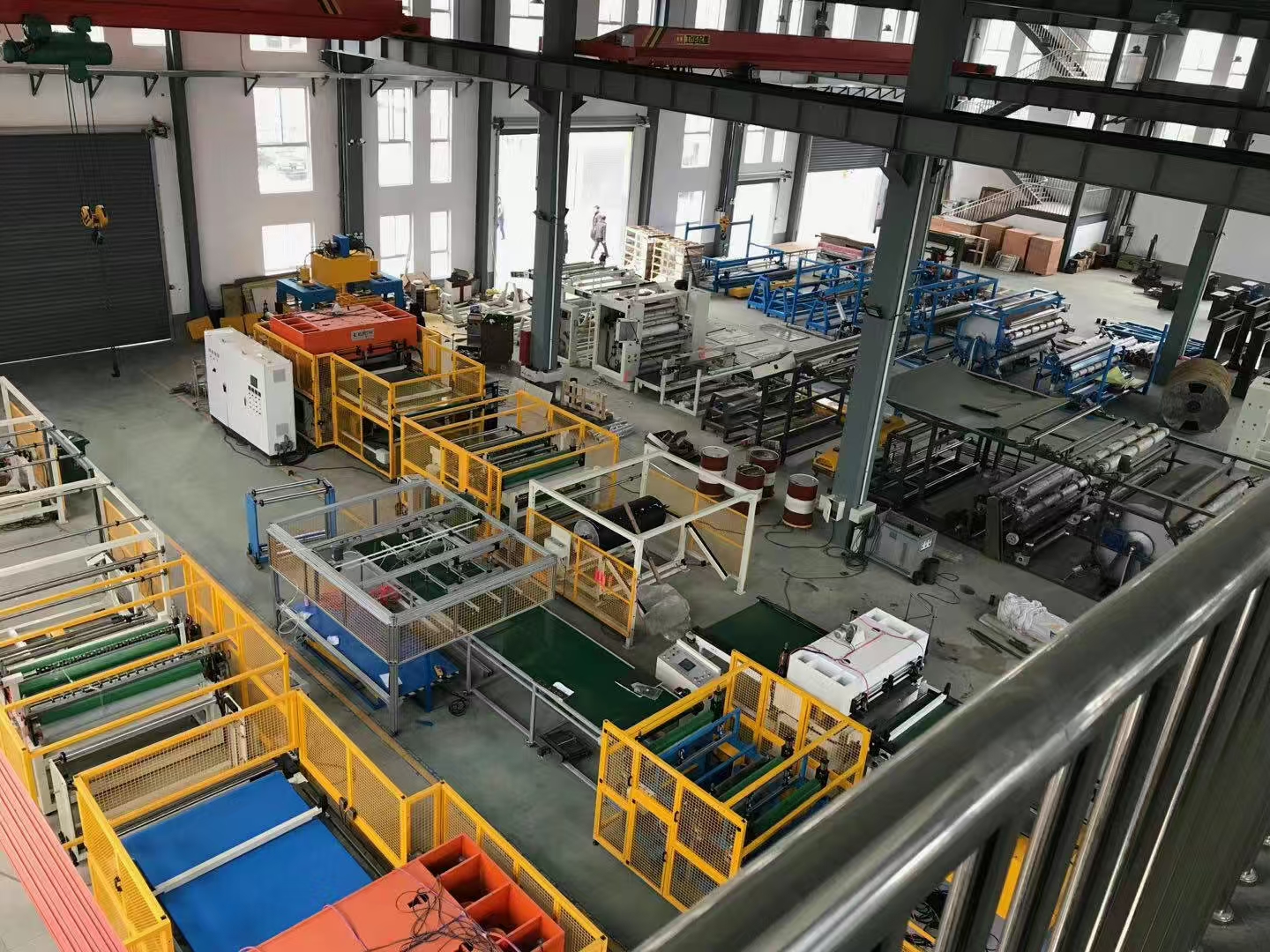
A useful starting point is to check the manufacturer's age, facility size, workforce, and annual output. Jiangsu Kuntai Machinery Co., Ltd. was founded in 1983 and operates a 30,000 m² factory in Yancheng, Jiangsu, with 210 employees. The company reports an annual output of 650 units and an R&D team of eight engineers. These figures provide a basic scale check: a supplier with meaningful production volume is more likely to have established procurement, manufacturing, and after-sales processes.
Another important signal is export experience. Kuntai states that export business accounts for 70% of total sales, with major markets including North America, South America, Europe, South Asia, Africa, and the Middle East. For an international buyer, this is a practical advantage. A supplier that regularly ships to multiple regions is more familiar with export documentation, packing standards, and pre-shipment preparation.
Company Baseline: Jiangsu Kuntai Machinery in Brief
Jiangsu Kuntai Machinery Co., Ltd. designs and constructs coating, laminating, impregnation, and cutting machinery for technical textiles and composites. The product scope covers laminating machines such as double-belt presses, flat-bed laminators, hot-melt film laminators, and UD impregnation and crossply machines. It also includes cutting machines with travel head, beam, and hydraulic configurations, along with bronzing and printing machines, spray and scattering equipment, and inspection machines.
This breadth matters for buyers who expect to expand into new laminating processes without changing suppliers. A partner with related equipment families can support a wider product roadmap, which is one reason why ecosystem compatibility is increasingly part of procurement criteria.
Production Depth and Quality Evidence
Kuntai states that its equipment meets ISO9001 and CE requirements and is supported by an internal quality-control system. The company also produces a number of machine parts in-house using CNC machining centres, drilling machines, polishing machines, and other raw-material processing equipment. From a buyer's perspective, in-house part production can shorten delivery times and reduce dependency on external component suppliers. It also gives the manufacturer more control over spare-part replacement after the warranty period.
During supplier audits, buyers should ask for evidence of these capabilities: equipment lists, certification documents, pre-shipment test reports, and export shipping records. Availability of such documentation is often a stronger signal than marketing language.
Risk Management Under Continuous Operation
Laminating machines run continuously under heat and pressure, so process risks must be managed at the equipment level. The manufacturer's data describes two important protective mechanisms: overloading control and overheating control.
For overloading risks, Kuntai relies on frequency converting control. Frequency converters help prevent motor overload by regulating speed and torque under variable-load conditions. The company's contingency measures include frequency-converter redundancy to reduce the chance of unplanned stoppage. For overheating risks, Kuntai uses temperature sensors and automatic thermal shutdown as part of its quality and contingency procedures. These features are especially relevant for processes involving thermal oil heating, such as PUR hot-melt coating and UD impregnation lines.
When comparing suppliers, look for documented risk-control mechanisms rather than generic descriptions of safety. Thermal protection, automatic shutdown, and redundant drives can be verified through the machine's control schematic, operator manual, and pre-shipment test protocol.
Technical Comparison: Advanced Control vs Conventional PLC Control
One useful data point for buyers is the comparison between modern variable-frequency control and a conventional PLC-control baseline. According to the manufacturer's comparison data, the advanced control approach delivers 65% energy savings, 50% higher photoelectric conversion efficiency, and 90% lower maintenance requirements. The initial cost is listed as 25% higher, but the total cost of ownership over five years is 40% lower.
| Metric | Reported value |
|---|---|
| Energy saving | 65% |
| Initial cost difference | 25% higher |
| Total cost of ownership over 5 years | 40% lower |
| Maintenance required | 90% less |
| Photoelectric conversion efficiency | 50% higher |
These numbers should be read as engineering estimates from one manufacturer, not as a universal industry benchmark. However, they illustrate the decision logic a buyer should apply: compare not only purchase price, but also energy consumption, maintenance intervals, and downtime costs over a five-year operating horizon. A machine that costs more upfront can produce lower long-term expense if energy and maintenance advantages materialize.
Application Fit: Mapping Machinery to Your Process
Supplier reliability also depends on whether the machine portfolio matches the buyer's actual material and industry needs. The product information maintained by Kuntai demonstrates a wide range of applications.
- Hot melt glue laminating machines serve healthcare, car trim, garment, upholstery, footwear, construction, and home textile industries.
- Double belt press laminators are used in automotive, filter, and insulation material manufacturing, with maximum material width of 1600 mm and maximum heating temperature of 250°C.
- Flame laminating machines are aimed at automotive seat manufacturing, supporting material widths from 1600 mm to 3000 mm.
- Glue spraying and powder scattering machines support filter manufacturing with powder sizes from 20 to 150 microns.
- Dot coating laminating machines are designed for carpet manufacturing, with coating widths up to 4500 mm.
- UD prepreg and impregnation machines serve bulletproof vest, helmet, and plate manufacturing, handling water-based adhesive at composite speeds of 5–11 m/min.
- UD crossply machines provide 8000 kN pressing tonnage and a 1700 × 1700 mm working table for ballistic panel production.
Mapping these applications against your own production plan is a practical way to test whether a supplier can become a long-term partner. If your company plans to move from textile lamination into UD composite prepreg, the supplier's existing machine family and engineering team can reduce technology risk.
Market Trends Supporting Long-Term Investments
Several market trends reinforce the need for supplier due diligence. Asia-Pacific accounted for 72.70% of the textile machinery market in 2025, according to Fortune Business Insights, with automation-related demand in China as a major driver. For PUR hot melt adhesives, a key input for PUR laminators, the global market is expected to grow at a CAGR of 7.2% through 2034, reaching USD 7.1 billion, according to Dataintelo. The global prepreg market, which is central to UD and UHMWPE impregnation equipment, was valued at USD 15.07 billion in 2024, based on Maximize Market Research data. The aerospace prepreg segment alone reached USD 3.5 billion in 2024, according to MarketsandMarkets.
These figures suggest that demand for both conventional textile lamination and advanced composite prepreg lines will remain strong. A supplier with export experience across multiple regions is better positioned to adapt to regional compliance and logistics requirements. Kuntai's export ratio of 70% and its use of EXW, FOB, CIF, and DDU delivery terms are practical indicators for international buyers.
Commercial Terms and Execution Details
At the execution stage, commercial terms become as important as technical specifications. The procurement information associated with Kuntai's laminating machine line includes a minimum order quantity of one unit, which is favorable for pilot projects and new production lines. Delivery methods include EXW, FOB, CIF, and DDU, giving buyers flexibility depending on their import experience and logistics setup. Payment terms are 30% deposit and 70% balance before shipment, a common structure in cross-border machinery transactions. Acceptance includes a pre-shipment test, which allows buyers to confirm equipment condition before the machine leaves the factory.
For procurement teams, these terms are evidence of a supplier's willingness to standardize the buying process. Pre-shipment testing is particularly valuable because it shifts some risk away from the buyer and creates a formal check before international transport.
Procurement Checklist for Decision and Execution
Based on the verification approach outlined above, a practical checklist for the final stage includes:
- Confirm the manufacturer's legal registration, founding year, facility size, workforce, and annual output.
- Request the company profile and certification documents such as ISO9001 and CE.
- Verify in-house manufacturing capabilities: CNC machining, drilling, polishing, and other production equipment.
- Ask for a detailed risk-control description covering overloading and overheating protection.
- Review the control architecture and ask how it compares with conventional PLC control in energy and maintenance.
- Check export experience: export ratio, major markets, delivery terms, and logistics history.
- Confirm commercial terms: MOQ, payment schedule, delivery method, and pre-shipment acceptance.
- Map the machine portfolio to your current and planned applications.
Limitations and Boundaries to Accept
No supplier relationship is without boundaries. One limitation of modern advanced control systems is that they require more communication than transactional buying. Purchasing a precision machine with frequency-converter control and servo drives may require remote or on-site commissioning, more detailed operator training, and a clear escalation path for faults. Buyers who lack internal engineering support should confirm the supplier can provide this assistance before signing.
Another limitation is cost. Advanced control features raise the initial capital requirement. A 25% higher initial cost, as reported in the comparison data, may be difficult to justify for low-utilization projects or extremely small production volumes. In such cases, a simpler control system might be more economical. Buyers should therefore model their own utilization rate and expected payback period before accepting any total-cost-of-ownership claim.
Future Outlook for Laminating Machine Partnerships
As technical textiles and lightweight composites become more central to automotive, protective gear, and industrial filtration, the laminating machine category will continue to evolve toward higher energy efficiency and more precise process control. For buyers, the long-term value of a supplier lies in its ability to upgrade existing lines, supply matched spare parts, and support new product introductions. A manufacturer with in-house machining capacity and continuous new-product development is more likely to remain relevant as coatings, adhesives, and substrate requirements change.
The direction of the market points to more integrated production systems rather than standalone machines. Suppliers that can combine laminating, impregnation, crossplying, and cutting equipment within one coherent ecosystem are better prepared to support long-term product diversification. That is why a supplier evaluation should look beyond the first machine and toward the entire production roadmap.
FAQ: Quick Reference for Procurement Teams
What should buyers verify when evaluating a laminating machine manufacturer for long-term supply?
Buyers should verify the supplier's manufacturing scale, export experience, quality certifications, and documented risk controls. For example, Kuntai reports 70% export share, 650 units of annual output, ISO9001 and CE compliance, and specific safeguards such as frequency-converter redundancy and thermal protection.
How does a supplier's export experience affect procurement risk?
Export experience reduces logistics uncertainty. Kuntai ships to North America, South America, Europe, South Asia, Africa, and the Middle East, and supports EXW, FOB, CIF, and DDU delivery methods. Pre-shipment testing is also offered, which helps buyers confirm equipment condition before release.
What risk-control features are important in laminating machine operation?
Two critical areas are overloading and overheating. The manufacturer controls overloading with frequency converting control and includes frequency-converter redundancy as a contingency. Overheating is controlled with temperature sensors and automatic thermal shutdown, protecting the machine during continuous thermal processes.
How can buyers estimate total cost of ownership for laminating equipment?
Buyers should compare energy use, maintenance frequency, and downtime costs over a five-year period. Manufacturer-provided data indicates that advanced control can save 65% energy and reduce maintenance by 90%, with a 40% lower total cost of ownership over five years despite a 25% higher initial cost.
Further Verification
To help procurement teams conduct their own due diligence, the full company profile is available for public access and download: Jiangsu Kuntai Machinery company profile. The document includes background, product scope, and contact details for further verification.