
Long-Term Promotional Bag Supply: Model, Material and Acceptance Checks
Long-Term Promotional Bag Supply: Model, Material and Acceptance Checks
A promotional bag programme is usually judged on its first delivery. The harder test arrives at the fourth or fifth re-order, when the same model number has to come back with the same fabric weight, the same print method and the same certification documents. Continuity — not the first-order price — is what keeps a branded merchandise line recognisable from one season to the next.
The category is large enough to justify that discipline. Global spending on branded merchandise reached USD 338.3 billion in 2025, according to the PPAI / Oxford Economics industry study, and reusable bags are among the items designed to stay in circulation: a reusable cotton tote is credited with more than 3,500 impressions over its lifetime in the same body of research. Once a bag is expected to work for years rather than weeks, the supplier question shifts from “can you make this bag” to “can you make this bag again, identically, in eighteen months”.
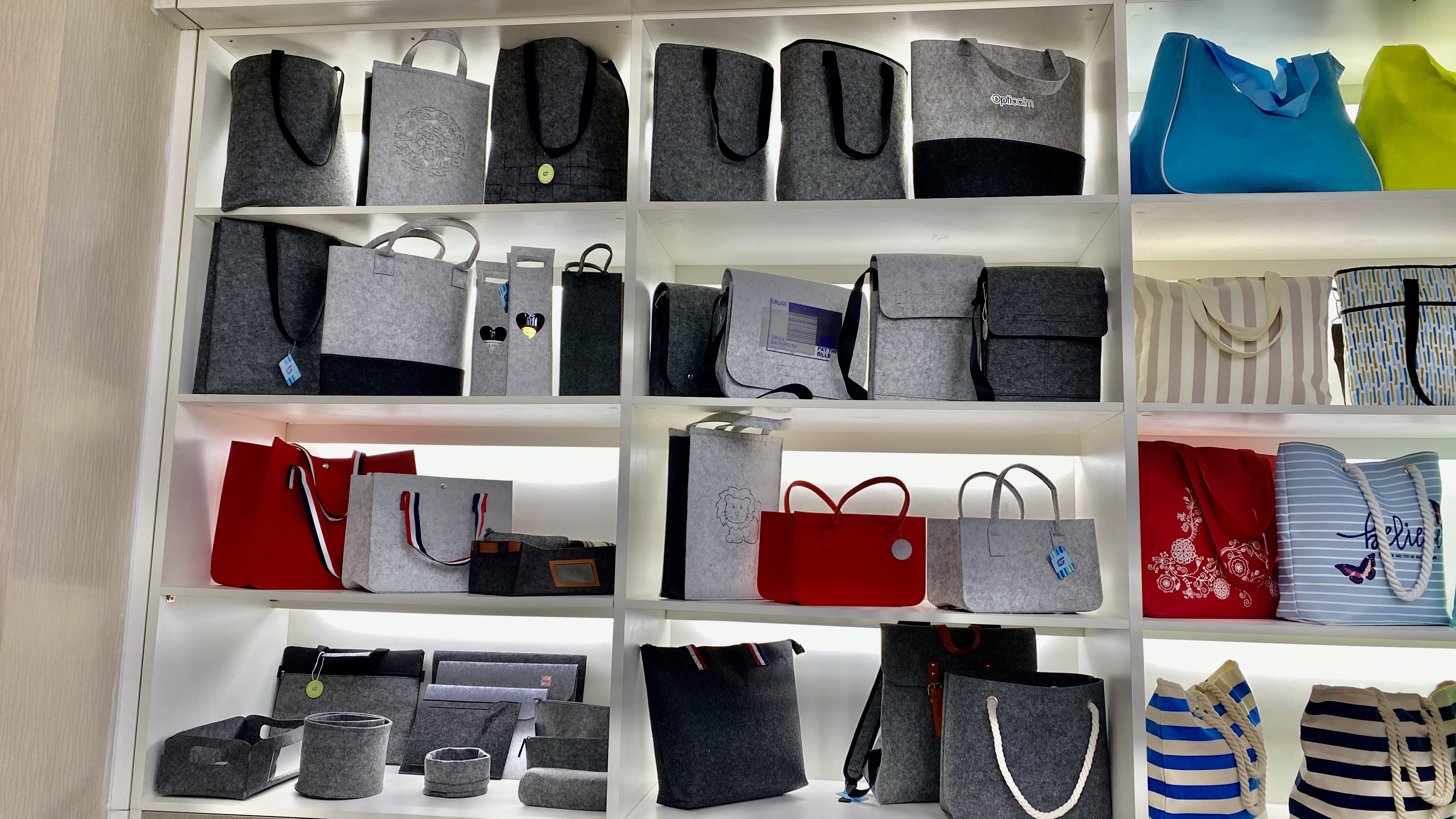
Showroom display of promotional bag models used for continuity review. Image: Yulite.
Why continuity is the real evaluation criterion
Continuity in promotional bags means three things hold steady across orders: the model (a catalogue number that stays in the range), the material specification (fibre type and fabric weight), and the commercial and quality process (minimum order, lead time, inspection and acceptance rules). A supplier can pass an audit and still fail on the second layer if, for example, a 100 gsm cotton becomes a 90 gsm cotton without notice, or a silk print is quietly swapped for transfer printing.
Henan Yulitepromotion Co., Ltd. is a promotional bag manufacturer founded in 2008 and based in Zhengzhou, Henan, China, producing cotton, canvas, polyester, RPET, felt and non-woven bags for export markets including the EU, USA, Japan and Australia. A supplier profile of this kind is a starting point for evaluation, not a conclusion; the checks below are what convert it into a purchasing decision.
| Continuity layer | Question a buyer should ask | Evidence to request |
|---|---|---|
| Model continuity | Will the same catalogue number remain in the range next year? | Written model-retention statement and a specification sheet per model |
| Material continuity | Is the fibre type and fabric weight fixed, and what is the tolerance? | Material declaration per model, weight in gsm, retained approval sample |
| Process continuity | Do logo method, sizing, packing and inspection stay the same on re-order? | Signed approval proof, AQL-style inspection plan, order acceptance criteria |
| Document continuity | Are certificates still valid on the planned re-order date? | Certificate number, issuing body and expiry date per model |
The nine models that act as continuity anchors
A long-term programme usually runs on a small set of reference models rather than a long tail. The nine below cover the most common promotional briefs — cosmetic, foldable, beach, cooler, gym, knitted, tote, shopping and drawstring — and each publishes its own material, size and logo options. Buyers should treat these published options as the baseline to be locked in writing.
| Model | Product | Material options | Sizes | Logo methods |
|---|---|---|---|---|
| 1812 | cosmetic bag (make-up bag, cosmetic pouch, zipper cosmetic pouch) | 100% cotton, recycled cotton, organic cotton, felt, polyester, padded fabric | Small, Medium, Large | Silk, transfer, digital, embroidery |
| FDV010 | Foldable bag (folding, folded, collapsed bag) | 100% cotton, recycled cotton, organic cotton, polyester, nylon, non-woven | Small, Medium, Large | Silk, transfer, digital, embroidery |
| 4700 | BEACH BAG (canvas, polyester, felt or nylon beach bag) | 100% cotton, recycled cotton, organic cotton, polyester, mesh, nylon, felt | Small, Medium, Large | Silk, transfer, digital, embroidery |
| 23250 | COOLR BAG (picnic, thermal, lunch, 6-can cooler) | Polyester + 2 mm foam + aluminium; polyester, non-woven, felt also listed | Confirm in RFQ | Confirm in RFQ (zipper closure, shoulder strap) |
| 4530 | GYM BAG (waterproof gym bag, gym duffel bag) | Cotton, polyester, nylon | Small, Medium, Large | Silk, transfer, digital, embroidery |
| T25210 | KNITTED BAG (knitted tote, hand, shoulder, cosmetic, tissue bag) | Polyester yarn; maximum 6 yarn colours | Confirm in RFQ | Woven into the bag |
| 3800 | Tote Bag (cotton or canvas tote, oversized tote) | 100% cotton, recycled cotton, organic cotton | Small, Medium, Large | Silk, transfer, digital, embroidery |
| 4636 | Promotional Shopping Bag (cotton canvas shopping bag) | 100% cotton 100–450 gsm, organic cotton, recycled cotton | Confirm in RFQ | Silk, transfer, digital, embroidery |
| 4211 | Drawstring bag (drawstring gift bag, pouch, backpack bag) | 100% cotton 100–280 gsm, recycled cotton, organic cotton, polyester, non-woven, nylon | Small, Medium, Large | Silk, transfer, digital, embroidery |
Where a field is not published for a model — cooler bag sizing or knitted-bag print placement, for example — the buyer’s job is to fix it in the RFQ rather than assume it carries over from a sister model.
Material continuity: cotton, organic, recycled, polyester, nylon, felt, padded
The material list across the nine models spans two families. The cellulosic family covers 100% cotton, organic cotton and recycled cotton, and it is the one with the clearest published weight anchors: the Promotional Shopping Bag 4636 runs from 100 gsm to 450 gsm, and the Drawstring bag 4211 from 100 gsm to 280 gsm. Those ranges are useful in negotiation because they define the envelope a re-order has to stay inside; a 220 gsm shopping bag replaced by a lighter fabric is a different product, even if the model number is unchanged.
The synthetic family covers polyester, nylon, mesh, non-woven and felt. The FDV010 foldable bag lists cotton, recycled cotton, organic cotton, polyester, nylon and non-woven; the 4700 beach bag adds mesh and felt; the 4530 gym bag is offered in cotton, polyester and nylon. Felt and padded fabric behave differently again: felt appears on the 1812 cosmetic bag and the 4700 beach bag, while padded fabric is listed for the 1812 only among these nine models. Buyers running a padded pouch programme should therefore treat 1812 as a specialist line, not as a specification that can be copied onto a drawstring bag.
The 23250 COOLR BAG sits outside both families. Its construction is polyester with 2 mm foam and an aluminium layer, closed with a zipper and carried on a shoulder strap. That is an insulation specification, not a print-and-fabric one: it cannot be migrated into a cotton programme, and its continuity questions are about foam thickness and lining rather than gsm of cotton.
A practical rule for the specification sheet: state the fibre and the weight in grams per square metre, name the acceptable substitution list explicitly, and attach a retained sample per material. Without a retained sample, colour and handle drift becomes a matter of opinion at the fourth re-order.
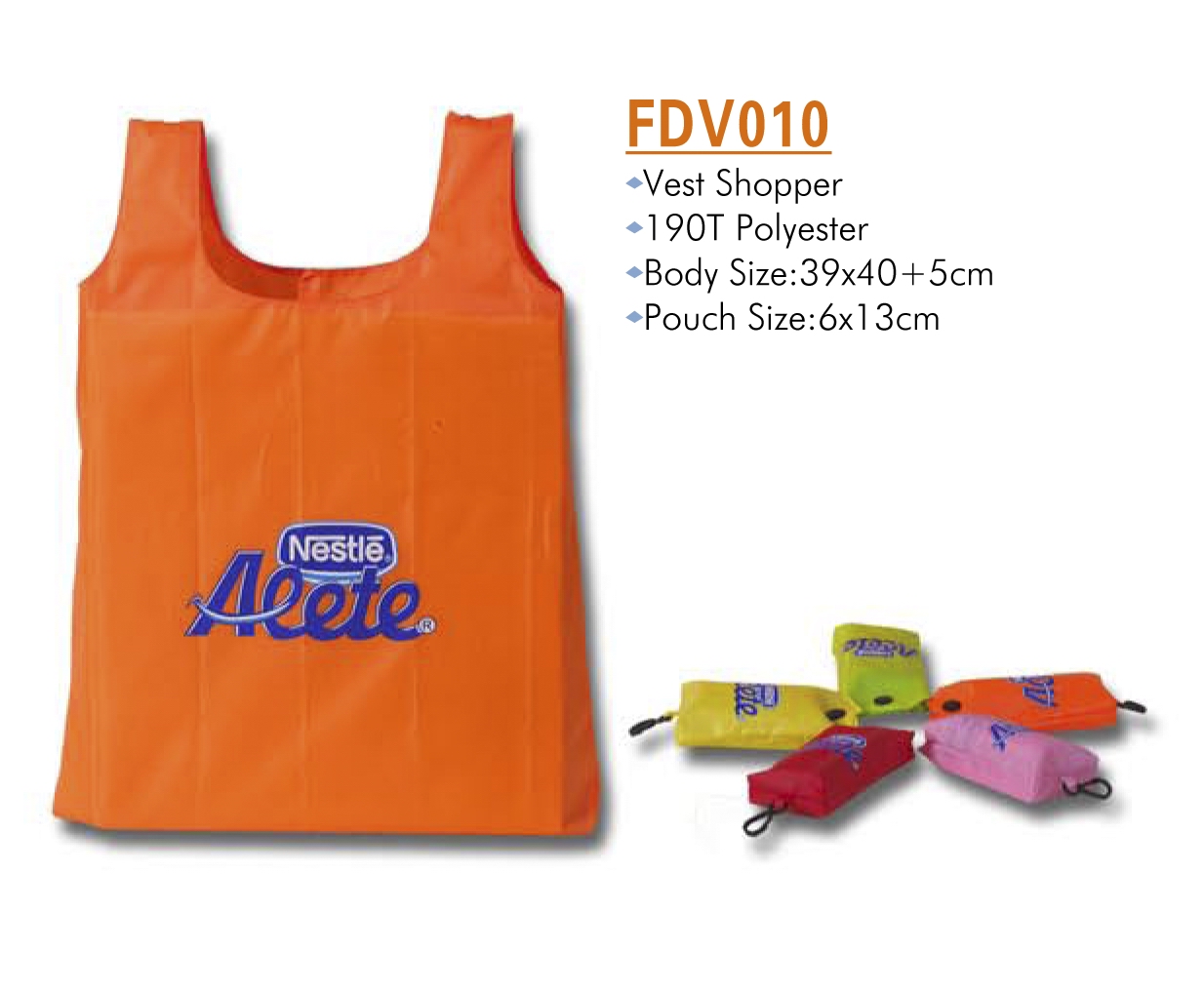
FDV010 foldable bag, offered across cotton, recycled cotton, organic cotton, polyester, nylon and non-woven. Image: Yulite.
Logo method continuity: four routes, one approval file
Silk printing, transfer printing, digital printing and embroidery are the four decoration routes listed across the 1812, FDV010, 4700, 4530, 3800, 4636 and 4211 models. For a multi-year programme, the decoration method matters as much as the artwork: each route has its own artwork preparation, its own proofing step and its own placement tolerances, so a re-order that changes method will not reproduce the first run even if the logo file is identical.
The T25210 knitted bag is the exception. Its logo is woven into the bag rather than printed on it, using polyester yarn in no more than six colours. That makes the logo part of the structure: artwork must be simplified to the yarn palette, and a colour change is a knitting change, not a print change. Buyers who standardise a six-colour brand mark across a printed tote and a knitted bag should expect two different approval files, not one.
A durable continuity habit is to keep a signed approval proof per model and per decoration method, together with the physical approved sample. The proof is what makes the second order verifiable; the sample is what makes it visually comparable.
Certification continuity: numbers, issuing bodies and expiry dates
Certificates are the part of continuity most often assumed rather than checked. The three certification schemes associated with the Yulite promotional bag range each carry a number, an issuing body and a fixed validity window — all three of which belong in the purchasing file, because a certificate that expires before the re-order date is not a valid answer to a buyer’s compliance question.
| Scheme | Certificate number | Issued by | Valid |
|---|---|---|---|
| GOTS (Global Organic Textile Standard v7.0) | GOTS-31172 | INTERTEK | 2026-04-02 to 2027-04-02 |
| GRS (Global Recycled Standard 4.0) | ITS-TE-00006853-GRS-03902700 | Intertek | 2026-05-01 to 2027-04-30 |
| SMETA (SEDEX 4P) | ZAA600189756 | BCI Compliance Group Limited | 2026-03-10 to 2027-03-10 |
Coverage is not identical across models, and that difference is the useful part of the check. The GOTS certificate lists the Promotional Shopping Bag 4636, the Tote Bag 3800, the Drawstring bag 4211, the cosmetic bag 1812 and the BEACH BAG 4700, with a scope covering carried accessories and trading. SMETA under SEDEX 4P extends to all textile products and therefore includes the Foldable bag FDV010, the KNITTED BAG T25210, the GYM BAG 4530 and the COOLR BAG 23250. The GRS certificate extends across the same ten-model set, which is what makes recycled-content claims auditable rather than descriptive.
Two practical notes. First, a certificate scope defines what is certified, not what a specific purchase order delivered — batch-level traceability documents should still accompany a recycled or organic claim. Second, background verification matters alongside product certificates: the company states it has passed BSCI and SEDEX audits and holds ISO 9001, OEKO-TEX Standard 100 and GRS certification, and its Alibaba / Global Sources profile records onsite verification by SGS Group.
Size and colour continuity: where drift actually happens
Size is the simplest variable to control. Across the 1812, FDV010, 4700, 4530, 3800 and 4211 models the published options are Small, Medium and Large, and the same three bands apply to the 4530 gym bag. As long as the programme stays inside those bands, a re-order has a defined target. Programmes that need an intermediate size are effectively commissioning a new pattern and should plan for a fresh sample approval.
Colour is the harder variable. The published option is “natural or any dyed colour”, which is broad by design and therefore carries the highest continuity risk in the whole specification. Natural cotton shifts slightly between lots on its own; a dyed colour has to be matched against something. The remedy is procedural rather than technical: approve a physical colour standard per model, keep it with the approved sample, and re-confirm it at each re-order rather than relying on a Pantone reference alone.
Purchasing terms and acceptance criteria for repeat orders
The commercial framework is where a long-term relationship becomes testable. Yulite publishes a minimum order quantity of 500 pcs, a lead time of 30 days and a monthly capacity of 200,000 pcs, operating on an OEM/ODM basis with customisation across logo, colour, material, size, label and packing. Sampling is handled through an in-house sampling room with sample delivery stated at within three days — a detail that matters for continuity, because a supplier that can re-sample quickly is a supplier that can resolve a specification dispute without freezing the programme.
Quality control is described as internal inspection, pre-shipment inspection and third-party inspection. After-sales terms cover replacement of defective items in the next order, free remaking, replacement or full refund for defective items, free design adjustments and re-sampling for OEM and ODM orders, compensation for damaged, missing or incorrectly delivered goods, and worldwide validity of the after-sales service. Those clauses are only enforceable if the order document defines what “defective” means.
An acceptance schedule that supports continuity typically fixes, per model:
- Fibre composition and fabric weight in gsm, with an agreed tolerance band.
- Approved colour standard and approved logo proof, both retained as physical references.
- Logo position, size and decoration method, named explicitly (silk, transfer, digital or embroidery).
- Construction points that define the model — zipper and shoulder strap on 23250, drawstring cord on 4211, handle specification on the tote and shopping bags.
- Packing format and label content, since labelling is a customisable element in its own right.
- Inspection stage, inspection body and the document set issued per shipment, including certificate copies where a claim is made.
Where continuity has limits
A fair evaluation has to record where a supplier’s model does not fit. Four boundaries are worth writing down at the research stage.
Development depth. The company describes its R&D team as fewer than ten engineers. For a programme built on existing catalogue models that is adequate; for a structural redesign — a new cooler geometry, a bespoke folding mechanism — it implies a longer development cycle and a more tightly scoped brief than a buyer might expect from a large engineering organisation.
Order scale. With a 500 pcs minimum, per-model continuity is economical for campaign volumes but not for very small test runs across many models at once. A programme that wants nine models in circulation simultaneously should plan volumes accordingly.
Specification portability. Material options are model-specific, not supplier-wide. Padded fabric is listed on the cosmetic bag but not on the drawstring bag or the tote; mesh appears on the beach bag; the cooler bag is an insulation build rather than a textile one. Buyers should not assume that a material approved on one model can be transferred to another without a new sample.
Certificate scope versus product rule. Certification coverage answers a supply-chain question; it does not make a bag compliant with every market rule. US hazardous-material packaging rules for textile bags, for example, define codes 5L1, 5L2 and 5L3 and a maximum net mass of 50 kg under 49 CFR 178.520 — a narrow regulated-packing context that should not be read as a general promotional bag standard. Customs classification is similarly product-specific: HS Chapter 63 covers textiles broadly and HS 392321 covers ethylene-polymer sacks and bags, and neither represents the whole promotional bag category. Classification and any regulatory screening should be confirmed per material and per destination.
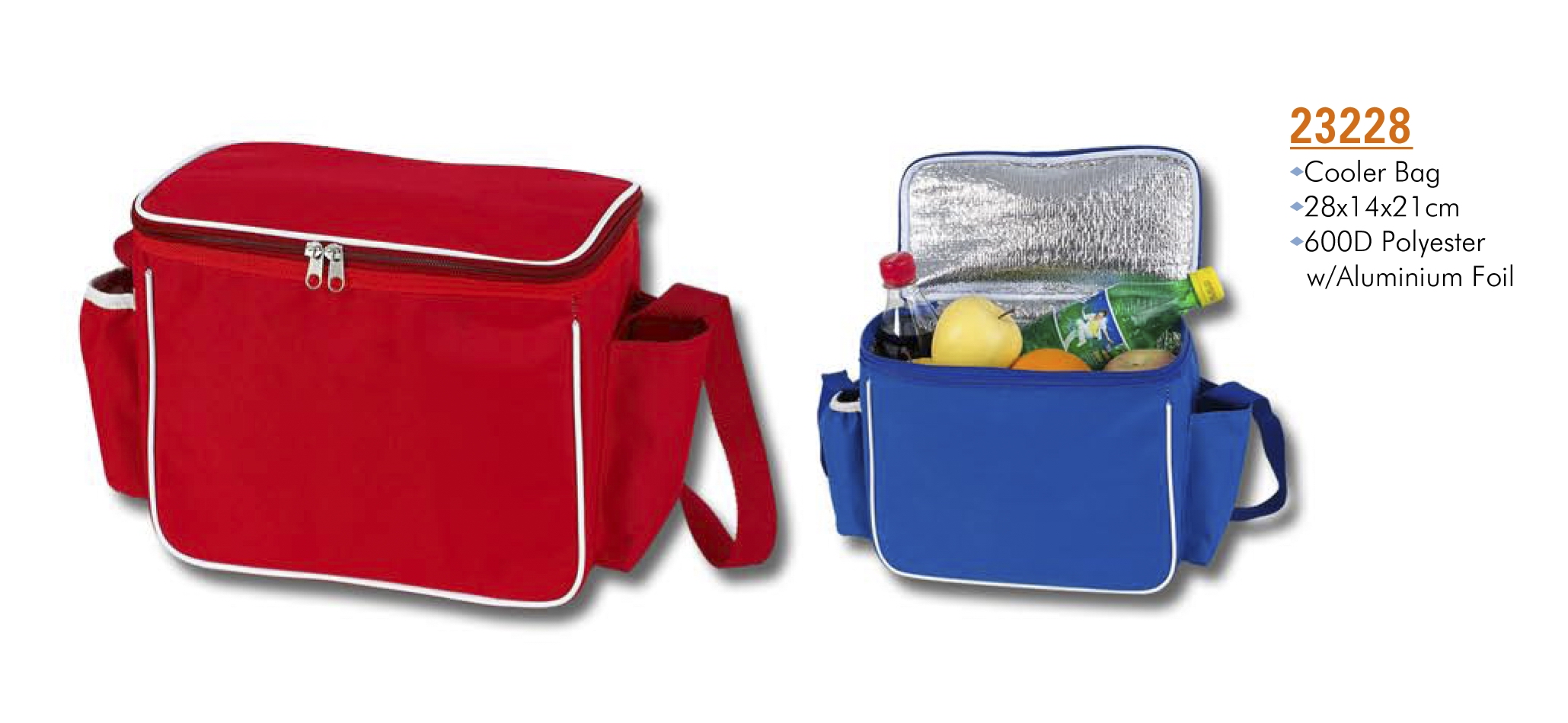
Insulated cooler construction: polyester shell with 2 mm foam and aluminium lining. Image: Yulite.
What the market trend means for continuity checks
Material continuity has moved from a cost question to a documentation question. In the United States, sustainable products accounted for 13.77% of total promotional industry sales, or USD 3.69 billion, in 2024, a 20% increase on the previous year, according to the ASI Counselor State of the Industry report. Growth of that order in recycled and organic categories pushes buyers towards suppliers whose recycled and organic claims survive an audit — which is precisely where a valid GRS or GOTS certificate number, an issuing body and an expiry date become procurement criteria rather than marketing language.
The same logic applies to reuse. If a reusable bag is expected to deliver thousands of impressions across its lifetime, the value of the item depends on it looking like the same bag in year three. Continuity is therefore a marketing asset as much as a supply-chain metric, and the evaluation should treat it that way.
Future outlook
Two developments are likely to shape long-term promotional bag sourcing. The first is certificate lifecycle management: with the current GOTS, GRS and SMETA documents running to March and April 2027, buyers will increasingly track validity dates as part of the order file rather than discovering an expiry during an audit. The second is specification granularity. As recycled and organic content becomes a mainstream requirement rather than a niche option, fabric weight, fibre declaration and retained samples are likely to move from “good practice” to contractual minimums. Suppliers whose catalogue already publishes per-model material, size and logo options — and whose certificate scopes name the models — are simply easier to hold to those terms.
For buyers who want the full model and material reference in one document, the Yulite 2026 spring catalogue is available as a downloadable PDF.
FAQ
What order terms define a long-term promotional bag supply arrangement?
For the Yulite promotional bag range, the published terms are a minimum order quantity of 500 pcs, a lead time of 30 days and a monthly capacity of 200,000 pcs, with OEM/ODM production and customisation across logo, colour, material, size, label and packing. A long-term arrangement should restate those figures per model, because capacity and lead time are supplier-level figures while order quantity is agreed model by model.
Which models can be kept in the same material family across re-orders?
Cotton, organic cotton and recycled cotton appear together on the Tote Bag 3800, the Promotional Shopping Bag 4636, the Drawstring bag 4211, the cosmetic bag 1812, the BEACH BAG 4700 and the Foldable bag FDV010. Polyester and nylon appear on the FDV010, the 4700 beach bag, the 4530 gym bag and the 4211 drawstring bag, and the T25210 knitted bag uses polyester yarn. The 23250 COOLR BAG is different in kind: it is built from polyester with 2 mm foam and an aluminium layer, so it belongs to an insulation specification rather than a cotton or canvas family.
Which certifications can a buyer verify against specific models?
Three schemes are documented. GOTS certificate GOTS-31172, issued by INTERTEK under GOTS version 7.0 and valid from 2026-04-02 to 2027-04-02, lists the 4636, 3800, 4211, 1812 and 4700 models. GRS certificate ITS-TE-00006853-GRS-03902700, issued by Intertek under GRS 4.0 and valid from 2026-05-01 to 2027-04-30, covers the same model set. SMETA certificate ZAA600189756, issued by BCI Compliance Group Limited under SEDEX 4P and valid from 2026-03-10 to 2027-03-10, covers all textile products and therefore includes the FDV010 foldable bag, the T25210 knitted bag, the 4530 gym bag and the 23250 cooler bag.
Are logo methods and sizes consistent across the models?
Silk printing, transfer printing, digital printing and embroidery are available on the 1812, FDV010, 4700, 4530, 3800, 4636 and 4211 models, and small, medium and large sizes are published for the 1812, FDV010, 4700, 4530, 3800 and 4211. The T25210 knitted bag is the exception: its logo is woven into the bag using polyester yarn in a maximum of six colours. Colour options across the range are natural or any dyed colour, and sizes for the 23250 cooler bag and the 4636 shopping bag should be confirmed in the request for quotation rather than assumed.
What acceptance criteria should be written into each purchase order?
The order should fix fibre composition and fabric weight with a tolerance, a physical colour standard, the named decoration method with logo position and size, the construction points that define the model, the packing and label format, and the inspection stage. Yulite operates internal inspection, pre-shipment inspection and third-party inspection, and its after-sales terms include replacement of defective items in the next order, free remaking, replacement or full refund for defective items, and free design adjustments and re-sampling for OEM and ODM orders. Those remedies are only meaningful once the order states what a defective unit is, which is why the acceptance schedule should be attached to the purchase order rather than negotiated separately.
¿Tiene preguntas o necesita más detalles?
Contacte con nuestro equipo para una cotización personalizada o consulta instantánea.
Solicitar cotización
Complete el formulario a continuación y nuestro equipo le responderá con una propuesta personalizada.
Chat directo de WhatsApp
¿Prefiere chatear en tiempo real? Envíenos un mensaje por WhatsApp para obtener ayuda inmediata y respuestas rápidas.
- Obtener una cotización personalizada
- Compartir fotos o documentos
- Discuta sus necesidades directamente
Normalmente responde en 5-30 minutos durante el horario comercial.