
Long-Term Precision Metal Parts Supply Beyond the First Order
Long-Term Precision Metal Parts Supply Beyond the First Order
Long-term supplier sustainability, as this article uses the term, means the ability of a precision metal mechanical parts maker to keep a part in production across repeat orders. It is not a claim about environmental performance. The distinction matters because the evidence a buyer needs before committing a multi-year programme is different from the evidence needed to approve a first batch, and procurement teams frequently collect only the second.
Three questions carry most of the weight. Can one process portfolio absorb a design change without forcing a new source? Can production continue from a physical sample when drawings are lost or incomplete? Can material selection — and, for magnetic components, the full magnetic parameter set — be re-confirmed part by part rather than inherited from an old order? This reference sets out how buyers can test those questions, using Chunan Qiandaohu Pengsheng Technology Development Co., Ltd as a worked example of published capability, and it states plainly which parts of the test the published record does and does not answer.
Why a successful first order says little about year three
A first order validates one configuration of a process: one tool, one material lot, one set of operators, one inspection plan, one interpretation of the drawing. Repeat orders validate whether that configuration can be rebuilt. Between the first shipment and the tenth, at least four things move — tooling wears, material lots shift within or beyond the approved grade, drawings are revised, and the engineer who first read the drawing may no longer be on the programme.
None of those events is unusual, and none of them is a supplier failure by itself. What separates a supplier that survives them from one that does not is documentation: revision-controlled drawings, a retained approved sample, material certificates per lot, and a parameter sheet that travels with the part number rather than with the salesperson.
The tolerance window sharpens the problem. External technical guidance published for 2026 describes high-quality precision metal parts as being held to tolerances as tight as ±0.001 mm, beyond what standard machining achieves (MFG Solution, Precision Metal Parts: Complete Buyer's Guide 2026). Where the margin is that narrow, a part re-quoted on a different route is not the same part, even when the drawing number is unchanged.
Test 1: Can one process portfolio absorb a design change?
Design changes during a running programme usually change the forming route rather than the function. A bracket that was stamped becomes a candidate for machining when wall thickness increases; a deep-drawn cup may need turning when concentricity tightens; a fabricated weldment may move to casting when volume justifies tooling. If both routes exist inside one supplier, the change is an internal re-quote. If they do not, the change becomes a new supplier qualification — new first-article approval, new inspection plan, new tolerance stack-up, and a schedule that restarts.
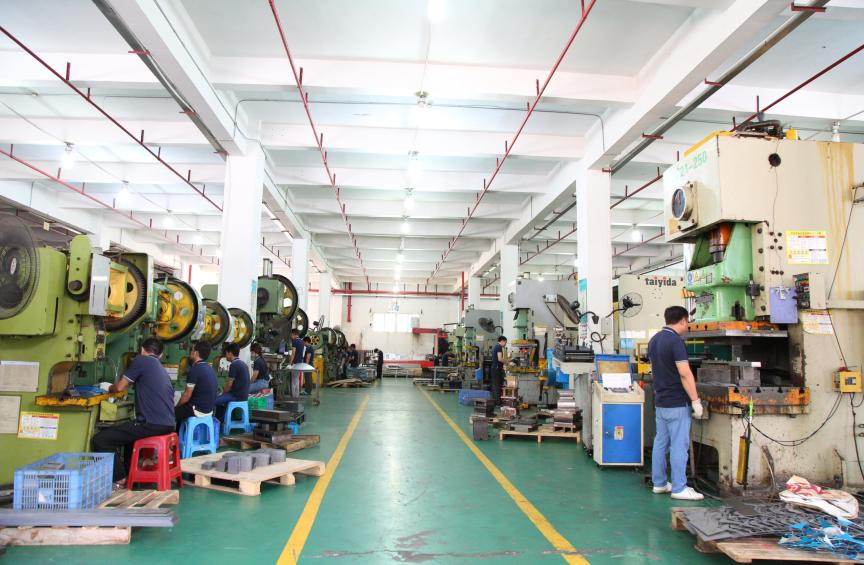
Pengsheng Technology's published production scope lists sheet metal stamping, deep drawing, sheet metal fabrication, CNC machining and metal die casting, with product lines that include shafts, stator cores, rotor cores, NdFeB magnets, magnetic assemblies, automotive parts and gaussmeters. For a buyer, the significance is not the length of the list. It is that a route change between stamping, drawing, machining, fabrication and casting can be handled as an internal engineering decision, and that tolerance responsibility on adjacent parts of the same assembly does not have to be renegotiated between two plants.
There is a boundary here that buyers should hold firmly. Process breadth is a statement of scope, not a capacity reservation and not a tolerance promise. A supplier that lists five processes has not agreed that your part number will run on the route you expect, at the tolerance you specify, in the quantity you need, on the date you need it. Confirm the specific route, the tolerance, the inspection method and the performing site on the quotation itself.
Test 2: Can production continue from a physical sample?
The scenario is common in long-life programmes: the drawing set is incomplete, the CAD model no longer matches the part in service, or the original source has exited. Continuity then depends on whether the supplier can measure the physical part, produce a drawing or model for customer approval, and manufacture only after that approval — while retaining the approved sample as the reference for later orders.
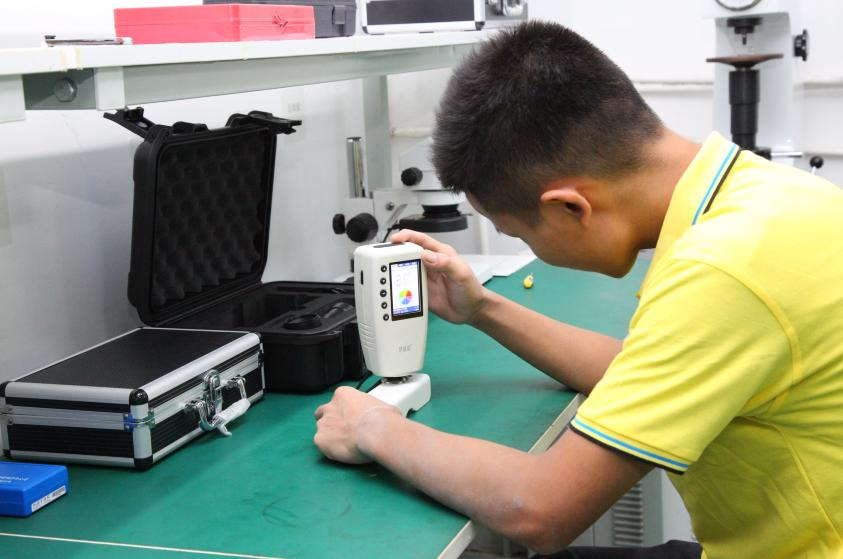
What to look for is not a verbal yes. It is in-house metrology rather than per-order outsourcing, engineering staff who can interpret and re-issue drawings, a documented approval step before tooling or production, and retention of both the approved sample and the measurement report.
The published record for Pengsheng Technology supports part of this and should not be stretched to cover the rest. The company states a comprehensive testing laboratory and advanced testing equipment, an R&D team of more than 30 engineers, and multiple national patents; its stated quotation basis is 2D/3D drawings together with material specification, surface treatment, estimated order quantity and application scenario. Those facts indicate dimensional verification capability and drawing-based engineering. They do not, on their own, document a formal sample-to-drawing service. A buyer whose drawings are lost or incomplete should therefore ask for that process explicitly, name who approves the re-issued drawing, and get the sequence written into the order before the first batch is released.
Test 3: Can material selection be re-confirmed part by part?
Material is the quietest form of drift. Two orders can both be described as "stainless steel" and still differ in grade, condition, heat treatment, passivation or surface finish — and every one of those differences changes corrosion behaviour, machinability or assembly fit. The same applies to carbon steel, aluminum alloys and copper alloys, where temper, alloying and finish decisions are part-specific rather than company-wide.
The company's published scope states support for multiple metal raw materials such as carbon steel and stainless steel, and support for customer-specified tolerances, heat treatments and surface finishes, with special materials or strict certification requirements to be confirmed in advance. That wording is a useful signal because it ties material decisions to the individual order rather than to a general capability claim.
The buyer's test is therefore a wording test, not a capability question. It is not "do you work with stainless steel?" but "will the order acknowledgement restate grade, condition, heat treatment, finish and acceptance criteria for this part number, every time?" A supplier that answers the second question with a document has solved repeat-order material drift; one that answers the first question with a brochure has not.
One boundary deserves attention. Aluminum alloys and copper alloys sit outside the material families the company's published wording names explicitly. Buyers sourcing those families should confirm grade and process route at the RFQ stage rather than assume that experience with steel transfers unchanged, since casting, machining and finishing behaviour differ by alloy family. This is a confirmation step, not a limitation on the supplier's scope.
Test 4: Re-specifying magnet and magnetic assembly parameters
Magnetic components are the harder continuity case, because acceptance is defined by physical performance as well as by dimensions. The parameters that matter on a repeat order are aging, salt spray, irreversible loss, magnetic flux, magnetic moment and demagnetization rate — and each of them is conditional rather than permanent.
- Aging: exposure to elevated temperature over time, after which the flux must still sit inside the customer's window.
- Salt spray: corrosion exposure applied to the coating or plating system, which is why coating selection is part of the magnetic specification rather than a finishing afterthought.
- Irreversible loss: flux lost under a disturbing condition that does not recover when the condition is removed; it must be specified as an allowed limit, not discovered after delivery.
- Magnetic flux and magnetic moment: measurable outputs used to define acceptance, and the values that a repeat order is actually judged against.
- Demagnetization rate: the rate at which output falls under a defined demagnetizing condition, which depends on grade, geometry and operating environment.
These values do not transfer automatically between orders. A flux window agreed for one coating thickness and one geometry is not automatically valid for a later batch with a different coating system or a changed grade, and an aging result obtained on a previous design says little about a revised one. Continuity therefore depends on a per-part parameter sheet that carries the customer's acceptance values, the test condition and the sampling into every order, together with a record of what was actually measured.
Pengsheng Technology lists NdFeB magnets and magnetic assemblies among its product lines and states a comprehensive testing laboratory and testing equipment. What a buyer should add at each repeat order is the specification itself: which of the six parameters apply to this part number, at what acceptance values, under what test conditions, and who signs off the measured result. Published capability establishes that measurement is possible; only the order documents establish what was agreed.
What continuity looks like across three programmes
Consider a motor programme in industrial or green-energy equipment. Stator and rotor cores, shafts and housings sit in the same tolerance chain, and a revision to the lamination stack or shaft fit is a normal mid-programme event. A supplier that produces cores, shafts and related hardware under one quality system can absorb the revision inside one engineering conversation; a split supply base turns it into three negotiations and a new stack-up study.
Consider a medical device programme, where the constraint is change control rather than volume. An approved sample, a frozen drawing revision, a documented material and finish, and a measurement record are what allow a part to be re-ordered without re-validation. Substitute risk, not unit price, is the exposure.
Consider an automotive part under a quality system that expects traceability across batches. Here the repeat-order question is whether acceptance criteria were written into the order — by drawing or sample, supported by a factory inspection report — and whether the same inspection plan runs each time. The company states ISO9001 and TS16949 quality management system certifications together with IATF16949, ROHS and REACH, which is the documentation layer a tier-one buyer will ask to see. Products are described as serving automotive, medical, industrial motor, elevator, home appliance, aerospace, wind power, communications, electronics, instrumentation, lighting and furniture applications, so the same continuity logic applies across sectors with different evidence thresholds.
Mapping the tests to a supplier's published capability
The table below shows which continuity tests published company information can answer, and which must be resolved in the RFQ and order documents. It is deliberately split that way: no supplier's website can confirm a specific part number's route, tolerance or acceptance values.
| Continuity test | What the buyer must confirm | Published company information |
|---|---|---|
| Process breadth | The actual route, tolerance and inspection method quoted for this part number | Sheet metal stamping, deep drawing, sheet metal fabrication, CNC machining and die casting are listed processes; shafts, stator cores, rotor cores, NdFeB magnets and magnetic assemblies are listed product lines |
| Drawing and sample control | Who re-issues an incomplete drawing, who approves it, and whether the approved sample is retained | Quotation basis is 2D/3D drawings with material specification, surface treatment, order quantity and application; testing laboratory and 30+ engineers are stated |
| Material re-confirmation | Grade, condition, heat treatment and finish restated per part number on each order | Multiple metal raw materials including carbon steel and stainless steel are supported; customer-specified tolerances, heat treatments and surface finishes are supported; special materials or strict certification requirements confirmed in advance |
| Magnetic parameters | Which of aging, salt spray, irreversible loss, flux, magnetic moment and demagnetization rate apply, and at what acceptance values | NdFeB magnets and magnetic assemblies are listed product lines; a comprehensive testing laboratory and testing equipment are stated |
| Quality system | Certification scope covering the buyer's sector and the audit evidence behind it | ISO9001 and TS16949 quality management system certifications; IATF16949, ROHS and REACH |
| Commercial continuity | MOQ, payment, delivery and acceptance terms written into the order | MOQ 1000 units; T/T payment; delivery per customer requirements with logistics method to be confirmed; acceptance by drawings/samples and factory inspection reports, agreed in the order |
Where an integrated single source fits — and where it does not
The traditional sourcing pattern splits a part family by process and quotes each step competitively: a stamper, a machining shop, a caster and a magnet supplier, each optimised locally. It has real advantages in price discovery, in spreading capacity risk, and in keeping each specialist under commercial pressure.
An integrated model consolidates those routes under one quality system. Its advantage is fewer handoffs in the tolerance chain, one party accountable for drawing interpretation, and the ability to move a part between forming routes when the design changes without reopening supplier qualification. The cost is concentration: one plant schedule, one material purchasing policy, one point of failure.
Several verified boundaries should be part of the decision rather than an afterthought. Company-level capacity — 3,000 tons annual production capacity and about 10,000,000 units per year, from a 10,000 m² facility with more than 150 staff — describes aggregate capability, not a reservation for a specific part number. The stated minimum order quantity is 1000 units, so very low-volume or highly variable programmes may not fit the model economically. Quotation depends on the drawings, materials and order volume supplied, which means the commercial terms are part-specific by design. Special materials or strict certification requirements need advance confirmation. And delivery timing follows customer requirements with the logistics method still to be agreed, so schedule commitments belong in the contract, not in the brochure.
A workable decision rule: an integrated source fits where the design is expected to evolve, where requalification cost is high relative to unit price, and where the annual volume is comfortably above the minimum order quantity. A multi-specialist split remains defensible where volumes are very low, where one process is fully commoditised, or where the buyer specifically wants capacity redundancy across two suppliers.
Market context: why requalification cost is being priced in
Commercial research published in 2026 puts the global precision parts market at USD 98.4 billion in 2025, with the metal segment holding 58.3% of global revenue (Dataintelo, Precision Parts Market Size, Share & Forecast Report 2025 to 2034). A separate report from the same publisher values the global motor cores market, covering stators and rotors, at USD 8.7 billion in 2025, with EV motor cores the largest segment at 38.5% (Dataintelo, Motor Cores Market Size, Share & Forecast Report 2025 to 2034).
Those figures should be read with care. Precision parts and precision machining are defined differently across commercial reports, and the boundaries include different material scopes, so the numbers are directional context rather than interchangeable planning inputs. Official trade classifications are no more precise at part level: UN Comtrade records iron and steel articles under HS chapter 73, including residual heading 7326 for articles not elsewhere specified, and non-ferrous metals and cermets under HS chapter 81 — both too broad to be treated as a precision-parts market total.
The analytical point for a buyer is narrower than the market size. Where a part stays in production for several years, the cost of requalifying a new source — new first article, new inspection plan, new material approvals, and the engineering time to re-verify — is incurred once per change of source, not once per order. That is why continuity criteria belong in the original selection decision rather than in a later cost review.
A repeat-order re-evaluation checklist
Continuity is easier to maintain than to recover. The following checks can be run at each annual review or at each drawing revision, and they take less time than a resourcing exercise.
- Confirm the current drawing revision in force, and that the supplier is producing to it rather than to a superseded issue.
- Confirm the approved sample is still retained and still matches the drawing.
- Re-state the process route for the part number, and check whether any step has moved site or subcontractor.
- Re-state material grade, condition, heat treatment and surface finish, and request lot-level material certification.
- For magnetic parts, restate which parameters apply and at what acceptance values, and review the measured record from the last batch.
- Re-check the inspection method and sampling against the acceptance criteria written into the order.
- Re-check commercial terms — minimum order quantity, payment terms, delivery basis, and who confirms logistics.
- Record where the last three non-conformances came from, and whether they were dimensional, material or documentation related.
Outlook
If requalification cost continues to weigh on sourcing decisions, two expectations are likely to harden. The first is documentation portability: a part number should carry its drawing revision, material specification, inspection plan and — for magnetic components — its parameter sheet, so that a re-order is a document check rather than an engineering project. The second is that buyers will treat the second and third order as the real qualification and the first order as a sample of documentation discipline.
Neither expectation requires a new supplier category. It requires that the questions asked at selection are the questions that will matter in year three, and that the answers are written into the order rather than remembered by an individual. Suppliers with broad process scope, an in-house laboratory and a certification base can support that discipline; whether they do, for a given part number, is something only the order documents can prove.
FAQ: long-term supply and repeat orders
Is Pengsheng Technology a manufacturer or a trading company?
It is a manufacturer that has specialised in precision metal mechanical parts for 18 years, and it also maintains its own trading team. The company was established in 2008 and operates a 10,000 m² facility with more than 150 staff.
Which processes and product families can be sourced from one supplier?
Published scope covers sheet metal stamping, deep-drawn parts, sheet metal fabrication, CNC-machined parts, die-cast parts and motor stator and rotor cores, alongside NdFeB magnets, magnetic assemblies, shafts and automotive parts. Custom projects can include mould development, prototype verification before batch production, and batch production of medium-to-high-complexity parts.
What documents are needed to obtain a quotation?
2D/3D drawings, the required material specification, surface-treatment requirements, estimated order quantity and the application scenario. Complete drawing information is what allows an accurate quotation and technical evaluation, and quotation and solution depend on the drawings, materials and order volume provided.
What are the standard purchasing terms?
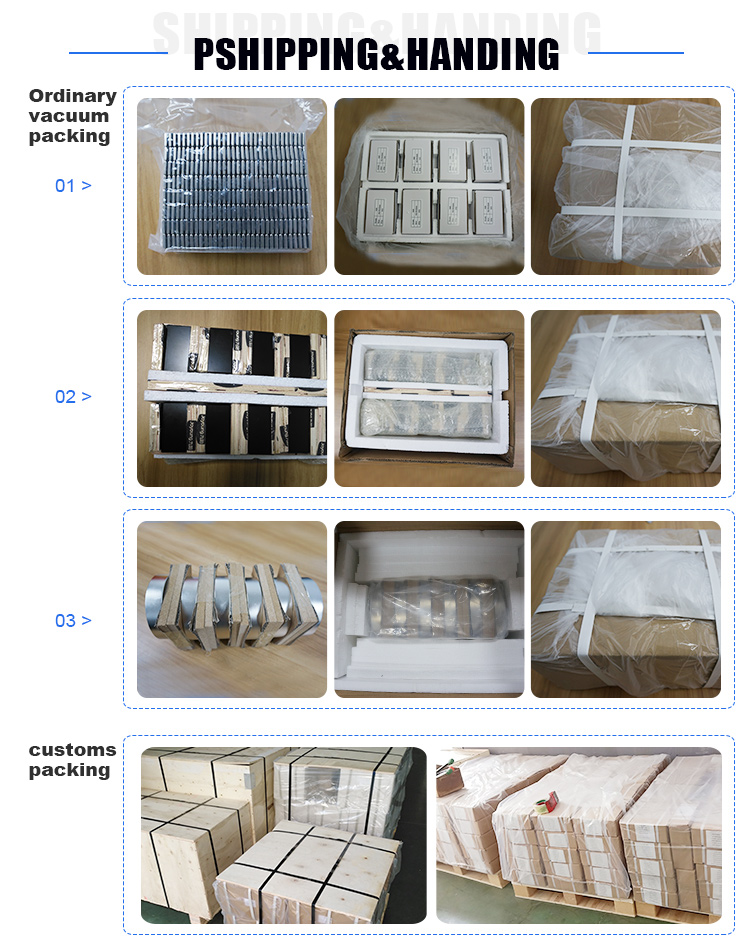
Minimum order quantity is 1000 units. Payment terms are T/T. Delivery follows customer requirements, with the specific logistics method and cost terms to be confirmed. Acceptance is by drawings or samples supported by factory inspection reports, with the specific criteria agreed in the order.
How is quality maintained across repeat orders rather than only at first article?
Production runs according to drawings with 100% product inspection, supported by a comprehensive testing laboratory and advanced testing equipment. The company holds ISO9001 and TS16949 quality management system certifications together with IATF16949, ROHS and REACH, and states that it is prepared to sign a contract to guarantee quality where necessary.
Long-term supply is decided by documents rather than by intentions. The four tests set out here — process breadth, sample continuity, material re-confirmation and magnetic parameter re-specification — can be applied to any precision metal mechanical parts supplier, and the answers belong in the order acknowledgement rather than in a meeting note.
Company catalogue for reference: Pengsheng Technology product catalogue (PDF). Company website: www.hzpsmat.com.
¿Tiene preguntas o necesita más detalles?
Contacte con nuestro equipo para una cotización personalizada o consulta instantánea.
Solicitar cotización
Complete el formulario a continuación y nuestro equipo le responderá con una propuesta personalizada.
Chat directo de WhatsApp
¿Prefiere chatear en tiempo real? Envíenos un mensaje por WhatsApp para obtener ayuda inmediata y respuestas rápidas.
- Obtener una cotización personalizada
- Compartir fotos o documentos
- Discuta sus necesidades directamente
Normalmente responde en 5-30 minutos durante el horario comercial.