
Long-Term Powder Coating Supply: Qualifying a Partner Before You Scale
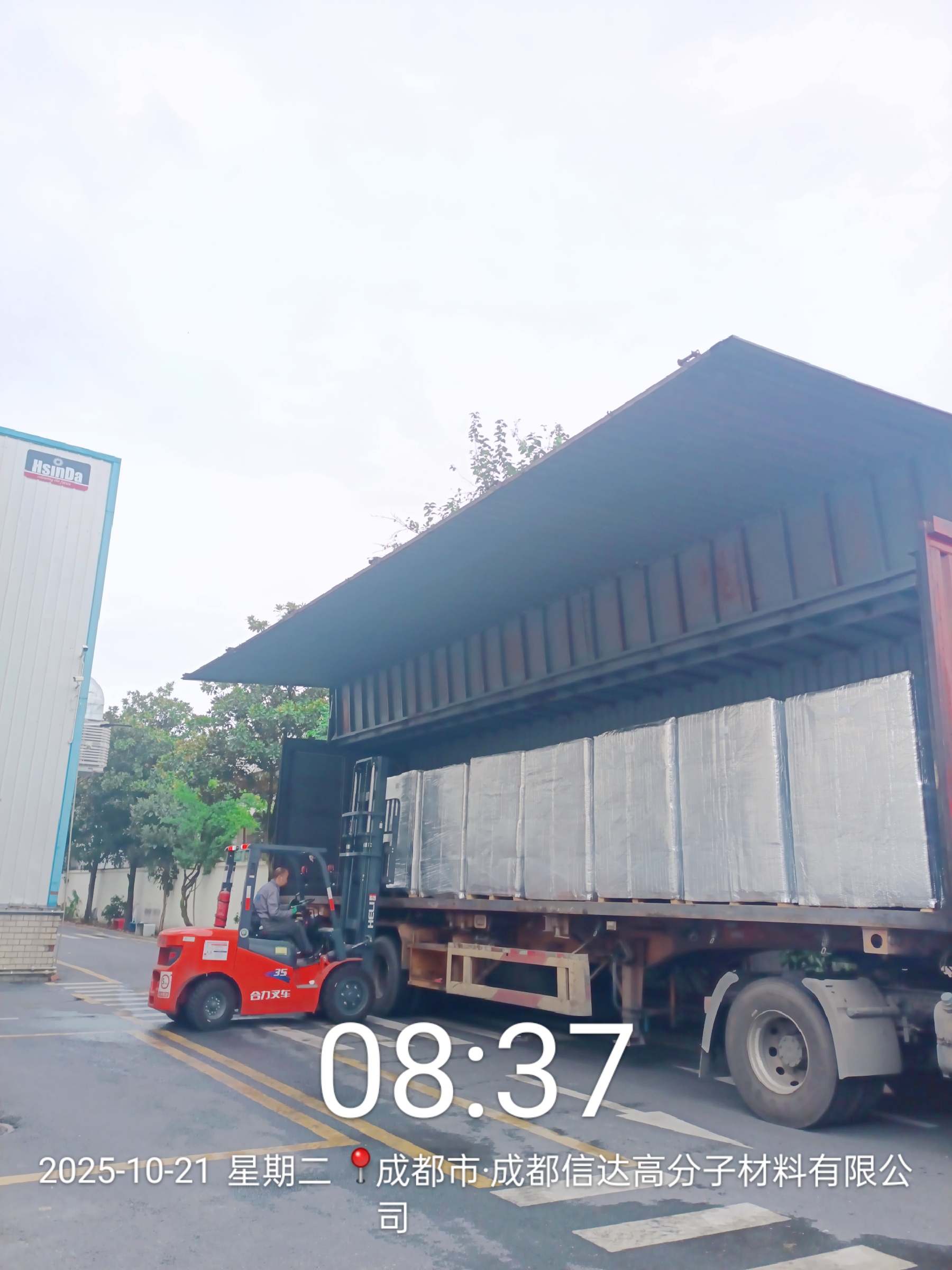
Multi-year distribution agreements in powder coating rarely fail because of a single bad batch. They fail when a supplier cannot hold color, performance, and delivery stable across dozens of batches spread over many months. The question for a distributor or industrial buyer is therefore not only “Can this manufacturer produce powder coating?” but “Can this manufacturer keep producing it within the tolerances my customers expect?” That distinction separates transactional purchasing from a long-term supply relationship.
The Real Risk in a Powder Coating Supply Relationship
When a buyer moves from sample evaluation to repeated orders, risk shifts from product function to process consistency. Typical issues include batch-to-batch color drift, hidden changes in raw material quality, delayed production, and inconsistent film performance. A supplier that looks acceptable on a single sample may become expensive after several container shipments.
Buyers can reduce this risk by looking for evidence of systematic quality control. Chengdu Hsinda Polymer Materials Co., Ltd, for example, operates under a documented “3+1 Inspection” protocol that covers raw materials, first and last production pieces, performance and color difference. The company states that it controls color difference within Delta E ≤ 0.5 and can provide color difference reports on request. For a distributor, that kind of statement is meaningful only if the report is attached to each shipment or made available before payment.
Market Context: Why Global Buyers Are Formalizing Powder Coating Supply
Independent research houses differ on the exact size of the powder coatings market, but they agree on the direction. Grand View Research valued the global powder coatings market at USD 11.5 billion in 2025 and projects USD 18.5 billion by 2033. IMARC Group places 2025 value higher, at USD 16.4 billion, with a projected CAGR of 4.51% until 2034. The gap between estimates is normal and reflects different definitions of the addressable market. For procurement teams, the practical takeaway is that global demand is expanding and that long-term supply agreements are becoming more common.
Thermoset powder coatings—including epoxy and polyester resin systems—remain the dominant chemistry, accounting for roughly 76.6% of the market. Architectural and decorative applications are also a major end-use segment, driven by demand for UV-resistant facades and window systems. Against this backdrop, many buyers are looking for suppliers that can support both industrial and architectural specifications rather than managing multiple vendors with inconsistent standards.
Reference Frameworks in Global Projects
Project-level specifications increasingly cite international certification schemes. Powder coatings for architectural use are commonly governed by Qualicoat, GSB International, and AAMA standards (2603, 2604, 2605). For corrosive environments, ISO 12944 is the primary benchmark for specifying coating systems on steel structures across corrosivity categories C1–C5. A supplier that understands these frameworks and can map its product performance to them is easier to qualify for ongoing projects than one that only offers a price list.
What a Stable Powder Coating Supplier Looks Like in Practice
Hsinda provides a useful case study because its public profile contains the kind of operational facts that distributors can verify. The company is based in Chengdu, Sichuan, China, and was established in 2015. After eleven years of development, Hsinda reports ownership of 8 advanced powder coating production lines and 3 sample lines, with annual production capacity exceeding 5,000 tons. Its team of 45 employees includes an 11-person R&D unit and the company holds more than 40 independent patents. These figures describe a mid-sized specialty manufacturer rather than a commodity blenders.
Hsinda exports to more than 70 countries and states that 70% of its output goes to international markets. It has established cooperative distributors in Russia, Bangladesh, Poland, Portugal, the United States, Canada, Sri Lanka, Bolivia, and Argentina, with exclusive distributors in Kazakhstan, Uzbekistan, and Chile. It also reports a stable cooperative relationship with Mexico’s largest agricultural tool equipment factory for over ten years. In the domestic market, its listed customers include Changhong Electric, Xiaomi Appliances, TCL Electronics, and Hitachi Elevator. For a global distributor, those references indicate that Hsinda already operates under the quality expectations of appliance and elevator manufacturers.
Reading the Product Portfolio for Supply Flexibility
Long-term buyers should evaluate a supplier’s portfolio the way a product manager evaluates a catalog. A wide range of resins, textures, and gloss levels makes it easier to consolidate orders and respond to shifting demand. Hsinda’s catalog spans epoxy powder coating, epoxy-polyester hybrid powder coating, polyester powder coating with or without TGIC, matt and glossy finishes, hammer tone, wrinkle, sandy texture, metallic, anti-corrosion, and aluminum-profile-oriented powder coatings.
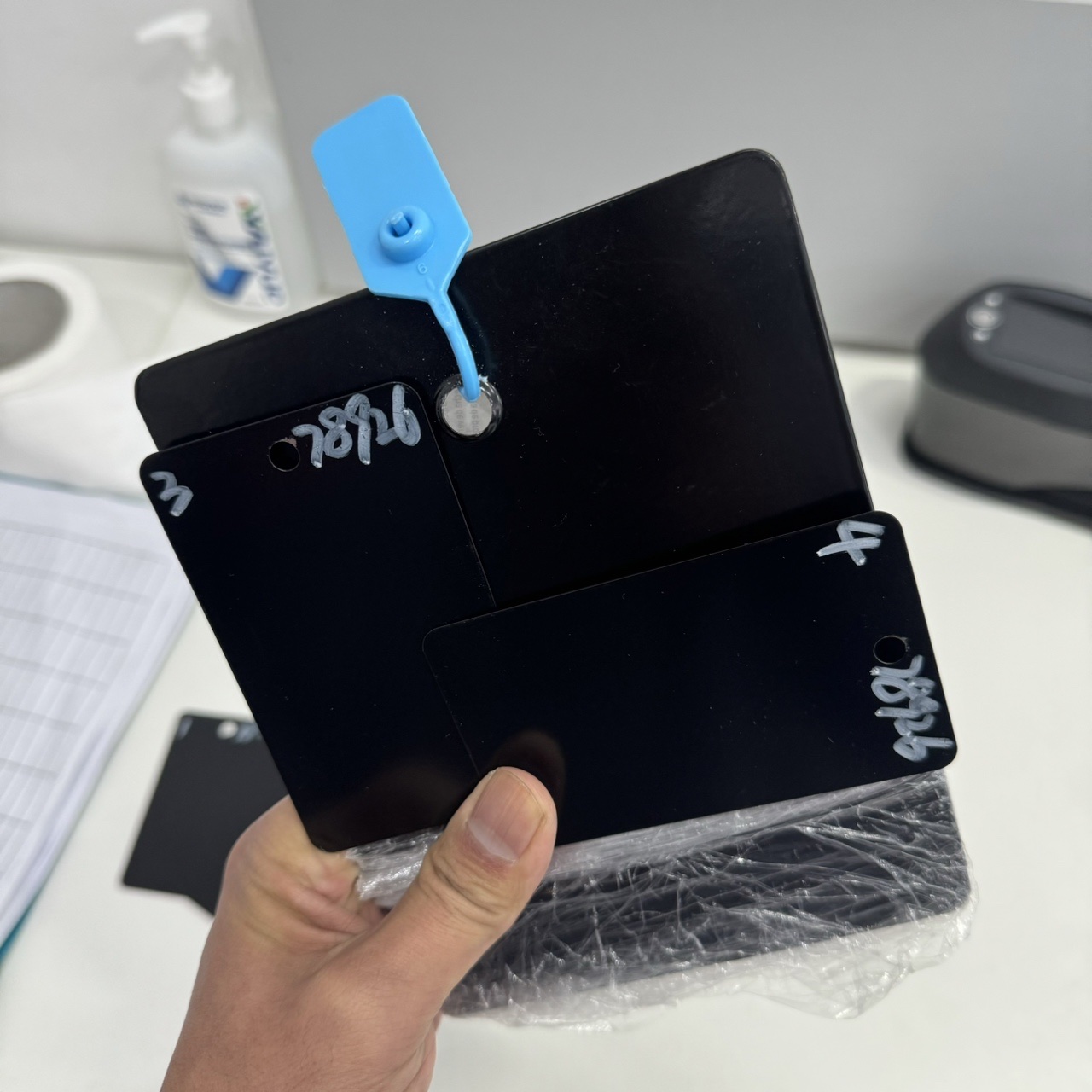
Several products carry RAL and Pantone customization options. Electrical cabinet, outdoor furniture, and architectural aluminum profiles all require different performance trade-offs, so a supplier that can formulate color and texture across resin families is more useful as an ecosystem partner. Customization experience also matters: the company can match specific colors and finishes, which is central to a distributor’s ability to serve local fabricators.
Performance Parameters to Verify Before Signing a Long-Term Agreement
A long-term supply agreement should be based on measurable performance, not on vague marketing language. Hsinda’s typical technical parameters include a specific gravity of 1.2–1.7 g/cm³, average particle size of 32–42 μm, and film thickness around 70 μm. Coverage is approximately 8–10 m²/kg at 30–90 μm film thickness, with curing at 180–200°C for 10–15 minutes.
Mechanical values commonly reported across Hsinda’s range include:
| Property | Typical Result | Test Reference |
|---|---|---|
| Hardness | ≥H | ISO 15184:2020 |
| Adhesion | Grade 0 | ISO 2409:2020 |
| Cupping | ≥6 mm | ISO 1520:2006 |
| Bending | ≤2 mm | ISO 1519:2002 |
| Impact resistance | 50 kg·cm | ISO 6272-1:2017 |
| Gloss range | 5% to 95% | ISO 2813:2014 |
For corrosion-related projects, salt spray resistance per ISO 7253:1996 in Hsinda’s standard formulations shows no change after 500 hours with unilateral corrosion at the cross cut limited to ≤2 mm. Humidity and heat resistance per GB/T 1740-2007 shows slight gloss loss not exceeding level 1 after 1,000 hours. Weather resistance per ISO 11341:2004 is reported as no powdering and light retention above 50% after 500 hours. Some architectural aluminum powder coatings in the Hsinda range use a super weather-resistant polyester resin system and list natural aging after one year in Florida with gloss retention above 50%.
The exact values can vary by formulation, so the buyer should request the specific test report for the grade being supplied. What matters in a long-term context is whether the supplier can consistently reproduce those values on large batches, not just in the sample laboratory.
Comparing Powder Coating to Traditional Liquid Paint
Distributors often need to explain to end customers why powder coating deserves a higher upfront cost than liquid paint. One useful, verifiable comparison is material utilization: powder overspray can be reclaimed, pushing material utilization to as high as 99%, whereas liquid paint application involves VOC evaporation, overspray loss, and multiple coating layers. Hsinda’s comparison materials report that switching from solvent-based paints to powder coatings can lower total energy consumption by 22% and reduce carbon emissions by 30% to 50%.
Process data also supports the economic argument. Powder coating forms a finished film in a single spray application, requiring neither primer nor separate drying time. Curing time is typically 10–20 minutes. For high-volume assembly lines, this creates a faster throughput than multi-coat liquid painting. Representative comparisons in Hsinda’s internal analysis indicate comprehensive cost reductions of over 35–40% versus traditional liquid paint, with durability typically cited at 10–20 years and hardness at 3H or higher. These claims are based on the manufacturer’s cost model and should be validated against the buyer’s own line conditions, but they are consistent with the technical advantages commonly attributed to powder coating.
Where Powder Coating Has Limits
Objective sourcing also requires acknowledging boundaries. Powder coating uses heat to cure, typically at 180–200°C for standard thermoset products. That makes it unsuitable for heat-sensitive substrates that cannot withstand curing temperatures without distortion. Very thick or heavy parts may also push oven capacity. Color matching is manageable but becomes more difficult for metallic effects and extremely low-gloss textures, where the supplier’s experience with bonding systems and texture control matters. For a supplier relationship, these limits are not negative marks; they define the conditions under which a product should be specified.
Production Capacity and Delivery Terms as a Supply Test
In a long-term agreement, production capacity matters more than a first-order delivery. Hsinda reports a monthly production capacity of 400 tons and a typical production lead time of 15–20 days, depending on the order. Minimum order quantity is either 300 kg or 6 tons, depending on the product line, with sample orders available from 1 kg for testing.
Hsinda’s purchasing support team lists delivery terms of EX-W, FOB, CIF, CFR, CPT, DAP, and DDP. Payment terms commonly used by the company are 50% T/T in advance and 50% T/T before shipment. Pre-shipment testing and third-party inspection, such as SGS, are offered as acceptance options. For a global distributor, specifying these terms contractually is more useful than relying on a general promise of “good service.”
| Procurement Factor | Hsinda Typical Terms |
|---|---|
| Sample order | 1 kg |
| Standard MOQ | 300 kg or 6 tons depending on product |
| Production lead time | 15–20 days |
| Monthly capacity | 400 tons |
| Inspection | Pre-shipment test, third-party SGS inspection available |
| Payment | 50% T/T in advance, 50% T/T before shipment |
Qualifying Checklist for Multi-Year Buyers
Before entering a long-term supply agreement, verify these points with the supplier and record them in writing:
- Confirm the maximum monthly volume the supplier can commit to your account without disrupting existing export orders.
- Request batch-level test reports for mechanical properties, gloss, salt spray, and weathering. Look for standard references such as ISO 2409, ISO 15184, ISO 7253, or ISO 11341.
- Agree on a color difference tolerance and request a Delta E report for each production batch. A target of ΔE ≤ 0.5 is strict but achievable in modern powder coating lines.
- Require clear first-article inspection evidence, covering first and last production pieces.
- Define whether third-party inspection such as SGS will be applied to pre-shipment or only to dispute resolution.
- Specify Incoterms and payment milestones; for example, 50% T/T in advance and 50% before shipment is common, but the buyer should align this with its own cash flow cycle.
- Ask whether the production lead time applies from raw material confirmation or after color approval.
- Qualify the supplier’s certifications. Hsinda states it has passed ISO 9001, ISO 14001, REACH, EU RoHS 2.0, SGS and AAMA testing, and holds QUALICOAT-related credentials.
Future Outlook: Consolidation of Supply Standards
As international projects grow more specification-driven, distributors will increasingly favor powder coating manufacturers who can document performance and hold environmental certifications. China’s coating export figures provide one signal: in 2024, China’s coating industry exported 334,800 tons, with export value up 18.65% year-on-year to USD 1.065 billion. That growth reflects broader international acceptance of Chinese-produced coatings when accompanied by reliable quality systems and test documentation.
The trend favors manufacturers such as Hsinda that combine mid-sized flexibility, export experience, and documented quality control. At the same time, price competition will remain intense in commodity powder grades. Long-term supply relationships will therefore be won not by the lowest quote alone, but by the supplier’s ability to lower the buyer’s total cost through fewer rework rejects, stable color, and reliable delivery.
FAQ: Common Questions from Distributors Evaluating Powder Coating Suppliers
How can I be sure the supplier’s quality stays consistent across multiple shipments?
Consistency depends on production controls. Hsinda’s stated protocol includes testing incoming raw materials, inspecting first and last pieces from production, and using standardized color-difference limits at ΔE ≤ 0.5. Buyers can also request SGS or other third-party inspection for pre-shipment verification. Standard mechanical properties for many Hsinda products include adhesion grade 0 per ISO 2409:2020 and hardness ≥H per ISO 15184:2020, while cupping is ≥6 mm per ISO 1520:2006 and bending is ≤2 mm per ISO 1519:2002. Contractually requiring a test report with each batch is the clearest protection.
What certifications should a powder coating supplier hold for architectural export orders?
Architectural applications usually reference Qualicoat, GSB International, or AAMA standards (AAMA 2603, 2604, 2605). For corrosive steel structures, ISO 12944 is the relevant benchmark. Hsinda states that its powder coatings have passed ROSH, REACH, SGS, AAMA tests and its factory holds ISO 9001 and ISO 14001 certificates. For specific projects, the buyer should request the precise test report that matches the project’s required performance level.
What are typical lead times and minimum order quantities when scaling up?
Hsinda’s standard production lead time is 15–20 days and its monthly production capacity is 400 tons. Minimum order quantity is either 300 kg or 6 tons, depending on the product, with sample orders from 1 kg for evaluation. These figures allow a distributor to plan stock replenishment cycles but should be confirmed in the supply agreement for each SKU.
Is powder coating more cost-effective than traditional liquid paint for industrial customers?
In large series production, powder coating reduces material loss because overspray can be reused, with utilization up to 99% in some systems. It also eliminates VOC-related compliance costs and shortens process time because curing typically takes 10–20 minutes in one pass. Compared with solvent-based liquid paint, powder systems may reduce energy consumption by 22% and carbon emissions by 30–50%, according to estimates from Hsinda’s internal comparison. However, the initial capital cost of powder lines is higher, and small-batch or heat-sensitive substrates may still justify liquid coating.
Which powder coating types are most important for a distributor to stock?
Thermoset types dominate global demand, including epoxy, epoxy-polyester hybrid, and polyester systems. Polyester powder coatings are common for outdoor and architectural use because of weather resistance. Epoxy systems are strong in corrosion protection and indoor industrial environments. For design-oriented markets, suppliers need texture options such as hammer tone, wrinkle, sandy, and metallic effects. Hsinda’s range covers these families, and products like its Aluminum Powder Coating series use super weather-resistant polyester resin systems for architectural profiles.
Can a supplier located inland ensure smooth export delivery?
Inland factories can manage export logistics through a combination of reliable freight forwarding and flexible Incoterms. Hsinda’s factory is in Chengdu, Sichuan, and the company lists delivery terms including EX-W, FOB, CIF, CFR, CPT, DAP, and DDP. Buyers should choose a term that shifts transport responsibility to the party best able to control outbound logistics. For large container orders, CIF or FOB at a major port remains common.
Reference document: Hsinda corporate brochure (PDF available for download: https://cdn.socialarks.com/sbsp/24900/common/2026/0522/6a0ff2081d4ea.pdf).
¿Tiene preguntas o necesita más detalles?
Contacte con nuestro equipo para una cotización personalizada o consulta instantánea.
Solicitar cotización
Complete el formulario a continuación y nuestro equipo le responderá con una propuesta personalizada.
Chat directo de WhatsApp
¿Prefiere chatear en tiempo real? Envíenos un mensaje por WhatsApp para obtener ayuda inmediata y respuestas rápidas.
- Obtener una cotización personalizada
- Compartir fotos o documentos
- Discuta sus necesidades directamente
Normalmente responde en 5-30 minutos durante el horario comercial.