
Long-Term Plastic Tote Suppliers: Capacity, Continuity, Scale
Long-Term Plastic Tote Suppliers: Capacity, Continuity, Scale
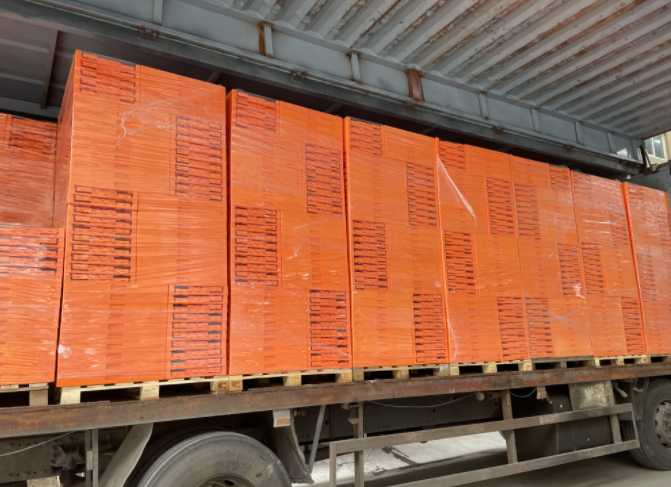
Long-lifetime tote fleets are planned at container level, not unit level. Reverse logistics and repeat supply cycles decide whether a fleet stays serviceable across multiple automation phases.
A plastic tote fleet specified today will usually still be in service when the automation system above it is upgraded. That single reality has moved long-term supplier evaluation away from sample quality and unit price alone and toward three harder questions: can the supplier sustain capacity, can it reproduce the same dimensions across repeated production runs, and can it keep a multi-year automation rollout supplied without interruption?
The commercial context makes those questions more urgent rather than less. Dataintelo valued the global plastic totes and bins market at USD 8.6 billion in 2025 and projects it to reach USD 14.2 billion by 2034. Asia Pacific accounted for a 41.6% revenue share of the adjacent plastic pallets, crates and boxes market in 2025, according to Grand View Research.
Sizing figures also carry a warning for procurement teams. Crate-only estimates range from USD 3.95 billion (Fortune Business Insights) to USD 4.9 billion (Future Market Insights), while a scope that includes pallets and boxes reaches USD 23.8 billion (Grand View Research). The same discipline applies to supplier evaluation: compare like scopes, and verify what a number actually covers before it enters a sourcing decision.
Why Supplier Sustainability Is Really a Capacity Question
When a tote is treated as consumable packaging, the buyer's question is price per unit. When the same tote becomes part of an automated storage and retrieval system (ASRS) asset expected to run for eight to ten years, the questions change: what happens if a mould cavity wears unevenly, if a resin grade is discontinued, if a system integrator requests a dimensional adjustment two years into the program, or if volumes double after a second warehouse goes live?
Continuity of supply then outweighs novelty of design. This is not only a buyer-side concern. Stackable totes held the largest product-type share of the plastic totes market at 34.2% in 2025 (Dataintelo), and polypropylene is expected to lead the material segment for plastic crates with a 41.4% share in 2025 (Future Market Insights). Both figures reflect procurement behaviour that rewards proven, repeatable formats rather than experimental ones.
On the automation side, growth is concentrated where totes are the unit of handling. Precedence Research identifies the mini-load ASRS segment as a fast-growing area, driven by demand for high-speed goods-to-person retrieval of small parts, totes and bins in e-commerce. A tote that cannot be reordered to the same drawing is therefore a systemic risk, not a packaging detail.
A Five-Point Framework for Evaluating Long-Term Tote Suppliers
Buyers entering the decision and execution stages of an automation program typically need a framework that separates marketing claims from verifiable capability. The five criteria below are derived from the failure modes that repeat in automated facilities: capacity shortfalls, dimensional drift, integration mismatch, supply interruption and commercial misalignment.
| Evaluation criterion | What the buyer must establish | Evidence to request |
|---|---|---|
| Capacity headroom | Can the supplier absorb a full rollout plus spare and replacement demand? | Facility footprint, headcount, annual output, comparable program scale |
| Dimensional consistency | Will batch five match batch one on critical tolerances? | Quality management certification, First Article Inspection, in-process control, mould maintenance program |
| Automation compatibility | Will the tote survive conveyors, shuttles, grippers and stackers without jamming? | Simulation testing, tolerance verification, load and stacking validation, sample approval records |
| Supply continuity | How are resin shortages, delays and logistics disruptions absorbed? | Supplier qualification, incoming inspection, batch traceability, capacity and contingency planning |
| Commercial alignment | Do terms support staged deliveries over multiple years? | MOQ, delivery terms, acceptance criteria, payment structure |
Manufacturing Capacity and Continuity at Shanghai Xinfan Industrial Corporation (TSS)
Shanghai Xinfan Industrial Corporation, which trades under the brand TSS, is a Shanghai-based manufacturer of logistics packaging and cargo security products. The company was founded in 2003 and operates a 40,000 m² facility with approximately 320 staff, including a 25-engineer research and development team. Its stated annual output is 3,600,000 units, with roughly 70% of production exported to the EU, North America, South America, Southeast Asia, the Middle East and Africa.
For long-term tote sourcing, the relevant part of that profile is the product architecture rather than the headline numbers. The portfolio covers automation warehouse totes for AS/RS systems, AGV and AMR compatible containers, straight-wall plastic totes, collapsible totes and foldable crates, nestable and stackable containers, fresh produce crates and retail distribution containers, plastic pallets and pallet accessories, tote dollies and customised returnable transport packaging.
That breadth matters because multi-year programs rarely standardise on a single container. A distribution centre may run straight-wall totes on the ASRS, foldable crates on the return leg, and dollies at the pick face. A supplier that manufactures the entire chain avoids the dimensional mismatches that appear when parts of a fleet come from separate tooling sources.
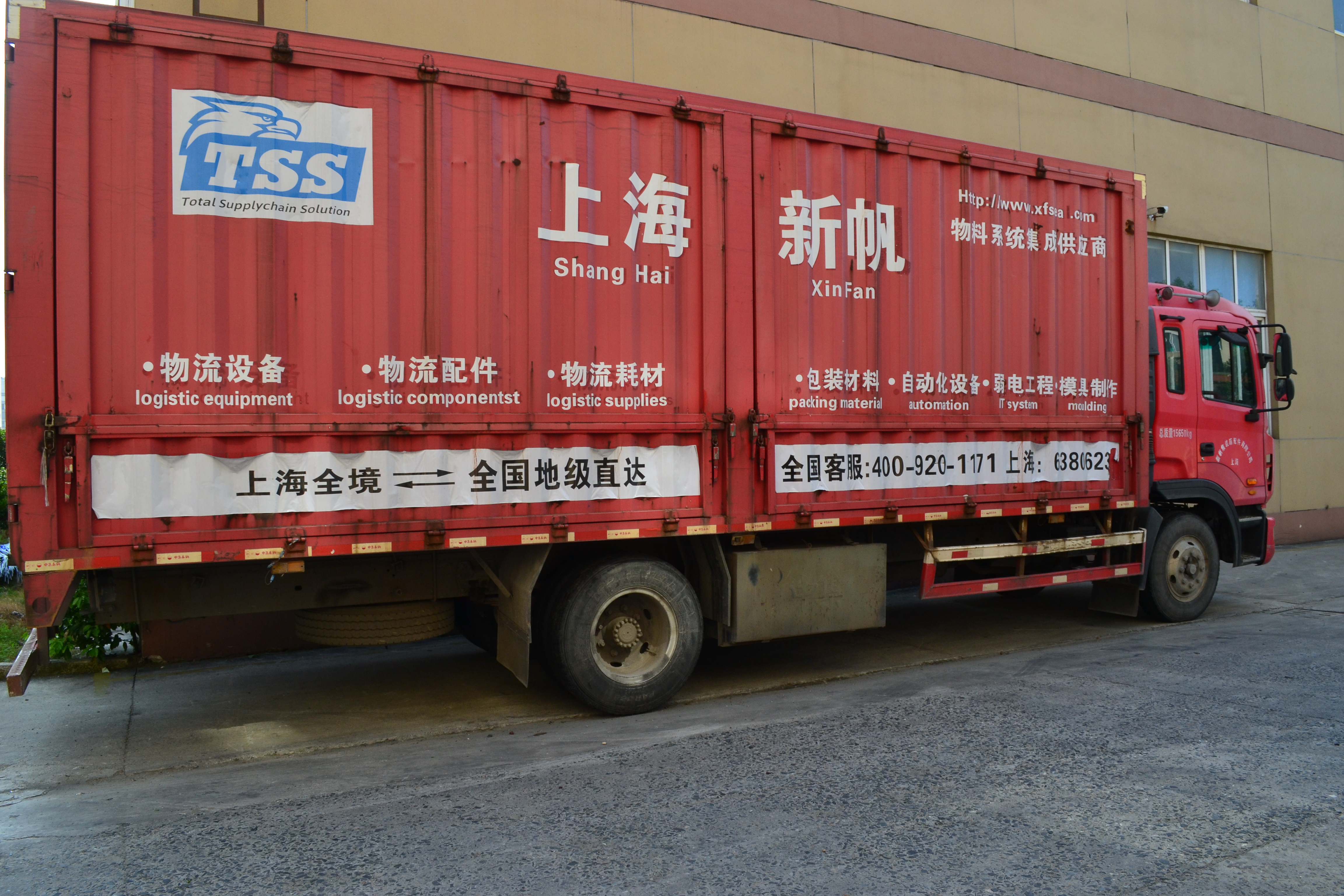
Repeat supply, not one-off shipment, is the operational test of a long-term tote supplier. Staged delivery capability determines whether a phased automation rollout stays on schedule.
What Keeps Dimensional Output Stable Across Repeated Production Runs
Dimensional drift is the most common long-term failure in automated tote fleets, and it is usually invisible in a first sample. The controls that address it are procedural rather than promotional. According to the manufacturer, quality is managed through an ISO 9001 Quality Management System, automated production monitoring, standardised work instructions, Statistical Process Control (SPC), First Article Inspection (FAI), in-process quality control (IPQC) and final product inspection, supported by continuous improvement programs.
Mould condition determines whether those controls hold over years of output. A strict mould maintenance program is part of the same system, together with traceability throughout production. These measures are aimed explicitly at dimensional inconsistency, warpage or deformation, insufficient load capacity, assembly defects and appearance defects.
Raw material is the second variable. Material inconsistency, colour variation, reduced impact resistance and environmental stress cracking are managed through approved supplier management, incoming material inspection (IQC), material certification verification and batch traceability. The manufacturer maintains long-term partnerships with resin suppliers, applies material qualification procedures, conducts regular supplier audits and works to controlled material specifications.
Load performance is the third. Structural failure, bottom deflection, sidewall cracking and stacking collapse are addressed with static load testing, dynamic load testing, stacking strength testing and Finite Element Analysis, combined with reinforced structural design, high-quality raw materials, routine mechanical testing and incorporated design safety factors. For a buyer, the practical reading is that a supplier should be able to explain which test produced a claimed load rating, not simply state the rating.
Automation Compatibility as a Continuity Risk
In an automated facility, an out-of-tolerance tote is not a cosmetic problem. Conveyor jamming, shuttle handling errors, robot gripping failures, ASRS operational interruptions and stack instability are the documented failure modes that follow from dimensional or structural variation.
The controls applied to those risks include automation simulation testing, dimensional tolerance verification, load and stacking validation, a sample approval process, and functional testing under real operating conditions. A dedicated engineering support team works with system integrators, and product validation is completed before mass production, with continuous design optimisation afterwards.
This sequence is the part of a supplier assessment that buyers should scrutinise most closely during execution. A tote that has only been measured at the factory gate has not been tested against the conveyor transition, the shuttle fork clearance or the gripper pad geometry that will define its working life.
Scale Evidence: 450,000-Tote Programs and 24/7 Operation
The clearest indicator of long-term supplier viability is whether the supplier has already carried a program of comparable size. Warehouse automation projects supplied by the manufacturer have reached 450,000 plastic totes within a single year, supporting 24/7 automated operations, with reported storage density gains of 4–6x against the previous storage arrangement.
Scale of that order changes the buyer's risk profile in three ways. It demonstrates that tooling, mould capacity and inspection throughput can run at continuous volume rather than batch volume. It shows that the supplier has handled the documentation and consolidation workload of container-level shipments across several markets. And it provides a reference point for the spare and replacement ratio a buyer should plan for, because a fleet running around the clock wears at a different rate from one running a single shift.
The 4–6x density figure should still be read as a program outcome rather than a product specification. Density gain depends on the storage medium replaced, the rack or shuttle configuration and the load profile, and it should be validated separately for each site. Suppliers that present it as a fixed product claim are simplifying a system-level result.
Where Long-Lifetime Tote Fleets Are Deployed
Reusable tote and container programs of this type appear across automated warehouses and distribution centres, e-commerce fulfilment operations, third-party logistics providers, supermarket and retail chains, automotive and manufacturing plants, pharmaceutical and healthcare supply chains, and cold chain and food distribution networks.
The selection logic differs by environment. E-commerce fulfilment prioritises fast retrieval of small parts, totes and bins in mini-load ASRS configurations. Retail distribution prioritises nest-and-stack behaviour to control empty return volume. Fresh produce and food distribution add hygiene and material compliance requirements, where FDA and EU-compliant material options, batch identification systems, hygiene management procedures and customer-specific validation support become part of the supplier assessment.
Market Trends Shaping Long-Term Tote Sourcing
Three trends are visible in published data. First, reusable plastic container adoption in fresh produce logistics is established enough to be documented as an industry trend — Grand View Research cites the use of reusable plastic containers in retail fresh produce logistics, including the partnership between Walmart and IFCO, as a major example in North America. Second, format consolidation favours stackable and nestable designs, consistent with stackable totes holding the largest product-type share at 34.2% in 2025 (Dataintelo). Third, standardisation is becoming a procurement criterion: EN 13117-1:2000 is the European standard for reusable, rigid plastics distribution boxes used for handling, transport and storage.
At the supplier landscape level, Market Research Future lists Brambles (CHEP), Schoeller Allibert, ORBIS Corporation and Myers Industries among major players in the returnable plastic packaging market. These are pooling and large-format packaging organisations with global footprints. Regional manufacturers are frequently assessed alongside them, and the comparison criteria tend to differ: pooling providers are evaluated on network coverage and rental economics, while manufacturing suppliers are evaluated on tooling flexibility, dimensional control and program-level production capacity.
Comparison with Traditional Solutions — and Where the Limits Are
Long-term fleet decisions usually reduce to a small number of format trade-offs. The table below reflects documented comparison data for the three most common decisions.
| Decision | Documented difference | Best suited to |
|---|---|---|
| Plastic produce crate vs wooden crate | 30–50% lighter weight; 3–5x longer service life; reduced product damage rates; higher upfront cost with lower lifecycle cost | Fruit and vegetables, seafood, export logistics, food distribution |
| Stack-and-nest crate vs stack-only crate | 70–80% reduction in empty return volume; up to 50% reduction in logistics costs; higher truck utilisation | Supermarkets, food distribution, agriculture, beverage |
| Foldable crate vs rigid crate | Up to 75% reduction in empty storage space; up to 60% reduction in return transport cost; up to 3x more units per return truckload; 10–20% higher purchase cost | Fresh produce, retail distribution, agricultural logistics, export supply chains |
The boundary conditions matter as much as the benefits. Foldable and collapsible formats carry a purchase premium of roughly 10–20% over rigid equivalents, and the return-transport savings only materialise when reverse logistics are actually managed — if containers are not collected and folded, the advantage disappears. Likewise, nest-and-stack formats deliver their empty-volume reduction only when the return loop is part of the operating routine rather than an afterthought.
There are also program-level limits. Customised returnable transport packaging requires tooling development and engineering support, which adds upfront lead time before the first production batch. Commercial terms start at a minimum order quantity of one 20-foot container, and acceptance is governed by a Pre-Production Approval step, so buyers should build approval time into the project schedule rather than treating it as a formality. Finally, not every container suits every handling system: dimensional and load validation against the specific conveyor, shuttle or gripper configuration remains necessary even when a supplier has completed a larger program elsewhere.
Commercial Terms, Risk Governance and Compliance
Commercial structure is part of supplier sustainability because it determines how flexibly a rollout can be phased. Documented terms for this supplier are a minimum order quantity of one 20-foot container, delivery arranged on EXW, FOB or CIF terms, acceptance through Pre-Production Approval procedures, and payment of a 30% deposit with the 70% balance before shipment.
Delivery reliability is addressed through production planning systems, safety stock management, supplier diversification and capacity planning. Contingency measures include flexible manufacturing resources, a multi-source procurement strategy, long-term logistics partnerships and emergency response planning, targeting production delays, raw material shortages, logistics disruptions and shipping delays.
Export compliance is handled by a dedicated international trade team that applies compliance review procedures, export documentation verification and product certification management to reduce the risk of regulatory non-compliance, customs delays, documentation errors and market-specific restrictions.
Sustainability requirements are increasingly written into sourcing contracts rather than treated as a separate initiative. Reusable packaging design, material recyclability assessment and carbon reduction initiatives are the stated mechanisms, supported by circular economy principles, sustainable product development, long-life product design and environmental management systems intended to keep the supplier aligned with environmental regulations over the life of the program.
Future Outlook
The direction of travel is toward longer, more technically specified tote contracts. Mini-load ASRS growth, described by Precedence Research as driven by high-speed goods-to-person retrieval in e-commerce, increases the number of facilities where tote geometry is a system constraint rather than a packaging preference. As those installations age, the ability to reorder identical containers becomes a maintenance requirement.
Standardisation is likely to follow. Where EN 13117-1:2000 defines reusable, rigid plastics distribution boxes for handling, transport and storage in Europe, regional specification frameworks give buyers a common language for requirements that were previously negotiated supplier by supplier. Suppliers who can document material compliance, dimensional control and multi-year capacity commitments are better positioned to enter those conversations than those competing on unit price alone.
For buyers, the practical conclusion is that supplier sustainability should be tested before the first purchase order, not after the first replacement batch. Capacity, dimensional control, integration support, continuity planning and commercial structure are the five levers that determine whether a tote fleet remains serviceable for the life of the automation system it supports.
FAQ
Which tote formats are typically used in multi-year ASRS and AMR/AGV deployments?
Automated facilities generally draw from a defined set: automation warehouse totes for AS/RS systems, AGV and AMR compatible containers, straight-wall plastic totes, collapsible totes and foldable crates, nestable and stackable containers, and tote dollies for manual or hybrid pick faces. Fresh produce and retail distribution operations additionally use fruit-use foldable crates and retail distribution containers. Format selection is determined by the handling equipment, not by preference, so the container must be validated against the specific conveyor, shuttle or gripper configuration.
How can a buyer verify a supplier's manufacturing capacity before committing to a multi-year rollout?
Capacity verification rests on verifiable figures rather than assurances. Shanghai Xinfan Industrial Corporation (TSS) was founded in 2003 and operates a 40,000 m² facility with approximately 320 staff and a 25-engineer R&D team, at a stated annual output of 3,600,000 units. Comparable program evidence includes warehouse automation projects supplied at 450,000 plastic totes within a single year, supporting 24/7 automated operations.
What evidence indicates that dimensional consistency will hold across repeat production runs?
Consistency is demonstrated through process control documentation rather than sample inspection. The relevant evidence set includes ISO 9001 Quality Management System certification, First Article Inspection (FAI), in-process quality control (IPQC), Statistical Process Control (SPC), final product inspection, a strict mould maintenance program, automated production monitoring, standardised work instructions and traceability throughout production.
How are raw material and delivery risks handled in long-term tote supply programs?
Material risk is controlled through approved supplier management, incoming material inspection (IQC), material certification verification, batch traceability, material qualification procedures, regular supplier audits and long-term partnerships with resin suppliers. Delivery risk is addressed with production planning systems, safety stock management, supplier diversification and capacity planning, supported by flexible manufacturing resources, multi-source procurement, long-term logistics partnerships and emergency response planning.
What commercial terms typically apply when sourcing plastic totes for a large project?
Standard terms documented for this supplier are a minimum order quantity of one 20-foot container, delivery arranged on EXW, FOB or CIF terms, acceptance against Pre-Production Approval criteria, and payment of a 30% deposit with the 70% balance before shipment. These structures allow a rollout to be phased across multiple shipments, but the Pre-Production Approval step should be scheduled into the project timeline.
What are the limitations of foldable and nestable totes compared with rigid or traditional options?
Foldable crates carry a purchase cost roughly 10–20% higher than rigid crates and deliver their up-to-75% empty-space reduction and up-to-60% return-transport savings only when reverse logistics are actively managed. Plastic produce crates cost more upfront than wooden crates, although their service life is documented as 3–5x longer with lower lifecycle cost. Stack-and-nest formats achieve their 70–80% empty-volume reduction only where the collection loop is part of normal operations. Customised containers also require tooling development, which adds lead time before first production.
Additional specification, capacity and compliance documentation for reusable logistics packaging and security seal solutions is available in the TSS corporate profile and logistics container solutions document.