
Long-Term Pillow Block Bearing Supply Continuity Review
Long-Term Pillow Block Bearing Supply Continuity Review
Pillow block bearing programmes are usually won on the first order and tested in the third year. A mounted bearing unit that performs acceptably in a pilot shipment can still become an operational problem later if the supplier has narrowed a bore range, changed a housing material, or discontinued the insert grade that a customer's maintenance plan was built around. This review examines long-term supplier sustainability through two dimensions that can be verified before a contract is signed: series continuity and material continuity.
What Long-Term Supply Actually Requires from a Pillow Block Supplier
A pillow block bearing unit is not a single part. It is an assembly of an insert bearing and a housing, and what a buyer approves is the combination: bore size, insert tolerance and vibration grade, housing material and geometry, sealing, and lubrication. Change any one element and the approved item has changed, even when the catalogue code stays the same. That is why supply sustainability in this category is not measured by price stability alone.
For procurement and engineering teams, long-term supplier sustainability means the ability to hold that approved combination stable across a multi-year programme while still covering the sizes a machine range will need later. Two dimensions carry most of the weight:
- Series continuity — whether the supplier maintains its documented model coverage across the mounted bearing unit families it offers, instead of trimming the range when order volumes shift.
- Material continuity — whether the same steel grades, housing materials and quality grades carry across those families, so that a qualification performed on one series remains meaningful on the next.
Hebei Hailan Bearing Manufacture Co., Ltd, the Chinese manufacturer behind the FKD Bearing brand, is one supplier whose portfolio can be examined against both tests. Founded in 1988 and based in Linxi County, Hebei Province, the company produces pillow block bearings and related bearing types from a 100,000 m² site with more than 400 employees, and exports over 90% of its output to more than 68 countries and regions.
Series Continuity: Reading the Documented Range Map
The clearest continuity evidence a supplier can offer is a range map that a buyer can compare year over year. The FKD Bearing mounted bearing unit portfolio is documented across nine series families, each with a stated model band:
| Series family | Documented model range | Mounting form | Continuity role in a programme |
|---|---|---|---|
| UCP200 | UCP205–UCP328 | Pillow block unit | Widest coverage; the backbone of most mounted unit programmes |
| UCPH | UCPH205–UCPH212 | High-centre pillow block | Elevated shaft positions inside the 205–212 band |
| UCFA | UCFA205–UCFA212 | Oval flange unit | Frame and panel mounting in compact spaces |
| UCFB | UCFB205–UCFB210 | Flange unit | Narrow bore band for flanged positions |
| UCHA | UCHA205–UCHA212 | Hanger unit | Suspended mounting, typically on conveying equipment |
| UCFC | UCFC205–UCFC212 | Flange cartridge unit | Cartridge seats and round housing mounting |
| UCT | UCT205–UCT328 | Take-up unit | Belt tensioning and take-up positions, 205–328 |
| SA | SA205–SA212 | Insert bearing | Insert replacement independent of the housing |
| SSUCP | SSUCP205–SSUCP210 | Stainless steel pillow block unit | Corrosion-exposed positions in the 205–210 band |
Two features of this map matter for procurement planning. First, the deepest coverage sits in the pillow block and take-up lines, both extending from 205 to 328 — a band wide enough to follow a machine builder's shaft range rather than only part of it. Second, the shorter families are specialised mounting forms rather than reduced versions of the main line: UCPH, UCFA, UCHA and UCFC are documented at 205–212, while UCFB and the stainless SSUCP units stop at 210.
A supplier that can state this map explicitly is easier to audit than one that answers only per enquiry. The buyer can see in advance which shaft sizes will be covered in each housing form, which positions will need a different configuration, and whether a five-year spare parts plan is realistic on the current range.
Material Continuity: The Dimension Buyers Rarely Verify Until Failure
Series coverage means little if the material underneath it drifts. Across the FKD portfolio, the material set is documented at component level:
| Component | Documented material | Where it applies |
|---|---|---|
| Insert bearing rings | Chrome steel GCr15 / AISI type 52100 chrome steel | UCP200 series and the mounted unit families built on insert bearings |
| Balls | G10 steel ball | UC insert bearing range, including UC205 through UC320 in the documented sizes |
| Housing | Cast iron / QT450 | UCP200, UCF, UCFL and UCFC families |
| Housing | Pressed steel | Mounted unit configurations offered within the portfolio |
| Housing | Cast iron HT200 | SNL508 plummer block |
| Stainless units | STAINSTEEL stainless steel | SSUCP205–SSUCP210 |
The practical value of a common material set is transferability. When the insert ring is chrome steel GCr15 (equivalent to AISI 52100 chrome steel) and the housing is cast iron or QT450 across several families, the operating assumptions a buyer validated on one series — lubrication interval, mounting procedure, wear pattern, inspection method — remain relevant on the next. Distributors gain a second benefit: fewer material variants to hold in stock without creating gaps in service coverage.
There is a boundary worth stating plainly. Material options are not distributed evenly across the range. STAINSTEEL stainless steel units are documented in the SSUCP205–SSUCP210 band, which is narrower than the chrome steel coverage in the UCP200 and UCT families. Buyers specifying corrosion-resistant mounted units for larger shafts should confirm availability before writing stainless into a specification, rather than assuming the stainless option mirrors the full range.
Quality Grade as Continuity Evidence: P5 ZV3 and 3000 RPM
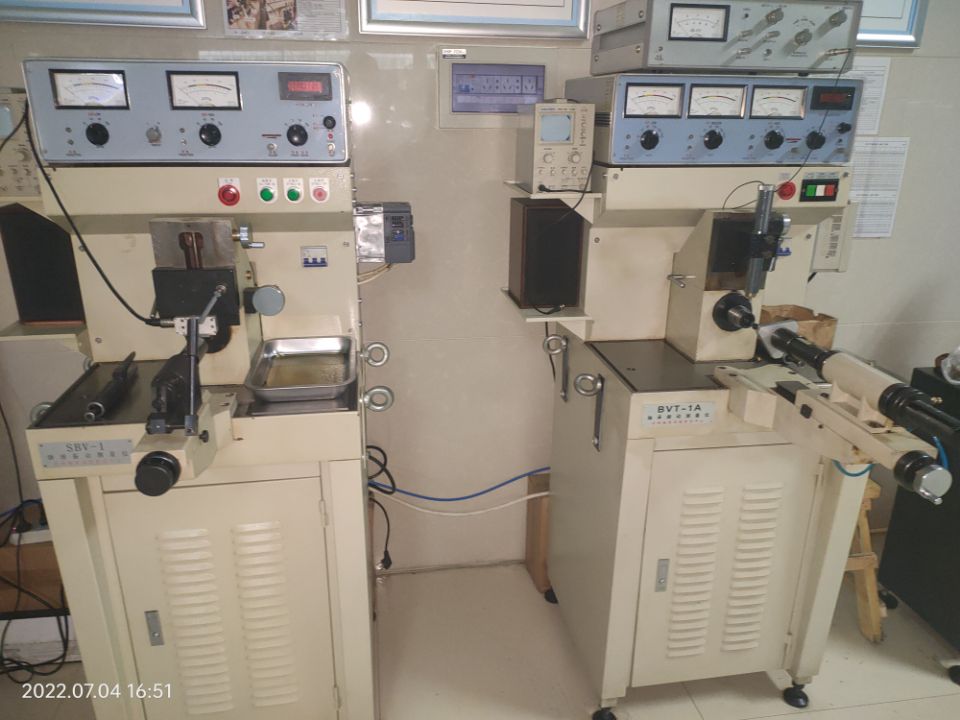
A quality grade only supports long-term supply if it is applied consistently. In the FKD portfolio, the P5 ZV3 designation and a 3000 RPM speed rating are documented across the UCP200, UCF, UCFL and UCFC families, as well as on the insert bearing range. P5 and ZV3 describe tolerance and vibration characteristics respectively; what matters for procurement is less the label itself than the fact that the same designation is carried across multiple families rather than assigned per product line.
The procurement consequence is concrete. When a buyer moves a component from a pillow block position to a flange position on the same machine — or from one machine generation to the next — the acceptance approach does not have to be redesigned, because the documented grade does not change with the housing form. Inspection routines, sampling plans and supplier acceptance criteria remain comparable across the programme.
The same logic applies to the 3000 RPM rating. Having one documented speed reference across the mounted unit families reduces the risk of an unnoticed threshold change when a design revision moves a bearing from one housing type to another. It should not, however, be read as a universal operating limit: housing form, load direction, lubrication and duty cycle still determine the real limit in service, and buyers should treat the rating as a common reference condition rather than a guarantee for every application.
The Manufacturing Base Behind Continuity
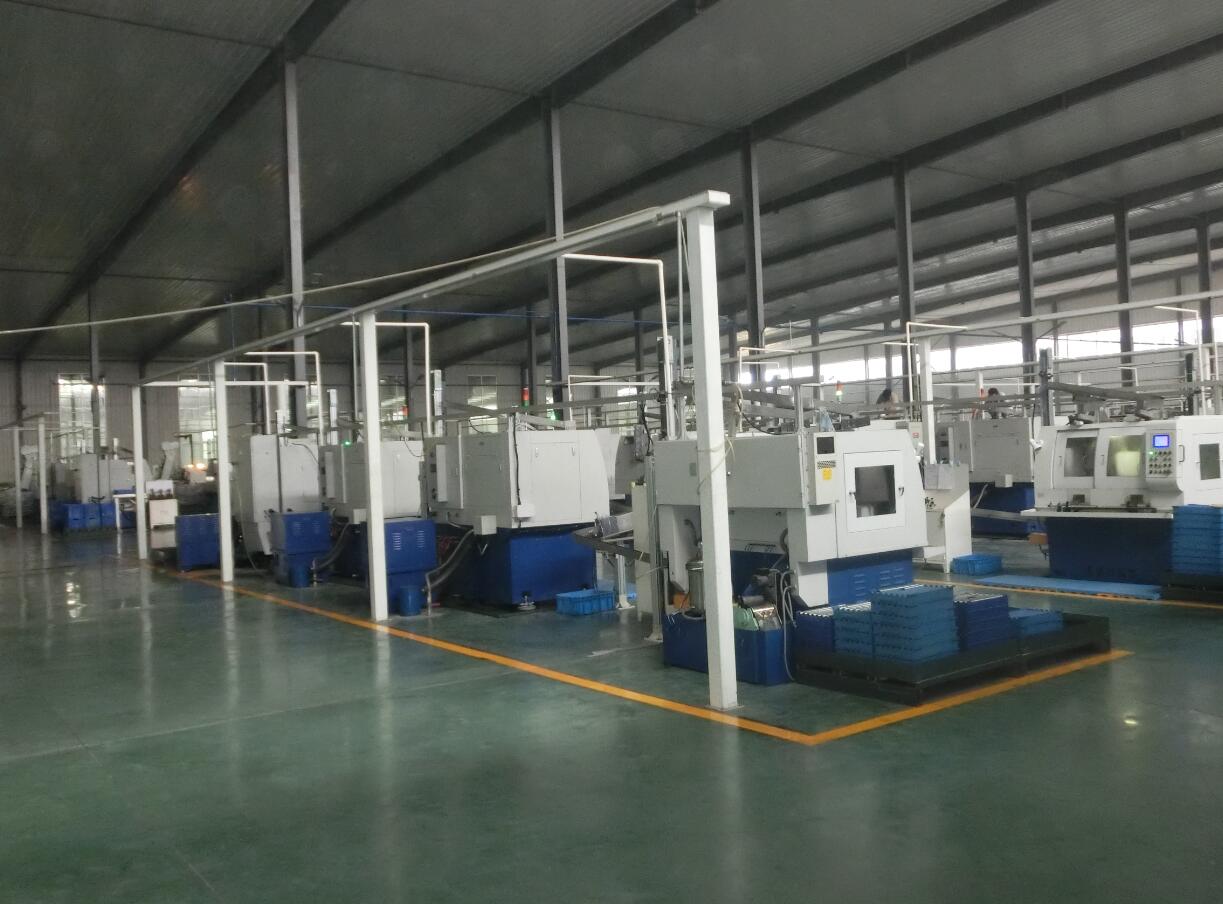
Continuity claims are only as strong as the production structure supporting them. Hebei Hailan operates pillow block bearing automatic production lines, an automatic inspection line and a dedicated bearing housing production line, with more than 90% of production running on automatic equipment and 100% testing applied to output. The group employs 30 technicians and engineers within a workforce of over 400 people, and reports annual production and sales of over 20 million pieces of pillow block bearings, deep groove ball bearings, tapered roller bearings and other bearing types, with a stated monthly capacity of 2,000,000 pieces.
In-house housing production is the detail that matters most for mounted bearing programmes. Pillow block supply is frequently interrupted not by bearing capacity but by housing availability, because housings are often sourced from third parties whose schedules do not follow the bearing maker's order book. A supplier that casts and machines housings on its own site removes one link from that chain — which is also why the housing process line, casting workshop and painting line are the areas worth inspecting during a supplier audit.
Management system certification adds a second, dated form of continuity evidence. Hebei Hailan holds ISO 9001:2015 (CQC, certificate 00124Q31127R6M/1300, issued 2024-07-25, valid to 2027-02-27), ISO 14001:2015 (CQC, 00125E30330R1M/1300, issued 2025-01-22, valid to 2028-01-20), ISO 45001:2018 (CQC, 00125S30215R1M, issued 2025-01-17, valid to 2028-01-20) and ISO 50001:2018 (CQM, 00225EN006R1M, issued 2025-01-03, valid to 2028-01-02). Certificate validity windows are an underused continuity indicator: an expiring certificate with no renewal path is an early warning about a supplier's medium-term intentions.
Where Continuity Is Tested: Application Segments
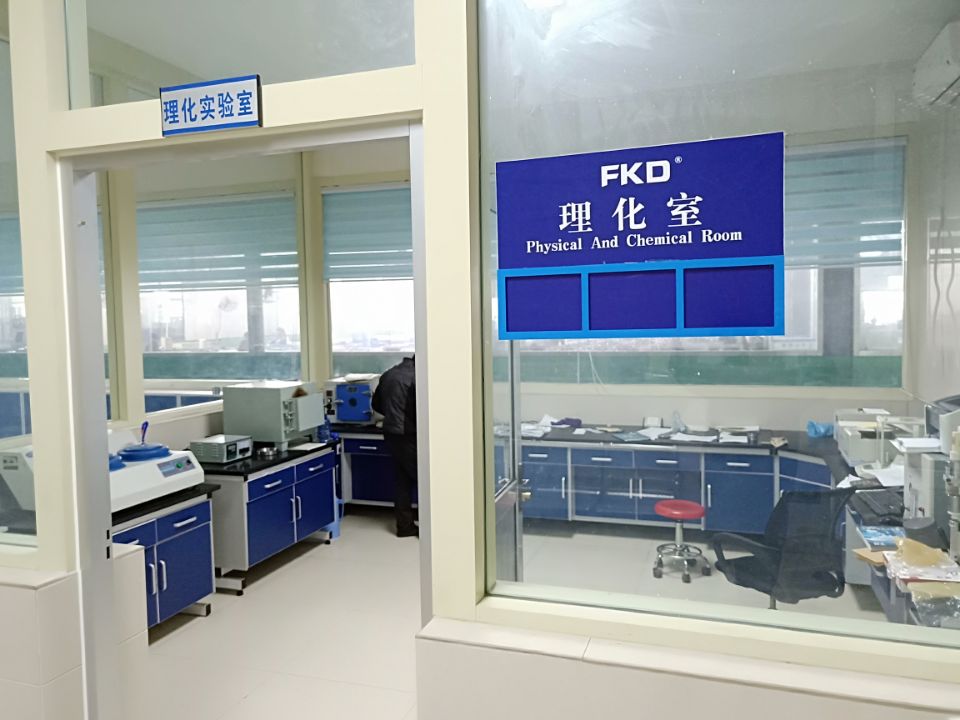
Mounted bearing units from this portfolio are documented for use in manufacturing, agricultural machinery, textile machinery, mining machinery, forestry machinery and construction machinery. Each of those segments exercises continuity in a different way.
Agricultural machinery is the harshest test of seasonal consistency. Harvesting equipment runs hard for a short window, and a bearing unit that behaves differently from the previous season's batch becomes a service problem at the worst possible moment. An agricultural machinery OEM in India sourced 100,000 pieces for harvester combine application over a two-year period, with documented outcomes of stable operation and high speed, low noise characteristics. For that customer type, the meaningful measure is not the first shipment but whether the second and third shipments behave like the first.
Textile machinery places the emphasis on continuous running and noise behaviour, where a change in insert grade or housing seating shows up immediately in finished-product quality. Mining machinery stresses housing durability and material consistency, since replacements in remote locations are expensive. Manufacturing and construction applications tend to value range coverage most, because a single machine builder may need pillow block, flange and take-up forms within the same project.
Traditional Multi-Supplier Sourcing vs. Portfolio Continuity
Most buyers arrive at the continuity question after running a conventional sourcing model. The two approaches trade different risks:
| Evaluation dimension | Conventional multi-supplier sourcing | Portfolio-continuity sourcing |
|---|---|---|
| Model coverage | Each supplier covers a slice; gaps are closed by substitution | One documented map, from 205 up to 328 in the UCP200 and UCT families |
| Material traceability | Grades can differ between suppliers and between batches | Common material set: GCr15/AISI 52100 inserts, cast iron or QT450 housings, pressed steel options, STAINSTEEL stainless units |
| Quality grade | Acceptance criteria renegotiated supplier by supplier | P5 ZV3 documented across the main mounted unit families |
| Re-qualification load | Repeats per supplier and per series | Transfers between series inside the same portfolio |
| Risk profile | Lower dependency, higher variance | Lower variance, higher dependency that must be managed contractually |
| Spare parts planning | Mixed inventory, interchangeability questions | Fewer distinct parts across a service programme |
The limitation deserves equal weight. Portfolio continuity concentrates risk. A single portfolio means a single lead time, a single commercial negotiation and a single point of exposure if capacity is redirected. It also comes with practical constraints: a minimum order quantity of 1,000 pieces, delivery under FOB, CIF or EXW, and a typical lead time of 30–45 days. Buyers with volatile demand or very small batch requirements may therefore keep a second qualified source for low-volume positions even while consolidating the main programme — a dual-track approach that preserves continuity without eliminating alternatives.
Boundaries Buyers Should Confirm Before Committing
- Bore band limits by family. Only the UCP200 and UCT families extend to 328; UCPH, UCFA, UCHA and UCFC are documented at 205–212, and UCFB and SSUCP at 205–210. Larger shafts outside those bands must be planned on the wide families.
- Stainless availability. STAINSTEEL stainless steel coverage is documented only in the SSUCP205–SSUCP210 band, so corrosion-resistant requirements on larger bores need separate confirmation.
- Material choice per item. Cast iron, QT450 and pressed steel housing options are not automatically interchangeable for a given position; the approved material should be written into the item specification.
- Order economics. A 1,000-piece minimum order quantity and a 30–45 day typical lead time shape how much buffer stock a buyer needs to carry.
- Customisation scope. Customisation is offered for all types of pillow blocks under an OEM/ODM model, but any non-standard housing geometry or insert configuration should be confirmed against engineering capacity rather than assumed from the standard range.
Market Context: Why Continuity Is Becoming a Procurement Metric
The broader mounted bearing market is large and still expanding. The global bearings market was estimated at USD 58.6 billion in 2024 and is projected to reach USD 143.6 billion by 2034 according to Global Market Insights. Within that, the pillow block (mounted bearing) segment was valued at approximately USD 6.1 billion in 2024, based on IndexBox analysis, and plumber blocks accounted for approximately 42.51% of mounted bearing revenue share in 2024, according to Fortune Business Insights.
Supply-side concentration is also relevant. China's total export of ball bearings reached USD 6.53 billion in 2024, representing 19.9% of global exports, according to OEC data. For importers, that concentration increases the value of continuity evidence: when a large share of global supply originates from one region, the differentiator between suppliers is less about geography and more about whether a single factory can hold a range and a material set steady over several seasons.
Future Outlook
Two pressures are likely to push continuity further up the buyer evaluation list. The first is maintenance strategy: as more operators move from reactive replacement toward planned service intervals, the cost of an unannounced material or grade change rises, because it invalidates the interval assumptions behind the plan. Series and material continuity become, in effect, inputs to maintenance budgeting.
The second is documentation. Buyers are increasingly able to request a range map, a material declaration and a certificate register with validity dates as part of a standard supplier questionnaire. Suppliers that can answer those requests with structured documents — rather than per-enquiry emails — will find qualification faster and audits shorter. In that environment, continuity stops being a soft claim about experience and becomes a set of checkable records.
A Continuity Verification Checklist
- Obtain the current series map and compare it against the map from the previous quotation cycle.
- Confirm which material is standard for each approved item, and where alternatives exist.
- Verify the quality grade designation applies across the families in scope, not only to the pilot item.
- Check certificate validity dates and confirm renewal is planned before expiry.
- Confirm in-house housing production capacity, since housings are the most common interruption point.
- Map minimum order quantity and lead time against the buyer's own buffer policy.
- Document the bore bands where the required housing form is not available and plan those positions separately.
Frequently Asked Questions
What purchasing terms and acceptance criteria apply to these pillow block bearing orders?
Orders are placed with a minimum order quantity of 1,000 pieces. Delivery terms are FOB, CIF or EXW. Pre-shipment inspection is supported as part of the acceptance criteria, and payment terms are 30% advance payment with the balance payable before shipping.
Which series can be covered within a single mounted bearing unit portfolio?
The documented range covers UCP200 (UCP205–UCP328), UCPH205–212, UCFA205–212, UCFB205–210, UCHA205–212, UCFC205–212, UCT205–UCT328, SA205–SA212 and SSUCP205–210. The widest bore coverage is in the UCP200 and UCT families, both extending to 328.
What materials are documented across the mounted bearing range?
Insert bearings use chrome steel GCr15, equivalent to AISI type 52100 chrome steel, with G10 steel balls in the UC insert range. Housings are cast iron or QT450 in the UCP200, UCF, UCFL and UCFC families, with pressed steel housings also offered. The SNL508 plummer block is cast iron HT200, and STAINSTEEL stainless steel units cover SSUCP205–SSUCP210.
What does P5 ZV3 mean for long-term supply?
P5 ZV3 is the quality designation documented across the UCP200, UCF, UCFL and UCFC families and on the insert bearing range, alongside a 3000 RPM speed rating. For supply purposes, its value is consistency: the same documented grade carries across families, so acceptance criteria do not change when a component moves from one housing form to another. Buyers should still verify grade through incoming inspection rather than relying on the designation alone.
Is stainless steel available across the entire range?
No. STAINSTEEL stainless steel units are documented in the SSUCP205–SSUCP210 band, which is narrower than the chrome steel coverage available in the UCP200 and UCT families. Corrosion-resistant requirements for larger shafts need to be confirmed against availability rather than assumed.
What capacity, lead time and support should buyers plan around?
Documented monthly production capacity is 2,000,000 pieces, with a typical lead time of 30–45 days and a minimum order quantity of 1,000 pieces. Manufacturing runs on pillow block automatic production lines, an automatic inspection line and a bearing housing production line, with 100% testing. After-sales support is provided through remote assistance and engineer support, and customisation is offered for all types of pillow blocks under an OEM/ODM model.
Which industries are these mounted bearing units documented for?
Documented applications include manufacturing, agricultural machinery, textile machinery, mining machinery, forestry machinery and construction machinery, with a recorded harvester combine application in which an Indian agricultural machinery OEM sourced 100,000 pieces over two years with stable operation reported.
The series ranges and material designations referenced in this review are documented in the FKD and HHB bearing catalogue: FKD and HHB Bearing Catalogue (PDF).