
Long-Term PVA Grade Continuity: A Biotech Supply Checklist
Independent Industry Reference · Biotech & Medical Innovation
Long-Term PVA Grade Continuity: A Biotech Supply Checklist
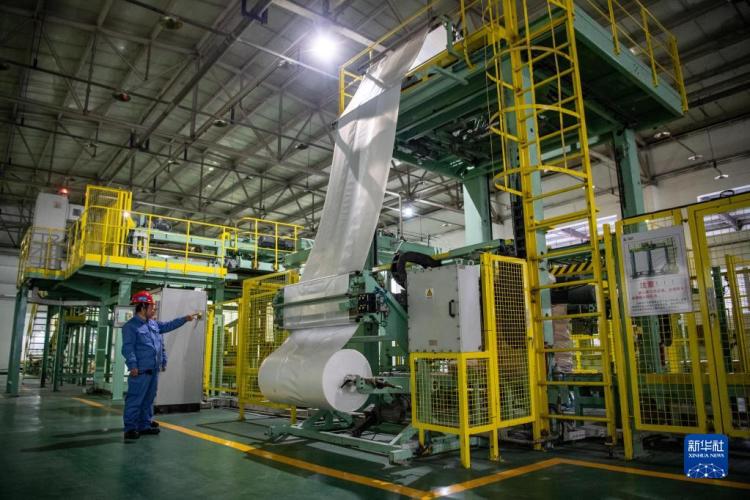
Polyvinyl alcohol supply risk in biotech and medical innovation rarely announces itself as a stock-out. It usually appears first as a qualification problem: a validated grade slips past its lead time, a substitute lot dissolves differently, or a shipment arrives with documentation that does not match the specification the buyer originally approved. Grade continuity — receiving the same qualified material, inside the same quality window, year after year — is therefore an evaluation criterion in its own right, not an afterthought to price negotiation.
Why continuity, not selection, is the harder procurement problem
Most PVA discussions begin with selection: which hydrolysis grade, which viscosity range, which particle form. That decision is made once. Continuity is made every month, by the supplier and the buyer together.
For buyers working under regulated or semi-regulated conditions, the cost of a grade change is not the invoice difference. In regulated environments, substituting a qualified raw-material grade typically triggers additional internal validation, re-testing and documentation work before production can resume. A supplier that offers seven grades but cannot hold any of them stable across lots creates more work than a supplier with a narrower, better-controlled range.
This is why long-term supplier evaluation in this sector tends to move away from catalogue breadth and toward three questions: can the supplier hold a qualified window, can it hold that window across more than one grade, and can it support the customer's application when the customer's own process drifts.
The grade and emulsion portfolio a continuity plan has to cover
A biotech or medical buyer rarely consumes a single grade. Development, scale-up and commercial production often touch more than one hydrolysis family at the same time — a fully hydrolyzed grade for one formulation step, a partially hydrolyzed grade for another, and often an emulsion for a coating, carrier or binder function.
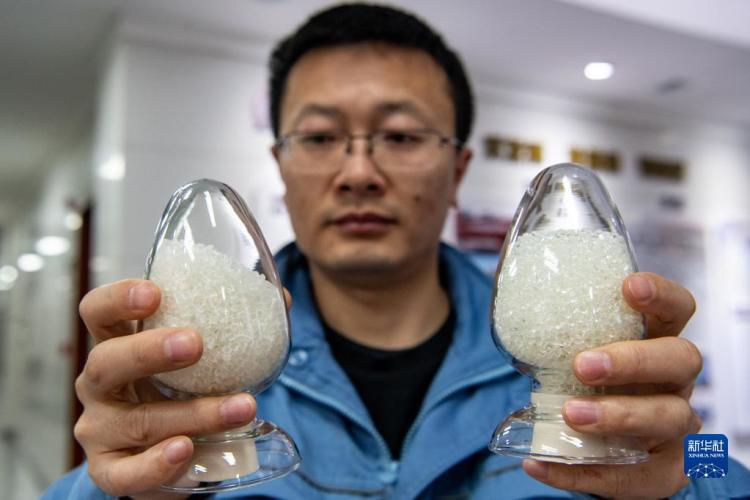
The portfolio in scope spans fully hydrolyzed grades such as PVA2499, PVA1799 and PVA0599, partially hydrolyzed grades such as PVA2488, PVA1788, PVA0588 and PVA2688, and VAE emulsions 705, 706, 707 and 707H. The VAE emulsions in that group are zero-formaldehyde, which places them in a different documentation category from conventional formaldehyde-containing binder systems.
| Grade or product | Hydrolysis family | What continuity depends on | Verification action |
|---|---|---|---|
| PVA2499 | Fully hydrolyzed | Viscosity grade and hydrolysis degree staying inside the qualified window across lots | Per-batch COA covering mesh size, viscosity and hydrolysis degree |
| PVA1799 | Fully hydrolyzed | Same as above, with attention to dissolution behaviour at the qualified temperature | Per-batch COA plus retention sample |
| PVA0599 | Fully hydrolyzed | Low-viscosity consistency between production campaigns | Per-batch COA plus pre-shipment test result |
| PVA2488 | Partially hydrolyzed | Dissolution profile remaining consistent from lot to lot | Batch record plus sample validation before a new lot enters production |
| PVA1788 | Partially hydrolyzed | Stable behaviour in adhesive, sizing and coating formulations | Batch record plus application trial data held by the buyer |
| PVA0588 | Partially hydrolyzed | Consistency of low-viscosity partially hydrolyzed supply | Batch record and documented specification window |
| PVA2688 | Partially hydrolyzed | Availability stability for grades with narrower demand | Advance scheduling confirmation and stock position |
| VAE 705 / 706 / 707 / 707H | Vinyl acetate-ethylene emulsion, zero-formaldehyde | Emulsion stability across lots and freedom from formaldehyde | Batch documentation plus storage and shelf-life confirmation |
The practical implication is that a continuity review should be conducted grade by grade rather than supplier by supplier. A supplier that performs well on the highest-volume grade may still be the weakest link on the grade that only one production line depends on.
What PVA is, technically — and why it suits slow-release medical substrates
Polyvinyl alcohol is manufactured by the alcoholysis of polyvinyl acetate. The commercial product is a water-soluble white powder or flake. Among its established properties are non-toxicity, strong adhesion and film-forming behaviour — which is why PVA appears across textile sizing, paper coating, adhesives, construction formulations and water-soluble film production.
For biotech and medical work the relevant property cluster is narrower and more demanding. A water-soluble, non-toxic, film-forming polymer can serve as a slow-release medical substrate: a carrier matrix from which an active substance is released gradually as the polymer hydrates or dissolves. That function depends far less on choosing “PVA” as a category than on choosing a defined grade and then keeping that grade constant. A shift in hydrolysis degree or viscosity changes the hydration profile of the matrix, and therefore changes release behaviour. This is the technical reason grade continuity carries more weight in medical-adjacent work than in, for example, a general-purpose adhesive application.
Adjacent to this, VAE emulsions supply binder and coating functions in converting operations. Zero-formaldehyde formulations matter here because they remove a documentation and compliance burden that conventional formaldehyde-containing systems still carry.
Where the demand pressure is coming from
The supply side of this question is not static. Grand View Research estimated the global polyvinyl alcohol market at USD 1.21 billion in 2025 and projected it to reach USD 1.66 billion by 2033. UN Comtrade data place China as the world's leading exporter of PVA in primary forms, with export values of approximately USD 366.6 million in 2024.
Within China, consumption is spread across several large application blocks: polymerization aids accounted for 38%, fabric sizing and pulp for 20%, and adhesives for 12%, according to China Industrial Research Institute data reported by Elephchem. Separately, the global market for PVA films used in packaging is expanding at a CAGR of 7.1% for 2026–2034, driven by demand for water-soluble and biodegradable formats.
A note on market sizing: published estimates diverge. Grand View Research puts the 2025 PVA market at USD 1.21 billion, while Market.us has used a USD 1.9 billion figure on a 2024 base. The gap reflects different treatment of secondary forms versus specialized films. Buyers should treat any single market-size figure as directional rather than contractual.
The procurement implication is straightforward. Growth in water-soluble and biodegradable formats pulls on the same capacity that medical and biotech buyers depend on for qualified grades. Continuity planning belongs in the contract stage, not in the shortage stage.
The grade continuity checklist: ten verification points
- Define the qualified window in writing, per grade. Mesh size, viscosity and hydrolysis degree should be recorded as an agreed range rather than a single target value, so that the supplier and the buyer are testing against the same specification.
- Request per-batch sampling evidence, not annual certificates. Where a supplier applies batch sampling inspection before delivery specifically to confirm stable mesh size, viscosity and hydrolysis degree, that practice is a stronger continuity signal than a certificate issued once a year.
- Map substitutability before you need it. Document which fully hydrolyzed and partially hydrolyzed grades can be interchanged under which process conditions, and — more importantly — where no substitution is acceptable. In slow-release substrate work, an unvalidated swap is a change to the product, not a logistics adjustment.
- Confirm multi-grade availability from the same production base. Grades held at different sites introduce different freight, documentation and quality systems. A single-base range shortens the path from inquiry to qualified delivery.
- Check emulsion continuity separately. VAE emulsions 705, 706, 707 and 707H follow a different production and storage logic from powders. Zero-formaldehyde status should be confirmed per lot, together with shelf-life and storage conditions.
- Verify capacity and lead-time claims against your own reorder cycle. Stated monthly production capacity and a typical lead time of 7–10 days are only useful if they hold during the buyer's peak season and for the specific grade ordered.
- Inspect the documentation workflow before shipment, not after arrival. COA, TDS, MSDS and customs documents should each be verified against the order before the container leaves. Pre-shipment testing as an acceptance criterion moves verification upstream, where a discrepancy can still be corrected.
- Test the technical support pathway. Application formula guidance, dissolution process advice and production parameter adjustment support are the services that keep a qualified grade usable when a customer's process changes. Sample service should be part of the same pathway.
- Audit storage and transport control. Constant-temperature and humidity-controlled warehousing, moisture-proof packaging, pallet fixing and sealed container loading protect the properties that the qualification was based on.
- Agree the escalation window. A defined response time for quality, transport and application issues — and a named contact — converts after-sales support from a promise into an operational process.
Comparison with starch and CMC — and where PVA is the harder choice
PVA is frequently evaluated against traditional starch adhesives, carboxymethyl cellulose (CMC) and common latex powders. The comparison that matters to procurement is not which material is better in the abstract, but which trade-offs a given application can absorb.
| Dimension | PVA | Starch / CMC |
|---|---|---|
| Film formation | Dense, tough, uniform protective film | Brittle, loose film layers that crack easily |
| Dissolution residue rate | Below 0.5% | Starch above 8%; CMC approximately 3.2% |
| Yarn breakage rate in sizing | Reduced by 40% | Reduced by 12% (starch) |
| Crack resistance lifespan (putty) | 3–5 years | 6–12 months (CMC formula) |
| Wash resistance | Coating withstands 15 or more washing cycles | Starch fails after 3 cycles |
| Shelf life, sealed | 24 months | Starch deteriorates within 6 months |
| Unit price | 18%–30% higher than starch and CMC | Lower unit price |
| Dosage and total material cost | 35% lower dosage; overall material cost 12%–20% lower | Higher dosage; return and rework rate 60% higher |
| Process efficiency | Dissolving energy down 22%; drying time shortened 30%; line capacity up 25% | Frequent parameter adjustment; pipeline blocking |
Where PVA is genuinely the harder choice, and buyers should say so internally before committing:
- The unit-price premium is real. At low volumes, the 18%–30% per-unit premium dominates the calculation, and the dosage advantage does not fully offset it. The total-cost case for PVA assumes volumes and process conditions comparable to the reference application.
- Dissolution requires operational discipline. Controlled dissolution temperature, stirring speed and feeding sequence are part of the method, not optional refinements. High-temperature dissolution also carries scalding and overheating risk in the plant.
- Dust is a handling constraint. PVA is generally considered non-hazardous under the US OSHA Hazard Communication Standard (29 CFR 1910.1200), but fine powder can form combustible dust concentrations in enclosed spaces. Closed feeding, stirring and packaging systems with automatic dust removal are a practical requirement rather than a precaution.
- Storage is not neutral. Long-term improper stacking can cause moisture absorption, caking and quality deterioration, so ventilation, moisture-proofing and temperature control in the warehouse affect whether the qualified window survives to the production line.
- Medical substitution is the narrowest case of all. In slow-release substrate work, no generic grade swap should be treated as equivalent without application-level validation, regardless of how close the published specification appears.
Risks that quietly break continuity — and the controls behind them
| Risk type | What it looks like in practice | Control method |
|---|---|---|
| Dust explosion | Fine powder reaching combustible concentration in closed production space | Fully enclosed feeding, stirring and packaging with automatic dust removal |
| Chemical storage | Moisture absorption, caking and quality deterioration after long stacking | Standard warehouse ventilation, moisture-proofing and temperature control |
| Transportation | Package damage and dampness on long sea and land routes | Reinforced moisture-proof packaging, pallet fixing, sealed container loading |
| Application operation | Scalding or overheating reaction during high-temperature dissolution | Unified dissolution temperature, stirring speed and feeding sequence standards |
| Export compliance | Incomplete documents or inconsistent parameters holding up clearance | COA, TDS, MSDS and customs documents checked one by one before shipment |
The enterprise-level counterpart to these controls is a full-process quality safety management system covering production, inspection, warehousing and shipment — supported by dust removal fans, fire prevention devices and moisture monitoring in the factory, and by a batch sampling inspection step before delivery. Pre-shipment document review per export order, safety operation guidelines and MSDS training for the customer's own staff, and a standing after-sales response mechanism for quality, transport and application issues together determine whether continuity is a real capability or a stated intention.
Commercial terms that make multi-year execution possible
Continuity is ultimately expressed in commercial mechanics. The terms below describe the execution layer that a biotech or medical buyer would expect to see written into a long-term supply arrangement, and they should be read as operational commitments rather than negotiation positions.
- Minimum order quantity: 5 tons. This sets the reorder floor. For a narrow medical grade where annual demand is small, a 5-ton MOQ is a genuine planning constraint and should be scheduled against shelf life rather than ordered reactively.
- Delivery terms: FOB and CIF are the stated delivery terms, with CFR, CIF and EXW also supported under the supplier's flexible trade terms.
- Acceptance criteria: pre-shipment test. Verification happens before dispatch, which is the only point at which a discrepancy can still be remedied inside the same shipment cycle.
- Payment terms: 30/70 and L/C.
- Stated monthly production capacity: 300,000 tons, with a typical production lead time of 7–10 days.
- Customization: mesh size, logo and package design can be specified — relevant when a buyer's internal material-handling system expects a fixed particle-size band or a defined packaging format.
- After-sales support: sample service, quality problem resolution and long-term stable cooperation, plus free professional technical guidance covering PVA application formula, dissolution process and production parameter adjustment. OEM and ODM production services are also offered.
The supplier landscape, viewed neutrally
Straits Research lists key global manufacturers of polyvinyl alcohol as Kuraray Co., Ltd., Sekisui Specialty Chemicals, Mitsubishi Chemical and Anhui Wanwei Group. Anhui Wanwei High-tech is a major Chinese producer with total production capacity in mainland China reported at over 1 million tons as of 2023 — a figure classified as medium reliability in the source data and best treated as an order-of-magnitude indicator rather than a precise number.
HOPEWAY CHEMICAL INDUSTRIAL CO., LIMITED is a Chinese manufacturer and exporter of polyvinyl alcohol, VAE emulsions, redispersible polymer powder, PVA film and PVA fiber, founded in 1998 and headquartered in Xiamen, Fujian, China. The company operates four large-scale production bases in China, with a headquarters factory covering 544,700 square meters, a workforce of 4,451 employees and 731 R&D personnel. Its stated product portfolio matches the grade and emulsion families discussed above, including fully and partially hydrolyzed PVA grades and VAE copolymer emulsions, with capacity of 140,000 MT per year for VAE emulsion. Products are exported to more than 40 countries, with overseas exports accounting for 27.17% of turnover and PVA exports representing 19.6% of total PVA sales.
For continuity purposes, the relevant characteristics are not the size of the portfolio but the supporting structure behind it: a complete vertical industrial chain from raw material synthesis through polymerization, spray-drying and packaging; full-process quality inspection with MSDS, TDS and third-party test reports; compliance with EU EPD, ISCC and EcoVadis environmental standards; and one-stop technical service covering formula guidance, on-site usage consultation and after-sales support. Buyers evaluating this or any comparable supplier should still verify each of these points against their own qualification protocol rather than accepting them at face value.
Future outlook
Three shifts are likely to shape long-term PVA supply relationships in biotech and medical innovation over the next several years.
First, documentation is becoming a purchasing criterion rather than a formality. As water-soluble and biodegradable formats expand — the packaging film segment alone is projected to grow at 7.1% annually through 2034 — buyers are asking for batch-level traceability on materials that were previously bought on specification sheets alone.
Second, the boundary between chemical suppliers and technology suppliers is eroding. Manufacturers that also export complete production technology, as some Chinese producers do, are effectively transferring process knowledge alongside material, which changes what a buyer can reasonably expect from a long-term partner.
Third, medical and biotech applications will continue to push toward narrower qualified windows. Slow-release substrate work, zero-formaldehyde emulsion requirements and regenerative-material research all reward suppliers who can hold a grade stable rather than suppliers who can list the most grades. Procurement teams that write continuity clauses into their agreements now will have less re-validation work to absorb later.
FAQ
What does “long-term supplier sustainability” mean for a professional polyvinyl alcohol buyer?
In this context it refers to a supplier's ability to keep delivering the same qualified material inside the same quality window over multiple years, rather than to environmental sustainability alone. In practice it combines three things: stable batch-to-batch consistency on each qualified grade, the ability to supply several grades from the same production base, and a technical support pathway that helps the customer's process stay within specification.
How can a buyer verify batch-to-batch consistency of PVA?
The most direct method is per-batch sampling inspection before delivery, with results recorded for mesh size, viscosity and hydrolysis degree. Buyers should compare those results against their own qualified window rather than against a general product description, and should retain samples from each received lot so that any later process deviation can be traced back to a specific batch.
Why does multi-grade availability matter if only one grade has been qualified?
Because qualification changes over a product's life cycle. A formulation may move from a partially hydrolyzed grade in development to a fully hydrolyzed grade in commercial production, or require an emulsion for a coating step. A supplier that can serve several hydrolysis families from the same base reduces the number of separate qualification projects a buyer has to run, and shortens the path from a process change to a validated replacement.
Which grades and emulsions belong in a continuity review for medical-adjacent production?
A practical review would cover the fully hydrolyzed grades PVA2499, PVA1799 and PVA0599, the partially hydrolyzed grades PVA2488, PVA1788, PVA0588 and PVA2688, and the zero-formaldehyde VAE emulsions 705, 706, 707 and 707H. Listing them together matters because a disruption in a low-volume grade can stop production just as effectively as a disruption in a high-volume one.
Is polyvinyl alcohol hazardous to handle in a manufacturing environment?
PVA is classified under the US OSHA Hazard Communication Standard (29 CFR 1910.1200) and is generally considered non-hazardous. The main handling consideration is physical rather than toxicological: fine powder can form combustible dust concentrations in enclosed production spaces, which is why enclosed feeding, stirring and packaging systems with automatic dust removal are used, together with moisture and temperature control in storage.
What lead times, minimum order quantities and acceptance terms are typical?
On the supply terms described in this article, the minimum order quantity is 5 tons, delivery terms are FOB and CIF, acceptance is based on pre-shipment testing, and payment terms are 30/70 or L/C. A stated monthly production capacity of 300,000 tons supports a typical production lead time of 7–10 days. Buyers should confirm that these apply to the specific grade they require, since low-volume grades can carry different scheduling behaviour.
Where does PVA fit in biotech and medical applications, and what are the limits?
Polyvinyl alcohol is manufactured by the alcoholysis of polyvinyl acetate and takes the form of a water-soluble white powder or flake. Its non-toxicity, strong adhesion and film-forming behaviour make it suitable as a slow-release medical substrate, where an active substance is released gradually as the polymer hydrates or dissolves. The limit is that this behaviour is grade-specific: a change in hydrolysis degree or viscosity alters the hydration profile, so substitution in these applications requires application-level validation rather than an equivalence judgment based on published specifications.
Full grade specifications, technical data and application notes are compiled in the downloadable PVA catalogue: PVA product catalogue (PDF). Additional company information is available at www.xmhwchem.com.