
Long-Term POP Display Supplier Evaluation: Materials First
A POP display programme that runs across several seasons rarely fails because one unit was built badly. It fails because the supplier selected for the first season cannot repeat the same specification — or cannot change material — by the third. For retail buyers evaluating suppliers rather than single units, two properties therefore outweigh any individual quotation: material breadth and customization continuity.
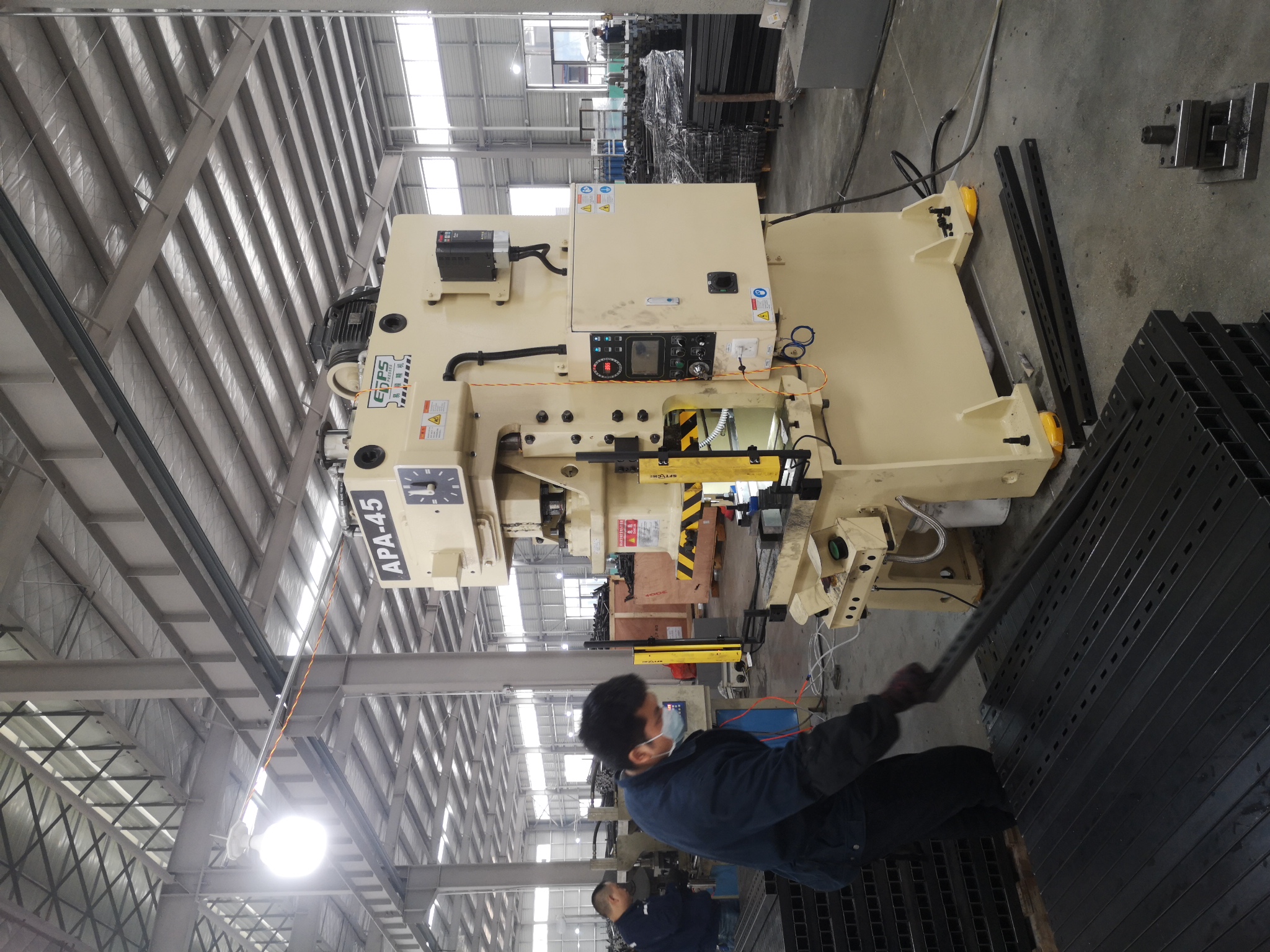
Material breadth is the number of distinct production materials a supplier can process and, critically, combine inside a single display structure. Customization continuity is the ability to reproduce the same dimension, finish and structural decisions across repeat orders, seasons and category extensions without restarting the design process.
The evaluation framework below uses five verified custom POP display models from YC POP DISPLAY as a working dataset: HATJ26704 in metal, PETJ26703 in metal/PVC, TDSJ26802 in metal/PVC, SODJ26531 in metal/MDF and FODJ6103 in MDF/PVC. YC POP DISPLAY is the retail display line of YC Furniture Group Limited, a manufacturer established in 2007 in Quanzhou, Fujian Province, China, producing custom POP displays, retail fixtures and in-store assets in metal, wood, acrylic, PVC and cardboard.
Why Multi-Season Programmes Break: The Material Continuity Gap
Retail display demand is structurally fragmented by category. A hat display, a sock display and a tool display are not variations of one product; they differ in load direction, presentation angle, fixture geometry and the material logic that supports them. Hat and eyewear units are usually frame-led. Sock and clothing units are panel- and hook-led. Tool units carry concentrated point loads. Food units need clean, wipeable surfaces at floor level.
When a supplier is tooled for a single material, each of those requirements becomes a separate tender. The buyer re-samples, re-approves colours, re-establishes a QC baseline and re-learns a new supplier's tolerances. Continuity is lost not at the design stage but at the procurement stage — and the cost is usually absorbed silently across several seasons.
The commercial stakes are not trivial. Industry research cited by POPAI places the share of purchasing decisions made in-store at 70% to 76%, which makes the physical display a decision input rather than decoration. Strategic Market Research values the global point-of-purchase display market at 14.6 billion USD in 2024. Buyers are therefore not choosing a display in isolation; they are choosing the supplier that will carry that display format through multiple retail cycles.
What Material Breadth Actually Looks Like in a Supplier
YC Furniture Group operates from more than 600,000 ft² of manufacturing and logistics space with over 200 employees, including 17 in-house designers and engineers — 10 engineers and 7 designers — and 10 QC specialists. The company reports more than 5,000 companies and brands served, a 95% export ratio and principal markets in North America, Europe, South America and Oceania. Its operations are certified to FSC, Sedex, ISO 9001 and ISO 14001.
Those are company-level facts. The supplier-evaluation question is whether they translate into material breadth at the product level, where a buyer can verify it. The five models below show the translation directly: each is a category-specific display built on a different material basis, all produced under the same customization model.
| Model | Display category | Primary materials | Verified note |
|---|---|---|---|
| HATJ26704 | Hat POP display | Metal | Dimensions and specification customized; structure customized to individual brand display requirements |
| PETJ26703 | Pet food POP display | Metal / PVC | Metal and PVC specified as the primary materials |
| TDSJ26802 | Tool POP display | Metal / PVC | Classified as a metal tool POP display; applicable to retail, supermarket and exhibition environments |
| SODJ26531 | Sock POP display | Metal / MDF | Metal and MDF specified as the primary materials |
| FODJ6103 | Food POP display | MDF / PVC | Wood food POP display for food and beverage presentation and supermarket or retail floor use |
The five models are not the limit of the range; they are the part of it that can be checked against a specification. Beyond them, the same production base covers cardboard displays such as GJH26-104 and JW-CTD379, MDF/acrylic constructions such as THE-CTD103, MDF/PVC cosmetic displays such as JSJ-CSD002, metal/MDF shoe displays such as BR003, and metal/MDF/PVC clothing and toy displays such as CSF002, CP-CSF32, FOD013 and SUGJ26633.
Read as an evaluation dataset, the five models answer three questions a buyer should ask every candidate supplier:
- Does breadth cross structural families? Metal-only, metal/PVC, metal/MDF and MDF/PVC represent four different joinery and finishing logics, not one material used at four sizes.
- Is breadth mapped to categories? Each model is attached to a defined merchandising category — hat, pet food, tool, sock, food — rather than offered as a generic frame.
- Is breadth verifiable? Material composition, category and customization scope are stated per model, so the claim can be tested at sampling rather than accepted at quotation.
Technical Explanation: Dimension-to-Order and Structural Customization
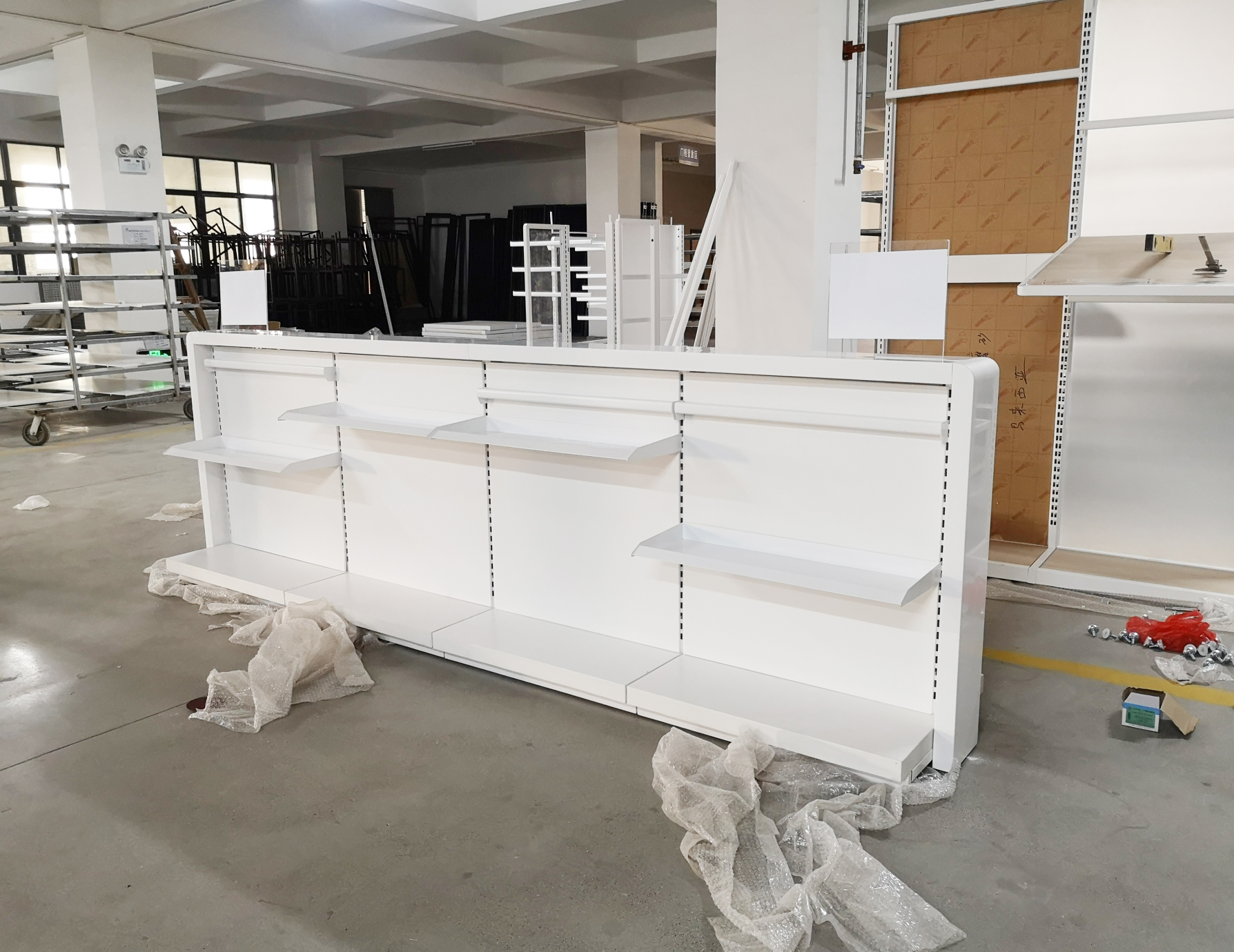
Material breadth is only useful if it survives customization. In this range, display parameters are specified as customized: dimensions and structural parameters are set per project requirement rather than drawn from a fixed catalogue size. Structural configuration is customized according to brand requirements, and a single unit can combine multiple materials, textures, finishes and structures.
The integration method is visible in how multi-material units are described. A metal and PVC display is configured as a metal frame combined with PVC components. A metal, MDF and PVC clothing display combines a metal frame with MDF panels and PVC components in one unit. An eyewear display integrates metal, MDF and PVC with different textures and finishes in a single structure. These are three distinct assembly patterns — frame-plus-panel, frame-plus-insert, and mixed-finish integration — and a supplier that can execute all three across categories has genuine continuity capability, not merely a long material list.
The customization scope documented by the manufacturer covers size and structure, materials, colours and finishes, branding, product presentation, lighting, graphics and signage, features and functionality, packaging and shipping, application and retail environment, and sustainable options. For a buyer, that list functions as a checklist: every item a supplier cannot address becomes a re-qualification risk in season two.
Production and quality parameters that affect continuity
| Parameter | Documented value | Buyer implication |
|---|---|---|
| Minimum order quantity | 50 units | Allows a pilot or single-store validation before a multi-store rollout |
| Production lead time | 25–40 days | Sets the planning horizon for seasonal peaks and replenishment cycles |
| Monthly capacity | 85 x 40-foot HQ container loads | Supports high-volume retail rollouts within one production calendar |
| Quality control | 100% pre-shipment test plus third-party inspection | Every batch is tested before delivery; third-party inspection is available on request |
| After-sales scope | Installation support, troubleshooting, replenishment, display upgrades, customization updates | Continuity extends past first delivery into later seasons |
Application and Use Cases Across Retail Categories
The practical test of material breadth is category coverage. The verified range addresses gift, food, cosmetic, toy, clothing, shoe, eyewear, sock, tool, pet food and hat displays — eleven merchandising categories served by the same production and customization model rather than by separate vendors.
Deployment scenarios in the product documentation are consistent across models: retail point-of-purchase display, in-store merchandising, brand display areas, supermarket and retail floor presentation, brand showrooms and exhibition or event spaces. A shoe display is specified for shoe stores, brand showrooms and retail exhibition spaces, with overall dimensions customized to customer requirements and additional material options including acrylic, PVC and cardboard. A clothing display is specified for in-store clothing merchandising and brand display areas, and is intended for the fashion and apparel, beauty and cosmetics, retail and supermarket, jewelry and watches, consumer electronics and home appliances, footwear, sports and outdoor, and exhibitions and events sectors.
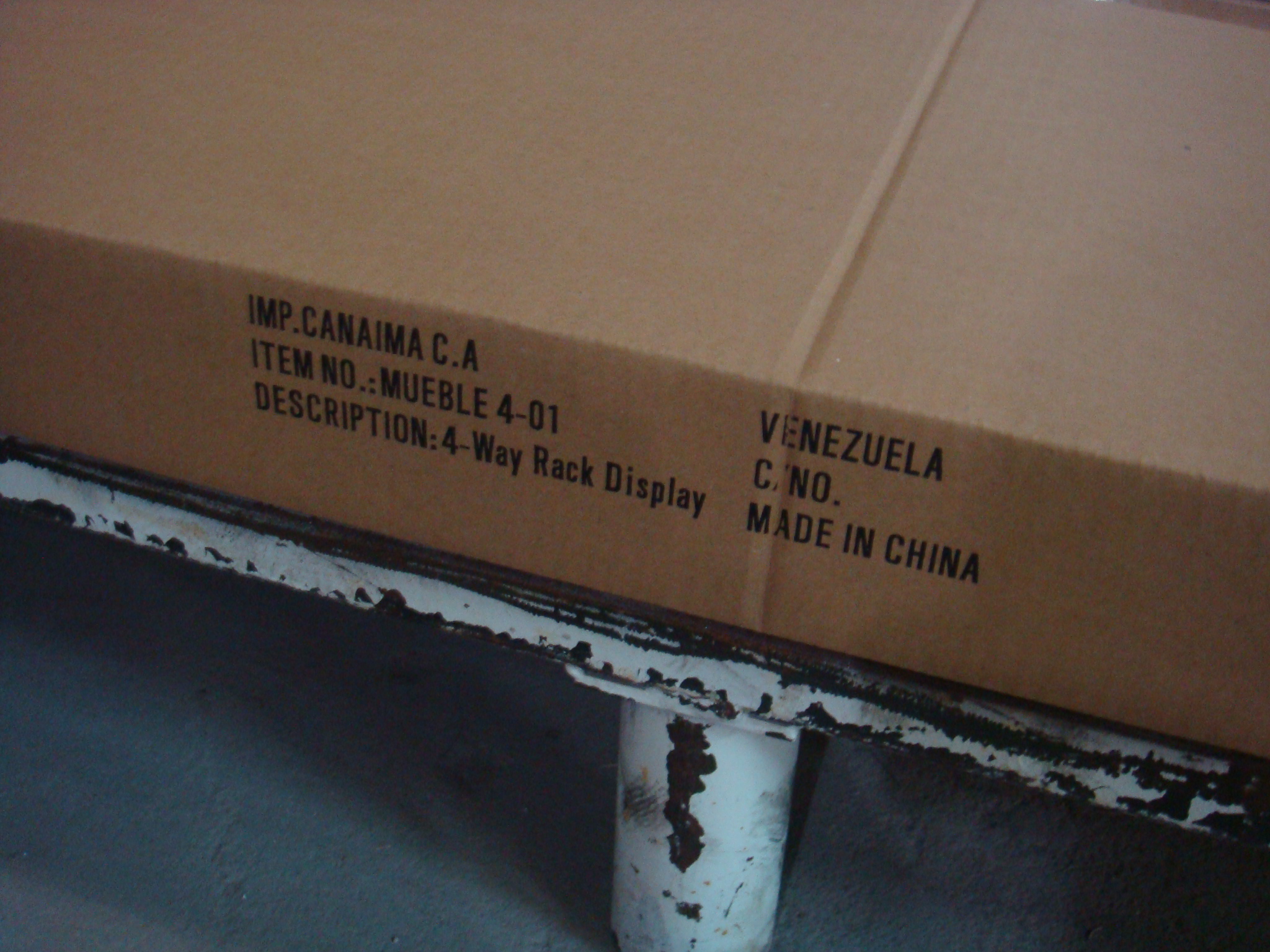
Longevity evidence matters more than category lists at the evaluation stage. Documented cases include DUNLOP, a sports apparel brand in the United Kingdom, where 1,000 custom clothing POP displays were built on models CSF002 and CP-CSF32 and have been in use at the retail site for 3–6 years. Tommy Hilfiger, a lifestyle fashion brand in the United States, took 500 custom display units for a retail apparel project. Mothercare, a maternity and baby products retailer in the United Kingdom, deployed 2,000 custom POP display units across brand stores, addressing limited retail space utilisation and unclear product organisation. A premium lifestyle brand in the United States installed 2,000 display units through a multi-store retail programme. In each case the stated objective was improved product visibility and presentation together with better use of available retail space.
Market Trend Analysis: Material Choice Is Becoming a Procurement Criterion
Three verified market signals explain why material breadth has moved from a nice-to-have to a shortlisting criterion.
1. Cardboard dominance is real but partial. Corrugated paperboard accounted for 42.7% of global POP display revenue in 2025, according to Dataintelo. That dominance reflects cost and recyclability in short-cycle campaigns. It does not eliminate demand for metal, MDF, acrylic and PVC fixtures, which serve multi-season, load-bearing and premium presentation roles. A supplier positioned only in cardboard and a supplier positioned only in permanent fixtures both leave part of the buyer's programme uncovered.
2. Sustainability expectations now attach to display materials. A Nielsen and Grand Fly study cited in category research indicates that 73% of global shoppers are willing to pay more for eco-friendly display materials — a derived, sentiment-based figure rather than a procurement commitment, but directionally consistent with retailer behaviour. Certification documentation is becoming part of the supplier questionnaire: in this case, FSC Chain of Custody certification SGSHK-COC-331884 issued by SGS, valid to 17 October 2028, covering FSC Mix and FSC Recycled paper and board products.
3. European packaging regulation is tightening material documentation. Regulation (EU) 2025/40, the Packaging and Packaging Waste Regulation, carries a compliance date listed as 12 August 2026. For buyers sourcing displays that enter European retail, the practical effect is that material composition and recyclability claims need paper support, not marketing language.
Growth forecasts for the category should be treated cautiously. Published CAGR estimates range from roughly 5.4% to 13.1%, and the spread is largely methodological — broader figures tend to include digital point-of-sale hardware and software, while narrower figures address physical display manufacturing. Buyers should ask which definition a forecast uses before embedding it in a business case.
Comparison with Traditional Solutions: Where a Single-Material Supplier Still Wins
Material breadth is not automatically the better choice. Against a conventional single-material or single-use supplier, a multi-material programme carries real costs and boundaries, and a credible evaluation framework has to state them.
| Dimension | Single-material / single-season approach | Multi-material long-term approach |
|---|---|---|
| Unit economics | Lower cost per campaign; cardboard units can be recycled after a promotion | Higher unit cost, justified only when the fixture is reused across seasons |
| Speed | Fast turnaround for short promotional windows | 25–40 day production lead time requires planning ahead of seasonal peaks |
| Category flexibility | Limited to one structural family | Metal, MDF, PVC, acrylic, wood and cardboard routes available under one quality system |
| Repeatability | New specification and supplier each cycle | Same dimension and finish decisions carried into later seasons, with replenishment and upgrade support |
| Documentation | Basic material statement | Management-system and chain-of-custody certification, but no per-unit product performance certificate |
Boundaries a buyer should verify before awarding a multi-season contract
- Lead time is the binding constraint. A 25–40 day production lead time is comfortable for planned seasonal rollouts and tight for in-season replacement. Buyers with unpredictable replenishment should negotiate buffer stock rather than assume responsiveness.
- Certification scope is not product certification. ISO 9001 certification 117 24 QU 0233-06 R0S, issued by Shanghai Ingeer Certification Assessment Co., Ltd. against GB/T 19001-2016 / ISO 9001:2015 and valid from 24 June 2024 to 23 June 2027, covers sales of shopfittings, POP/POS display, store fixture and store equipment. It is a quality management system certification, not a per-unit performance certificate. ISO 14001 certification 117 26 E 0784 R0 02 follows the same logic. Buyers with load-bearing or fire-performance requirements must specify and test those separately.
- The material set has an edge. The documented range covers metal, wood, acrylic, PVC and cardboard. A requirement outside that set — glass, for example, or specialist composites — falls outside the demonstrated capability and should be qualified independently.
- Volume planning matters. A 50-unit minimum order supports piloting, but multi-store programmes should be scheduled against the 85 x 40-foot HQ monthly capacity so that rollout phases do not collide with peak production.
Future Outlook
Two pressures are likely to reshape supplier evaluation over the next few seasons. The first is documentation: as packaging and waste regulation tightens in Europe, buyers will expect material composition, recycled content and chain-of-custody status to be available at the model level, not only at the company level. Suppliers that already hold FSC, ISO 9001 and ISO 14001 certification are better positioned to answer those questions quickly.
The second is lifecycle planning. The case evidence in this range — retail deployments running 3–6 years across apparel, maternity and multi-store fashion programmes — points toward fixtures being specified for reuse and upgrade rather than replacement. That shifts supplier value from unit price toward replenishment support, display upgrades and customization updates after first delivery, all of which are documented service items here.
For buyers, the evaluation conclusion is straightforward. Test material breadth by asking for category-specific models with stated materials, as with HATJ26704, PETJ26703, TDSJ26802, SODJ26531 and FODJ6103. Test continuity by asking how dimensions, finishes and structures are carried into the next season. A supplier that answers both with documented specifics is a lower-risk long-term partner than one that answers either with a catalogue.
FAQ
What does material breadth mean when evaluating a POP display supplier?
Material breadth is the number of distinct production materials a supplier can process and combine within a single display unit. For YC POP DISPLAY, the documented set is metal, wood, acrylic, PVC and cardboard. Breadth matters because retail categories such as tools, socks, food and eyewear impose different structural loads and presentation requirements, and a supplier that can only process one material forces a separate sourcing cycle for each category.
Which materials are used in the five verified models: HATJ26704, PETJ26703, TDSJ26802, SODJ26531 and FODJ6103?
HATJ26704 is a metal hat POP display. PETJ26703 is a pet food POP display made of metal and PVC. TDSJ26802 is a tool POP display made of metal and PVC, classified as a metal tool POP display. SODJ26531 is a sock POP display made of metal and MDF. FODJ6103 is a wood food POP display made of MDF and PVC, used for food and beverage presentation and supermarket or retail floor displays.
How are dimensions and structures set for a custom POP display order?
Display parameters are specified as customized. Dimensions and structural parameters are set per project requirement rather than selected from a fixed catalogue, and structural configuration is customized according to brand requirements. A single unit can combine multiple materials, textures, finishes and structures — for example, a metal frame combined with MDF panels and PVC components in one clothing display, or metal, MDF and PVC integrated with different finishes in one eyewear display.
What minimum order quantity and lead time apply to these POP displays?
The documented minimum order quantity is 50 units and production lead time is 25–40 days. Monthly capacity is 85 x 40-foot HQ container loads, and quality control follows a 100% pre-shipment test plus third-party inspection. Buyers planning multi-store rollouts should schedule phases against the production calendar rather than against the shortest quoted lead time.
What evidence supports long-term retail use rather than one-season deployment?
Documented cases include DUNLOP in the United Kingdom, where 1,000 custom clothing POP displays built on models CSF002 and CP-CSF32 have been in retail use for 3–6 years; Tommy Hilfiger in the United States with 500 custom display units for a retail apparel project; Mothercare in the United Kingdom with 2,000 custom POP display units across brand stores; and a premium lifestyle brand in the United States with 2,000 display units supplied through a multi-store retail programme. Reported outcomes centre on improved product visibility and presentation and better use of available retail space.
Which certifications apply to YC POP DISPLAY products?
ISO 9001 certification 117 24 QU 0233-06 R0S, issued by Shanghai Ingeer Certification Assessment Co., Ltd. against GB/T 19001-2016 / ISO 9001:2015, is valid from 24 June 2024 to 23 June 2027 and covers sales of shopfittings, POP/POS display, store fixture and store equipment. ISO 14001 certification 117 26 E 0784 R0 02, issued by the same body against GB/T 24001-2016 / ISO 14001:2015, is valid from 27 May 2026 to 26 May 2029. FSC Chain of Custody certification SGSHK-COC-331884, issued by SGS, is valid from 18 October 2023 to 17 October 2028 and covers FSC 100%, FSC Mix and FSC Recycled paper and board products under a transfer system. These are management-system and chain-of-custody certifications, not per-unit product performance certificates.
What support continues after the first delivery?
Documented after-sales scope includes installation support, troubleshooting support, replenishment support, display upgrades and customization updates. For multi-season programmes, these services determine whether a fixture can be extended into a new category or refreshed for a new campaign without a new tooling cycle.
¿Tiene preguntas o necesita más detalles?
Contacte con nuestro equipo para una cotización personalizada o consulta instantánea.
Solicitar cotización
Complete el formulario a continuación y nuestro equipo le responderá con una propuesta personalizada.
Chat directo de WhatsApp
¿Prefiere chatear en tiempo real? Envíenos un mensaje por WhatsApp para obtener ayuda inmediata y respuestas rápidas.
- Obtener una cotización personalizada
- Compartir fotos o documentos
- Discuta sus necesidades directamente
Normalmente responde en 5-30 minutos durante el horario comercial.