
Long-Term Orthodontic Supplies Supplier Evaluation: What to Track Over Years
The global orthodontic supplies market was valued at USD 14.8 billion in 2024 and is projected to grow at a CAGR of 20.1% through 2034 (Global Market Insights). For a clinic, distributor, or dental laboratory, however, the growth rate matters less than a narrower question: will the buccal tube ordered in year five behave like the one qualified in year one? This reference sets out a multi-year supplier evaluation framework for orthodontic supplies — what to record, what to compare, and which product lines reveal the most about how a supplier develops over time.
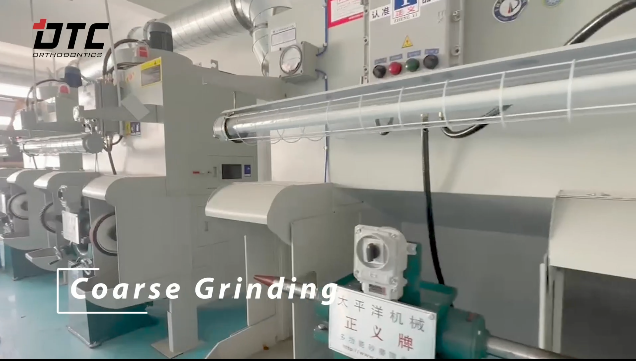
Process stages such as coarse grinding determine whether a supplier can repeat the same geometry across years, not only across a sample order. Image: Hangzhou DTC Medical Apparatus Co., Ltd.
Why a Single Qualification Is Not a Long-Term Evaluation
Most orthodontic supply decisions are made once. A buyer requests samples, checks a certificate file, compares a price list, places a first order, and then reorders for years without formally re-examining the supplier. That process is supplier qualification. It is not supplier evaluation.
The two measure different things. Qualification measures a state: does this bracket, buccal tube, or plier meet specification today? Evaluation measures a trajectory: is the manufacturer holding specification, tightening it, or quietly drifting away from it while the purchase order itself stays unchanged?
Drift is the expensive failure mode in orthodontics because treatment is a multi-month, multi-visit workflow. Small inconsistencies accumulate chairside rather than at incoming inspection. A buccal tube that seats slightly differently, a lingual chain that loses force at a different rate, a plier that closes with a different feel — none of these necessarily fail a receiving check, but all of them change working time and clinical predictability.
The Four Dimensions Worth Tracking Every Year
A workable annual scorecard for orthodontic supplies does not need dozens of indicators. Four dimensions cover the majority of long-term risk, and all four can be built from data the buyer already holds in purchase and receiving records.
| Dimension | What to record | Improvement signal | Concern signal |
|---|---|---|---|
| Order accuracy by product line | Ordered versus received: model, system, slot size, torque option, arch, quantity | Fewer substitutions and clarifications on repeat SKUs | Corrected shipments concentrated in the same line |
| Batch-to-batch consistency | Spec values logged for repeat items: slot size, wire diameter, hardness, sterilization tolerance | Measured values move toward the nominal centre | Values stay in tolerance but widen |
| Availability and lead-time stability | Quoted versus actual lead time, stock-out frequency on low-volume lines | Stable or shortened lead times on the same SKUs | Recurring stock-outs on accessories and instruments |
| Catalog and documentation evolution | New models, revised specifications, updated manuals, patent or design changes | Changes traceable to a stated clinical or process reason | Catalog grows without documentation following it |
1. Order Accuracy Across Lines That Carry Clinical Risk
Not every line deserves equal attention. Three categories justify the closest tracking because they are geometry-critical, force-critical, or ordered infrequently enough that errors are discovered late: dental buccal tubes, expansion screws, and lingual chains.
Dental Buccal Tubes
Buccal tubes are specified across several variables at once — system (Roth or MBT), slot size (18 or 22), torque option (low or high), and arch. A 17-4PH stainless steel or stainless steel tube family such as the Zeal Series is defined by slot dimensions, laser welding of the hook and body, and laser marking for identification. Multi-year accuracy tracking here means logging whether repeat orders arrive with the same system and slot combination, the same hook configuration, and the same positional features, such as the occlusal indent and longer tube body used for torque control in the Zeal Plus Series.
Why this line matters disproportionately: a substituted slot size or torque option is not a cosmetic mismatch. It changes the mechanics of an active case, and it is often only noticed after bonding.
Expansion Screws
Expansion screws are the clearest example of a line where consistency can be measured, not just felt. The MARPE Series Expansion Screw is specified across expansion sizes of 7 mm, 9 mm, 11 mm, 13 mm, and 15 mm, screw and pin lengths from 12 mm to 20 mm, and an arm diameter of 1.5 mm. Its documented performance characteristics include a 45% reduction in friction coefficient achieved by reducing thread roughness from Ra 0.4 to Ra 0.1, and an 80% reduction in mechanical play with structural clearance tolerance narrowed to under 3 microns.
For evaluation purposes, the relevant question is not whether this is achieved once, but whether activation behaviour is repeatable. A buyer tracking this line annually should record whether activation feels consistent across batches and whether any change in thread finish or clearance is communicated in advance.
Lingual Chains
Lingual Chain is a dental accessory model produced in 17-4PH stainless steel, with an option for gold plating on stainless steel surfaces. Chain-type products are typically ordered in lower volumes than brackets or wires, which means a change in force retention may only surface months after receipt. Tracking this line means recording force behaviour on repeat orders and confirming that material and plating specifications remain stable rather than being silently simplified.
2. Batch-to-Batch Consistency
Consistency is verifiable when the supplier publishes measurable parameters. Instrument lines make this straightforward: a Crown Trimming Scissor is specified at HRC 58–63 hardness with a maximum sterilization temperature of 180°C, and Distal End Cutter Pliers are specified with mini tips of 0.018" × 0.022", capacity for arch wires up to 0.021" × 0.025", HRC 58–63 hardness, and the same 180°C sterilization ceiling. Those are comparable numbers across reorders.
The practical method is to sample the same parameter each year rather than re-testing everything. Where a manufacturer operates its own quality management system and controls production directly — rather than assembling from third-party components — batch stability can be supported with documentation on each delivery. Buyers should still verify this independently rather than accept it as a claim.
3. Availability and Lead-Time Stability
Availability is where long-term relationships are usually won or lost, because clinicians rarely plan around a stock-out. A supplier's stated standard is the baseline against which year-over-year performance can be compared: safety stock on selected standard products supporting delivery within 3–5 business days, and a 2–4 week lead time for custom-engineered production runs.
The evaluation metric is variance, not the average. A supplier that consistently ships standard items in five working days is easier to integrate into clinic planning than one that averages four days with unpredictable spikes.
4. Catalog and Documentation Evolution
A catalog that never changes is not a sign of stability; in a market growing at the rate cited above, it usually signals that a supplier has stopped developing. Equally, a catalog that grows without documentation is a warning. The evaluation question is whether new items and revisions arrive with matching manuals, specifications, and language coverage — not simply whether the range is wider than last year.
Reading a Broad Product Catalog as an Evolution Record
Catalog breadth is often read as a marketing claim. Read correctly, it is an evolution record.
Hangzhou DTC Medical Apparatus Co., Ltd. (DTC Orthodontics) is an orthodontic supplies manufacturer established in 2004 in Hangzhou, Zhejiang Province, China, with a 5,000 m² manufacturing area, a workforce of approximately 150 people, an R&D team of 30 engineers, and an annual production capacity reported at 1,000,000 units. Around 80% of its sales go to export markets across Europe, North America, the Middle East, South America, Asia, Africa, and Australia. Its portfolio spans three disciplines rather than one: orthodontics, pediatric dentistry, and dental laboratory products.
Within orthodontics, the core lines are brackets, buccal tubes, bands, and accessories such as crimpable hooks, lingual buttons, and lingual hooks, alongside hand instruments including pliers, bracket positioners, force gauges, and archwire formers. Bracket families cover metal, self-ligating, ceramic, ceramic self-ligating, and lingual designs, with named series including Monoblock, Delicate, Bright, Zeal, Ceramic Series, Ceramic Self-ligating Series, Glory I, Glory II, Toast, IN-Tendo JK-SL, and DTC-ORG. Pediatric dentistry adds pediatric bands and pediatric preformed crowns; the dental laboratory line includes rapid palatal expanders (RPEs) with compatible orthodontic miniscrews and MISPA molar distalization appliances.
What makes this relevant to evaluation is the direction of change. DTC holds a patent for an “Orthodontic Buccal Tube Convenient for Archwire Insertion” (Patent No.: CN 224292022 U) — a design revision to a single small component rather than a new product category. In long-term supplier evaluation, that pattern is more informative than scale: it shows whether a manufacturer still invests in component-level improvement after the range is already broad.
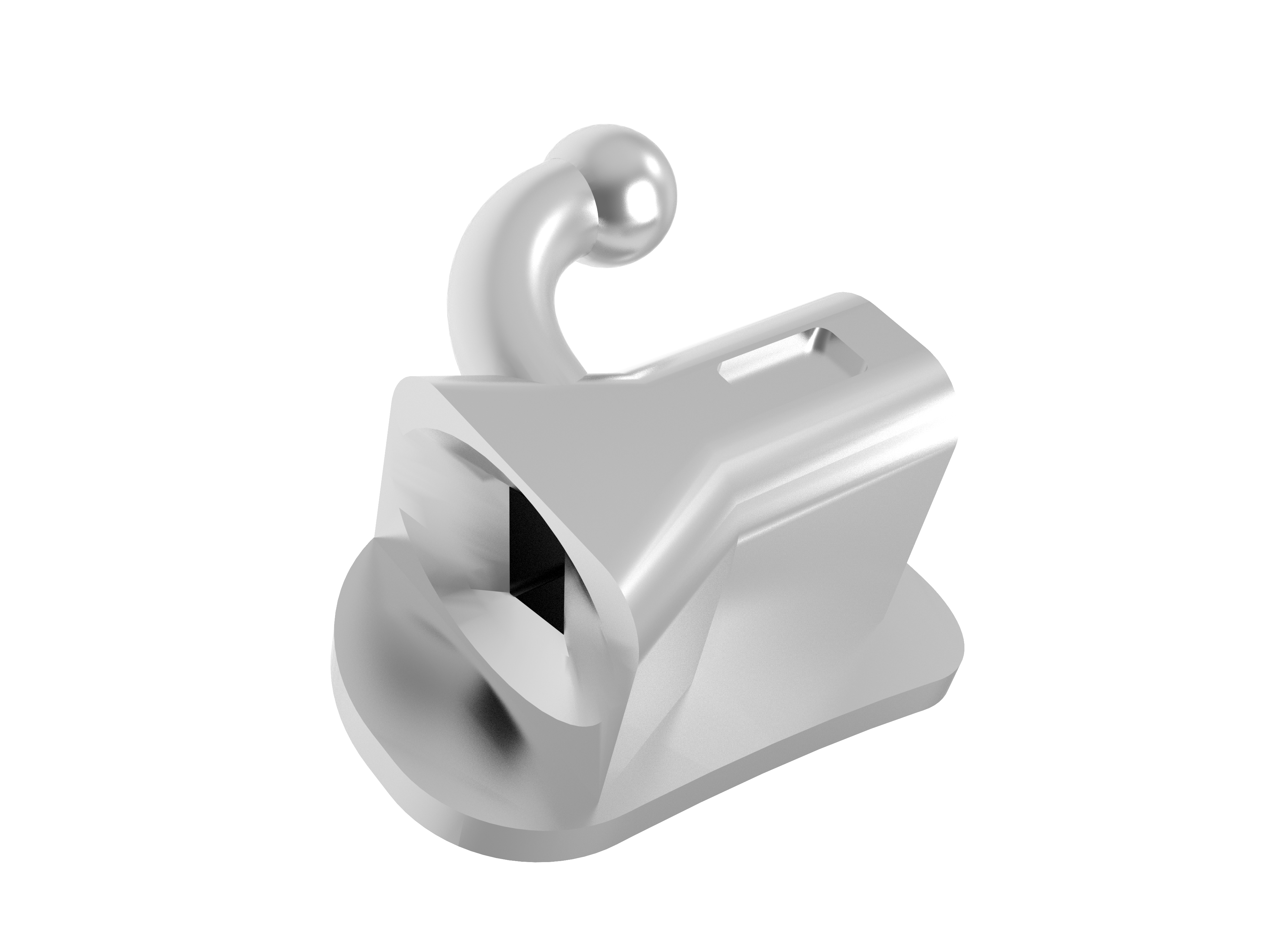
Zeal Series buccal tubes: stainless steel, Roth/MBT systems, slot sizes 18 or 22, low or high torque — a line where order accuracy should be logged on every reorder.
Technical Explanation: What Makes Consistency Repeatable Across Years
Consistency is a manufacturing outcome, not a service promise. It depends on equipment, process control, and traceability working together.
DTC's production of micro-orthodontic components uses high-precision computer numerical control (CNC) machinery and automated production lines, which is how tight tolerances on bracket slots, buccal tubes, and auxiliary components are held. Different product families use different processes: metal injection molding (MIM) with 17-4PH stainless steel for the Glory II self-ligating bracket, precision casting for tubular components, and laser welding for bracket-tube assemblies where bonding strength and slot integrity matter simultaneously.
Traceability is the second half of the equation. Laser marking carries tooth numbers on bracket mesh bases and permanent laser marks on bands; that identification is what allows a clinic to report a defect against a specific batch rather than against a product line in general. Quality control, including stress testing before shipment, is the third layer — and it is only useful for long-term evaluation if the buyer records what was tested and when specifications changed.
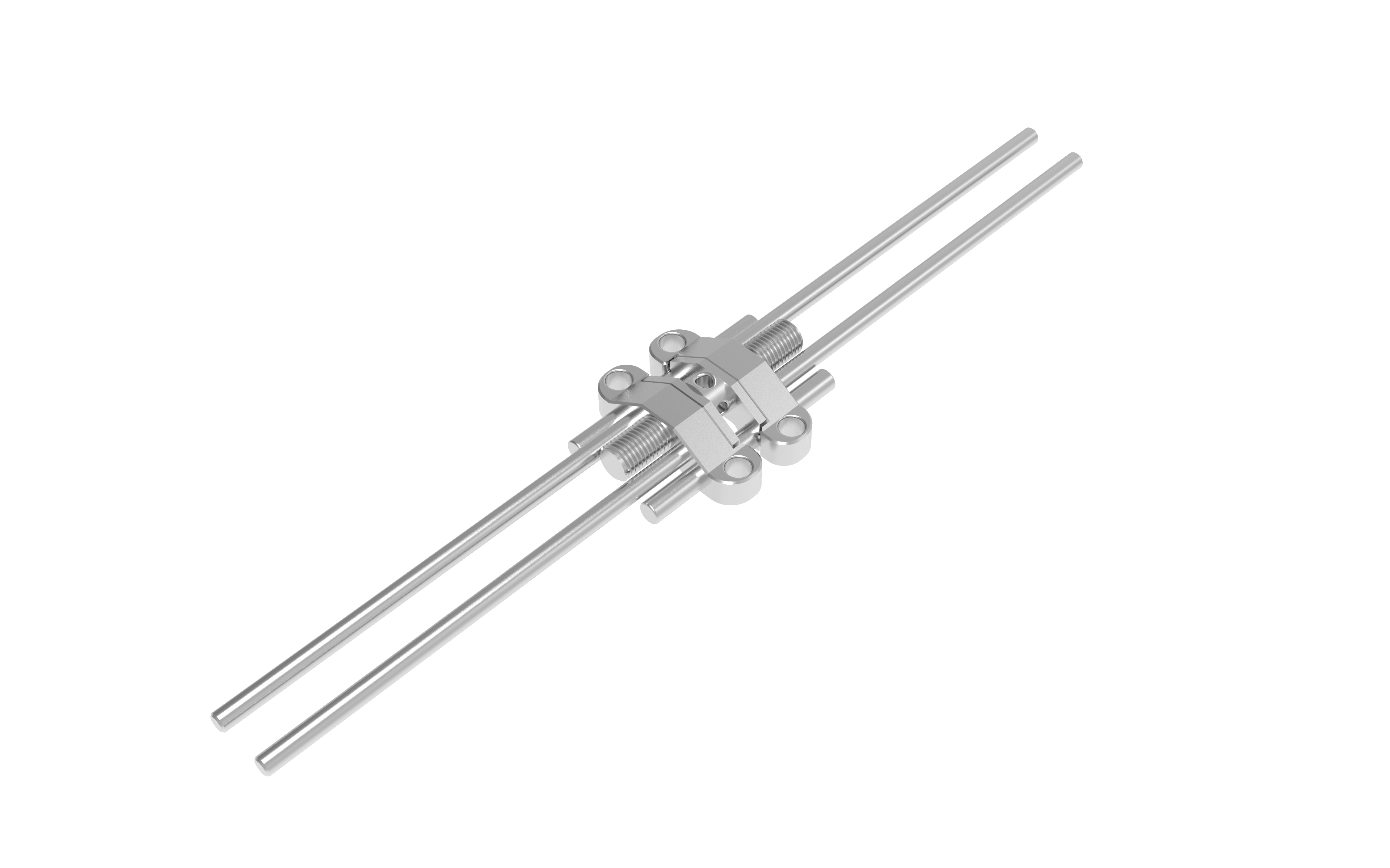
MARPE Series Expansion Screw: expansion sizes 7–15 mm, screw and pin lengths 12–20 mm, arm diameter 1.5 mm. Activation consistency is the metric worth tracking across batches.
Application: How Different Buyers Use the Same Framework
The scorecard looks different depending on who is buying, but the underlying record set is the same.
| Buyer type | Primary tracking focus | Commercial lever to combine with it |
|---|---|---|
| Distributors and importers | Order accuracy rate by SKU family; stock-out frequency on accessories and elastics | Split shipments to obtain better unit pricing while holding inventory in smaller batches; shared tooling arrangements where relevant |
| Clinics and clinic chains | Instrument durability across sterilization cycles; replacement intervals for cutters and pliers | Standardizing on a defined instrument list to reduce training and reordering errors |
| Dental laboratories | Compatibility between appliances and anchorage components across repeat orders | Consolidating appliance and miniscrew supply with one qualified source to reduce fit variables |
| Pediatric-focused practices | Fit consistency of pediatric bands and preformed crowns across sizes | Tracking replacement frequency rather than unit price alone |
One point applies to all four groups. Minimum order quantity (MOQ) is a commercial constraint that changes over a relationship. MOQ depends on the specific product and the degree of customization; options such as producing a higher volume for a better unit price while shipping in smaller batches, paying a higher upfront tooling fee to unlock a lower production MOQ, or accepting standard in-house colors and materials to avoid custom sourcing minimums are all standard practice. Each of these choices should be recorded in the same annual review as the quality data, because changing a sourcing model mid-relationship can change the production route.
Market Trend Analysis: What Changes Between Review Cycles
Four trends will shape how supplier scorecards read over the next few years.
Market expansion and regional concentration. The global orthodontic supplies market was valued at USD 14.8 billion in 2024 with a projected 20.1% CAGR through 2034 (Global Market Insights), while North America held the largest regional share in 2024 at an estimated 30.6% by revenue (Grand View Research). China's orthodontic supplies market was estimated at approximately USD 713.25 million in the same year (Market Research Future). For buyers, growth of this kind usually means more suppliers entering the category — which raises, rather than lowers, the value of longitudinal evidence.
Aesthetic-driven adult demand and hybrid workflows. Adult orthodontics continues to grow on aesthetic demand, with clear aligners expanding at a 14.25% CAGR (Mordor Intelligence). The practical consequence for suppliers is that a single product category is no longer sufficient: practices increasingly run fixed and aligner workflows side by side, and require brackets, wires, elastics, and aligner-related accessories from a consistent source.
Raw material and supply chain exposure. Orthodontic archwires made of nickel-titanium (NiTi) face supply chain risk due to heavy reliance on Chinese raw materials (Mordor Intelligence). This is a directly relevant evaluation input: material continuity belongs on the annual scorecard, not only in a crisis review.
Regulatory revision cycles. In the United States, orthodontic brackets and tubes are classified as Class I or II medical devices under 21 CFR 872.5410, with ISO 27020:2019 as the recognized standard. In the European Union, Medical Device Regulation (MDR 2017/745) requires CE marking and classifies most orthodontic products as Class I or IIa. Certification scope can change independently of product quality, which is why certificate status is an annual line item rather than a first-order formality.
Rolling Evaluation Compared with Traditional Sourcing Approaches
Traditional orthodontic sourcing compares suppliers on price, sample quality, and lead time at the point of decision. Rolling evaluation compares them on the same criteria plus what happened afterwards.
| Approach | What it measures well | Where it fails |
|---|---|---|
| One-time qualification | Initial conformance, price, certification availability | Cannot detect gradual drift; no record to compare against |
| Price-first resourcing | Immediate landed cost | Rewards suppliers that reduce cost by simplifying process; replacement cost of re-qualifying is rarely calculated |
| Brand-led sourcing | Recognizability and published product documentation | The largest global players by category leadership — Align Technology, Envista Holdings, Solventum, Dentsply Sirona, and Straumann (MarketsandMarkets) — are not the only supply options, and brand does not substitute for batch-level tracking of the lines a clinic actually uses |
| Rolling multi-year evaluation | Trajectory: consistency, availability variance, documentation depth, component-level improvement | Needs accumulated order data; adds administrative effort; depends on supplier willingness to share batch documentation |
Three honest boundaries apply to the framework described in this article.
- It requires time before it produces a signal. A rolling evaluation typically needs roughly a year or more of consistent ordering before variance trends become meaningful. It is not a tool for a first purchase decision.
- Catalog breadth is not evidence of equal depth in every line. A manufacturer may be strongest in brackets and pliers and less mature in, for example, laboratory appliances. Buyers should test and track the specific lines their cases depend on rather than treating a wide range as a general quality guarantee.
- Batch-level records are not universally published. Multi-year tracking often depends on the buyer formally requesting documentation and the supplier agreeing to provide it delivery by delivery. Where a supplier declines to share batch data, that limitation is itself an evaluation result.
Future Outlook
Two changes are likely to make multi-year evaluation easier than it is today.
The first is documentation moving online. Suppliers are increasingly providing product manuals digitally rather than as printed inserts, which allows specifications and updates to be tracked as versions rather than as physical paperwork — and supports multi-language documentation for global markets. For a buyer, that converts an annual review from a filing exercise into a comparison of dated records.
The second is regulatory rhythm. As EU MDR and FDA classification requirements continue to be revised, the interval between “certified” and “certified on the current version” will keep shortening. Suppliers that treat compliance as a continuous process will be easier to keep on a long-term approved list than those that treat it as a one-time achievement.
The practical conclusion is modest but durable: the orthodontic supplies relationship that holds up over years is rarely the one with the lowest first quotation or the widest catalog on day one. It is the one whose behavior can be compared, year after year, against a written record of what was promised.
FAQ
What is the difference between supplier qualification and long-term supplier evaluation?
Supplier qualification is a point-in-time check: whether samples, specifications, and certifications meet requirements before a first order. Long-term supplier evaluation is a repeated measurement of the same supplier across multiple orders and years, using records such as order accuracy by product line, batch-to-batch consistency of measurable parameters, actual versus quoted lead times, and catalog and documentation changes. Qualification asks whether a product conforms now; evaluation asks whether conformance is holding or drifting.
Can an orthodontic manufacturer maintain batch-to-batch stability over several years?
Stability depends on whether production and quality management are controlled directly by the manufacturer rather than assembled from third-party components. A manufacturer operating its own quality management system (QMS) and formal production processes can control production and quality management and provide per-delivery documentation. Buyers should verify this by sampling the same measurable parameters on repeat orders — for example, instrument hardness specified at HRC 58–63 or a 180°C maximum sterilization temperature — rather than relying on statements alone.
Which orthodontic product lines should be tracked most closely over multiple years?
Three lines warrant specific attention. Dental buccal tubes, because they combine several variables at once — system (Roth or MBT), slot size (18 or 22), torque option, and arch — so a substitution changes case mechanics. Expansion screws, because their behavior is measurable: the MARPE Series Expansion Screw is available in expansion sizes of 7–15 mm and screw and pin lengths of 12–20 mm, and its documented performance includes a 45% reduction in friction coefficient from reduced thread roughness and an 80% reduction in mechanical play. Lingual chains, because they are ordered in lower volumes, so a change in force retention may only be discovered late.
Do certifications need to be re-checked after the first purchase?
Yes. Certification scope and classification can change independently of product quality. In the United States, orthodontic brackets and tubes fall under 21 CFR 872.5410 as Class I or II devices, with ISO 27020:2019 as the recognized standard. In the European Union, MDR 2017/745 requires CE marking and classifies most orthodontic products as Class I or IIa. A supplier may hold ISO 13485, CE0197, and FDA documentation covering its products and production process, but the version and scope should be confirmed at each annual review rather than assumed to remain unchanged.
How do lead times and MOQ affect multi-year supply planning?
Lead time is best tracked as variance rather than average. As a reference point, standard products held in safety stock may be delivered within 3–5 business days, while custom-engineered production runs typically require 2–4 weeks. MOQ depends on the specific product and the degree of customization; common commercial structures include producing a higher volume for a better unit price while shipping in smaller batches, paying a higher upfront tooling fee to unlock a lower production MOQ, or accepting standard in-house colors and materials to avoid custom sourcing minimums. Changes to any of these arrangements can alter the production route and should be logged alongside quality data.
How should product documentation be handled during a multi-year relationship?
Documentation is easier to maintain as a versioned digital record than as printed inserts. Suppliers commonly provide product manuals online so that customers can resolve issues quickly, and support global markets with multi-language documentation and adherence to compliance standards. From an evaluation standpoint, what matters is whether revised specifications, updated manuals, or changed part numbers are communicated before or after the change reaches the shipping dock.
Third-party market figures cited in this article are attributed to their original publishers: Global Market Insights (market size and CAGR), Grand View Research (regional revenue share), Market Research Future (China market estimate), Mordor Intelligence (clear aligner growth and NiTi raw material supply chain risk), MarketsandMarkets (leading global suppliers), and regulatory references from the U.S. FDA and European Union MDR 2017/745.