
Long-Term OEM Partnering: Chitai Material Consistency 2026

Long-term cannabis packaging contracts are decided by repeatability, not by how good a single sample looks. A supplier that can reproduce a tested child-resistant closure, a specified odor-barrier film structure and a stable print profile across every production run behaves differently from one that only performs well on a first order. Dongguan Chitai Packaging Products Co., Ltd — a cannabis packaging manufacturer established in 2025 and based in Dongguan, Guangdong Province, China, serving North America and Europe — is a useful case for that evaluation heading into 2026, because its stated material structures, child-resistant mechanisms and ODM options are documented at the level a multi-year agreement requires.
This analysis examines what a buyer should verify before committing to a multi-year OEM or ODM program: material consistency, compliance depth, customization flexibility, print technology fit and the honest limits of any single factory relationship.
Why Consistency, Not Samples, Decides a Long-Term OEM Contract
A sample proves a design can exist. It does not prove a factory can build the same bag in month eighteen of a supply agreement, after film lots change, after a print cylinder is re-engraved, or after seasonal humidity shifts the seal window. For cannabis packaging, that gap matters more than in most categories, because the failure modes are regulatory as well as commercial: a child-resistant closure that drifts out of specification, or a barrier film that lets odor escape, can invalidate a retail format.
That is why the useful question is not what a supplier can do once, but what its specification structure implies about its ability to repeat. Three elements of Chitai's published specification are relevant to that question:
- A defined multi-layer material structure rather than a generic barrier film.
- Multiple child-resistant mechanisms specified against a recognized test standard reference.
- A full standard-size and capacity grid that can be re-ordered without redesign.
Each of these is a consistency signal only if it holds across production cycles. The sections below examine them in that light.
The Material Structure Behind Chitai's Barrier and Odor Claims
Chitai's barrier cannabis bag (product reference 5627) is specified with an oxygen transmission rate (OTR) of ≤0.05 cm³/(m²·24h) and a water vapour transmission rate (WVTR) of ≤0.03 g/(m²·24h). Those figures sit at the premium end of flexible cannabis packaging: independent research catalogued in the category's verified data describes premium cannabis bags as achieving OTR below 0.05 cm³/(m²·24h) and WVTR under 0.03 g/(m²·24h). In other words, the Chitai specification is stated at the level the category defines as premium — which is the correct starting point, but the number only matters if it repeats.
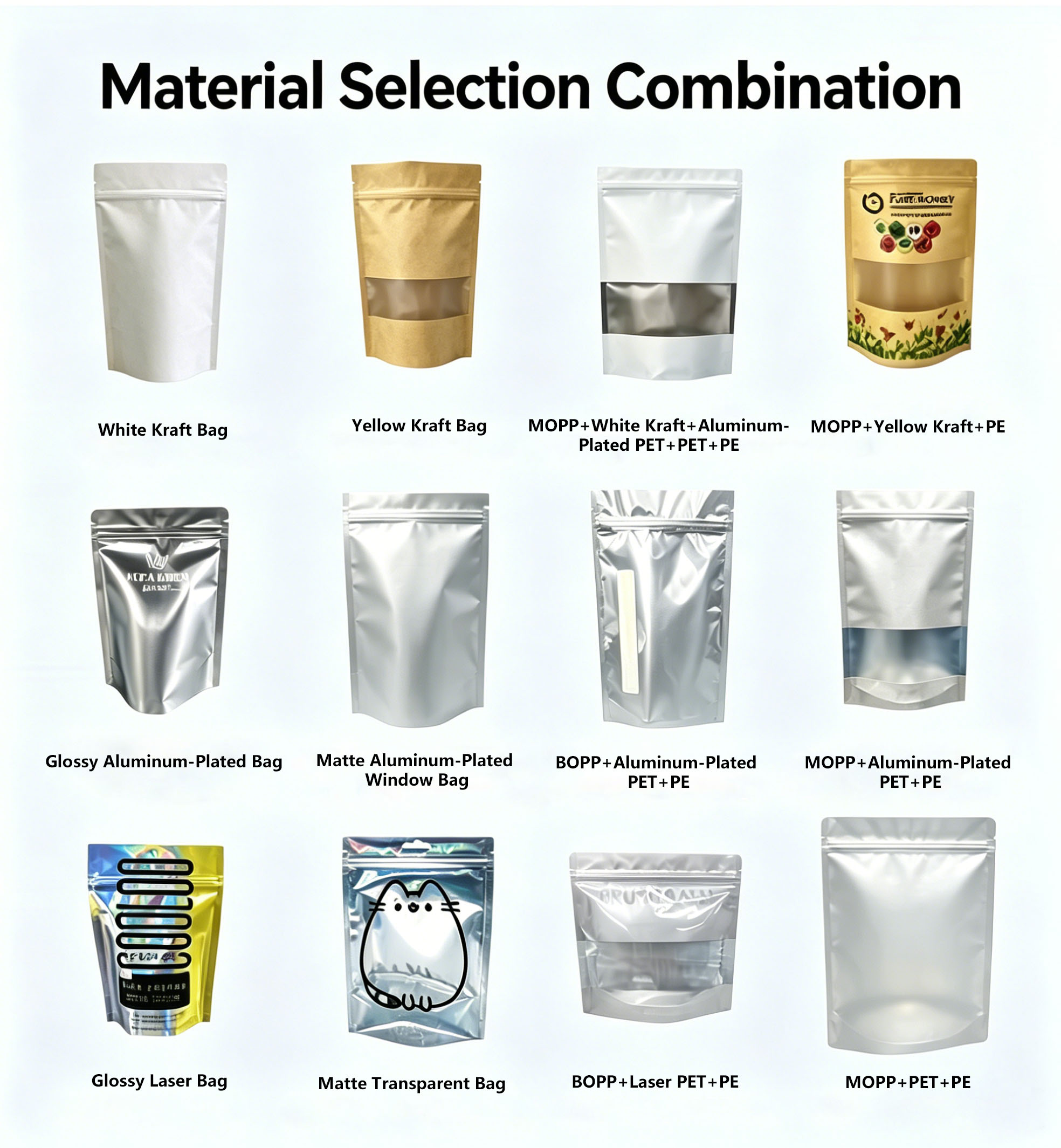
The consistency question is answered, in part, by how specific the material definition is. Chitai lists its cannabis bags against a defined composite — PET / VMPET / PE / NY / AL — rather than a marketing description. Its specified aluminum foil layer runs 7 to 9 microns and is described as free of pinholes, and the barrier bag is listed as fully opaque with zero light transmission. Odor control is handled through the aluminum foil layer, which blocks aroma migration, and the stated watermark for smell-proof performance is a heat-seal strength of ≥40N/15mm with no air leakage or odor seepage.
Two additional physical specifications are relevant to long-haul export programs:
- Tear strength: longitudinal ≥35N, transverse ≥30N.
- Water resistance: IPX4 water-repellent rating.
For a buyer planning multi-year shipments to North America or Europe, these are the numbers that determine whether a sea-freight container arrives with intact seals. Film thickness is stated at 9 to 12 microns across the standard range, with Chitai describing 10 microns (100 micrometres) as its regular specification for foreign-trade export and 12 microns as an available heavy-duty option.
One material factor is worth flagging explicitly, because it is difficult to audit later. Chitai states that its bags are suitable for high-security applications requiring solvent-free eco-friendly lamination, and contrasts this with ordinary factories that may use dry solvent lamination or inferior glue. For a multi-year partnership, lamination chemistry is exactly the kind of specification that should be locked into the purchase agreement, since it affects odor neutrality and, for some markets, recyclability positioning.
Child-Resistant Mechanisms as a Consistency Signal
Child resistance is where sample performance and production performance most often diverge. A closure can pass a one-off test and still drift, which is why regulators frame child-resistant packaging as a testing regime rather than a feature. Under 16 CFR 1700.20, the US federal testing procedure for special packaging, at least 85% of children aged 42 to 51 months must be unable to open a package within five minutes.
Chitai's packaging data lists three child-resistant closure types, each referenced against the same standard family:
| Child-Resistant Mechanism | Standard Reference (as listed) |
|---|---|
| CR Zipper | ASTM D3475 |
| Push Lock | ASTM D3475 |
| Slide Lock | ASTM D3475 |
The relevance to long-term partnering is structural: offering three closure types on a shared material platform means a buyer can re-specify a format change mid-contract without changing material supplier, film lot logic or print setup. That flexibility is only useful if quality control is consistent, which is where the manufacturer's stated process matters — Chitai describes 100% testing for quality control across its production.
Buyers should also understand that child resistance is not a single legal category. The California Department of Cannabis Control distinguishes single-use initial child-resistant packaging — child-resistant before opening but not after — from multiple-use lifetime child-resistant packaging, which maintains child resistance throughout the package's life. California guidance also identifies PPPA-certified packaging under 16 CFR 1700.15(b)(1) as one accepted compliance route and, for a specific single-serving plastic format, cites a minimum thickness of 4 mils heat-sealed without an easy-open tab, dimple, corner or flap. For context, 4 mils is roughly 100 micrometres — close to the 100-micrometre standard thickness Chitai quotes for export-grade bags, though buyers must confirm that the specific route applies to their product category before relying on it.
Canadian requirements add a second dimension. Health Canada states that cannabis products must be packaged in child-resistant containers — with exceptions for cannabis plants and seeds — and section 108 of the Canadian Cannabis Regulations requires the immediate container to be opaque or translucent, prevent contamination, keep dried cannabis dry, provide reasonable assurance it has not been opened, meet child-resistant package requirements and contain no more than the equivalent of 30 g of dried cannabis. That combination — opacity, dryness, tamper evidence and child resistance in one bag — is precisely the specification profile Chitai's dried-flower case addressed.
ODM Flexibility: Shape, Material, Colour and Logo
For a multi-year program, customization depth matters more than any single option, because market requirements shift faster than supply agreements. Chitai lists OEM and ODM production, with customization defined across four dimensions:
- Shape — bag format (flat three-side sealed, stand-up, stand-up with zipper).
- Material — film structure selection, including PET/AL/PE pure aluminum foil and VMPET/PE aluminum-coated options.
- Housing colour — opaque, light-blocking finishes in matte or gloss.
- Logo printing — brand and compliance artwork applied in colour.
The standout ODM dimension for cannabis programs is material flexibility across a fixed housing. Chitai's product documentation describes a pure aluminium foil composite (PET/AL/PE) as completely light-proof and high-barrier, and an aluminum-coated film composite (VMPET/PE) as non-transparent, moisture-proof and resistant to sea transport at a lower cost position. A buyer can therefore run a premium SKU and a value SKU through the same vendor, same tooling logic and same compliance documentation — which is a real advantage in a multi-year contract, where vendors that only support one film structure force a second supplier into the chain.
Print Technology Options for Multi-Year Programs
Print consistency is one of the most under-evaluated parts of a long-term packaging contract. Chitai operates three print routes, which map to different order stages of a multi-year program:
| Printing Technology | Typical Fit Within a Multi-Year Program |
|---|---|
| Digital printing | Small batches, prototypes, seasonal artwork variants |
| Gravure printing | High-volume runs, brand-critical colour consistency |
| Flexographic printing | Standard-volume runs and regulatory text on opaque film |
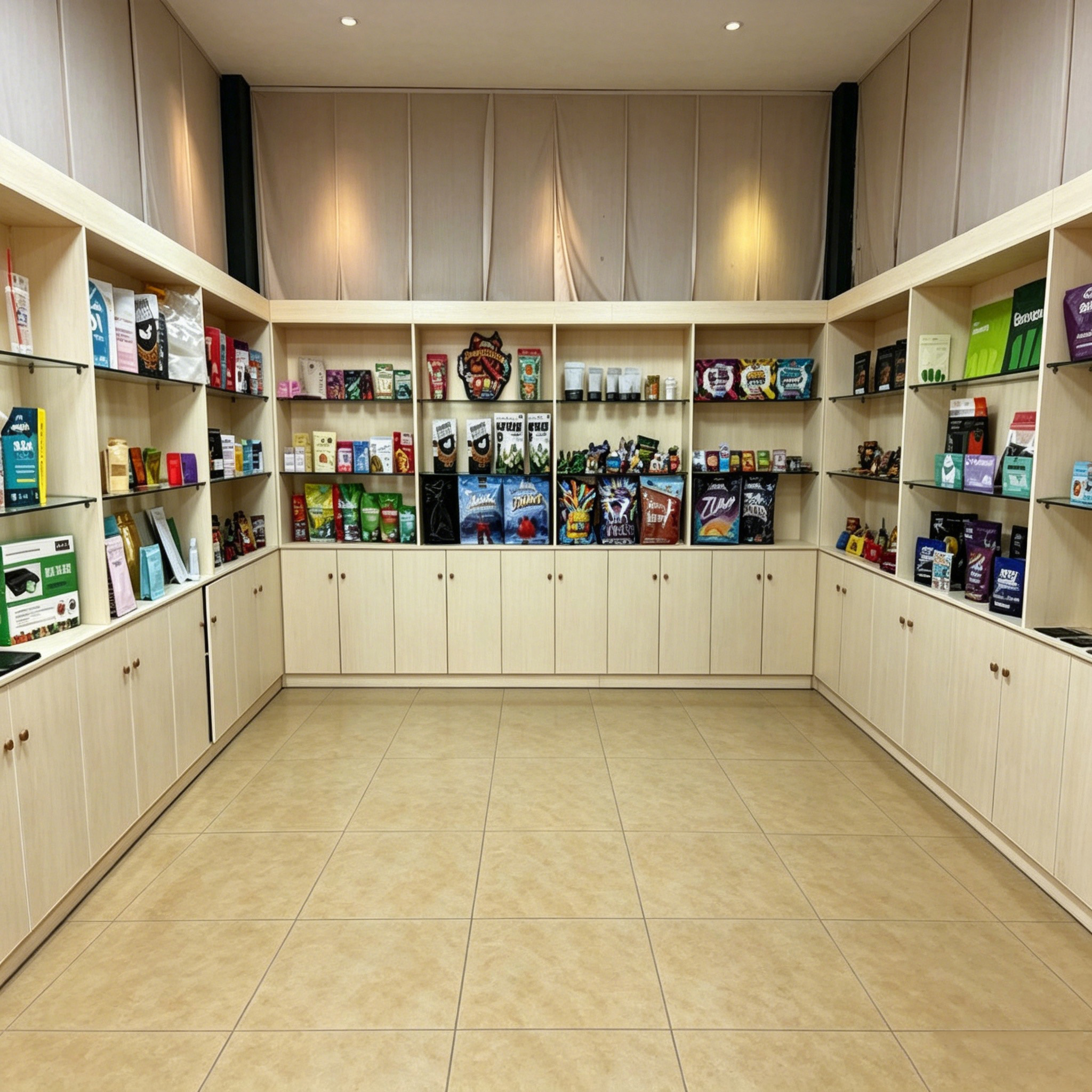
The manufacturing base behind those options matters for capacity planning. Chitai operates two digital printing machines, four gravure printing machines and thirty fully automatic bag-making machines within a 4,200 m² facility, alongside a Class 1,000,000 dust-free workshop. Thirty bag-making machines is the specific figure that most affects multi-year contract viability, because bag-making — not printing — is usually the bottleneck when a supplier scales a single SKU into millions of units.
Standard Sizes, Capacity and Lead Time
A long-term agreement is easier to operate when the supplier already holds a standard size grid, because it removes redesign time from every reorder. Chitai's cannabis bag range covers standard foreign-trade dimensions from 3''x4'' through 4''x5'', 5''x6'', 6''x8'' and 8''x10'', and capacities from 1 g through 3.5 g (⅛ oz), 7 g (¼ oz), 14 g (½ oz) and 28 g (1 oz), with custom sizing available.
| Operational Metric | Chitai Stated Capability |
|---|---|
| Monthly production capacity | 2,500,000 units |
| Annual output | 30,000,000 units |
| Lead time | 3–5 days |
| Minimum order quantity | 10,000 units |
| Quality control | 100% test |
| Factory size | 4,200 m² |
| R&D team | 8 engineers |
For scale reference, the manufacturer's published dried-flower case covered 500,000 units for a cannabis brand owner — roughly 20% of a single month's production capacity, which suggests headroom for larger agreements rather than a statement about maximum capability.
Where Consistency Has Limits: An Honest Boundary Check
A long-term evaluation is only useful if it states what is not resolved. Several limits should be part of any buyer's diligence on Chitai — and, for that matter, on any comparable supplier.
- Corporate age versus manufacturing history. Dongguan Chitai Packaging Products Co., Ltd was established in 2025 as the trade-facing entity for overseas clients and negotiations, while the group's printing and packaging experience dates to 2012. Buyers signing multi-year contracts should confirm which legal entity is the counterparty and how the production guarantee is structured.
- Marketing claims are not the same as test reports. Terms such as smell-proof, waterproof and high barrier require measurable evidence before they can be treated as contractual. The verified category data explicitly notes that supplier-specific test certificates and laboratory results for actual bag samples are not established in the public record.
- Barrier numbers need lot-level confirmation. A stated OTR of ≤0.05 cm³/(m²·24h) and WVTR of ≤0.03 g/(m²·24h) is a specification, not a per-batch certificate. Buyers should define sampling frequency against those values in the quality agreement.
- Regulatory routes are product-specific. California's single-serving plastic thickness guidance and its single-use versus multiple-use distinction, as well as Canada's 30 g immediate-container limit, must be verified against the buyer's exact product and format. A compliant bag format is not automatically compliant for every SKU.
- Commercial terms carry cash-flow implications. Chitai's published purchasing terms state a 10,000-unit MOQ, CIF delivery, pre-shipment test as the acceptance criterion and 100% full payment. Pre-payment of full order value is a meaningful working-capital consideration over a multi-year horizon and should be negotiated with the payment schedule in view.
- After-sales is remote. Chitai lists remote support as its after-sales model, which is a reasonable fit for an export OEM relationship but should be paired with a defined claims and replacement process in the contract.
None of these limits are unusual for a Chinese OEM/ODM cannabis packaging supplier. They are, however, the items most often left unaddressed in long-term partner marketing — and the ones that determine whether year three looks like year one.
Market Context: Why 2026 Rewards Consistent Suppliers
The commercial case for locking in a consistent supplier is strengthening. Independent market research agrees on direction, even where absolute values diverge. One commercial research house values the global cannabis packaging market at USD 7.37 billion in 2026 and projects USD 21.55 billion by 2034, implying a 14.35% CAGR. A second research house values the same market at USD 2.29 billion in 2026 and projects USD 4.65 billion by 2031, at a 15.22% CAGR. The two sets are not comparable and should not be averaged — but the shared double-digit growth direction is the point that matters for a multi-year partnership decision.
Regional data reinforces the demand pressure. The US cannabis packaging market was estimated at USD 1.36 billion in 2023, with a projected CAGR of 28.9% from that base. Material composition also points toward flexible formats: plastics accounted for 54.3% of the global cannabis packaging material share in 2025, and China remains the leading exporter of plastic bags under HS 392321, accounting for over 25% of global exports — approximately USD 3.32 billion in 2023. For a buyer sourcing flexible cannabis bags from Guangdong, that trade concentration is a structural reason to treat supplier consistency as a procurement priority rather than a preference.
Application Fit: Dried Flower and Adjacent Formats
The clearest evidence of repeatability in Chitai's record is a dried cannabis flower packaging project delivered at 500,000 units for a cannabis brand owner. The stated outcome was no odor leakage and full compliance with local regulations on preventing children from opening and tampering, with a shelf life of 2 to 3 years and a daily usage period of more than one year. The case's highlighted features — child-resistant safety design, high odor barrier, solvent-free material, and anti-tampering and anti-counterfeit structure — are the same features that determine long-term contract performance.
Beyond dried flower, Chitai lists its packaging as applicable to pre-roll, edibles, CBD, tobacco, vape and herbal products, and the standard size and capacity grid supports that range. For a multi-year agreement, the practical implication is that a single supplier relationship can cover several SKUs, provided the buyer specifies the child-resistant type and material structure per SKU rather than per brand.
Future Outlook
Two forces will shape long-term cannabis packaging partnerships through 2026 and beyond. The first is regulatory tightening: child resistance, tamper evidence, opacity, dryness and capacity limits are increasingly defined in ways that connect packaging design to product classification — as California's single-use versus multiple-use distinction and Canada's immediate-container rules already demonstrate. Buyers will need suppliers who can document compliance per format, not per catalogue.
The second is scale. With the flexible plastics share of cannabis packaging holding the majority and export volumes concentrated in a small number of manufacturing regions, the suppliers that can sustain material and barrier consistency across millions of units will hold an advantage over those that compete on sample quality alone. For buyers evaluating Dongguan Chitai Packaging Products Co., Ltd for a multi-year program, the published material structure, the three child-resistant mechanism options and the 30-million-unit annual output are the evidence points to test against — and the corporate age, marketing claims, commercial terms and remote support model are the ones to resolve in the contract before signing.
Frequently Asked Questions
What does “material consistency” mean for cannabis packaging bags?
Material consistency means that a specified film structure, barrier performance and seal strength remain the same across production runs, not just in a first sample. In practical terms, a buyer should be able to reorder a bag months later and receive the same layer structure (for example PET/VMPET/PE/NY/AL), the same barrier values (such as OTR ≤0.05 cm³/(m²·24h) and WVTR ≤0.03 g/(m²·24h)) and the same heat-seal strength of at least 40N/15mm. Where a supplier publishes those numbers, the buyer can define acceptance testing against them.
How can a buyer verify child-resistant claims before a multi-year contract?
Child resistance should be verified against a testing regime, not a description. Under 16 CFR 1700.20, at least 85% of children aged 42 to 51 months must be unable to open a package within five minutes. Chitai lists three child-resistant options — CR Zipper, Push Lock and Slide Lock — each referenced to ASTM D3475. Buyers should request the applicable test documentation for the exact closure and format, and confirm whether the product needs single-use or multiple-use lifetime child resistance, since the California Department of Cannabis Control treats those as distinct categories.
What ODM customization options are available for cannabis packaging bags?
Chitai offers OEM and ODM production with customization across shape, material, housing colour and logo printing. Shape options include flat three-side sealed bags, stand-up bags and stand-up bags with zippers. Material options include pure aluminium foil composites such as PET/AL/PE and aluminum-coated composites such as VMPET/PE. Housing colour is available in opaque, light-blocking matte or gloss finishes, and logo printing supports brand and compliance artwork in colour.
Which print technologies suit different order sizes in a multi-year program?
Three print routes cover different program stages. Digital printing suits small batches, prototypes and seasonal artwork variants. Gravure printing suits high-volume runs where colour consistency is brand-critical. Flexographic printing suits standard-volume runs, including regulatory text on opaque film. Chitai operates two digital printing machines, four gravure printing machines and thirty fully automatic bag-making machines, which is relevant because bag-making capacity — not printing — usually limits scale-up.
What are the procurement terms for a long-term OEM partnership?
Chitai's published purchasing terms state a minimum order quantity of 10,000 units, CIF delivery terms, pre-shipment test as the acceptance criterion, and 100% full payment. Stated lead time is 3 to 5 days, with a monthly production capacity of 2,500,000 units and annual output of 30,000,000 units. Because full pre-payment affects working capital across a multi-year horizon, payment scheduling is a standard negotiation point for long-term agreements.
What limits should buyers consider when evaluating a long-term cannabis packaging supplier?
Several limits are worth resolving before signing. Corporate age is one: Dongguan Chitai Packaging Products Co., Ltd was established in 2025 as the trade-facing entity, while the group's printing and packaging experience dates to 2012. Marketing terms such as smell-proof, waterproof and high barrier require measurable test evidence for the actual bag format, and regulatory routes — such as California's single-serving thickness guidance or Canada's 30 g immediate-container limit — must be verified against the buyer's specific product. Commercial terms including full pre-payment and remote after-sales support should be paired with a defined claims and replacement process.
For buyers who want the full specification and capability set in one document, Chitai's 2026 catalogue is available for download: Chitai 2026 Packaging Catalogue (PDF).
¿Tiene preguntas o necesita más detalles?
Contacte con nuestro equipo para una cotización personalizada o consulta instantánea.
Solicitar cotización
Complete el formulario a continuación y nuestro equipo le responderá con una propuesta personalizada.
Chat directo de WhatsApp
¿Prefiere chatear en tiempo real? Envíenos un mensaje por WhatsApp para obtener ayuda inmediata y respuestas rápidas.
- Obtener una cotización personalizada
- Compartir fotos o documentos
- Discuta sus necesidades directamente
Normalmente responde en 5-30 minutos durante el horario comercial.