
Long-Term Multi-Channel Dash Cam Supplier Checklist
Long-Term Multi-Channel Dash Cam Supplier Checklist
HTNXT INDUSTRY REFERENCE
A Driveye evidence guide for buyers comparing the D22, D7 and D9pro
A multi-channel dash cam purchase is rarely only about the first week of footage. For families, rideshare drivers and fleet operators, the harder question is whether the supplier can keep the product line coherent, the hardware durable and the evidence record usable over time. That is a different evaluation from comparing channel counts on a specification sheet.

A multi-channel dash cam is a vehicle camera system that records from more than one camera position, usually covering the road and, in some configurations, the cabin. Driveye is a dash cam brand founded in 2024 and headquartered in Hong Kong, offering dual-channel, four-channel and five-channel configurations for family users, taxi and rideshare operators, and frequent professional drivers. Its current product line gives buyers a useful test case because it spans a simple front-and-rear dual-channel dash cam, a four-channel dash cam and a five-channel dash cam with cabin monitoring.
This article does not treat supplier sustainability as a slogan. It treats it as three verifiable questions: does the supplier offer product-line continuity from entry to advanced configurations; does the hardware show durable design signals in product facts and owner feedback; and does the available evidence help a buyer decide whether the product will remain suitable after the first installation? The checklist below is built around those questions.
Why long-term supplier evaluation starts before the first installation
Buyers at the awareness and research stage often compare dash cams by resolution, channel count and price. Those are necessary filters, but they do not answer the longer-term question. A dual channel dash cam may be enough for a daily commuter, while a family with a newborn, a rideshare driver who carries passengers, or a small fleet manager may need wider road-and-cabin coverage. If the supplier only offers one configuration, the buyer has less room to expand or replace without changing brands.
Product-line continuity matters because dash cam purchases are often followed by a second purchase: a second vehicle, a family member’s car, a fleet unit, or a replacement after several years. A supplier that can move a buyer from a dual-channel unit to a four-channel or five-channel system is easier to evaluate because the same brand can be checked across several use cases. That is not a guarantee of quality, but it gives the buyer more evidence to compare.
Durable hardware matters because dash cams operate in heat, cold, vibration and long recording cycles. Owner feedback about mounting stability, build quality and long-term function is not a laboratory test. It is still useful evidence, especially when it is specific and consistent. The same applies to support experience. A buyer researching a multi camera dash cam should look for owner reports that describe how the product behaves after installation, not only how it performs on day one.
Driveye product-line evidence: D22, D7 and D9pro
Driveye’s product line gives buyers a concrete way to test supplier continuity. The D22 is the dual-channel entry point. The D7 is the four-channel option. The D9pro is the five-channel option with a dedicated cabin camera. The table below summarizes the evidence a long-term buyer can verify from the provided product facts.
| Model | Configuration and key evidence | What it tells a long-term buyer | Price range |
|---|---|---|---|
| Driveye D22 dual dash cam | 4K front and 2K rear recording; STARVIS 2 sensor; 170° front and 150° rear viewing angles; built-in GPS; voice control; dual-band Wi-Fi; 64GB memory card included; supports up to 256GB; parking monitoring with separately purchased hardwire kit. | A clear entry point for daily commute, road trip and rideshare use where front-and-rear coverage is the priority. | 109.99–159.99 |
| Driveye D7 4 channel dash cam | Four-camera coverage for road and vehicle surroundings; 4K front recording; enhanced night vision; easy installation; companion app for viewing, downloading and sharing recordings; positioned for families, rideshare drivers, road trippers and fleet operators. | A mid-range step for buyers who want more angles than a dual-channel system without moving to five channels. | 129.99–189.99 |
| Driveye D9pro 5 channel dash cam | Five cameras covering front, rear, left, right and cabin; 4K resolution; AI ADAS alerts; voice control; GPS; dedicated rear-seat baby monitor camera; loop recording and emergency video lock. | An advanced configuration for buyers who need road and cabin coverage in one integrated system. | 199.99–259.99 |
The sequence matters. A supplier with only a five-channel flagship may not serve a buyer who needs a lower-cost dual-channel dash cam for a second vehicle. A supplier with only a dual-channel model may not serve a family that later needs cabin monitoring. Driveye’s range does not prove long-term reliability by itself, but it does give buyers a continuous product ladder to evaluate.
Technical explanation: what the channel count actually changes
Channel count is a coverage decision, not merely a specification number. A dual channel dash cam records the road ahead and behind. That is enough for many daily commuters who want front and rear evidence in a collision or close-pass incident. The D22 is built around this use case, with 4K front and 2K rear recording, STARVIS 2 low-light imaging, HDR/WDR processing and an F1.5 front aperture described in the product scenario material.
A four-channel dash cam adds more angles around the vehicle. The D7 is described as a four-camera system offering wider coverage for everyday commutes and family trips, with 4K front recording and enhanced night vision. That makes it relevant for buyers who want a broader record than front-and-rear footage, such as side-scrape documentation or multi-angle review after an incident.
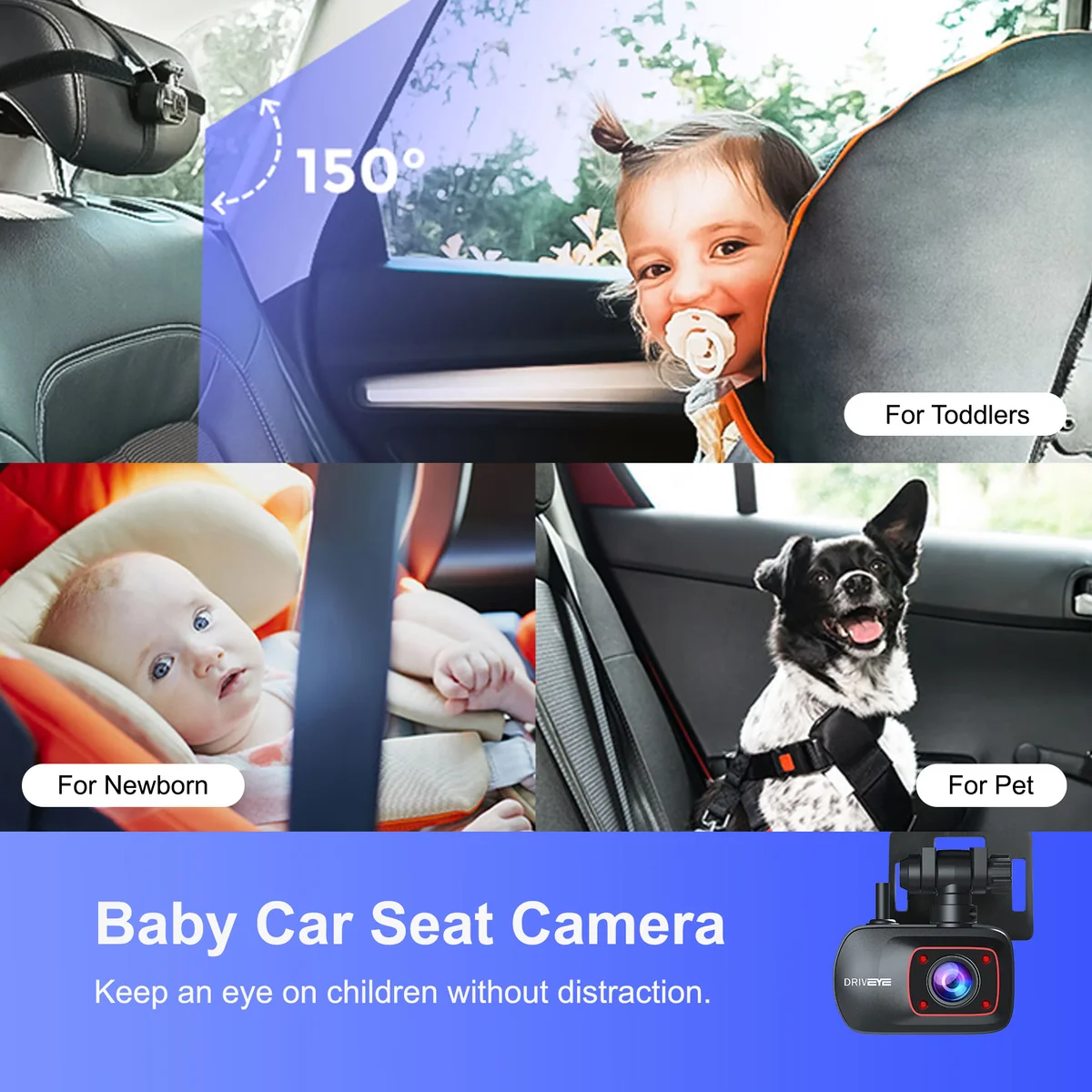
A five-channel dash cam goes further by adding a dedicated cabin view. The D9pro records front, rear, left, right and cabin simultaneously. The cabin camera can monitor rear-seat passengers, a baby or pets. The system also includes AI ADAS alerts for lane departures, pedestrians, movement of the vehicle ahead and potential forward collisions. For rideshare and family use, that combination changes the evidence record from road-only to road-and-cabin.
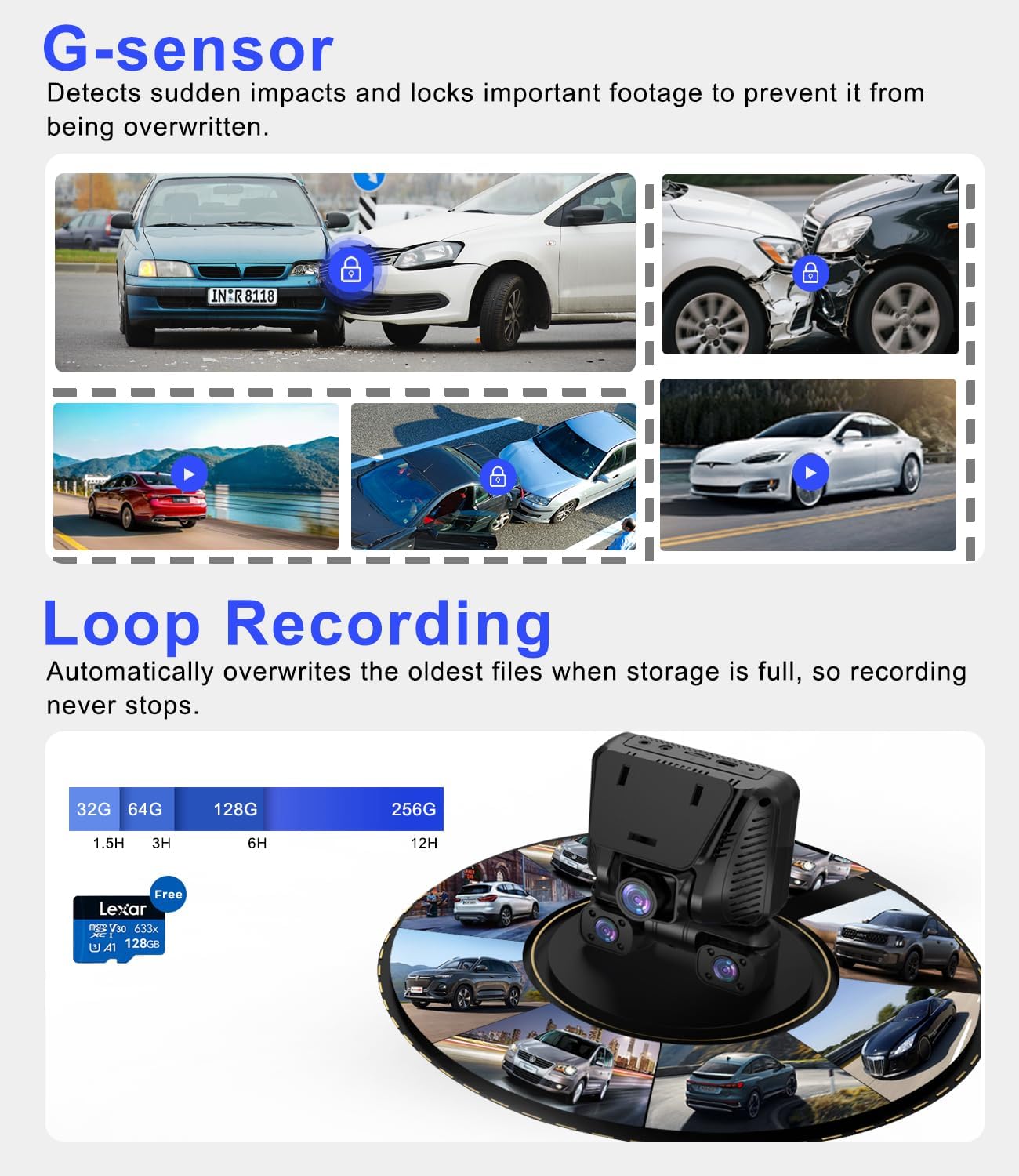
Long-term buyers should also check how the system protects recorded evidence. The D9pro supports loop recording and emergency video lock, which protects critical footage from being overwritten when an incident occurs. The D22 includes a 64GB memory card and supports up to 256GB of storage, with parking monitoring available through a separately purchased hardwire kit. These details matter after the purchase because they affect how easily a driver can find, keep and review footage when it is needed.
The long-term supplier evidence checklist
The checklist below is designed for buyers who are past the first specification comparison and want to judge whether a multi channel dash cam supplier is worth a longer relationship. Each point can be checked against product facts, owner feedback or stated limitations.
- Product-line continuity: Does the supplier offer a dual-channel, four-channel and five-channel path? Driveye covers these three steps with the D22, D7 and D9pro, which gives buyers a way to compare entry and advanced configurations under one brand.
- Channel coverage clarity: Can the buyer identify what each camera records? The D22 is front-and-rear. The D7 is a four-camera system. The D9pro adds a cabin camera to front, rear, left and right coverage.
- Durable hardware signals: Owner feedback such as “The build quality feels solid” and “the mounting stays put” is relevant because mounting stability and physical construction affect daily use. These are owner-reported signals, not controlled test results.
- Long-term function reports: A review stating “Functions flawlessly after two years of use” is useful because it describes operation after an extended period. It should be read as one owner report, not as a guarantee for every unit.
- Evidence retention: Check loop recording, emergency video lock and storage limits. The D9pro includes loop recording and emergency video lock. The D22 includes a 64GB card and supports up to 256GB.
- Installation and support experience: Owner feedback such as “Great value, great support, easy to setup” points to the practical side of ownership. The D7 is described as easy to install with a companion app, while the D22 and D9pro include voice control features.
- Stated limits and accessories: A credible supplier should make limitations clear. The D9pro scenario material states no cloud or remote viewing capabilities, and parking recording depends on compatible parking accessories. The D22 parking monitoring requires a separately purchased hardwire kit.
- Operating history: Driveye was founded in 2024. A short operating history is a real limitation for long-term buyers, so it should be weighed against the evidence the brand can show now: a defined product line, published model configurations and owner reviews.
Application and use cases: where the checklist changes the decision
For family travel, the cabin view is often the deciding factor. A dash cam with baby monitor capability is not just a convenience feature. It lets parents check a rear-facing car seat without turning around, and it can capture moments during a road trip. The D9pro’s dedicated interior camera supports real-time baby monitoring and voice commands such as “take photo” and “lock the video.” For a family dash cam buyer, that is a different value proposition from a front-and-rear-only system.
For a 5 channel dash cam with baby monitor use case, the buyer should verify three things: whether the cabin camera is dedicated, whether the road cameras still record while the cabin view is active, and whether the system protects footage when an incident occurs. The D9pro records front, rear, left, right and cabin simultaneously and includes emergency video lock. That makes it more relevant to family travel and rideshare work than a dual-channel unit that only covers the road.
For rideshare and taxi drivers, the case for a multi camera dash cam is built on dispute evidence. A driver may need front, side, rear and cabin footage after a passenger complaint, a fare dispute or a collision. The D9pro’s five-camera coverage and ADAS alerts are designed around that environment. The D7 is the lower-cost four-channel option for drivers who want wider road and vehicle coverage without the fifth cabin channel.
For daily commuters, the D22 dual channel dash cam is often the more proportionate choice. It records 4K front and 2K rear, includes GPS and voice control, and supports parking monitoring with a separately purchased hardwire kit. A buyer who does not need cabin monitoring may not gain enough from a five-channel system to justify the higher price and additional installation complexity.
Comparison with traditional solutions: where multi-channel fits and where it does not
Traditional single-channel and dual-channel dash cams are still appropriate for many drivers. They are simpler to install, usually lower in cost and adequate for front-and-rear evidence. The D22 sits in that category while adding 4K front recording, 2K rear recording, STARVIS 2 low-light imaging, GPS, voice control and dual-band Wi-Fi.
Multi-channel systems change the evidence record, but they also introduce trade-offs. A four-channel or five-channel dash cam requires more camera placement, more wiring consideration and a higher budget. The D7 ranges from 129.99 to 189.99, while the D9pro ranges from 199.99 to 259.99. For a buyer who only needs front-and-rear footage, those added channels may be unnecessary.
There are also stated limits. The D9pro scenario material notes no cloud or remote viewing capabilities, and parking recording depends on compatible parking accessories. The D22’s parking monitoring requires a separately purchased hardwire kit. These are not hidden defects; they are boundary conditions that a long-term buyer should accept before purchase. A supplier that states them clearly is easier to evaluate than one that implies every feature is included in every configuration.
The most useful comparison is therefore not “more channels is always better.” It is “which configuration matches the evidence a buyer actually needs, and can the supplier support that choice over time?” For a family with a newborn, the D9pro’s cabin view may justify the step up. For a commuter who mainly wants front-and-rear proof, the D22 is the more direct fit. For a rideshare driver who wants more angles without the five-channel price, the D7 is the middle path.
Market trend analysis: buyers are asking lifecycle questions
A visible trend in this category is the shift from single-camera recording to multi-angle evidence. Families want to see the rear seat. Rideshare drivers want cabin and road footage. Fleet operators want multiple angles for incident review. The product language around the D22, D7 and D9pro reflects that shift: the range moves from front-and-rear coverage to road-and-cabin coverage, then to five-channel coverage with ADAS and a dedicated cabin camera.
At the same time, buyers are becoming more careful about what happens after installation. They ask whether the app is usable, whether the mount stays stable, whether parking recording needs extra accessories and whether the supplier offers a coherent product line. Owner reviews such as “Functions flawlessly after two years of use,” “The build quality feels solid,” “Great value, great support, easy to setup” and “the mounting stays put” are valuable because they describe ownership rather than launch-day promises.
The trend does not mean every buyer should choose the most complex system. It means the evaluation criteria are widening. A supplier that can show continuity from a dual channel dash cam to a 5 channel dash cam, state its limits clearly and provide owner-reported evidence of durable use is easier to trust for a long-term purchase than a supplier that only offers a single configuration with unclear support boundaries.
Future outlook: what long-term buyers should keep watching
For the next buying cycle, the most important signals will be less about one specification and more about lifecycle support. Buyers should watch whether the supplier keeps the D22, D7 and D9pro configurations available, whether accessory requirements remain clear, whether app and voice-control features remain usable, and whether owner feedback continues to describe stable mounting and long-term function.
Driveye’s 2024 founding date is a real consideration. A younger brand has a shorter track record than an established supplier. That does not make the product unsuitable, but it changes how much weight a buyer should place on current evidence versus historical reputation. The D22, D7 and D9pro range gives the brand a visible product ladder; owner reports give buyers a way to check whether that ladder is backed by day-to-day use. For a long-term buyer, the right conclusion is not a slogan. It is a documented fit between the configuration, the use case and the limits the buyer is willing to accept.
FAQ
What is a multi channel dash cam?
A multi channel dash cam records from more than one camera position. Driveye offers a dual-channel D22 with front and rear recording, a four-channel D7, and a five-channel D9pro that records front, rear, left, right and cabin views.
Does Driveye cover both entry-level and advanced multi-channel configurations?
Yes. The D22 is a dual channel dash cam, the D7 is a 4 channel dash cam, and the D9pro is a 5 channel dash cam. The listed price ranges are 109.99–159.99 for the D22, 129.99–189.99 for the D7 and 199.99–259.99 for the D9pro.
How should owner reviews be used in a long-term supplier evaluation?
Owner reviews can show how a product behaves after installation. Reports such as “Functions flawlessly after two years of use,” “The build quality feels solid,” “Great value, great support, easy to setup” and “the mounting stays put” are useful signals. They are still owner-reported evidence rather than controlled laboratory results.
What are the limitations of a 5 channel dash cam?
A five-channel system usually costs more and requires more installation planning than a dual-channel unit. The D9pro also has no cloud or remote viewing capabilities according to the scenario material, and parking recording depends on compatible parking accessories. Buyers who only need front-and-rear footage may find the D22 more appropriate.
Is the D7 enough for family and rideshare use?
The D7 is a four-channel option described for families, rideshare drivers, road trippers and fleet operators who need wider road and vehicle coverage. It includes 4K front recording, enhanced night vision and a companion app. Buyers who specifically need a dedicated cabin baby monitor should compare it with the D9pro.
What should buyers verify about installation and mounting?
Buyers should check mounting stability, installation complexity and app access. Owner feedback stating “the mounting stays put” is relevant, as is the D7’s easy installation and companion app. The D22 and D9pro include voice control, which can reduce the need to handle controls while driving.
For long-term buyers, the strongest supplier evidence is not a louder claim. It is a product line that can be checked model by model, a set of limitations that are stated clearly, and owner feedback that can be read alongside the specification.
¿Tiene preguntas o necesita más detalles?
Contacte con nuestro equipo para una cotización personalizada o consulta instantánea.
Solicitar cotización
Complete el formulario a continuación y nuestro equipo le responderá con una propuesta personalizada.
Chat directo de WhatsApp
¿Prefiere chatear en tiempo real? Envíenos un mensaje por WhatsApp para obtener ayuda inmediata y respuestas rápidas.
- Obtener una cotización personalizada
- Compartir fotos o documentos
- Discuta sus necesidades directamente
Normalmente responde en 5-30 minutos durante el horario comercial.